- Wall Switch: The switched half of the outlet is off, or the switch itself is faulty.
- Tripped Breaker/GFCI: The circuit breaker supplying power to one half (or the entire outlet if it's a GFCI) has tripped.
- Loose Wiring: A wire has come loose from its terminal screw or back-stab connection, specifically affecting one half of the outlet.
- Damaged Outlet: The internal components of one receptacle have failed.
Electrical · Panel or service upgrade
| Project category | Electrical |
|---|---|
| Problem type | Panel or service upgrade |
| Trade required | Electrical |
| Urgency | Planned project |
| Safety risk | High safety risk |
| DIY suitability | Licensed pro only |
| Cost category | High cost |
| Typical timeline | Permit plus utility scheduling, commonly 2–6 weeks |
| Contractor type | Licensed electrician |
Repair option
Add a subpanel when the main service is adequate.
Replacement option
Full service upgrade with utility coordination and permits.
Common causes
- Obsolete or recalled panel brands
- Service capacity too small for added loads
- No room for required AFCI/GFCI breakers
Relevant tools:project cost estimatorcompare quotes
Published May 9, 2026Last updated October 25, 2026
Tools & materials you'll need
Affiliate linksAs an Amazon Associate FixlyGuide earns from qualifying purchases — at no extra cost to you. Prices and availability are accurate as of publication and subject to change.
Quick Answer
When only half of an electrical outlet is working, it's a common symptom of a 'split-receptacle' or 'half-hot' wiring configuration. In these setups, the small metal tab connecting the two hot (often brass-colored) screw terminals on the outlet's side is intentionally broken, allowing each receptacle to be controlled independently. One half might be wired to a wall switch (for a lamp, for example), while the other half is constantly powered. Less commonly, it could indicate a loose wire, a tripped GFCI, or an issue with the circuit breaker.
The Problem
You plug in a lamp, and it works. You plug your phone charger into the other receptacle on the same outlet, and nothing. This frustrating scenario is a classic sign that your outlet is intentionally wired as a split-receptacle, or, less commonly, has developed a wiring fault. While a split-receptacle is a feature, not a bug, it can be confusing if you don't realize that's how it's designed. The problem arrives when you expect both halves to deliver constant power, or when the switched half stops working due to a separate issue like a tripped breaker or a loose connection.
How It Works
Standard electrical outlets (duplex receptacles) have two independent three-prong sockets that typically share a single hot wire, a single neutral wire, and a single ground wire. Internally, a small, break-away metal tab connects the two brass-colored screw terminals on the 'hot' side, as well as the two silver-colored screw terminals on the 'neutral' side. This tab ensures that both receptacles receive power from the same source.
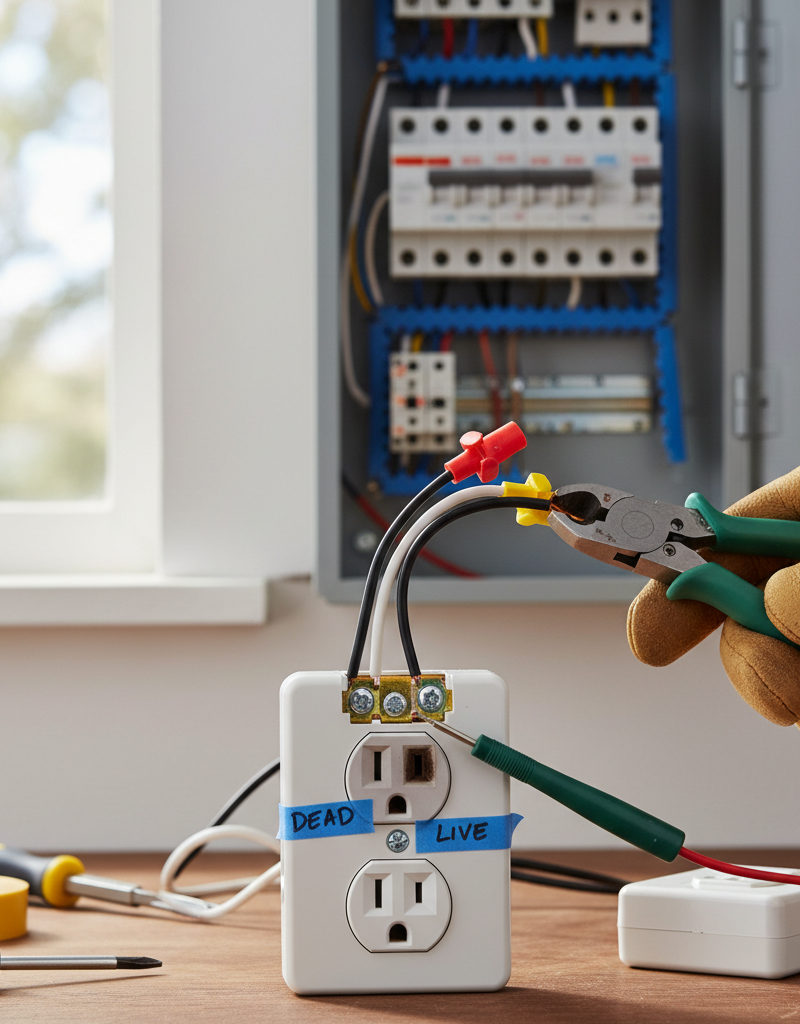
In a split-receptacle configuration, the metal tab on the hot side (connecting the brass screws) is deliberately broken off. This allows two separate hot wires to be connected to the outlet: one for the top receptacle and one for the bottom. Often, one of these hot wires comes directly from the circuit breaker, providing constant power, while the other hot wire runs through a wall switch before reaching the outlet. This setup is popular for controlling floor or table lamps with a wall switch, eliminating the need to reach for the lamp’s individual switch. The neutral side tab (silver screws) is usually left intact, ensuring both halves share a common neutral return path.
When only one half works, the most likely culprits are:
- Wall Switch: The switched half of the outlet is off, or the switch itself is faulty.
- Tripped Breaker/GFCI: The circuit breaker supplying power to one half (or the entire outlet if it's a GFCI) has tripped.
- Loose Wiring: A wire has come loose from its terminal screw or back-stab connection, specifically affecting one half of the outlet.
- Damaged Outlet: The internal components of one receptacle have failed.
Understanding this wiring scheme is the first step to diagnosing and fixing the issue, as many homeowners mistakenly believe a non-working half indicates a serious electrical fault when it's simply a switched outlet being 'off.'
Step-by-Step Fix
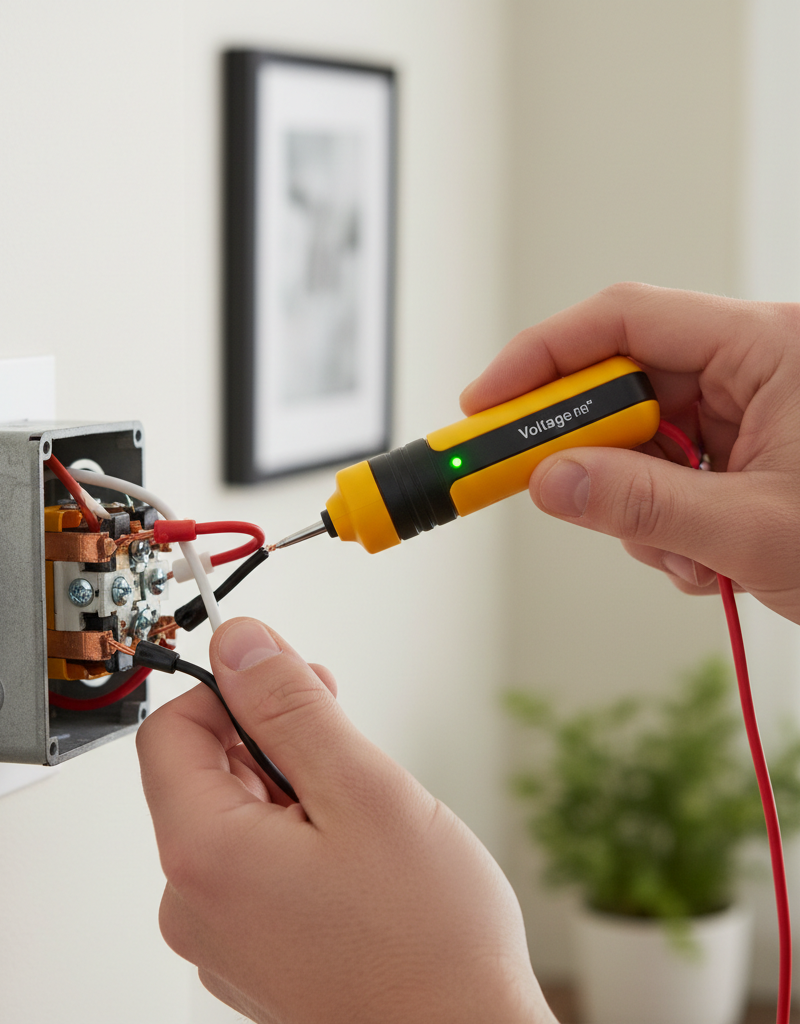
SAFETY NOTE: Always turn off the power at the circuit breaker before working on any electrical outlet. Use a non-contact voltage tester to confirm the power is off before touching any wires.
-
Check for a Wall Switch — Confirming a Split Setup
- Before assuming a fault, flip all wall switches in the room. Many homeowners overlook that an outlet is controlled by a switch. If one half turns on, your outlet is intentionally split. Problem solved! If not, proceed.
- If this doesn't work: Move to the next step, as it could still be a split outlet with a bigger issue, or an entirely different problem.
-
Reset the Circuit Breaker — Restoring Power
- Go to your electrical panel. Locate the breaker for the affected room or circuit. It might be clearly labeled, or you might need to test breakers one by one. A tripped breaker will often be in an 'off' or middle position. Firmly push it to the 'OFF' position, then back to 'ON'.
- If you have Ground Fault Circuit Interrupter (GFCI) outlets upstream (common in kitchens, bathrooms, garages, or basements), check and reset any GFCI outlets in the vicinity. Push the 'RESET' button firmly.
- Safety Tip: Wear dry shoes and stand on a dry surface when working with the electrical panel. Use a flashlight if the area is dim.
- If this doesn't work: The breaker may be faulty, or there's a short somewhere. Consult a pro if the breaker immediately trips again.
-
Inspect the Outlet (Power OFF) — Visual Confirmation and Initial Checks
- Turn off power to the outlet at the circuit breaker. Confirm power is off with a non-contact voltage tester.
- Carefully remove the outlet's faceplate.
- Gently unscrew the outlet from the electrical box and pull it out, holding it by its insulated sides. Avoid touching any wires.
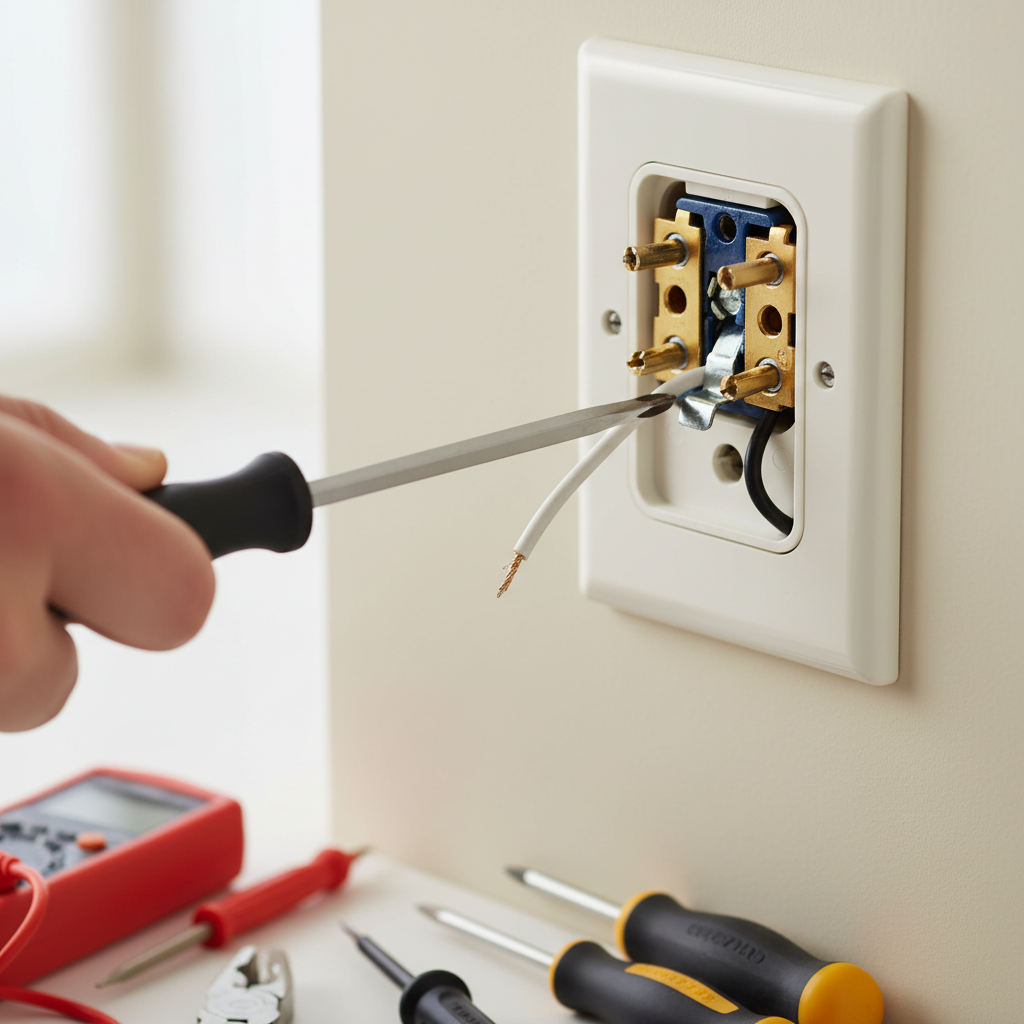
- Visually inspect the outlet. Are any wires loose? Are there any burn marks or melted plastic? Does the small metal tab on the brass (hot) side between the two screws appear to be broken?
- Diagnostic: If the tab on the hot side is broken, you have a split-receptacle. If it's intact, but only half works, the problem is likely a loose wire or a damaged outlet.
-
Confirm Wire Connections — Tightening & Reconnecting
- With power OFF and confirmed, examine each wire connection.
- Black/Red Wires (Hot): These are connected to the brass-colored screws. If this is a split-receptacle, you'll likely see two black or one black and one red wire on different brass screws, with the tab between them broken. Ensure all hot wires are securely wrapped clockwise around their respective screws and tightened. Avoid using back-stab connections (where wires are pushed directly into small holes on the back of the outlet) if possible; replace them with screw terminals for a more secure connection.
- White Wires (Neutral): These connect to the silver-colored screws. Ensure these are tight. The neutral tab should usually remain intact.
- Green/Bare Copper Wire (Ground): Connected to the green screw. Ensure it's secure.
- If a wire is loose: Loosen the screw, re-strip about 3/4 inch of insulation if needed, form a clockwise loop, and retighten the screw firmly. Give each wire a gentle tug to verify its security.
- If this doesn't work: The problem might be further upstream, or the outlet itself is faulty.
-
Test the Outlet with a Multimeter (Optional but Recommended) — Advanced Diagnostics
- After resecuring wires and before reassembling, turn the power back ON to the circuit.
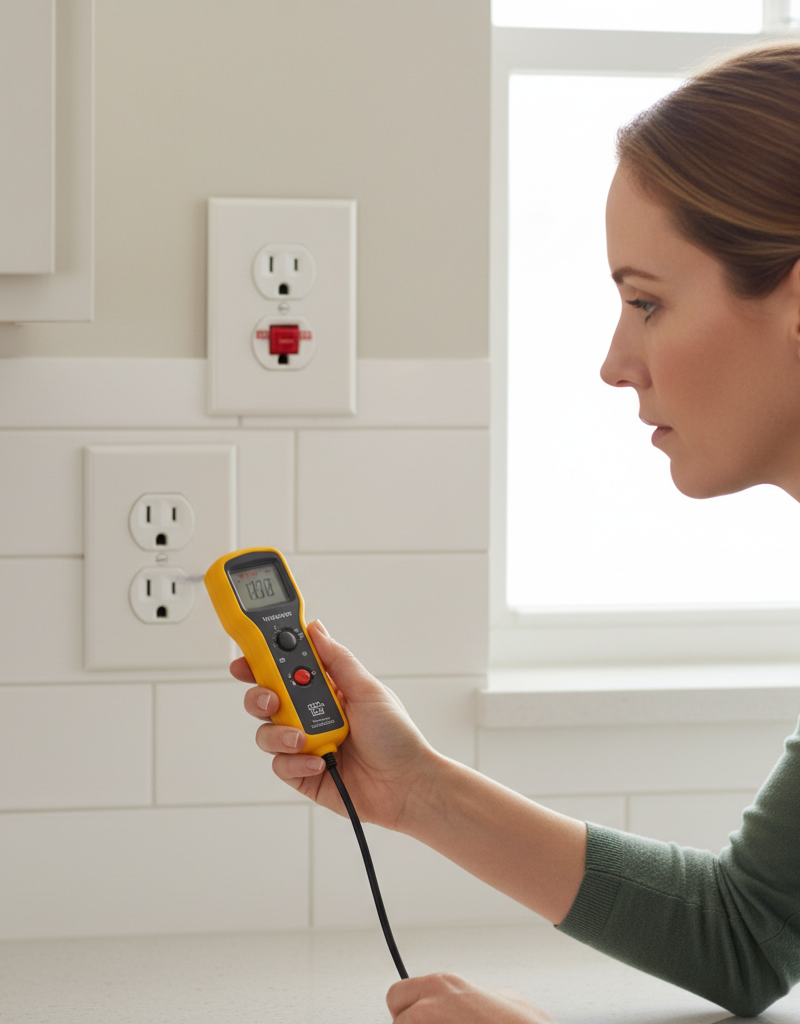
- Carefully use a multimeter set to AC voltage (V~) to test the voltage between the hot (brass screw) terminals and the neutral (silver screw) terminals. You should read approximately 120V.
- Test between each hot terminal and the ground (green screw) terminal. Again, around 120V.
- Test between the two hot terminals if the tab is broken. You might read 0V (if from the same circuit) or 120V (if from different legs of a multi-wire branch circuit, or a 'miswired' split).
- Safety Tip: Be extremely careful not to touch live wires or probes together. If you're uncomfortable with this step, skip it and assume a faulty outlet if previous steps haven't worked.
- If you don't read 120V on one side: Power isn't reaching that half. This points to a faulty connection further back, a wiring issue in the wall, or a faulty breaker.
-
Replace the Outlet — New Hardware
- If you've confirmed secure wiring, reset the breaker, and ruled out a wall switch, the outlet itself may be faulty. Internal components can wear out or become damaged, especially with heavy use or if back-stab connections have heated up and loosened.
- Turn off power again at the breaker and confirm with your voltage tester.
- Disconnect all wires from the old outlet. Note carefully which wire went to which screw. Take a picture if it helps.
- Connect the wires to the new outlet, ensuring the hot wires (black/red) go to the brass screws, neutral (white) to silver, and ground (green/bare) to the green screw. Remember to break the hot-side tab on the new outlet if you are restoring a split-receptacle configuration.
- Secure the new outlet into the electrical box, attach the faceplate, and restore power.
Common Causes
- Intentional Split-Receptacle Wiring (Switched Outlet): By far the most common reason. One half is wired to a wall switch, commonly found in living rooms or bedrooms to control lamps.
- Loose Wire Connection: Over time, wires can vibrate loose from screw terminals or, more commonly, from less reliable back-stab connections. This can affect just one half of the outlet if the connection is specific to that segment.
- Tripped Circuit Breaker or GFCI: A short circuit or overload can trip the breaker supplying power, or an issue with a connected appliance can trip an upstream GFCI outlet, cutting power to one or both halves.
- Internal Outlet Damage: The receptacle itself can fail due to age, wear, or internal electrical arcing, causing one of the internal connections to break.
- Faulty Wall Switch: If one half is switched, the switch itself could be faulty, preventing power from reaching that part of the outlet.
- Back-stab Wiring Failure: Wires pushed into the small holes on the back of outlets (back-stabs) are notorious for loosening or creating poor connections over time, leading to intermittent power or total failure of one or both receptacles.
Common Mistakes
- Forgetting the Wall Switch: Many homeowners immediately assume a serious electrical problem without first checking all wall switches in the room. Always confirm it's not simply a switched outlet that's turned off.
- Not Shutting Off Power: Attempting to troubleshoot an outlet without turning off the circuit breaker is extremely dangerous and can lead to electric shock or fire. ALWAYS use a non-contact voltage tester to confirm no power.
- Ignoring Loose Wires: Overlooking or not thoroughly tightening loose wire connections is a common mistake. Even a slightly loose wire can cause intermittent power, arcing, or an eventual complete power loss.
- Using Back-Stab Connections: While convenient for electricians, back-stab connections are less secure than screw terminals and are a frequent cause of outlet failures. When replacing an outlet, always use the screw terminals.
- Miswiring a Split-Receptacle: If replacing a split-receptacle, forgetting to break the metal tab on the hot side (brass screws) will result in both receptacles being constantly powered or both being switched, rather than the intended independent operation.
- Assuming a Faulty Outlet Immediately: Sometimes the problem is upstream (breaker, switch, or another outlet in the circuit) rather than the outlet itself. Always troubleshoot systematically before replacing components.
Cost & Time Breakdown
| Task | DIY cost | Pro cost | Time |
|---|---|---|---|
| Initial troubleshooting | $0 | $100–$250 | 5–15 minutes |
| Tighten loose wire | $0 | $100–$250 | 15–30 minutes |
| Replace standard outlet | $3–$10 | $150–$300 | 20–45 minutes |
| Replace GFCI outlet (if needed) | $15–$25 | $180–$350 | 30–60 minutes |
| Faulty switch replacement | $5–$20 | $150–$300 | 30–60 minutes |
| Advanced diagnosis (pro only) | N/A | $150–$400+ | 1–2 hours+ |
Tips & Prevention
- Label Your Breaker Panel: Clearly label your circuit breaker panel so you know exactly which breaker controls which rooms or outlets. This saves time and ensures safety.
- Avoid Overloading Outlets: Regularly overloading outlets can cause connections to heat up and loosen over time, leading to issues. Distribute high-wattage appliances across different circuits if possible.
- Periodic Check-ups: Every few years, remove faceplates and gently pull out outlets in high-use areas to check for loose wires or signs of wear. Always turn off power first!
- Use Screw Terminals: When replacing outlets, always use the screw terminals for connections rather than the push-in back-stab holes, as screw terminals provide a much more secure and reliable connection.
- Understand Split Receptacles: If you have an outlet that's half-on/half-off, investigate if it's designed to be switched. Knowing your home's wiring design prevents unnecessary troubleshooting.
- Upgrade Old Outlets: If your home has very old, two-prong (ungrounded) outlets or outlets with loose-fitting plugs, consider upgrading to modern three-prong or GFCI outlets for safety and reliability.
When to Call a Professional
While a half-working outlet can often be a simple DIY fix, there are clear indicators it's time to call a licensed electrician. If, after checking for a tripped breaker and a wall switch, the problem persists, or if you observe any signs of electrical danger, cease all DIY efforts immediately. You should absolutely call a professional if you notice burning smells, scorch marks on the outlet or wall, buzzing sounds from the wall, or if the circuit breaker repeatedly trips. Any uncertainty about electrical wiring, multiple outlets failing, or the presence of aluminum wiring in an older home also warrants professional intervention, as these issues can indicate more serious underlying problems that require expert diagnosis and repair for your safety and the integrity of your home's electrical system.
Related Articles
Keep troubleshooting with these hand-picked guides from FixlyGuide:
- The 7 Head-Scratching Reasons Your Outlet Died (Even With The Breaker On) — Discover the surprising reasons why an electrical outlet might stop working even when its circuit breaker is fully engaged, and how to safe…
- Why Your Outlet Died But the Breaker's STILL On (The GFCI Culprit) — Discover the hidden reasons an electrical outlet stops working, even when the circuit breaker remains on, often pointing to a tripped GFCI.
- The 3 Hidden Reasons Your Gas Burner Won't Light (Beyond a Clog) — Before you call a technician, discover the most common culprits behind a gas stove burner that refuses to ignite and learn how to fix them…
- That "Copper" Outlet Wire Might Be A Fire Hazard in Disguise — Discover the hidden fire risk lurking behind your walls—aluminum wiring was a cheap copper alternative in the 60s & 70s, but its unique pro…
- The #1 Mistake Homeowners Make When a Gas Burner Won't Light (And the Easy Fix) — Before you call a technician, discover the most common, overlooked reason your gas stove burner isn't lighting and how to fix it yourself i…
- The 5-Minute Trick That Often Fixes a Dead Doorbell (No Electrician Needed) — Before you call an electrician for a dead doorbell, learn the surprising common culprit homeowners overlook and how to fix it in minutes.
Should you do this yourself?
Answer five quick questions before you start. Safety outranks savings every time.
Your experience with work like this
How high do you have to work?
Does the job involve any of these?
Will it need a permit?
Specialty tools
Free and instant. Educational guidance only — not a quote, inspection, or professional diagnosis.
What should this project cost?
Enter your project details for a realistic cost range before you call anyone.
Outlet and switch work usually $150–$400; panel upgrades commonly $1,800–$4,200.
- Regional adjustment
- National average
- Labor share (typical)
- ~$709
- Quotes to collect
- 3 written estimates
Educational estimate based on national averages — not a binding quote. Always confirm with written local estimates.
Fixly Project Decision Box
- DIY difficulty
- Professional Recommended
- Estimated time
- Diagnosis 1–2 hours
- Cost level
- Moderate
Main tools / materials
- Non-contact voltage tester
- Outlet tester
- Flashlight
When to stop and call a pro
- Burning smell, scorch marks, or a warm outlet or switch plate
- A breaker that trips again right after being reset
- Any work inside the service panel
- Aluminum wiring or cloth-insulated wiring
Need professional help?
Talk to a Licensed ElectricianBefore you start
Check the difficulty, permits, and safety risk — then decide whether to call a pro.
- Estimate this projectGet a cost range for your scope and ZIP before you call anyone.Open
- Get local estimatesSend one request and compare written estimates from vetted pros.Open
Free, no signup required. Estimates are educational guidance, not a quote or an inspection.
Get the print-ready PDF of this guide
A clean, ad-free, printable version you can keep on your phone or pin to the workshop wall. Free with a FixlyGuide account.
- Print-optimized layout
- Tools, materials & every step included
- Saved to your account
Frequently asked questions
Why would only one side of an outlet work?+
The most common reason is that the outlet is wired as a 'split-receptacle,' where one half is controlled by a wall switch (e.g., for a lamp) and the other half is constantly powered. Less frequently, it could be due to a loose wire connection, a tripped circuit breaker, or a damaged outlet.
How do I know if an outlet is a split-receptacle?+
The easiest way to check is to flip all wall switches in the room. If one side of the outlet turns on or off with a switch, it's a split-receptacle. You can also visually inspect the outlet after turning off power: if the small metal tab connecting the two brass (hot) screws is broken, it's split.
Is it dangerous if only half an outlet works?+
If the half not working is due to a deliberate split-receptacle setup, it's not inherently dangerous. However, if the issue stems from loose wiring, a repeatedly tripping breaker, or internal damage to the outlet, there could be risks of arcing, overheating, or electrical shock. Always investigate the cause safely.
Can a loose wire cause only half an outlet to work?+
Yes, a loose wire connection, particularly on the hot (black or red) side of the outlet, can cause only one of the two receptacles to lose power. This is more common with push-in 'back-stab' connections than with securely fastened screw terminals.
Discussion
Loading comments…