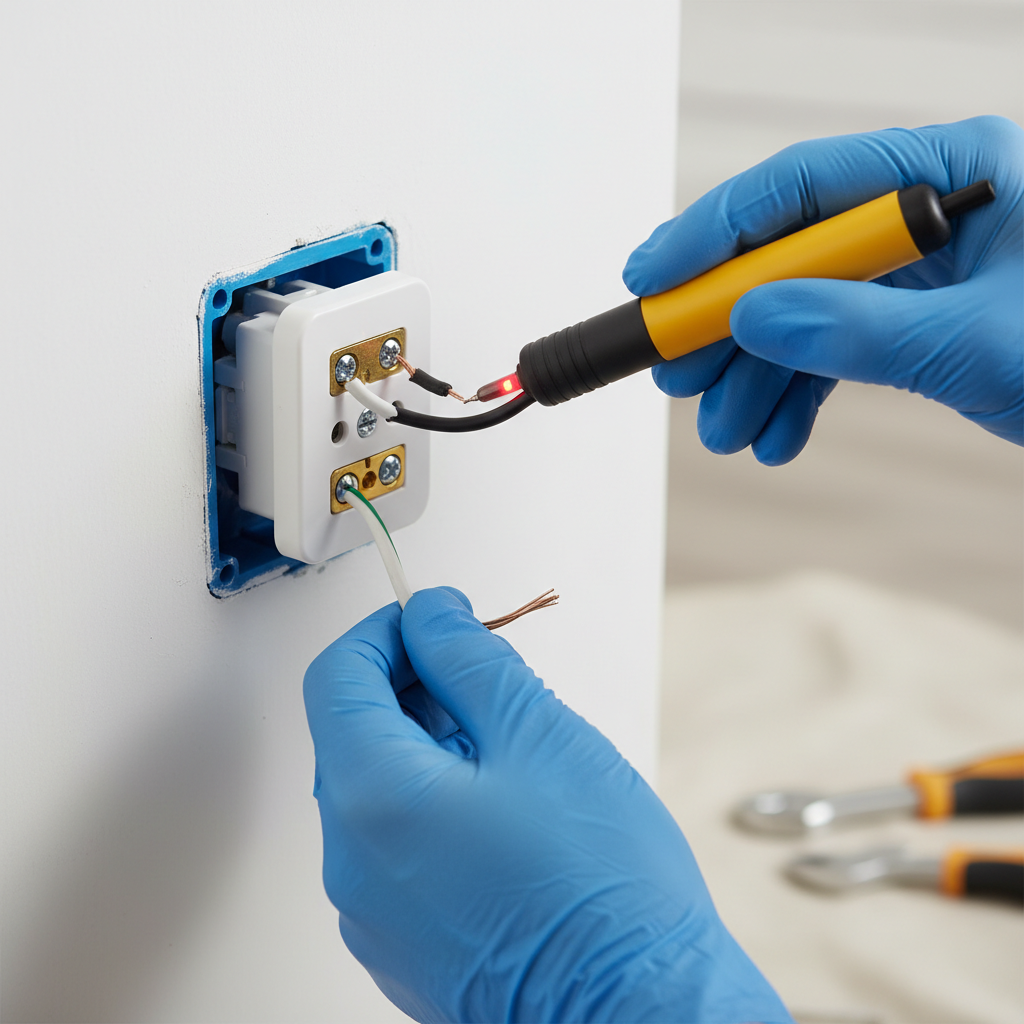
- Identify the Circuit Breaker — Locate and switch off the correct breaker.
- Go to your main electrical panel.
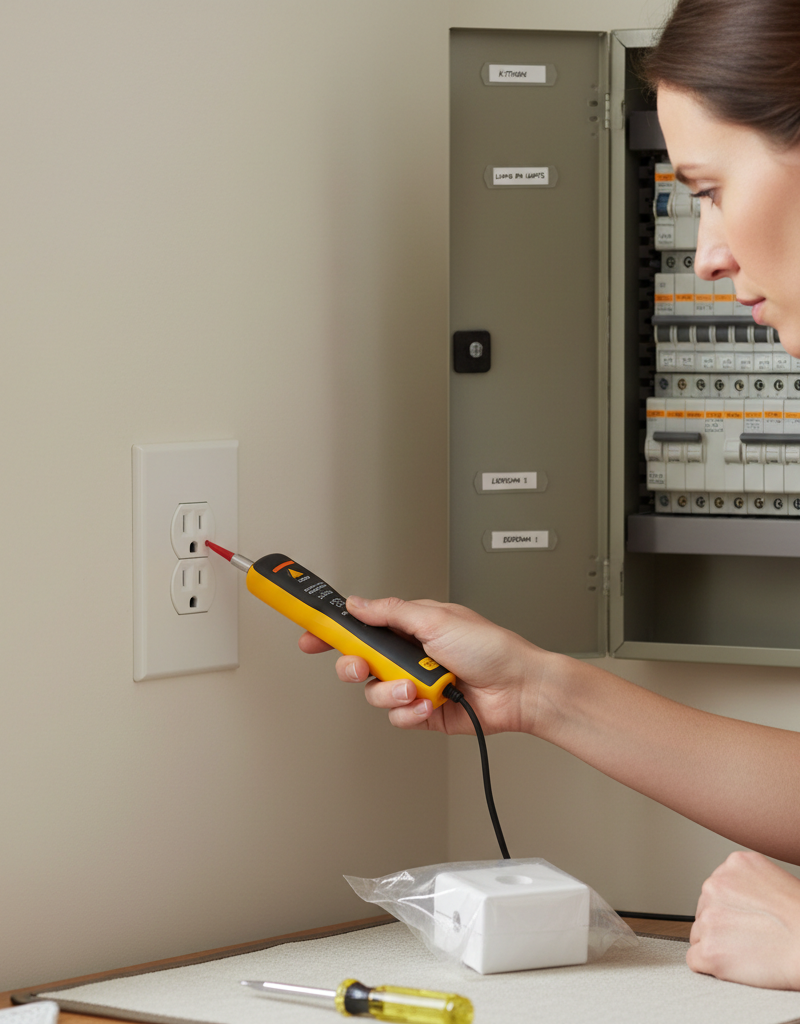
- Look for labeling that indicates the room or area where the faulty outlet is located. If unlabeled, you may need to flip breakers one by one until the outlet goes dead (test with a lamp or voltage tester).
- Flip the corresponding breaker to the 'OFF' position.
- Safety: Always verify with a non-contact voltage tester at the outlet that power is indeed off before proceeding. Insert the tester into both slots of both receptacles (the working and non-working side) to ensure no electricity is present.
Electrical · Panel or service upgrade
| Project category | Electrical |
|---|---|
| Problem type | Panel or service upgrade |
| Trade required | Electrical |
| Urgency | Planned project |
| Safety risk | High safety risk |
| DIY suitability | Licensed pro only |
| Cost category | High cost |
| Typical timeline | Permit plus utility scheduling, commonly 2–6 weeks |
| Contractor type | Licensed electrician |
Repair option
Add a subpanel when the main service is adequate.
Replacement option
Full service upgrade with utility coordination and permits.
Common causes
- Obsolete or recalled panel brands
- Service capacity too small for added loads
- No room for required AFCI/GFCI breakers
Relevant tools:project cost estimatorcompare quotes
Published June 9, 2026Last updated August 17, 2026
Tools & materials you'll need
Affiliate linksAs an Amazon Associate FixlyGuide earns from qualifying purchases — at no extra cost to you. Prices and availability are accurate as of publication and subject to change.
Quick Answer
When you plug something into an outlet and only one of its two receptacles provides power, the issue is almost always localized to the outlet's internal wiring or components. The most common cause is a loose hot wire connection to one of the two separate brass terminal screws on the outlet. It could also be a result of a tripped Ground-Fault Circuit Interrupter (GFCI) outlet or breaker upstream, or, in older homes, a 'split-receptacle' setup where each half is on a different circuit or controlled by a switch. While often a simple fix, always prioritize safety by turning off the power before troubleshooting.
The Problem
Imagine plugging in your phone charger and it works, but then you try to plug in a lamp into the other receptacle of the same outlet, and nothing happens. This scenario—where one half of a duplex electrical outlet is dead while the other functions perfectly—is a common and often perplexing issue for homeowners. It's frustrating because it suggests a partial failure, not a complete loss of power, making the diagnosis seem more complicated than it often is. This problem can render half of your wall outlets useless, disrupt your daily routines, and potentially signal underlying electrical issues that, while not immediately dangerous, warrant investigation.
How It Works
To understand why only half an outlet works, it helps to know how a standard duplex receptacle is wired. A typical 120-volt duplex outlet has two independent receptacles (the slots you plug into) sharing a single housing. Internally, each receptacle has its own set of hot (brass screws), neutral (silver screws), and ground (green screw) terminals.
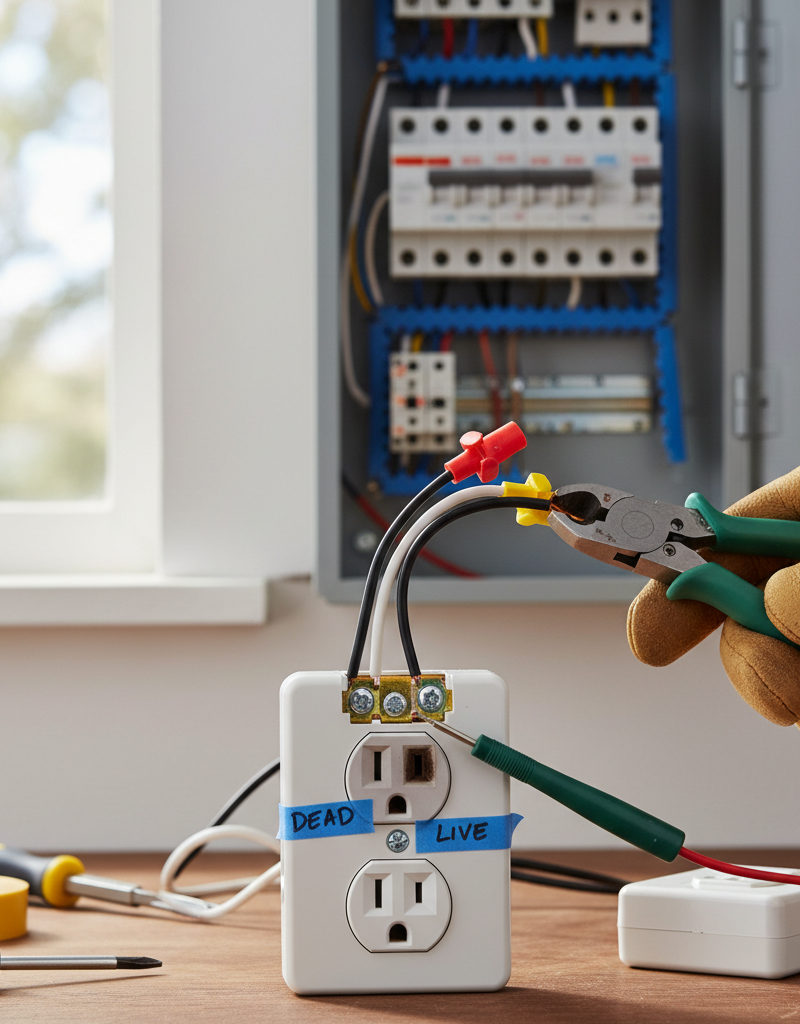
Crucially, standard outlets come with removable break-off tabs. There's a small metal tab connecting the two brass (hot) screws and another connecting the two silver (neutral) screws. When these tabs are intact, both receptacles share the same hot and neutral connections, meaning if one works, both should. However, in cases where only half the outlet works, the most frequent culprit is a loose or damaged wire connected to one specific hot terminal screw, or less commonly, a loose neutral wire affecting only one half when a tab has been broken.
Sometimes, especially in kitchens, dining rooms, or living rooms, these tabs are intentionally broken. For example, the hot tab might be broken to allow each half of the outlet to be on a separate circuit (known as a 'split' or 'split-wired' receptacle, often requiring a 3-wire cable with two hot wires, a neutral, and a ground). Or, one half might be controlled by a wall switch (e.g., for a lamp) while the other half is always hot. In these split configurations, if one of the circuits trips or loses power, only one half of the outlet will stop working.
Another key component is the Ground-Fault Circuit Interrupter (GFCI). These outlets (identifiable by their 'Test' and 'Reset' buttons) protect against electrical shock. If an upstream GFCI outlet or a GFCI breaker trips, it can cut power to all downstream standard outlets, or in some configurations, only affect one leg of a split receptacle or just the 'load' side of the GFCI itself, leaving the 'line' side live. Understanding these internal connections and potential configurations is vital for accurate troubleshooting.
Step-by-Step Fix
Safety First! Before touching any outlet or wiring, always turn off the power at the circuit breaker or fuse box. Go to your electrical panel, locate the breaker labeled for the room or area you're working in, and flip it to the 'OFF' position. Use a non-contact voltage tester to confirm the power is off at the outlet before proceeding.
-
Identify the Circuit Breaker — Locate and switch off the correct breaker.
- Go to your main electrical panel.
- Look for labeling that indicates the room or area where the faulty outlet is located. If unlabeled, you may need to flip breakers one by one until the outlet goes dead (test with a lamp or voltage tester).
- Flip the corresponding breaker to the 'OFF' position.
- Safety: Always verify with a non-contact voltage tester at the outlet that power is indeed off before proceeding. Insert the tester into both slots of both receptacles (the working and non-working side) to ensure no electricity is present.
-
Inspect the Outlet for External Damage — Check for visual cues on the outlet itself.
- With power confirmed off, carefully remove the outlet cover plate screws and then the cover plate.
- Examine the outlet's face for any scorch marks, discoloration, cracks, or loose components. Sometimes a simple impact or loose screw can cause internal damage not immediately visible.
-
Pull the Outlet from the Wall Box — Gently unmount the outlet for internal inspection.
- Unscrew the two mounting screws (top and bottom) that secure the outlet to the electrical box.
- Carefully pull the outlet straight out of the box, allowing enough slack in the wires to safely inspect the connections. Do not disconnect any wires yet.
-
Examine Wiring Connections — Look for loose or damaged wires on the terminals.
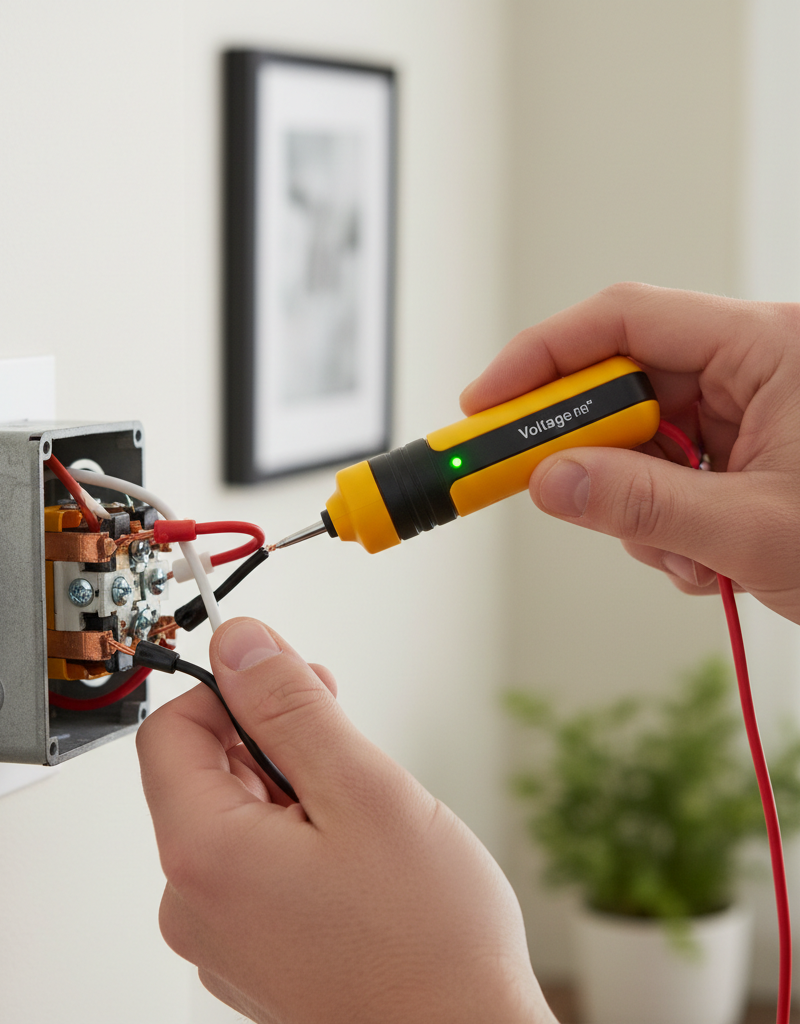
- With the outlet pulled out, carefully inspect all wire connections: the black (hot) wires to the brass screws, the white (neutral) wires to the silver screws, and the bare copper or green (ground) wire to the green screw.
- Pay close attention to the individual brass screws. A common issue for a half-dead outlet is a loose black wire on one of the brass terminal screws.
- Check for any frayed wires, loose stab-in connections (if used – these are less reliable than screw terminals), or wires that appear to be pulled out of their terminal.
- If wires are connected using stab-in holes (on the back of the outlet): Carefully pull the outlet further out and consider transferring these to the more secure screw terminals. You can release stab-in wires by inserting a small screwdriver into the slot next to the wire.
-
Tighten All Terminal Screws — Secure all hot, neutral, and ground connections.
- Using an appropriate screwdriver (flathead or Phillips, depending on the screw type), gently but firmly tighten all the terminal screws on the outlet, even those that appear secure.
- Make sure the wires are properly wrapped clockwise around the screws (if screw terminals are used) to ensure good contact when tightened.
- If any wire looks damaged or frayed at the connection point, trim off the damaged section with wire cutters and strip about 5/8 of an inch of insulation to expose fresh copper before reattaching.
-
Check for Broken Tabs — Determine if the hot or neutral tabs are intentionally broken.
- Look at the narrow metal tabs connecting the two brass screws and the two silver screws.
- If the brass tab is broken, it means the two receptacles are designed to be on separate circuits or one is switch-controlled. If this is the case, and you've confirmed both related breakers are on (or the switch is on), follow the wiring back into the box to see if two separate hot wires are present.
- If the neutral tab is broken, it's typically for split-wired 240V appliances (rare for standard outlets) or specific multi-wire branch circuits. If only one half is dead and the tabs are broken, the issue might be upstream on one of the dedicated lines.
- If a tab is broken unintentionally: The outlet is likely faulty and needs replacement.
-
Test for Upstream GFCI Trip — Check GFCIs in bathrooms, kitchens, and basements.
- If the outlet still isn't working after checking the wiring, locate any GFCI outlets in bathrooms, kitchens, garages, basements, or outdoor areas that might be on the same circuit.
- Press the 'Reset' button firmly on any GFCI outlets you find. Sometimes the faulty outlet is connected downstream from a tripped GFCI, even if the GFCI isn't in the same room.
- Also, check your main electrical panel for any GFCI circuit breakers (they will have a 'Test' button on them) that might have tripped. Reset these if found.
-
Consider Outlet Replacement — If troubleshooting fails, swap out the outlet.
- If you've tightened all connections, checked for broken tabs, and ruled out GFCI trips, the outlet itself might be faulty.
- With the power OFF, disconnect all wires from the old outlet.
- Connect the wires to a new, identical outlet: black wires to brass screws, white wires to silver screws, and ground wire to the green screw. Ensure wire loops are clockwise and screws are tight.
- Carefully push the new outlet back into the box, ensuring no wires are pinched. Secure it with the mounting screws and reattach the cover plate.
- Restore power and test the outlet.
Common Causes
- Loose Hot Wire Connection: This is by far the most frequent culprit. If one of the hot (black) wires connected to a brass terminal screw is loose, it will only deliver power to the receptacle it's supposed to energize. Since each receptacle has its own dedicated hot screw, a poor connection on one screw means no power to that specific set of slots. Over time, vibration, expansion/contraction, or improper installation can cause these connections to loosen.
- Loose Neutral Wire Connection (Less Common for Half-Dead): While a loose neutral wire typically kills both receptacles, in some very specific scenarios (especially if the neutral tab were broken or an unusal wiring configuration exists), it could theoretically impact only one side. However, this is less likely than a hot wire issue.
- Tripped Upstream GFCI (Ground-Fault Circuit Interrupter): If the problematic outlet is wired downstream from a GFCI outlet (common in kitchens, bathrooms, garages, and basements) or a GFCI circuit breaker, and that GFCI has tripped, it can cut power to the entire circuit it protects. Sometimes, due to specific wiring or GFCI functionality, it might only affect the 'load' side, meaning one receptacle could retain power while the other loses it if the outlet receives power from two different points.
- Broken Internal Tab: Standard duplex outlets have small metal tabs connecting the two hot screws and the two neutral screws. If the hot tab is accidentally broken (or intentionally broken for special wiring like a split-wired receptacle or a switch-controlled outlet), and power is only supplied to one of the hot terminals, only one half will work. While often intentional for specific setups, accidental breaks can occur during installation.
- Faulty Outlet: Over time, internal components of an outlet can wear out, corrode, or fail. This can result in one of the receptacles losing its ability to make good contact internally, even if the wiring connections are solid. Age, repeated plug insertions, or even minor electrical surges can contribute to internal failure.
- Shorted Circuit within the Outlet: Although rare with only half an outlet failing, an internal short circuit (e.g., between hot and ground, or hot and neutral) could theoretically damage one receptacle internally or trip a breaker for only one side of a split-wired outlet.
Common Mistakes
- Forgetting to Kill the Power: The most dangerous mistake! Always, always turn off the correct breaker and verify with a voltage tester before touching any wiring. Working on a live circuit can lead to severe injury or electrocution.
- Ignoring Upstream GFCIs: Many homeowners focus solely on the problematic outlet and forget that a tripped GFCI in another room (like a bathroom or garage) could be the root cause. Always check all GFCIs on the same circuit.
- Assuming a Complete Outlet Failure: Don't immediately replace the outlet without first checking and tightening the wiring connections. A loose wire is a much more common and simpler fix than a faulty outlet.
- Using Stab-In Connections: While convenient for quick installation, the 'stab-in' holes on the back of many outlets can loosen over time and lead to intermittent or partial power loss. If your outlet uses these, it's best practice to move the wires to the more secure screw terminals, wrapping them clockwise.
- Not Checking for Broken Tabs: Failing to notice if the hot or neutral break-off tabs are intentionally (or accidentally) removed can lead to incorrect diagnostics, especially if the outlet is designed for split-wiring or switch control.
- Over-tightening Screws: While loose screws are a problem, over-tightening can strip the screws, damage the wire, or crack the outlet's housing, creating new electrical hazards. Tighten until snug, then give a slight additional turn.
Cost & Time Breakdown
| Task | DIY Cost | Pro Cost | Time |
|---|---|---|---|
| Tighten existing connections | $0 | $75–$150 | 15–30 minutes |
| Replace faulty outlet | $2–$10 | $100–$250 | 30–60 minutes |
| Replace GFCI outlet (upstream) | $12–$25 | $150–$300 | 45–90 minutes |
| Diagnose split-wired issue | $0 (if familiar) | $150–$350 | 30–90 minutes |
| Replace tripped breaker | $10–$25 | $180–$400 | 45–120 minutes |
Tips & Prevention
- Regular Visual Inspections: Periodically check outlets for signs of damage like cracks, scorch marks, or loose-fitting plugs. Replace any damaged outlets promptly.
- Avoid Overloading Circuits: Plugging too many high-draw appliances into one circuit can lead to tripped breakers or, over time, wear down outlet components. Distribute loads evenly.
- Use Screw Terminals: When installing or replacing outlets, always use the side screw terminals instead of the push-in (stab-in) connections on the back. Screw terminals provide a much more secure and reliable connection, reducing the likelihood of loose wires.
- Check GFCIs Monthly: Test your GFCI outlets monthly by pressing the 'Test' button, which should trip the outlet (power off). Then press 'Reset' to restore power. This ensures they are functioning correctly and will protect against shock.
- Proper Wire Bending: When connecting wires to screw terminals, bend the wire into a 'C' shape that wraps around the screw clockwise. This ensures that as you tighten the screw, it pulls the wire further into contact rather than pushing it away.
- Annual Panel Check: Consider a professional electrician inspecting your electrical panel every few years, especially for older homes. They can check for loose breakers or worn wiring that might lead to issues like partially working outlets.
When to Call a Professional
While addressing a half-working outlet can often be a straightforward DIY task, there are clear instances when a licensed electrician is necessary. If you've followed the troubleshooting steps, particularly checking and tightening connections and replacing the outlet, and the problem persists, it indicates a more complex underlying issue. Call a pro if you suspect a problem within the electrical panel, such as a faulty breaker that isn't tripping correctly or is only partially supplying power. If you find multiple outlets exhibiting similar partial power failures, it could point to a broader circuit wiring issue that requires expert diagnosis. Additionally, if the outlet shows signs of burning, emits a smoky smell, or causes repeated breaker trips, immediately turn off the power and contact an electrician, as these are signs of a potentially dangerous electrical fault. Never attempt to diagnose or repair issues related to the main electrical panel or extensive in-wall wiring without proper licensing and experience.
Related Articles
Keep troubleshooting with these hand-picked guides from FixlyGuide:
- Why Your Outlet Died (Even If the Breaker's ON): The Hidden Causes Everyone Misses — Discover the surprising reasons why an electrical outlet might stop working even when the circuit breaker appears to be on, and learn how t…
- Only Half Your Outlet Works? The Hidden Split-Receptacle Culprit — Discover why only half of your electrical outlet might be working and how to safely troubleshoot and fix the common culprit: a split-recept…
- The Secret Reason Half Your Wall Outlet Dies (And It's Not What You Think) — Discover why only half of your electrical outlet might be working and how to diagnose and fix the common culprit, saving you from a costly…
- Why Only Half Your Outlet Works (And The Simple 15-Minute Fix) — Discover why only one receptacle of your electrical outlet might be working and how to fix this common issue in under 15 minutes.
- The 7 Head-Scratching Reasons Your Outlet Died (Even With The Breaker On) — Discover the surprising reasons why an electrical outlet might stop working even when its circuit breaker is fully engaged, and how to safe…
- The Secret Reason Your Thermostat Lies (And How to Fix It in Minutes) — Discover why your thermostat isn't hitting its set temperature and learn simple, actionable steps to diagnose and fix the most common culpr…
Should you do this yourself?
Answer five quick questions before you start. Safety outranks savings every time.
Your experience with work like this
How high do you have to work?
Does the job involve any of these?
Will it need a permit?
Specialty tools
Free and instant. Educational guidance only — not a quote, inspection, or professional diagnosis.
What should this project cost?
Enter your project details for a realistic cost range before you call anyone.
Outlet and switch work usually $150–$400; panel upgrades commonly $1,800–$4,200.
- Regional adjustment
- National average
- Labor share (typical)
- ~$709
- Quotes to collect
- 3 written estimates
Educational estimate based on national averages — not a binding quote. Always confirm with written local estimates.
Fixly Project Decision Box
- DIY difficulty
- Professional Recommended
- Estimated time
- Diagnosis 1–2 hours
- Cost level
- Moderate
Main tools / materials
- Non-contact voltage tester
- Outlet tester
- Flashlight
When to stop and call a pro
- Burning smell, scorch marks, or a warm outlet or switch plate
- A breaker that trips again right after being reset
- Any work inside the service panel
- Aluminum wiring or cloth-insulated wiring
Need professional help?
Talk to a Licensed ElectricianBefore you start
Check the difficulty, permits, and safety risk — then decide whether to call a pro.
- Estimate this projectGet a cost range for your scope and ZIP before you call anyone.Open
- Get local estimatesSend one request and compare written estimates from vetted pros.Open
Free, no signup required. Estimates are educational guidance, not a quote or an inspection.
Get the print-ready PDF of this guide
A clean, ad-free, printable version you can keep on your phone or pin to the workshop wall. Free with a FixlyGuide account.
- Print-optimized layout
- Tools, materials & every step included
- Saved to your account
Frequently asked questions
Why does only one plug on my outlet work?+
The most common reason only one plug (receptacle) on your outlet works is a loose or faulty hot (black) wire connected to one of the individual brass terminal screws on the outlet. Each receptacle has separate hot connections, so if one connection is poor, only that side loses power. Less common causes include a tripped GFCI upstream or, rarely, a faulty outlet internally.
What's the difference between a broken hot tab and a broken neutral tab on an outlet?+
A standard duplex outlet has small metal tabs connecting the two brass (hot) screws and the two silver (neutral) screws. If the hot tab is broken, it allows each receptacle to be powered by a separate hot wire, often for split-wired outlets or switch control. If the neutral tab is broken, it's typically for specific multi-wire branch circuits (MWBCs) or 240V applications. An accidentally broken tab can lead to one side of the outlet losing power.
Can a tripped GFCI cause only half an outlet to stop working?+
Yes, a tripped GFCI (either an outlet or a breaker) can cause only half of an outlet to stop working, especially if the outlet is downstream from the GFCI and is wired in a specific 'split' configuration where one side is on the protected 'load' side and the other on the unprotected 'line' side. Always check and reset any GFCIs on the circuit.
Is it safe to use the working half of an outlet if the other half is dead?+
While the working half may appear functional, it's generally not recommended to continue using it if the other half is dead. The underlying cause, such as a loose wire or internal fault, could pose a safety risk, like arcing or overheating. It's best to turn off the power to the outlet and diagnose the issue before further use.
When should I call an electrician for a half-working outlet?+
You should call a licensed electrician if you've followed all troubleshooting steps—tightening connections, checking GFCIs, and replacing the outlet—and the problem persists. Also call a professional if you suspect issues within your main electrical panel, notice signs of burning or melting near the outlet, or if the problem affects multiple outlets, indicating a more widespread wiring concern.
Discussion
Loading comments…