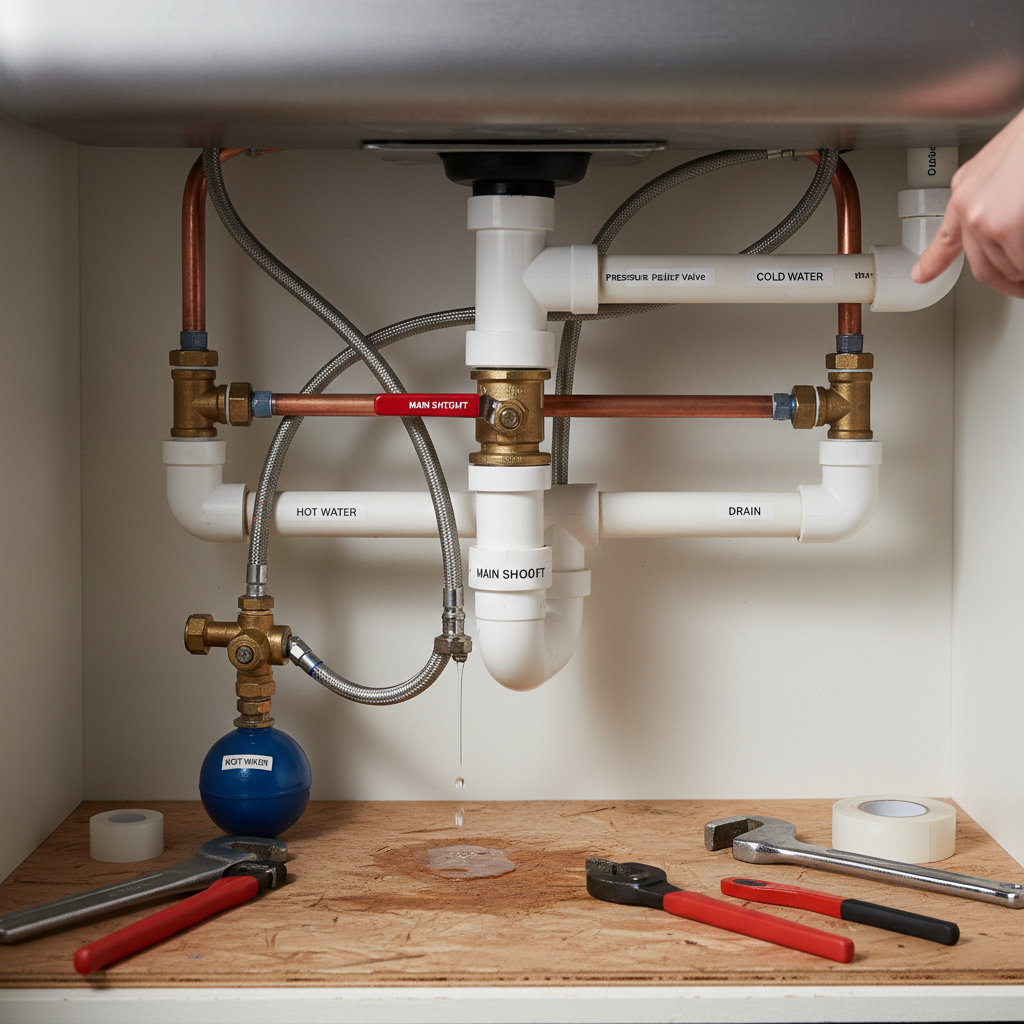
- Supply — pressurized water from the meter or well to every fixture, split into hot and cold at the water heater.
- Drain, waste, and vent — gravity carries used water out; vent pipes let air in so drains don't gurgle or siphon traps dry.
- Fixtures and appliances — toilets, sinks, tubs, the dishwasher, the washing machine, and the water heater.
Plumbing · Leak
| Project category | Plumbing |
|---|---|
| Problem type | Leak |
| Trade required | Plumbing |
| Urgency | Emergency — act now |
| Safety risk | High safety risk |
| DIY suitability | DIY for experienced homeowners |
| Cost category | Low cost |
| Typical timeline | Shut water off now; repair usually same or next day |
| Contractor type | Licensed plumber |
Repair option
Isolate at the shutoff, replace the failed component, and dry the cavity fully.
Replacement option
Repipe the run or the branch when corrosion is widespread.
Common causes
- Failed supply line or shutoff valve
- Worn washers, cartridges, or P-trap connections
- Pinhole corrosion in older copper
Relevant tools:emergency checklistdiy or hire a pro
Published September 4, 2026Last updated September 4, 2026
Tools & materials you'll need
Affiliate linksNo materials required.
As an Amazon Associate FixlyGuide earns from qualifying purchases — at no extra cost to you. Prices and availability are accurate as of publication and subject to change.
Quick Answer
Plumbing problems are cheap when they're small and ruinous when they're ignored. The three things every homeowner should know: where the main shutoff is, how to read the water meter, and which symptoms mean shut it off right now rather than wait for a weekday appointment.
How the System Is Laid Out
Every house has three plumbing systems overlapping:
- Supply — pressurized water from the meter or well to every fixture, split into hot and cold at the water heater.
- Drain, waste, and vent — gravity carries used water out; vent pipes let air in so drains don't gurgle or siphon traps dry.
- Fixtures and appliances — toilets, sinks, tubs, the dishwasher, the washing machine, and the water heater.
Most emergencies are supply-side, because supply lines are pressurized 24 hours a day.
Find Your Shutoffs Today
- Main shutoff — usually where the supply enters the house, near the water heater, in a garage, or in a meter box near the street. Turn it fully off and back on once a year so it doesn't seize.
- Fixture stops — small valves under sinks and behind toilets. These let you isolate one fixture instead of the whole house.
- Water heater shutoff — on the cold inlet above the tank.
Tag them. Show everyone in the house. This single step is the highest-return thing in this guide.
The Ten-Minute Leak Test
- Turn off every fixture and appliance that uses water.
- Read the water meter, including the small leak-detection dial.
- Wait 30 minutes without using any water.
- Read it again.
Any movement means water is going somewhere it shouldn't. Combine that with an unexplained bill jump, a warm spot on a slab floor, or the sound of running water in a quiet house, and treat it as an active leak.
Symptoms and What They Usually Point To
| Symptom | Common causes | Urgency |
|---|---|---|
| Low pressure at one faucet | Clogged aerator or fixture stop | DIY |
| Low pressure whole house | Main valve, pressure regulator, corroded piping, leak | Same week |
| Toilet runs constantly | Flapper or fill valve | DIY |
| Slow drain in one fixture | Local clog or hair in the trap | DIY |
| Multiple drains slow at once | Main line blockage | Prompt |
| Sewage backing up | Main line blockage or failure | Call now |
| Water stain on ceiling below a bathroom | Supply or drain leak above | Prompt |
| Meter spinning with everything off | Hidden or slab leak | Shut off main, call now |
Maintenance That Prevents Big Bills
- Replace rubber washing-machine hoses with braided stainless every 5 years.
- Drain a few gallons from the water heater annually to reduce sediment.
- Keep hair catchers in showers rather than pouring chemicals down drains.
- In freezing weather, insulate exposed pipes and let a trickle run on exterior walls.
- Check under every sink twice a year — a flashlight and a dry paper towel find leaks early.
When to Stop and Call a Pro
Gas water heater work, sewer line work, repiping, and anything behind a wall belongs to a licensed plumber. Aerators, flappers, supply hoses, and a plunger are safely yours. If you can't stop water from entering a space, shut the main off first and call second.
Find a Pro Through Fixly Guide
If the next step is a professional, don't start with a phone book. Start with a diagnosis and a short list.
- Find a local pro — pick your trade and ZIP code to see vetted contractors serving your area.
- DIY or hire a pro? — a two-minute check that tells you which jobs are safe to handle yourself.
- Repair or replace? 12 expensive home decisions — how to judge a big-ticket quote.
- Home problem guides — start with the symptom, get likely causes and safety guidance.
- 15 house problems you shouldn't ignore — warning signs homeowners get used to.
Fixly Guide provides educational guidance only. Nothing here is a professional diagnosis or an inspection.
What should this project cost?
Enter your project details for a realistic cost range before you call anyone.
Common repairs run $150–$650; repipes and water-heater replacements reach $1,500–$4,500.
- Regional adjustment
- National average
- Labor share (typical)
- ~$754
- Quotes to collect
- 3 written estimates
Educational estimate based on national averages — not a binding quote. Always confirm with written local estimates.
Fixly Project Decision Box
- DIY difficulty
- Moderate
- Estimated time
- 30 minutes – half a day
- Cost level
- Moderate
Main tools / materials
- Adjustable wrench
- Plunger or drain auger
- Bucket and towels
- Thread tape
When to stop and call a pro
- Water you cannot shut off at the fixture or main
- Sewage backing up into more than one fixture
- Water near electrical panels or outlets
- Gas water heater work beyond relighting a pilot
Need professional help?
Get a Licensed PlumberFrequently asked questions
Where is my main water shutoff valve?+
Usually where the water line enters the house — near the water heater, in a garage or basement, or in a meter box near the street. Find it and test it before an emergency.
How do I know if I have a hidden water leak?+
Shut off all water use, read the meter, wait 30 minutes and read again. Movement means water is escaping somewhere. Unexplained bill increases and warm spots on a slab floor are other signs.
Why is my water pressure low all of a sudden?+
A sudden whole-house drop usually points to a valve, the pressure regulator, or a supply-side problem such as a leak. Low pressure at a single fixture is almost always the aerator or its shutoff.
Are chemical drain cleaners safe to use?+
Repeated use can damage older pipes and makes a plumber’s job more hazardous. Mechanical clearing with a plunger or drain snake is generally the better first step.
Discussion
Loading comments…