- Unexplained increase in water usage
- Sound of running water when fixtures are off
- Damp flooring or wet drywall
- Unexplained ceiling stains
- Meter movement when water shouldn't be running
Plumbing · Leak
| Project category | Plumbing |
|---|---|
| Problem type | Leak |
| Trade required | Plumbing |
| Urgency | Emergency — act now |
| Safety risk | High safety risk |
| DIY suitability | DIY for experienced homeowners |
| Cost category | Low cost |
| Typical timeline | Shut water off now; repair usually same or next day |
| Contractor type | Licensed plumber |
Repair option
Isolate at the shutoff, replace the failed component, and dry the cavity fully.
Replacement option
Repipe the run or the branch when corrosion is widespread.
Common causes
- Failed supply line or shutoff valve
- Worn washers, cartridges, or P-trap connections
- Pinhole corrosion in older copper
Relevant tools:emergency checklistdiy or hire a pro
Published September 21, 2026
Tools & materials you'll need
Affiliate links- AmazonSmall bowl or towelFor catching water while checking an aerator
As an Amazon Associate FixlyGuide earns from qualifying purchases — at no extra cost to you. Prices and availability are accurate as of publication and subject to change.
You turn on the shower.
Instead of the strong stream you're used to, you get something that feels more like a drizzle.
Then someone turns on the kitchen faucet and the shower gets even weaker.
Or maybe you've noticed something stranger: your water pressure was perfectly normal yesterday—and suddenly it isn't.
Low water pressure can be nothing more than an annoying clogged faucet screen. But sometimes it's your home's way of telling you something has changed in the plumbing system.
A pressure regulator can fail. A valve can be partially closed. Pipes can become restricted. A water supply line can develop a leak.
That's why the first Fixly Guide rule is:
Don't start replacing things until you know where the problem is.
The fastest way to narrow down low water pressure isn't asking “How do I increase my water pressure?” It's asking: “Where is the pressure low?”
That one question can eliminate a surprising number of possibilities.
First: Is It One Faucet or the Entire House?
Before touching anything, perform a simple test. Check several fixtures:
- Kitchen faucet
- Bathroom faucet
- Shower
- Another bathroom
- Outdoor faucet
Test both hot and cold water. You're looking for a pattern.
Only one faucet is weak
The problem is probably near that fixture. Possible causes include a clogged aerator, mineral buildup, a partially closed supply valve, or a faucet cartridge problem.
Only one shower is weak
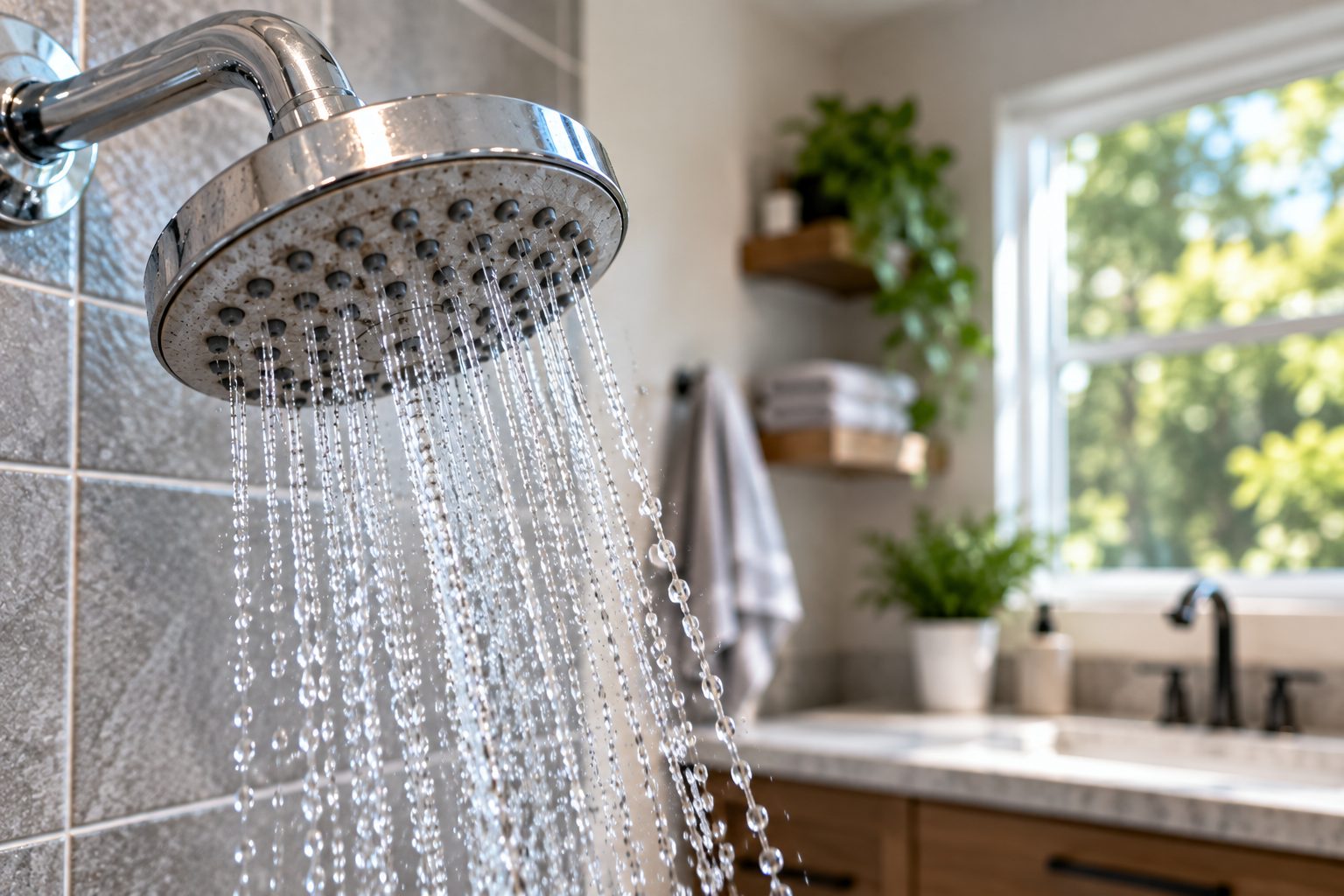
Start with the showerhead. Mineral deposits can gradually clog the small openings.
Hot water is weak but cold water is normal
Now your water heater or hot-water plumbing becomes more relevant.
Every fixture is weak
That's different. A whole-house pressure problem can point toward the main shutoff, pressure regulator, supply line, restricted piping, or municipal water supply.
And there's another clue that matters: did it happen gradually—or suddenly? Pressure that slowly worsens over years is different from pressure that suddenly changes overnight. Something changed. Now let's find it.
1. Your Faucet Aerator Is Clogged
Start with the cheap possibility. Look at the end of your faucet. There's usually a small screen called an aerator. Water passes through it before leaving the faucet.
Over time it can collect mineral deposits, sediment, rust particles, and small debris. Eventually, water can't move through it as easily. The result can feel exactly like low water pressure.
Here's the clue: if the kitchen faucet is weak but everything else works normally, don't start worrying about your home's main plumbing. Start at the kitchen faucet.
Depending on the fixture, removing and cleaning or replacing the aerator may solve the problem. This is particularly worth checking in areas with mineral-rich water.
2. Your Showerhead Has Mineral Buildup
Your shower can develop the same problem. Look closely at the spray nozzles. Do some holes barely produce water? Is the spray uneven? Do streams shoot sideways?
Mineral deposits can gradually restrict the showerhead. Before assuming your entire house has bad pressure, compare the shower with a nearby sink.
If the sink has strong flow but the shower doesn't, you've learned something important. The problem may be the shower—not the house.
3. A Shutoff Valve Isn't Completely Open
This one is surprisingly easy to overlook. Your home has multiple water shutoff valves.
If someone recently repaired plumbing, replaced a fixture, worked on the water heater, shut off the home's water, or performed remodeling work, a valve may not have been completely reopened.
A partially closed main valve can restrict water throughout the house. Individual fixture valves can create the same symptom at a single sink or toilet.
Important: Don't aggressively force an old, corroded, or seized valve. An aging valve that hasn't moved in years can create a much bigger problem if damaged. If something doesn't move normally, that's a good place to stop.
4. Your Pressure Regulator May Be Failing
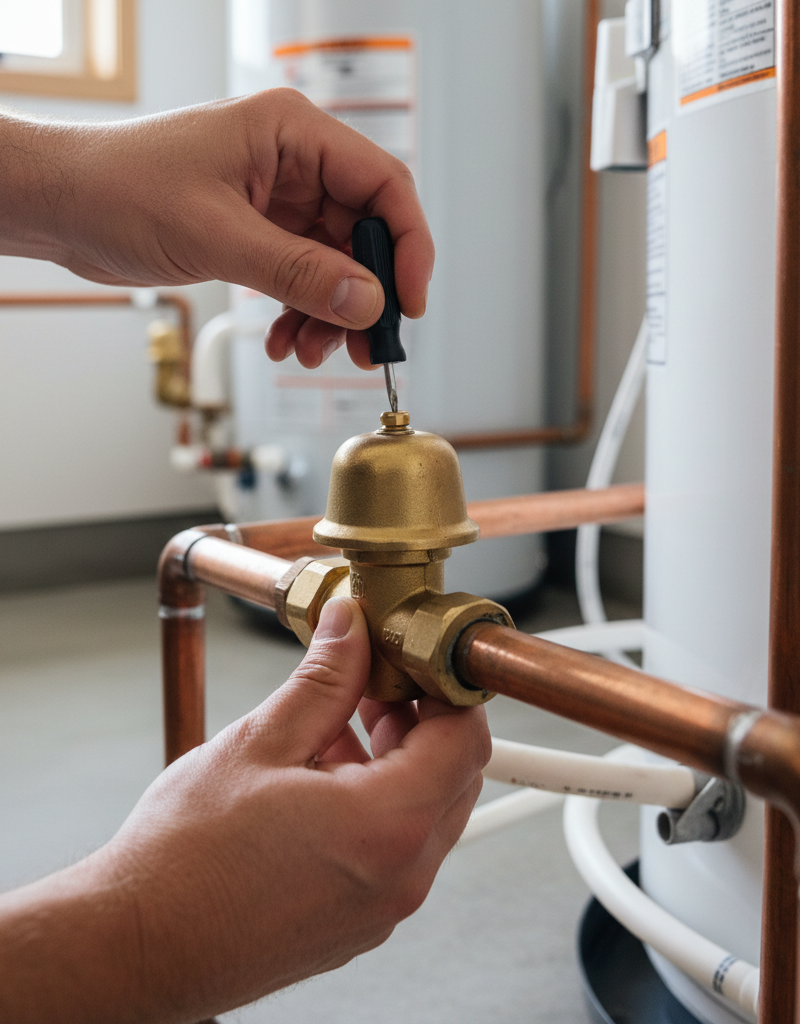
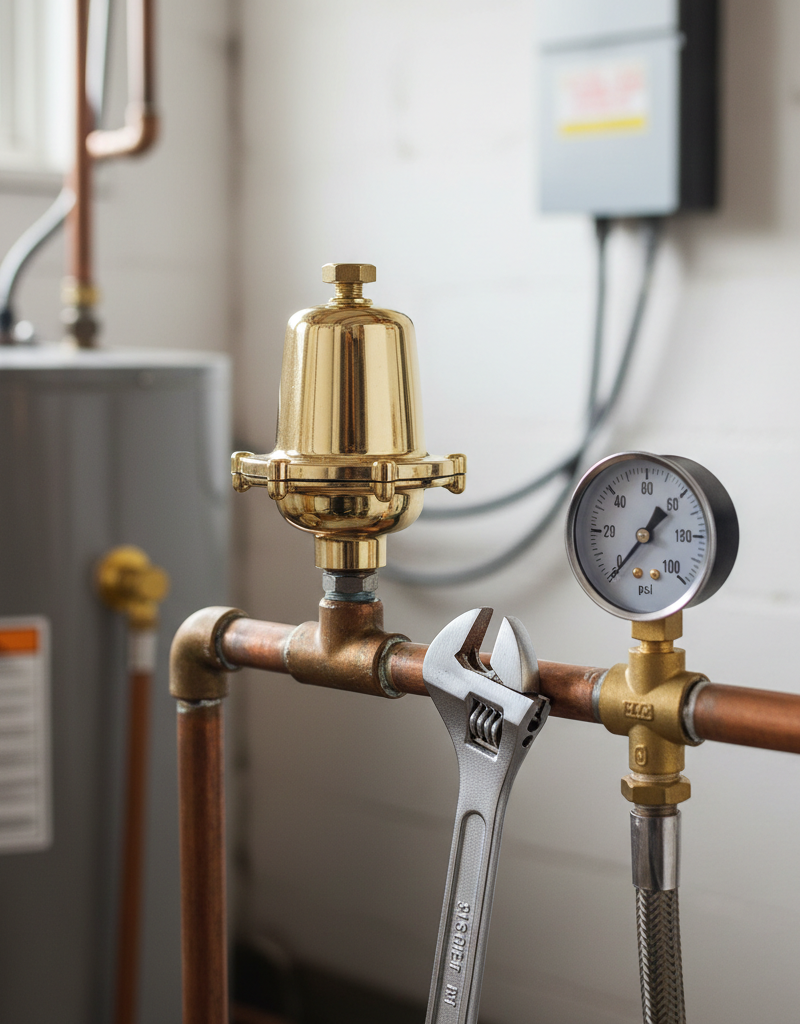
Some homes have a pressure-reducing valve, often called a PRV. Its job is basically what its name suggests: it regulates incoming water pressure before that water travels through your house.
When it isn't operating properly, homeowners may experience low pressure throughout the house, unusually high pressure, inconsistent pressure, or noticeable pressure fluctuations.
If every fixture suddenly behaves differently while neighboring homes don't have the same issue, the regulator becomes one possibility worth investigating. A plumber can test the system rather than guessing whether the regulator needs adjustment or replacement.
5. Your Neighborhood May Have Low Pressure
Here's another reason not to immediately start repairing your house. The problem might not be your house.
Municipal systems can experience temporary pressure changes because of water-main repairs, main breaks, system maintenance, firefighting activity, unusual demand, or other supply interruptions.
Try something incredibly sophisticated: ask your neighbor, “Is your water pressure low too?”
If several nearby homes suddenly have the same problem, that's valuable information. Check your water utility's current service alerts as well. If everyone has low pressure, calling a plumber to replace components inside your home probably isn't the first move.
6. There Could Be a Hidden Water Leak
This is where low water pressure deserves more attention. A significant leak can allow water to escape before it reaches your fixtures. But low pressure alone does not prove you have a leak.
Look for additional evidence:
- Unexplained increase in water usage
- Sound of running water when fixtures are off
- Damp flooring or wet drywall
- Unexplained ceiling stains
- Wet areas in the yard
- Foundation-area moisture
- Meter movement when water shouldn't be running
One symptom gives you a question. Several symptoms give you a pattern. A sudden whole-house pressure change combined with evidence of unexplained water use deserves prompt investigation. Our guide to finding a hidden leak behind a ceiling or wall explains what to look for next.
7. Older Pipes May Be Restricted
Pipes don't necessarily remain the same inside forever. Older galvanized steel piping, in particular, can corrode internally. The pipe might look reasonably normal from the outside while the usable opening inside becomes increasingly restricted.
Think of it like this: a pipe might originally have plenty of room for water. Years of corrosion and buildup can gradually reduce that space. Less usable space means restricted flow.
One clue is that the problem has been getting progressively worse rather than suddenly appearing. Older homes with aging plumbing may eventually require a professional assessment to determine whether isolated repairs or larger-scale pipe replacement makes sense.
But don't jump immediately to “I need to repipe my entire house.” Remember our rule: diagnose first. Spend second.
8. Your Water Heater Could Be Involved
Here's an important diagnostic question: is the problem only happening with hot water?
Turn on cold water. Then hot. Compare them.
If cold-water flow seems normal throughout the house but hot-water flow is consistently weak, your troubleshooting changes. Possible causes can involve water-heater valves, sediment or mineral accumulation, restrictions in hot-water piping, or other water-heater-related plumbing issues.
This is another reason homeowners should test hot and cold separately instead of simply saying, “My house has low pressure.”
9. Several Fixtures Are Being Used at Once
Try this experiment. Turn on the shower and notice the flow. Now have someone run another shower, start the washing machine, or open another faucet. Does your shower suddenly become dramatically weaker?
Every plumbing system has a finite capacity. If pressure problems mainly appear when multiple fixtures operate simultaneously, the issue may involve system capacity, restrictions, or supply conditions rather than one defective showerhead.
This pattern is especially useful information to give a plumber. Instead of saying, “My water pressure is bad,” you can say, “The pressure is normal with one fixture running, but drops significantly whenever two fixtures operate.” That's much more useful diagnostic information.
10. There May Be a Problem With the Main Supply Line
You've checked the obvious things. Aerators are clean. Showerheads are fine. Valves appear open. Neighbors have normal pressure. But your entire house still doesn't.
At that point, the problem may be farther upstream. Possible issues can include pressure-regulator problems, supply-line restrictions, damaged service piping, aging plumbing, or hidden leaks.
Those aren't problems homeowners should solve by randomly adjusting valves or digging up the yard. It's time for proper diagnosis.
The 10-Minute Low-Water-Pressure Test
Before calling anyone, collect some information.
- Check multiple faucets. Determine whether the problem is isolated or throughout the house.
- Compare hot and cold. This can help determine whether the hot-water system is involved.
- Remove and inspect one aerator. If one faucet is weak, check the simplest restriction first.
- Check whether anything recently changed. Did plumbing work just happen? Was the water recently shut off? Did pressure suddenly change? Was construction happening nearby? Did your water bill change? Did someone work around the main valve?
- Ask a neighbor. This can quickly separate a neighborhood supply problem from a house-specific problem.
- Look for leak evidence. Don't tear walls apart. Simply observe and listen for anything unusual.
- Document the pattern. Note whether it affects one fixture or all fixtures; hot, cold, or both; whether it was sudden or gradual; constant or intermittent; worse when multiple fixtures run; and whether neighbors are affected.
You just gave a plumber significantly better information.
What About Testing Water Pressure?
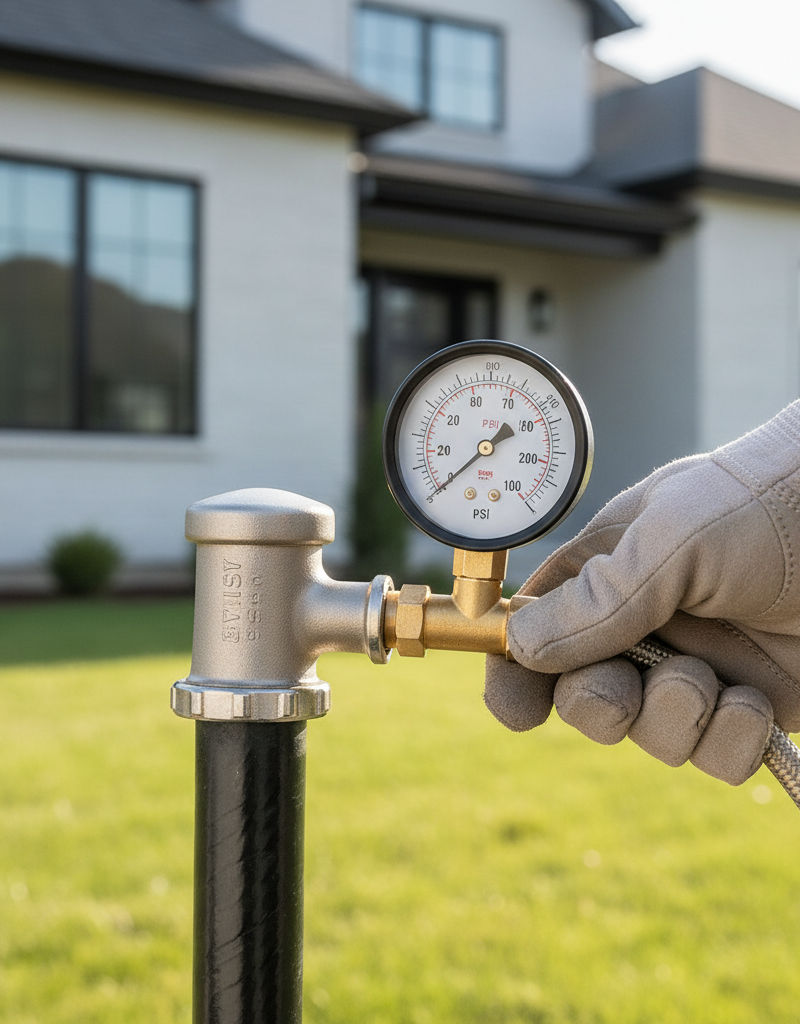
A basic water-pressure gauge that connects to an appropriate hose bib can give homeowners useful information.
Residential pressure commonly falls somewhere around 40–80 psi, although appropriate pressure depends on the plumbing system and local requirements; pressure above 80 psi generally requires regulation under common plumbing-code practice.
But don't turn one reading into your own diagnosis. A measurement is evidence. It's not necessarily the answer.
And don't start randomly adjusting a pressure regulator because you watched a 45-second video. Too much pressure can also damage plumbing components.
When Should You Call a Plumber?
Consider professional diagnosis when:
- Pressure suddenly dropped throughout the house
- You suspect a hidden leak
- The water meter indicates unexplained usage
- Pressure remains low after basic fixture checks
- Your pressure regulator may be malfunctioning
- Older pipes appear heavily corroded
- The main valve is damaged or difficult to operate
- Only hot-water flow is severely restricted
- You see water damage
- You're unsure what's causing the change
If you discover substantial uncontrolled leaking, know how to shut off your home's main water supply and take appropriate steps to limit additional water damage.
Don't Make This Expensive Mistake
A homeowner notices low pressure. Someone tells them, “You need new pipes.” Another person says, “It's definitely your regulator.” Someone online says, “You need a booster pump.”
Maybe. Maybe not.
The correct question isn't “What expensive thing should I install?” It's “Why did my water pressure change?”
A clogged aerator and deteriorated whole-house piping can create a similar complaint. They obviously aren't the same repair. That's why good troubleshooting starts with the pattern.
Questions to Ask a Plumber About Low Water Pressure
- Is the pressure actually low, or is the water flow restricted? Those aren't necessarily the same issue.
- Is this affecting the entire house or only certain fixtures? You may already know the answer from your testing.
- What pressure reading did you get? Ask for the measurement.
- What do you believe is causing the problem? The diagnosis matters more than the sales pitch.
- What evidence points to that cause? This is one of the best questions homeowners can ask any contractor.
- Is there a smaller repair we should rule out before considering a larger replacement? That's the Fixly Guide mindset.
Frequently Asked Questions
Why did my water pressure suddenly get low?
A sudden change can result from a supply interruption, partially closed valve, regulator issue, leak, or another restriction. Check whether the problem affects one fixture or the whole house and whether neighbors are experiencing it before assuming the cause.
Why is the water pressure low in only one faucet?
A clogged aerator, fixture cartridge, or partially closed supply valve may be responsible.
Why is my shower pressure low but my sinks are fine?
The showerhead itself may be restricted by mineral buildup or debris.
Why is only my hot-water pressure low?
That pattern can point toward the water heater, its valves, or restrictions in the hot-water side of the plumbing system.
Can a water leak cause low pressure?
A sufficiently significant leak can contribute to pressure loss, particularly when accompanied by other clues such as unexplained water usage, meter movement, or visible moisture.
Should I install a water-pressure booster?
Not until you understand why the pressure is low. A booster doesn't fix a clogged fixture, hidden leak, partially closed valve, or failing regulator.
The Fixly Guide Rule
When something in your house changes, don't immediately assume the worst. But don't ignore it either.
Follow the evidence:
- One faucet or the whole house?
- Hot or cold?
- Sudden or gradual?
- Constant or only when several fixtures are running?
- Just your house or the whole neighborhood?
Those answers can turn “My water pressure is terrible” into “I know where the problem is likely coming from and what I need to do next.”
And that's exactly what Fixly Guide is designed to help homeowners do.
Something changed. Find out why.
If you've already checked the basics and your home's water pressure is still unusually low, find a qualified plumber who can test the system and identify the cause before you spend money replacing the wrong thing.
Homeowners: Has your house ever suddenly lost water pressure? What caused it?
Plumbers: What's the most common low-water-pressure problem you find that homeowners could have spotted earlier?
Follow Fixly Guide for more home tips, repair costs, DIY guidance, contractor advice, and warning signs that can help you catch problems before they become expensive.
What should this project cost?
Enter your project details for a realistic cost range before you call anyone.
Common repairs run $150–$650; repipes and water-heater replacements reach $1,500–$4,500.
- Regional adjustment
- National average
- Labor share (typical)
- ~$754
- Quotes to collect
- 3 written estimates
Educational estimate based on national averages — not a binding quote. Always confirm with written local estimates.
Fixly Project Decision Box
- DIY difficulty
- Moderate
- Estimated time
- 30 minutes – half a day
- Cost level
- Moderate
Main tools / materials
- Adjustable wrench
- Plunger or drain auger
- Bucket and towels
- Thread tape
When to stop and call a pro
- Water you cannot shut off at the fixture or main
- Sewage backing up into more than one fixture
- Water near electrical panels or outlets
- Gas water heater work beyond relighting a pilot
Need professional help?
Get a Licensed PlumberFrequently asked questions
Why did my water pressure suddenly get low?+
A sudden change can result from a supply interruption, partially closed valve, regulator issue, leak, or another restriction. Check whether the problem affects one fixture or the whole house and whether neighbors are experiencing it before assuming the cause.
Why is the water pressure low in only one faucet?+
A clogged aerator, fixture cartridge, or partially closed supply valve may be responsible.
Why is my shower pressure low but my sinks are fine?+
The showerhead itself may be restricted by mineral buildup or debris.
Why is only my hot-water pressure low?+
That pattern can point toward the water heater, its valves, or restrictions in the hot-water side of the plumbing system.
Can a water leak cause low pressure?+
A sufficiently significant leak can contribute to pressure loss, particularly when accompanied by unexplained water usage, meter movement, or visible moisture.
Should I install a water-pressure booster?+
Not until you understand why the pressure is low. A booster does not fix a clogged fixture, hidden leak, partially closed valve, or failing regulator.
Discussion
Loading comments…