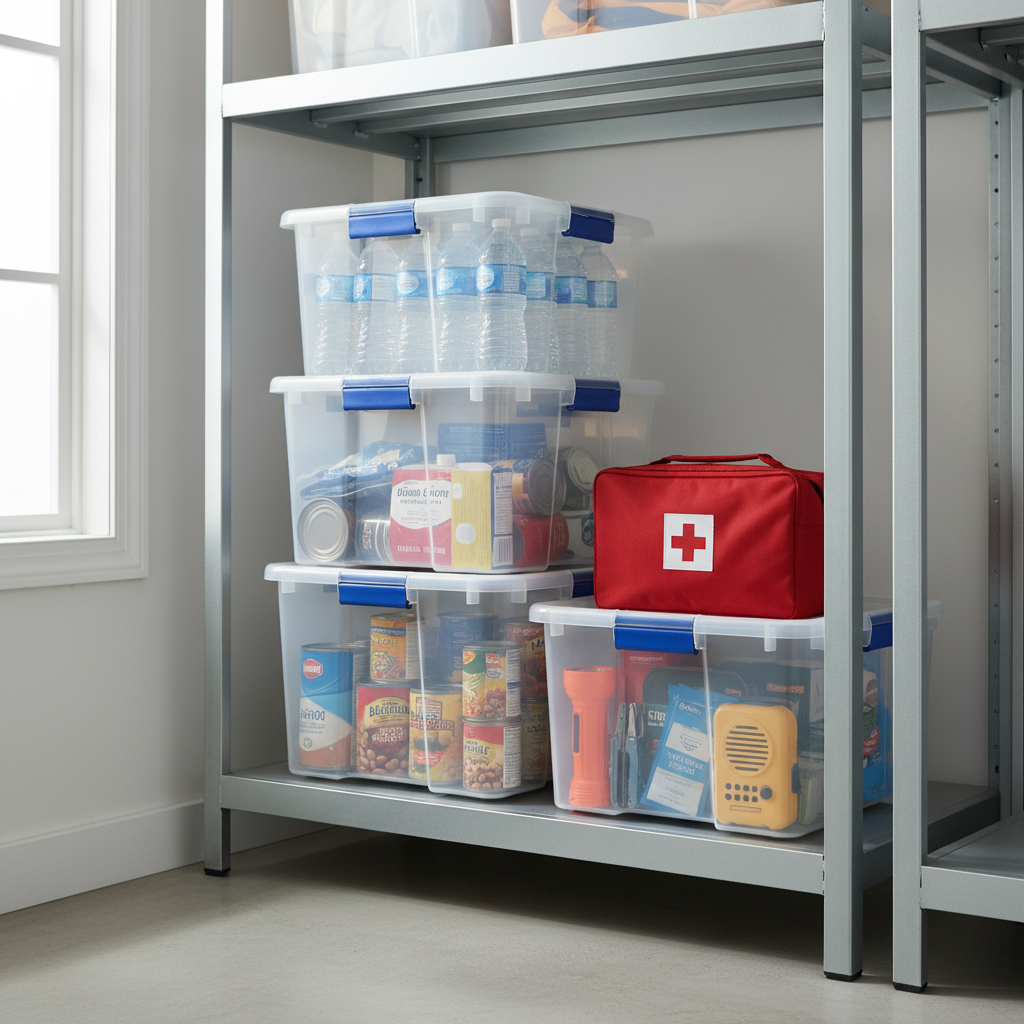
- Assess Your Family's Needs — Before gathering supplies, list the specific needs of each family member, including pets.
- Consider: Medications, dietary restrictions, baby formula, pet food, and any special medical equipment.
- Tip: Include comfort items like books, games, or small toys for children to reduce stress.
Published July 20, 2026Last updated August 17, 2026
Tools & materials you'll need
Affiliate links- AmazonPlastic storage bins2-3, 20-gallon
- AmazonBottled water1 gallon per person per day for 3-7 days
- AmazonNon-perishable food3-7 days' supply · Canned goods, energy bars, dried fruit
- AmazonFirst-aid kitComprehensive, beyond basic items
- AmazonAA/AAA batteriesMultiple packs
- AmazonWhistle
- AmazonDuct tape
As an Amazon Associate FixlyGuide earns from qualifying purchases — at no extra cost to you. Prices and availability are accurate as of publication and subject to change.
Quick Answer
Preparing for extreme weather is critical for every homeowner. A well-assembled emergency kit, costing around $75 for essential items, provides the necessary provisions to safeguard your family and property when disaster strikes. Focus on water, food, first-aid, and communication, and store it for quick access, away from potential flood zones.
The Problem
When hurricanes, blizzards, floods, or earthquakes strike, essential services like power, water, and even cellular networks can be disrupted for days, sometimes weeks. These interruptions turn everyday necessities into urgent challenges. Supermarkets may be closed, roads impassable, and emergency services overwhelmed. Without proper preparation, homeowners can find themselves without clean water, food, light, communication, or medical supplies, leading to heightened anxiety, discomfort, and even danger during an already stressful period. Many homeowners underestimate the duration of these outages or the immediate scarcity of supplies, putting themselves and their families at significant risk when a catastrophic event occurs.
How It Works
An emergency kit functions as a self-contained lifeline, designed to sustain individuals and families for a minimum of 72 hours, though ideally up to a week or more, in conditions where external resources are unavailable. The effectiveness of a kit lies in its comprehensive nature, addressing the most immediate human needs: hydration, nutrition, shelter, medical care, communication, and light. For instance, a hand-crank radio provides vital weather alerts and news when electricity is out. A water filter can turn questionable water into potable water, extending limited supplies. First-aid supplies address minor injuries, preventing them from worsening into emergencies that would require overburdened professional medical attention. The kit works by anticipating common post-disaster scenarios—power outages, blocked roads, contaminated water, lack of communication—and providing practical solutions. Its "working" principle is simple: be proactive rather than reactive, ensuring that when a crisis hits, you have the immediate means to be self-sufficient and safe, buying precious time until professional help and infrastructure can recover.
Step-by-Step Fix
Here’s how to build and maintain an effective emergency kit for your home:
-
Assess Your Family's Needs — Before gathering supplies, list the specific needs of each family member, including pets.
- Consider: Medications, dietary restrictions, baby formula, pet food, and any special medical equipment.
- Tip: Include comfort items like books, games, or small toys for children to reduce stress.
-
Gather Essential Water Supplies — Water is the most critical item. Aim for at least one gallon per person per day for drinking and sanitation.
- Recommendation: Store commercially bottled water. Rotate it every six months.
- Alternative: Consider a portable water filter or purification tablets as a backup for non-potable sources.
-
Stock Non-Perishable Food — Choose foods that require no cooking, refrigeration, or special preparation.
- Examples: Canned goods (with a manual can opener), energy bars, dried fruit, nuts, and peanut butter.
- Check Dates: Rotate food items every 6-12 months to ensure freshness.
-
Assemble a Comprehensive First-Aid Kit — Go beyond basic band-aids. This kit should handle minor injuries and stabilize more serious ones.
- Include: Sterile gloves, antiseptic wipes, various bandage sizes, gauze, medical tape, pain relievers, allergy medicine, and any personal prescription medications (with doctor's note).
- Safety: Keep a first-aid manual or app handy for quick reference.
-
Secure Lighting and Power Sources — When the grid goes down, light and charging capabilities become vital.
- Essentials: Battery-powered flashlights (with extra batteries), headlamps, and crank or solar-powered lanterns.
- Power: A portable power bank for charging phones and a car charger can be crucial for communication.
-
Develop Communication Strategies — Plan how your family will communicate if cell towers are down or power is out.
- Tools: A NOAA weather radio (hand-crank or battery-powered) for alerts, and a whistle to signal for help.
- Plan: Designate an out-of-state contact person for family members to check in with.
-
Organize Important Documents — Keep copies of vital records safe and accessible.
- Documents: Identification, insurance policies, bank account records, and medical records.
- Storage: Store them in a waterproof, portable container or a password-protected USB drive.
-
Store Your Kit Strategically — The kit needs to be easy to access, even in the dark or if parts of your home are damaged.
- Location: Store in a sturdy, easy-to-carry container (like a plastic bin or backpack) in a readily accessible spot, such as a closet near an exit or a garage shelf. Avoid basements prone to flooding.
- Multiple Locations: Consider smaller, portable kits for cars or individual bags for evacuation.
-
Regularly Review and Update — An emergency kit is not a "set it and forget it" item.
- Frequency: Check your kit at least twice a year (e.g., when you change smoke detector batteries).
- Actions: Replace expired food/water, test batteries, update medications, and rotate clothing items if included.
Common Causes
The need for a robust emergency kit primarily stems from the unavoidable impacts of natural disasters. While a "cause" in the typical sense implies an actionable trigger, here it refers to the events that necessitate such preparation:
- Widespread Power Outages: Storms (hurricanes, ice storms, blizzards) can knock out power grids for extended periods, severing access to light, heating/cooling, and electronic communication.
- Contaminated or Unavailable Water Supply: Flooding can contaminate municipal water sources, and power outages can halt water treatment and pumping, making tap water unsafe or nonexistent.
- Blocked Roads and Inaccessible Emergency Services: After severe weather, downed trees, debris, or floodwaters can render roads impassable, isolating communities and delaying critical aid.
- Disrupted Supply Chains: Panic buying before a storm and damaged infrastructure after can quickly empty store shelves, making essential goods impossible to find for days or weeks.
- Communication Failures: Cell towers can be damaged or overwhelmed, landlines can go down, and internet services can be cut, leaving families without a way to contact loved ones or receive official alerts.
- Injuries and Medical Emergencies: Accidents are more common during and after disasters. With limited access to medical facilities, minor injuries can become serious if not treated promptly with a well-stocked first-aid kit.
Common Mistakes
- Underestimating Water Needs: Many homeowners only stock a small amount of bottled water. Mistake: Assuming tap water will always be safe or that enough will be delivered. Instead: Plan for one gallon per person per day for at least three days, ideally more, for drinking and basic hygiene.
- Ignoring Food Rotation: Storing non-perishables for years without checking expiration dates. Mistake: Your "emergency" food could be spoiled when you need it most. Instead: Mark expiration dates on items and rotate them out every 6-12 months, using older items in your regular pantry.
- Forgetting a Manual Can Opener: Relying solely on canned goods but having no way to open them if power is out. Mistake: Canned food is useless if you can
Related Articles
Keep troubleshooting with these hand-picked guides from FixlyGuide:
- The Hidden Reason Your GFCI Trips (and 7 Ways to Stop It) — A persistently tripping GFCI outlet is a safety warning, often indicating moisture, a faulty appliance, or a wiring problem that homeowners…
- The Hidden Reason Your GFCI Trips (and Why Most Homeowners Miss It) — A continuously tripping GFCI outlet is a safety warning, often signaling common but overlooked issues like moisture intrusion, appliance fa…
- The Hidden Reason Your GFCI Trips — And Why Most Homeowners Get It Wrong — A continuously tripping GFCI outlet is a safety warning, often indicating a problem like moisture, a faulty appliance, or a wiring issue th…
- The #1 Chainsaw Mistake That Wrecks Your Yard (and Your Back) — Avoid common chainsaw errors that lead to frustration, damage, and unnecessary physical strain.
- 7 Hidden Equity Drains Costing You Thousands Annually — Your home is an asset, but silent problems like minor leaks, poor insulation, and deferred maintenance can drain its value. Discover the se…
- That Drywall Hole Isn't Just Ugly, It's a Bat Signal — Learn the pro-approved method for patching drywall holes of any size. We cover the surprising science behind a lasting repair and common mi…
Should you do this yourself?
Answer five quick questions before you start. Safety outranks savings every time.
Your experience with work like this
How high do you have to work?
Does the job involve any of these?
Will it need a permit?
Specialty tools
Free and instant. Educational guidance only — not a quote, inspection, or professional diagnosis.
What should this project cost?
Enter your project details for a realistic cost range before you call anyone.
Cost depends heavily on which system turns out to be the source.
- Regional adjustment
- National average
- Labor share (typical)
- ~$1,620
- Quotes to collect
- 3 written estimates
Educational estimate based on national averages — not a binding quote. Always confirm with written local estimates.
Before you start
Check the difficulty, permits, and safety risk — then decide whether to call a pro.
- Estimate this projectGet a cost range for your scope and ZIP before you call anyone.Open
- Get local estimatesSend one request and compare written estimates from vetted pros.Open
Free, no signup required. Estimates are educational guidance, not a quote or an inspection.
Get the print-ready PDF of this guide
A clean, ad-free, printable version you can keep on your phone or pin to the workshop wall. Free with a FixlyGuide account.
- Print-optimized layout
- Tools, materials & every step included
- Saved to your account
This article was independently written by FixlyGuide based on the source topic.
Frequently asked questions
How much water do I need in an emergency kit?+
Aim for at least one gallon of water per person per day for a minimum of three days, covering both drinking and basic sanitation needs. Store commercially bottled water and consider purification methods as a backup.
What's the most important item in an emergency kit?+
While all components are crucial, water is the single most important item. A human can survive weeks without food but only days without water. Prioritize securing an adequate, safe water supply.
How often should I check my emergency kit?+
You should review and update your emergency kit at least twice a year. A good reminder is when you change the batteries in your smoke detectors. Check expiration dates, test batteries, and refresh items as needed.
Can I use tap water in my emergency kit?+
While you can store tap water in clean, food-grade containers, commercially bottled water is generally recommended due to its verified purity and sealed packaging. If using tap water, replace it every six months.
Discussion
Loading comments…