
- Missing or cracked shingles: These are obvious entry points for water.
- Curling shingles: Shingle edges that are curling up or down indicate aging and loss of material flexibility.
- Blistering or buckling: Raised areas suggest moisture trapped beneath shingles or issues with the underlying deck.
- Granule loss: Darker spots where granules have worn off, exposing the black asphalt. Excessive granules in gutters are a major red flag.
- Misaligned or loose shingles: Shingles that aren't lying flat or appear out of place can be susceptible to wind uplift.
General remodeling · Renovation planning
| Project category | General remodeling |
|---|---|
| Problem type | Renovation planning |
| Trade required | General contracting |
| Urgency | Planned project |
| Safety risk | Low safety risk |
| DIY suitability | Pro recommended |
| Cost category | Major investment |
| Typical timeline | Design and permitting often 2–4 months before work starts |
| Contractor type | General contractor |
Repair option
Phase the work and fix the building envelope first.
Replacement option
Full renovation with permits, design, and a general contractor.
Common causes
- Space no longer fits how the household lives
- Resale preparation
- Deferred maintenance stacking up
Relevant tools:project cost estimatorcompare quoteshome improvement material prices
Published May 23, 2026Last updated August 17, 2026
Tools & materials you'll need
Affiliate linksNo materials required.
As an Amazon Associate FixlyGuide earns from qualifying purchases — at no extra cost to you. Prices and availability are accurate as of publication and subject to change.
Quick Answer
Many common roof problems can be identified with a thorough inspection conducted entirely from the ground using a good pair of binoculars. Look for tell-tale signs such as missing or cracked shingles, curled shingle edges, excessive shingle granule loss visible in gutters, sagging or distorted roof lines, and damaged or overflowing gutters. Regular ground-level inspections can help you catch minor issues before they escalate into major, costly repairs.
The Problem
Your roof is your home's primary defense against the elements. Over time, exposure to sun, rain, wind, and hail takes a toll, causing wear and tear that can lead to leaks, structural damage, and diminished energy efficiency. Many homeowners assume roof inspections require dangerous climbs onto the roof itself, or they simply wait until a visible leak appears indoors, by which point the damage can be extensive and expensive to fix. The real problem is missing the early warning signs that your roof is deteriorating, signs that are often visible from the ground if you know what to look for.
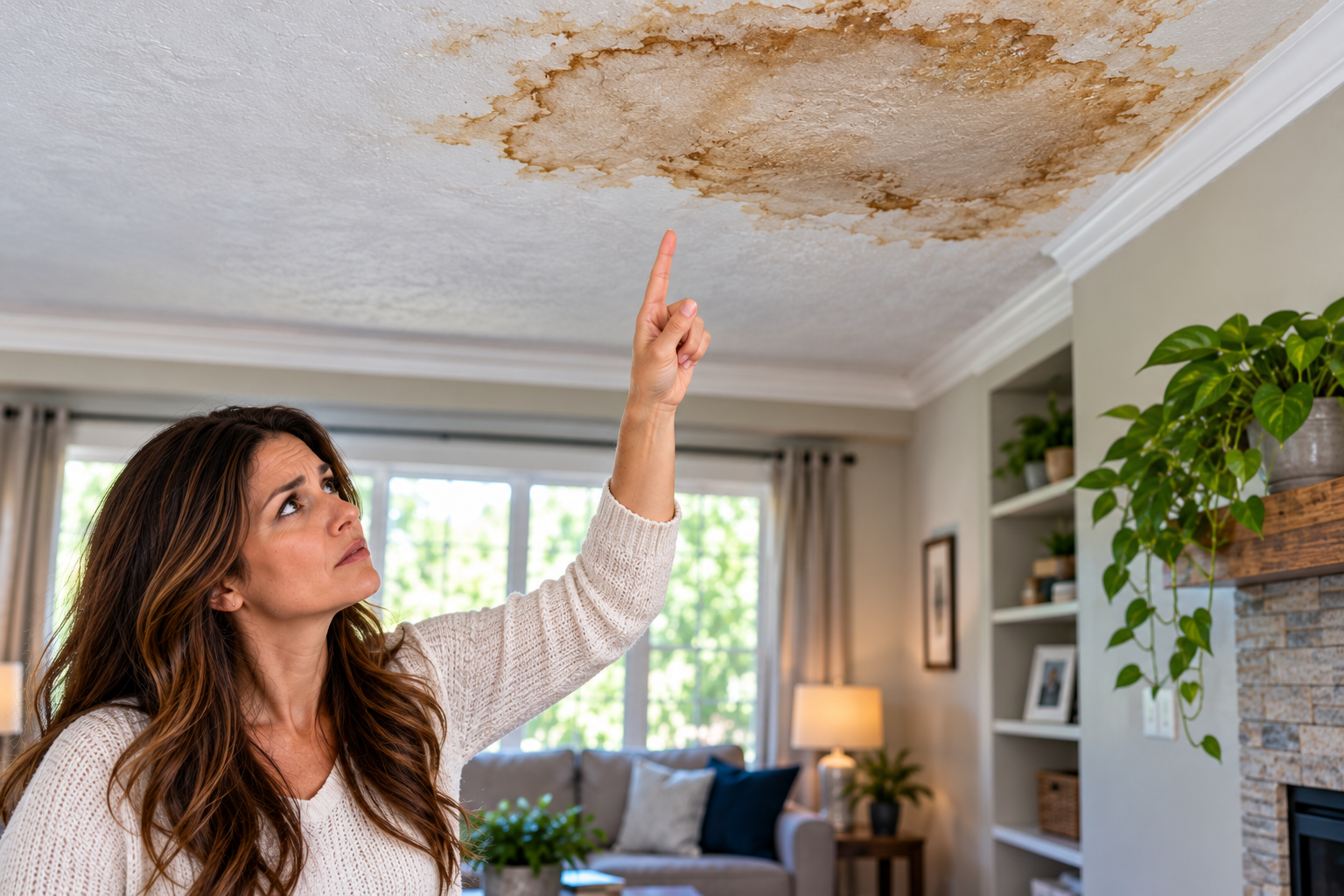
Ignoring these early indicators can lead to a cascade of issues. A small crack or missing shingle can allow water to penetrate the underlayment, rotting wooden sheathing, compromising insulation, and eventually staining ceilings or walls inside your home. This not only creates an unsightly mess but can also foster mold growth, impact indoor air quality, and even weaken the structural integrity of your home. Proactive ground-level inspections empower you to identify these vulnerabilities early, allowing for timely repairs that prevent significant damage and extend your roof's overall lifespan.
How It Works
Understanding how your roof is constructed helps in identifying problems. A typical asphalt shingle roof consists of several layers, each playing a crucial role. First, the roof deck (often plywood or OSB) forms the structural base, nailed to the rafters. Over this, an underlayment (felt paper or synthetic material) provides a secondary barrier against water penetration, especially during heavy rain or if shingles are damaged. Then, starter shingles are applied along the eaves, followed by the main field of asphalt shingles, which are individual layers of asphalt-coated fiberglass mat topped with ceramic granules. These granules protect the asphalt from UV degradation and contribute to the shingle's fire rating and color.
Flashing—thin sheets of metal—is installed around features like chimneys, skylights, vents, and in valleys where two roof planes meet. Flashing diverts water away from these vulnerable penetration points. Ridge caps cover the peaks of the roof, providing a watertight seal. Gutters and downspouts, while not technically part of the roof structure, are integral to its performance, collecting and channeling rainwater away from the foundation. When any of these components fail due to age, weather, or improper installation, the entire system is compromised. Shingles can crack, curl, or lose granules, exposing the underlying asphalt to UV rays which accelerate deterioration. Flashing can rust, bend, or pull away, creating entry points for water. Gutters can clog, overflow, or detach, causing water to pool around the foundation or run down exterior walls. A ground-level inspection focuses on observing the visible signs of these failures from a safe distance.
Step-by-Step Fix
Safety First – Always choose a clear day with good visibility. Never attempt to climb onto your roof for routine inspection unless you are a trained professional with proper safety gear. Your goal is to identify issues from the ground.
1. Prepare Your Tools – Gather your binoculars, a notepad, and a camera or smartphone. A clear day with good lighting is essential for seeing details.
2. Walk the Perimeter – Begin by walking around your entire home, keeping a watchful eye on all roof planes. Observe the overall condition from different angles.
3. Scan for Sagging or Unevenness – Look along the roofline for any dips, sags, or unlevel sections. This can indicate structural deck damage or compromised rafters. Pay particular attention to the valleys and near the eaves.
4. Inspect Shingles with Binoculars – Systematically scan every square foot of the roof, focusing on shingles. Look for: * Missing or cracked shingles: These are obvious entry points for water. * Curling shingles: Shingle edges that are curling up or down indicate aging and loss of material flexibility. * Blistering or buckling: Raised areas suggest moisture trapped beneath shingles or issues with the underlying deck. * Granule loss: Darker spots where granules have worn off, exposing the black asphalt. Excessive granules in gutters are a major red flag. * Misaligned or loose shingles: Shingles that aren't lying flat or appear out of place can be susceptible to wind uplift.
5. Check Flashing and Vent Boots – Use binoculars to examine areas around chimneys, skylights, plumbing vents, and roof vents. Look for: * Rust or corrosion: On metal flashing. * Cracks or tears: In sealant around vent boots. * Lifted or loose flashing: Any separation from the roof surface. * Missing caulk or tar: Around penetration points.
6. Evaluate Gutters and Downspouts – Inspect these for: * Debris: Clogged gutters cause water to back up and overflow, leading to fascia damage and foundation issues. * Sagging or detachment: Gutters pulling away from the fascia indicate too much weight from debris/water or failing fasteners. * Dents or holes: Physical damage can impede proper water flow. * Excessive shingle granules: A significant amount of grit in gutters is a strong sign of advanced shingle wear.
7. Look Inside the Attic (If Accessible) – This step requires entering your home but is crucial. With a flashlight, look for: * Water stains or streaks: On the underside of the roof deck or rafters, indicating current or past leaks. * Mold or mildew: Especially in corners or near vent penetrations. * Damp insulation: A sign of a leaking roof. * Daylight: Any visible light penetrating the attic from the outside is a definite leak path.
8. Document Your Findings – Take photos of any suspicious areas. Note the location and type of damage. This documentation is invaluable if you need to call a professional for repairs or insurance claims.
9. If You Find Issues: Minor issues like a single cracked shingle can sometimes be patched by a handy homeowner with caution (if it
Related Articles
Keep troubleshooting with these hand-picked guides from FixlyGuide:
- The 5 Hidden Warning Signs Your Roof Is Failing (Before It's Too Late) — Learn to spot critical roof issues from the ground using binoculars, protecting your home from costly damage and extending your roof's life…
- The 9 Sneaky Signs Your Roof Is Failing (And How to Spot Them From the Ground) — Learn to spot critical signs of roof damage from the safety of the ground, potentially saving thousands in repairs.
- The 7 Critical Roof Flaws You Can Spot From Your Yard (Before They Cost You Thousands) — Learn how to spot critical roof damage from the safety of your yard, identifying issues like missing shingles and blocked gutters before th…
- The 3 Critical Mistakes Homeowners Make Inspecting Their Roof (From the Ground) — Learn how to spot damaging roof problems safely from the ground, avoiding common pitfalls and knowing exactly what to look for.
- The 5 Hidden Signs Your Soffit and Fascia Are Failing (Before It's Too Late) — Learn to identify the key signs of damaged soffit and fascia to prevent costly structural issues and protect your home's integrity.
- Did Wind Damage Your Roof? Find Out Before It's Too Late — High winds can inflict serious, yet subtle, damage to your roof. Learn to spot the hidden signs of wind damage from the safety of the groun…
Your seasonal maintenance checklist
The small jobs that prevent the expensive repairs. Tick them off — progress saves on this device.
Free, no signup. Skip anything that requires roof access or working near live electrical.
Estimate your own project cost
National averages are a starting point. Enter your details for a range that fits your house.
Roof replacement cost
- Per square (installed)$604 – $866
Add $500–$2,500 if decking is rotten and needs replacement. Storm damage may be covered by insurance.
Educational estimate only — always confirm with written local bids.
What should this project cost?
Enter your project details for a realistic cost range before you call anyone.
Spot repairs commonly run $400–$1,800; full replacement typically $9,000–$18,000 for an average home.
- Regional adjustment
- National average
- Labor share (typical)
- ~$2,948
- Quotes to collect
- 3 written estimates
Educational estimate based on national averages — not a binding quote. Always confirm with written local estimates.
Fixly Project Decision Box
- DIY difficulty
- Professional Recommended
- Estimated time
- Inspection 1–2 hours · repairs 1–3 days
- Cost level
- High
Main tools / materials
- Binoculars for a ground-level look
- Flashlight for attic checks
- Moisture meter
- Roofing cement (temporary patch only)
When to stop and call a pro
- Active leak near lights, fans, or any wiring
- Sagging, bulging, or water-filled ceiling
- Steep, wet, or two-story roof — do not climb it
- Storm or hail damage you plan to claim on insurance
Need professional help?
Free roof assessment first — no phone calls until you ask for them.
Get Local Roofing HelpDecide what your roof needs
Two minutes of questions turns "something is wrong up there" into a clear next step.
- Repair or replace your roof?Answer 10 questions about age, leaks, and damage to get a clear next step.Open
- Compare contractor quotesScore up to four bids on price, warranty, licensing, and timeline.Open
- Get local estimatesSend one request and compare written estimates from vetted pros.Open
Free, no signup required. Estimates are educational guidance, not a quote or an inspection.
Recommended for DIYers & woodworkers
Sponsored
The Top 20 Tools for Workshops of Any Budget
No stationary machines or power tools required — plus 3 fundamental tools that can't be bought at any price.
Get the free guide
Ted's Woodworking — The #1 Woodworking Resource
Detailed instructions, dimensioned drawings, materials & cutting lists, and 3D schematics for every skill level.
See the plansSponsored: links above are affiliate links. FixlyGuide may earn a commission on qualifying purchases — at no extra cost to you.
Frequently asked questions
How often should I inspect my roof from the ground?+
You should inspect your roof from the ground at least twice a year—ideally in the spring and fall—and after any major storm with high winds, heavy rain, or hail. This allows you to catch minor issues before they worsen.
What tools do I need for a ground-level roof inspection?+
The most important tool is a good pair of binoculars. You'll also want a notepad and pen or a smartphone for taking notes and photos, and a flashlight if you plan to check your attic.
Can I really see serious damage from the ground?+
Yes, many significant roof issues like missing or cracked shingles, widespread granule loss, sagging rooflines, and corroded flashing are clearly visible with a thorough ground-level inspection using binoculars. While it can't replace a professional up-close inspection, it's highly effective for early detection.
What's the most common sign of a failing roof?+
Beyond obvious leaks, excessive shingle granule loss is one of the most common and often overlooked signs of a failing asphalt shingle roof. If you see significant grit accumulating in your gutters or at the base of your downspouts, it indicates your shingles are losing their protective layer and nearing the end of their lifespan.
When should I call a professional for a roof inspection?+
Call a professional roofer if you identify significant damage from your ground-level inspection, such as multiple missing shingles, large areas of granule loss, structural sagging, or persistent leaks in your attic. Also, consider a professional inspection every 3-5 years, especially for roofs over 10 years old, for a closer look at areas difficult to assess from the ground.


Discussion
Loading comments…