
- Step Flashing: Used where a roof meets a vertical wall (like a dormer or chimney side). These are individual L-shaped pieces layered with shingles, ensuring water cascades down and over each piece.
- Valley Flashing: A long, V-shaped or W-shaped piece of metal installed in the valleys where two roof planes meet. This is a high-volume water channel, so robust, properly installed valley flashing is crucial.
- Apron Flashing: A single, L-shaped piece of flashing typically used at the base of chimneys or dormers, where the roof slopes away from the vertical element.
- Vent Pipe Flashing (or Boot Flashing): A rubber or metal cone-shaped piece that fits snugly around plumbing vent pipes, sealed to the roof deck and shingled around. The rubber collar is a common failure point due to UV degradation.
- Skylight Flashing: A specialized, multi-piece system designed to create a watertight seal around skylight frames. It typically includes sill flashing, step flashing, and head flashing, all working together.
Plumbing · Leak
| Project category | Plumbing |
|---|---|
| Problem type | Leak |
| Trade required | Plumbing |
| Urgency | Emergency — act now |
| Safety risk | High safety risk |
| DIY suitability | DIY for experienced homeowners |
| Cost category | Low cost |
| Typical timeline | Shut water off now; repair usually same or next day |
| Contractor type | Licensed plumber |
Repair option
Isolate at the shutoff, replace the failed component, and dry the cavity fully.
Replacement option
Repipe the run or the branch when corrosion is widespread.
Common causes
- Failed supply line or shutoff valve
- Worn washers, cartridges, or P-trap connections
- Pinhole corrosion in older copper
Relevant tools:emergency checklistdiy or hire a pro
Published May 13, 2026Last updated August 17, 2026
Tools & materials you'll need
Affiliate linksNo materials required.
As an Amazon Associate FixlyGuide earns from qualifying purchases — at no extra cost to you. Prices and availability are accurate as of publication and subject to change.
Quick Answer
Carefully inspecting your roof's flashing from the ground can save you thousands in potential water damage. Utilize a high-powered pair of binoculars to examine chimneys, skylights, plumbing vents, and roof valleys. Look for signs of corrosion, bent or lifted metal, missing caulk, or any gaps where water could penetrate. Early identification of these common issues allows for timely, targeted repairs before minor problems become major headaches.
The Problem
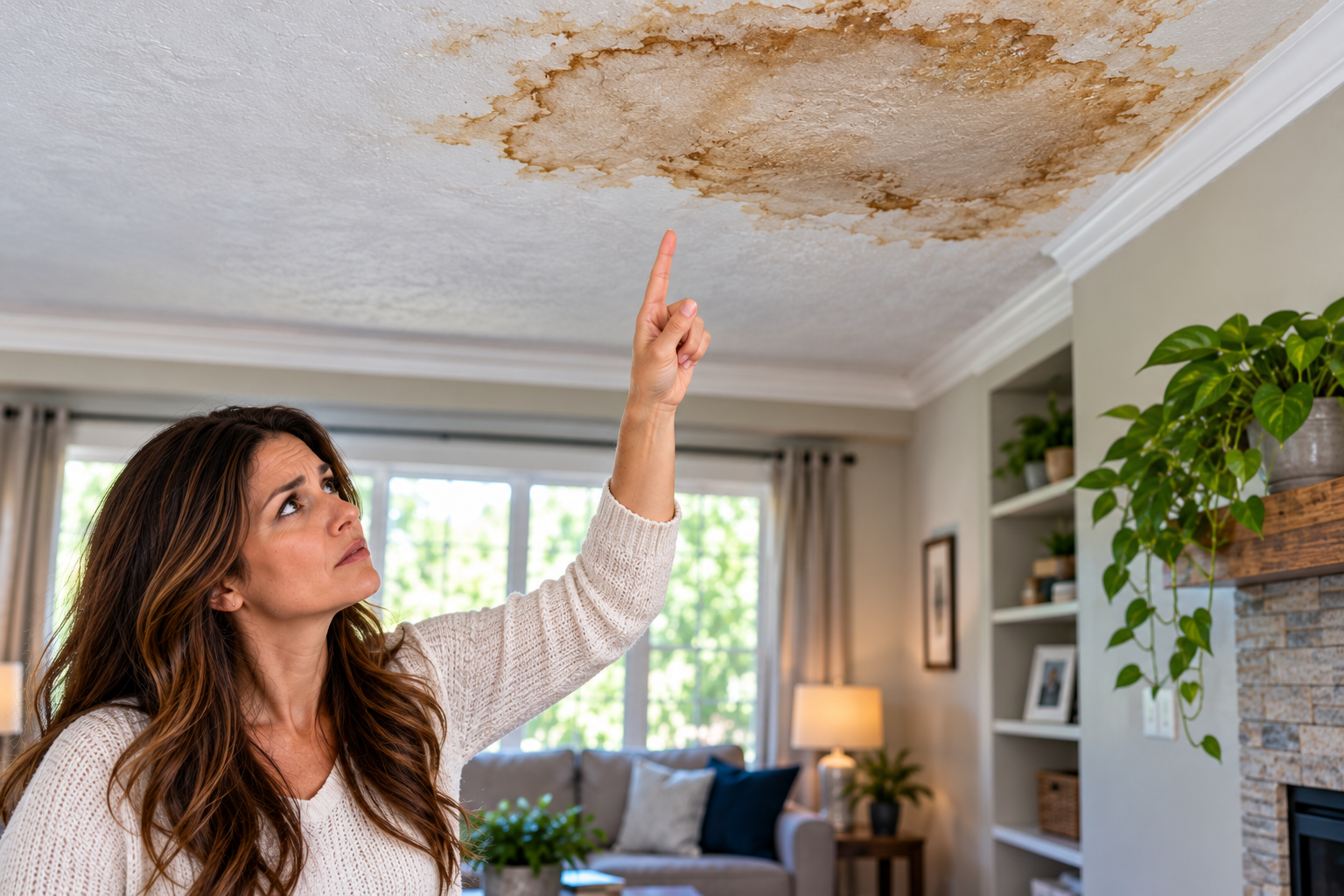
Many homeowners assume a roof leak means a problem with shingles. While shingle damage is a common culprit, the vast majority of roof leaks — especially in newer roofs — actually originate from failed or improperly installed flashing. Flashing is the thin, specialized material (usually metal like aluminum, copper, or steel) installed at critical junctures on your roof where two surfaces meet or where the roof intersects with vertical elements. These areas are inherently vulnerable to water intrusion. When flashing fails, water doesn't just drip; it often funnels directly into your attic, down wall cavities, and onto ceilings, causing extensive damage that can be expensive to repair. The challenge for many homeowners is that inspecting these areas often requires getting on the roof, which can be dangerous. This guide empowers you to conduct a thorough, ground-level inspection of your roof's most leak-prone flashing, helping you identify potential issues before they cause significant damage.
How It Works
Understanding how flashing works is key to knowing what to look for during your inspection. Flashing acts as a watertight seal, diverting water away from vulnerable points on the roof. Think of your roof as a giant shed, and flashing as the specialized rain gear for its joints and seams. There are several types of flashing, each designed for a specific purpose:
- Step Flashing: Used where a roof meets a vertical wall (like a dormer or chimney side). These are individual L-shaped pieces layered with shingles, ensuring water cascades down and over each piece.
- Counter Flashing: Often seen with step flashing, particularly around chimneys. It's a second piece of flashing installed above and over the step flashing, typically mortared into the chimney's masonry or integrated into the siding, creating an additional barrier.
- Valley Flashing: A long, V-shaped or W-shaped piece of metal installed in the valleys where two roof planes meet. This is a high-volume water channel, so robust, properly installed valley flashing is crucial.
- Apron Flashing: A single, L-shaped piece of flashing typically used at the base of chimneys or dormers, where the roof slopes away from the vertical element.
- Vent Pipe Flashing (or Boot Flashing): A rubber or metal cone-shaped piece that fits snugly around plumbing vent pipes, sealed to the roof deck and shingled around. The rubber collar is a common failure point due to UV degradation.
- Drip Edge Flashing: Metal stripping installed along the eaves and rake edges of the roof. It directs water off the roof and into the gutters (or away from the fascia if there are no gutters), protecting the edge of the roof deck and fascia board.
- Skylight Flashing: A specialized, multi-piece system designed to create a watertight seal around skylight frames. It typically includes sill flashing, step flashing, and head flashing, all working together.
The proper installation of flashing involves layering it correctly with shingles, using appropriate sealants (like roofing cement or high-quality caulk), and ensuring fasteners are not exposed to direct water flow. Any interruption in this integrated system—a bent piece, a cracked seal, or a missing shingle over a flashing piece—creates a direct pathway for water into your home's structure.
Step-by-Step Fix
While this guide focuses on identifying issues from the ground, addressing them often requires professional help. If you spot any of these issues, contact a qualified roofing professional for repair.
-
Safety First— Before you begin
- Safety is paramount. Never attempt to climb onto your roof, especially if you're uncomfortable with heights, the roof is wet, icy, or steeply pitched. This inspection is designed to be done from the ground. Use a sturdy ladder only if absolutely necessary to get a better vantage point on a lower roof section, and always have a spotter.
- Choose a clear day with good visibility. Overcast conditions can hide subtle damage.
-
Gather Your Tools— Preparation is key
- Binoculars: A good quality pair (e.g., 8–10x magnification) is essential for close-up views of flashing details. Invest in a pair with good low-light performance if possible.
- Digital Camera with Zoom: Take clear photos of any suspicious areas. This helps you track changes over time and share specific concerns with a roofing professional.
- Notebook and Pen: Document findings, including location, type of flashing, and suspected issue.
- Flashlight: Useful for peering into eaves or under overhangs if you have a lower roof section.
-
Start with the Chimney— A common leak culprit
- Scan the entire chimney base: Look for step flashing (individual pieces layered with shingles) and counter flashing (metal strips mortared into the chimney). Are all pieces straight and intact? Is the mortar around the counter flashing cracked or missing?
- Examine the apron flashing: This is the flat piece at the lowest point of the chimney, where it meets the roof. Is it rusted, bent, or lifted up? Is there any missing roofing cement or caulk where it meets the shingles?
- Check for rust or discoloration: These can indicate long-standing water issues.
- If this doesn't work: If the flashing appears fine but you suspect a chimney leak (e.g., water stains near the fireplace), the issue might be with the chimney cap, crown, or masonry itself, requiring a chimney sweep or masonry specialist.
-
Inspect Skylights— Water's easy entry point
- Circle the entire skylight frame: Inspect all sides where the skylight meets the roof. Look for the distinct pieces of skylight flashing (head flashing at the top, step flashing on the sides, and sill flashing at the bottom).
- Focus on seams and seals: Are the flashing pieces tightly sealed? Is there any cracking, peeling, or missing caulk or sealant around the glass or frame where it meets the flashing? Look for dark streaks below the skylight, indicating past or present water flow.
- If this doesn't work: If the skylight itself is old, the seals within the glass unit might have failed, causing condensation or leaks independent of the flashing.
-
Examine Vent Pipes— Rubber boots degrade over time
- Locate all plumbing, furnace, and exhaust vents: Each will have a rubber or metal 'boot' flashing around its base. Use your binoculars to get a close look.
- Check the rubber collar: This is the most common failure point. Look for cracks, tears, dry rot, or pieces missing from the rubber. The sun's UV rays cause this material to degrade over time. Is the boot itself still tightly sealed to the roof deck and pipe?
- Inspect the shingle overlap: Ensure shingles are properly layered over the top edge of the boot flashing, directing water over it, not underneath.
-
Scan Valleys— Water's superhighway
- Trace the lines of all roof valleys: These are the V-shaped channels where two roof sections meet. Valleys handle a large volume of water during rain.
- Look for exposed flashing: If your roof has open valleys, you'll see the metal flashing. Is it bent, corroded, or pulling away from the underlying roof deck? Are there any holes or punctures?
- Check for debris accumulation: Leaves, pine needles, and other debris can build up in valleys, trapping moisture and accelerating corrosion or even forcing water under shingles.
- If this doesn't work: In closed valleys (where shingles meet without exposed metal), look for any visible shingle damage, missing granules, or lifting edges in the valley line, which can indicate issues with the underlying flashing.
-
Review Drip Edges and Rake Edges— Often overlooked protection
- Walk along the perimeter of your house: Look up at the drip edge flashing along the eaves (the horizontal edges) and rake edges (the sloped edges) of your roof.
- Inspect for bending or damage: Is the drip edge straight and securely fastened? Is it bent or corroded? Does it properly direct water into the gutters or away from the fascia board?
- Check for proper shingle overhang: Shingles should slightly overhang the drip edge, but not too much, to ensure water doesn't wick back onto the fascia.
-
Photograph and Document— Your evidence trail
- Take clear, well-lit photographs of any areas of concern. Note the specific location on your roof (e.g.,
Related Articles
Keep troubleshooting with these hand-picked guides from FixlyGuide:
- The 7 Critical Roof Flaws You Can Spot From Your Yard (Before They Cost You Thousands) — Learn how to spot critical roof damage from the safety of your yard, identifying issues like missing shingles and blocked gutters before th…
- The 9 Sneaky Signs Your Roof Is Failing (And How to Spot Them From the Ground) — Learn to spot critical signs of roof damage from the safety of the ground, potentially saving thousands in repairs.
- The 7 Critical Home Inspection Mistakes Most Homeowners Make (and How to Spot Them) — Discover the crucial home inspection mistakes homeowners commonly overlook and learn how to identify potential problems before they become…
- The 7 Critical Home Inspection Checks Most Homeowners Miss (And How to Spot Them) — Discover the crucial annual home inspection checks often overlooked by homeowners, and learn how to identify potential issues before they b…
- Is Your Roofline Hiding a $10,000 Secret? 7 Warnings Your Soffit & Fascia Are Failing — Discover the critical signs of soffit and fascia damage that could indicate widespread problems and how to properly address them before the…
- The Secret Culprit Behind Your Leaky Chimney (It’s Not Always the Obvious Flashing) — Discover the often-overlooked causes of chimney leaks during rain and how to tackle them with effective DIY solutions and prevention tips.
Your seasonal maintenance checklist
The small jobs that prevent the expensive repairs. Tick them off — progress saves on this device.
Free, no signup. Skip anything that requires roof access or working near live electrical.
Estimate your own project cost
National averages are a starting point. Enter your details for a range that fits your house.
Roof replacement cost
- Per square (installed)$604 – $866
Add $500–$2,500 if decking is rotten and needs replacement. Storm damage may be covered by insurance.
Educational estimate only — always confirm with written local bids.
What should this project cost?
Enter your project details for a realistic cost range before you call anyone.
Spot repairs commonly run $400–$1,800; full replacement typically $9,000–$18,000 for an average home.
- Regional adjustment
- National average
- Labor share (typical)
- ~$2,948
- Quotes to collect
- 3 written estimates
Educational estimate based on national averages — not a binding quote. Always confirm with written local estimates.
Fixly Project Decision Box
- DIY difficulty
- Professional Recommended
- Estimated time
- Inspection 1–2 hours · repairs 1–3 days
- Cost level
- High
Main tools / materials
- Binoculars for a ground-level look
- Flashlight for attic checks
- Moisture meter
- Roofing cement (temporary patch only)
When to stop and call a pro
- Active leak near lights, fans, or any wiring
- Sagging, bulging, or water-filled ceiling
- Steep, wet, or two-story roof — do not climb it
- Storm or hail damage you plan to claim on insurance
Need professional help?
Free roof assessment first — no phone calls until you ask for them.
Get Local Roofing HelpDecide what your roof needs
Two minutes of questions turns "something is wrong up there" into a clear next step.
- Repair or replace your roof?Answer 10 questions about age, leaks, and damage to get a clear next step.Open
- Compare contractor quotesScore up to four bids on price, warranty, licensing, and timeline.Open
- Get local estimatesSend one request and compare written estimates from vetted pros.Open
Free, no signup required. Estimates are educational guidance, not a quote or an inspection.
Get the print-ready PDF of this guide
A clean, ad-free, printable version you can keep on your phone or pin to the workshop wall. Free with a FixlyGuide account.
- Print-optimized layout
- Tools, materials & every step included
- Saved to your account
Recommended for DIYers & woodworkers
Sponsored
The Top 20 Tools for Workshops of Any Budget
No stationary machines or power tools required — plus 3 fundamental tools that can't be bought at any price.
Get the free guide
Ted's Woodworking — The #1 Woodworking Resource
Detailed instructions, dimensioned drawings, materials & cutting lists, and 3D schematics for every skill level.
See the plansSponsored: links above are affiliate links. FixlyGuide may earn a commission on qualifying purchases — at no extra cost to you.
Frequently asked questions
How often should I inspect my roof's flashing?+
You should inspect your roof's flashing at least twice a year – once in the spring after winter storms and again in the fall before winter. After any major storm with high winds or heavy hail, it's also a good idea to perform a quick check.
What's the main difference between step flashing and counter flashing?+
Step flashing consists of individual L-shaped pieces layered with shingles where the roof meets a vertical wall, like a chimney side. Counter flashing is installed above and over the step flashing, often mortared into masonry, to provide an additional layer of protection against water intrusion.
Can I fix minor flashing issues myself?+
Minor issues like a small crack in caulk can sometimes be addressed with a high-quality, exterior-grade sealant. However, anything involving bent metal, significant corrosion, or damaged rubber boots typically requires a professional roofer to ensure a proper, long-lasting, and watertight repair.
What are the most common signs of flashing failure?+
Common signs include rust or corrosion on metal flashing, bent or lifted flashing pieces, missing or cracked caulk/sealant, tears or dry rot in rubber vent boots, dark streaks or water stains on the roof directly below flashing, and water stains on interior ceilings or walls near rooflines.


Discussion
Loading comments…