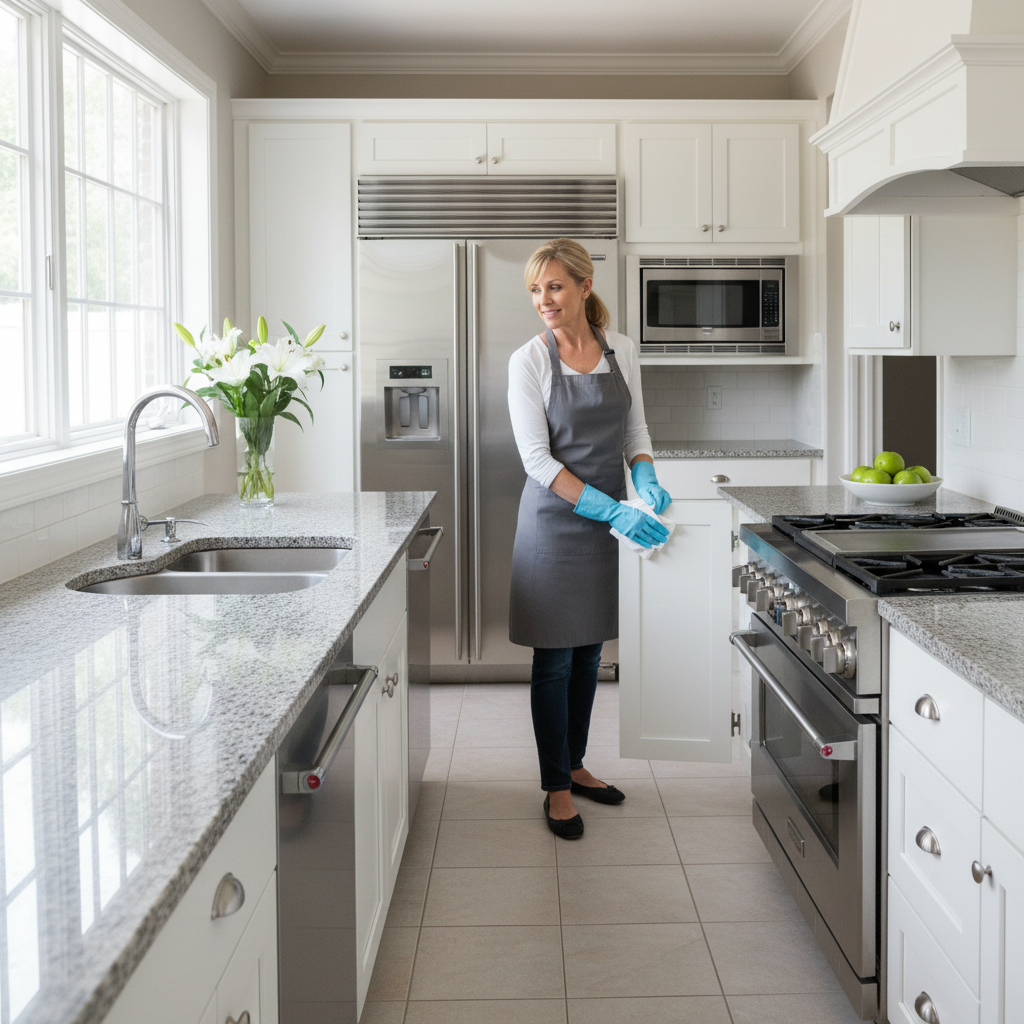
- Cooking Habits: High-heat cooking, frying, and sautéing throw grease into the air, and it settles on everything. That invisible bacon mist? It lands everywhere.
- Lack of Immediate Cleanup: Let spills sit, and they dry hard. Dried tomato sauce or milk on the counter turns into a science experiment if you ignore it.
- Using the Wrong Cleaners: An all-purpose spray might smell nice, but it often isn’t built to break down heavy grease or mineral scale. It just pushes the mess around and leaves a sticky film.
- Hard Water: In a lot of places, tap water leaves minerals behind as white spots and film, especially in sinks and around faucets. That’s not dirt. It’s mineral buildup that needs acid to break loose.
- Infrequent Deep Cleaning: Even with regular wipe-downs, grease and grime stack up in layers if you don’t deep clean now and then. That’s where that sticky kitchen feel comes from.
Kitchen · Kitchen remodel
| Project category | Kitchen |
|---|---|
| Problem type | Kitchen remodel |
| Trade required | General contracting |
| Urgency | Planned project |
| Safety risk | Low safety risk |
| DIY suitability | Pro recommended |
| Cost category | Major investment |
| Typical timeline | Design and cabinet lead time 8–16 weeks; build 4–8 weeks |
| Contractor type | Kitchen remodeler or general contractor |
Repair option
Refacing, new counters, or hardware for a fraction of a gut remodel.
Replacement option
Full remodel when layout, plumbing, or electrical needs to change.
Common causes
- Dated layout
- Failing cabinets or counters
- Adding function or resale value
Relevant tools:project cost estimatorcompare quoteshome improvement material prices
Published August 16, 2026Last updated August 17, 2026
Tools & materials you'll need
Affiliate links- AmazonHeavy-duty degreaserFor stovetops, range hoods, and greasy cabinets
- AmazonAll-purpose cleanerFor general surfaces like laminate counters, sinks
- AmazonpH-neutral cleanerFor natural stone counters (granite, marble)
- AmazonStainless steel cleaner/polishFor stainless steel appliances
- AmazonWhite vinegarOptional, for hard water or drain odors
As an Amazon Associate FixlyGuide earns from qualifying purchases — at no extra cost to you. Prices and availability are accurate as of publication and subject to change.
Quick Answer
Look, I’ve walked into kitchens where homeowners swear they scrub every week, but the place still feels sticky under your shoes and tacky on your hands. Usually, they’re hitting everything with one general-purpose spray, and that just doesn’t touch the ugly stuff — baked-on grease, dried food splatter, all that junk that hangs on for dear life. The real trick isn’t scrubbing harder. It’s using the right cleaner for the right mess, then giving it a little time to work. You want cleaners that break down specific grime, plus the right technique, or you’re just moving dirt from one spot to another.
The Problem
Ever spend an hour cleaning the kitchen, only to have it feel grimy again two days later? Or you’ve got that stubborn film on the cabinets above the stove no matter what you spray? That’s the problem right there. It usually isn’t laziness. It’s a mismatch between the mess and the method. Kitchens are a different animal — heat, food particles, oils, moisture, all of it working together in a way you don’t see in most other rooms.
So now you’re dealing with a stew of organic gunk, polymerized oils, and sometimes mineral deposits from water. A general all-purpose cleaner is like trying to patch a roof leak with duct tape. It might buy you some time, but it’s not fixing the issue. You need something that emulsifies grease, dissolves food proteins, or cuts through hard water stains instead of just spreading them around. If you don’t break that mess down at the source, it just keeps sitting there and making the kitchen feel dirty no matter how many times you wipe it.
How It Works
Alright, let’s talk straight about what’s happening when you clean. You’re not just wiping a surface — you’re mixing chemistry with grime. Different messes respond to different cleaners, and if you miss that part, you’ll work twice as hard for half the result. Here’s the breakdown:
-
Grease and Oil: These are hydrocarbons. Water and oil don’t mix, so plain water-based cleaner won’t dissolve them. You need something that can break up those hydrocarbon chains or help them mix with water. That’s where surfactants come in. They’ve got one end that likes water (hydrophilic) and one that likes oil (hydrophobic). They wrap around the oil droplets and lift them off the surface so you can rinse them away. Degreasers often use strong alkaline ingredients like sodium hydroxide or sodium metasilicate, which saponify fats — basically turning them into soap that rinses clean.
-
Food Residues (Sugars, Proteins, Starches): These are organic compounds, and once they bake on, they can get real stubborn. Enzymatic cleaners are handy here because enzymes break big molecules into smaller, water-soluble ones. Proteases break down proteins, amylases handle starches, and lipases attack fats. Bleach (sodium hypochlorite) oxidizes a lot of food stains too, and it disinfects while it’s at it.
-
Mineral Deposits (Hard Water Stains): Calcium, magnesium, and lime scale are alkaline. You need an acid to dissolve them. Vinegar (acetic acid) or phosphoric acid are common in descalers. The acid reacts with the mineral and forms a salt you can wipe or rinse away.
-
Disinfecting: This isn’t just about looking clean. It’s about killing germs. Disinfectants use active ingredients like quaternary ammonium compounds ("quats"), bleach, or alcohol to knock out bacteria and viruses. They usually need to stay wet on the surface for a set "dwell time" — often 5-10 minutes — to do the job. A quick swipe? No dice.
So when you grab a cleaner, you’re picking the right tool for the enemy in front of you. That’s why a dedicated degreaser knocks cabinet gunk loose while an all-purpose spray can just leave a streaky mess behind.
Step-by-Step Fix
Here’s how I do it when a kitchen needs a real reset. Don’t rush. A little patience goes a long way.
-
Prep the Area — Clear the clutter first. Before you spray a thing, get the small appliances, dishes, and décor off the counters. Empty the sink. If you’re cleaning the stove, pull off the grates and drip pans. That isn’t just about making room — it keeps cleaners off food and dishes, and it lets you actually reach the surfaces that need attention.
-
Degrease the Heaviest Areas — Attack the grease monsters. For stovetops, range hoods, and the cabinets right above the stove, use a heavy-duty degreaser made to cut through oil. Spray it on liberally and make sure the surface is fully wet. Let it sit for at least 5-10 minutes — that’s the dwell time doing its thing. Don’t let it dry out. For really baked-on messes, you may need a second round or a gentle scrub with a nylon brush or non-scratch pad.
- Safety: Wear rubber gloves and eye protection. Degreasers can rough up your skin and eyes. Keep the room ventilated.
-
Clean and Polish Appliances — Stainless, glass, and control panels. For stainless steel appliances, use a dedicated stainless steel cleaner and polish. Put it on a microfiber cloth, then wipe with the grain of the steel. That keeps streaks down. For glass stovetops, use a ceramic stovetop cleaner; a razor scraper can carefully lift burned-on bits. For control panels and buttons, a gentle all-purpose cleaner on a damp cloth works best. Don’t spray directly onto electronics — that’s asking for trouble.
- Tools: Microfiber cloths, non-scratch scouring pads, razor scraper (for glass stovetops).
-
Tackle Countertops — From granite to laminate. The cleaner depends on the counter material. Laminate, solid surface, or quartz? An all-purpose cleaner usually does fine. Natural stone like granite or marble needs a pH-neutral cleaner so you don’t etch it. Spray, let it sit for a minute, then wipe it down with a clean damp cloth. Always finish with a separate dry cloth so you don’t leave streaks or water spots.
-
Clean Inside the Sink — Don’t forget the drain. Once the sink’s cleared out, spray it with an all-purpose cleaner or a mild abrasive cleaner if the stains are stubborn. Scrub with a brush or sponge. For stainless steel sinks, a little baking soda and lemon juice can help bring back the shine. Pour a cup of white vinegar down the drain, let it sit for 30 minutes, then flush with hot water to help with odors and minor clogs.
-
Wipe Down Cabinets and Backsplash — Spot-clean and shine. Use an all-purpose cleaner or a mild degreaser — diluted if it’s a heavy-duty product — for painted or finished wood cabinets. Test a hidden spot first. Spray onto a microfiber cloth, not straight on the cabinet, then wipe. For tile backsplashes, you may need a grout cleaner now and then for the grout lines. On glossy surfaces, finish with a dry microfiber cloth to knock out streaks.
-
Sweep and Mop the Floor — Last but not least. Sweep or vacuum well to get the loose debris up. Then mop with a cleaner that matches your floor. Tile, vinyl, or linoleum? A general floor cleaner is fine. Hardwood needs a pH-neutral wood floor cleaner. Change the mop water if it gets filthy — otherwise, you’re just dragging dirt around. I pulled a water heater in Frisco last month and the kitchen floor had that same greasy film because nobody was changing the mop bucket. Same story, different house.
-
Final Touches — Sparkle and sanitize. Do one last walk-through. Wipe light switches, doorknobs, and cabinet pulls with a disinfecting wipe. Put the small appliances back, then step back and take a look. If you did it right, the kitchen should feel clean, not just look clean.
Common Causes
Why does a kitchen get grubby so fast? Here’s what I see over and over:
- Cooking Habits: High-heat cooking, frying, and sautéing throw grease into the air, and it settles on everything. That invisible bacon mist? It lands everywhere.
- Lack of Immediate Cleanup: Let spills sit, and they dry hard. Dried tomato sauce or milk on the counter turns into a science experiment if you ignore it.
- Ineffective Ventilation: A weak or unused range hood won’t pull out grease-heavy steam, so it condenses on cabinets, walls, and ceilings. I was in a house in Sandy Springs once where the homeowner barely used her brand new, fancy range hood. I could scrape grease off the cabinets above the stove with my fingernail. Turned out the ductwork was too small for the fan, which didn’t help one bit.
- Using the Wrong Cleaners: An all-purpose spray might smell nice, but it often isn’t built to break down heavy grease or mineral scale. It just pushes the mess around and leaves a sticky film.
- Hard Water: In a lot of places, tap water leaves minerals behind as white spots and film, especially in sinks and around faucets. That’s not dirt. It’s mineral buildup that needs acid to break loose.
- Infrequent Deep Cleaning: Even with regular wipe-downs, grease and grime stack up in layers if you don’t deep clean now and then. That’s where that sticky kitchen feel comes from.
Common Mistakes
I’ve watched homeowners make these mistakes a hundred times. Don’t be that guy.
- Spraying Directly onto Electronics/Wood: You’ll soak sensitive parts or mess up wood finishes. Spray the cloth first.
- Not Letting Cleaners Dwell: Cleaners need time. A quick spray and immediate wipe won’t break down tough messes. Give it 5-10 minutes, especially with degreasers or disinfectants.
- Using Abrasive Scrubbers on Delicate Surfaces: Steel wool on stainless steel or a harsh pad on a non-stick pan is a scratch job waiting to happen. Match the tool to the surface.
- Mixing Cleaning Chemicals: NEVER mix bleach with ammonia (found in many window cleaners) or acid (like vinegar). You’ll create toxic chlorine gas. Seriously — don’t do it. Stick to one cleaner at a time.
- Ignoring the Range Hood Filters: Those filters are supposed to trap grease. If they’re clogged, the hood can’t do its job, and grease gets recirculated back into the kitchen. Clean ’em monthly, at least.
- Forgetting to Rinse: Some cleaners leave residue behind. If you don’t wipe with a clean damp cloth after cleaning, that residue can attract more dirt or leave everything feeling sticky.
Cost & Time Breakdown
Here’s what it costs to keep a kitchen clean, whether you’re doing it yourself or calling in the cavalry.
| Task | DIY Cost ($) | Pro Cost ($) | Time (DIY) |
|---|---|---|---|
| Weekly surface clean | $5–$15/month | N/A | 30–60 min |
| Monthly deep clean (kitchen) | $10–$30/month | $150–$300 | 1–3 hours |
| Annual deep clean (whole house) | N/A | $300–$800 | N/A |
| Specialty cleaner purchases | $20–$50/year | N/A | N/A |
| New cleaning tools (brushes, cloths) | $15–$30/year | N/A | N/A |
Tips & Prevention
Want to keep the grime down and save your back? Here’s what I tell my clients.
- Wipe As You Go: The easiest grease to clean is the grease that hasn’t dried yet. Wipe spills right away, and give the stovetop a quick once-over after cooking. That keeps buildup down and saves you a pile of work later.
- Use Your Range Hood: Turn it on before you start cooking and leave it running for 5-10 minutes after you’re done. That pulls airborne grease and moisture out before it settles. Check the filters and clean them monthly or quarterly, depending on how much you cook.
- Choose the Right Tools: A good set of microfiber cloths, a non-scratch scrub brush, and a dedicated degreaser will make life easier. Don’t try to scrub everything with a paper towel.
- Regular Deep Clean Schedule: Aim for a real deep clean at least once a month. Hit the spots you skip during daily wipe-downs — behind appliances, cabinet tops, inside the microwave. A little routine saves a big headache.
- Consider Splatter Screens: If you fry a lot, a simple mesh splatter screen cuts way down on the oil that ends up on your stovetop and backsplash. Cheap fix. Big payoff.
- Maintain Your Dishwasher: Run an empty cycle with a dishwasher cleaner once a month so grease and food residue don’t build up inside the machine. A clean dishwasher cleans your dishes better.
When to Call a Professional
Look, sometimes you hit a wall, and that’s fine. You’re a homeowner, not a full-time cleaning crew. If you’ve got thick, baked-on grease that won’t budge with heavy-duty degreasers and elbow grease, especially on high-end finishes you don’t want to damage, it might be time to bring in a pro. Same goes for serious mold or mildew beyond the surface — deep in grout or behind cabinets — where a mold remediation specialist may need to handle it safely and completely. If pests are showing up because of hidden grime, you may need pest control first, then a deep clean after the critters are gone. Don’t risk ruining expensive finishes or breathing harsh fumes for hours trying to scrape off years of gunk. A professional cleaning service’s got the industrial cleaners, steam gear, and know-how to handle truly ugly messes safely and fast, usually in a fraction of the time it’d take you.
FAQ
What's the best all-purpose cleaner for kitchens?
For general wiping and lighter messes, a decent all-purpose cleaner is fine. I usually steer people toward something pH-neutral and streak-free. Just don’t expect it to blast through heavy grease or deep stains.
Can I use dish soap to clean kitchen surfaces?
Dish soap is a pretty good degreaser for everyday spills. Diluted dish soap works for general cleaning, but it can leave a film if you don’t rinse well, and it won’t sanitize or remove hard water spots.
How often should I deep clean my kitchen?
I tell folks to do a full deep clean at least once a month. That means the oven, microwave interior, range hood filters, and the cabinet fronts and backsplashes that always get skipped.
What's the trick to cleaning stainless steel without streaks?
Always wipe with the grain of the stainless steel using a dedicated stainless steel cleaner and polish. Put the cleaner on a microfiber cloth first, then wipe. Finish with a dry microfiber cloth to buff it out.
Is vinegar a good kitchen cleaner?
Vinegar is great for hard water stains and light grease, and it has some disinfecting power. But it’s acidic, so don’t use it on natural stone like marble or granite, or on cast iron, and never mix it with bleach.
How do I clean stubborn, baked-on grease from my stovetop?
For baked-on grease, you need a heavy-duty alkaline degreaser. Apply it, let it dwell for 10-15 minutes, then gently scrub with a non-scratch pad or even a razor scraper for glass stovetops. Patience matters here.
Should I clean my range hood filters?
Absolutely. Clogged filters mean the hood isn’t working right. Most metal filters can be removed and soaked in hot, soapy water with a degreaser, or even tossed in the dishwasher. Do that at least quarterly.
What cleaners should I avoid mixing?
Never, ever mix bleach with ammonia (often in glass cleaners) or vinegar (or any other acid). That makes dangerous toxic fumes. Read the labels and stick to one chemical at a time.
Can I use floor cleaner on my kitchen counters?
I wouldn’t. Floor cleaners are made for durability and often leave residues that aren’t food-safe or are too harsh for countertop materials. Stick with dedicated counter cleaners or an all-purpose spray.
My kitchen always smells stale. What's causing it?
Stale odors usually come from hidden grime. Check your garbage disposal, the drip tray under your fridge, your trash can, and the drains. A solid deep clean, especially in those forgotten spots, usually fixes it. Keep the air moving while you cook too. "
Related Articles
Keep troubleshooting with these hand-picked guides from FixlyGuide:
- The 6 Cleaning Secrets Hiding in Your Power Drill (Plus Attachments to Master) — Your power drill isn't just for DIY projects; with the right attachments, it's a powerful and efficient cleaning tool for tackling tough gr…
- The Secret Power Tool Hiding in Your Garage for a Speedier Clean — Unlock the hidden potential of your cordless drill to tackle stubborn household grime, soap scum, and dirt with specialized cleaning attach…
- The Secret to Lush Raised Beds? It's Not Just About How You Water — Smart irrigation for raised garden beds isn't just about automation; it's about delivering the right amount of water precisely when your pl…
- The Hidden Reason Your AC Isn't Cooling (And 7 Fixes Homeowners Miss) — If your central AC isn't cooling your home, the culprit often lies in an overlooked issue that's simple to fix, preventing costly professio…
- The Hidden Culprit Behind Your AC Not Cooling (and How to Find It) — If your central AC isn't cooling your home, the issue often stems from a surprisingly simple problem that's easy to overlook. Learn how to…
- The #1 Mistake Homeowners Make When Caulking a Bathroom Sink (And How to Fix It) — Discover the most common caulk mistake homeowners make around bathroom sinks and follow simple steps to achieve a lasting, watertight seal.
Should you do this yourself?
Answer five quick questions before you start. Safety outranks savings every time.
Your experience with work like this
How high do you have to work?
Does the job involve any of these?
Will it need a permit?
Specialty tools
Free and instant. Educational guidance only — not a quote, inspection, or professional diagnosis.
What should this project cost?
Enter your project details for a realistic cost range before you call anyone.
Cosmetic refreshes start near $5,000; full remodels commonly $25,000–$45,000.
- Regional adjustment
- National average
- Labor share (typical)
- ~$8,550
- Quotes to collect
- 3 written estimates
Educational estimate based on national averages — not a binding quote. Always confirm with written local estimates.
Before you start
Check the difficulty, permits, and safety risk — then decide whether to call a pro.
- Estimate this projectGet a cost range for your scope and ZIP before you call anyone.Open
- Get local estimatesSend one request and compare written estimates from vetted pros.Open
Free, no signup required. Estimates are educational guidance, not a quote or an inspection.
Get the print-ready PDF of this guide
A clean, ad-free, printable version you can keep on your phone or pin to the workshop wall. Free with a FixlyGuide account.
- Print-optimized layout
- Tools, materials & every step included
- Saved to your account
This article was independently written by FixlyGuide based on the source topic.
Frequently asked questions
What's the best all-purpose cleaner for kitchens?+
For general wiping and lighter messes, a good quality all-purpose cleaner is fine. I usually recommend something pH-neutral and streak-free. However, remember it won't cut through heavy grease or deep stains effectively.
Can I use dish soap to clean kitchen surfaces?+
Dish soap is a decent degreaser, especially for everyday spills. Diluted dish soap can be used for general cleaning, but it can leave a film if not rinsed well, and it won't sanitize or tackle hard water spots.
How often should I deep clean my kitchen?+
I tell folks to aim for a full deep clean at least once a month. This includes things like cleaning the oven, microwave interior, range hood filters, and really getting into those cabinet fronts and backsplashes.
What's the trick to cleaning stainless steel without streaks?+
The key is to always wipe with the grain of the stainless steel using a dedicated stainless steel cleaner and polish. Apply the cleaner to a microfiber cloth first, then wipe. Finish with a dry microfiber cloth to buff.
Is vinegar a good kitchen cleaner?+
Vinegar is excellent for cutting through hard water stains and light grease, and it has some disinfecting properties. However, it's acidic, so don't use it on natural stone (like marble or granite) or cast iron, and never mix it with bleach.
How do I clean stubborn, baked-on grease from my stovetop?+
For baked-on grease, you need a heavy-duty alkaline degreaser. Apply it, let it dwell for 10-15 minutes, then gently scrub with a non-scratch pad or even a razor scraper for glass stovetops. Patience is key here.
Should I clean my range hood filters?+
Absolutely! Clogged filters mean your range hood isn't working right. Most metal filters can be removed and soaked in hot, soapy water with a degreaser, or even run through the dishwasher. Do this at least quarterly.
What cleaners should I avoid mixing?+
Never, ever mix bleach with ammonia (often in glass cleaners) or vinegar (or any other acid). This creates dangerous toxic fumes. Always read labels and stick to one chemical at a time for safety.
Can I use floor cleaner on my kitchen counters?+
I wouldn't recommend it. Floor cleaners are formulated for durability and often leave residues that aren't food-safe or are too harsh for kitchen counter materials. Stick to dedicated counter cleaners or an all-purpose spray.
My kitchen always smells stale. What's causing it?+
Stale odors often come from hidden grime. Check your garbage disposal, the drip tray under your fridge, your trash can, and even your drains. A good deep clean, especially of those forgotten spots, usually solves it. Ensure good ventilation while cooking too.

Discussion
Loading comments…