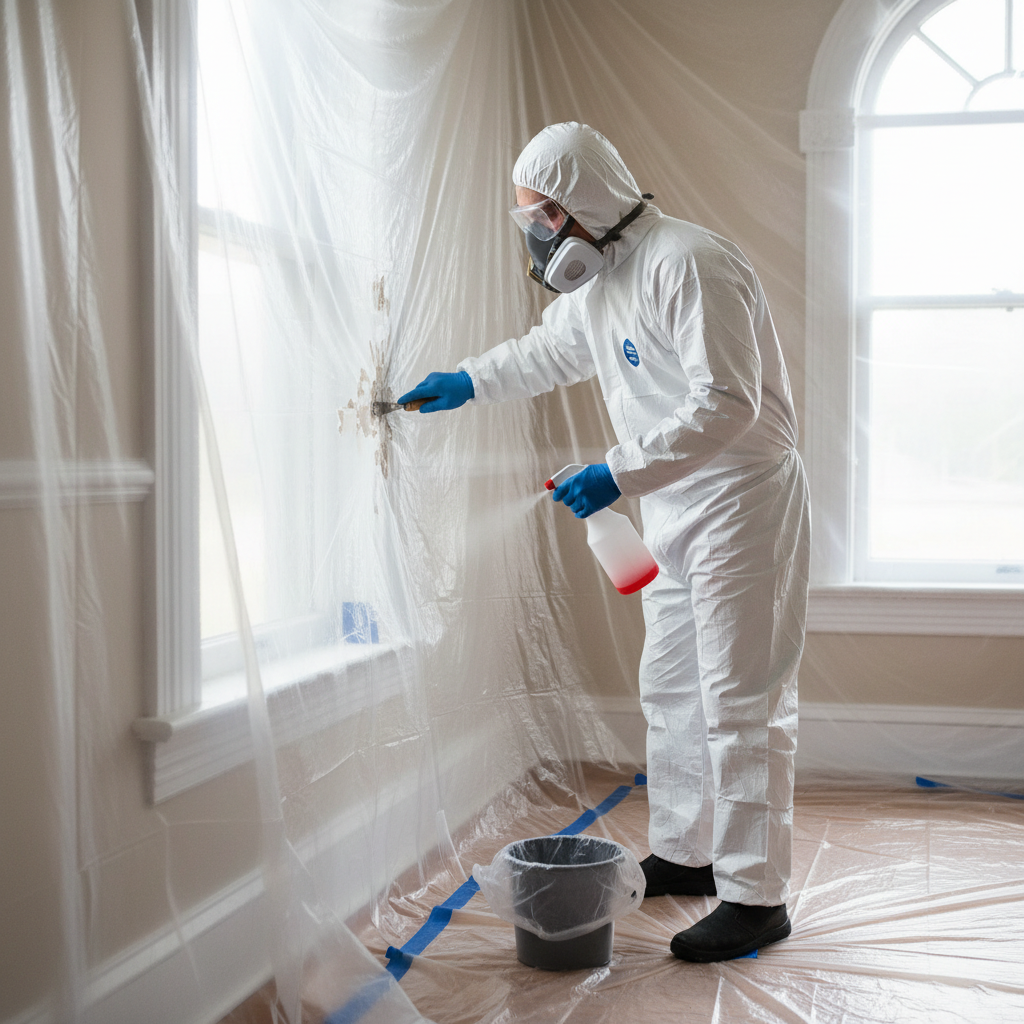
- Test for Lead Before You Start — Identify the hazard early.
- If the test is positive: Proceed with extreme caution. Decide if this is a DIY project or if a professional is needed.
- Safety Note: Never taste or inhale dust from paint chips. Wash hands thoroughly after handling samples.
Published July 10, 2026Last updated August 17, 2026
Tools & materials you'll need
Affiliate linksAs an Amazon Associate FixlyGuide earns from qualifying purchases — at no extra cost to you. Prices and availability are accurate as of publication and subject to change.
Quick Answer
If your home was constructed before 1978, there’s a significant chance that its painted surfaces contain lead-based paint. The danger isn't primarily from stable, intact paint, but from the invisible, toxic dust generated when these surfaces are disturbed during common home repairs. Activities such as sanding, scraping, drilling, or demolition can release microscopic lead particles into the air, creating a serious health hazard for all occupants, especially children and pregnant women. Always test suspect surfaces and follow stringent safety protocols if lead is present.
The Problem
You're eager to refresh a room or tackle a long-overdue repair, perhaps stripping an old window frame or cutting into a wall. If your home predates 1978, you’re not just dealing with paint; you might be disturbing a hidden health hazard: lead paint. The problem is insidious because lead dust is often invisible and odorless. There's no tell-tale sign that you're inhaling or ingesting a neurotoxin. Children are particularly vulnerable because their developing nervous systems are more susceptible to lead's damaging effects, which can manifest as learning disabilities, behavioral problems, and developmental delays. Adults can experience issues ranging from high blood pressure to kidney damage. A seemingly simple DIY project can inadvertently create a dangerous environment, spreading lead particles throughout your home and jeopardizing your family's health for years to come.
How It Works
Lead-based paint was incredibly popular for its durability, vibrant colors, and moisture resistance before its widespread ban for residential use in 1978 by the Consumer Product Safety Commission. This means that homes built before this year, or even those renovated with older paint stock, are likely to have lead paint on various surfaces. The core danger lies in lead's toxic properties. When lead paint is disturbed—through actions like scraping, sanding, cutting, or even impact from a door repeatedly hitting a frame—it generates microscopic dust particles. These particles are so fine they can remain airborne for extended periods, invisible to the naked eye. Once settled, they can be easily re-aerosolized by everyday activities like walking or vacuuming.
Exposure occurs primarily through inhalation and ingestion. Inhaling lead dust directly introduces it to the lungs, from where it can enter the bloodstream. Ingestion happens when dust settles on hands, food, or toys, and then makes its way into the mouth. Young children are at particularly high risk because they frequently put their hands and objects into their mouths, and their bodies absorb lead more efficiently than adults. Once in the body, lead is stored in bones and soft tissues and can affect nearly every organ system, especially the brain and nervous system, kidneys, and blood-marrow.
Step-by-Step Fix
Always assume lead paint is present in homes built before 1978 until proven otherwise by testing. If lead is confirmed or suspected, prioritize containment and minimization of dust generation.
-
Test for Lead Before You Start — Identify the hazard early.
- Use EPA-recognized lead test kits, available at most hardware stores. Follow the instructions precisely. Alternatively, cut a small chip from each painted layer and send it to an accredited lab for definitive testing. This method is more accurate.
- If the test is positive: Proceed with extreme caution. Decide if this is a DIY project or if a professional is needed.
- Safety Note: Never taste or inhale dust from paint chips. Wash hands thoroughly after handling samples.
-
Clear and Contain the Work Area — *Prevent spread BEFORE you begin work.
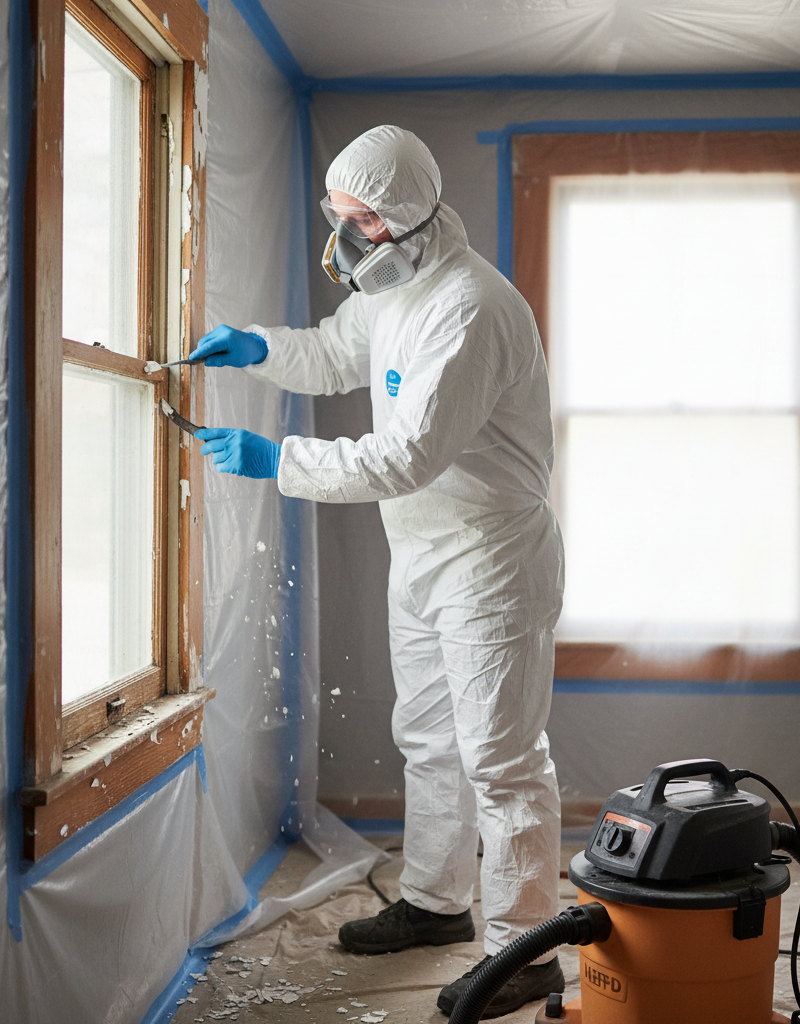
- Remove all furniture, rugs, curtains, and personal items from the room. If items cannot be removed, cover them completely with two layers of 6-mil plastic sheeting and seal with painter's tape.
- Close and seal all windows and doors leading to other parts of the house with 6-mil plastic sheeting and tape. Turn off forced-air heating and air conditioning systems to prevent dust circulation.
- Lay heavy-duty 6-mil plastic sheeting on the floor, extending at least 6 feet beyond the work area in all directions. Overlap seams by 9-12 inches and tape them securely. Extend plastic up walls by at least 6 inches and tape.
-
Don Personal Protective Equipment (PPE) — Your barrier against invisible threats.
- Wear a disposable N100 or P100 respirator. Simple dust masks are NOT adequate. Ensure a tight seal around your face.
- Wear a full-body disposable coverall suit, goggles, and disposable gloves. Tape the gloves to the sleeves of the coverall for a complete seal.
- Minimize skin exposure; lead can be absorbed through the skin, though inhalation and ingestion are the primary routes.
-
Wet Methods are Your Friend — Control dust at its source.
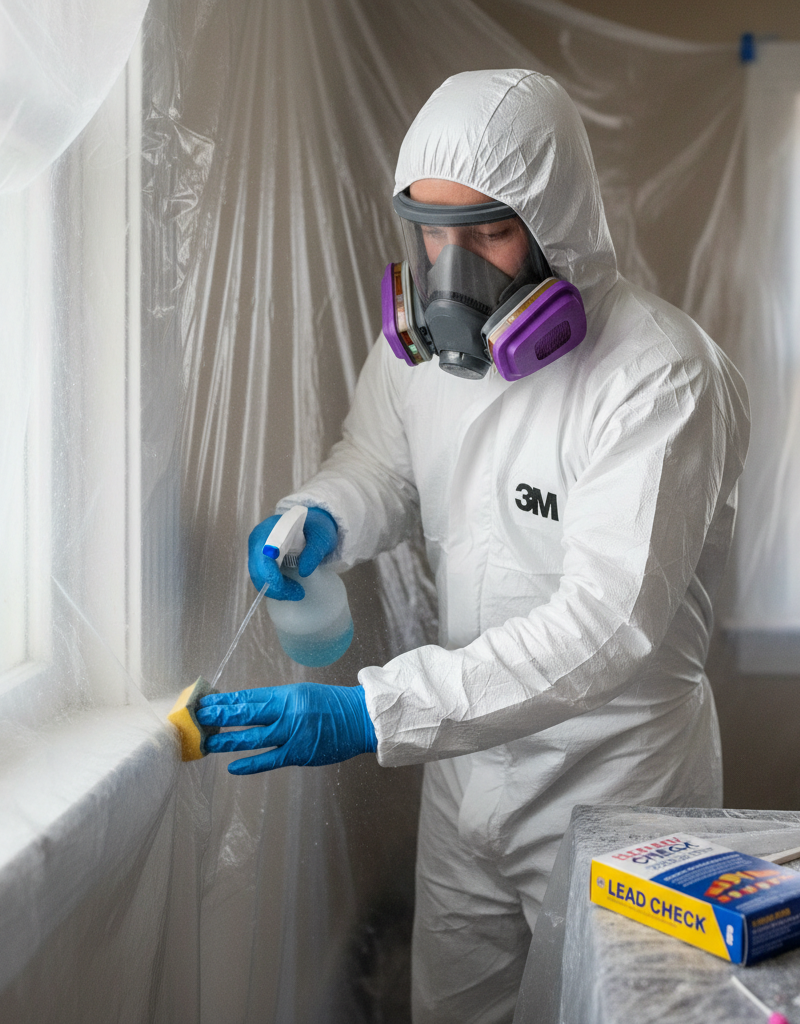
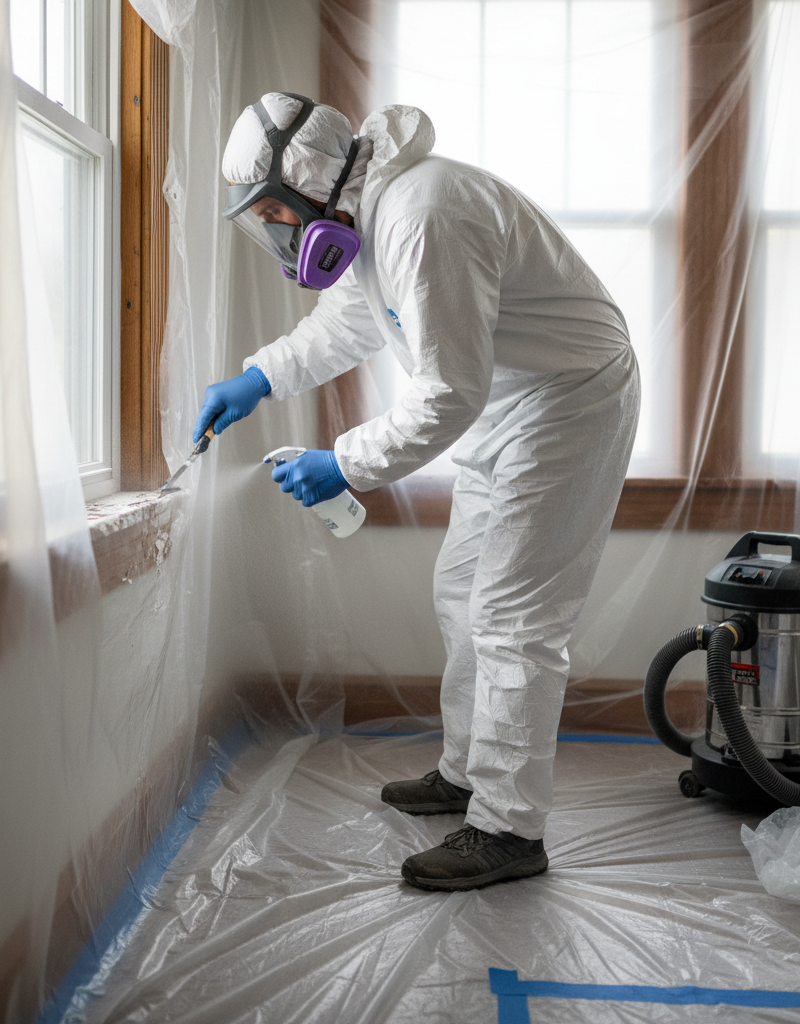
- Mist surfaces lightly with water before scraping or sanding. This significantly reduces airborne dust. Do NOT flood the area, as it can create lead-contaminated wastewater.
- Use a spray bottle with a fine mist setting. Work in small sections.
- Never dry sand, dry scrape, or use heat guns above 1100°F (593°C) on suspect surfaces. These methods generate vast amounts of lead dust and fumes and are extremely dangerous.
-
Use Specialized Tools — Minimize dust generation.
- Consider using power tools with HEPA-filtered vacuum attachments. Sanding tools with shrouds that connect to a HEPA vacuum are ideal for reducing airborne dust.
- Chemical paint strippers designed for lead paint are another option, but follow manufacturer instructions carefully and ensure adequate ventilation.
- Avoid: Belt sanders, disc sanders, heat guns, and harsh abrasives that create excessive dust.
-
Clean as You Go — Don't let dust accumulate.
- Frequently clean the work area using a HEPA-filtered vacuum cleaner. Standard shop vacuums or household vacuums will only spread lead dust.
- Wet-wipe all surfaces thoroughly with disposable cloths. Change cloths frequently and dispose of them as lead waste.
- Collect all debris, paint chips, and dust immediately in heavy-duty plastic bags.
-
Final Cleanup and Disposal — Methodical decontamination is crucial.
- Once work is complete, HEPA vacuum all plastic sheeting, walls, and floors. Then wet-wipe everything at least twice with clean cloths and a lead-specific cleaner or an all-purpose cleaner.
- Carefully fold the plastic sheeting inward to contain all debris, then place it into doubled heavy-duty 6-mil plastic bags. Seal the bags with tape.
- Remove PPE (coverall, gloves, respirator) carefully, turning items inside out as you remove them, and place them into the sealed waste bags immediately.
- Contact your local waste management facility or health department for proper disposal of lead-contaminated waste. Do NOT put it in regular household trash.
-
Personal Decontamination — Protect yourself and your family.
- Before leaving the work area, remove your respirator and clean reusable items according to manufacturer instructions. Place disposable items in waste bags.
- Take a shower immediately after completing work. Wash your hair thoroughly.
- Wash work clothes separately from other laundry. Consider wearing disposable clothing that can be bagged and discarded.
Common Causes
The primary
Related Articles
Keep troubleshooting with these hand-picked guides from FixlyGuide:
- 7 Inspection Red Flags That Secretly Signal a $20,000 Bill — Don't let your dream home become a money pit. Many buyers and even some inspectors overlook subtle home inspection red flags that lead to f…
- The 12 Checks That Prevent 80% of Costly Home Repairs — Don't wait for a disaster. Our comprehensive monthly home maintenance checklist reveals the surprising, simple tasks that catch small issue…
- The 4 Critical Power Tools Every New Homeowner FORGETS to Buy (Don't Be One of Them) — New homeowners often overlook essential power tools that make common home repairs and maintenance tasks significantly easier. Learning whic…
- The Hidden Truth About — Uncover the surprising risks of buying used furniture and appliances, and learn essential inspection tips to protect your home and wallet.
- The 7 Critical Household Filters You're Forgetting (And What They Cost You) — Neglected household filters are quietly costing you money, diminishing air quality, and paving the way for expensive repairs. Discover the…
- The 7 Critical Home Inspection Mistakes Most Homeowners Make (and How to Spot Them) — Discover the crucial home inspection mistakes homeowners commonly overlook and learn how to identify potential problems before they become…
What should this project cost?
Enter your project details for a realistic cost range before you call anyone.
Cost depends heavily on which system turns out to be the source.
- Regional adjustment
- National average
- Labor share (typical)
- ~$1,620
- Quotes to collect
- 3 written estimates
Educational estimate based on national averages — not a binding quote. Always confirm with written local estimates.
Get the print-ready PDF of this guide
A clean, ad-free, printable version you can keep on your phone or pin to the workshop wall. Free with a FixlyGuide account.
- Print-optimized layout
- Tools, materials & every step included
- Saved to your account
This article was independently written by FixlyGuide based on the source topic.
Frequently asked questions
How do I know if my home has lead paint?+
The most reliable way is to have your home tested by a certified lead inspector or risk assessor. For DIY, you can use EPA-recognized lead test kits available at hardware stores, or collect paint chip samples to send to an accredited laboratory for analysis.
What are the health risks of lead paint exposure?+
Lead exposure can cause serious health problems, particularly for children and pregnant women. In children, it can lead to learning disabilities, behavioral problems, decreased IQ, and developmental delays. In adults, it can cause high blood pressure, kidney damage, reproductive problems, and nervous system disorders.
Can I renovate my home if it has lead paint?+
Yes, but it requires strict adherence to lead-safe work practices. This includes containing the work area, using personal protective equipment (PPE), minimizing dust generation through wet methods, and thorough cleanup with a HEPA vacuum. For extensive renovations, it's highly recommended to hire an EPA-certified lead-safe renovator.
What is considered lead-safe work practice?+
Lead-safe work practices involve a set of procedures designed to minimize lead dust during renovation, repair, and painting projects. Key components include containing the work area with plastic sheeting, using wet methods for dust suppression, utilizing a HEPA vacuum for cleanup, wearing appropriate PPE (respirator, gloves, coveralls), and properly disposing of lead-contaminated waste.
Discussion
Loading comments…