- Partially Closed Main Shut-Off Valve: Could be accidental, or from a repair where nobody fully reopened it. Quick check. Easy win if that’s the issue.
- Water Meter or City Valve Issues: Less common, but sometimes a valve by your municipal water meter gets left partially closed by city workers after maintenance, or the meter itself goes bad.
- Significant Water Leak: A big leak, even one hidden underground or behind a wall, will steal pressure from the whole system.
- Well Pump Problems (for well users): If you’re on a well, a failing pump, bad pressure switch, or leaky pressure tank can all cause low pressure everywhere. That’s a different animal, and it’s usually best handled by a well specialist.
Plumbing · Low water pressure
| Project category | Plumbing |
|---|---|
| Problem type | Low water pressure |
| Trade required | Plumbing |
| Urgency | Soon — within weeks |
| Safety risk | Low safety risk |
| DIY suitability | DIY friendly |
| Cost category | Low cost |
| Typical timeline | DIY checks in under an hour; PRV replacement a half day |
| Contractor type | Licensed plumber |
Repair option
Clean aerators, then test static pressure before replacing the PRV.
Replacement option
Repipe when scaling in galvanized lines is the cause.
Common causes
- Clogged aerators or fixture screens
- Failing pressure-reducing valve
- Partially closed main shutoff
- Galvanized pipe scaling in older homes
Relevant tools:diy difficulty
Published July 25, 2026Last updated August 17, 2026
Tools & materials you'll need
Affiliate linksAs an Amazon Associate FixlyGuide earns from qualifying purchases — at no extra cost to you. Prices and availability are accurate as of publication and subject to change.
Quick Answer
If every faucet in your house is just coughing out a weak little trickle instead of a solid stream, yeah, that’ll drive you nuts. Nine times out of ten, it’s not the city water. The trouble’s usually in your own plumbing — a bad pressure regulator, mineral buildup choking the lines, or a main shut-off that isn’t wide open. You can usually hunt it down with a few simple checks and a little patience.
The Problem
I’ve been a contractor for over 25 years, and I can tell you the first thing homeowners say when the whole house loses pressure is, “The city’s got a problem.” Most of the time, that’s not it. If it were a municipal issue, your neighbors would be grumbling too — the whole street would feel it. What’s usually happening is something inside your home’s water supply is strangling the flow. That could be the main line coming in, the pressure regulator, or the plumbing itself. The result is the same: the washer takes forever to fill, showers feel like a misting hose, and even flushing the toilet starts taking its sweet time. That’s not just annoying. It messes with appliance performance and throws off your whole day.
How It Works
To figure out why the pressure dropped, you’ve gotta know the path the water takes to get to you. I like to think of it as a controlled river. Water comes in from the municipal main (or your well) and heads onto your property through a service line. Right after that, there’s usually a main shut-off valve, then a water meter. On most homes built after the 1980s, you’ll also have a pressure regulator. That little thing matters a lot. It takes the high street pressure — sometimes 80-100 psi (pounds per square inch) — and knocks it down to a safer 40-60 psi. That’s the sweet spot. Enough push for decent showers, but not so much that it starts wrecking hoses and fixtures. No regulator, or a bad one, and you’re either overpressured or underpowered. From there, the water splits into hot and cold lines, goes to the water heater, then out to the rest of the house. Every bend, valve, and fixture adds a bit of resistance, but the system’s built for that. Then something gets in the way — sediment, a half-closed valve, an old regulator that sticks — and now every fixture feels it. It’s like trying to sip through a pinched straw. That’s why I start at the front of the line and work inward.
Step-by-Step Fix
Here’s how I’d walk a homeowner through low-pressure troubleshooting. We’re starting outside and moving in, checking the usual suspects first.
-
Check the Main Shut-off Valve — Verify it's fully open. This is the very first thing I check. Sometimes, after a plumbing repair or just from someone bumping into it, that valve never gets opened all the way back up. It’s usually a gate valve (round handle) or a ball valve (lever handle). Turn it clockwise until it stops, then back it off counter-clockwise until it stops again, and make sure it’s truly open. If it’s a gate valve, don’t muscle it when you open it — you can wreck the stem.
- Location: Usually near your water meter, or where the main water line enters the house, often in a basement or utility closet.
- If it's stuck: Don’t force an old gate valve. You could snap it or crack the pipe, and then you’ve got a much bigger mess. If it’s corroded and won’t move, call a pro.
-
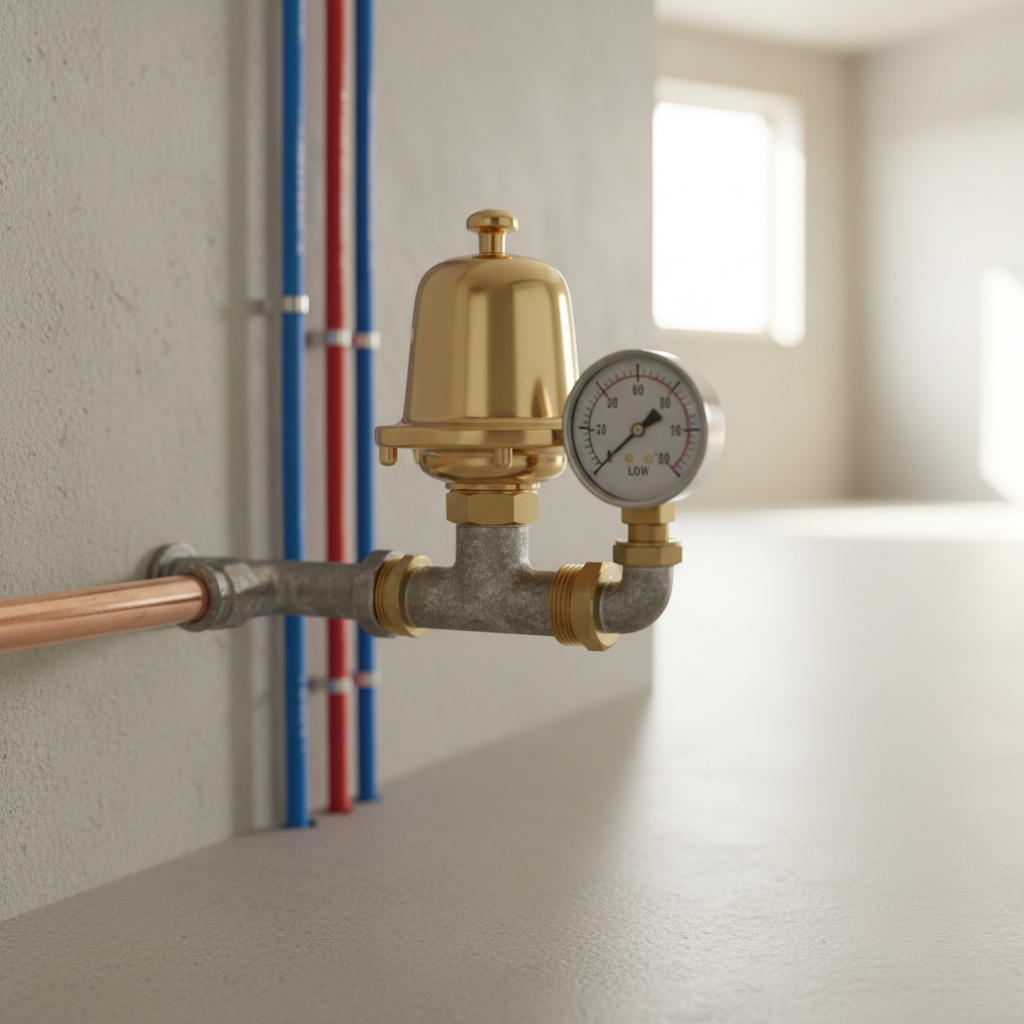
Test Your Pressure Regulator (PRV) — See if it's failed. The PRV is usually bell-shaped and sits on the main water line after the main shut-off valve. If it goes bad, it can strangle the flow. Best way to check it is with a water pressure gauge — you can grab one at any hardware store for about 10-15 bucks, and it threads onto an outdoor spigot. Hook the gauge to any outside faucet and open the faucet fully. A healthy residential pressure should land between 40-70 psi. If it’s sitting below 40 psi, or bouncing all over the place, the PRV is probably your troublemaker.
- Safety Note: If your pressure is extremely high (over 80 psi), that’s a problem too and can chew up appliances. The PRV handles both ends of that mess.
- If it's failing: Replacing a PRV is a pretty solid DIY job if you’re comfortable with basic plumbing, since it usually means cutting pipe and using sweat fittings or push-fit connectors. If you’re not sure, call a pro. I swapped one out last month in a house in East Nashville — homeowner was convinced the city had throttled the supply, and nope, his 25-year-old PRV had finally kicked the bucket.
-
Inspect Your Water Meter Valve — Ensure it's fully open. There’s usually a shut-off valve on either side of your water meter. These are often turned with a special wrench, though sometimes an adjustable wrench does the trick. Same deal as the main shut-off: make sure they’re fully open. The water company will sometimes close one partially during maintenance. Just keep in mind, messing with the city side of the meter can get you fined, so observe, don’t adjust, unless you’ve got authorization and you’re on your side of the line.
- When to check: Especially if you’ve had municipal work done nearby lately.
-
Confirm Neighbor's Pressure — Rule out a city-wide problem. Easy one. Ask a neighbor. If their pressure’s fine, then your issue is in your house. If they’re having the same problem, it’s time to call the municipal water department. Usually that means there’s a main break or some work going on that’s hitting the whole area.
-
Check for Leaks — Look for visible signs. A big enough leak anywhere in the system can drag down pressure for the whole house. Check exposed pipes in the basement, under sinks, and around the water heater for drips or damp spots. Watch for weird green patches in the yard too — that can point to a buried leak. If the water meter’s spinning fast and nobody’s using water inside, that’s a giant red flag.
- Hidden leaks: Sometimes the leak’s behind a wall. If you hear water running all the time or spot unexplained moisture, that’s leak-detection-and-plumbing territory — not a DIY afternoon.
-
Clean Aerators and Showerheads — Address localized clogs. This usually shows up as low pressure at one fixture, but if you’ve got a lot of sediment in the lines, it can gum up multiple aerators and showerheads and make the whole house feel sluggish. Unscrew faucet aerators and poke out mineral buildup with a small wire brush or toothpick. For showerheads, soak them in a bowl of vinegar overnight to break down deposits. I’ve seen some so packed up they were barely sputtering — no joke.
-
Flush Your Water Heater — Remove sediment buildup. Water heaters collect sediment at the bottom, especially in hard-water areas. That gunk can restrict flow through the cold water inlet or hot water outlet lines. Shut off the cold water supply to the heater, hook a garden hose to the drain valve, and open it up. Let it run until the water clears. This won’t directly cause low cold pressure, but it can hammer your hot water pressure so bad it feels like the whole house is weak. Do this once a year.
-
Evaluate for Galvanized Pipe Corrosion — Consider old piping. If your house was built before 1970 and still has original galvanized steel pipes, corrosion and mineral buildup are probably choking off the water. Those pipes rust from the inside out. There isn’t a real DIY fix for that one. Repiping is the answer, and that’s a major plumbing job. You can sometimes spot galvanized pipe by the dull grey finish and threaded joints. Crack it open, and you’ll see the inside diameter has shrunk way down.
Common Causes
- Failing Water Pressure Regulator (PRV): This is probably the top offender. They don’t last forever; 10-15 years is a good run. When they fail, they often choke the flow. They’re supposed to drop street pressure to a safe range for your home’s plumbing (typically 40-60 psi).
- Partially Closed Main Shut-Off Valve: Could be accidental, or from a repair where nobody fully reopened it. Quick check. Easy win if that’s the issue.
- Sediment Buildup/Corrosion in Pipes: Really common in older homes with galvanized steel pipes, or anywhere with hard water. Minerals and rust build up over time and shrink the pipe’s interior. Even copper can get pinhole clogs from sediment.
- Water Meter or City Valve Issues: Less common, but sometimes a valve by your municipal water meter gets left partially closed by city workers after maintenance, or the meter itself goes bad.
- Significant Water Leak: A big leak, even one hidden underground or behind a wall, will steal pressure from the whole system.
- Well Pump Problems (for well users): If you’re on a well, a failing pump, bad pressure switch, or leaky pressure tank can all cause low pressure everywhere. That’s a different animal, and it’s usually best handled by a well specialist.
Common Mistakes
- Blaming the City First: You wouldn’t believe how many calls I get where the homeowner swears it’s the municipal supply. Rule out the easy stuff inside your own house first.
- Ignoring Aerators and Showerheads: They only affect one fixture at a time, sure, but if several are clogged, the whole house feels weak. Easy thing to check off the list.
- Adjusting the PRV Without a Gauge: Guessing at the setting won’t get you anywhere. You need that pressure gauge to know what you’re dealing with. Too high can damage appliances; too low is the problem we’re trying to fix.
- Over-tightening Old Valves: Especially gate valves. If it’s sticky or corroded, cranking on it can snap the stem or handle and turn a pressure issue into a flood.
- Not Flushing Your Water Heater Annually: Sediment builds up. It’s simple maintenance, and it saves you a pile of headaches, including hot water pressure problems.
- Assuming All Low Pressure is the Same: Is it hot water only? Cold water only? One fixture? The whole house? Figuring out the scope narrows it down fast. A single-fixture issue usually points away from the main supply parts.
Cost & Time Breakdown
| Task | DIY Cost | Pro Cost | Time |
|---|---|---|---|
| Check Main Shut-off Valve | $0 | $0–$50 (service call) | 5–10 minutes |
| Test Pressure Regulator (PRV) | $10–$20 (gauge) | $50–$100 (diagnosis) | 10–15 minutes |
| Replace Pressure Regulator | $75–$250 (part) | $300–$800 | 1–3 hours |
| Clean Aerators/Showerheads | $0–$5 | $50–$100 (per fixture) | 15–30 minutes |
| Flush Water Heater | $0 (hose) | $100–$250 | 30–60 minutes |
| Repipe House (galvanized) | N/A (major job) | $5,000–$15,000+ | 3–7 days |
Tips & Prevention
- Annual Water Heater Flush: Seriously, do it. I’ve seen heaters packed solid with sediment. It keeps problems from piling up and helps your unit last longer. Watch for dark or sandy water at the start.
- Regular PRV Checks: If you’ve got a pressure gauge, check your home’s static water pressure once every 6 months to make sure the PRV’s still doing its job. They usually last 10-15 years, but there’s no harm in keeping an eye on it.
- Know Your Main Shut-off: Make sure everybody in the house knows where the main water shut-off valve is and how to use it. In an emergency — say a burst pipe — those extra seconds can save you thousands in damage. This one’s not optional.
- Install a Whole-House Water Filter: If you live where the water’s hard or sandy, a whole-house filter can cut down a lot of buildup in your pipes and fixtures and protect your investment. Change the filter cartridge when the manufacturer says to — usually every 3-6 months.
- Watch for Gradual Decline: Low pressure usually doesn’t happen overnight unless a valve gets closed or a pipe bursts. If pressure slides down slow over weeks or months, that often means sediment buildup or a PRV starting to fail.
When to Call a Professional
You can absolutely handle some of this troubleshooting yourself, and that’ll save you some real money. But there are times when you need a licensed pro. If you’ve checked the main shut-off and the pressure regulator and you’re still getting low pressure — especially if the house has galvanized pipes — you’re probably looking at bigger work like repiping. Any job that means cutting into the main water line, like replacing a PRV if you’re not comfortable with soldering or push-fit fittings, should go to a plumber. Same thing if you suspect a hidden leak behind walls or under the foundation. If you’re on a well system, persistent low pressure usually points to the pump, pressure tank, or control box, and that’s a job for a well drilling and pump specialist. Don’t turn a small problem into a big one, and don’t gamble with local plumbing codes. A pro’s got the tools, the experience, and the license to handle water-system headaches the right way.
Related Articles
Keep troubleshooting with these hand-picked guides from FixlyGuide:
- The #1 Mistake Homeowners Make When Diagnosing Low Water Pressure (It's Not Your City's Fault) — Before you blame your municipal water supply for low water pressure, learn the most common overlooked culprit inside your home.
- The Secret Culprit Behind Your Whole-House Low Water Pressure (It's Not Always the City) — Whole-house low water pressure can be a frustrating and complex issue, ranging from simple fixes homeowners can do to signs that require a…
- The #1 Mistake Homeowners Make When Diagnosing Low Water Pressure (It's Not Your Pipes!) — Low water pressure throughout your house often points to a single, easily overlooked culprit: your main water shut-off valve.
- The #1 Mistake Homeowners Make When Diagnosing Low Water Pressure — Discover the most overlooked cause of frustrating low water pressure impacting your entire home and how to fix it yourself, saving hundreds…
- The 4 Hidden Reasons Your Entire Home Has Low Water Pressure (And the Easy Fixes) — Low water pressure throughout your entire home can be a frustrating and often misunderstood problem, with several common culprits. Learn to…
- The Secret Culprit Behind Your Dishwasher's Standing Water (It's Not Always a Clog) — Don't assume a clog is the only reason your dishwasher isn't draining; often, the fix is simpler than you think.
What should this project cost?
Enter your project details for a realistic cost range before you call anyone.
Common repairs run $150–$650; repipes and water-heater replacements reach $1,500–$4,500.
- Regional adjustment
- National average
- Labor share (typical)
- ~$754
- Quotes to collect
- 3 written estimates
Educational estimate based on national averages — not a binding quote. Always confirm with written local estimates.
Fixly Project Decision Box
- DIY difficulty
- Moderate
- Estimated time
- 30 minutes – half a day
- Cost level
- Moderate
Main tools / materials
- Adjustable wrench
- Plunger or drain auger
- Bucket and towels
- Thread tape
When to stop and call a pro
- Water you cannot shut off at the fixture or main
- Sewage backing up into more than one fixture
- Water near electrical panels or outlets
- Gas water heater work beyond relighting a pilot
Need professional help?
Get a Licensed PlumberGet the print-ready PDF of this guide
A clean, ad-free, printable version you can keep on your phone or pin to the workshop wall. Free with a FixlyGuide account.
- Print-optimized layout
- Tools, materials & every step included
- Saved to your account
Recommended for DIYers & woodworkers
Sponsored
The Top 20 Tools for Workshops of Any Budget
No stationary machines or power tools required — plus 3 fundamental tools that can't be bought at any price.
Get the free guide
Ted's Woodworking — The #1 Woodworking Resource
Detailed instructions, dimensioned drawings, materials & cutting lists, and 3D schematics for every skill level.
See the plansSponsored: links above are affiliate links. FixlyGuide may earn a commission on qualifying purchases — at no extra cost to you.
Frequently asked questions
Why is my water pressure suddenly low everywhere?+
Sudden, whole-house low water pressure often points to a partially closed main shut-off valve or a problem with your water pressure regulator (PRV). It could also be a significant leak in your main line or, less commonly, an issue with the municipal supply or a well pump if you're on a private well.
How do I check my water pressure regulator?+
You can test your water pressure regulator by attaching a water pressure gauge (available at hardware stores) to an outdoor hose bib. Open the spigot fully and read the gauge. Ideal residential pressure is typically between 40-70 psi. A reading consistently below 40 psi or highly fluctuating pressure suggests your PRV might be failing.
Can a clogged water heater cause low pressure?+
Yes, sediment buildup in your water heater can significantly restrict hot water flow, making it feel like you have overall low pressure, especially on the hot side. Flushing your water heater annually helps remove this sediment buildup and maintain flow.
What's the normal water pressure for a house?+
Most homes should have water pressure between 40-60 pounds per square inch (psi). While some systems can go up to 70-80 psi, anything consistently above 80 psi can be damaging to your plumbing and appliances, and anything below 40 psi is generally considered low.
Should I call my water company if I have low water pressure?+
Only after you've ruled out common issues *within* your home. Check your main shut-off valve, pressure regulator, and ask your neighbors if they're experiencing similar problems. If your neighbors also have low pressure, then it's appropriate to contact your municipal water provider.
How long do water pressure regulators last?+
Water pressure regulators typically last 10-15 years. Their lifespan can be shortened by high incoming water pressure, aggressive water chemistry, or frequent fluctuations in the municipal supply. Regular checks can help identify a failing unit before it causes major issues.
Can old pipes cause low water pressure?+
Absolutely. If your home has old galvanized steel pipes, they are highly prone to internal corrosion and mineral buildup. This buildup narrows the effective diameter of the pipes over time, significantly restricting water flow and causing system-wide low pressure. The only real fix for this is whole-house repiping.
Is it safe to fix a water pressure regulator myself?+
Replacing a water pressure regulator is typically a moderate DIY job. It requires shutting off your main water supply, cutting and joining pipes (either with sweat fittings, compression, or push-fit connectors). If you're not comfortable with these plumbing tasks, it's safer and often more efficient to call a licensed plumber to ensure it's installed correctly and doesn't leak.
Can a well pump cause low water pressure?+
Yes, if your home is on a well system, low water pressure throughout the house can be a symptom of several well-related issues. These include a failing well pump itself, a defective pressure switch that regulates when the pump turns on, or a waterlogged or faulty pressure tank. These issues almost always require a well system specialist.

Discussion
Loading comments…