- The Hidden Reason Your GFCI Trips — And Why Most Homeowners Get It Wrong — A continuously tripping GFCI outlet is a safety warning, often indicating a problem like moisture, a faulty appliance, or a wiring issue th…
- The Secret Power Tool Hiding in Your Garage for a Speedier Clean — Unlock the hidden potential of your cordless drill to tackle stubborn household grime, soap scum, and dirt with specialized cleaning attach…
- The Single Cedar Board Secret to Attracting Bluebirds to Your Yard — Discover how to construct an ideal bluebird nesting box using just one cedar board, providing a safe and inviting habitat for these cherish…
- The 4 Critical Dimensions of a Bluebird House (Most DIY Plans Miss One) — Discover the precise measurements and often-overlooked design elements essential for building a bluebird house that truly attracts nesting…
- The Single Board Secret to Attracting Bluebirds: A Quick DIY House — Discover how to construct an ideal bluebird house using just one cedar board, providing a safe and inviting home for these cherished backya…
Published July 28, 2026Last updated August 17, 2026
Tools & materials you'll need
Affiliate links- AmazonMild glass cleaner1 bottle
As an Amazon Associate FixlyGuide earns from qualifying purchases — at no extra cost to you. Prices and availability are accurate as of publication and subject to change.
Quick Answer
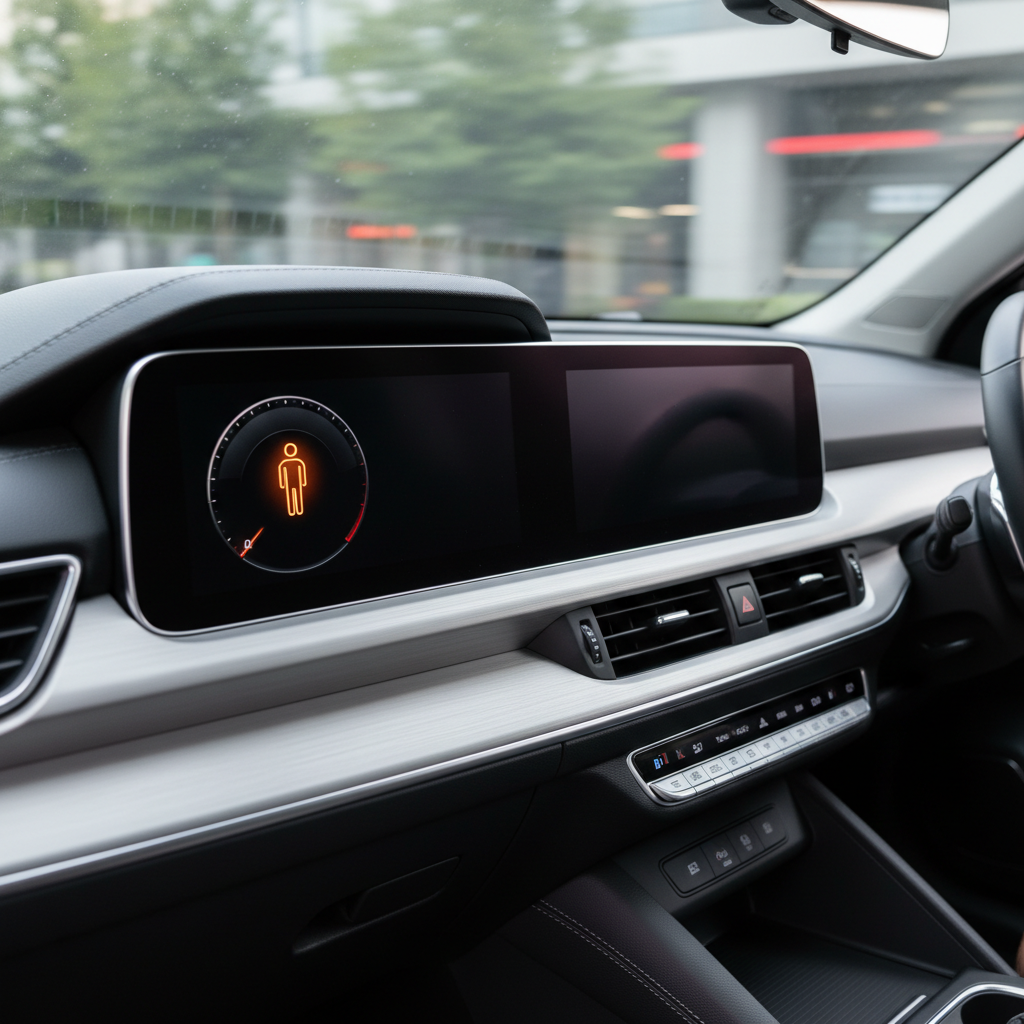
That illuminated person symbol on your dashboard is your car saying, “Hey, heads up — there’s a person or cyclist out there, and we might be getting too close.” It’s part of your car’s Advanced Driver-Assistance Systems (ADAS), specifically the pedestrian detection feature. When it lights up, that’s a serious warning, usually with chimes and sometimes automatic braking, all meant to buy you those extra seconds to react and avoid a wreck. Don’t brush it off — it’s there to protect you and the folks outside your vehicle.
The Problem
I’ve been on the road for over 30 years, and I’ve seen vehicle safety get a whole lot smarter. One of the biggest leaps has been these driver-assistance systems. Early on, missing a pedestrian was all on the driver — just you, your eyes, and your reflexes. Now the car’s got some brains too, especially in busy neighborhoods or after dark. The real issue isn’t just seeing the symbol; it’s knowing what it means and reacting right then and there. Plenty of folks catch a warning light and shrug it off like it’s just another sensor hiccup. But this isn’t a “check engine” light you can put off till next week. This is an immediate alert. Ignore it, and the consequences can get ugly fast — not just bent metal, but injuries. You’ve got to be ready to move the second your car gives you that heads-up.
How It Works
Think of your car’s pedestrian detection system like a quiet lookout, always scanning what’s ahead. Most modern systems, like the one in my buddy Dave’s 2021 Outback, use a mix of tech. Up front — usually behind the grille or tucked in the windshield near the rearview mirror — you’ll find radar sensors and cameras. The radar throws out radio waves, those waves bounce off objects, and the car figures out distance and speed from the return. At the same time, the camera — usually a high-resolution, wide-angle setup — is watching shapes and movement patterns that match a human or a bicycle.
Those sensors feed everything into the car’s brain, where it runs a pile of algorithms. It’s looking for gait patterns, a human silhouette, the shape of a bike, all that stuff. It also checks size, speed, and where the object’s headed relative to your vehicle. If the system thinks there’s a strong chance of a collision with a pedestrian or cyclist, it jumps in. First you’ll usually get an audible warning — beeps or chimes. Right with that, the little person symbol, sometimes with a “BRAKE!” message, pops up on the dash or head-up display. On more advanced setups, like on my son’s Ford Explorer, it may pre-charge the brakes or even apply them if you don’t react fast enough. The whole thing happens in milliseconds. It’s like having a fast co-pilot keeping an eye out for trouble while you’re driving. Not perfect, though. Heavy rain, thick fog, or sun glare can throw the sensors off — I’ve seen that firsthand — but it’s still a strong layer of protection that can cut down the risk of a bad hit.
Step-by-Step Fix
Okay, “fix” isn’t really the right word here, since nothing’s broken. This is about your reaction. When that person symbol lights up, the system’s doing exactly what it’s supposed to do: warning you about a real hazard. Your job is simple. Act.
-
Don’t Panic, Scan Immediately — The symbol means possible danger. First move: do a quick but thorough scan of the area right in front of your vehicle. The system usually catches things within a 10-20 foot radius, though sometimes it’s a little farther out.
- Safety First: Never mash the brakes without checking your rearview mirror for traffic behind you. You don’t want to create a rear-end accident on top of everything else.
-
Verify the Threat — Is there actually a pedestrian or cyclist there? Sometimes it’s a false alarm from a mailbox, a bag blowing across the road, or a shadow moving weird. Still, assume it’s real until you prove otherwise.
- If it’s a false alarm: Good. You checked, no harm done, and you can keep rolling.
-
Brake Smoothly and Firmly — If you confirm there’s a person or cyclist, hit the brakes firmly but in a controlled way. Don’t stomp like you’re trying to break the pedal in half unless it’s a true emergency — that can upset the vehicle or surprise the driver behind you.
- Modern braking: Most ABS systems will handle a hard stop without locking up, but your goal is still a clean, controlled stop.
-
Steer to Avoid (If Safe) — If braking alone won’t stop the collision, and the path’s clear, steer around the obstruction if you can. Look for an escape route — a clear lane, shoulder, or even a soft curb if that’s the only option. That’s a last resort. You’ve got to think quick.
- Important Consideration: Check your blind spots before swerving. A small scrape beats yanking into another car or oncoming traffic.
-
Maintain Awareness — Once the immediate danger’s gone and the symbol clears, don’t relax too fast. Stay alert. In city driving, people can step out from anywhere. This isn’t a one-and-done warning; it means you’re in an area where this kind of thing can happen again.
-
Troubleshooting False Alarms — If the system keeps crying wolf, there may be a dirty sensor in the mix. My son’s car, for example, had its front radar sensor caked with mud after a weekend camping trip, and it was yelling at him every five minutes.
- Clean the sensors: Find the radar sensor — often behind the front grille or bumper — and the camera, usually at the top center of the windshield. Use a soft cloth and mild glass cleaner. Don’t go at it with anything abrasive.
- Check for obstructions: Make sure nothing’s blocking the sensors. A bad car wash sticker, a leaf, or even a fresh coat of pollen can mess with things.
-
System Deactivation? — Most cars let you shut the system off temporarily through the infotainment screen or a dash button. I wouldn’t make it a habit, but if it’s throwing false positives nonstop — say, off-roading where it thinks bushes are people — you might have to. Just remember to turn it back on once you’re back on normal roads. Some systems reset on restart anyway.
Common Causes
When that person symbol lights up, it usually comes down to one of these:
- Actual Pedestrian/Cyclist: That’s the big one. Someone walks into your path, a cyclist crosses ahead, or a kid darts out from between parked cars. Your car saw it before you fully registered it. I’ve had that happen plenty in school zones, and I’m grateful every time for the extra warning.
- Sudden Obstruction: Sometimes it’s not a person at all, just something that looks like one to the sensors. A big animal, a dog, a tumbleweed, a trash can rolling into the street, or low-hanging brush can fool it for a second. Back in 2019, I was driving through Kentwood and my system screamed at me for a giant cardboard box that blew off a truck.
- Dirty or Obscured Sensors: Dust, mud, snow, ice, or even heavy rain can block the radar or camera and make the system misread what’s going on. A little grime goes a long way with these things.
- Low Light or Glare: Even with better tech, ugly lighting can still cause trouble. Driving straight into a setting sun or under deep shadows can confuse the cameras and make object ID harder.
- System Malfunction: Less common, but it happens. If the symbol stays on all the time, even with nobody around, or it’s warning you in clear open space, there may be a fault. Could be a sensor, wiring, or software issue. That’s the point where you want a pro to take a look.
Common Mistakes
I’ve seen homeowners — and plenty of seasoned drivers — make the same mistakes with this system. Don’t be that guy.
- Ignoring the Warning: Worst move you can make is assuming it’s a false alarm every single time. This isn’t like low tire pressure where you can top it off later. This light means possible impact. Treat every alert like it matters until you know otherwise.
- Over-reliance on the System: Don’t act like the car’s driving itself. These are assistance systems, not replacements for an alert driver. You still need to scan ahead, predict what’s coming, and brake yourself. The car’s backup, not the boss.
- Not Cleaning Sensors: A dirty sensor is basically a blind sensor. A little road grime can mess the whole thing up. Make it a habit to check and wipe the camera and radar areas when you wash the car.
- Turning the System Off & Forgetting: Some folks get fed up with false alarms and shut it off. Fine, if you’ve got a reason. But if you forget to turn it back on, you’ve lost a pretty important safety net for everyday driving. Turn it back on.
- Not Understanding Your Car’s Specifics: Not all pedestrian detection systems work the same way. Some just warn you; others will brake for you. Read the owner’s manual. Know what your vehicle will do — and what it won’t — when that symbol lights up.
Cost & Time Breakdown
Since this is about reacting to the system, there’s no direct “DIY fix” cost. But keeping the system clean and working right matters, and if it truly fails, you’ll need a professional involved. Here
Related Articles
Keep troubleshooting with these hand-picked guides from FixlyGuide:
- The Hidden Reason Your GFCI Trips — And Why Most Homeowners Get It Wrong — A continuously tripping GFCI outlet is a safety warning, often indicating a problem like moisture, a faulty appliance, or a wiring issue th…
- The Secret Power Tool Hiding in Your Garage for a Speedier Clean — Unlock the hidden potential of your cordless drill to tackle stubborn household grime, soap scum, and dirt with specialized cleaning attach…
- The Single Cedar Board Secret to Attracting Bluebirds to Your Yard — Discover how to construct an ideal bluebird nesting box using just one cedar board, providing a safe and inviting habitat for these cherish…
- The 4 Critical Dimensions of a Bluebird House (Most DIY Plans Miss One) — Discover the precise measurements and often-overlooked design elements essential for building a bluebird house that truly attracts nesting…
- The Single Board Secret to Attracting Bluebirds: A Quick DIY House — Discover how to construct an ideal bluebird house using just one cedar board, providing a safe and inviting home for these cherished backya…
- Why Your Wall Switch Feels Hot: The Hidden Danger Most Homeowners Miss — A hot light switch isn't just uncomfortable; it's a critical warning sign of potential electrical hazards that demand immediate attention.
What should this project cost?
Enter your project details for a realistic cost range before you call anyone.
Cost depends heavily on which system turns out to be the source.
- Regional adjustment
- National average
- Labor share (typical)
- ~$1,620
- Quotes to collect
- 3 written estimates
Educational estimate based on national averages — not a binding quote. Always confirm with written local estimates.
Get the print-ready PDF of this guide
A clean, ad-free, printable version you can keep on your phone or pin to the workshop wall. Free with a FixlyGuide account.
- Print-optimized layout
- Tools, materials & every step included
- Saved to your account
This article was independently written by FixlyGuide based on the source topic.
Frequently asked questions
What is the little person symbol on my car dashboard?+
The little person symbol indicates your car's pedestrian detection system has identified a pedestrian or cyclist in your path, warning you of a potential collision. It's an important safety feature designed to give you more time to react.
How does pedestrian detection work?+
These systems use a combination of front-facing cameras and radar sensors to scan the road ahead. They process images and radar waves to detect the shapes, sizes, and movements characteristic of people or bicycles, triggering alerts if a collision risk is detected.
Should I be worried if the person symbol lights up occasionally?+
Not necessarily worried, but you should always take it seriously and immediately scan your surroundings for a potential hazard. The system is working as intended, even if it's a false alarm from an unusual object.
Can I turn off the pedestrian detection system?+
Most vehicles allow you to temporarily deactivate the system via the infotainment screen or a dashboard button. However, it's strongly recommended to keep it active for your safety and the safety of others, especially in urban environments.
What should I do if my car frequently gives false alarms?+
First, check and clean the sensors, usually located behind the front grille and on the windshield. If false alarms persist after cleaning, there might be a system malfunction, and you should have it inspected by a professional mechanic.
Does cleaning my car affect the pedestrian detection system?+
Yes, it can. Ensure that when you wash your car, you specifically clean the areas where the radar sensors (often behind the grille/bumper) and the front-facing camera (usually near the rearview mirror) are located. Dirt, mud, or even heavy bug splatter can obscure them.
Is the pedestrian detection system always accurate?+
While highly advanced, these systems aren't foolproof. Extreme weather conditions like heavy rain, dense fog, or direct sunlight glare can sometimes interfere with their accuracy, leading to missed detections or false alarms. Always remain attentive.
My car braked automatically when the symbol appeared. Is that normal?+
Yes, in many newer vehicles, the pedestrian detection system includes Automatic Emergency Braking (AEB). If the system detects an imminent collision and the driver doesn't react quickly enough, it can apply the brakes autonomously to mitigate or prevent an impact.


Discussion
Loading comments…