- The 4 Critical Dimensions of a Bluebird House (Most DIYers Miss One) — Discover the four often-overlooked dimensions crucial for a successful bluebird house, ensuring your avian residents thrive season after se…
- The Secret to Lush Raised Beds? It's Not Just About How You Water — Smart irrigation for raised garden beds isn't just about automation; it's about delivering the right amount of water precisely when your pl…
- The 6 Cleaning Secrets Hiding in Your Power Drill (Plus Attachments to Master) — Your power drill isn't just for DIY projects; with the right attachments, it's a powerful and efficient cleaning tool for tackling tough gr…
- The Secret Power Tool Hiding in Your Garage for a Speedier Clean — Unlock the hidden potential of your cordless drill to tackle stubborn household grime, soap scum, and dirt with specialized cleaning attach…
- The 5 Essential Tools Every New Gardener Needs (And 3 You Can Skip) — Starting a garden doesn't require a huge investment in tools; savvy new gardeners can thrive with just a few key items and save money by kn…
Published July 30, 2026Last updated August 17, 2026
Tools & materials you'll need
Affiliate links- AmazonOrganic Compost2-3 bags (1.5 cu ft each) · High-quality, well-rotted compost to improve soil structure and nutrients.
- AmazonShade-Tolerant PlantsChoose from the list provided, appropriate for your hardiness zone.
- AmazonTree & Shrub Fertilizer (slow-release granular)Optional, for a slight boost to struggling plants, use sparingly.
As an Amazon Associate FixlyGuide earns from qualifying purchases — at no extra cost to you. Prices and availability are accurate as of publication and subject to change.
Quick Answer
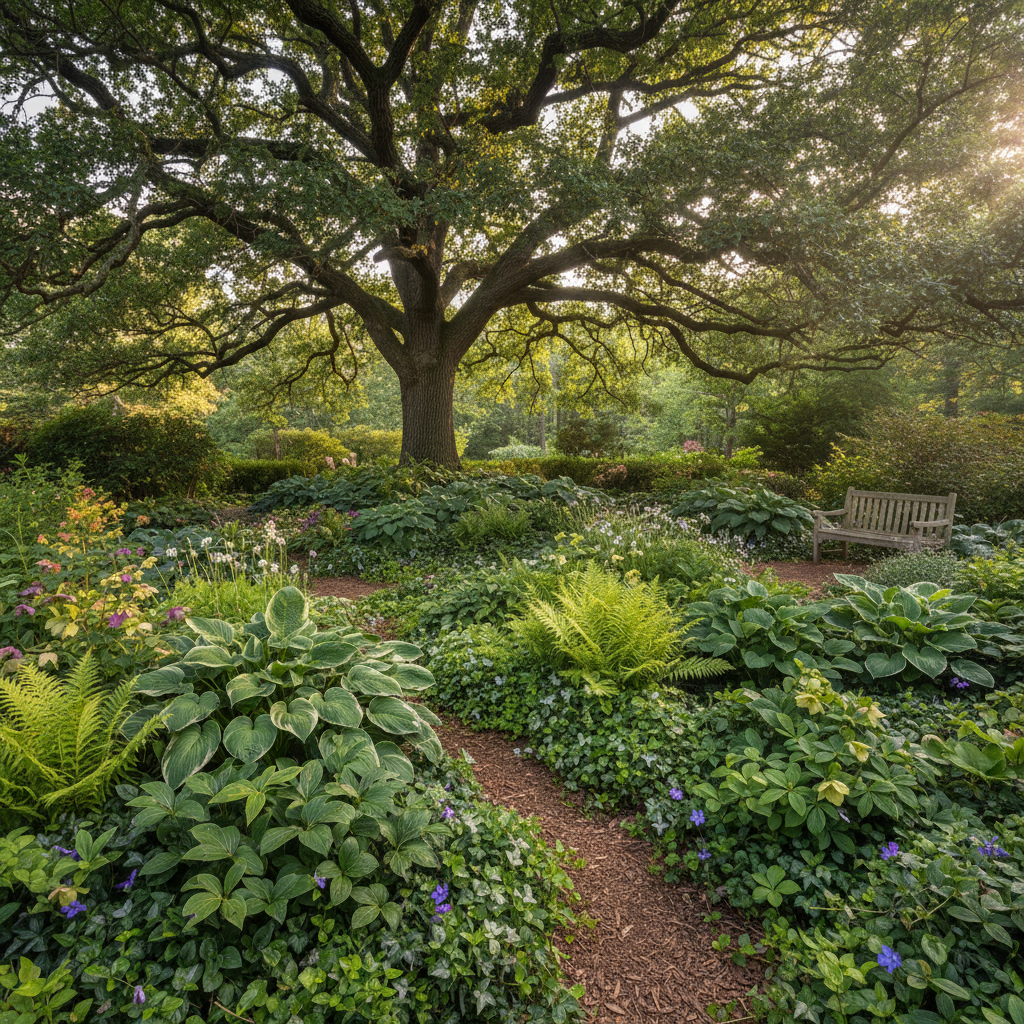
I’m gonna be straight with you: trying to grow much of anything right under a big, established tree is a rough deal. Real rough. That thing’s a nutrient hog and a shade monster. But don’t toss in the towel just yet. The trick is picking the right plants — ones that can handle a little abuse — and giving ’em a hand getting started. We’re talking soil amendment, maybe some drip irrigation, and choosing species that naturally deal with dry shade like they were built for it. I’ve had solid luck with folks planting things like Liriope or certain hostas in these spots, and with a little elbow grease, you can too.
The Problem
I’ve looked at a lot of yards over the years, and one of the biggest head-scratchers for homeowners is that bare, sad patch under their big shade trees. You know the spot. Folks try everything—pansies, petunias, even some shrubs—and almost nothing makes it past the first season. They start thinking they’ve got a black thumb, but it ain’t them. It’s the tree. That mature oak or maple isn’t just throwing shade; it’s running a master class in resource competition, and your little flowers are getting worked over.
First off, there’s the shade. Deep, often year-round shade that most pretty flowering plants just can’t hack. They need sun to do their thing, to photosynthesize and make the energy they need to grow. Under a dense canopy, they’re basically starving for light, stretching for scraps, getting leggy and weak. I tell homeowners, if it looks like a permanently cloudy day under that tree, most standard garden plants ain’t gonna cut it.
Then there’s the root competition. This, in my experience, is the real silent killer. Those big trees have massive, widespread root systems, especially the big established ones you see all over suburbs like Willow Creek or Northwood. I remember back in '08, I was helping a couple in Willow Creek clear out some old boxwoods under a huge Silver Maple, and the ground was just packed with fine feeder roots. I mean packed. Like trying to dig through rebar. Those roots are crazy good at grabbing every last drop of water and nutrient in the soil before anything else gets a shot. Your little annual just can’t square up with a root system that’s been there for fifty years or more. It’s a constant fight, and the tree usually wins. Folks think they’re watering enough, but a lot of that water gets stolen by the tree roots before it ever reaches the smaller plants.
And don’t forget the soil itself. Under an old tree, the soil is often depleted, compacted, and light on organic matter. Sure, leaves fall and break down over time, but after decades, the tree’s taken most of the good stuff. On top of that, the constant shade keeps the soil cooler and often wetter in the winter, then bone-dry in the summer. That’s not exactly prime real estate for new growth.
So before you grab another flat of impatiens, get clear on what you’re up against. It’s a triple threat: deep shade, heavy root competition for water and nutrients, and usually pretty lousy soil. Once you understand that, you can pick the right plants and methods to beat ’em.
How It Works
Think of a big tree as a benevolent dictator. It gives you shade, which is nice for cooling things down, but it also throws a long shadow, literally and figuratively, on anything trying to grow beneath it. The science behind this mess is pretty straightforward, and once you understand it, you’ll see why generic fixes just don’t work.
Light Deprivation: Plants need chlorophyll to convert sunlight into energy (photosynthesis). Most garden plants require at least 4-6 hours of direct sun daily. Under a dense tree canopy, especially deciduous trees in full leaf, light levels can drop to less than 10% of full sunlight. Even a plant that looks okay for a week can start fading fast if it’s not getting enough light to keep up its energy. That’s why stuff that loves full sun goes south so quick under a canopy — no dice.
Root Competition: Tree roots spread far beyond the drip line, often reaching two to three times the canopy width. These roots, especially the fine feeder roots close to the surface, are incredibly efficient at absorbing water and nutrients from the soil. When you plant something underneath, it’s immediately competing with a mature, established system that’s already dialed in and drinking from the same bucket. I’ve pulled up more than one “mystery-failing” flower bed where the real issue was the tree had already claimed the whole neighborhood underground.
Soil Conditions: The soil under a large tree often gets compacted from foot traffic and lacks organic matter because the tree has been siphoning nutrients for years. Heavy shade also slows down evaporation, which can leave the soil wet for longer periods after rain, but then it can dry out quickly in summer if the canopy intercepts most of the rainfall. It’s a weird setup—too wet, then too dry, and usually not a lot of food in the soil. Plants don’t like that kind of roller coaster.
Canopy Effects: The tree canopy also changes the microclimate beneath it. Temperatures stay cooler, wind is reduced, and humidity can be higher. That sounds pleasant, sure, but many garden plants prefer more airflow and warmer soil temperatures. Under a big tree, you’re creating a whole different growing environment, and a lot of common plants just aren’t built for it.
So yeah, it’s not magic. It’s light, roots, soil, and the way the whole area behaves under that tree. Get those factors wrong, and the bed’s toast before it even gets started.
Related Articles
Keep troubleshooting with these hand-picked guides from FixlyGuide:
- The 4 Critical Dimensions of a Bluebird House (Most DIYers Miss One) — Discover the four often-overlooked dimensions crucial for a successful bluebird house, ensuring your avian residents thrive season after se…
- The Secret to Lush Raised Beds? It's Not Just About How You Water — Smart irrigation for raised garden beds isn't just about automation; it's about delivering the right amount of water precisely when your pl…
- The 6 Cleaning Secrets Hiding in Your Power Drill (Plus Attachments to Master) — Your power drill isn't just for DIY projects; with the right attachments, it's a powerful and efficient cleaning tool for tackling tough gr…
- The Secret Power Tool Hiding in Your Garage for a Speedier Clean — Unlock the hidden potential of your cordless drill to tackle stubborn household grime, soap scum, and dirt with specialized cleaning attach…
- The 5 Essential Tools Every New Gardener Needs (And 3 You Can Skip) — Starting a garden doesn't require a huge investment in tools; savvy new gardeners can thrive with just a few key items and save money by kn…
- The #1 Mistake When Your Dishwasher Won’t Drain (And How to Fix It in 20 Minutes) — Discover the most common reason your dishwasher isn't draining and how to troubleshoot and fix it yourself in under half an hour.
What should this project cost?
Enter your project details for a realistic cost range before you call anyone.
Maintenance projects start a few hundred dollars; full redesigns often $6,000–$15,000.
- Regional adjustment
- National average
- Labor share (typical)
- ~$2,453
- Quotes to collect
- 3 written estimates
Educational estimate based on national averages — not a binding quote. Always confirm with written local estimates.
This article was independently written by FixlyGuide based on the source topic.
Frequently asked questions
Can I just add more soil under a tree to plant?+
Careful with that! Piling too much soil around a tree's trunk can smother its root flare and lead to decline or even death over time. If you need to add soil, keep it to 2-3 inches at most and keep it away from the trunk itself. It's better to amend the existing soil gradually.
What's the best way to water new plants under a tree?+
Forget the sprinkler. Young plants under trees need consistent, deep watering right at their root zone. I always recommend setting up a drip irrigation system or using a soaker hose for 20-30 minutes, 2-3 times a week, when they're getting established. This gets water directly to them without flooding the tree's main roots.
Should I prune tree branches to let in more light?+
Yes, judicious pruning can absolutely help! 'Lifting' the canopy (removing lower branches) or 'thinning' (removing select interior branches) can increase light penetration. However, always consult with a certified arborist before making major cuts to avoid damaging the tree or creating an imbalanced look.
How do I deal with tree roots blocking planting?+
You'll encounter roots, no doubt. For smaller, fibrous roots, you can hand-prune them carefully. Avoid cutting large structural roots (anything over 1-inch in diameter) as this can seriously harm the tree. Sometimes, it means planting around the bigger roots or choosing plants that are happy with less soil depth.
What's the absolute hardiest plant for dense dry shade?+
If I had to pick just one, I'd lean towards Cast Iron Plant (*Aspidistra elatior*). It earned its name for a reason – it's practically indestructible in deep, dry shade, tolerates neglect, and even some foot traffic. Liriope is a close second for its versatility.
Do I need to fertilize plants under trees?+
Generally, not heavily. Over-fertilizing can encourage lush growth that's then vulnerable to the tough conditions. Focus on building healthy soil with organic amendments like compost. If plants look nutrient-deficient, a slow-release, balanced organic fertilizer applied lightly in spring can help, but don't overdo it.
Can I use raised beds under trees?+
You can, but proceed with caution. Raised beds add significant soil depth, which can indeed make planting easier. However, if the bed is extensive, the tree's roots will eventually grow into it, and you run the risk of burying the tree's root flare. Keep raised beds relatively shallow (6-8 inches) and don't push them right up against the trunk.
How often should I re-amend the soil?+
Once you've initially amended the soil well, an annual top-dressing of 1-2 inches of good quality compost in the spring is usually sufficient. This slowly breaks down, adding organic matter and nutrients without disturbing the established plants or the tree's roots too much.

Discussion
Loading comments…