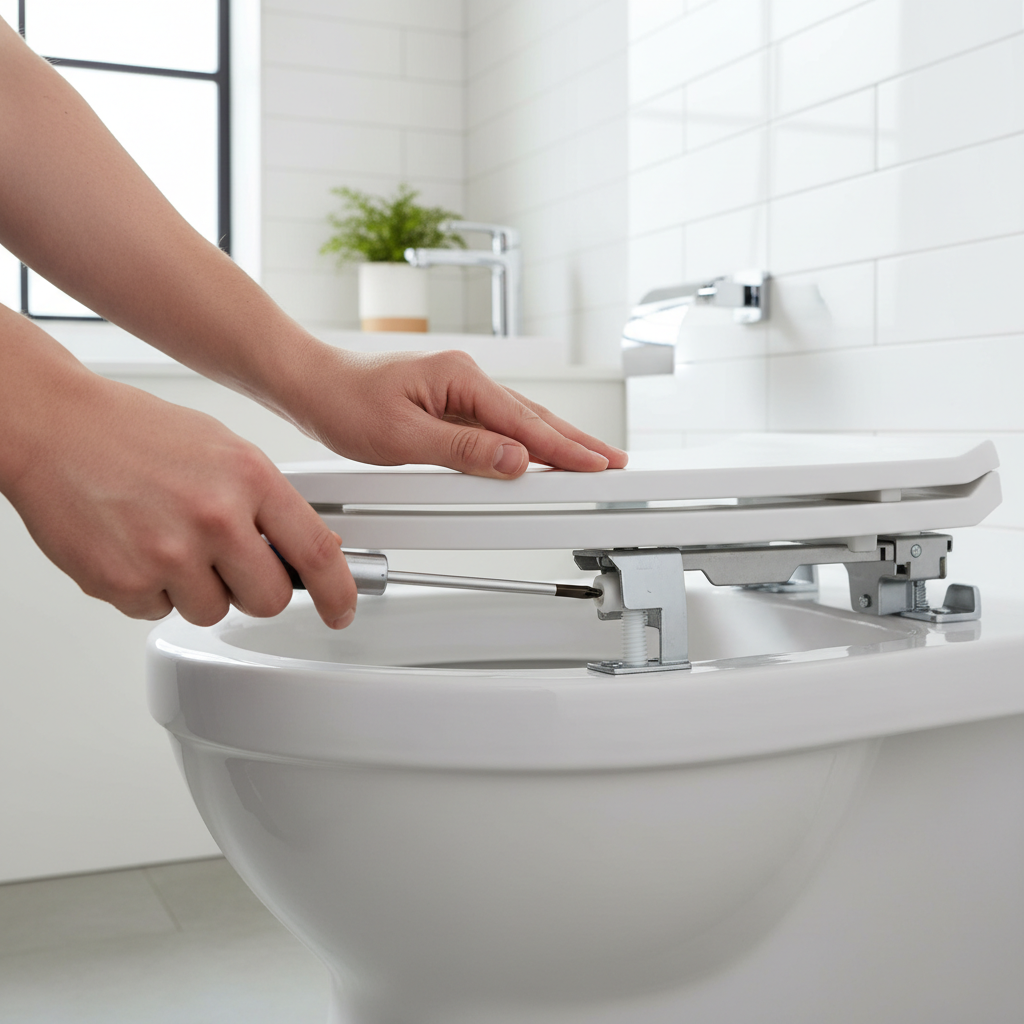
- Material Degradation: The most common cause. Over time, the plastic or enamel finish is broken down by a combination of cleaning chemicals, UV light exposure, and physical wear, leading to permanent yellowing and staining.
- Hinge Failure: The mechanical hinges are a major point of failure. Constant opening and closing wears out the plastic or metal components, resulting in a loose, wobbly, and misaligned seat.
- Bolt Corrosion: Metal bolts used in older installations are highly susceptible to rust and corrosion from moisture and ammonia. This can cause the nuts to seize completely, making removal extremely difficult.
- Physical Stress and Impact: Dropping the seat lid repeatedly, standing on the toilet lid, or excessive weight can cause fine stress cracks to form in the plastic, which then trap dirt and bacteria.
- Improper Cleaning: Using highly abrasive cleaners, scouring pads, or neat bleach can strip the protective glossy finish from the seat, accelerating discoloration and making it harder to clean in the long run.
General remodeling · Renovation planning
| Project category | General remodeling |
|---|---|
| Problem type | Renovation planning |
| Trade required | General contracting |
| Urgency | Planned project |
| Safety risk | Low safety risk |
| DIY suitability | Pro recommended |
| Cost category | Major investment |
| Typical timeline | Design and permitting often 2–4 months before work starts |
| Contractor type | General contractor |
Repair option
Phase the work and fix the building envelope first.
Replacement option
Full renovation with permits, design, and a general contractor.
Common causes
- Space no longer fits how the household lives
- Resale preparation
- Deferred maintenance stacking up
Relevant tools:project cost estimatorcompare quoteshome improvement material prices
Published June 4, 2026Last updated August 17, 2026
Tools & materials you'll need
Affiliate links- AmazonSocket Wrench Set with Deep Sockets1 · Essential for removing old-style nuts.
- AmazonFlathead Screwdriver1 · For prying open old hinge caps.
- AmazonPhillips Head Screwdriver1 · Often needed for tightening new top-mount bolts.
- AmazonTape Measure1 · To confirm bowl shape and bolt spread.
- AmazonSafety Glasses1 · Protects eyes from cleaning chemicals or brittle plastic.
- AmazonNew Toilet Seat1 · Ensure it matches your bowl shape (round or elongated).
- AmazonPenetrating Oil (e.g., WD-40)1 can · Crucial if your old bolts are metal and rusted.
- AmazonDisposable Gloves1 pair · For hygiene.
- AmazonBathroom Cleaner and Stiff Brush1 · For cleaning the newly exposed porcelain.
As an Amazon Associate FixlyGuide earns from qualifying purchases — at no extra cost to you. Prices and availability are accurate as of publication and subject to change.
Quick Answer
A new toilet seat instantly modernizes a bathroom by replacing a stained, cracked, or dated fixture with a clean, new one. The key is measuring your bolt spread (the two bolts holding the seat to the bowl), which is a standard 5.5 inches in the US, and choosing between a round or elongated bowl shape for a perfect fit. Modern quick-release and top-tightening bolt systems make this a 30-minute job that dramatically improves hygiene and aesthetics.
The Problem
Take a hard look at your toilet seat. Not the bowl, which you likely clean regularly, but the seat itself. Is it still the gleaming white it once was, or has it taken on a faint, stubborn yellow hue? Are there small, dark cracks forming near the hinges? Does the whole thing shift unnervingly when you sit down? This is the subtle problem that plagues millions of bathrooms. A worn-out toilet seat makes an otherwise sparkling clean bathroom feel grimy, dated, and unhygienic.
The plastic and enamel finishes on toilet seats are under constant assault. Between UV light from windows, the aggressive chemicals in cleaning products, and simple mechanical stress, they inevitably degrade. The smooth, non-porous surface becomes subtly rough, trapping microscopic grime and bacteria. The color shifts from crisp white to a dingy ivory or yellow, a change that no amount of scrubbing can reverse. This discoloration is often a sign that the protective finish has failed, and the porous core material is now absorbing moisture and bacteria.
Then there are the hinges. Over thousands of cycles of opening and closing, they loosen. The plastic can become brittle and crack, or the metal components can corrode. This leads to the dreaded "seat wobble," which is not only annoying but also puts extra stress on the porcelain bowl itself. Worst of all are the bolts holding the seat to the bowl. Hidden under plastic caps, they live in a perpetually damp environment, leading to rust and corrosion that can make replacement seem like an impossible task. A cheap, flimsy, or discolored toilet seat is a small detail that has an outsized negative impact on the overall impression of your bathroom.
How It Works
The humble toilet seat is a simple but elegant piece of engineering designed for easy installation and removal. Its functionality hinges on a standardized measurement most homeowners completely miss: the bolt pattern. In the United States, the distance between the center of the two bolt holes on the toilet bowl is a standard 5.5 inches. This is the "secret" that ensures near-universal compatibility among seat and toilet brands. The real trick isn't just knowing the measurement, but understanding the hardware that uses it.
A toilet seat assembly consists of the seat, the lid, and a hinge mechanism. This hinge has two bolt assemblies that pass through the 5.5-inch spaced holes in the back of the toilet bowl. The magic happens in how these bolts are secured. For decades, the standard method involved long metal bolts that went all the way through the porcelain and were secured from underneath with metal or nylon nuts. This required a homeowner to awkwardly lie on the floor, reaching up behind the bowl with a wrench.
The modernization of the toilet seat—and the key to a fast upgrade—lies in the evolution of this mounting hardware. Newer seats have abandoned the clumsy bottom-nut design in favor of "top-tighting" systems. These brilliant designs use an expanding anchor, much like a drywall anchor. You simply drop the bolt into the hole from above and tighten it with a screwdriver. As you tighten, a sleeve expands inside or underneath the hole, locking the bolt firmly in place. Another major innovation is the "quick-release" hinge. Seats with this feature can be detached from their mounting posts with the press of a button or the flip of a lever. This allows you to completely remove the entire seat for thorough cleaning, eliminating the grimy, hard-to-reach areas around the hinge posts. These two features—top-tightening bolts and quick-release hinges—are what make replacing a toilet seat a true 10-minute "reno."
Step-by-Step Fix
1. Safety First, Clean Second
- Put on a pair of disposable gloves and safety glasses. Old toilet hardware can be grimy and potentially brittle. Give the entire toilet a thorough cleaning with your preferred disinfectant spray, paying special attention to the hinge and bolt area. This makes the job far more pleasant.
2. Measure and Identify Your Shape
- First, determine your toilet bowl shape. There are two standards in the US: Round (about 16.5 inches from bolt holes to front center) and Elongated (about 18.5 inches). Measure your existing seat to confirm. Next, use a tape measure to check the distance between the center of the two bolt holes. It will almost certainly be 5.5 inches, but this confirmation gives you ultimate peace of mind.
3. Purchase Your New Throne
- With your bowl shape confirmed, buy a new seat. Consider upgrading to a "soft-close" model to prevent slamming, and a "quick-release" model for easier cleaning. Materials range from basic plastic ($25) to enameled wood, polypropylene, or even advanced bidet seats ($100+). For most homes, a mid-range polypropylene soft-close seat ($40-$60) offers the best blend of durability and features.
4. Pop the Old Hinge Caps
- Locate the plastic caps covering the base of the old hinges. Use a flathead screwdriver to gently pry them open. They usually snap on and off. This will expose the top of the bolt heads or plastic nuts.
5. Assess the Old Bolts
- Look at the exposed hardware. If you see a plastic screw head or nut on top, you may have a top-mount seat. If you see a metal bolt head, the nut is almost certainly underneath the toilet bowl. If the bolts are metal and look corroded, spray them liberally from above and below with a penetrating oil like WD-40 and let it sit for 15-20 minutes.
6. Attack the Old Nuts
- For bottom-mount bolts, place a deep-well socket wrench over the nut underneath the bowl. A 1/2" or 9/16" socket is most common. You may need to hold the bolt head steady on top with a screwdriver while you turn the nut counter-clockwise with the wrench. If the whole bolt spins, try to grip it with locking pliers.
7. Remove the Old Seat
- Once the nuts are fully unthreaded and removed, simply lift the old toilet seat and hinge assembly straight up and off the bowl. You have now successfully removed the old unit. Set it aside on some newspaper for disposal.
8. The Deep Clean You've Been Waiting For
- You will now see two bolt holes and a layer of grime on the porcelain that has been impossible to reach for years. This is a deeply satisfying cleaning opportunity. Spray the area with a good bathroom cleaner or a vinegar solution and use a stiff brush or non-scratch scouring pad to scrub the surface until it shines like new.
9. Install the New Bolt Hardware
- Unpack your new seat and read the specific instructions, as systems vary. For most modern top-tightening seats, you will simply push the anchor-style bolts through the holes from the top. There may be a rubber gasket to place down first.
10. Position and Tighten the New Seat
- Place the new seat onto the mounting posts or bolts. Before fully tightening, slide the seat back and forth to center it perfectly on the rim of the bowl. Once aligned, use your screwdriver or the included tool to tighten the bolts from the top. The key is to get them snug and secure, but do not overtighten. Cranking down with excessive force can crack the porcelain of the toilet bowl itself.
11. Test and Clip Down
- Give the newly installed seat a good wiggle from side to side. It should feel solid and stable with no movement. Test the soft-close feature. Once you are satisfied with the position and tightness, snap the decorative hinge caps down to cover the hardware.
Common Causes
- Material Degradation: The most common cause. Over time, the plastic or enamel finish is broken down by a combination of cleaning chemicals, UV light exposure, and physical wear, leading to permanent yellowing and staining.
- Hinge Failure: The mechanical hinges are a major point of failure. Constant opening and closing wears out the plastic or metal components, resulting in a loose, wobbly, and misaligned seat.
- Bolt Corrosion: Metal bolts used in older installations are highly susceptible to rust and corrosion from moisture and ammonia. This can cause the nuts to seize completely, making removal extremely difficult.
- Physical Stress and Impact: Dropping the seat lid repeatedly, standing on the toilet lid, or excessive weight can cause fine stress cracks to form in the plastic, which then trap dirt and bacteria.
- Improper Cleaning: Using highly abrasive cleaners, scouring pads, or neat bleach can strip the protective glossy finish from the seat, accelerating discoloration and making it harder to clean in the long run.
Common Mistakes
- Buying the Wrong Shape: The most frequent error is buying an elongated seat for a round bowl, or vice-versa. Always measure first.
- Over-Tightening the Bolts: This is the most dangerous mistake. Applying too much torque to the bolts can crack the porcelain of the toilet bowl itself, turning a $50 fix into a $400+ toilet replacement.
- Not Using Penetrating Oil: When faced with old, rusted metal bolts, trying to use brute force alone will lead to frustration and stripped nuts. Let penetrating oil do the work for you.
- Forgetting the Deep Clean: Skipping the opportunity to scrub the newly exposed porcelain under the old hinges. This traps old grime under your brand-new hardware.
- Ignoring the Instructions: Tossing the little instruction sheet and trying to guess how the new top-tightening or quick-release mechanism works. Reading it for 30 seconds can save 30 minutes of frustration.
- Using the Wrong Tools: Trying to remove bottom-mount nuts with regular pliers instead of a deep-well socket wrench, which provides a much better grip and torque.
Cost & Time Breakdown
| Task | DIY Cost | Pro Cost | Time |
|---|---|---|---|
| Measure & Purchase Seat | $25 - $90 | N/A | 30 minutes |
| Removal of Old Seat | $5 (Penetrating Oil) | $40 - $60 | 15-45 minutes |
| Clean Toilet Surface | $5 (Cleaner/Brush) | (Included in labor) | 10 minutes |
| Installation of New Seat | $0 | $40 - $60 | 15 minutes |
| Total | $30 - $100 | $120 - $220 | 1 - 1.5 hours |
Tips & Prevention
- Prioritize Quick-Release: When buying a new seat, make "quick-release" or "easy-clean" hinges a non-negotiable feature. The ability to remove the seat completely for cleaning is the single best way to maintain hygiene.
- Clean Gently: Avoid harsh, abrasive chemicals like scouring powders or chlorine bleach. Clean your seat with mild dish soap and water or a pH-neutral bathroom cleaner to preserve its factory finish.
- Check for Wobble: Every few months, give the seat a gentle push from side to side. If you feel any movement, pop the hinge caps and re-tighten the bolts slightly. This prevents the wobble from getting worse.
- Don't Stand on the Lid: Toilet seat lids are not designed as step-stools. This habit can easily lead to cracked lids and broken hinges.
- Address Stains Immediately: Don't let hard water or other stains sit for weeks. Clean them promptly to prevent them from setting into the finish.
- Upgrade Your Material: For a few dollars more, upgrade from basic polystyrene to a polypropylene or enameled wood seat. These materials are generally denser and more resistant to staining and chemical damage.
When to Call a Professional
For 95% of homes, replacing a toilet seat is a quintessential DIY task. However, there are a few specific scenarios where handing the job over to a plumber is the wise choice. The primary reason is hopelessly corroded hardware. If the bolts are so rusted that they have fused with the nuts, and several applications of penetrating oil combined with a powerful wrench have failed, stop before you break something. A professional has tools like nut splitters or oscillating multi-tools that can cut the old bolt off without damaging the porcelain bowl.
You should also call a pro if you notice any pre-existing damage to the toilet bowl itself, such as cracks or chips in the porcelain around the bolt holes. Attempting to wrench on old bolts in this situation could cause the damage to spread, leading to a leak or a complete toilet replacement. Finally, if you are upgrading to a high-tech electronic bidet seat that requires a new electrical outlet and a dedicated water line connection, this installation moves beyond simple mechanics and into the realm of licensed plumbers and electricians.
Repair or replace this system?
Plug in four numbers and see which choice holds up financially.
Free and instant. Educational guidance only — not a quote, inspection, or professional diagnosis.
Questions to ask before you sign
Ask every contractor the same questions and the cheapest bid stops looking cheapest. Check them off as you go — your progress is saved on this device.
Free, no signup. Bring this to every walkthrough so you compare bids on the same terms.
What should this project cost?
Enter your project details for a realistic cost range before you call anyone.
Mid-range remodels commonly $12,000–$22,000; small repairs often under $600.
- Regional adjustment
- National average
- Labor share (typical)
- ~$5,603
- Quotes to collect
- 3 written estimates
Educational estimate based on national averages — not a binding quote. Always confirm with written local estimates.
Fixly Project Decision Box
- DIY difficulty
- Moderate
- Estimated time
- 30 minutes – half a day
- Cost level
- Moderate
Main tools / materials
- Adjustable wrench
- Plunger or drain auger
- Bucket and towels
- Thread tape
When to stop and call a pro
- Water you cannot shut off at the fixture or main
- Sewage backing up into more than one fixture
- Water near electrical panels or outlets
- Gas water heater work beyond relighting a pilot
Need professional help?
Get a Licensed PlumberRepair or replace?
Run the age, cost ratio, and repair history through the calculator before you commit.
- Estimate this projectGet a cost range for your scope and ZIP before you call anyone.Open
- Get local estimatesSend one request and compare written estimates from vetted pros.Open
Free, no signup required. Estimates are educational guidance, not a quote or an inspection.
Recommended for DIYers & woodworkers
Sponsored
The Top 20 Tools for Workshops of Any Budget
No stationary machines or power tools required — plus 3 fundamental tools that can't be bought at any price.
Get the free guide
Ted's Woodworking — The #1 Woodworking Resource
Detailed instructions, dimensioned drawings, materials & cutting lists, and 3D schematics for every skill level.
See the plansSponsored: links above are affiliate links. FixlyGuide may earn a commission on qualifying purchases — at no extra cost to you.
Frequently asked questions
What's the difference between a round and an elongated toilet seat?+
A round toilet bowl measures approximately 16.5 inches from the center of the bolt holes to the front edge of the bowl. An elongated bowl is about 2 inches longer, measuring approximately 18.5 inches. Elongated bowls are generally considered more comfortable and hygienic, while round bowls are used to save space in smaller bathrooms. You must buy the correct shape for your bowl.
How do I get a rusted toilet seat bolt off?+
First, generously spray the nut and bolt from both top and bottom with a quality penetrating oil (like WD-40 or PB B'laster) and let it work for at least 20-30 minutes. Use a deep-well socket wrench (usually 1/2") for the best grip on the nut. If it still won't budge, a plumber can use a special tool called a nut splitter or a small oscillating tool to cut the bolt off without harming the porcelain.
Are expensive toilet seats worth it?+
Often, yes. While a basic $25 seat works, spending $50-$80 gets you significant upgrades. Features like 'soft-close' prevent slamming, 'quick-release' hinges make cleaning dramatically easier, and better materials like polypropylene are more resistant to the staining and yellowing that makes cheap seats look old quickly. These features improve the daily experience and longevity of the seat.
Can I put an elongated seat on a round toilet?+
No, you should not. While the bolt holes will line up, the elongated seat will overhang the front of the round bowl by about two inches. This will look awkward, feel unstable, and create a cleaning nuisance. Always match the seat shape to the bowl shape.
Discussion
Loading comments…