- Weak or Diseased Branch: The primary culprit. An internally compromised branch, even if thick, cannot handle dynamic loads. Often invisible until failure.
- Unsuitable Tree Species: Some trees (e.g., Poplar, Silver Maple, Box Elder, Willow) have naturally brittle wood or weak limb structures, making them inherently unsafe for swing installation.
- Improper Attachment: Ropes tied directly to the branch can cut into the bark, girdle the branch, and restrict nutrient flow, weakening it over time. Tight chains or too-thin materials also concentrate stress.
- Underestimating Dynamic Load: Homeowners often only consider static weight. The swinging motion significantly multiplies the forces exerted on the branch, leading to unexpected failures.
- Old or Weathered Hardware/Rope: UV exposure, rain, and temperature fluctuations degrade ropes and metal hardware over time, reducing their strength.
Published May 26, 2026Last updated August 17, 2026
Tools & materials you'll need
Affiliate linksAs an Amazon Associate FixlyGuide earns from qualifying purchases — at no extra cost to you. Prices and availability are accurate as of publication and subject to change.
Quick Answer
The most critical, yet frequently overlooked, factor in safe tree swing installation is the health and species of the tree and its branch. Many homeowners focus solely on rope strength or knot tying, but a weak or unsuitable branch is the primary cause of dangerous failures. Always assess the tree's condition, age, and wood type before hanging a swing to ensure it can safely support the load.
The Problem
You're envisioning joyful afternoons, children laughing, perhaps even a peaceful moment for yourself, gently swinging under the shade of a mature tree. But for many homeowners, the dream of a backyard tree swing turns into a nightmare through oversight. The problem isn't usually a flimsy rope or a poorly tied knot; those are often the first things homeowners check. The real danger lies in misjudging the tree itself. A branch that looks sturdy can be internally compromised by disease, insects, or rot, or it might simply belong to a species with brittle wood. Hanging a swing on such a branch introduces dynamic stresses – swinging, twisting, and sudden loads – that can exceed its structural integrity, leading to catastrophic failure. This isn't just about a broken swing; it's about serious injury or worse, and it's a mistake that's easily preventable with a deeper understanding of arboreal physics and biology.
How It Works
Understanding how a tree supports a swing involves a brief dive into dendrology and basic mechanics. A tree branch, like any cantilevered beam, experiences stress primarily at its point of attachment to the trunk. When a swing is added, this stress is compounded by dynamic loading. Imagine a static weight of 100 pounds. When that 100-pound weight is swinging, the forces exerted on the branch can momentarily spike to several times that amount due to momentum and changes in direction. This is known as impact loading or dynamic loading. The actual force depends on the arc of the swing, the speed, and the weight of the occupant. For example, a 150-pound person swinging vigorously can exert forces equivalent to 400-600 pounds or more on the branch attachment point.
Trees counteract these forces through a combination of wood density, grain structure, and the overall caliper (diameter) and health of the branch. Different tree species have vastly different wood densities and flexibility. Oaks (Quercus species) and maples (Acer species), for instance, are known for their strong, dense wood and robust branch structures, making them generally excellent choices. Poplars (Populus species) and willows (Salix species), conversely, often have softer, more brittle wood and are prone to limb breakage, making them unsuitable. The branch's diameter is also critical; a minimum of 8 inches in diameter at the attachment point is a good rule of thumb for mature trees, providing enough cross-sectional area to distribute the load effectively. Furthermore, the tree's overall health plays a crucial role. A tree experiencing drought stress, pest infestation, or internal rot will have significantly compromised structural integrity, even if it appears outwardly strong. The cambium layer, just beneath the bark, is responsible for growth and nutrient transport; damage here weakens the entire limb. Gravity, leverage, and the sheer strength of the wood are all in play, constantly being tested with every sway of the swing.
Step-by-Step Fix
1. Assess Tree Health and Species — Before you even think about hanging a swing, thoroughly inspect the tree. Look for obvious signs of distress such as dead leaves or branches, discolored bark, fungal growth (mushrooms), or insect activity (boreholes, sawdust). Identify the tree species; consult a local arborist or a tree identification guide if unsure. Prioritize species known for strong wood, like Oak, Maple, Ash, or Elm. Avoid Poplar, Willow, Honey Locust, or trees with apparent disease.
- Safety Note: Never climb a ladder to inspect a branch without a spotter. If you suspect internal rot or severe disease, call a certified arborist for a professional assessment.
2. Select the Right Branch — Choose a live, healthy branch that is relatively horizontal, at least 8 inches in diameter where the swing will attach, and free from any obvious cracks, splits, or cankers. The branch should be high enough so the swing hangs freely, typically 8-12 feet off the ground, ensuring plenty of clearance underneath and around. The branch should also extend out from the trunk far enough to allow for a full swing arc without hitting the trunk or other branches. Look for a branch that is part of the main scaffold of the tree, indicating good structural integration.
- If this doesn't work: If no suitable branch meets these criteria, consider a freestanding swing set or a different tree. Do not compromise on branch integrity.
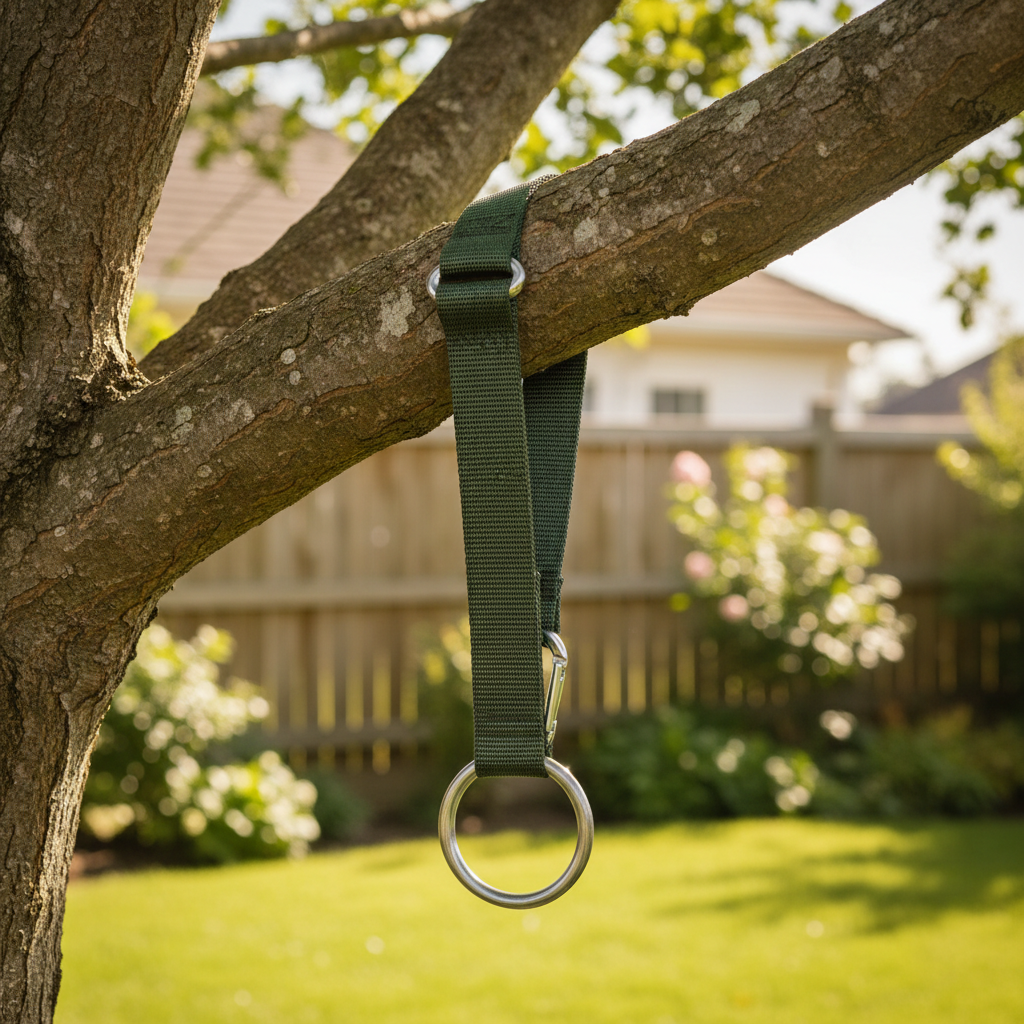
3. Prepare Your Rope or Straps — Instead of tying ropes directly around the branch, which can girdle and damage the tree over time, use tree-saver straps or a protective sleeve. These broad, flat straps distribute pressure more evenly and prevent bark abrasion. If using rope, thread it through a sturdy, outdoor-grade rubber hose or a piece of PVC pipe to protect the branch's cambium layer. Cut two lengths of rope or straps, ensuring they are long enough to reach the desired swing height with extra for secure knot tying.
- Tools/Materials: Heavy-duty tree-saver straps (at least 2 inches wide) OR marine-grade rope (minimum 1/2-inch diameter) and heavy-duty rubber hose/PVC pipe sleeves (cut to 2-3 ft lengths).
4. Attach Straps/Ropes Securely — Drape the tree-saver straps over the selected branch, ensuring they are positioned at least 1-2 feet away from the trunk to avoid excessive leverage stress. If using rope with sleeves, thread the rope through the protective sleeve and then over the branch. Ensure the sleeve fully covers the contact point. Bring the ends of the straps or ropes down.
5. Install Anchor Hardware (If Applicable) — For certain types of swings or to make future adjustments easier, you might use heavy-duty galvanized shackles or carabiners. Attach these to the ends of your tree-saver straps. If using rope, ensure your knots are appropriate for outdoor use and weight-bearing, such as a Bowline knot, Figure-Eight knot, or a Fisherman's Bend, and secure the rope directly to the swing seat or to the shackles/carabiners.
- Safety Note: Double-check all knots and connections. Perform a gentle pull test on each attachment point before connecting the swing seat.
6. Secure the Swing Seat — Attach your chosen swing seat to the ropes or straps using appropriate hardware (carabiners, heavy-duty clips, or secure knot tying). Ensure the seat is level and hangs at a comfortable height for its intended users. A common height for children's swings allows their feet to touch the ground when seated, while adult swings can be higher.
7. Test the Load Gradually — Before anyone fully swings, perform a cautious load test. First, apply your own weight (or a helper's) slowly and gently, holding onto the ropes. Listen for creaking, groaning, or cracking sounds from the branch. Visually inspect the branch for any signs of bending or stress. If everything seems secure, have the lightest user try the swing gently, gradually increasing the intensity of the swing.
- If this doesn't work: If you hear any concerning noises or see visible stress, immediately remove the swing and re-assess the branch. It is not safe.
8. Monitor and Maintain — Regularly inspect the tree branch, straps/ropes, and hardware, especially after severe weather. Look for wear and tear, fraying ropes, rust on hardware, or any changes in the tree's health around the attachment point. Re-adjust or replace components as needed. Trees grow, and the branch will gradually increase in diameter, potentially girdling unprotected ropes.
Common Causes
- Weak or Diseased Branch: The primary culprit. An internally compromised branch, even if thick, cannot handle dynamic loads. Often invisible until failure.
- Unsuitable Tree Species: Some trees (e.g., Poplar, Silver Maple, Box Elder, Willow) have naturally brittle wood or weak limb structures, making them inherently unsafe for swing installation.
- Improper Attachment: Ropes tied directly to the branch can cut into the bark, girdle the branch, and restrict nutrient flow, weakening it over time. Tight chains or too-thin materials also concentrate stress.
- Underestimating Dynamic Load: Homeowners often only consider static weight. The swinging motion significantly multiplies the forces exerted on the branch, leading to unexpected failures.
- Old or Weathered Hardware/Rope: UV exposure, rain, and temperature fluctuations degrade ropes and metal hardware over time, reducing their strength.
- Improperly Tied Knots: Weak or incorrect knots can slip, untie, or fail under stress. Essential to use knots designed for load-bearing and outdoor conditions.
Common Mistakes
- Ignoring the Tree's Health: Focusing solely on the swing itself and neglecting to inspect the tree for disease, pests, or old age is a critical oversight. A healthy-looking exterior can hide significant internal damage.
- Choosing a Branch Too Small: Using a branch less than 8 inches in diameter, especially for adult swings, provides insufficient structural support for dynamic forces. Always prioritize larger, more mature limbs.
- Tying Ropes Directly to the Branch: This is a common mistake that harms the tree by girdling the branch and can lead to eventual limb failure by weakening the wood over time where the rope constricts growth.
- Placing the Attachment Point Too Close to the Trunk: This puts excessive leverage stress on the branch collar (where it joins the trunk), a critical area for structural integrity. Always attach at least 1-2 feet out from the trunk.
- Not Using Marine-Grade or UV-Resistant Rope: Standard ropes can degrade quickly when exposed to the elements, leading to fraying and sudden failure. Invest in quality materials.
- Forgetting Regular Inspections: Tree swings are exposed to the elements and continuous stress. Neglecting annual or bi-annual inspections of the branch, rope, and hardware can lead to dangerous, unexpected failures.
Cost & Time Breakdown
| Task | DIY cost | Pro cost | Time |
|---|---|---|---|
| Tree inspection (DIY) | $0 | N/A | 15–30 minutes |
| Tree inspection (Arborist) | N/A | $75–$200 | 30–60 minutes |
| Purchase straps/rope/hardware | $30–$100 | N/A | 15–30 minutes |
| Install swing (DIY) | $0 | N/A | 30–60 minutes |
| Initial load test | $0 | N/A | 5–10 minutes |
| Total (DIY) | $30–$100 | N/A | 1–2 hours |
Tips & Prevention
- Annual Tree Health Check: Once a year, thoroughly inspect your tree for signs of disease, insect infestation, or overall stress. Look for unusual leaf drop, bark changes, or fungal growths. Consider a professional arborist check every 3-5 years.
- Choose the Right Tree: If you're planting a new tree for future swing ambitions, select a species known for strong wood and robust structure, such as Oak, Sugar Maple, or Hickory. Plan for long-term growth.
- Inspect Hardware & Rope Regularly: Before each swing season and after any major storm, check ropes for fraying, hardware for rust or bending, and protective sleeves for damage. Replace components at the first sign of wear.
- Vary Attachment Points (If Possible): If your tree has multiple suitable branches, occasionally move the swing to a different limb to allow a 'rest' period for the previously stressed branch. This distributes the load over time.
- Periodically Adjust Straps/Ropes: As the tree grows, its diameter increases. Check that protective straps or sleeves aren't becoming too tight and adjust or replace them to prevent girdling and bark damage.
- Educate Users: Remind children and adults about safe swinging practices, such as not standing on the swing if it's not designed for it, and avoiding extreme, dangerous maneuvers that put excessive stress on the branch.
When to Call a Professional
While installing a tree swing seems like a simple DIY project, recognizing when to call a professional arborist is crucial for safety. You should immediately contact a certified arborist if you are unsure about the health or species of your tree, or if the ideal branch shows any signs of weakening like cracks, decay, fungal growth, or abnormal limb sag. If the branch you've selected is too high to access safely with a standard ladder, or requires specialized climbing equipment, an arborist can install the swing securely. Furthermore, if your tree is suffering from pests, disease, or structural issues that might compromise its ability to safely hold a swing, a professional assessment can recommend treatment or guide you to safer alternatives, ensuring the long-term health of your tree and the safety of your family.
Related Articles
Keep troubleshooting with these hand-picked guides from FixlyGuide:
- The Secret to Lush Raised Beds? It's Not Just About How You Water — Smart irrigation for raised garden beds isn't just about automation; it's about delivering the right amount of water precisely when your pl…
- The Hidden Reason Your GFCI Trips (It's Not Always a Faulty Outlet) — A continuously tripping GFCI outlet is a critical safety warning, often indicating moisture, a faulty appliance, or a wiring problem that r…
- The 4-Hour — Transform your garden into a self-sufficient oasis with smart strategies for watering, weeding, and pest control, minimizing your effort.
- The Hidden Reason Your GFCI Trips (It’s Not Always a Bad Outlet) — A tripping GFCI outlet is a safety mechanism doing its job, often indicating a problem like moisture, a faulty appliance, or a wiring issue…
- The #1 Mistake Owners Make With New Pellet Grills (And How to Fix It) — Avoid a bitter first cook by properly seasoning your new pellet grill before its inaugural use.
- The #1 Gutter Mistake You're Making (And 3 Hidden Causes of Overflow) — Overflowing gutters in heavy rain are often a sign of a deeper issue than just debris, leading to potential foundation damage and costly re…
What should this project cost?
Enter your project details for a realistic cost range before you call anyone.
Cost depends heavily on which system turns out to be the source.
- Regional adjustment
- National average
- Labor share (typical)
- ~$1,620
- Quotes to collect
- 3 written estimates
Educational estimate based on national averages — not a binding quote. Always confirm with written local estimates.
This article was independently written by FixlyGuide based on the source topic.
Frequently asked questions
How thick does a tree branch need to be for a swing?+
For optimal safety, a tree branch should be at least 8 inches in diameter at the point where the swing will be attached. This ensures sufficient structural integrity to handle the dynamic forces exerted by swinging.
What kind of tree is best for a swing?+
Trees known for strong, dense wood and robust branch structures are best, such as Oak (White Oak, Live Oak), Sugar Maple, Ash, and Hickory. Avoid trees with brittle wood like Poplar, Willow, or Silver Maple.
How often should I inspect my tree swing?+
You should inspect your tree swing, the branch, and all hardware at least once a year, preferably before the start of swinging season. Additionally, check it after any severe weather conditions, such as strong winds or heavy storms.
Can a tree swing damage a tree?+
Yes, if not installed correctly. Ropes tied directly around a branch can girdle it, cutting off nutrient flow and eventually weakening or k_illing the branch. Using tree-saver straps or protective sleeves around ropes can prevent this damage.

Discussion
Loading comments…