- The 90-Second Trick to Unclogging Any Shower Drain (No Chemicals Needed) — Learn how to quickly and safely clear a clogged shower drain using simple tools and household items, avoiding harsh chemicals.
- How to Unclog a Drain Without Harsh Chemicals (5 Pro Methods) — Drain cleaners eat your pipes, your skin, and the environment. These 5 chemical-free methods clear 95% of household clogs faster — and cost…
- Clogged AC Drain Line? Clear It Yourself in 30 Minutes — Learn how to quickly and safely clear a clogged AC drain line to restore your air conditioner's efficiency and prevent water damage.
- The 1 Mistake Homeowners Make When Their AC Drain Clogs (And The $5 Fix) — Discover the most common error homeowners make when tackling a clogged AC drain line and learn a simple, inexpensive solution to prevent co…
- The Nasty Truth About Your Smelly Bathroom Sink — And the $5 Fix — A persistent foul odor from your bathroom sink drain is often caused by a forgotten gunk buildup that's easy to eliminate with basic househ…
Plumbing · Clog
| Project category | Plumbing |
|---|---|
| Problem type | Clog |
| Trade required | Plumbing |
| Urgency | Soon — within weeks |
| Safety risk | Low safety risk |
| DIY suitability | DIY friendly |
| Cost category | Low cost |
| Typical timeline | Same-day DIY attempt; pro visit within a day or two |
| Contractor type | Licensed plumber |
Repair option
Plunger, hand auger, or trap cleanout before chemicals.
Replacement option
Line replacement when clogs return in the same spot repeatedly.
Common causes
- Hair and soap buildup in the trap
- Grease cooling in the branch line
- Flushed wipes or foreign objects
Relevant tools:diy difficultydiy or hire a pro
Published April 18, 2026Last updated August 17, 2026
Tools & materials you'll need
Affiliate linksAs an Amazon Associate FixlyGuide earns from qualifying purchases — at no extra cost to you. Prices and availability are accurate as of publication and subject to change.
How it works
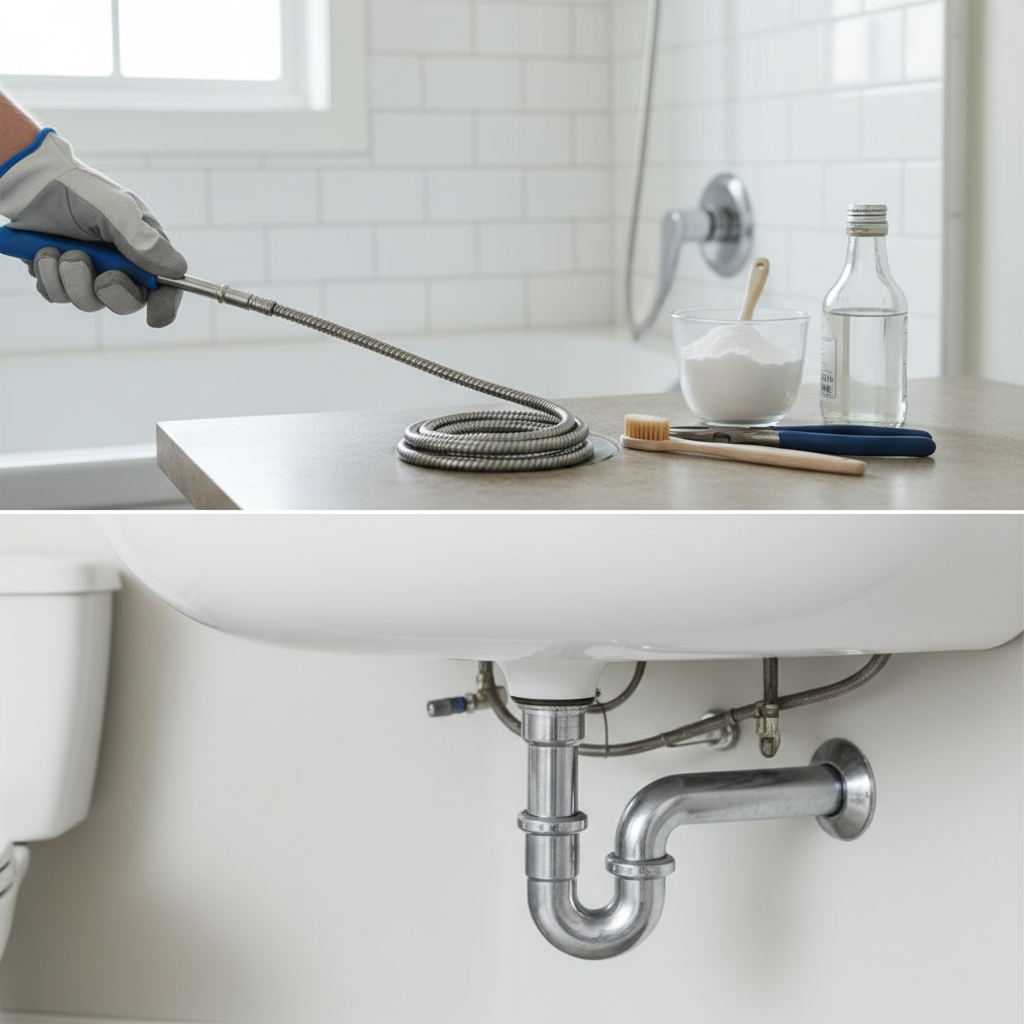
Your shower drain system is designed to quickly channel water away while preventing sewer gases from entering your home. It starts with the visible drain cover, or strainer, which provides the first line of defense against large debris. Below the strainer, the drainpipe drops vertically before entering a U-shaped bend called a P-trap. The sole purpose of the P-trap is to hold a small amount of water at all times, creating a seal that blocks gases from the main sewer line from rising into your bathroom. From the P-trap, the branch drain line slopes downward to connect with a larger drain stack, which eventually leads to your home's main sewer line.
Clogs almost always form in the first few feet of this system. Hair, the primary culprit, slips through the strainer and snags on the drain’s internal crossbars or the rough interior of the pipes. Over time, soap scum, conditioners, and body oils act as a binding agent, creating a dense, water-resistant mass. This blockage typically lodges just below the drain opening or gets caught in the tightest curve of the P-trap. Understanding this simple anatomy is key: your target is almost always the hair and soap scum buildup located within arm’s length of the drain opening or just past it, in the trap. Most chemical-free methods work by either physically pulling this mass out or breaking it down enough for water to flush it away.
Step-by-Step Fix
Follow these methods sequentially, from the simplest to the most involved. Most clogs surrender to the first few steps.
- Tools & Materials: Flathead and Phillips screwdrivers, gloves, eye protection, flashlight, bucket, old rags, needle-nose pliers, baking soda, white vinegar, drain claw tool, 25-foot handheld drain auger (snake).
- Safety: Always wear gloves and eye protection. Drain gunk contains bacteria and mold. If you suspect a previous owner used chemical drain openers, be extremely cautious, as residual chemicals can splash and cause severe burns. Never mix different cleaning agents.
-
Prepare the Area and Remove the Strainer — First, clear the shower floor of all bottles and mats. Use a screwdriver to remove the screws holding the drain cover in place. If there are no screws, it may be a "snap-in" type that can be pried up gently with a flathead screwdriver or a "lift-and-turn" type that must be unscrewed from its base. Place the screws and cover in a safe place to avoid losing them down the drain. This initial step gives you direct visual and physical access to the drain opening.
-
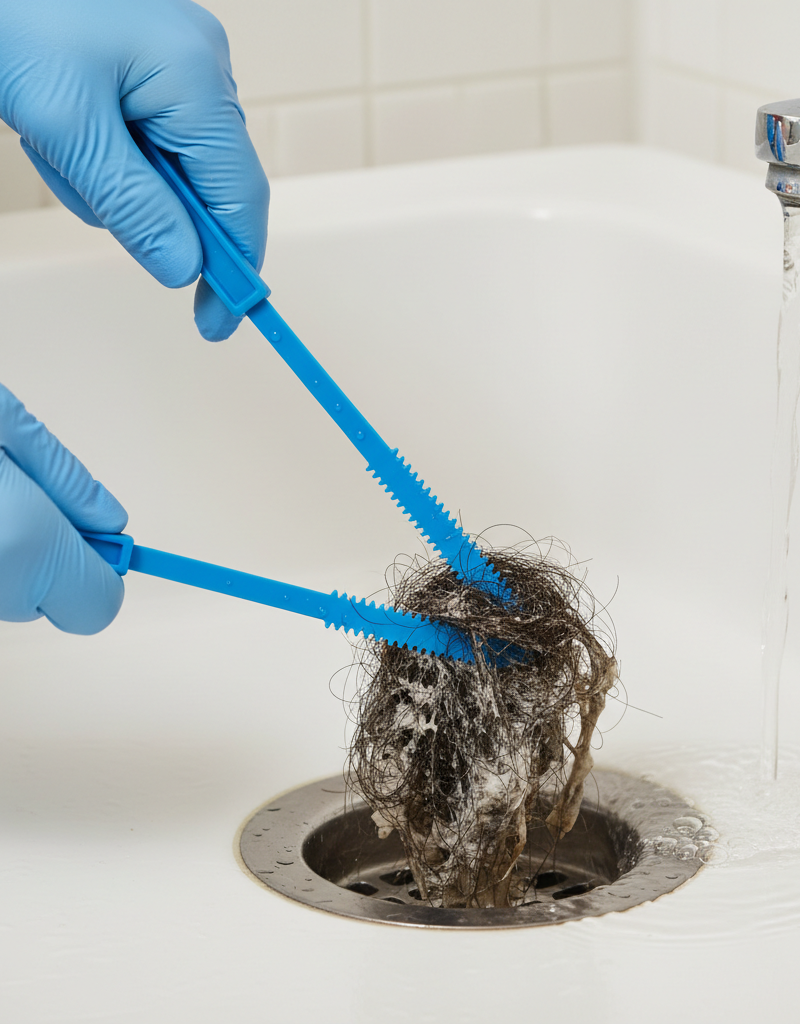
Perform Initial Manual Cleaning — Wearing gloves, use a flashlight to look into the drain opening. Often, a significant portion of the clog is visible within the first few inches. Use your fingers or a pair of needle-nose pliers to pull out any accessible wads of hair and debris. You may remove the bulk of the clog with this step alone. Clean any gunk from the underside of the strainer as well.
-
Flush with Hot Water — Boil a gallon of water and let it cool for about two minutes (to approximately 180-200°F). This slight cooling helps prevent damage to PVC pipes and their solvent-welded joints, which can soften at boiling temperatures (212°F). Pour the hot water directly into the drain in two or three stages. This can be effective at melting and flushing away lighter blockages composed primarily of soap scum and conditioner buildup.
- If this doesn't work: The clog is likely a dense mat of hair that is resistant to heat alone. Proceed to the next step.
-
Use a Baking Soda and Vinegar Solution — This natural chemical reaction creates fizzing action that can help break down and dislodge mild-to-moderate clogs. Pour one cup of baking soda directly into the drain, ensuring as much as possible gets down the pipe. Follow it immediately with one cup of distilled white vinegar. The mixture will foam and bubble. Immediately cover the drain opening with a rag or the upturned drain cover to direct the reaction downward. Let it sit for 30-60 minutes.
-
Flush the Reaction — After waiting, uncover the drain and flush it again with another gallon of very hot (not boiling) water. This second flush aims to wash away the debris that was broken up by the baking soda and vinegar reaction. If drainage is improved but still slow, you can repeat this step.
-
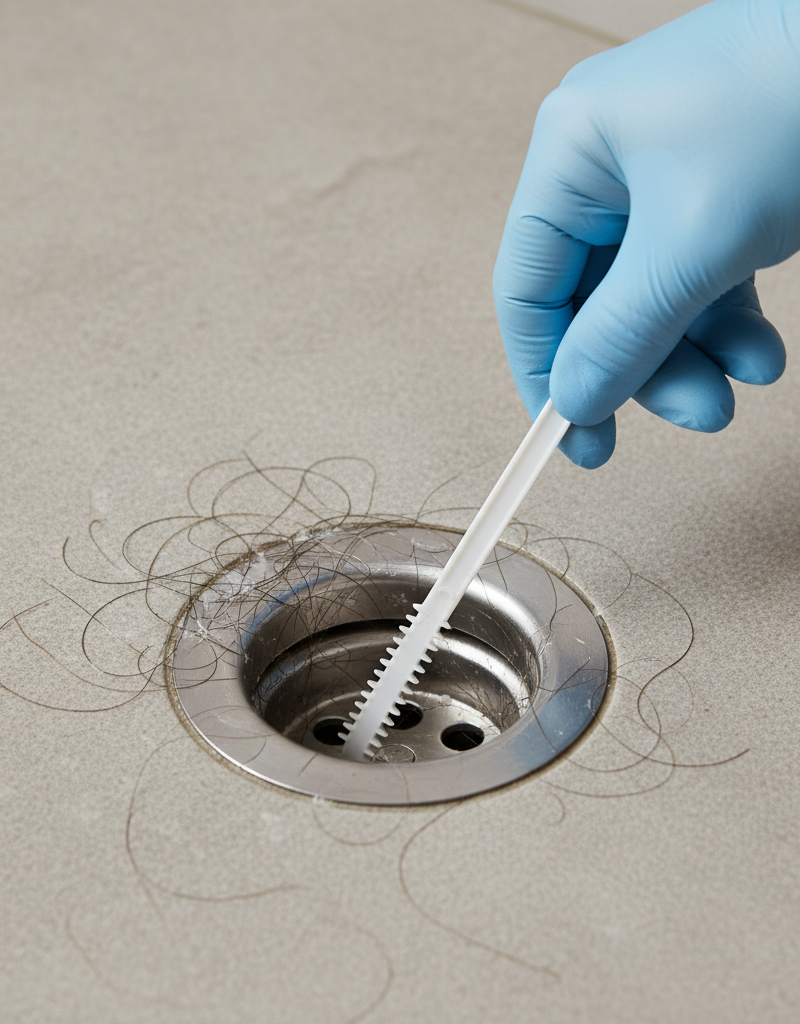
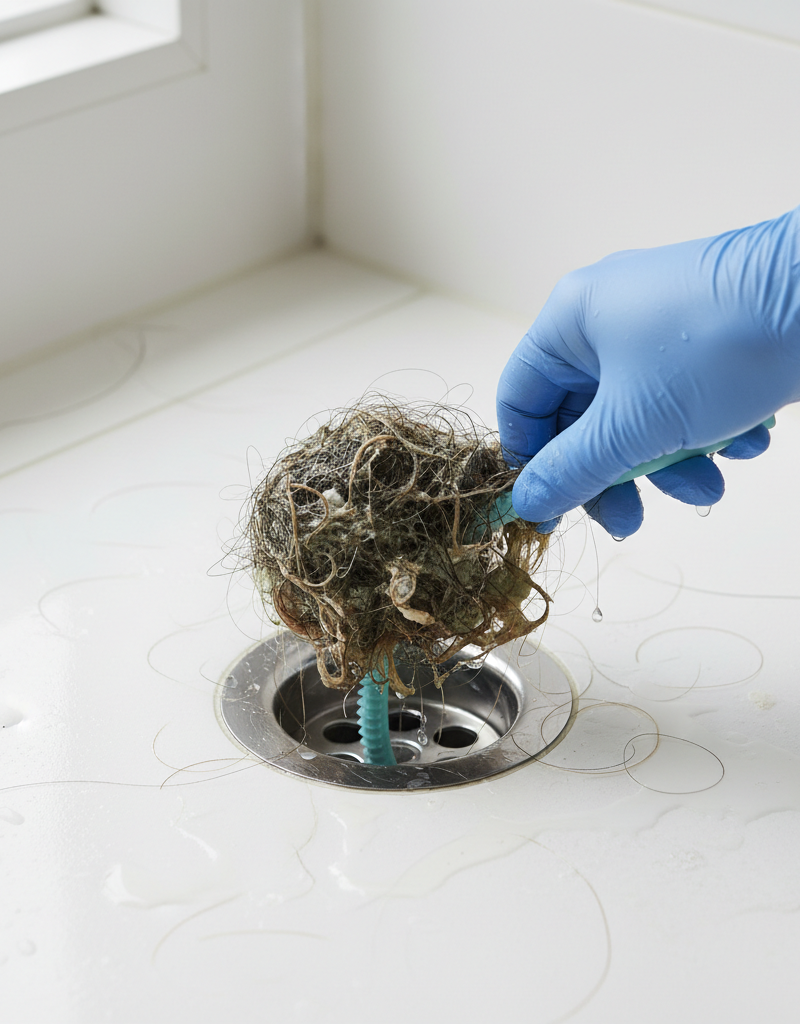
Deploy a Plastic Drain Claw — A drain claw (often sold as a "Zip-It" tool) is a thin, flexible piece of barbed plastic. It is exceptionally effective for shower clogs. Push the tool straight down into the drain as far as it will comfortably go. Do not force it. Slowly rotate the tool a few times, then gently pull it straight back up. The barbs will snag the hair and allow you to extract a significant portion of the clog. Repeat this process 3-4 times, inserting the claw at different angles, until you are no longer pulling out debris.
-
Address the Tub Overflow Assembly (If Applicable) — In a shower/tub combination, the clog is often tangled in the trip-lever drain mechanism, which is accessed via the overflow plate. Use a screwdriver to remove the screws on the overflow plate (the chrome plate on the tub wall with the lever). Gently pull the plate and the attached linkage assembly out of the overflow pipe. This assembly is frequently matted with hair. Clean it thoroughly, then feed a drain claw or auger down the overflow pipe opening, as this provides a more direct path to the P-trap, bypassing sharp bends.
-
Advance to a Handheld Drain Auger — For stubborn clogs deep in the P-trap or beyond, a drain auger (plumbing snake) is the definitive DIY tool. Feed the flexible cable into the drain opening until you feel resistance. Position the auger’s canister about 6 inches from the drain, then tighten the thumbscrew to lock the cable. Slowly turn the crank handle clockwise while applying gentle forward pressure. You will feel the auger work its way through the clog.
- Technique: If you hit a hard stop, it might be the pipe itself. Loosen the thumbscrew, advance the cable another few inches, re-tighten, and continue cranking. Reverse the crank direction periodically to help break up the mass or hook it for retrieval.
- Retrieval: Once you feel the resistance lessen, retract the cable by loosening the thumbscrew and pulling it back, cranking as you go if needed. The clog may come out with the auger head.
-
Thoroughly Flush and Clean — Once you have broken through or retrieved the clog, flush the drain with several gallons of hot tap water for at least five minutes. This ensures all remaining debris is washed down into the main sewer line. Clean your tools thoroughly, preferably outside with a garden hose, before storing them to prevent rust and odors.
-
Reassemble and Test — Reinstall the overflow plate and linkage (if removed) and the drain strainer. Turn on the shower at full pressure and watch the drain. The water should flow away quickly without any pooling. If drainage is normal, the job is complete.
Common mistakes
Avoiding these common errors will prevent you from making the problem worse, damaging your plumbing, or creating a safety hazard.
- Using Corrosive Chemical Drain Cleaners. This is the most common and damaging mistake. Caustic chemical cleaners generate heat that can warp PVC pipes and melt glue at the joints. They also corrode metal pipes over time. Worse, if the chemical fails to clear the clog, you are left with a pipe full of toxic liquid, making any subsequent manual attempt (like snaking) extremely dangerous due to the risk of chemical splashback.
- Forcing a Drain Auger. Ramming a drain snake into the pipe when you feel resistance is a recipe for disaster. The resistance could be a tight pipe bend, not the clog. Forcing it can permanently wedge the auger tip in the pipe, crack the pipe, or simply compact the clog, making it even harder to remove. The correct technique is to use gentle pressure combined with a steady clockwise rotation to "drill" through the blockage.
- Ignoring the Tub Overflow Plate. In shower/tub combos, the trip-lever mechanism that opens and closes the drain is a magnet for hair. Many homeowners snake the main drain repeatedly with no success because the primary clog is tangled in this linkage, which must be pulled out and cleaned via the overflow opening.
- Using an Auger That is Too Large. A handheld auger with a 1/4-inch cable is appropriate for a standard 1.5-inch to 2-inch shower drain line. Attempting to use a larger, more powerful auger intended for main sewer lines (3-inch pipes or larger) can easily damage the smaller-diameter branch line and will not navigate the tight P-trap bend correctly.
- Dropping Screws or Tools Down the Drain. It is surprisingly easy to drop one of the small screws from the drain cover down the open pipe while working. This creates a new, more serious problem. Always plug the drain opening with a rag before unscrewing or screwing in the cover.
- Pouring True Boiling Water into PVC. While very hot water is useful, water at a rolling boil (212°F) can exceed the temperature rating for some PVC pipe fittings and the solvent cement used to join them. This can soften the plastic and weaken joints, leading to future leaks. Letting the water cool for a minute or two makes it significantly safer while remaining effective against soap scum.
Cost & time breakdown
The cost and time investment vary significantly depending on the severity of the clog and the method required. Most clogs can be solved with the least expensive options.
| Task | DIY cost | Pro cost | Time |
|---|---|---|---|
| Manual Removal & Hot Water Flush | $0–$5 (gloves) | N/A | 15–30 minutes |
| Baking Soda & Vinegar Method | $5–$10 | N/A | 45–75 minutes |
| Using a Plastic Drain Claw | $5–$15 (one-time tool cost) | N/A | 10–20 minutes |
| Using a 25-ft Handheld Auger | $25–$50 (one-time tool cost) | N/A | 30–60 minutes |
| Basic Professional Drain Service | N/A | $150–$250 | 1–2 hours |
| Professional Hydro-Jetting | N/A | $350–$600+ | 1.5–3 hours |
When to call a pro
While most shower clogs are a straightforward DIY fix, certain signs indicate a more complex problem that requires professional equipment and expertise. Call a licensed plumber if you encounter any of the following situations:
- Multiple Drains Are Clogged: If your shower, toilet, and bathroom sink are all draining slowly or backing up simultaneously, the blockage is not in the individual branch drain. It is almost certainly in your home’s main sewer line, a problem that requires a powerful, long-reach sewer auger or hydro-jetting equipment.
- Water Backs Up in the Shower When You Flush the Toilet: This is another classic symptom of a main line clog. The water from the toilet cannot escape down the blocked main pipe, so it takes the path of least resistance backward and up into the lowest drain in the house, which is often the shower.
- All DIY Methods Have Failed: If you have diligently tried manual removal, a drain claw, and a handheld auger without success, the clog may be too dense, too far down the line, or caused by something other than hair (like tree roots in an older home).
- The Auger Fails to Pass a Certain Point: If your 25-foot auger stops at the same spot every time and cannot be worked past it, you could have a collapsed pipe, a severe offset joint, or a foreign object lodged in the line.
- Persistent Foul Odors: A constant sewer gas smell that is not solved by clearing the P-trap may indicate a problem with your home's drain-waste-vent (DWV) system, which is a job for a professional.
Prevention & maintenance
An ounce of prevention is far easier than an hour of snaking a drain. Incorporate these habits to keep your shower drain flowing freely.
- Install a High-Quality Hair Catcher. This is the single most effective preventive measure. Choose a silicone or metal mesh hair catcher that fits securely over your drain opening. These devices are far more effective than standard strainers at trapping hair before it enters the pipe. Clean it after every use—a five-second task that prevents hours of work later.
- Conduct a Weekly Hot Water Flush. Once a week, heat a gallon of water on the stove until very hot (but not boiling) and pour it down the drain. This regular flush helps dissolve soap scum, shampoo, and conditioner residue before it can solidify and bind with hair.
- Use an Enzyme-Based Drain Maintainer Monthly. Unlike harsh chemical cleaners, enzyme-based cleaners use natural bacteria and enzymes to digest organic waste like hair and soap scum. Using one of these products once a month according to package directions is a safe and effective way to keep pipes clear without damaging them.
- Be Mindful of Your Soap. Traditional bar soaps are often high in tallow (animal fat), which is a major contributor to soap scum buildup. Switching to a liquid body wash or a glycerin-based soap can significantly reduce the amount of pipe-clogging residue left behind after a shower.
- Perform a Proactive Cleaning. Don't wait for a complete blockage. Every two to three months, remove the drain strainer and use a plastic drain claw to pull out any accumulated hair. This quick, five-minute maintenance task removes clogs while they are small and manageable.
Related Articles
Keep troubleshooting with these hand-picked guides from FixlyGuide:
- The 90-Second Trick to Unclogging Any Shower Drain (No Chemicals Needed) — Learn how to quickly and safely clear a clogged shower drain using simple tools and household items, avoiding harsh chemicals.
- How to Unclog a Drain Without Harsh Chemicals (5 Pro Methods) — Drain cleaners eat your pipes, your skin, and the environment. These 5 chemical-free methods clear 95% of household clogs faster — and cost…
- Clogged AC Drain Line? Clear It Yourself in 30 Minutes — Learn how to quickly and safely clear a clogged AC drain line to restore your air conditioner's efficiency and prevent water damage.
- The #1 Mistake Homeowners Make When Their AC Drain Clogs (And The $5 Fix) — Discover the most common error homeowners make when tackling a clogged AC drain line and learn a simple, inexpensive solution to prevent co…
- The Nasty Truth About Your Smelly Bathroom Sink — And the $5 Fix — A persistent foul odor from your bathroom sink drain is often caused by a forgotten gunk buildup that's easy to eliminate with basic househ…
- Your Floating Shelves Failed? 3 Hidden Drywall Mistakes. — Learn how to safely and securely install floating shelves into drywall using the right anchors and tools, avoiding common mistakes.
Should you do this yourself?
Answer five quick questions before you start. Safety outranks savings every time.
Your experience with work like this
How high do you have to work?
Does the job involve any of these?
Will it need a permit?
Specialty tools
Free and instant. Educational guidance only — not a quote, inspection, or professional diagnosis.
What should this project cost?
Enter your project details for a realistic cost range before you call anyone.
Common repairs run $150–$650; repipes and water-heater replacements reach $1,500–$4,500.
- Regional adjustment
- National average
- Labor share (typical)
- ~$754
- Quotes to collect
- 3 written estimates
Educational estimate based on national averages — not a binding quote. Always confirm with written local estimates.
Fixly Project Decision Box
- DIY difficulty
- Moderate
- Estimated time
- 30 minutes – half a day
- Cost level
- Moderate
Main tools / materials
- Adjustable wrench
- Plunger or drain auger
- Bucket and towels
- Thread tape
When to stop and call a pro
- Water you cannot shut off at the fixture or main
- Sewage backing up into more than one fixture
- Water near electrical panels or outlets
- Gas water heater work beyond relighting a pilot
Need professional help?
Get a Licensed PlumberBefore you start
Check the difficulty, permits, and safety risk — then decide whether to call a pro.
- Estimate this projectGet a cost range for your scope and ZIP before you call anyone.Open
- Get local estimatesSend one request and compare written estimates from vetted pros.Open
Free, no signup required. Estimates are educational guidance, not a quote or an inspection.
Get the print-ready PDF of this guide
A clean, ad-free, printable version you can keep on your phone or pin to the workshop wall. Free with a FixlyGuide account.
- Print-optimized layout
- Tools, materials & every step included
- Saved to your account
Frequently asked questions
What is the best way to unclog a shower drain without chemicals?+
The most effective methods involve physically removing the clog with a drain claw or plumbing snake, or using a baking soda and vinegar solution to break down organic matter.
Can I use boiling water to unclog a shower drain?+
While boiling water can help with minor grease clogs, it's generally not recommended for PVC pipes as it can soften or warp them. For hair and soap scum, it's less effective on its own.
How do I prevent shower drain clogs?+
To prevent clogs, use a hair catcher over the drain, rinse the drain with hot water after each shower, and perform a preventative baking soda and vinegar flush monthly. Avoid letting soap remnants or small objects go down the drain.
Is it safe to use a plumbing snake in a shower drain?+
Yes, a drain snake or auger is safe for shower drains when used carefully. Insert it slowly and avoid forcing it, which could damage pipes or fittings. Always follow the manufacturer's instructions.
How often should I clean my shower drain to prevent clogs?+
A monthly preventative cleaning with baking soda and vinegar is generally sufficient. Regular use of a hair catcher and manually removing visible hair will also significantly reduce clog frequency.
Discussion
Loading comments…