- The 1 Washing Machine Killer (It's Not Overloading!) — And How to Prevent It — Discover the surprising culprit behind premature washing machine failure and learn simple, actionable steps to extend its lifespan and keep…
- The 3 Washing Machine Mistakes That Cost You Hundreds (And How to Fix Them) — Avoid costly repairs and extend the life of your washing machine by understanding three common mistakes and how to prevent them.
- That Funky Smell in Your Washing Machine — Tired of your washing machine making your 'clean' clothes smell musty? We'll show you how often you should actually deep clean your washi…
- The 3 Washing Machine Mistakes That Cost You Hundreds (And How to Fix Them Forever) — Avoid costly repairs and premature replacement by learning three common washing machine mistakes and how to fix them for good.
- The 1 Caulk Mistake That Leads to Mold (And How to Fix It Right) — Discover the most common caulk mistake that causes frustrating mold growth around your bathtub and learn the simple, effective way to recau…
General remodeling · Renovation planning
| Project category | General remodeling |
|---|---|
| Problem type | Renovation planning |
| Trade required | General contracting |
| Urgency | Planned project |
| Safety risk | Low safety risk |
| DIY suitability | Pro recommended |
| Cost category | Major investment |
| Typical timeline | Design and permitting often 2–4 months before work starts |
| Contractor type | General contractor |
Repair option
Phase the work and fix the building envelope first.
Replacement option
Full renovation with permits, design, and a general contractor.
Common causes
- Space no longer fits how the household lives
- Resale preparation
- Deferred maintenance stacking up
Relevant tools:project cost estimatorcompare quoteshome improvement material prices
Published July 24, 2026Last updated August 17, 2026
Tools & materials you'll need
Affiliate linksAs an Amazon Associate FixlyGuide earns from qualifying purchases — at no extra cost to you. Prices and availability are accurate as of publication and subject to change.
Quick Answer
That funky smell coming from your washing machine isn't just unpleasant; it's usually a mold and mildew problem. The good news? You don't need a new machine. A few solid cleaning steps and a little regular maintenance can knock that stink out, keep your washer running right, and get your clothes smelling fresh again. Most times, it’s simpler than folks think. It usually comes down to those dark, damp spots where the gunk likes to hang out.
The Problem
Alright, let’s talk about the elephant in the laundry room: that stubborn, musty, sometimes downright nasty smell coming from your washing machine. I’ve been at this for over twenty-five years, and I can’t count how many calls I’ve gotten from people in places like Cranston or Warwick, convinced their washer was dying just because it smelled awful. More often than not, it’s not a mechanical breakdown at all; it’s a cleanliness problem. Your washing machine, especially a high-efficiency (HE) front-loader, is basically a cozy little home for mold, mildew, and bacteria. Think about it. Warm. Wet. Full of dirt from clothes, skin cells, pet hair, detergent residue. Then you close the door and walk away. Well, that’s a recipe. And that smell doesn’t just sit there looking ugly — it can get into your laundry and make “clean” clothes smell like they sat in a gym bag overnight.
How It Works
To really understand why your washer stinks, you gotta know how these newer machines work. Back in my dad’s day, we had top-loaders that filled right up, clothes sloshing around in what was basically a little swimming pool. Today’s HE machines, especially front-loaders, are a different animal. They use way less water — sometimes as little as 10-15 gallons per load compared to 40-50 gallons for older models. They clean by tumbling clothes through a concentrated mix of water and detergent, leaning on motion instead of soaking everything to the gills. Great for the water bill. Great for the planet. Not always great for keeping things spotless inside the machine.
With less water moving through, detergent residue can get stronger and stickier, and it clings to the drum, the dispenser, and especially that rubber door gasket. That residue, mixed with lint, soil, and constant dampness, turns into a buffet for mold and mildew. The gasket on a front-loader, with all those accordion-style folds, is a notorious hideout. Water sits there. It doesn’t dry out fast. Same story with the detergent drawer if you never crack it open and clean it. Top-loaders aren’t off the hook either. Their agitators or wash plates can trap crud, and the dispenser gets ignored way too often. Anything that stays wet and doesn’t get a proper rinse or dry cycle is asking for trouble. And with a closed drum, the air doesn’t move much. I pulled a washer in Frisco last month that had exactly this leak-and-stink combo, and the inside smelled like a swampy sock drawer — no joke. Microorganisms love that kind of setup, especially when the temperature inside the machine sits in that sweet spot for growth, usually between 60°F and 90°F.
Step-by-Step Fix
Here’s how I tackle a stinky washer. You’ll want about an hour of hands-on time, plus another hour or so for the cycles to do their thing.
-
Empty the Washer — Before you do anything else, make sure the machine is completely empty. Sounds obvious, I know, but I’ve seen folks try to clean a washer with clothes still in it. That’s no dice. You’re not getting a real clean, and you’re wasting cleaner. Unplug the machine from the wall too, just to be safe, especially before you start messing with the gasket.
-
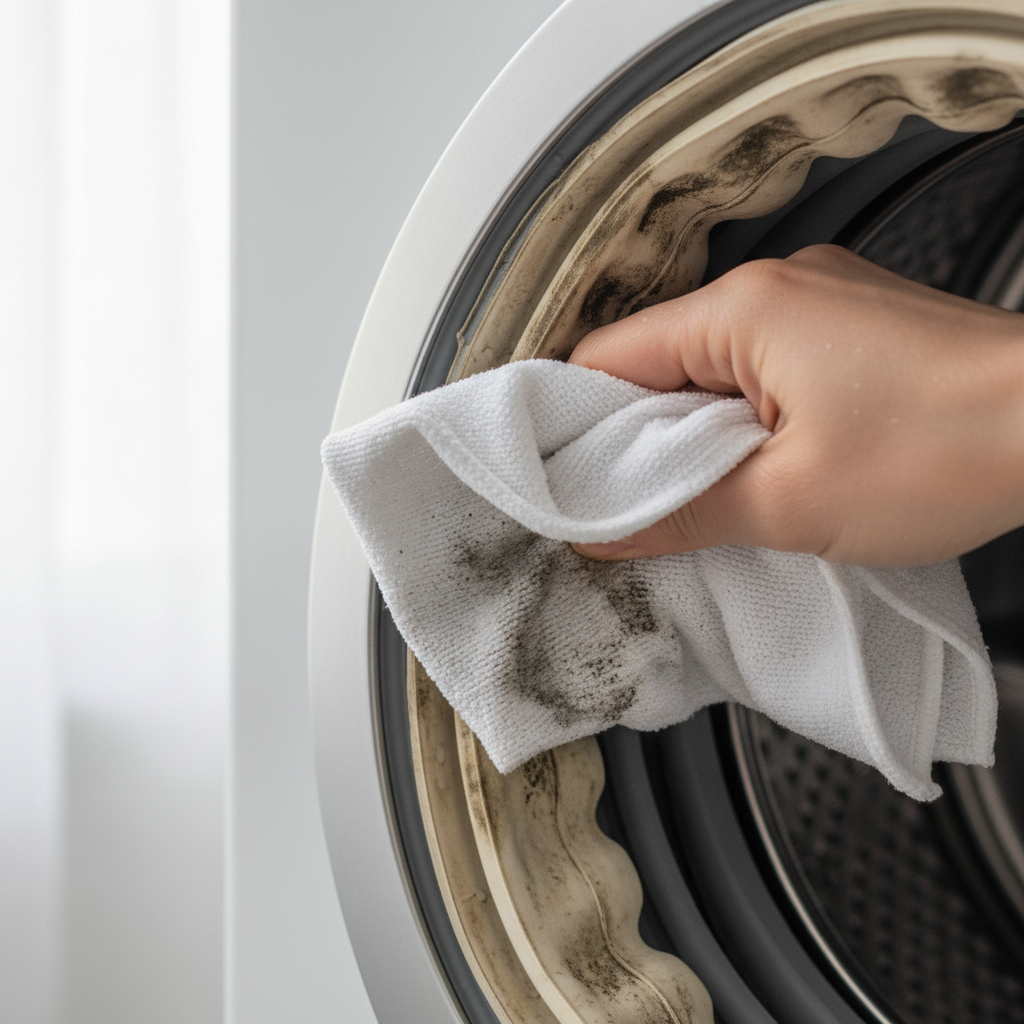
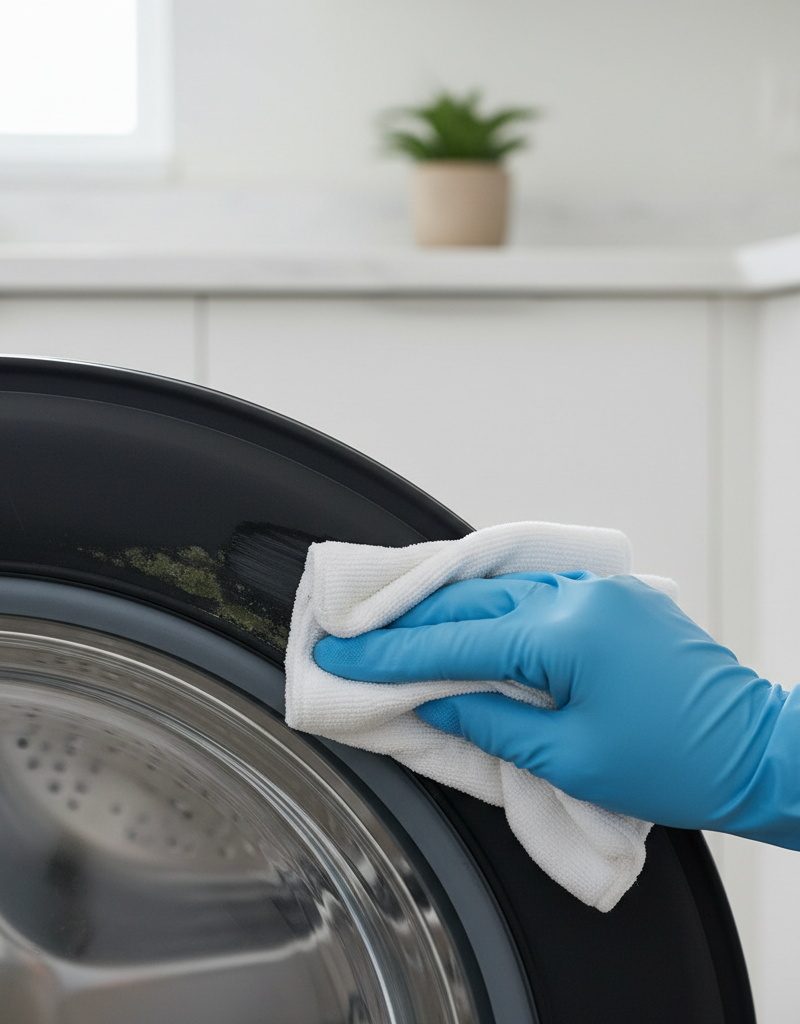
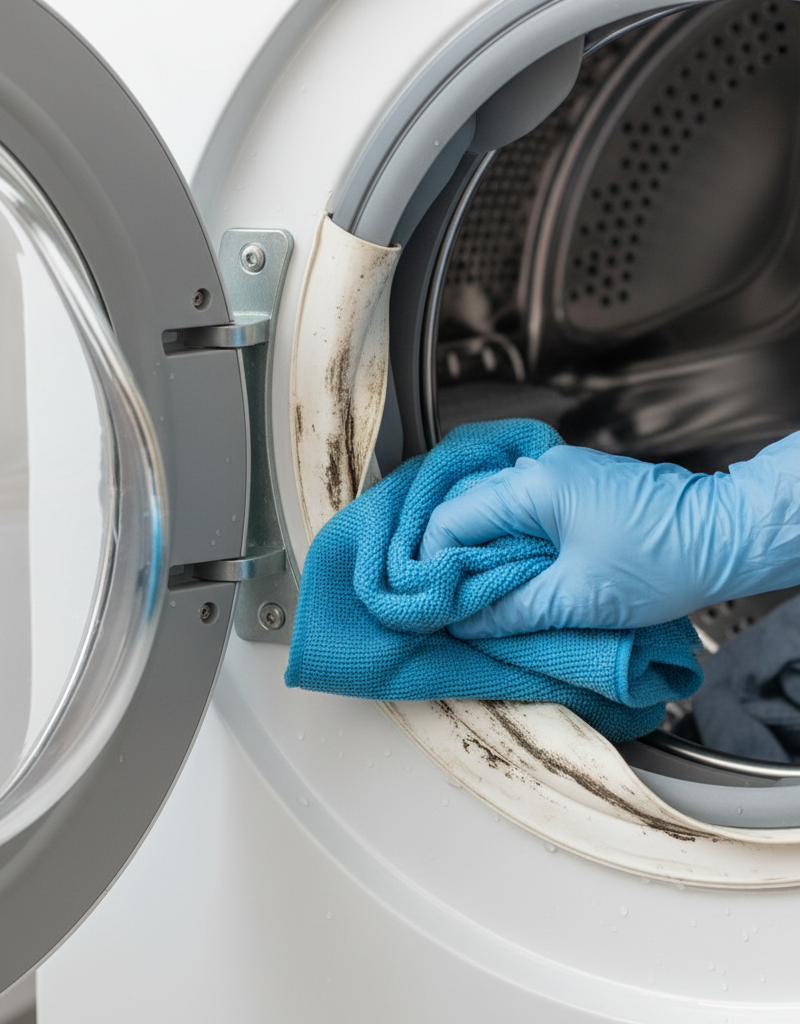
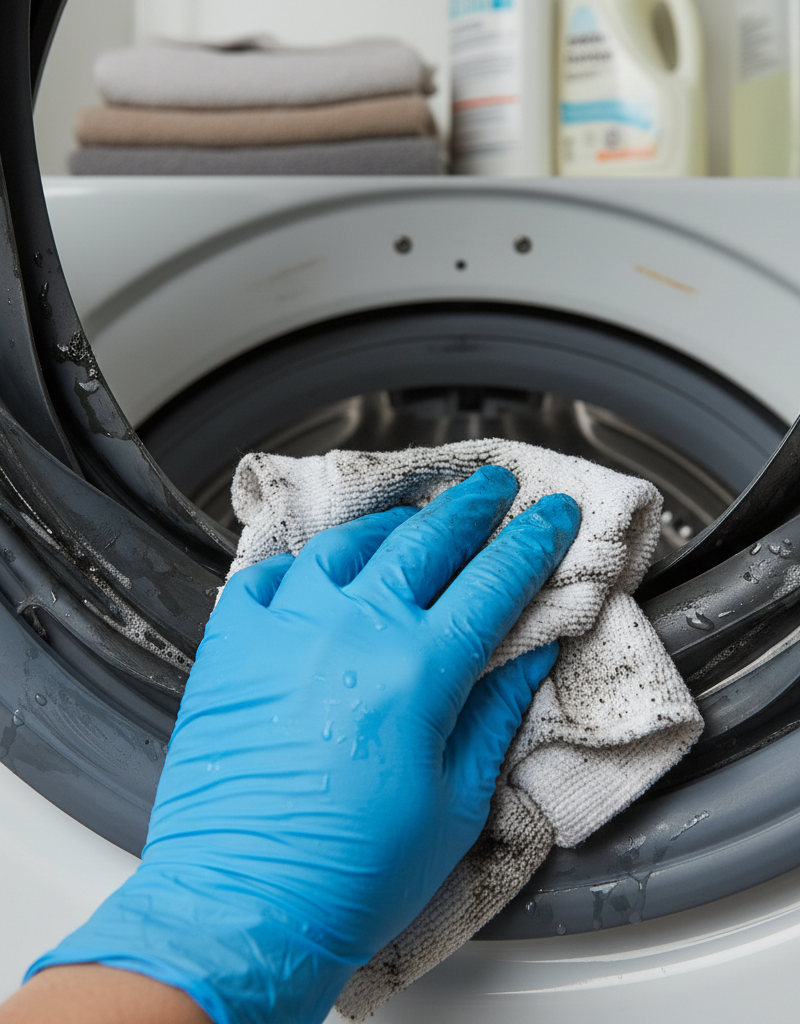
Clean the Door Gasket — This is where most of the mold and mildew congregates on front-loaders. Pull back the rubber gasket around the door opening. You’ll probably find black gunk, slime, and maybe even a couple stray socks. Wipe every fold with a damp cloth soaked in a 1:1 solution of white vinegar and water, or use a mildew cleaner made for the job. Don’t tiptoe around it — get your fingers in there, use a scrub brush, and clean the whole thing. I once opened up a GE Profile in North Kingstown where the homeowner told me she’d “already cleaned it,” but when I pulled back the gasket, there was a quarter, three hair ties, and enough black sludge to start a science fair. Amazing what hides in that rubber. Dry it off when you’re done.
- Safety Note: If you’re using a strong cleaner, wear gloves and keep the area well-ventilated.
-
Clean the Detergent Dispenser — Residue loves to build up in this often-forgotten component. Pull out the dispenser drawer completely if your machine allows it — most do, and there’s usually a tab or button to release it. Rinse it under hot water and scrub off any caked-on detergent or fabric softener. An old toothbrush is perfect for the tight corners. If it’s really crusty, let it soak in warm, soapy water for 15-20 minutes before you scrub. Wipe out the opening where the drawer sits too.
-
Run a Hot Cleaning Cycle (Part 1: Vinegar) — This is your first deep clean for the drum and internal components. Add two cups of distilled white vinegar directly to the detergent dispenser or pour it straight into the drum (for top-loaders, add it to the wash water). Set your machine to its hottest water setting and the largest load size available. If you have a
Related Articles
Keep troubleshooting with these hand-picked guides from FixlyGuide:
- The #1 Washing Machine Killer (It's Not Overloading!) — And How to Prevent It — Discover the surprising culprit behind premature washing machine failure and learn simple, actionable steps to extend its lifespan and keep…
- The 3 Washing Machine Mistakes That Cost You Hundreds (And How to Fix Them) — Avoid costly repairs and extend the life of your washing machine by understanding three common mistakes and how to prevent them.
- That Funky Smell in Your Washing Machine — Tired of your washing machine making your 'clean' clothes smell musty? We'll show you how often you should actually deep clean your washi…
- The 3 Washing Machine Mistakes That Cost You Hundreds (And How to Fix Them Forever) — Avoid costly repairs and premature replacement by learning three common washing machine mistakes and how to fix them for good.
- The #1 Caulk Mistake That Leads to Mold (And How to Fix It Right) — Discover the most common caulk mistake that causes frustrating mold growth around your bathtub and learn the simple, effective way to recau…
- That Mildew Smell in Your Washer? Here's the Real Fix. — Tired of 'clean' laundry smelling musty? The problem isn't your detergent; it's trapped bacteria and mold inside your washing machine. We'l…
Should you do this yourself?
Answer five quick questions before you start. Safety outranks savings every time.
Your experience with work like this
How high do you have to work?
Does the job involve any of these?
Will it need a permit?
Specialty tools
Free and instant. Educational guidance only — not a quote, inspection, or professional diagnosis.
What should this project cost?
Enter your project details for a realistic cost range before you call anyone.
Cost depends heavily on which system turns out to be the source.
- Regional adjustment
- National average
- Labor share (typical)
- ~$1,620
- Quotes to collect
- 3 written estimates
Educational estimate based on national averages — not a binding quote. Always confirm with written local estimates.
Before you start
Check the difficulty, permits, and safety risk — then decide whether to call a pro.
- Estimate this projectGet a cost range for your scope and ZIP before you call anyone.Open
- Get local estimatesSend one request and compare written estimates from vetted pros.Open
Free, no signup required. Estimates are educational guidance, not a quote or an inspection.
Recommended for DIYers & woodworkers
Sponsored
The Top 20 Tools for Workshops of Any Budget
No stationary machines or power tools required — plus 3 fundamental tools that can't be bought at any price.
Get the free guide
Ted's Woodworking — The #1 Woodworking Resource
Detailed instructions, dimensioned drawings, materials & cutting lists, and 3D schematics for every skill level.
See the plansSponsored: links above are affiliate links. FixlyGuide may earn a commission on qualifying purchases — at no extra cost to you.
Frequently asked questions
Why does my washing machine smell musty?+
Musty odors usually come from mold and mildew buildup in damp areas like the door gasket, detergent dispenser, and drum. Modern high-efficiency machines use less water, which can leave more residue that fosters microbial growth.
How often should I clean my washing machine?+
I recommend cleaning your washing machine at least once a month, especially if you use it frequently or mostly with cold water. If you notice odors recurring sooner, bump up the cleaning schedule to every two to three weeks.
Can I use bleach to clean my washing machine?+
Yes, you can use bleach, but be careful. Add 1/2 cup of bleach directly to the bleach dispenser, then run a hot water cycle. Avoid mixing bleach with vinegar, as this creates dangerous chlorine gas. Always consult your machine's manual for bleach instructions.
Is it better to use vinegar or a specialty cleaner?+
Both can be effective. White vinegar is a natural deodorizer and mild disinfectant, great for maintenance. Specialty washing machine cleaners are formulated to tackle tough residue and odor-causing bacteria. For heavy odors, a specialty cleaner might be more potent. I often tell folks to start with vinegar and if that doesn't quite cut it, then move to a commercial product.
Why does my front-loader smell worse than my old top-loader?+
Front-loaders are known for this due to their design. The rubber gasket often traps water, lint, and detergent, creating a prime environment for mold. Also, they use less water, leading to more concentrated residue buildup. Leaving the door ajar after cycles helps a lot.
What kind of detergent should I use to prevent odors?+
Always use HE (High-Efficiency) detergent if you have an HE machine. These detergents are low-sudsing and formulated to work with less water, reducing residue. Using too much or the wrong type of detergent is a major contributor to odor issues.
Should I leave the washer door open after a cycle?+
Absolutely! This is one of the simplest and most effective preventative measures. Leaving the door ajar allows the drum and gasket to air dry completely, significantly reducing the moisture that mold and mildew need to thrive. I can't stress this enough – it makes a huge difference!
My clothes still smell after cleaning the machine. What now?+
First, make sure you've thoroughly cleaned every part mentioned, especially deep in the gasket folds and dispenser. If the problem persists, you might have a more stubborn internal buildup or even a clog in the drain hose. At that point, it might be time to call in a pro to inspect the machine's internal components and drain system.
Can hard water contribute to washing machine odors?+
Yes, hard water can absolutely contribute. The minerals in hard water can combine with detergent residue to create a more stubborn film that's harder to rinse away, providing even more fodder for mold and mildew. Using a hard water additive or soft water detergent might help in areas with very hard water.
Discussion
Loading comments…