- Do now: Arrange heating service, inspect accessible plumbing, repair drafts, and locate your water shutoff.
- Do before freezing weather: Disconnect hoses, protect faucets, prepare irrigation, and review household supplies.
- Do during the event: Follow local alerts, monitor indoor conditions, and use your home’s freeze-protection plan.
General remodeling · Renovation planning
| Project category | General remodeling |
|---|---|
| Problem type | Renovation planning |
| Trade required | General contracting |
| Urgency | Planned project |
| Safety risk | Low safety risk |
| DIY suitability | Pro recommended |
| Cost category | Major investment |
| Typical timeline | Design and permitting often 2–4 months before work starts |
| Contractor type | General contractor |
Repair option
Phase the work and fix the building envelope first.
Replacement option
Full renovation with permits, design, and a general contractor.
Common causes
- Space no longer fits how the household lives
- Resale preparation
- Deferred maintenance stacking up
Relevant tools:project cost estimatorcompare quoteshome improvement material prices
Published October 25, 2026
The first cold morning usually starts with a simple decision: turn on the heat.
But preparing your house for colder weather takes more than adjusting the thermostat. The hose beside the garage, the damaged seal under the front door, and the heating system you haven’t serviced can all deserve attention before you need them.
The best cold-weather home maintenance plan starts while you still have time to make repairs, gather supplies, and ask questions.
This guide explains how to prepare your Dallas–Fort Worth home for winter, what to prioritize, which jobs are reasonable homeowner tasks, and when professional help makes sense. You do not need to do everything in one afternoon. You do need to know what matters most for your particular house.
When Should You Prepare Your DFW Home for Winter?
Start during fall, before freezing weather appears in your local forecast. The National Weather Service lists November 22 as the average first freeze date for Dallas/Fort Worth, but its records also show first freezes occurring much earlier. An average date is not a prediction for your neighborhood or the current year. Source 1
Use the seasonal calendar to plan maintenance and the local forecast to trigger your final preparations. A useful approach is to separate your list into three stages:
- Do now: Arrange heating service, inspect accessible plumbing, repair drafts, and locate your water shutoff.
- Do before freezing weather: Disconnect hoses, protect faucets, prepare irrigation, and review household supplies.
- Do during the event: Follow local alerts, monitor indoor conditions, and use your home’s freeze-protection plan. The specific needs of an older house with plumbing in a crawl space can differ from those of a newer house with different pipe routing. Start by learning where your vulnerable equipment and water lines are.
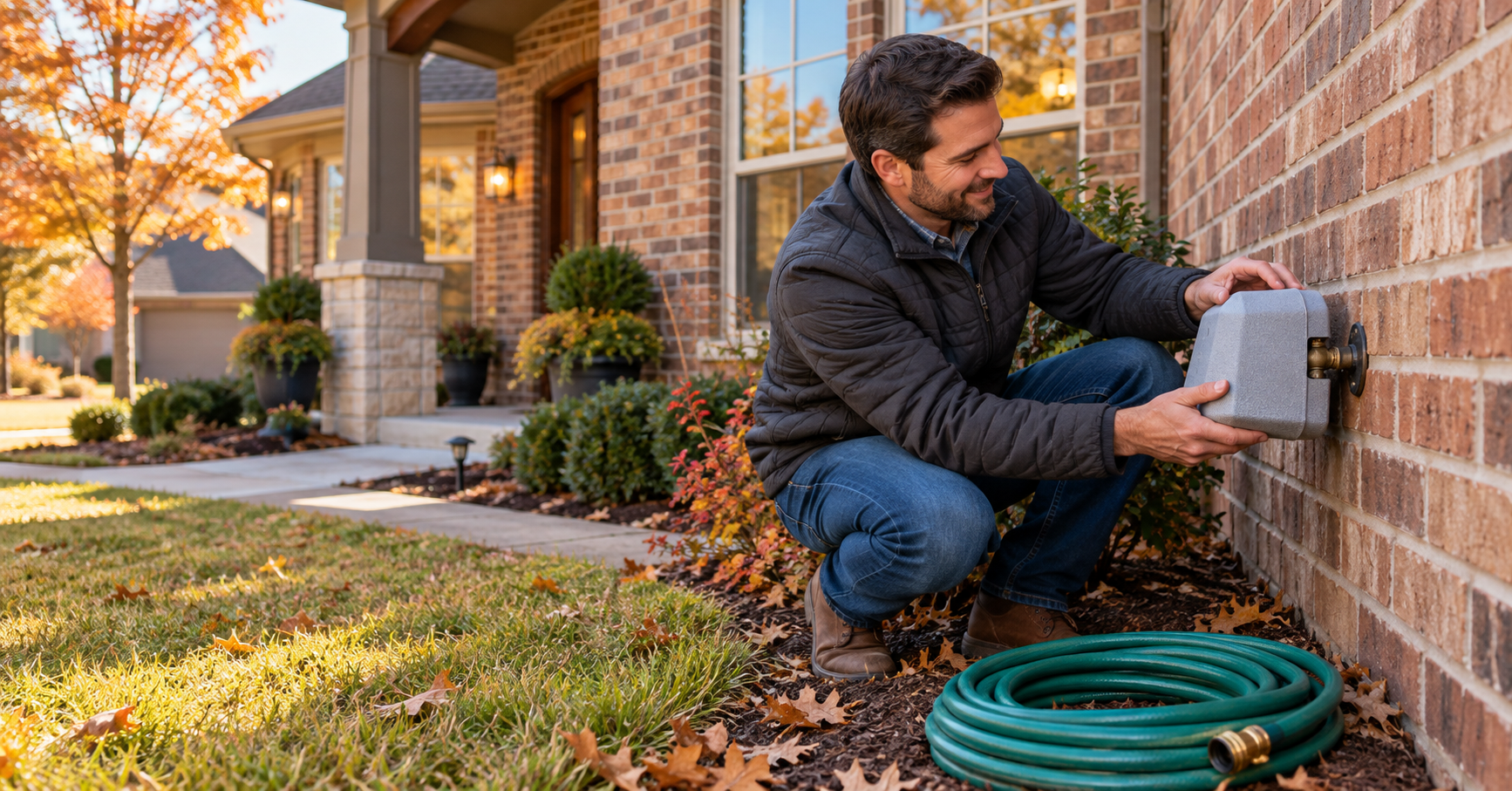
1. Disconnect Hoses and Protect Outdoor Faucets
Walk around the entire house rather than checking only the faucet you use most often. Look behind shrubs, beside the driveway, and near outdoor living areas.
Disconnect garden hoses, drain them, and put them away. Fit insulated covers over outdoor faucets and inspect any exposed water pipes. Fort Worth’s water department recommends removing hoses and using insulated faucet covers as part of freeze preparation. Source 2
Make sure each cover fits the fixture and closes properly against the surrounding surface. A cover hanging loosely from the faucet is a job that still needs attention.
A practical task: Take a photo of each outdoor faucet and make a short shopping list. This helps you avoid discovering a missing cover after stores close.
Covers help protect vulnerable fixtures, but they do not guarantee protection through every freeze. If a faucet has leaked, frozen previously, or has an unusual installation, ask a plumber what additional preparation is appropriate.
2. Find Plumbing Outside the Heated Living Space
Some of your most exposed water lines may be indoors. Pipes in unheated garages, attics, and crawl spaces, along with pipes near exterior walls, can be vulnerable to freezing. The American Red Cross recommends insulating exposed pipes and paying attention to these locations. Source 3
Inspect only areas you can reach safely. Look for missing insulation, gaps at joints, or material that has slipped away from a pipe. Ask a plumber about the correct insulation and any equipment-specific protection.
Do not assume that buying a thicker faucet cover addresses a separate unprotected line in the garage.
When requesting help, be specific: “This laundry supply line is in an unheated garage,” or “This bathroom has frozen before.” Those details are more useful than simply asking someone to winterize the house.
Insulation slows heat loss; it does not create heat. A prolonged freeze or loss of indoor heating may require additional precautions.
3. Locate Your Home’s Water Shutoff Before an Emergency
If water starts pouring from a damaged pipe, that is a difficult moment to begin searching for a valve.
Find your home’s customer-side main water shutoff and confirm how it operates. The Texas Department of Insurance recommends locating and checking the shutoff before winter, with a plumber addressing a stuck or unusable valve. Locations vary, so do not assume your house matches a neighbor’s. Source 4
Ask your plumber or water utility to identify the correct valve if you are unsure. Do not force an unfamiliar valve or operate utility equipment without guidance.
Take a photo, record any tool needed, and show another adult in the household where it is. Keep the area accessible.
This preparation also helps when you are away. A family member should not need to search through old messages to find instructions during a leak.
4. Check Heating Performance and Schedule Service
Give yourself time to address heating problems before the first night you depend on the system.
Check the filter using the equipment instructions. Replace disposable filters or clean reusable ones as directed, using the correct size and type. The Department of Energy notes that dirty filters restrict airflow and can make heating equipment work harder. Source 5
Record the filter size and installation date. A photo of the label can prevent an unnecessary second trip to the store.
Fuel-burning heating systems need professional attention, too. CPSC recommends annual professional inspections of equipment such as furnaces, fireplaces, chimneys, and associated venting. Source 6
When scheduling service, explain any rooms that remain uncomfortable, repeated shutdowns, or changes in performance. Ask what the visit includes and request an explanation of any recommended repair.
Changing a filter is routine maintenance. It does not replace a professional inspection of fuel-burning equipment or establish that the system is safe.
5. Seal Drafts Without Blocking Ventilation
Before assuming that a cold room needs new windows, inspect the simpler details.
Check weatherstripping around doors and movable window parts. Look at the door sweep and inspect visible gaps around frames. Caulking suitable stationary gaps and replacing worn weatherstripping can reduce unwanted air leakage. The Department of Energy recommends these measures for winter comfort and efficiency. Source 5
Choose materials intended for the surface, location, and movement involved. A door still needs to open, close, and latch correctly after weatherstripping is installed.
Do not seal required vents, appliance exhaust openings, or drainage openings. The Department of Energy emphasizes maintaining proper ventilation when weatherizing. Source 7
Try this first: Identify the one door or window that bothers you most, photograph the problem, and address it before committing to a larger replacement project.
If several rooms are consistently uncomfortable, a professional assessment may help distinguish air leaks, insulation issues, and heating-system problems.
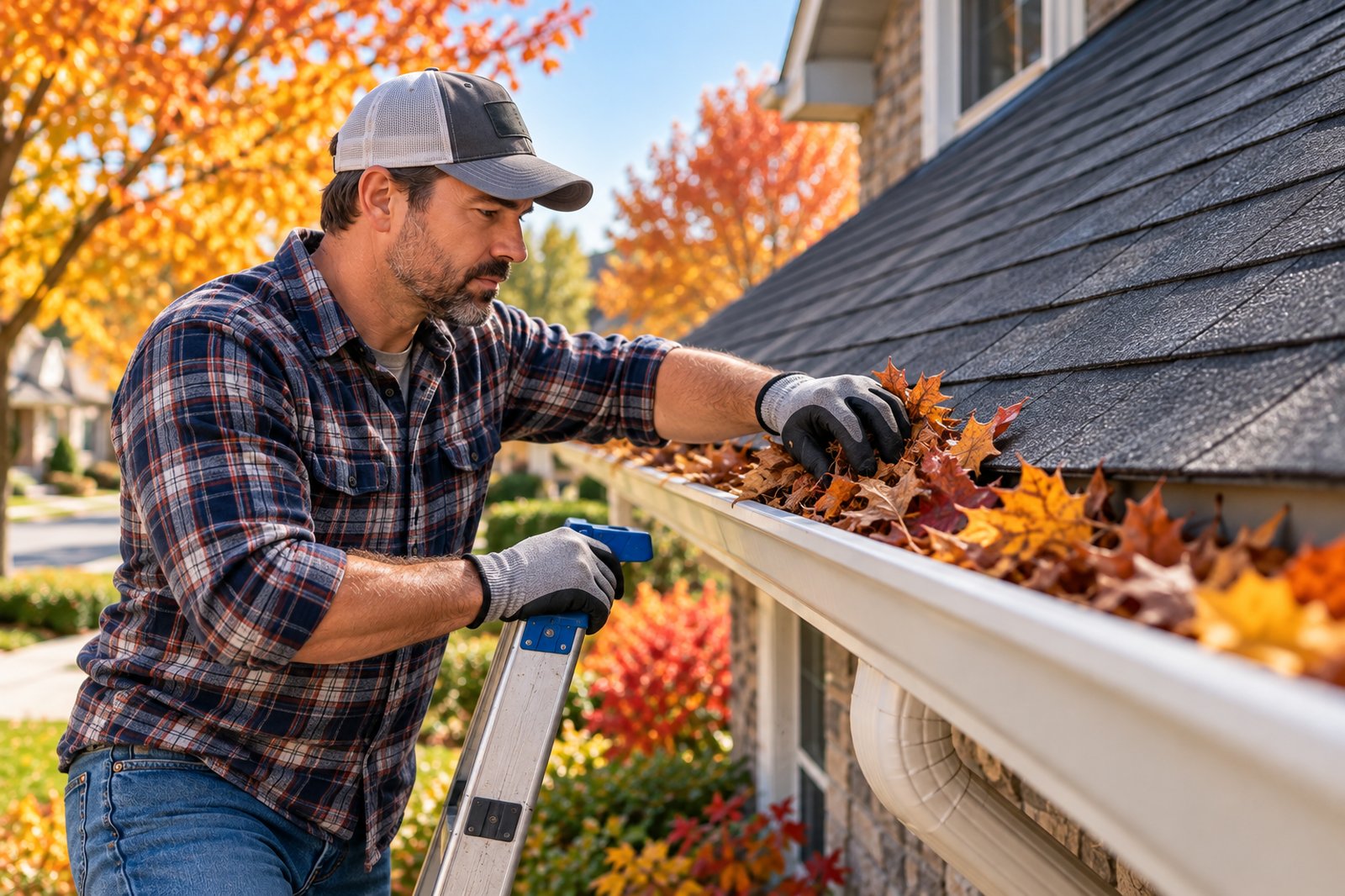
6. Check Gutters, Roof Concerns, and Overhanging Branches
Cold-weather preparation includes looking upward.
The Texas Department of Insurance includes gutter cleaning and attention to trees over homes and vehicles in its winter-readiness guidance. Source 4 Arrange removal of accumulated debris, and note visible damage or loose components for a professional to inspect.
Make your initial observations from the ground. You do not need to climb onto the roof to create a useful maintenance list.
Write down what you see and where: “Water spills over the gutter above the back door,” or “There is a loose section near the garage.” A clear description and a photo help when requesting service.
Avoid turning a seasonal checklist into an unsafe ladder project. Hire help for work you cannot perform safely, especially around high roofs, unstable branches, or electrical lines.
If a ceiling stain or recurring leak already exists, arrange an assessment of the cause before repainting the area.
7. Prepare Irrigation and Outdoor Equipment for Your Setup
Your sprinkler controller is only one part of the irrigation system.
Texas winter-preparation guidance recommends shutting down and draining lawn sprinkler systems before freezing conditions. Source 8 However, the procedure depends on the installation. Follow the manufacturer’s instructions or have an irrigation professional explain the correct steps.
Turning a controller off does not necessarily remove water from every component. Ask specifically about exposed piping, backflow equipment, and any parts that need protection.
Avoid copying a neighbor’s valve sequence without knowing whether your systems match. The same caution applies to outdoor kitchens and other water-connected equipment.
If you have a pool, obtain a freeze and power-outage plan from your pool professional or equipment manufacturer. Keep those instructions with your household checklist. A plan that depends on electricity needs a separate answer for what happens if power fails.
The useful question is: “What does this particular system need before temperatures drop?”
8. Test Smoke and Carbon Monoxide Alarms
Make alarms part of your seasonal maintenance routine rather than waiting for a low-battery chirp.
CPSC recommends monthly testing, smoke alarms on every level and inside bedrooms, and carbon monoxide alarms on every level and outside sleeping areas. Battery backup helps maintain protection during a power outage. Source 6
Check the manufacturer’s instructions for replacement dates and battery requirements. Different alarms may have different service lives.
Carbon monoxide is colorless and odorless, so smell is not a reliable warning. CDC recommends battery-powered or battery-backup CO detectors near sleeping areas and annual servicing of fuel-burning appliances by a qualified technician. Source 9
A simple organizational tip: Photograph each alarm’s label, record its replacement date, and keep the information in one note on your phone.
If a CO alarm sounds, leave the building immediately and call 911 from outside. Do not remain indoors trying to locate the source. Source 12
9. Set Up Space Heaters Safely
A portable heater needs a suitable location before it needs an outlet.
Keep it at least three feet from bedding, curtains, furniture, paper, and other combustible materials. Use a stable, level surface where children and pets are unlikely to knock it over. Keep the cord out from under rugs and carpeting. Source 10
Plug an electric space heater directly into a wall outlet, not an extension cord or power strip. Turn it off before sleeping and do not leave it running unattended. Source 6 Source 10
If safe spacing and a direct wall connection are impossible, choose a different arrangement. Moving a heater closer to a bed is not a solution to a short cord.
Follow the appliance’s instructions, including any greater clearance requirements. Repeatedly needing supplemental heat in one area is also a reason to ask about the room’s underlying comfort problem.
10. Prepare for a Power Outage Before You Need the Supplies
Think through an ordinary evening without electricity: lighting, phones, meals, medication, warmth, and water.
Ready.gov recommends an emergency kit with water, food, and other essentials. Its baseline water recommendation is one gallon per person per day for several days, for drinking and sanitation. Include additional supplies for pets and household-specific needs. Source 11
Gather flashlights, spare batteries, charged power banks, necessary medications, blankets, and food you can use without normal cooking facilities. Keep the supplies together and check them periodically.
If anyone relies on powered medical equipment, make an outage plan with their provider in advance.
Never use a gas oven, charcoal grill, or portable gas camping stove to heat your home. CDC says portable generators must operate outdoors, more than 20 feet from windows, doors, and vents—never inside a home or garage, even with openings left open. Source 9
Choose where you could safely go if your house becomes too cold or necessary equipment cannot operate.
What to Do When a Freeze Is in the Forecast
Your maintenance work should make the final preparations shorter.
Check local weather alerts and your water utility’s current instructions. Confirm outdoor protection is in place and review your irrigation plan. During very cold weather, the Red Cross recommends consistent thermostat settings, keeping garage doors closed where water lines are present, and opening sink cabinets to let warm air reach plumbing. Move hazardous household products out of children’s and pets’ reach. Source 3
Follow local instructions on dripping faucets and water-use restrictions. There is no need to invent a universal rule for every home and every utility. Texas guidance specifically advises following local government directions. Source 8
Make sure everyone knows where the flashlights, shutoff instructions, and emergency contacts are. If you will be away, arrange for someone to check the property and discuss any special winterization needs with a plumber beforehand.
Common Cold-Weather Preparation Mistakes
Doing only the visible jobs. Covering outdoor faucets is useful, but it does not address inaccessible plumbing, heating maintenance, or an unknown shutoff location.
Treating every house the same. Equipment instructions and your home’s layout matter more than a generic social-media shortcut.
Waiting until the warning arrives to book maintenance. Use the comfortable days for inspections and repairs. Reserve the last-minute list for final checks.
Buying supplies without checking fit. Count faucets, photograph filter labels, and identify worn weatherstripping before shopping.
Confusing a checklist with a guarantee. Preparation reduces avoidable vulnerabilities. It cannot promise that equipment will never fail or that every pipe will remain protected through a prolonged outage.
Frequently Asked Questions
When should I cover outdoor faucets in North Texas?
Have the covers ready during fall and install appropriate protection before freezing temperatures reach your location. Use your local forecast rather than waiting for the regional average first-freeze date. Disconnect attached hoses first. Source 1 Source 2
Should I drip every faucet when temperatures drop?
Follow your water utility’s current guidance and any restrictions. Which fixtures need attention depends on pipe exposure and the home’s layout. Ask a plumber about previously frozen or vulnerable lines before a cold event. Source 8
What temperature should I leave my house at while away?
The Red Cross advises leaving the heat on and setting it no lower than 55°F when away during cold weather. This is not a guarantee for every pipe; vulnerable plumbing or prolonged severe conditions may require a different plan. Source 3
Do outdoor faucet covers guarantee that pipes will not freeze?
No. Treat covers as one part of preparation. Assess the connected plumbing and follow professional advice for previously frozen fixtures or unusual installations. Insulation alone does not supply heat.
What should I do if I suspect a frozen pipe?
Contact a plumber and locate your shutoff. Texas guidance recommends shutting off water when pipes freeze to prevent leaking from damaged pipes as they thaw. Never use an open flame to thaw plumbing. Stay away from water near electrical equipment. Source 8 Source 3
Which winter preparation tasks should I hire out?
Consider professional help for fuel-burning appliance inspections, unfamiliar plumbing or irrigation work, inaccessible insulation, roof work, and difficult tree maintenance. Describe the actual problem and ask for a written scope before authorizing work.
Your Practical Cold-Weather Action Plan
| When | What to do |
|---|---|
| This week | Locate the shutoff, inspect accessible pipes, check filters, test alarms, and identify maintenance needs. |
| Before a freeze | Disconnect hoses, protect faucets, follow the irrigation plan, and gather outage supplies. |
| During freezing weather | Follow local alerts and utility guidance, monitor the home, and use heating equipment safely. |
| After the event | Look for new leaks or damage when safe, photograph concerns, and arrange necessary repairs. |
Start with one walk around the house and one walk through it. Take notes instead of relying on memory. Separate quick homeowner tasks from jobs that require a service appointment.
You do not need a perfect house to be better prepared. You need a plan that matches the house you actually live in.
Visit FixlyGuide.com for practical homeowner guidance and to explore the contractor directory. Ask prospective professionals about their qualifications, relevant experience, insurance, and written scope for your project.
What do you always check before the first freeze—and what did you learn the hard way? Share your experience in the comments.
Follow Fixly Guide for seasonal maintenance advice, repair planning, and straightforward help caring for your home.
Sources
- National Weather Service: DFW earliest and latest freezes
- City of Fort Worth: Prepare pipes for freezing temperatures
- American Red Cross: Preventing and thawing frozen pipes
- Texas Department of Insurance: How to make your house winter ready
- Department of Energy: 5 tips to help you save on energy bills this winter
- CPSC: Generators, furnaces and space heaters
- Department of Energy: Energy-saving hacks to weather the winter
- Texas Department of Insurance: Winter storms and pipes
- CDC: Carbon monoxide poisoning basics
- CPSC: Winter weather fire and CO safety
- Ready.gov: Build a kit
- CPSC: Carbon monoxide questions and answers
Related Guides
Your seasonal maintenance checklist
The small jobs that prevent the expensive repairs. Tick them off — progress saves on this device.
Free, no signup. Skip anything that requires roof access or working near live electrical.
What should this project cost?
Enter your project details for a realistic cost range before you call anyone.
Common repairs run $150–$650; repipes and water-heater replacements reach $1,500–$4,500.
- Regional adjustment
- National average
- Labor share (typical)
- ~$754
- Quotes to collect
- 3 written estimates
Educational estimate based on national averages — not a binding quote. Always confirm with written local estimates.
Stay ahead of the next repair
Turn this guide into a schedule you will actually follow.
- Is this a safe DIY job?Check permits, tools, and risk before you start the steps below.Open
- Estimate this projectGet a cost range for your scope and ZIP before you call anyone.Open
Free, no signup required. Estimates are educational guidance, not a quote or an inspection.
Recommended for DIYers & woodworkers
Sponsored
The Top 20 Tools for Workshops of Any Budget
No stationary machines or power tools required — plus 3 fundamental tools that can't be bought at any price.
Get the free guide
Ted's Woodworking — The #1 Woodworking Resource
Detailed instructions, dimensioned drawings, materials & cutting lists, and 3D schematics for every skill level.
See the plansSponsored: links above are affiliate links. FixlyGuide may earn a commission on qualifying purchases — at no extra cost to you.
Frequently asked questions
When should I cover outdoor faucets in North Texas?+
Have the covers ready during fall and install appropriate protection before freezing temperatures reach your location. Use your local forecast rather than waiting for the regional average first-freeze date. Disconnect attached hoses first.
Should I drip every faucet when temperatures drop?+
Follow your water utility’s current guidance and any restrictions. Which fixtures need attention depends on pipe exposure and the home’s layout. Ask a plumber about previously frozen or vulnerable lines before a cold event.
What temperature should I leave my house at while away?+
The Red Cross advises leaving the heat on and setting it no lower than 55°F when away during cold weather. This is not a guarantee for every pipe; vulnerable plumbing or prolonged severe conditions may require a different plan.
Do outdoor faucet covers guarantee that pipes will not freeze?+
No. Treat covers as one part of preparation. Assess the connected plumbing and follow professional advice for previously frozen fixtures or unusual installations. Insulation alone does not supply heat.
What should I do if I suspect a frozen pipe?+
Contact a plumber and locate your shutoff. Texas guidance recommends shutting off water when pipes freeze to prevent leaking from damaged pipes as they thaw. Never use an open flame to thaw plumbing. Stay away from water near electrical equipment.
Which winter preparation tasks should I hire out?+
Consider professional help for fuel-burning appliance inspections, unfamiliar plumbing or irrigation work, inaccessible insulation, roof work, and difficult tree maintenance. Describe the actual problem and ask for a written scope before authorizing work.

Discussion
Loading comments…