- The One Pruning Mistake That Could Be Killing Your Shrubs (and How to Fix It) — Discover the crucial pruning mistake many homeowners make that can significantly damage or even kill their shrubs, and learn the simple fix.
- The 1 Mistake Homeowners Make with Pellet Grills (and How to Fix It) — Unpredictable temperature swings are the most common and frustrating issue for pellet grill owners, often caused by maintenance oversights.
- 7 Inspection Red Flags That Secretly Signal a $20,000 Bill — Don't let your dream home become a money pit. Many buyers and even some inspectors overlook subtle home inspection red flags that lead to f…
- The 4 Hidden Reasons Your Lawn Stays Yellow (And How to Fix It FAST) — Uncover the surprising culprits behind a yellow lawn and learn the quick, effective fixes to restore vibrant green growth.
- The 3 Critical Mistakes Wrecking Your Lawn (And the Liquid Fix) — Unlock the secret to a verdant lawn by learning how to avoid critical fertilization errors and choosing the right liquid solution.
Concrete · Cracked or sunken concrete
| Project category | Concrete |
|---|---|
| Problem type | Cracked or sunken concrete |
| Trade required | Concrete |
| Urgency | Planned project |
| Safety risk | Moderate safety risk |
| DIY suitability | Pro recommended |
| Cost category | High cost |
| Typical timeline | Pour in a day, cure before use for several days |
| Contractor type | Concrete contractor |
Repair option
Slab lifting or crack repair when the concrete is otherwise sound.
Replacement option
Tear out and repour when the slab is spalled or broken through.
Common causes
- Soil washout under the slab
- Missing control joints
- Freeze-thaw and de-icing salts
Relevant tools:project cost estimatorhome improvement material prices
Published May 25, 2026Last updated August 17, 2026
Tools & materials you'll need
Affiliate linksAs an Amazon Associate FixlyGuide earns from qualifying purchases — at no extra cost to you. Prices and availability are accurate as of publication and subject to change.
Quick Answer
Many homeowners rush into cleaning concrete surfaces without proper diagnosis or preparation, often opting for a one-size-fits-all solution. This leads to ineffective cleaning, wasted effort, and sometimes even damage to the concrete. The secret to truly transformative concrete cleaning lies in understanding the specific stain, matching it with the right cleaning agent, and meticulous preparation, followed by a precise power washing technique to reveal a truly clean, restored surface.
The Problem
Your concrete driveway, patio, or walkways take a beating from the elements, vehicle traffic, foot traffic, and spills. Over time, these surfaces accumulate a variety of unsightly stains: dark green mold and mildew thrive in damp, shaded areas; oil and grease leave dark, persistent splotches from car leaks or barbecue mishaps; rust stains seep from metal furniture or fertilizer; and general dirt and grime dull the once-bright surface. Beyond aesthetics, some of these contaminants, especially mold and algae, can make concrete slippery and dangerous. Ignoring these issues not only detracts from your home's curb appeal but can also lead to the gradual degradation of the concrete itself, necessitating more costly repairs down the line.
How It Works
Concrete, while seemingly solid, is a porous material. This porosity is why it readily absorbs liquids and contaminants, leading to deep-set stains that mere scrubbing with water can't remove. Different stains interact with concrete in different ways. Oil and grease, for instance, are hydrocarbons that penetrate deep into the pores, requiring a degreaser to emulsify and lift them. Mold and mildew are living organisms that root into the surface, needing an algaecide or bleach solution to kill and loosen them. Rust stains are a chemical reaction of iron oxides, which require an acid-based cleaner to dissolve the metallic compounds.
Most commercial concrete cleaners work by a combination of chemical action and surfactants. The chemicals target specific stain types, breaking down their molecular structure or dissolving them. Surfactants, or surface-active agents, reduce the surface tension of water, allowing the cleaning solution to penetrate deeper into the concrete's pores and encapsulate the loosened dirt and grime. This encapsulation makes it easier for the power washer to rinse away the contaminants effectively. A power washer then provides the necessary mechanical force, using high-pressure water to blast away the loosened matter and flush it from the concrete's pores. The fan-tip nozzle creates a wide, even spray pattern that is powerful enough to clean without gouging the concrete, provided it's used correctly. Understanding this interplay between the stain, the chemical cleaner, and the mechanical action of the power washer is fundamental to achieving a truly deep and lasting clean.
Step-by-Step Fix
Getting your concrete sparkling clean isn't just about blasting it with a power washer. It's a methodical process that tackles the root causes of stains.
-
Assess the Stains and Clear the Area — Identify the types of stains present (oil, rust, mold, general grime) as this dictates your cleaner choice. Move all furniture, potted plants, vehicles, and anything else off the concrete surface. Sweep away loose debris, leaves, and dirt thoroughly.
- Tip: Look for distinct patterns. Dark, slick spots often indicate oil, while green or black fuzzy patches are usually mold or algae. Orange/brown spots suggest rust.
-
Protect Nearby Surfaces — Cover any adjacent landscaping, painted surfaces, or windows with plastic sheeting or tarps. Concrete cleaners, especially acidic or alkaline ones, can damage plants and finishes. You may also want to dampen plants thoroughly before and after applying cleaners to dilute any overspray.
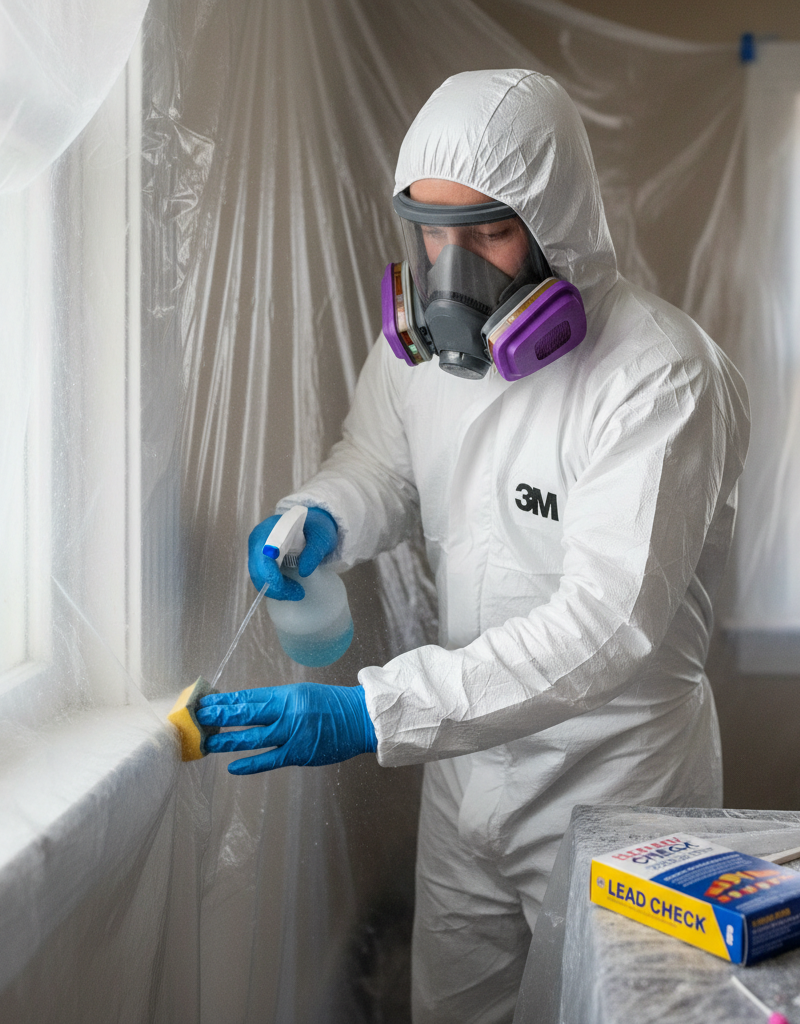
- Safety Note: Always wear appropriate personal protective equipment (PPE), including rubber gloves, eye protection, and long sleeves/pants, especially when handling chemical cleaners.
-
Pre-treat Stubborn Stains — This is a critical step often skipped. Apply a specialized cleaner directly to highly concentrated or specific stains BEFORE general cleaning. For oil stains, use an absorbent like cat litter or sawdust first, then a dedicated concrete degreaser. For rust, use an oxalic acid-based rust remover. For heavy mold/mildew, use a bleach-based solution or dedicated concrete algaecide. Let these penetrate for the time recommended by the manufacturer, typically 10-20 minutes.
- If this doesn't work: If stains persist after one application, reapply the pre-treatment and allow more dwell time or gently scrub with a stiff brush.
-
Apply General Concrete Cleaner — For overall cleaning and less severe grime, use a general-purpose concrete cleaner. Mix it according to the manufacturer's directions. Apply with a pump sprayer, roller, or a stiff-bristled broom, ensuring even coverage across the entire surface. Work in manageable sections to prevent the cleaner from drying.
- Tool Tip: A pump sprayer makes large areas much easier to cover evenly.
-
Allow Dwell Time — Let the general cleaner sit on the concrete for the recommended dwell time, usually 15-30 minutes. This allows the surfactants and active ingredients to break down and lift dirt and grime from the pores. Do NOT let the cleaner dry on the surface; in warm weather, you may need to lightly mist it with water to keep it active.
-
Agitate (Optional but Recommended) — For heavily soiled areas or stubborn general grime, agitate the cleaner with a stiff-bristled push broom or deck brush. This mechanical action helps dislodge embedded dirt and activates the cleaning solution further.
-
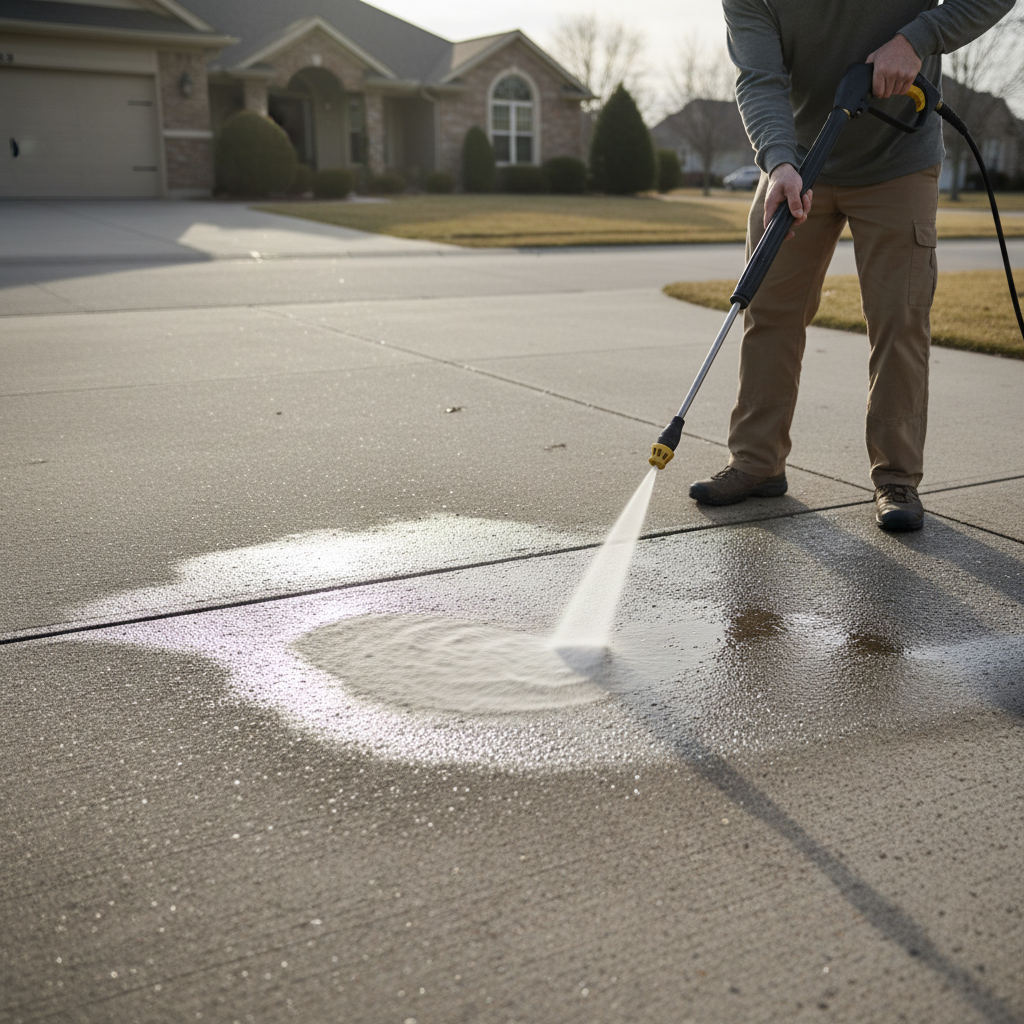
Power Wash the Surface — Starting from the highest point and working your way down, use a pressure washer with a 25-degree or 40-degree fan-tip nozzle. Keep the nozzle 6-12 inches from the surface and maintain a consistent distance and overlapping passes to prevent streaking. Move the wand smoothly and steadily.
- Safety Note: Never point the pressure washer at people, pets, or fragile objects. Wear sturdy closed-toe shoes and eye protection. Start with a wider fan tip and move closer if needed, rather than starting with a narrow, powerful spray that can damage concrete.
- Pro Tip: For very large areas, consider renting a surface cleaner attachment for your power washer – it provides a more even clean and prevents
Related Articles
Keep troubleshooting with these hand-picked guides from FixlyGuide:
- The One Pruning Mistake That Could Be Killing Your Shrubs (and How to Fix It) — Discover the crucial pruning mistake many homeowners make that can significantly damage or even kill their shrubs, and learn the simple fix.
- The #1 Mistake Homeowners Make with Pellet Grills (and How to Fix It) — Unpredictable temperature swings are the most common and frustrating issue for pellet grill owners, often caused by maintenance oversights.
- 7 Inspection Red Flags That Secretly Signal a $20,000 Bill — Don't let your dream home become a money pit. Many buyers and even some inspectors overlook subtle home inspection red flags that lead to f…
- The 4 Hidden Reasons Your Lawn Stays Yellow (And How to Fix It FAST) — Uncover the surprising culprits behind a yellow lawn and learn the quick, effective fixes to restore vibrant green growth.
- The 3 Critical Mistakes Wrecking Your Lawn (And the Liquid Fix) — Unlock the secret to a verdant lawn by learning how to avoid critical fertilization errors and choosing the right liquid solution.
- The #1 Mistake Homeowners Make Cleaning Gutters (And How to Fix It) — Discover the biggest gutter cleaning mistake that leads to costly roof damage and learn the right way to protect your home.
Should you do this yourself?
Answer five quick questions before you start. Safety outranks savings every time.
Your experience with work like this
How high do you have to work?
Does the job involve any of these?
Will it need a permit?
Specialty tools
Free and instant. Educational guidance only — not a quote, inspection, or professional diagnosis.
Estimate your own project cost
National averages are a starting point. Enter your details for a range that fits your house.
Concrete slab calculator
- Bagged mix (80 lb)$372 – $527
- Ready-mix delivery (1.5 cu yd)$210 – $300
Ready-mix is usually cheaper above ~1 cu yd. Most suppliers have a short-load fee under 3 yd.
Educational estimate only — always confirm with written local bids.
What should this project cost?
Enter your project details for a realistic cost range before you call anyone.
Driveways and patios commonly run $8–$18 per square foot poured.
- Regional adjustment
- National average
- Labor share (typical)
- ~$2,003
- Quotes to collect
- 3 written estimates
Educational estimate based on national averages — not a binding quote. Always confirm with written local estimates.
Before you start
Check the difficulty, permits, and safety risk — then decide whether to call a pro.
Free, no signup required. Estimates are educational guidance, not a quote or an inspection.
Get the print-ready PDF of this guide
A clean, ad-free, printable version you can keep on your phone or pin to the workshop wall. Free with a FixlyGuide account.
- Print-optimized layout
- Tools, materials & every step included
- Saved to your account
This article was independently written by FixlyGuide based on the source topic.
Frequently asked questions
How often should I clean my concrete surfaces?+
For driveways and high-traffic areas, cleaning every 1-2 years is often sufficient. Patios and walkways in shaded, damp areas prone to mold may benefit from annual cleaning. Regular sweeping and rinsing can extend the time between deep cleans.
Can I use bleach to clean concrete?+
Bleach (sodium hypochlorite) is effective for killing mold, mildew, and algae on concrete. However, it should be diluted, used with caution, and rinsed thoroughly. Avoid using it near plants or colored concrete as it can cause discoloration. Always wear protective gear.
What kind of pressure washer is best for concrete?+
For most homeowner tasks, a gas or electric pressure washer with 2000-3000 PSI and a flow rate of 2-3 GPM is ideal. Ensure it has interchangeable nozzle tips (25-degree and 40-degree are most useful for concrete). Lower PSI models may be insufficient, while higher PSI models can damage concrete if not used carefully.
Discussion
Loading comments…