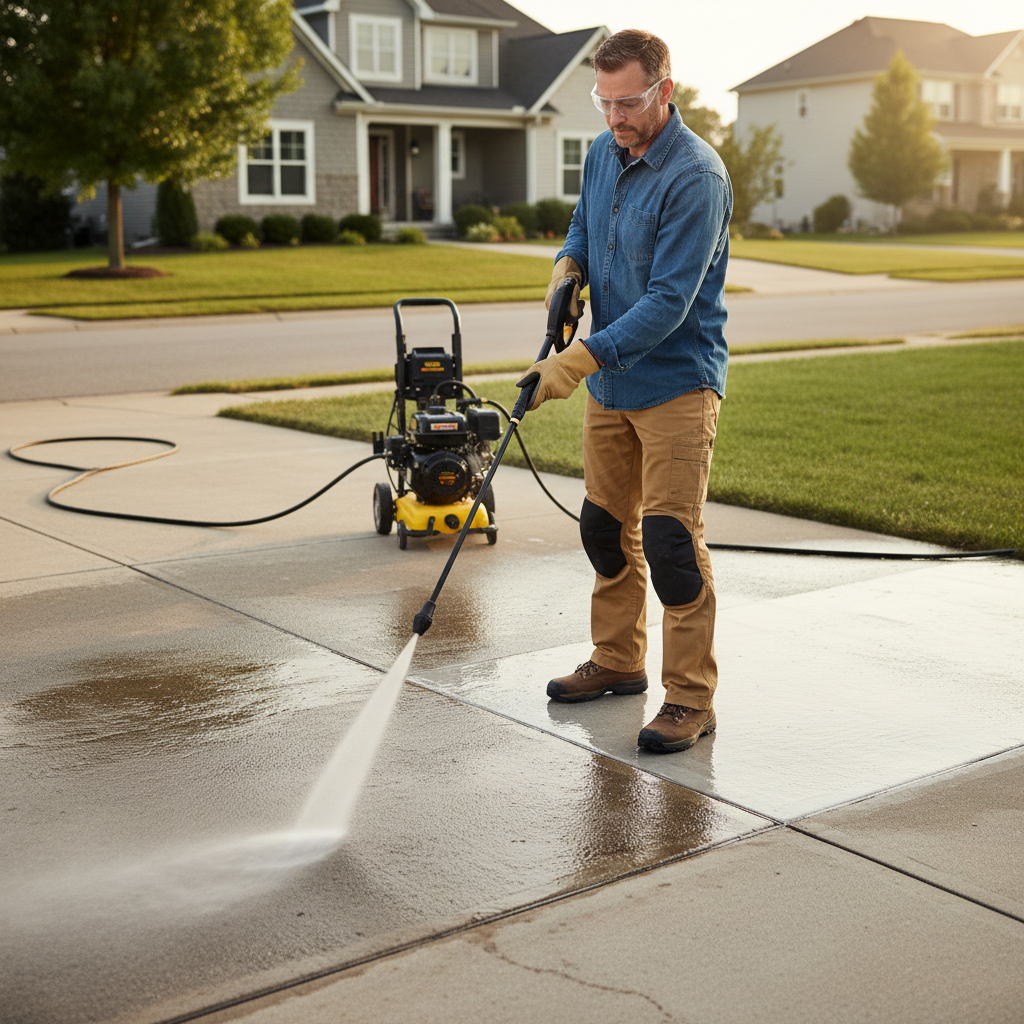
- For oil/grease: Use an alkaline degreaser. Apply directly to the stain, allow it to dwell, then scrub.
- For rust/efflorescence: Use an acid-based cleaner (e.g., phosphoric acid). Always dilute according to instructions and never use on unsealed or colored concrete without testing first.
- For mold/mildew: An oxygen bleach-based cleaner or a commercial mildew remover is effective. Avoid chlorine bleach which can yellow concrete over time.
Landscaping · Deck or fence project
| Project category | Landscaping |
|---|---|
| Problem type | Deck or fence project |
| Trade required | Landscaping |
| Urgency | Planned project |
| Safety risk | Moderate safety risk |
| DIY suitability | DIY for experienced homeowners |
| Cost category | High cost |
| Typical timeline | Most builds 3–10 days depending on size |
| Contractor type | Landscaping contractor |
Repair option
Replace failed boards, posts, and hardware; reseal the surface.
Replacement option
Rebuild when framing or the ledger connection is unsafe.
Common causes
- Rot at posts and ledger
- Storm damage
- Adding outdoor living space
Relevant tools:home improvement material pricesproject cost estimator
Published May 24, 2026Last updated August 17, 2026
Tools & materials you'll need
Affiliate linksAs an Amazon Associate FixlyGuide earns from qualifying purchases — at no extra cost to you. Prices and availability are accurate as of publication and subject to change.
Quick Answer
Many homeowners inadvertently damage their concrete surfaces or achieve unsatisfactory results by making one critical mistake: using a one-size-fits-all approach to cleaning. This often means grabbing the strongest bleach solution or blasting with the highest pressure washer setting, without considering the type of stain, the concrete's age, or the surrounding landscaping. Effective, lasting concrete cleaning isn't about brute force; it's about understanding the specific cleaning agents and techniques that work for different challenges, from oil stains to mildew, ultimately preserving your concrete's integrity and appearance.
The Problem
Your concrete driveway, patio, or walkways are more than just functional surfaces; they significantly contribute to your home's curb appeal. However, these surfaces are constantly exposed to the elements, vehicle traffic, foot traffic, and spills, leading to an accumulation of dirt, grime, oil, rust, mold, and mildew. Over time, this buildup not only makes your concrete look unsightly but can also degrade its surface, leading to etching, discoloration, and premature wear. The problem isn't always obvious at first, often appearing as a gradual dulling or subtle staining. The real pain point arises when a homeowner tries to "fix" it with an inappropriate cleaner or method, potentially worsening the damage or creating new, more stubborn stains that are even harder to remove.
How It Works
Concrete, primarily composed of Portland cement, aggregate (sand and gravel), and water, is a porous material. This porosity is key to understanding how stains penetrate and how cleaners work. Unlike a perfectly smooth, non-porous surface, concrete has microscopic capillaries and voids that allow liquids and airborne particles to seep in and become trapped. This is why oil stains spread and darken, and why mildew roots itself deep within the surface structure.
Concrete cleaners work in several ways, depending on their chemical composition and the type of stain they target. Detergents and surfactants lower the surface tension of water, allowing it to penetrate dirt and grime more effectively and lift them from the concrete pores. Alkaline cleaners, often containing sodium hydroxide (lye) or potassium hydroxide, are excellent for breaking down organic matter like grease, oil, and food spills by saponifying fats and emulsifying oils. They convert oils into water-soluble soaps that can then be rinsed away. Acidic cleaners, such as those containing phosphoric acid, hydrochloric acid, or citric acid, are used for dissolving mineral deposits like rust, efflorescence (a white powdery substance caused by salt deposits), and hard water stains. They react with the mineral compounds, making them soluble so they can be rinsed. Enzymatic cleaners contain beneficial microbes that "eat" and break down organic stains like pet waste, blood, or food residue, making them particularly effective for odor removal and deep cleaning without harsh chemicals. Finally, a pressure washer doesn't just blast dirt away; it uses high-velocity water to physically dislodge contaminants, forcing them out of the concrete's pores. The combination of chemical action and mechanical force is often the most effective approach for deep-seated stains and overall concrete restoration.
Step-by-Step Fix
Before you begin any concrete cleaning project, always review the specific instructions on the cleaner you choose, wear appropriate personal protective equipment (PPE), and test the cleaner in an inconspicuous area. Ensure children and pets are kept away from the work zone.
-
Prep the Area — Remove all furniture, potted plants, and loose debris from the concrete surface. Use a stiff-bristle broom to sweep away as much loose dirt, leaves, and cobwebs as possible.
- Safety Note: If using a leaf blower, wear eye protection to prevent dust and debris from entering your eyes.
-
Protect Nearby Plants and Surfaces — Concrete cleaners, especially acidic or alkaline ones, can harm plants, grass, and painted surfaces. Use plastic sheeting or tarps to cover any adjacent landscaping or walls. Dampen surrounding soil and plants with plain water before applying cleaner; this helps dilute any overspray.
- Tip: Create a small dirt berm or use sandbags around the perimeter of the concrete to prevent runoff from reaching sensitive areas.
-
Pre-Wet the Concrete — Using a garden hose with a spray nozzle, thoroughly wet down the entire concrete surface. This helps the cleaner spread evenly, prevents it from drying too quickly, and can "lift" some surface dirt before the actual cleaning begins.
- Why it matters: Pre-wetting prevents the concrete from immediately absorbing the cleaning solution, allowing it to work on surface stains first.
-
Apply the Cleaner (Correctly!) — Based on your stain type (oil, rust, mildew), select the appropriate concrete cleaner. Follow the manufacturer's dilution ratios precisely. Apply the cleaner evenly using a garden sprayer for large areas or directly pouring and spreading with a soft-bristle brush for smaller spots. Work in manageable sections if your area is large.
- For oil/grease: Use an alkaline degreaser. Apply directly to the stain, allow it to dwell, then scrub.
- For rust/efflorescence: Use an acid-based cleaner (e.g., phosphoric acid). Always dilute according to instructions and never use on unsealed or colored concrete without testing first.
- For mold/mildew: An oxygen bleach-based cleaner or a commercial mildew remover is effective. Avoid chlorine bleach which can yellow concrete over time.
-
Allow Dwell Time — Let the cleaner sit on the concrete surface for the time recommended by the manufacturer, typically 10–20 minutes. This allows the chemicals to penetrate and break down the stains. Do not let the cleaner dry on the surface; if it starts to dry, mist it lightly with water.
- Crucial: Drying prematurely can leave residue or permanent marks. Keep the surface consistently damp with the cleaning solution.
-
Scrub Stubborn Areas — For deep-seated stains or high-traffic areas, use a stiff-bristle brush or a deck brush with a long handle to agitate the cleaner. Apply steady pressure in a circular or back-and-forth motion.
- **If this doesn
Related Articles
Keep troubleshooting with these hand-picked guides from FixlyGuide:
- The #1 Mistake Homeowners Make with Pellet Grills (and How to Fix It) — Unpredictable temperature swings are the most common and frustrating issue for pellet grill owners, often caused by maintenance oversights.
- The One Pruning Mistake That Could Be Killing Your Shrubs (and How to Fix It) — Discover the crucial pruning mistake many homeowners make that can significantly damage or even kill their shrubs, and learn the simple fix.
- 7 Hidden Equity Drains Costing You Thousands Annually — Your home is an asset, but silent problems like minor leaks, poor insulation, and deferred maintenance can drain its value. Discover the se…
- Is a Wall-Mounted Pressure Washer Right for Your Garage? The Unvarnished Truth — Discover if a wall-mounted pressure washer is the right cleaning solution for your home, offering a powerful and space-saving alternative t…
- The Secret 5 Bugs Invading Homes (It's Not Just Lanternflies) — Discover the five most common invasive bugs pest professionals treated last year that homeowners often overlook, and learn how to protect y…
- The #1 Mosquito Mistake Homeowners Make (and 3 Natural Fixes) — Discover the biggest mistake homeowners make in mosquito control and learn three natural, effective fixes to reclaim your backyard without…
What should this project cost?
Enter your project details for a realistic cost range before you call anyone.
Driveways and patios commonly run $8–$18 per square foot poured.
- Regional adjustment
- National average
- Labor share (typical)
- ~$2,003
- Quotes to collect
- 3 written estimates
Educational estimate based on national averages — not a binding quote. Always confirm with written local estimates.
Get the print-ready PDF of this guide
A clean, ad-free, printable version you can keep on your phone or pin to the workshop wall. Free with a FixlyGuide account.
- Print-optimized layout
- Tools, materials & every step included
- Saved to your account
This article was independently written by FixlyGuide based on the source topic.
Frequently asked questions
How often should I clean my concrete surfaces?+
For most homes, cleaning concrete driveways and patios once or twice a year is sufficient to prevent heavy buildup and maintain appearance. High-traffic areas or those prone to mildew might benefit from more frequent cleaning.
Can I use household bleach to clean concrete?+
While diluted household bleach can kill mildew, it's generally not recommended for regular concrete cleaning. Bleach can cause discoloration, especially on colored concrete, and its environmental runoff can harm plants. Oxygen bleach alternatives are safer and more effective for organic stains without the harsh side effects.
What is efflorescence and how do I remove it?+
Efflorescence is a white, powdery residue on concrete surfaces caused by water seeping through and carrying mineral salts to the surface, which then crystallize as the water evaporates. It's best removed with an acid-based cleaner specifically formulated for masonry, applied carefully and rinsed thoroughly.
Is pressure washing safe for all concrete?+
Pressure washing can be effective, but it's not safe for all concrete or all users. Too much pressure (above 2000-2500 PSI) or holding the nozzle too close can etch, pit, or even damage the concrete surface, especially on older or weaker slabs. Always start with a lower pressure and keep the wand moving. For very old or delicate concrete, chemical cleaning with scrubbing might be a safer option.

Discussion
Loading comments…