- Blown Thermal Fuse: The most common cause for an electric dryer running but not heating. Often a symptom of restricted airflow due to a clogged dryer vent, forcing the dryer to overheat.
- Failed Heating Element: Over time, the coiled wire in the heating element can break or burn out due to fatigue or excessive wear. This directly prevents heat generation.
- Faulty High-Limit Thermostat: While less common than a fuse, a thermostat stuck in the
HVAC · High energy usage
| Project category | HVAC |
|---|---|
| Problem type | High energy usage |
| Trade required | HVAC |
| Urgency | Planned project |
| Safety risk | Low safety risk |
| DIY suitability | DIY for experienced homeowners |
| Cost category | High cost |
| Typical timeline | Assessment within weeks; replacement planned off-season |
| Contractor type | Licensed HVAC technician |
Repair option
Duct sealing, insulation, and a tune-up before touching the equipment.
Replacement option
High-efficiency replacement sized by a load calculation, not a rule of thumb.
Common causes
- Aging, low-efficiency equipment
- Leaking ducts losing conditioned air
- Insufficient attic insulation
- Oversized system short-cycling
Relevant tools:project cost estimatorrepair or replace
Published June 1, 2026Last updated August 18, 2026
Tools & materials you'll need
Affiliate linksAs an Amazon Associate FixlyGuide earns from qualifying purchases — at no extra cost to you. Prices and availability are accurate as of publication and subject to change.
Quick Answer
If your electric dryer runs but fails to generate heat, the issue typically lies with either a blown thermal fuse or a compromised heating element. Both are relatively inexpensive components that can be diagnosed with a multimeter and replaced with common hand tools, allowing a DIYer to restore their dryer's heating in about 30–60 minutes for under $30.
The Problem
Imagine pulling a load of supposedly clean laundry from your dryer, only to find the clothes still damp and cold. This frustrating scenario points to a critical failure in the dryer's heating system. While the drum still tumbles and the fan circulates air, the crucial heat needed for drying is absent. This common problem can make laundry day a nightmare and lead to longer drying times, higher energy bills, and even mildew growth on clothes if left unaddressed. Ignoring it won't make it go away; in fact, continued use of a non-heating dryer can sometimes exacerbate other issues or simply waste electricity by tumbling clothes indefinitely without drying them.
How It Works
An electric dryer's heating system is remarkably straightforward, relying on a few key components to generate and regulate heat. At its heart is the heating element, a coiled wire (often nichrome) that generates heat when electricity passes through it, much like a giant toaster element. This element is housed within a sheet metal casing. As the dryer fan pulls air from the room, it passes over the incandescent heating element, warming the air before it enters the dryer drum. This hot, dry air then tumbles with your wet clothes, picking up moisture. The moist air is then expelled through the dryer vent to the outside.
To prevent the dryer from overheating and becoming a fire hazard, several safety mechanisms are in place. The thermal fuse is a one-time use safety device, designed to blow and cut power to the heating element if the dryer's temperature exceeds a safe limit, usually due to restricted airflow (a clogged vent) or a failing thermostat. Once blown, it must be replaced. The high-limit thermostat is another safety device that cycles the heating element on and off to maintain the desired temperature and will trip if the temperature goes too high, but it resets automatically. The operating thermostat senses the air temperature within the drum and signals the control board to turn the heating element on or off to maintain the selected drying temperature. If any of these components fail, especially the thermal fuse or the heating element, the dryer will stop producing heat, even if the motor continues to tumble.
Step-by-Step Fix
Safety First: Before attempting any repairs, always unplug your dryer from the wall outlet. Even with the dryer off, it can still carry a lethal electrical charge. If it's a gas dryer, also turn off the gas supply valve. Wear work gloves to protect your hands from sharp metal edges.
-
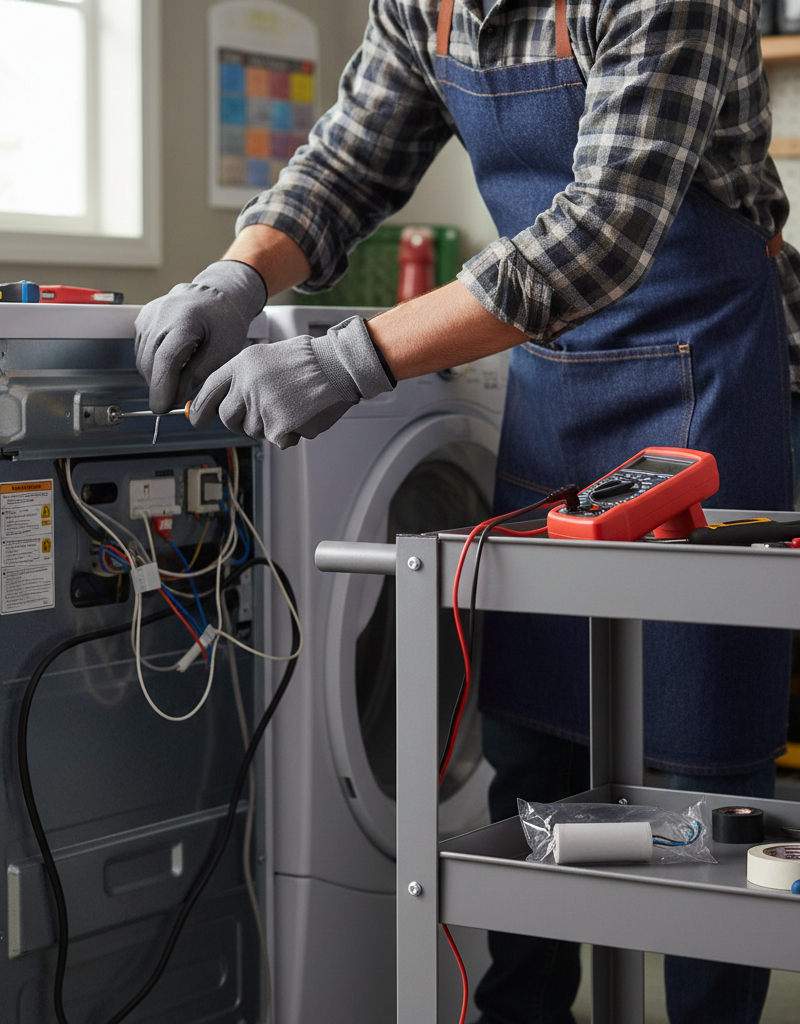
Access the Rear Panel — Unplug the dryer and move it away from the wall. Using a Phillips head screwdriver or nut driver, remove the screws securing the large metal access panel on the back of the dryer. Set the screws aside in a safe place.
- Tools: Phillips head screwdriver or 1/4-inch nut driver
- Safety: Ensure the dryer is completely unplugged.
-
Locate the Heating Element and Fuses — Identify the key components. Inside the dryer's rear housing, you'll see a large, typically round or rectangular metal canister, which is the heating element housing. Connected to this housing, often on the exhaust duct, you'll find the thermal fuse (a small, white cylindrical component with two wires) and typically one or more thermostats (round discs with two wires). The heating element itself will have thicker wires leading to it.
-
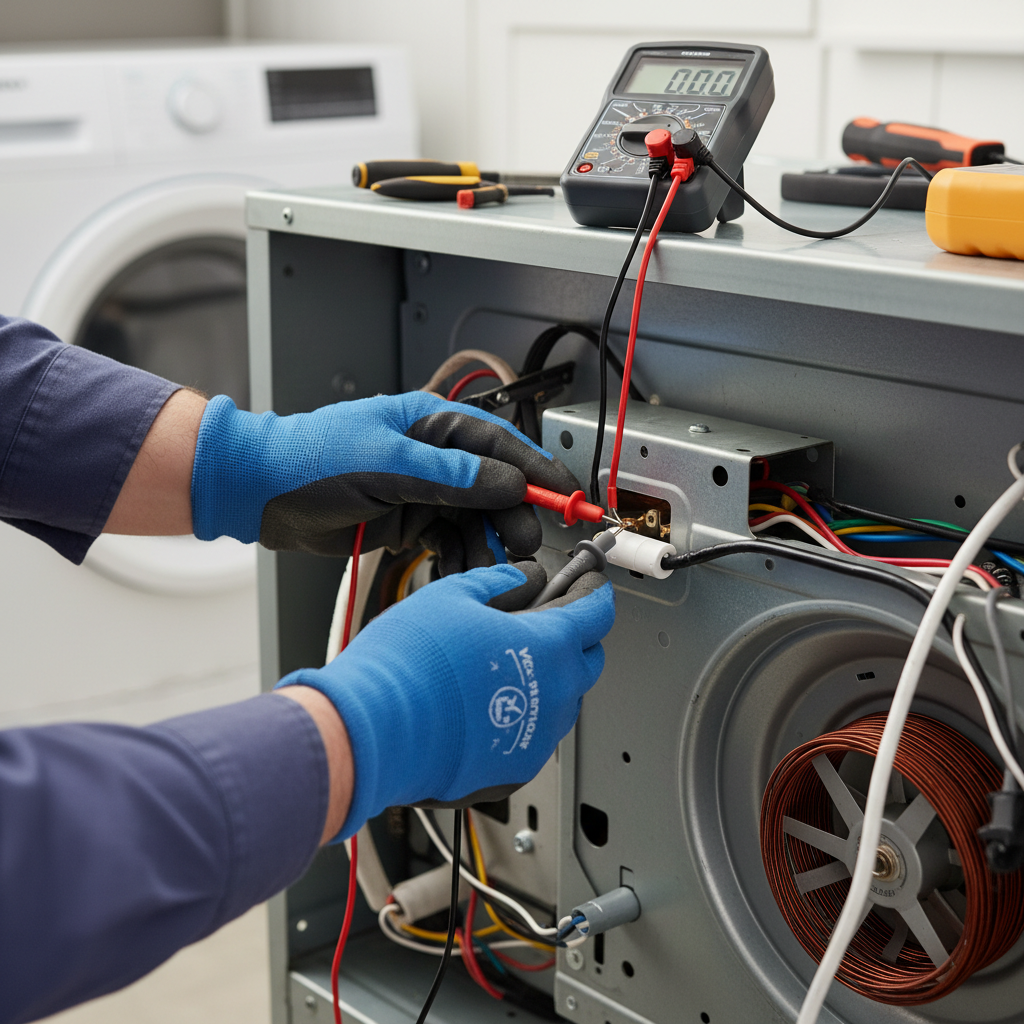
Test the Thermal Fuse — Confirm if the fuse has blown. Disconnect the two wires leading to the thermal fuse. Set your multimeter to the continuity setting (often indicated by an audible beep or an ohm symbol). Place one probe on each terminal of the thermal fuse. If the multimeter beeps or reads near '0' ohms, the fuse is good. If there's no beep or it reads 'OL' (open loop) or infinite resistance, the fuse is blown and needs replacement.
- Tools: Multimeter
- If no multimeter: You can visually inspect for burn marks, but a multimeter is more reliable.
- What if it's good? Proceed to test the heating element.
-
Test the Heating Element — Check for electrical continuity. Disconnect the power wires (usually two thicker wires) leading to the heating element inside its housing. Set your multimeter to the ohms setting. Place one probe on each terminal of the heating element. A good heating element will typically show a resistance reading between 8 and 20 ohms (consult your dryer's service manual or a parts diagram for exact specifications). If it reads 'OL' or infinite resistance, the element has a break in its coil and is faulty.
- Tools: Multimeter
- Safety: Be careful not to bend or damage the delicate heating coils.
- Important: If the element looks visibly broken or burnt, it's almost certainly the problem.
-
Remove the Faulty Component — Carefully detach the part. If the thermal fuse or heating element tested bad, use a nut driver or screwdriver to remove the mounting screws that secure it to the dryer. Gently pull the component free, noting how it was oriented for reinstallation.
-
Install the New Component — Connect the replacement part. Position the new thermal fuse or heating element correctly and secure it with the mounting screws. Reattach the wires to their respective terminals. Ensure all connections are snug and secure.
- Material: Replacement thermal fuse or heating element.
- Important: Ensure you have the correct replacement part number for your specific dryer model.
-
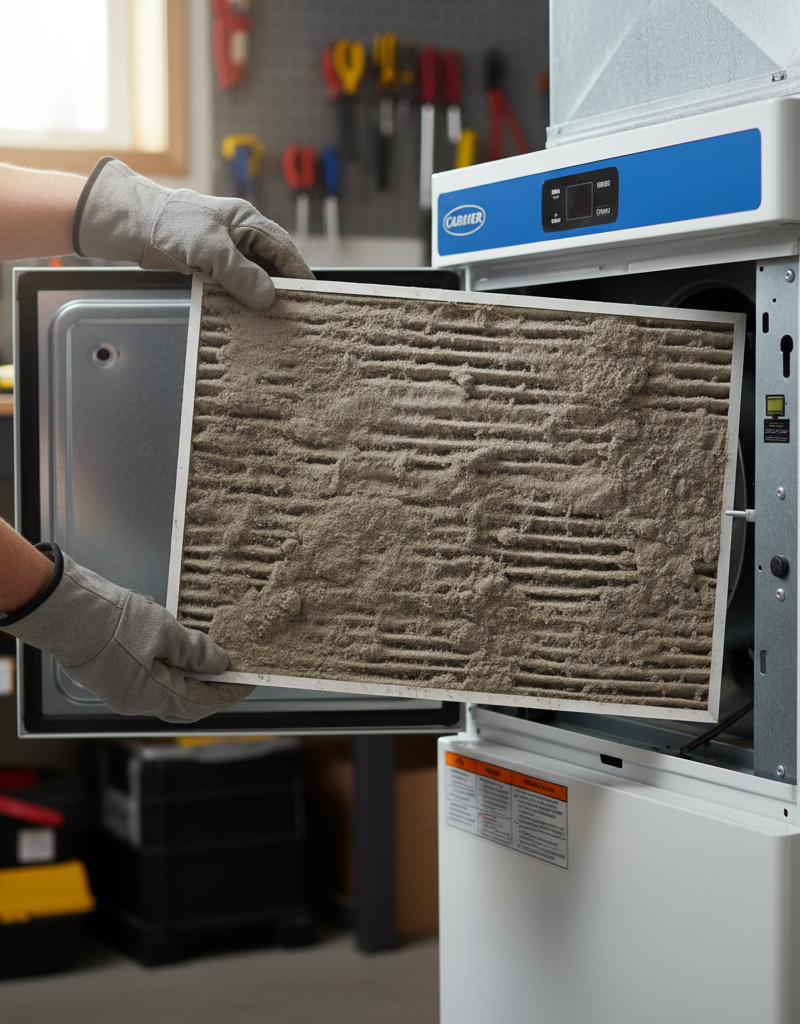
Inspect and Clean Venting — Address the root cause of a blown fuse. A clogged dryer vent is the most common reason a thermal fuse blows. Before reassembling, thoroughly inspect the entire dryer vent hose and the dryer's internal lint trap housing for lint buildup. Clear any obstructions. Use a vacuum cleaner with a crevice attachment to get into tight spaces.
- Tools: Shop vac or household vacuum with attachments.
- Prevention: Regularly clean your dryer's lint screen and inspect the vent hose.
-
Reassemble and Test — Put everything back together and confirm the fix. Replace the rear access panel, securing it with all removed screws. Push the dryer back into its position, ensuring the vent hose is properly connected and not kinked. Plug the dryer back into the wall outlet. Run a short cycle (e.g., 'air fluff' or 'low heat') for 5-10 minutes and check if heat is being produced (you can feel the inside of the drum or the exhaust vent).
- Safety: Double-check all electrical connections are fully seated before plugging in.
Common Causes
- Blown Thermal Fuse: The most common cause for an electric dryer running but not heating. Often a symptom of restricted airflow due to a clogged dryer vent, forcing the dryer to overheat.
- Failed Heating Element: Over time, the coiled wire in the heating element can break or burn out due to fatigue or excessive wear. This directly prevents heat generation.
- Faulty High-Limit Thermostat: While less common than a fuse, a thermostat stuck in the
Related Articles
Keep troubleshooting with these hand-picked guides from FixlyGuide:
- The $5 Part That Stops Your Dryer From Heating (And How to Replace It in 30 Minutes) — A dryer that tumbles but doesn't heat often points to a blown thermal fuse, a simple and inexpensive fix most homeowners can do themselves.
- The $5 Part That Stops Your Dryer From Heating (And How to Fix It) — A common and inexpensive component, the thermal cutoff fuse, is often the culprit when your electric dryer stops producing heat, and it's a…
- The $5 Part That Stops Your Dryer From Heating (And How to Replace It) — A dryer that tumbles but doesn't heat often points to a blown thermal fuse, a cheap and simple fix any homeowner can do.
- The $5 Part That Stops Your Dryer From Heating (And How to Replace It in 30 Min) — Discover the most common, inexpensive culprit behind a dryer not heating up and learn how to quickly diagnose and replace it yourself.
- The #1 Dryer Heating Culprit Homeowners Miss (And the Cheap Fix) — Your dryer's not heating? Often, the culprit is a hidden component that's easy and inexpensive to replace if you know where to look.
- The #1 Mistake Homeowners Make When Their Ice Maker Stops (And the Easy Fix) — Is your refrigerator ice maker on strike? Often, a simple oversight or minor clog is the culprit, easily fixable with basic tools.
Repair or replace your HVAC system?
Plug in four numbers and see which choice holds up financially.
Free and instant. Educational guidance only — not a quote, inspection, or professional diagnosis.
Estimate your own project cost
National averages are a starting point. Enter your details for a range that fits your house.
HVAC replacement cost
- Equipment$2,200 – $3,800
- Installation labor$1,200 – $2,500
Always insist on a Manual J load calculation — sq-ft sizing is only a rough check. Federal heat-pump rebates may reduce cost significantly.
Educational estimate only — always confirm with written local bids.
Repair or replace?
Run the age, cost ratio, and repair history through the calculator before you commit.
Free, no signup required. Estimates are educational guidance, not a quote or an inspection.
Get the print-ready PDF of this guide
A clean, ad-free, printable version you can keep on your phone or pin to the workshop wall. Free with a FixlyGuide account.
- Print-optimized layout
- Tools, materials & every step included
- Saved to your account
Frequently asked questions
Why would my electric dryer run but not heat up?+
The most common reasons an electric dryer runs but doesn't heat up are a blown thermal fuse or a faulty heating element. A clogged dryer vent can cause the thermal fuse to blow due to overheating.
How do I test if my dryer's heating element is bad?+
You can test a dryer's heating element using a multimeter set to the ohms setting. Disconnect the power leads and touch the probes to the element's terminals. A good element will show a resistance reading (typically 8-20 ohms), while a bad one will show 'OL' or infinite resistance.
Can I replace a dryer thermal fuse myself?+
Yes, replacing a dryer thermal fuse is a common DIY repair. After ensuring the dryer is unplugged, you can access the fuse on the back panel, test it with a multimeter, and replace it with a new one. Remember to also check and clean your dryer vent, as a clog often causes the fuse to blow.
Discussion
Loading comments…