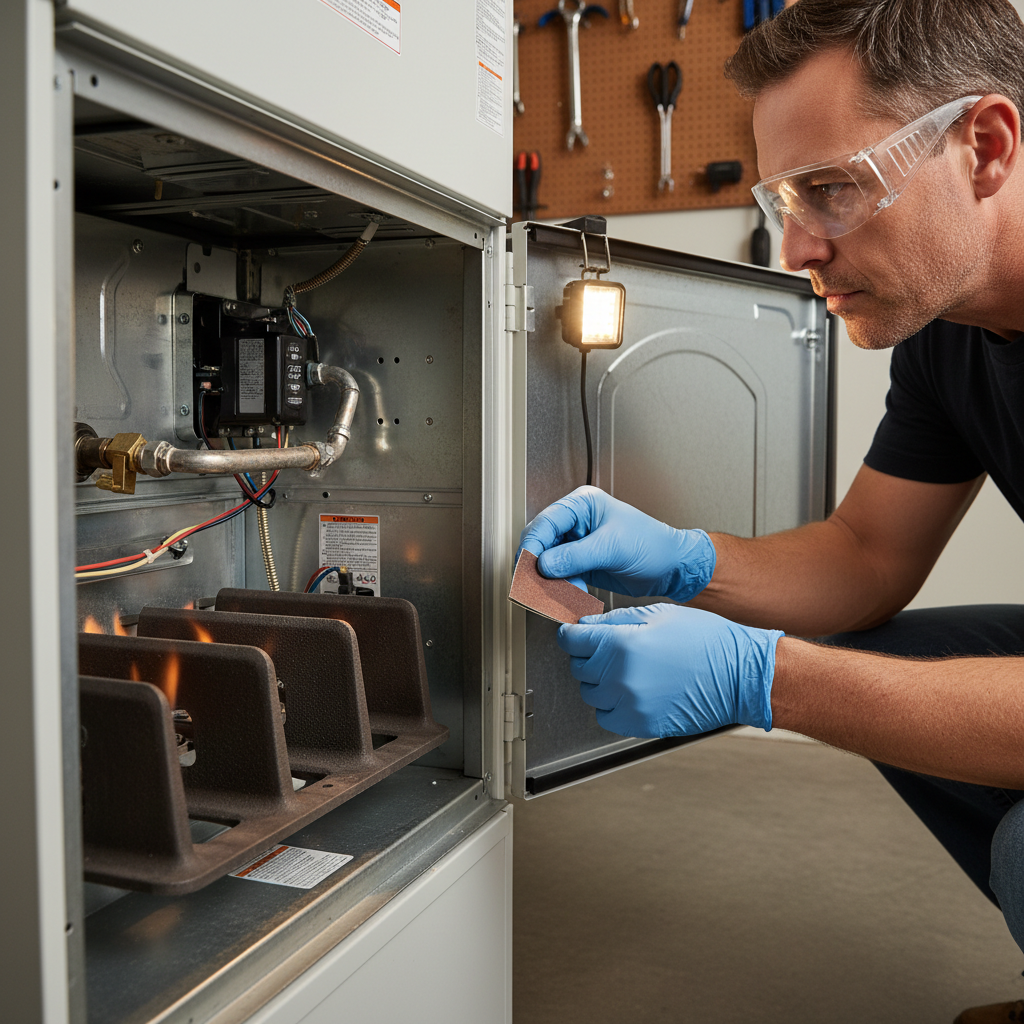
- Inducer Motor Starts: This motor pulls combustion byproducts out of the heat exchanger and sends them outside through the flue. It also brings in fresh air for combustion.
- Pressure Switch Closes: Once the airflow checks out, a pressure switch closes and tells the control board it's safe to keep going.
- Igniter Heats Up: The hot surface igniter (HSI) or a pilot light lights the gas at the burners.
- Gas Valve Opens & Burners Ignite: Once the igniter's hot enough, the gas valve opens and the burners fire up. Nice clean flame, if everything's working right.
- Blower Motor Engages: After the heat exchanger warms up — usually after a minute or two of burner operation — the main blower motor kicks on and pushes warm air through the ductwork.
HVAC · High energy usage
| Project category | HVAC |
|---|---|
| Problem type | High energy usage |
| Trade required | HVAC |
| Urgency | Planned project |
| Safety risk | Low safety risk |
| DIY suitability | DIY for experienced homeowners |
| Cost category | High cost |
| Typical timeline | Assessment within weeks; replacement planned off-season |
| Contractor type | Licensed HVAC technician |
Repair option
Duct sealing, insulation, and a tune-up before touching the equipment.
Replacement option
High-efficiency replacement sized by a load calculation, not a rule of thumb.
Common causes
- Aging, low-efficiency equipment
- Leaking ducts losing conditioned air
- Insufficient attic insulation
- Oversized system short-cycling
Relevant tools:project cost estimatorrepair or replace
Published July 28, 2026Last updated August 17, 2026
Tools & materials you'll need
Affiliate linksAs an Amazon Associate FixlyGuide earns from qualifying purchases — at no extra cost to you. Prices and availability are accurate as of publication and subject to change.
Quick Answer
When your furnace can't finish a full heating cycle and it keeps kicking on and off every few minutes, you've got a short-cycling problem. It ain't just a nuisance; it's wasteful, it beats up your equipment, and it'll shave years off the furnace's life. I've run into it hundreds of times. Most of the time, it's something simple like a clogged filter or a dirty flame sensor, but every so often it turns out to be something bigger, like an oversized unit. Don't sweat it — I'll walk you through the usual suspects and how I'd handle 'em on a real job.
The Problem
Picture a cold January evening in Boise — I still remember one ugly freeze a few years back when I was thawing burst exterior pipes all day — and your furnace is humming along. But instead of running steady until the place is warm, it fires up, runs five to ten minutes, then shuts down. A few minutes later, it's back on again. Then off. Then on. That's short cycling. It's like trying to heat a big pot of water by turning the burner on high for a minute, shutting it off, then doing it again. You're burning energy, but you ain't getting much heat out of the deal.
A normal heating cycle should last at least 10–15 minutes, sometimes up to 20 minutes or more, especially if it's really cold outside. That gives the furnace time to heat properly, spread that warmth through the ducts, and then cool down the way it's supposed to. When it short cycles, the parts — especially the igniter, blower motor, and control board — keep starting and stopping. That's hard on 'em. Real hard. It's stop-and-go traffic for your furnace instead of a nice highway cruise. Over time, that kind of abuse leads to wear, repairs that don't come cheap, and a furnace that quits way before it should, costing homeowners thousands.
How It Works
To make sense of why your furnace is doing the stop-and-go thing, it helps to know how the system's supposed to run. Most residential furnaces, whether they burn natural gas, propane, or oil, work on a pretty straightforward idea: heat exchange.
When your thermostat calls for heat, it closes a circuit and sends a low-voltage signal to the furnace's control board. From there, the board runs through a sequence:
- Inducer Motor Starts: This motor pulls combustion byproducts out of the heat exchanger and sends them outside through the flue. It also brings in fresh air for combustion.
- Pressure Switch Closes: Once the airflow checks out, a pressure switch closes and tells the control board it's safe to keep going.
- Igniter Heats Up: The hot surface igniter (HSI) or a pilot light lights the gas at the burners.
- Gas Valve Opens & Burners Ignite: Once the igniter's hot enough, the gas valve opens and the burners fire up. Nice clean flame, if everything's working right.
- Flame Sensor Proves Flame: A small rod, the flame sensor, detects the flame. This thing's a critical safety device. If it doesn't sense flame within a few seconds, it tells the control board to shut off the gas valve so raw gas doesn't keep pumping into the house. This is a common point of failure for short cycling.
- Blower Motor Engages: After the heat exchanger warms up — usually after a minute or two of burner operation — the main blower motor kicks on and pushes warm air through the ductwork.
- Thermostat Satisfaction: The furnace keeps running until the air at the thermostat reaches the set point. Then the thermostat opens the circuit, the control board shuts down the burners, and after a short fan-off delay, the blower stops too.
Short cycling usually means something in that sequence is getting cut off early, so the furnace thinks it's done or thinks something's wrong and shuts down before it should.
Step-by-Step Fix
Before you start on any of this, safety first. Shut off power to the furnace at the thermostat AND at the circuit breaker that feeds it. You're dealing with electricity and maybe gas, so don't get cute with it.
-
Check the Air Filter — The most common culprit
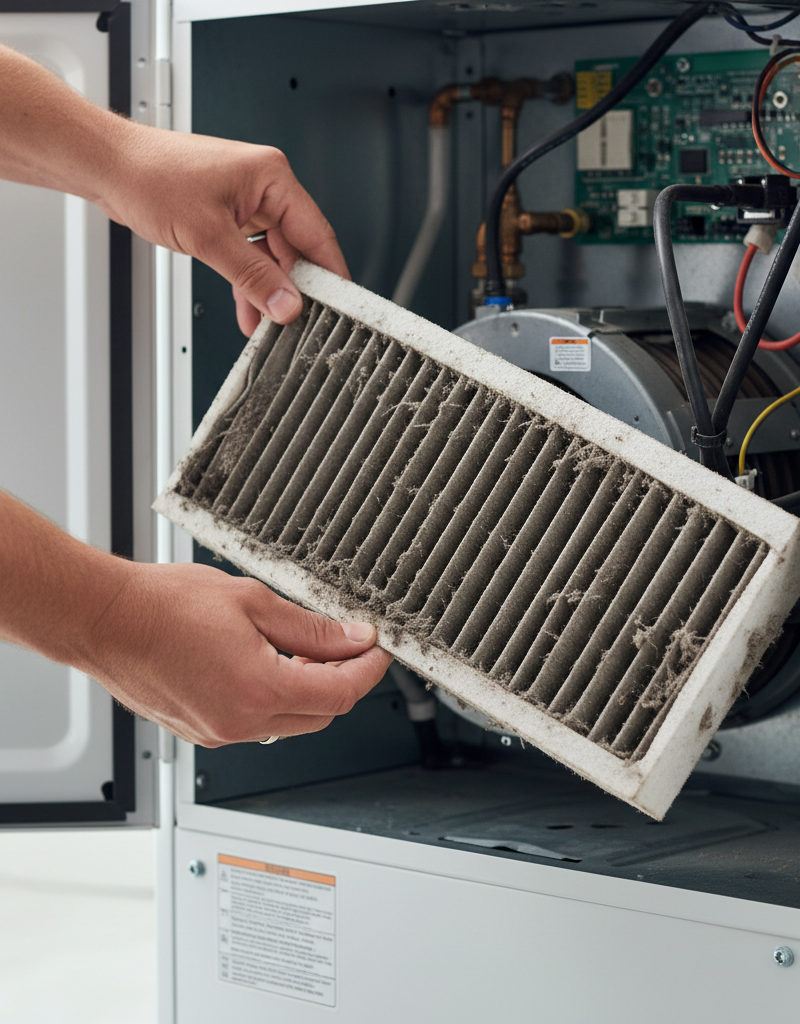
- Open the filter slot on the furnace or the return air duct and pull the filter out. Is it packed with dust, pet hair, and all the usual junk? A clogged filter chokes off airflow, which makes the furnace work harder. The heat exchanger can overheat fast, and that trips a limit switch that shuts things down to prevent damage. This is probably the number one reason I get calls about short cycling.
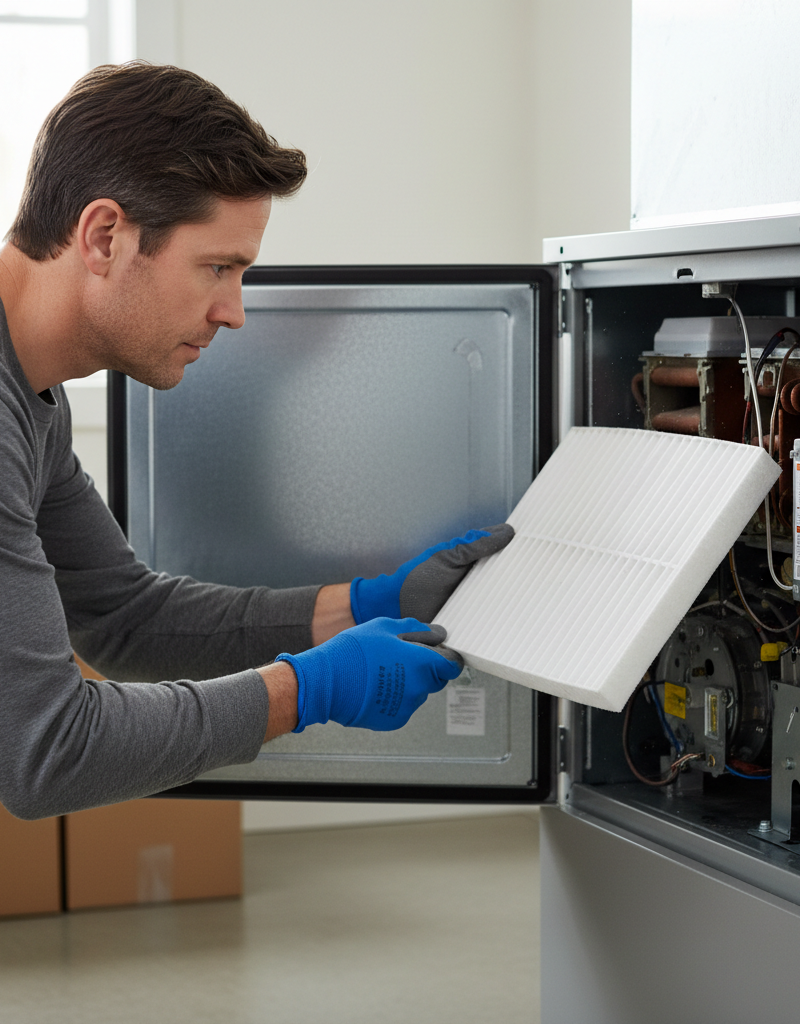
- Fix: Replace it. Use the right size and the right type. I usually like a MERV 8-11 pleated filter for a decent balance of airflow and filtration. Don't cheap out on those flimsy fiberglass filters; they barely do a lick of good. Swap it every 1-3 months, and more often if you've got pets or allergies.
-
Inspect the Flame Sensor — A dirty but easy fix
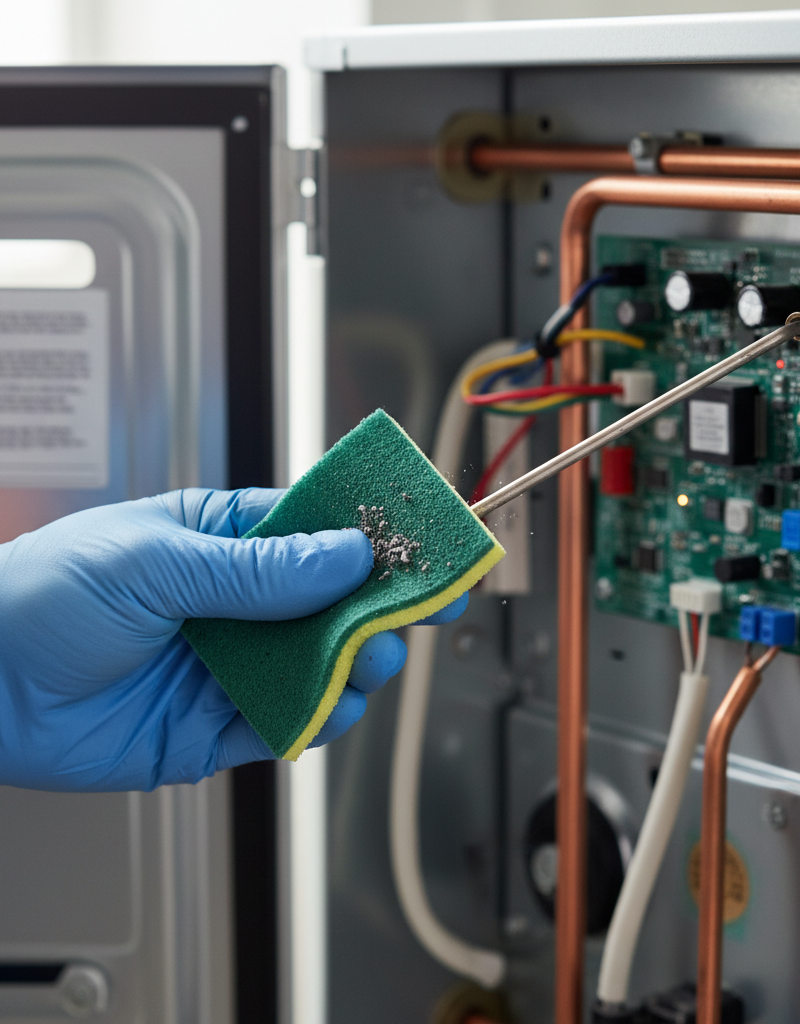
- Find the flame sensor. It's a small, thin metal rod, about 2-3 inches long, usually sitting right in front of the burner flames. It'll have a single wire attached to it. Over time, carbon can build up on that sensor and insulate it, which keeps it from sensing flame even when the burner is lit. The furnace thinks there's no flame and shuts itself down as a safety move.
- Fix: Take the flame sensor out carefully — usually one screw holds it in place. Use a piece of fine-grit sandpaper (400-grit works well) or emery cloth and gently clean off the carbon. You're not trying to make it shiny enough to eat off; just knock off the gunk. Put it back in tight. I've had this fix solve the problem on the first try more times than I can count.
-
Reset the Limit Switch — When things get too hot
- Your furnace has safety devices called limit switches that stop overheating. If the furnace gets too hot, often because airflow's restricted from a dirty filter or blocked vents, a limit switch trips and shuts the burners down. Some are manual reset, others reset themselves. Manual reset switches usually have a small red or black button.
- Fix: Check for a red or black button on or near the blower compartment or inside the burner area. If you find one, press it firmly. If it clicks, it was tripped. If it pops again right away, you've got an underlying problem that needs fixing, usually airflow or a failing internal part. If you can't find a button, it's probably an auto-reset type, and the furnace will come back on after it cools off. Still, you've got to find out why it overheated in the first place.
-
Check Your Thermostat — Sometimes it's just user error (or a bad battery)
- Is your thermostat set right? Is it in the correct mode, and is the set temperature actually above the room temperature? A weak battery, a bad location near a draft, or a wonky thermostat can make the furnace cycle weird. I pulled a water heater in Frisco last month that had exactly this kind of goofy control issue nearby, and the homeowner was convinced the equipment was shot — nope, just a bad control setup throwing everybody for a loop.
- Fix: Replace the batteries if it takes them. Make sure it's set to Heat. Give it a look for dust or loose wiring. If it's an old dial thermostat or a cheap digital one acting flaky, you might just need a replacement. No dice? Then move on.
-
Look at Vents and Returns — Air needs a way in and out
- Walk through the house and check every supply vent and return grille. Are any closed off? Buried under rugs? Blocked by furniture? Too many closed vents can mess with airflow and cause the furnace to overheat, which leads to short cycling.
- Fix: Open the vents. Clear the returns. Don't block them with sofas, boxes, or whatever else got shoved in the way. The system needs to breathe, plain and simple.
-
Check for a Faulty Flame Sensor Wire or Loose Connections
- Sometimes the sensor itself ain't the problem — it's the wire, the connector, or another loose connection in the control circuit. A tiny break can make the furnace act possessed.
- Fix: With the power off, inspect visible wiring for loose plugs, corrosion, or heat damage. If you see a burnt connector or a wire that's cooked, that's not a DIY shrug-it-off moment.
-
Consider Furnace Size
- If everything else checks out and the furnace still short cycles, the unit may be too big for the home. Oversized furnaces heat the space too fast, shut off, then fire back up again. It sounds efficient, but it isn't.
- Fix: That one takes a pro to confirm. You'd want a proper load calculation, not a guess, and if the furnace is oversized, the real fix is often equipment replacement or system redesign. That's not what anybody wants to hear, but there it is.
-
Call for Service if the Control Board Is Acting Up
- If the igniter, flame sensor, filter, thermostat, vents, and limit switch all check out, the control board may be glitching. When boards start failing, they can misread signals and shut the furnace down for no good reason.
- Fix: This is where I tell people to stop poking around and get a licensed tech in there. Control board troubleshooting gets messy quick, and you're better off letting somebody with the right meter sort it out.
Common Causes at a Glance
- Clogged air filter. Easy, cheap, and way too common.
- Dirty flame sensor. Little part, big headache.
- Overheating from blocked airflow — closed vents, dirty ducts, or a bad blower.
- Tripped limit switch.
- Thermostat trouble. Bad batteries, bad placement, bad wiring.
- Oversized furnace. The system's too big for the house.
- Failing control board or wiring issue.
What You Shouldn't Do
- Don't keep resetting the furnace over and over. That's just masking the real issue.
- Don't run it with a filthy filter. You're asking for a shutdown.
- Don't ignore weird smells, burnt marks, or a buzzing control board.
- Don't start swapping parts blindly unless you know what you're looking at.
When to Call a Pro
Call in a pro if:
- the furnace short cycles after you've changed the filter and checked the thermostat,
- you see soot, scorch marks, or melted wiring,
- the limit switch keeps tripping,
- the burners light and shut off immediately,
- or you just don't feel comfortable working around gas and electrical components.
A good HVAC tech can test airflow, combustion, the flame signal, and the control board without guessing. That's the fastest way to get the thing sorted and keep from turning a small problem into an expensive one.
Related Articles
Keep troubleshooting with these hand-picked guides from FixlyGuide:
- The Secret Reason Your Furnace Turns On and Off So Much (It's Not What You Think) — Short cycling strains your furnace and wastes energy. Learn the most common surprising causes and how to fix them to restore efficient heat…
- The #1 HVAC Mistake Costing You Hundreds (And How Often to Really Change Your Filter) — Discover the crucial mistake most homeowners make with HVAC filters, leading to higher energy bills, poor air quality, and system damage. L…
- Why Your Heat Pump Auxiliary Heat Won't Turn Off — Discover why your heat pump's auxiliary heat keeps running, driving up your energy bills. Learn to troubleshoot common issues and know when…
- Furnace Keeps Turning On and Off? Here's Why. — Is your furnace running in short, frequent bursts instead of steady cycles? This is called short cycling. Discover the common causes, like…
- The Dryer Fire Hazard Hiding in Plain Sight (and How to Eliminate It in 30 Minutes) — Lint buildup in your dryer vent is a silent fire hazard. Learn how to clean it thoroughly and prevent a potential disaster with simple tool…
- Swap Your Leaky Faucet This Weekend, No Plumber Needed — Ready to stop that annoying drip and give your kitchen an instant upgrade? This guide shows you how to replace a kitchen faucet yourself. W…
Should you do this yourself?
Answer five quick questions before you start. Safety outranks savings every time.
Your experience with work like this
How high do you have to work?
Does the job involve any of these?
Will it need a permit?
Specialty tools
Free and instant. Educational guidance only — not a quote, inspection, or professional diagnosis.
Estimate your own project cost
National averages are a starting point. Enter your details for a range that fits your house.
HVAC replacement cost
- Equipment$2,200 – $3,800
- Installation labor$1,200 – $2,500
Always insist on a Manual J load calculation — sq-ft sizing is only a rough check. Federal heat-pump rebates may reduce cost significantly.
Educational estimate only — always confirm with written local bids.
What should this project cost?
Enter your project details for a realistic cost range before you call anyone.
Service calls and common repairs run $150–$900; full system replacement typically $6,000–$12,000.
- Regional adjustment
- National average
- Labor share (typical)
- ~$1,935
- Quotes to collect
- 3 written estimates
Educational estimate based on national averages — not a binding quote. Always confirm with written local estimates.
Fixly Project Decision Box
- DIY difficulty
- Advanced
- Estimated time
- Homeowner checks 20–30 minutes
- Cost level
- Moderate
Main tools / materials
- Clean air filter
- Garden hose for condenser coils
- Shop vac for the condensate line
When to stop and call a pro
- Burning smell, smoke, or a tripping breaker
- Refrigerant lines iced over or hissing
- Any work inside the sealed refrigerant circuit (EPA-licensed only)
- Gas smell near a furnace — leave and call the utility
Need professional help?
Find an HVAC Pro Near YouBefore you start
Check the difficulty, permits, and safety risk — then decide whether to call a pro.
Free, no signup required. Estimates are educational guidance, not a quote or an inspection.
Get the print-ready PDF of this guide
A clean, ad-free, printable version you can keep on your phone or pin to the workshop wall. Free with a FixlyGuide account.
- Print-optimized layout
- Tools, materials & every step included
- Saved to your account
Frequently asked questions
What's a normal furnace run time?+
A healthy furnace should typically run for 10-20 minutes per cycle, especially on colder days, to effectively heat your home. Shorter cycles usually indicate an issue.
How often should I change my furnace filter?+
Most homeowners should plan on changing their furnace filter every 1-3 months. If you have pets, allergies, or do a lot of remodeling, you might need to change it monthly.
Can an oversized furnace cause short cycling?+
Absolutely. An oversized furnace heats your home too quickly, satisfies the thermostat, and then shuts off before completing a decent cycle. This constant starting and stopping is inefficient and puts stress on components. It's like driving a Ferrari to the corner store.
Is short cycling dangerous?+
While often not immediately dangerous, continuous short cycling can lead to premature furnace breakdown, higher energy bills, and potential carbon monoxide issues if a cracked heat exchanger is involved. It's best to address it promptly.
Why does my furnace blow cold air sometimes?+
If your furnace blows cold air before starting the burners, it could be the purge cycle. If it's blowing cold air *after* heating, it might be a delayed fan shutoff or an issue where the burners aren't igniting or staying lit, which can also cause short cycling.
Can a clogged vent cause short cycling?+
Yes, a blocked exhaust vent (flue) can trigger pressure switches or limit switches, causing the furnace to shut down prematurely as a safety measure. Always ensure your outdoor vents are clear of snow, ice, or debris.
What does a dirty flame sensor do?+
A dirty flame sensor builds up carbon, which insulates it. The sensor then can't detect the flame, even if it's there. The furnace's safety protocols kick in, believing there's no ignition, and shut off the gas, causing short cycling.
How much does it cost to fix short cycling?+
DIY fixes like changing a filter or cleaning a flame sensor are cheap, often under $20. If a pro is needed for a faulty control board or fan motor, costs can range from $200-$600. Replacing an oversized furnace can be several thousand dollars.
Discussion
Loading comments…