- Dirty Air Filter: Blocks airflow, makes the furnace overheat, and shuts it off early through the high-limit switch.
- Faulty Thermostat: Can misread room temp, be in a bad spot, or just have internal issues and tell the furnace to quit too soon.
- Oversized Furnace: Heats the space too quickly, satisfies the thermostat before a real cycle finishes, and ends up cycling on and off all day.
- Restricted Airflow: Blocked supply or return vents, or ductwork that’s not sized right, can make the furnace overheat.
- Malfunctioning Flame Sensor: Carbon buildup keeps it from confirming flame, so the gas valve shuts down for safety.
HVAC · High energy usage
| Project category | HVAC |
|---|---|
| Problem type | High energy usage |
| Trade required | HVAC |
| Urgency | Planned project |
| Safety risk | Low safety risk |
| DIY suitability | DIY for experienced homeowners |
| Cost category | High cost |
| Typical timeline | Assessment within weeks; replacement planned off-season |
| Contractor type | Licensed HVAC technician |
Repair option
Duct sealing, insulation, and a tune-up before touching the equipment.
Replacement option
High-efficiency replacement sized by a load calculation, not a rule of thumb.
Common causes
- Aging, low-efficiency equipment
- Leaking ducts losing conditioned air
- Insufficient attic insulation
- Oversized system short-cycling
Relevant tools:project cost estimatorrepair or replace
Published August 18, 2026Last updated August 18, 2026
Tools & materials you'll need
Affiliate linksAs an Amazon Associate FixlyGuide earns from qualifying purchases — at no extra cost to you. Prices and availability are accurate as of publication and subject to change.
Quick Answer
Your furnace is probably short cycling because something’s telling it the job’s done too soon, or it’s getting too hot. Could be a clogged air filter starving it for air, a thermostat that’s out of whack, or a safety switch doing its job and shutting things down before the unit cooks itself. I see this one all the time. Most of the time, it sounds scarier than it is — and a lot of it is a pretty straightforward fix if you’ve got a little patience and the right tools.
The Problem
You know the routine: cold day, furnace fires up, and instead of a nice steady run, it goes five, maybe ten minutes, then shuts back off. The house never quite gets there, and the furnace keeps repeating the same little dance all day. That’s short cycling. It’s not just annoying; it beats up your equipment, jacks up the energy bill, and wears out parts way faster than they should. Think stop-and-go traffic versus a smooth highway cruise — same idea. Every start-up puts stress on the motor and igniter, and those short heat blasts aren’t doing you any favors. Something in the system’s off, plain and simple.
How It Works
Alright, let’s walk through how these furnaces are supposed to run, because once you see the sequence, the problem usually makes a lot more sense. Think of your furnace like a little heat plant. When your thermostat — that brain on the wall — sees the temperature drop below your set point, it sends a signal to the furnace control board. That board’s the command center, and everything runs through it.
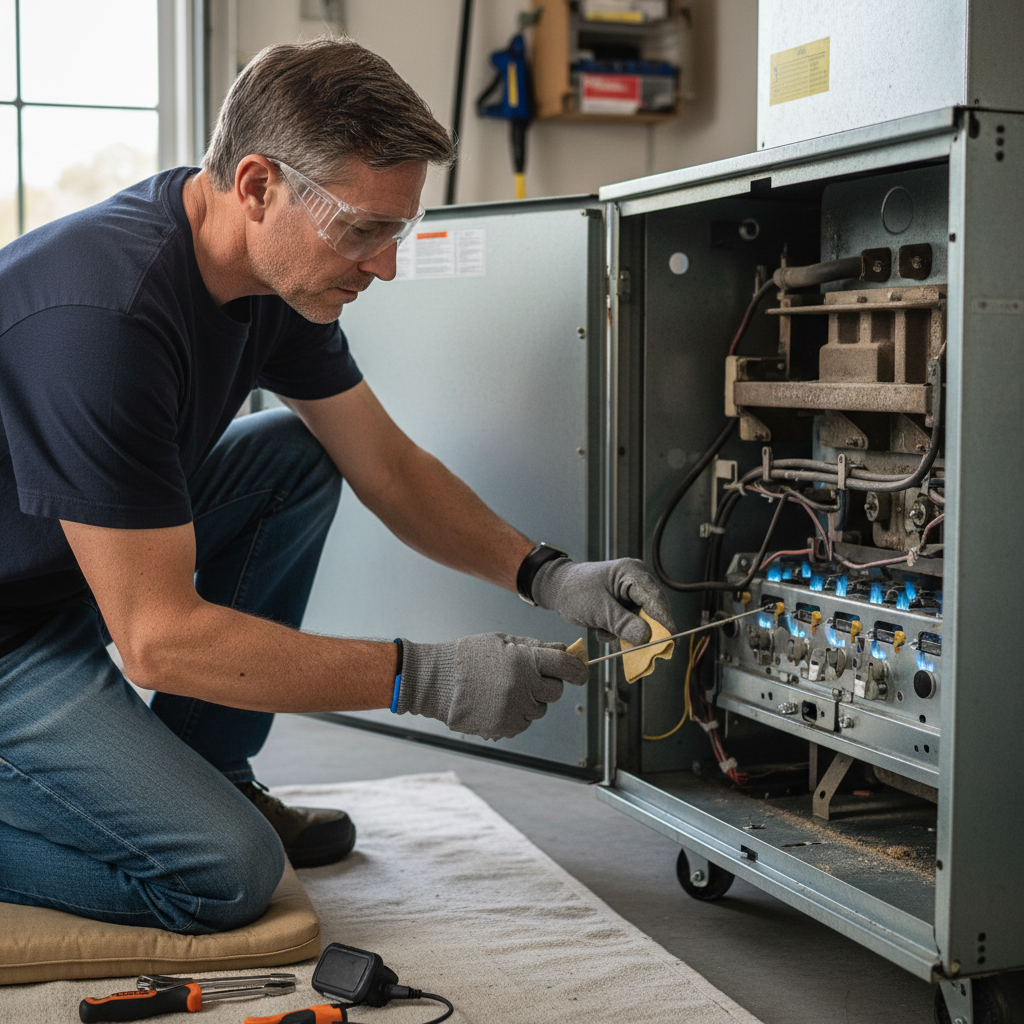
First, the inducer motor spins up, pulling combustion air into the furnace and pushing exhaust out. Then the igniter — either a hot surface igniter glowing red or a spark igniter making that click-click-click sound — lights the gas. Once the flame’s established, a flame sensor checks that it’s actually burning. If it doesn’t see a flame, the furnace shuts down for safety. That’s one very common short-cycling cause right there.
After a few seconds of solid combustion, the main blower fan kicks on, pulls air from your return ducts, runs it across the heat exchanger, and sends warm air through the supply ducts into the house. That keeps going until the thermostat says the house is warm enough, then it tells the furnace to shut off. The blower usually keeps running a bit longer — 90 to 120 seconds — to squeeze the leftover heat out of the heat exchanger and into the rooms. A normal heating cycle, depending on how cold it is outside and how tight the house is, should run at least 15-20 minutes, sometimes 30 minutes or more.
When it short cycles, one of those steps gets cut short. Furnace lights, blower comes on, then bam, it shuts down before the house ever really warms up. Could be a sensor yelling “too hot,” a thermostat acting goofy, or airflow being so restricted the unit overheats in a hurry. Once you understand the flow, you can usually narrow down where things are going sideways.
Step-by-Step Fix
Alright, let’s get after it. I’ve seen furnaces short cycle for just about every reason you can imagine, but these steps hit the common stuff first. Start simple. Start cheap. And grab your safety glasses and gloves.
-
Check the Air Filter — The simplest fix that gets missed all the time.
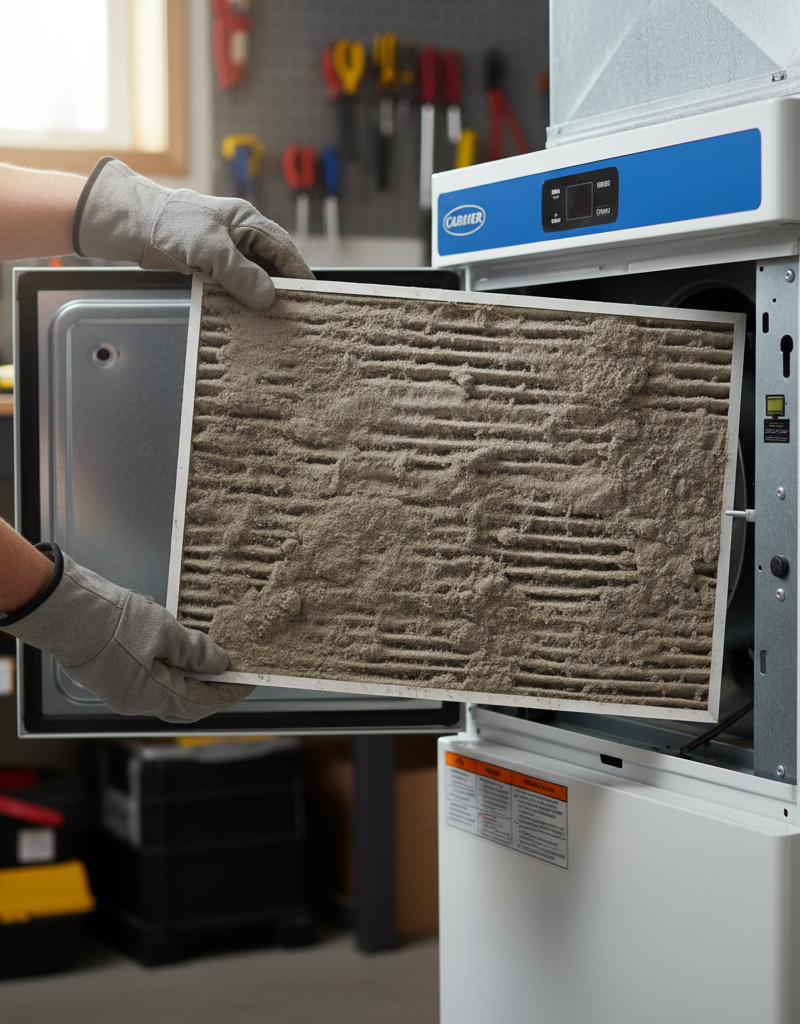
- Head to the furnace and find the filter slot, usually a rectangular opening on the return duct or right inside the cabinet. Pull the filter out. If it’s dark gray, loaded with dust bunnies, or looks like a shag carpet, it’s choking the furnace. A dirty filter cuts airflow, the heat exchanger gets hot too fast, and the high-limit switch trips the unit off.
- Action: Put in a clean filter. Make sure it’s the right size and the right MERV rating — I usually tell folks MERV 8-11 for most residential systems. Mark the date on the new one with a Sharpie. Check it monthly, and replace it every 1-3 months depending on pets and how dusty your place gets.
-
Examine the Thermostat — Sometimes the messenger gets blamed, not the furnace.
- Calibration Check: Look at the settings first. Fan on “Auto,” not “On”? Temperature set where you actually want it? People bump these things all the time, or the schedule gets changed and nobody notices. If it’s an older mercury thermostat, it needs to sit level or it won’t read right. With digital stats, a battery swap or reset can clear up weird behavior — check the manual for that part. And make sure there isn’t a draft hitting it, like from an open window or a nearby supply vent, because that can fool it into thinking the room’s colder than it is.
- Location & Interference: Is it on an interior wall, away from sunlight, appliances, or drafts? Put one near a window or next to a heat source and you’ll get bad readings. I chased a short-cycling call for half a day in a house in Chandler, Arizona, and it turned out the homeowner had parked a brand-new floor lamp right under the thermostat. That lamp warmed the wall just enough to mess with it. Moved the lamp, problem solved. No fancy repair. Just a dumb little placement issue.
-
Inspect the Flame Sensor — Tiny part. Big attitude.
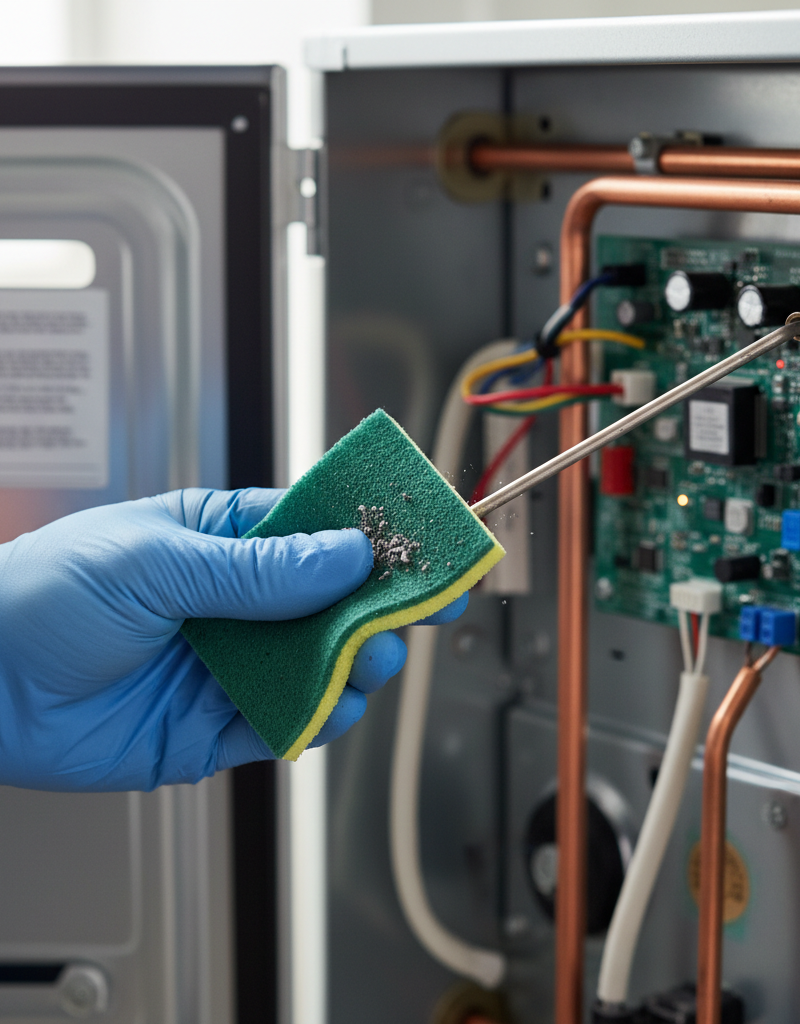
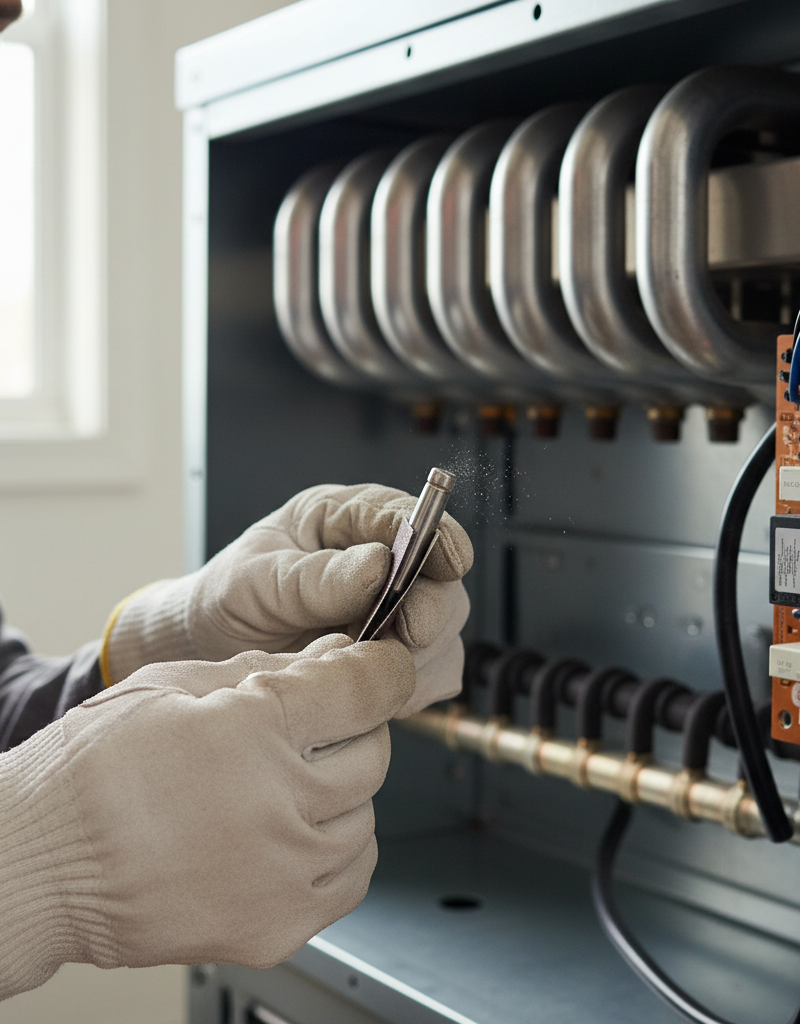
- Safety First: Kill power to the furnace at the breaker. Find the flame sensor. It’s a small metal rod, usually 2-3 inches long, sitting right in the flame path next to the igniter. Its job is to prove there’s a flame. Over time, carbon builds up on it and insulates it, so it thinks the flame isn’t there even when it is. The furnace lights, runs a few seconds, then shuts off because the sensor never gave the all-clear.
- Cleaning: Take it out gently — usually one screw. Use a fine-grit Emory cloth or even a dollar bill to lightly clean off the buildup. Don’t go at it with coarse sandpaper or steel wool; you’ll scratch it up. Put it back carefully. It’s delicate, so don’t bend it or manhandle it.
-
Check for Restricted Vents — The furnace’s gotta breathe.
- Walk the house and make sure every supply and return vent is open and not blocked. Couches, rugs, curtains, toys — I’ve seen all of it jammed over vents. That creates back pressure in the ductwork, and the furnace can overheat and trip the high-limit switch. Return grilles matter too. They’re usually larger and mounted low on walls or up in ceilings.
- Action: Clear the blockage. If you’ve got rooms that are always too hot or too cold, don’t shut vents all the way in other rooms. That throws the whole airflow balance off, and then you’re chasing problems nobody wants.
-
Examine the High-Limit Switch — The furnace’s emergency brake.
- Location: The high-limit switch is a safety device that keeps the furnace from overheating. It’s usually inside the blower compartment or near the heat exchanger. If the furnace gets too hot — typically above 200°F — this switch opens up, cuts power to the burners, and stops the heating cycle. It’s often the reason the furnace runs a short time, shuts off, and the blower keeps going for a bit.
- Troubleshooting: You can’t really “fix” a bad high-limit switch yourself — if it’s bad, it gets replaced — but knowing what it does helps. If it’s tripping, the cause is usually poor airflow: dirty filter, blocked vents, undersized ducts, that sort of thing. Deal with those first. If everything checks out and it still trips, the switch itself may be weak or failing, and that’s a pro job. I replaced a high-limit switch in an old Lennox furnace in Evergreen last winter that was tripping at 180°F instead of its factory setpoint of 200°F. The switch was toast, not the airflow.
-
Verify Furnace Sizing — An oversized furnace loves to short cycle.
- If the furnace is too big for the house, it heats the place too fast, hits the thermostat set point before it’s had a real, efficient run, and shuts down. Then the house cools off, and it does the same thing again. You won’t fix that with a screwdriver. If it short-cycled from day one, especially after a new install, this might be the culprit. It’s inefficient, and it shortens the life of the unit.
- Consideration: This is the kind of issue that usually needs a professional to size things correctly for a replacement. A tech might be able to adjust blower speeds if the system allows it, but a lot of the time it’s a design mistake from the start.
-
Check Condensate Drain Line (High-Efficiency Furnaces Only) — Another safety trip waiting to happen.
- If you’ve got a high-efficiency condensing furnace — you’ll see a plastic exhaust pipe instead of metal — it makes condensate, or water, while it runs. That water drains through a PVC pipe, often into a floor drain. If the drain clogs with algae or junk, the water backs up, and a float switch — the condensate safety switch — trips and shuts the furnace down so you don’t end up with water damage.
- Action: Find the condensate trap and drain line. If there’s standing water, clear the blockage with a wet/dry vac or a stiff brush. Sometimes you’ve gotta disconnect the PVC sections to clean them out right. Pour a cup of distilled water mixed with a few drops of bleach down the line a few times a year to keep algae from taking hold.
Common Causes
- Dirty Air Filter: Blocks airflow, makes the furnace overheat, and shuts it off early through the high-limit switch.
- Faulty Thermostat: Can misread room temp, be in a bad spot, or just have internal issues and tell the furnace to quit too soon.
- Oversized Furnace: Heats the space too quickly, satisfies the thermostat before a real cycle finishes, and ends up cycling on and off all day.
- Restricted Airflow: Blocked supply or return vents, or ductwork that’s not sized right, can make the furnace overheat.
- Malfunctioning Flame Sensor: Carbon buildup keeps it from confirming flame, so the gas valve shuts down for safety.
- Failing High-Limit Switch: A safety device that trips when the furnace overheats; it can weaken over time and trip at lower temps than it should.
- Clogged Condensate Drain: On high-efficiency furnaces, backed-up condensate can trip a safety switch and stop the unit.
Common Mistakes
- Ignoring the Filter: Folks forget to check or change it because it seems minor. It’s not. It’s one of the biggest reasons furnaces act up and waste energy. Change it monthly!
- Closing Too Many Vents: Trying to save a buck by shutting vents in unused rooms throws off the system, increases static pressure, and can lead to overheating and short cycling.
- Over-Cleaning the Flame Sensor: Scrubbing it with the wrong material or bending it can ruin it and make the whole problem worse.
- Setting the Thermostat Too Low/High: Constantly fiddling with the thermostat or setting wild temperatures can make the furnace cycle fast and inefficiently.
- DIYing Gas or Electrical: Messing with gas lines, high-voltage wiring, or internal control boards without training is dangerous and illegal in a lot of places. Leave that to the pros.
- Not Checking the Condensate Line: Skip the drain line on a high-efficiency unit and you’re asking for water damage and an unnecessary service call.
Cost & Time Breakdown
Here’s a rough idea of what you’re looking at for common short-cycling fixes:
| Task | DIY Cost | Pro Cost | Time |
|---|---|---|---|
| Replace Air Filter | $10–$40 | $0 (if part of service) | 5 minutes |
| Clean Flame Sensor | $0 (Emery cloth) | $150–$300 | 15–20 minutes |
| Thermostat Replacement | $30–$200 | $150–$400 | 30 minutes – 1 hour |
| Clear Condensate Line | $0 (wet/dry vac) | $150–$300 | 20–30 minutes |
| High-Limit Switch Replacement | $20–$50 (part) | $200–$450 | 30 minutes |
| Ductwork Inspection/Sealing | N/A | $300–$1,000+ | Varies (hours) |
Tips & Prevention
- Regular Filter Changes: Seriously, this is your first line of defense. Check the filter every month and replace it at least every 1-3 months. Clean filter, happier furnace.
- Annual Professional Tune-up: Have an HVAC pro service the furnace every fall before heating season kicks in. They’ll clean, inspect, and adjust the system, and catch small stuff before it turns into a headache.
- Keep Vents Clear: Don’t let furniture, rugs, or anything else block supply and return vents.
- Smart Thermostat Usage: Programmable or smart thermostats are great, but don’t swing the temperature all over the place. Steady usually beats constant cranking.
- Monitor Flame Color: A healthy gas flame should be mostly blue with very little yellow or orange. If you’re seeing a bunch of yellow, that’s a combustion issue and you need a pro to take a look.
- Listen to Your Furnace: Strange noises matter. Clanking, grinding, banging — those are signs something mechanical needs attention.
When to Call a Professional
Look, I’m all for DIY, but some things are better left to licensed pros. If you’ve gone through the list — changed the filter, cleaned the flame sensor, checked the vents, reset the thermostat — and the furnace is still short cycling, it’s time to bring in an HVAC tech. Call a pro right away if you smell gas, hear loud banging from inside the unit, or the furnace keeps failing to ignite. Anything involving gas lines, complicated electrical parts beyond the thermostat, or a cracked heat exchanger — which can leak carbon monoxide — needs an experienced, licensed professional. Don’t play games with safety. It’s not worth it.
Related Articles
Keep troubleshooting with these hand-picked guides from FixlyGuide:
- The Hidden Reason Your Furnace Short Cycles (and the $15 Fix) — Furnace short cycling can drive up energy bills and wear out your system prematurely; often, a simple fix like a dirty filter or miscalibra…
- The Secret Reason Your Thermostat Lies (and 5 Fixes That Actually Work) — If your thermostat isn't reaching its set temperature, understanding the underlying cause is key to a comfortable home and lower energy bil…
- The Secret Reason Your Thermostat Lies (and How to Make It Tell the Truth) — Discover why your thermostat isn't reaching its set temperature and how to diagnose and fix common culprits with simple DIY steps.
- The Secret Reason Your Oven Fails to Heat (It's NOT Always the Element) — Discover why your oven isn't reaching its set temperature, from common part failures to overlooked calibration issues, and how to fix it.
- The #1 Mistake Homeowners Make When Their Furnace Blows Cold Air — Learn the surprising reason your furnace might be blowing cold air and how to fix it with simple steps.
- The Secret Reason Your Kitchen Sink Drains Slow (It's Not Always Grease) — A slow-draining kitchen sink is a common nuisance, but the culprit isn't always obvious. Learn how to diagnose and fix the real problem.
What should this project cost?
Enter your project details for a realistic cost range before you call anyone.
Service calls and common repairs run $150–$900; full system replacement typically $6,000–$12,000.
- Regional adjustment
- National average
- Labor share (typical)
- ~$1,935
- Quotes to collect
- 3 written estimates
Educational estimate based on national averages — not a binding quote. Always confirm with written local estimates.
Fixly Project Decision Box
- DIY difficulty
- Advanced
- Estimated time
- Homeowner checks 20–30 minutes
- Cost level
- Moderate
Main tools / materials
- Clean air filter
- Garden hose for condenser coils
- Shop vac for the condensate line
When to stop and call a pro
- Burning smell, smoke, or a tripping breaker
- Refrigerant lines iced over or hissing
- Any work inside the sealed refrigerant circuit (EPA-licensed only)
- Gas smell near a furnace — leave and call the utility
Need professional help?
Find an HVAC Pro Near YouGet the print-ready PDF of this guide
A clean, ad-free, printable version you can keep on your phone or pin to the workshop wall. Free with a FixlyGuide account.
- Print-optimized layout
- Tools, materials & every step included
- Saved to your account
Frequently asked questions
How long should a furnace run in a cycle?+
A properly sized and functioning furnace should run for at least 15-20 minutes in a typical heating cycle to effectively warm your home and operate efficiently. In very cold weather, cycles can be longer, sometimes 30 minutes or more.
What does furnace short cycling sound like?+
You'll hear the furnace kick on, the burners ignite, and the fan start, but then after only 5-10 minutes, everything shuts down, only to repeat the process again shortly after. It's an unusually frequent on-off pattern.
Can a dirty filter cause short cycling?+
Absolutely, it's one of the most common causes! A clogged air filter restricts airflow, causing the furnace to overheat. When it gets too hot, a safety device called the high-limit switch trips, shutting the furnace down prematurely.
Why does my furnace short cycle when it's really cold outside?+
If your furnace only short cycles when it's very cold, it might indicate an undersized furnace struggling to keep up, or a problem with the high-limit switch tripping due to prolonged high heat demand. It could also be related to an airflow issue becoming more pronounced under stress.
Is it bad if my furnace is short cycling?+
Yes, it's definitely bad. Short cycling puts excessive wear and tear on your furnace's components, especially the igniter and blower motor, leading to premature breakdowns. It also makes your furnace less efficient, driving up your energy bills.
Can a bad thermostat cause short cycling?+
It sure can. A faulty thermostat might misread the room temperature, call for heat unnecessarily, or cut off the heating cycle too early. Sometimes it's as simple as dead batteries or being located in a drafty spot.
How often should I change my furnace filter to prevent short cycling?+
You should check your furnace filter monthly and replace it every 1 to 3 months, depending on factors like pets, allergies, and overall household dust. Don't go longer than three months, or you're asking for trouble.
What is the high-limit switch and why does it matter for short cycling?+
The high-limit switch is a critical safety device that monitors the temperature inside your furnace. If the internal temperature gets too high (usually from restricted airflow), it trips, shutting down the burners to prevent damage and potential fire. If it's weak, it can trip too easily, causing short cycling.
Discussion
Loading comments…