- Thermostat Issues: A bad thermostat, or one sitting in a drafty spot or near a heat source like a lamp or sunny window, can read the temperature wrong and shut things down too soon. Check the batteries too, if it’s battery-powered.
- Blocked Exhaust or Intake Vents: If the furnace can’t vent combustion gases properly or can’t pull in fresh air, safety switches will trip and shut it off. Look outside for snow, ice, leaves, or even a bird nest blocking the vents.
- Malfunctioning Limit Switch: This safety device watches the heat exchanger temperature. If things get too hot, it cuts power to the burners. A bad limit switch can trip early even when the furnace isn’t actually overheating.
- Faulty Blower Motor or Capacitor: If the blower motor isn’t moving enough air, or the capacitor is weak, the heat exchanger can overheat and the furnace will short cycle.
HVAC · High energy usage
| Project category | HVAC |
|---|---|
| Problem type | High energy usage |
| Trade required | HVAC |
| Urgency | Planned project |
| Safety risk | Low safety risk |
| DIY suitability | DIY for experienced homeowners |
| Cost category | High cost |
| Typical timeline | Assessment within weeks; replacement planned off-season |
| Contractor type | Licensed HVAC technician |
Repair option
Duct sealing, insulation, and a tune-up before touching the equipment.
Replacement option
High-efficiency replacement sized by a load calculation, not a rule of thumb.
Common causes
- Aging, low-efficiency equipment
- Leaking ducts losing conditioned air
- Insufficient attic insulation
- Oversized system short-cycling
Relevant tools:project cost estimatorrepair or replace
Published August 29, 2026Last updated August 29, 2026
Tools & materials you'll need
Affiliate links- AmazonFine-grit emery clothOr Scotch-Brite pad, DO NOT use sandpaper
As an Amazon Associate FixlyGuide earns from qualifying purchases — at no extra cost to you. Prices and availability are accurate as of publication and subject to change.
Quick Answer
When your furnace kicks on, runs for a few minutes, then shuts off before your house is warm—only to do it all over again a short while later—you’ve got what we call “short cycling.” I’ve seen that one plenty. It’s a pain, but a lot of times the fix is simpler than folks think. Most often, it’s a dirty flame sensor, a clogged air filter, or something as plain as a thermostat setting that’s out of whack. Get it handled sooner rather than later, and you’ll save on energy bills and keep that furnace from beating itself to death.
The Problem
I’ve seen it hundreds of times: a homeowner calls, irritated because their furnace is doing this weird on-again, off-again dance. “It just won’t stay on!” they’ll say. That’s short cycling in a nutshell. Instead of running a full heating cycle to bring the house up to the set temperature, the furnace fires up, runs for maybe 5-10 minutes, then cuts out. A little while later, it starts back up. Not only is that annoying, it’s hard on the parts—especially the igniter and blower motor—and that leads to premature failure. You’re also paying more for less heat, because the furnace burns a pile of energy just getting started. Let it ride too long, and you’re looking at bigger repair bills down the road, or maybe replacing the whole unit sooner than you should.
How It Works
To really wrap your head around short cycling, you’ve got to know how your furnace should run. It’s not rocket science, but there are a few moving parts. When your thermostat calls for heat, a signal goes to the furnace’s control board. The induced draft motor starts, pulling exhaust gases out. Then the igniter—either a hot surface igniter or a spark igniter—gets hot enough to light things off. Once that’s ready, the gas valve opens and sends gas to the burners. The igniter lights the gas, and now you’ve got flame.
Here’s where the flame sensor comes in. It’s a small metal rod sitting in the flame. Its whole job is to prove to the control board that the burners actually lit. If it doesn’t “see” flame within a few seconds (usually 3-7 seconds), the board assumes ignition failed and shuts off the gas for safety. That’s a very common short cycling issue, and you’ll hear it called a “flame rectification failure.”
If the flame sensor does prove ignition, the main blower fan kicks on after a short delay—just long enough to warm up the heat exchanger—and pushes hot air through your ducts. The furnace keeps running until the thermostat is satisfied, then the gas valve closes and the blower keeps spinning a bit longer to cool the heat exchanger down. A normal cycle can run 15-20 minutes, sometimes longer, depending on the weather and how tight the house is. When something breaks that sequence, especially the flame proving part, or if the furnace overheats, it shuts down early. That’s your short cycling problem.
Step-by-Step Fix: Cleaning Your Flame Sensor
Alright, let’s go after one of the most common—and easiest—fixes for short cycling: a dirty flame sensor. This little piece can cause a mountain of trouble.
-
Safety First: Kill the Power — This ain’t a suggestion; it’s the rule. Set your thermostat to “Off.” Then go to the electrical panel and flip the breaker for the furnace. I always double-check it’s dead—sometimes I’ll even try calling for heat just to make sure nothing happens. You’re dealing with gas and electricity here, so no games.
- Tools: Your hands.
- Safety: Always verify power is off before touching any electrical components.
-
Locate the Furnace Panel — Most furnaces have an access panel, usually on the front or side. Take that off so you can get to the burner assembly. It’s often held by a couple screws or it’ll slide up and out.
- Tools: Screwdriver (usually a Philips head).
-
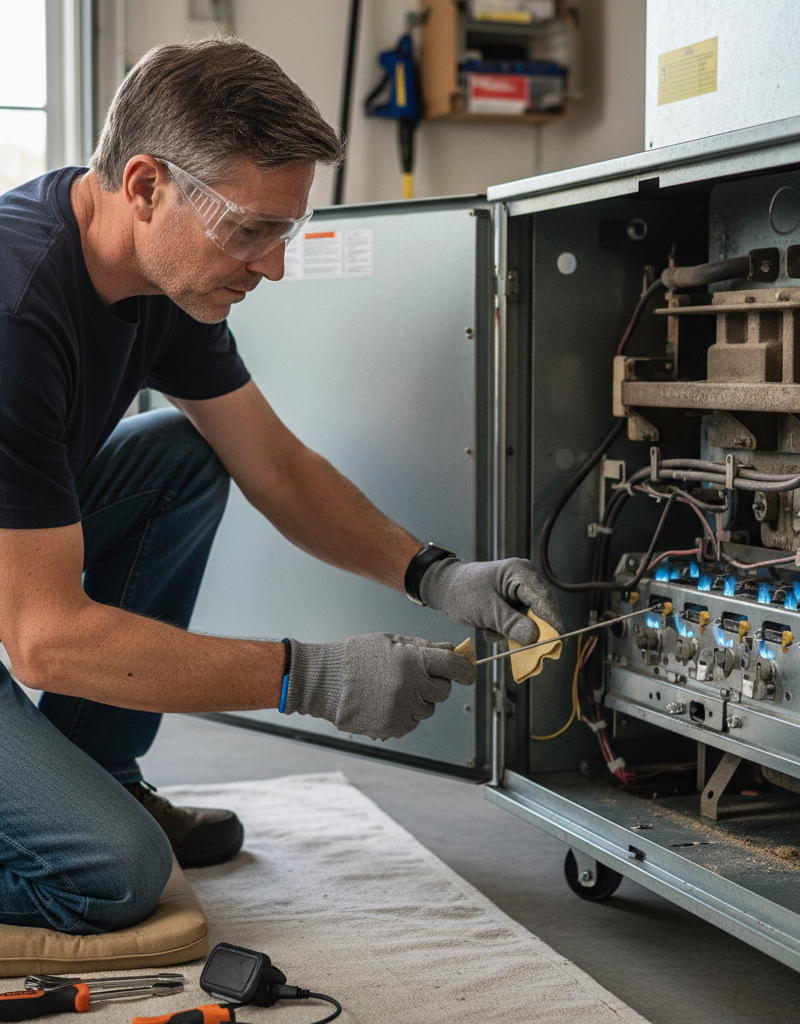
Find the Burner Assembly — Inside, you’ll see a row of metal tubes—those are the burners. The flame sensor will be a thin metal rod, usually about 2-4 inches long and 1/8-inch thick, sticking into the flame path from one burner. It’s usually opposite the igniter, or at least a few inches away. It’ll have one wire hooked to it.
- If you can't find it: Check the owner’s manual or look up a diagram online for your exact model. They all vary a bit.
-
Disconnect the Wire — Pull the wire straight off the flame sensor terminal carefully. It might be snug, but it should come off without much force. Don’t yank on the wire itself.
-
Remove the Flame Sensor — The sensor is usually held in by a single screw. Back that out, then gently pull the sensor straight out of its mounting bracket. Don’t bend the rod.
- Tools: Nut driver or screwdriver (might be a 1/4-inch or 5/16-inch).
-
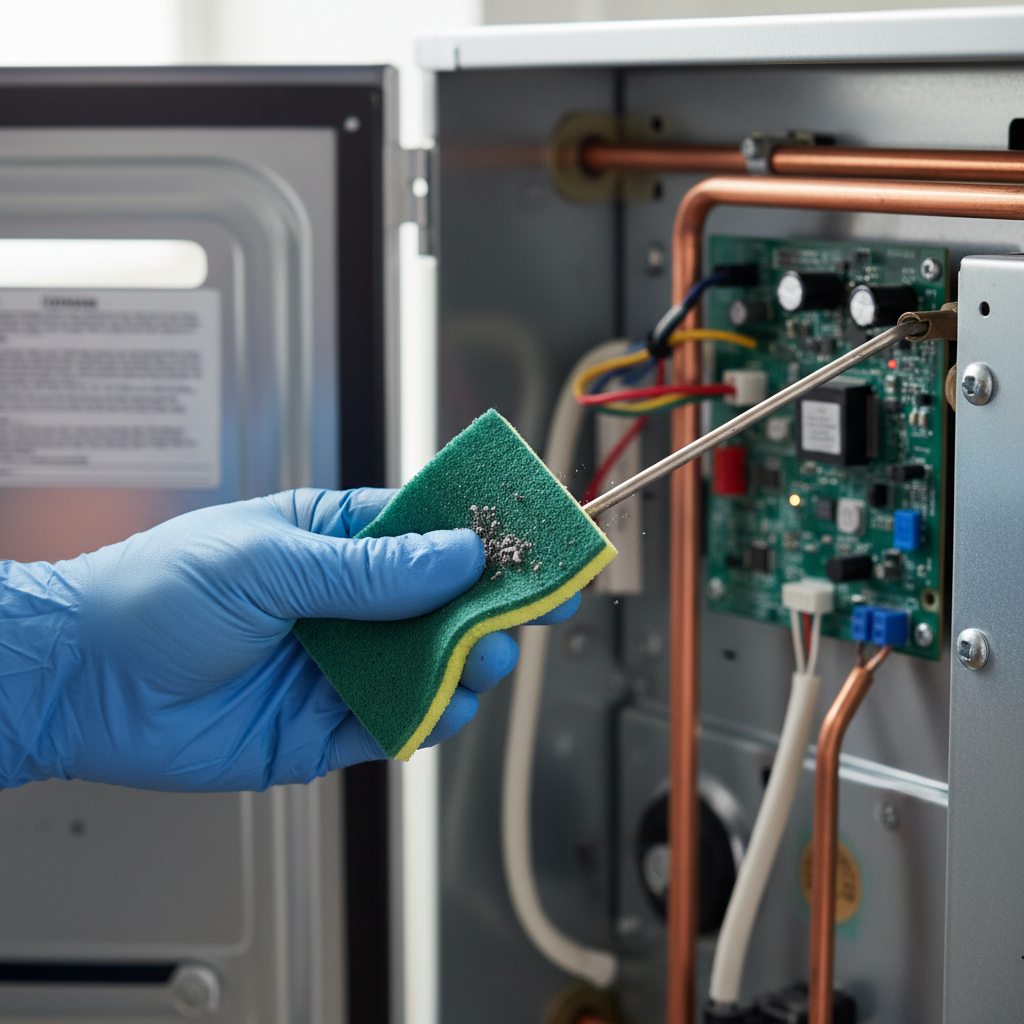
Clean the Sensor — Now we get to the part that fixes a bunch of these calls. Grab fine-grit emery cloth or a Scotch-Brite pad (never sandpaper, because it can be too rough and scratch the sensor, which gives carbon more places to stick). Rub the whole rod gently but firmly. You’re just knocking off the black, sooty buildup. It should go from dull black to shiny metal. You don’t need mirror finish. Just get the crud off. I pulled a water heater in Frisco last month that had exactly this kind of nuisance issue on the furnace next to it—same carbon caked sensor, same frustrated homeowner, same simple fix. Cleaned it up, fired right off. Saved everybody a headache.
- Materials: Fine-grit emery cloth (around 180-220 grit) or Scotch-Brite pad.
- What NOT to use: Steel wool, sandpaper, or harsh chemical cleaners.
-
Reinstall the Sensor — Slide the cleaned sensor back into the bracket the same way it came out. Put the screw back in and tighten it snug—don’t crank on it, or you can crack the ceramic base. Push the wire back onto the terminal until it seats firmly.
-
Replace Access Panel & Restore Power — Reinstall the furnace access panel and make sure it’s secured right. Then head back to the panel and flip the furnace breaker back on. Set your thermostat back to “Heat” and bump it up a few degrees so it calls for heat.
-
Test the Furnace — Watch it and listen. The furnace should light, the flame sensor should prove the flame, and after a short delay the main blower should kick on. It ought to run a full cycle until the thermostat is satisfied. If it still short cycles, this may not be the only thing going on.
Common Causes
Cleaning the flame sensor is a solid first move, but it’s not the only reason a furnace might short cycle. Here are the usual suspects:
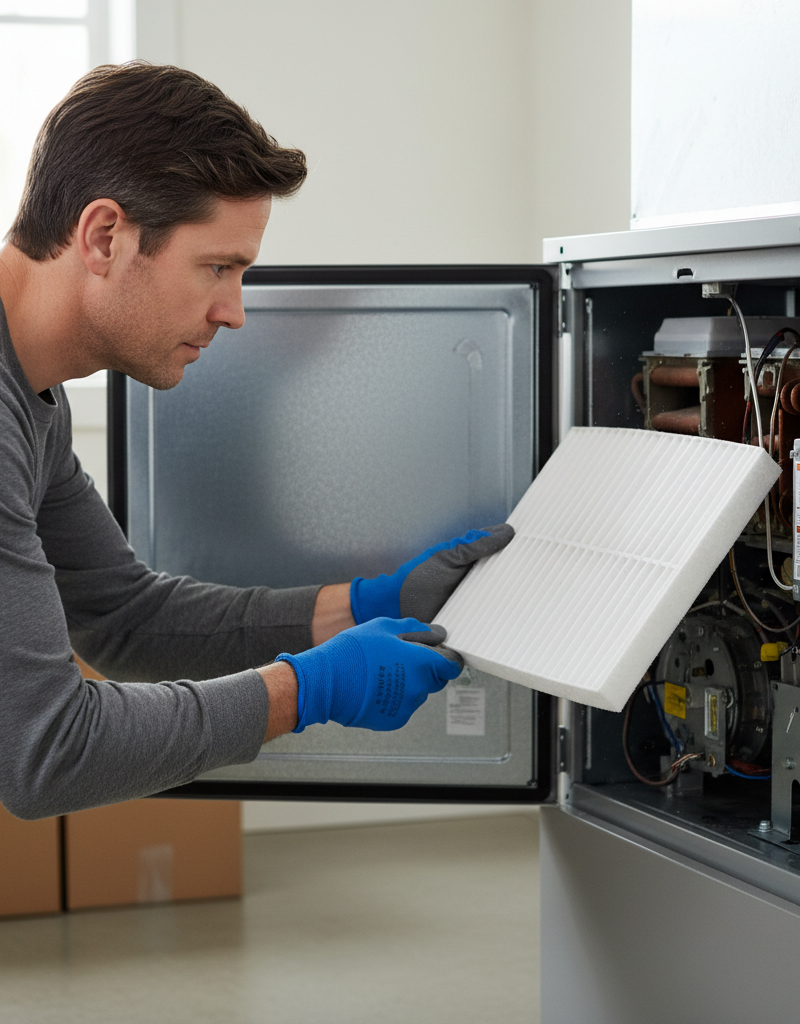
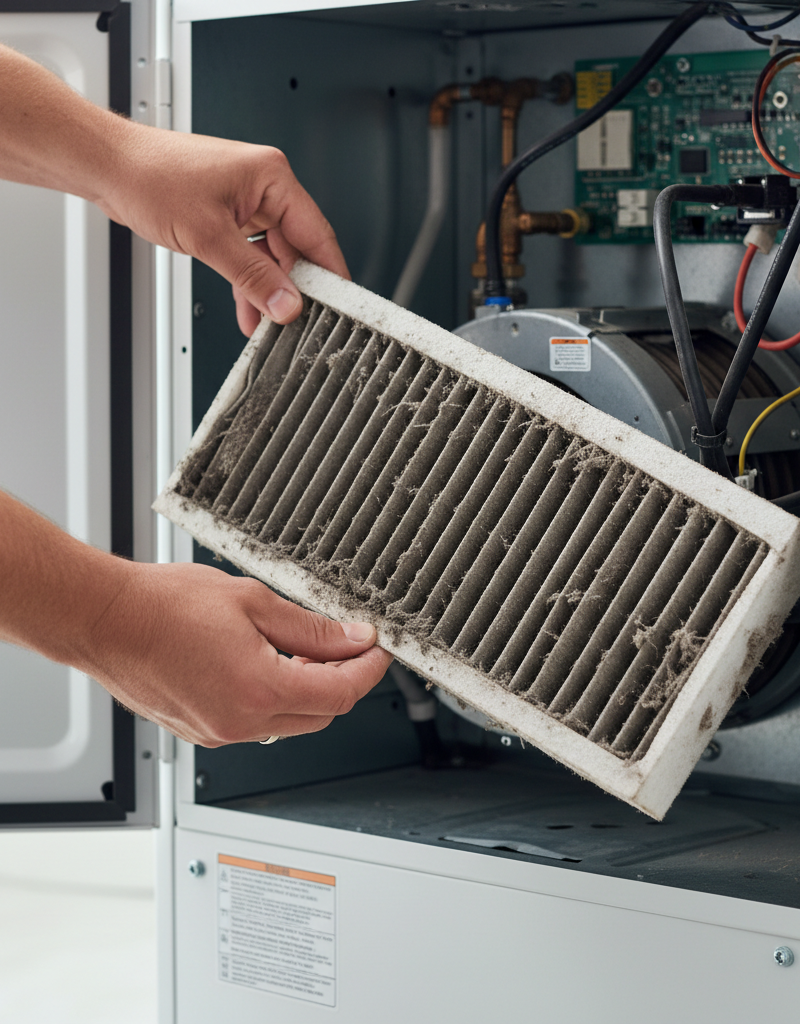
- Clogged Air Filter: This is probably the second most common cause after a dirty flame sensor. A dirty filter chokes off airflow, which makes the furnace work harder. That can overheat the heat exchanger and trip the safety limit switch, shutting the furnace down early. Change your filter every 1-3 months, seriously.
- Oversized Furnace: Believe it or not, a furnace that’s too big for the home can short cycle. It heats the space so fast that the thermostat is satisfied in just a few minutes, so it never gets through a proper cycle. Wasteful, and it beats up the parts.
- Thermostat Issues: A bad thermostat, or one sitting in a drafty spot or near a heat source like a lamp or sunny window, can read the temperature wrong and shut things down too soon. Check the batteries too, if it’s battery-powered.
- Blocked Exhaust or Intake Vents: If the furnace can’t vent combustion gases properly or can’t pull in fresh air, safety switches will trip and shut it off. Look outside for snow, ice, leaves, or even a bird nest blocking the vents.
- Malfunctioning Limit Switch: This safety device watches the heat exchanger temperature. If things get too hot, it cuts power to the burners. A bad limit switch can trip early even when the furnace isn’t actually overheating.
- Faulty Blower Motor or Capacitor: If the blower motor isn’t moving enough air, or the capacitor is weak, the heat exchanger can overheat and the furnace will short cycle.
Common Mistakes
Homeowners make the same mistakes over and over with a short cycling furnace. Skip these if you want to save yourself a headache and maybe a repair bill too:
- Ignoring the Air Filter: Thinking you can squeeze another month out of that dusty filter? Don’t. A clogged filter is a top short cycling culprit and one of the easiest fixes. I’ve seen filters so packed they looked like cardboard.
- Using the Wrong Tools for Flame Sensor Cleaning: Reaching for sandpaper or steel wool? Stop right there. Those rough materials can scratch the sensor rod, leaving tiny grooves where carbon builds up even faster, or even ruining the part completely.
- Not Checking the Thermostat: Assuming the thermostat is fine is a mistake. Check the settings, make sure it’s level if it’s an older mercury type, and swap the batteries. Sometimes that’s all it is.
- Constantly Resetting the Furnace: If the furnace is shutting off on a safety limit, keep hitting reset without fixing the root problem and you can do real damage, maybe even to the heat exchanger. Find the cause—don’t just reset it and call it a day.
- Overlooking Outdoor Vents: On high-efficiency furnaces, ignoring blocked intake or exhaust vents outside is a common miss. Snow, ice, or debris can trip the safety controls in a hurry.
- DIYing Gas Line Issues: If you suspect trouble with the gas valve or gas lines, don’t mess with it. That’s licensed-pro only. Natural gas is no joke.
Cost & Time Breakdown
Here’s the usual breakdown when you’re dealing with a short cycling furnace, depending on what you end up doing:
| Task | DIY Cost | Pro Cost | Time |
|---|---|---|---|
| Clean Flame Sensor | $5–$15 | $100–$250 | 15–30 min |
| Replace Air Filter | $10–$30 | Included in service | 5 min |
| Replace Thermostat Batteries | $5–$10 | Included in service | 2 min |
| Clean Blocked Vents | $0 | $100–$200 | 10–20 min |
| HVAC System Tune-up & Diagnosis | — | $150–$350 | 1–2 hrs |
| Replace Flame Sensor (if needed) | $20–$40 | $150–$300 | 30 min–1 hr |
| Replace Limit Switch | $30–$70 | $180–$400 | 30 min–1 hr |
Tips & Prevention
Keeping your furnace running smooth and avoiding that annoying short cycling isn’t rocket science. A little regular maintenance goes a long way:
- Regular Filter Changes: This is the cheapest, easiest preventative step you can take. Put it on your calendar or set a phone reminder. For most homes, once a month is ideal during heating season. At the very least, every three months.
- Annual Professional Tune-up: I can’t say this enough. Have an HVAC tech out once a year, usually in the fall before heating season starts. They’ll clean and inspect everything, catch small issues before they turn into big ones, and make sure the safety controls are doing their job. Worth every penny.
- Keep Vents Clear: Make sure your return and supply vents inside the house aren’t blocked by furniture or drapes. Outside, check the furnace intake and exhaust vents for leaves, snow, or ice—especially after a storm.
- Smart Thermostat Placement: Make sure the thermostat isn’t in direct sunlight, near a drafty window, or above a heat source like a TV or register. Those things can throw off the temperature reading and mess with cycling.
- Listen to Your Furnace: Pay attention to new noises or weird smells. Furnaces usually tell you when something’s off. A little extra rattle, a strange burning smell—those are clues worth chasing.
- Don't Over-Clean the Flame Sensor: Cleaning it’s good, but doing it too often or too aggressively can damage the ceramic or the rod itself. Once a year during a tune-up, or only when symptoms point there, is enough.
When to Call a Professional
Look, I’m all for homeowners getting their hands dirty, but some jobs are too risky or too technical for a DIY fix. If you’ve cleaned the flame sensor, replaced the filter, checked the vents, and the furnace is still short cycling, it’s time to bring in a licensed HVAC pro. Any issue involving gas lines, persistent error codes on the control board, or even a faint smell of gas should get a professional on the phone right away. If you’re working on an older furnace and parts are tough to find, or if the problem seems to be an intermittent electrical fault, that’s another solid sign. And if you just don’t feel comfortable or aren’t sure what you’re looking at, don’t force it. Your safety—and the way your heating system performs—are worth it.
Related Articles
Keep troubleshooting with these hand-picked guides from FixlyGuide:
- The 4 Hidden Reasons Your Furnace Short Cycles (and What to Check First) — Discover the four most common reasons your furnace is short cycling and how to diagnose and fix these issues to restore efficient heating.
- The Secret Reason Your Furnace Kicks Off Early (It’s Not What You Think) — Furnace short cycling is a common, frustrating problem that wastes energy and wears out your system. It happens when your furnace turns on…
- The Hidden Reason Your Furnace Short Cycles (and the $15 Fix) — Furnace short cycling can drive up energy bills and wear out your system prematurely; often, a simple fix like a dirty filter or miscalibra…
- The 4 Hidden Reasons Your Dryer Tumbles Cold (And How to Fix Them in 30 Minutes) — Your dryer tumbles, but clothes stay cold. Discover the four most common culprits behind a dryer that won't heat, and how to troubleshoot t…
- The #1 HVAC Mistake Costing You Money (And 3 Ways to Fix It) — Your HVAC filter is vital for air quality and system efficiency. Learn how often to change it to avoid costly repairs and high energy bills.
- The Surprising Reason Your Ceiling Fan Wobbles (It’s Not Always What You Think) — A wobbling ceiling fan is more than just annoying; it can be a symptom of various issues, from loose screws to unbalanced blades, impacting…
Should you do this yourself?
Answer five quick questions before you start. Safety outranks savings every time.
Your experience with work like this
How high do you have to work?
Does the job involve any of these?
Will it need a permit?
Specialty tools
Free and instant. Educational guidance only — not a quote, inspection, or professional diagnosis.
Estimate your own project cost
National averages are a starting point. Enter your details for a range that fits your house.
HVAC replacement cost
- Equipment$2,200 – $3,800
- Installation labor$1,200 – $2,500
Always insist on a Manual J load calculation — sq-ft sizing is only a rough check. Federal heat-pump rebates may reduce cost significantly.
Educational estimate only — always confirm with written local bids.
What should this project cost?
Enter your project details for a realistic cost range before you call anyone.
Service calls and common repairs run $150–$900; full system replacement typically $6,000–$12,000.
- Regional adjustment
- National average
- Labor share (typical)
- ~$1,935
- Quotes to collect
- 3 written estimates
Educational estimate based on national averages — not a binding quote. Always confirm with written local estimates.
Fixly Project Decision Box
- DIY difficulty
- Advanced
- Estimated time
- Homeowner checks 20–30 minutes
- Cost level
- Moderate
Main tools / materials
- Clean air filter
- Garden hose for condenser coils
- Shop vac for the condensate line
When to stop and call a pro
- Burning smell, smoke, or a tripping breaker
- Refrigerant lines iced over or hissing
- Any work inside the sealed refrigerant circuit (EPA-licensed only)
- Gas smell near a furnace — leave and call the utility
Need professional help?
Find an HVAC Pro Near YouGet the print-ready PDF of this guide
A clean, ad-free, printable version you can keep on your phone or pin to the workshop wall. Free with a FixlyGuide account.
- Print-optimized layout
- Tools, materials & every step included
- Saved to your account
Frequently asked questions
What does furnace short cycling mean?+
Furnace short cycling means your furnace turns on, runs for a short period (often just a few minutes), and then shuts off before your home has reached the desired temperature. It then repeats this cycle frequently, instead of completing longer, less frequent heating cycles.
Why is my furnace short cycling?+
Common reasons include a dirty flame sensor, a clogged air filter, an oversized furnace, thermostat issues (like poor placement or dead batteries), or blocked exhaust/intake vents. It's often a safety mechanism tripping to prevent damage or overheating.
Can a dirty flame sensor cause short cycling?+
Absolutely, it's one of the most common reasons! A dirty flame sensor can't properly detect the flame, causing the furnace's control board to shut off the gas as a safety measure, leading to short cycling.
How often should I clean my flame sensor?+
You generally don't need to clean it more than once a year. Often, a professional HVAC tune-up will include this. However, if your furnace starts short cycling, it's a good first DIY troubleshooting step.
What tools do I need to clean a flame sensor?+
You'll typically need a screwdriver (often Philips head), a nut driver (usually 1/4-inch or 5/16-inch), and fine-grit emery cloth or a Scotch-Brite pad. Make sure to avoid abrasive materials like sandpaper.
Is it safe to clean my own flame sensor?+
Yes, it's generally safe as long as you follow proper safety precautions. The most important step is to absolutely ensure the power to your furnace is completely shut off at the breaker before you touch anything inside the unit.
How can I prevent furnace short cycling?+
Regular maintenance is key: change your air filter monthly, ensure all supply and return vents are open, keep outdoor intake/exhaust vents clear, and schedule an annual professional furnace tune-up.
When should I call a professional for short cycling?+
If cleaning the flame sensor and replacing the air filter doesn't fix the problem, or if you suspect gas line issues, hear strange noises, or see persistent error codes, it's definitely time to call a licensed HVAC professional.
Can an oversized furnace cause short cycling?+
Yes, an oversized furnace can heat your home so quickly that it satisfies the thermostat's call for heat in just a few minutes. This prevents it from running a full, efficient cycle and leads to premature wear on components.
Discussion
Loading comments…