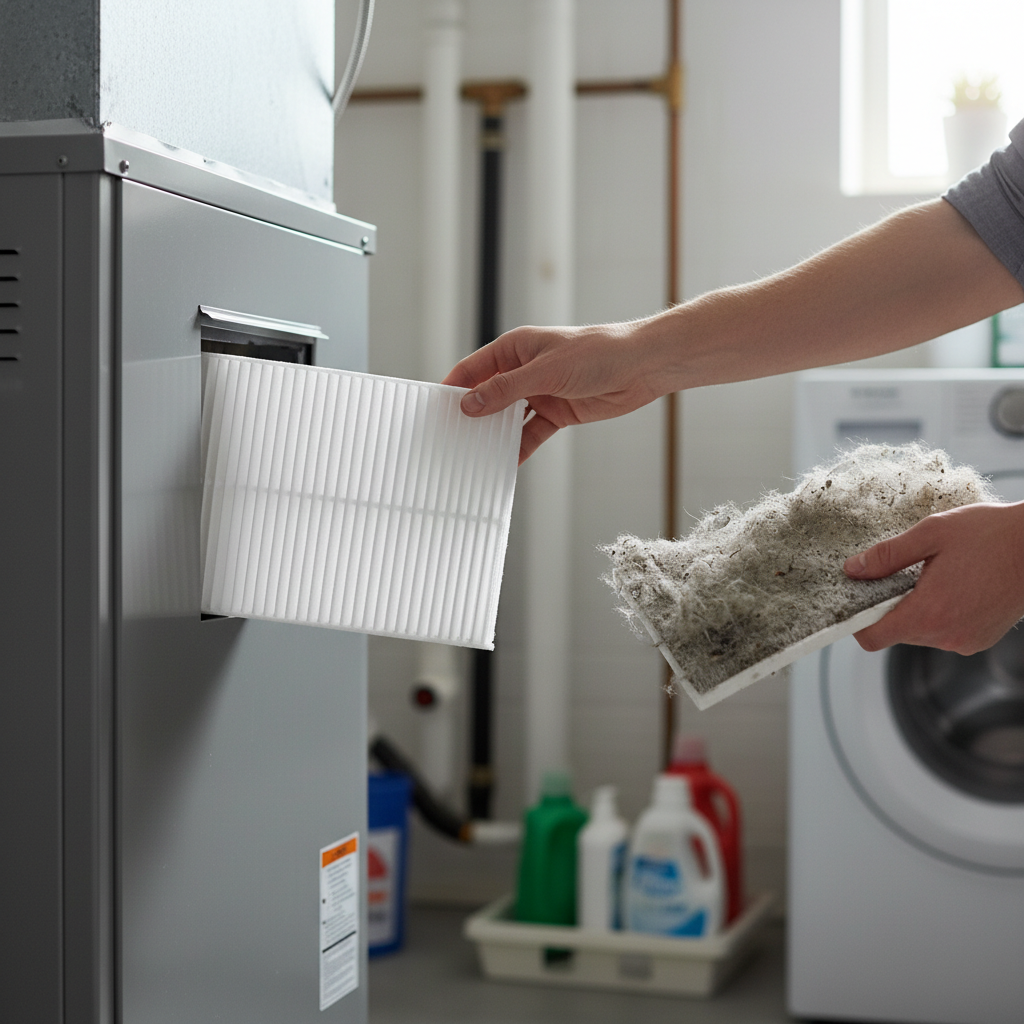
- Clogged Air Filter: The most frequent cause. Restricts airflow, leading to overheating and safety sensor shutdowns. Replace regularly (every 1-3 months).
- Faulty Thermostat: Incorrect settings, dead batteries, or internal malfunctions can prevent the furnace from signaling for heat.
- Dirty Flame Sensor: Carbon buildup prevents the sensor from confirming a flame, triggering a safety shutdown.
- Pilot Light Out (Older Furnaces): No pilot, no main burner ignition. Can be caused by drafts, dirty orifice, or a faulty thermocouple.
- Tripped Limit Switch: A safety device that shuts off the burners if the heat exchanger overheats, often due to restricted airflow (dirty filter, blocked vents).
HVAC · High energy usage
| Project category | HVAC |
|---|---|
| Problem type | High energy usage |
| Trade required | HVAC |
| Urgency | Planned project |
| Safety risk | Low safety risk |
| DIY suitability | DIY for experienced homeowners |
| Cost category | High cost |
| Typical timeline | Assessment within weeks; replacement planned off-season |
| Contractor type | Licensed HVAC technician |
Repair option
Duct sealing, insulation, and a tune-up before touching the equipment.
Replacement option
High-efficiency replacement sized by a load calculation, not a rule of thumb.
Common causes
- Aging, low-efficiency equipment
- Leaking ducts losing conditioned air
- Insufficient attic insulation
- Oversized system short-cycling
Relevant tools:project cost estimatorrepair or replace
Published July 19, 2026Last updated August 17, 2026
Tools & materials you'll need
Affiliate linksAs an Amazon Associate FixlyGuide earns from qualifying purchases — at no extra cost to you. Prices and availability are accurate as of publication and subject to change.
Quick Answer
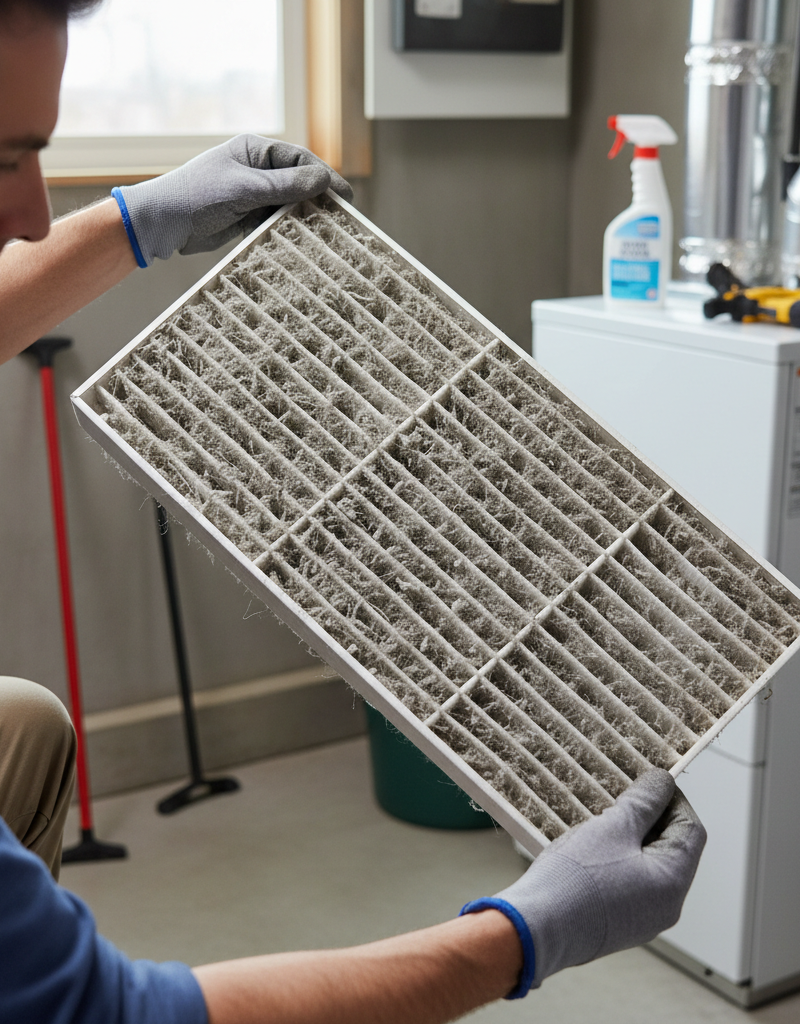
When your furnace starts blowing cold air, the primary culprit is often a simple, overlooked issue: a clogged air filter. This seemingly minor component plays a crucial role in your furnace's operation. A dirty filter chokes off airflow, forcing your furnace to work harder and eventually leading to overheating. Modern furnaces are equipped with safety sensors that will shut down the heating element (or burners) when they detect overheating, leaving only the fan to circulate unheated air. Swapping out a dirty filter for a clean one is a quick, inexpensive fix that can restore warmth and prevent more serious problems.
The Problem
There's nothing more frustrating than a furnace running constantly, yet delivering only a chilly gust of air through your vents. You expect comforting warmth, but instead, you get a reminder of the cold outside. This isn't just an inconvenience; it can be a sign of underlying issues that, if left unaddressed, could lead to higher energy bills, reduced system lifespan, or even a complete breakdown. While the feeling of cold air can be alarming, many of the reasons behind it are surprisingly simple for a homeowner to diagnose and rectify without needing a professional call-out immediately. Identifying the source of cold air quickly is key to restoring comfort and preventing further issues.
How It Works
To understand why your furnace might be blowing cold air, it's helpful to grasp the basic principles of how a forced-air heating system operates. When you set your thermostat to 'heat,' it signals the furnace to begin its cycle. First, the inducer motor starts, drawing combustion air into the burner section and venting exhaust gases. Next, the igniter (either a hot surface igniter or a pilot light) fires up, igniting the gas burners. These flames heat a metal component called the heat exchanger. As the heat exchanger warms, the blower motor kicks on, drawing cool air from your home's return air ducts, pulling it through the air filter, and then pushing it across the hot heat exchanger. The air absorbs heat, becomes warm, and is then distributed throughout your home through the supply ducts and vents. This cycle continues until your thermostat's set temperature is reached.
Crucially, several safety mechanisms are built into this process. A limit switch monitors the temperature of the heat exchanger. If the airflow is restricted (e.g., by a dirty filter) or the burners stay on too long, the heat exchanger can overheat. When this happens, the limit switch trips, shutting off the gas supply to the burners to prevent damage to the furnace or a fire hazard. The blower motor, however, might continue to run for a short period to dissipate residual heat, resulting in cold air being circulated. Similarly, a flame sensor confirms that a flame is present at the burners. If it doesn't detect a flame, it will shut down the gas valve as a safety precaution, preventing unburnt gas from accumulating. Understanding these mechanisms helps in troubleshooting because when cold air blows, it often indicates one of these safety features has been activated due to a fault in the heating process, rather than a total system failure.
Step-by-Step Fix
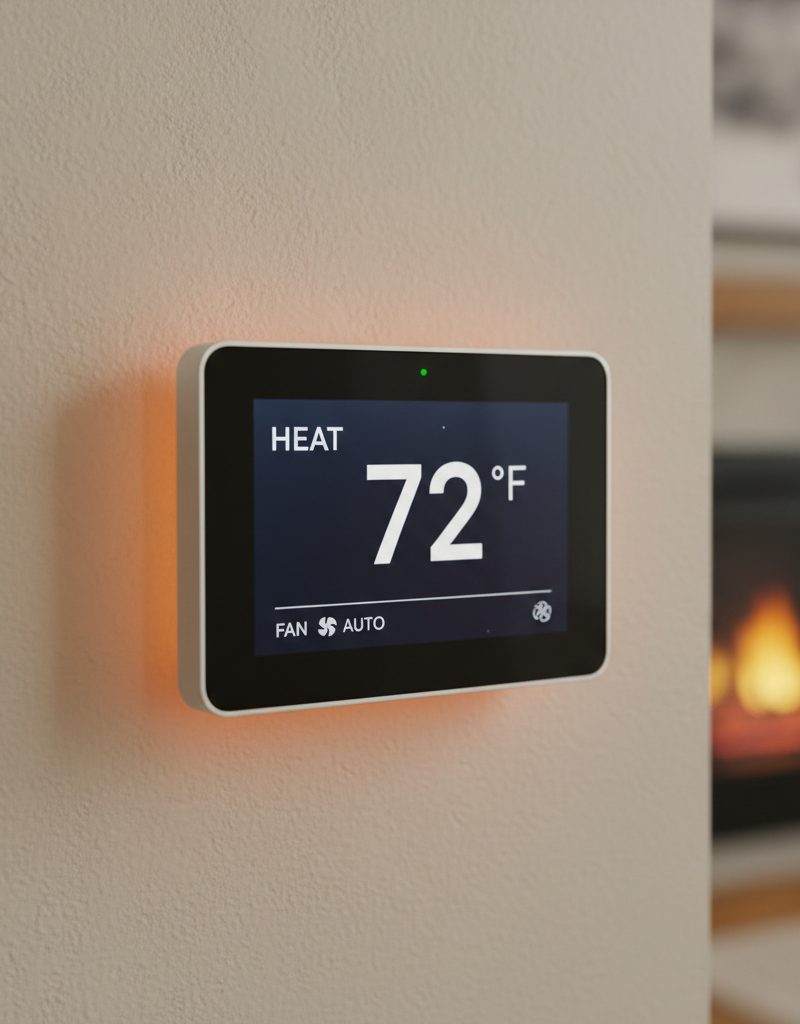
1. Check Your Thermostat Settings – Ensure it's set to 'Heat' and 'Auto'.
Before diving into the furnace itself, confirm your thermostat isn't causing the issue. Make sure the system switch is set to 'Heat' and the fan setting is on 'Auto,' not 'On.' If the fan is set to 'On,' it will blow air continuously, even when the furnace isn't actively heating, which can feel like cold air. Double-check the desired temperature; if it's set below the room's current temperature, the furnace won't engage. If you have a programmable thermostat, ensure no conflicting schedules are active. Switch to 'Heat' and 'Auto' and increase the set temperature by 5 degrees above the current room temperature.
- If this doesn't work: If the thermostat screen is blank, check its batteries. Replace them if necessary. If it's still unresponsive, there might be a wiring issue or a faulty thermostat, which could require professional assistance.
2. Inspect and Replace the Air Filter – The most common culprit for cold air.
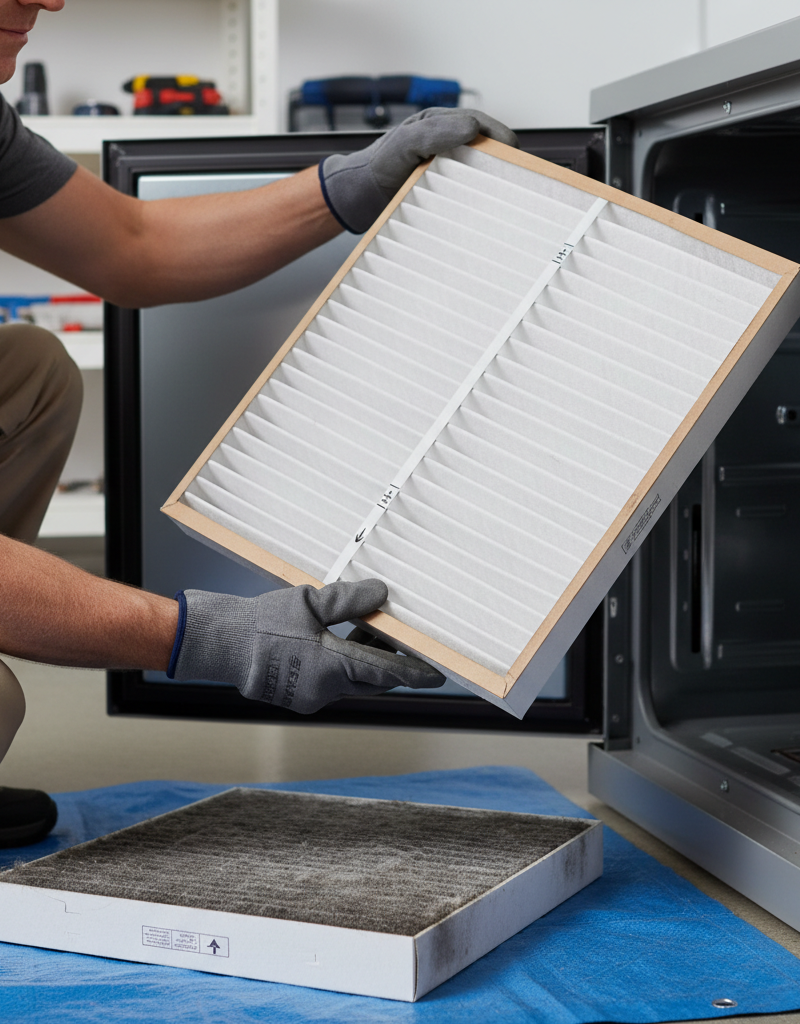
Locate your furnace's air filter slot, typically a rectangular opening near the blower compartment or return ductwork. Pull out the existing filter and visually inspect it. If it's heavily clogged with dust, pet hair, and debris, it's restricting airflow significantly. A dirty filter forces the furnace to work harder and can cause the limit switch to trip, shutting off the burners. Replacing a dirty filter is the most frequent fix for cold air issues. Choose a filter with the correct MERV rating (generally MERV 8-11 is good for most homes) and ensure the arrow on the filter points in the direction of airflow, usually towards the furnace.
- Safety Note: Always turn off power to the furnace at the service switch (usually on the side of the furnace) or at your electrical panel before opening any access panels or replacing filters.
- If this doesn't work: Even with a clean filter, if the burners are still not igniting, the problem lies elsewhere.
3. Check the Furnace Power Switch and Circuit Breaker – Ensure the furnace has power.
Locate the furnace power switch, which looks like a regular light switch mounted on or near the furnace unit. Ensure it's in the 'On' position. It's surprisingly common for this switch to be accidentally flipped off. Next, go to your home's electrical service panel. Locate the circuit breaker labeled for your furnace (it might also be labeled 'HVAC' or 'Furnace'). If it's tripped (usually halfway between 'On' and 'Off' or fully 'Off'), flip it completely to 'Off' and then back to 'On.' A tripped breaker indicates a power surge or an electrical fault, and resetting it might restore power. If the breaker trips again immediately, do not attempt to reset it repeatedly; this indicates a persistent electrical problem that requires a professional.
- Tools: Flashlight (optional).
- If this doesn't work: If the furnace has power but still no heat, continue to the next steps.
4. Examine the Flame Sensor – A small, critical safety device.
The flame sensor is a thin metal rod, usually located in the path of the burner flames. Its job is to detect if a flame is present. If it gets dirty, a thin layer of carbon buildup can prevent it from sensing the flame correctly, causing the furnace to shut off the gas supply as a safety measure, even if the igniter is working. Turn off the furnace power at the switch. Gently remove the flame sensor (usually held by one screw). Use a fine-grit Emory cloth or very fine sandpaper (not steel wool, which can leave conductive fibers) to lightly clean off any carbon buildup. Reinstall the sensor securely.
- Safety Note: Always turn off electricity and gas to the furnace before working near the burners or flame sensor. Wait for components to cool down.
- If this doesn't work: If cleaning the flame sensor doesn't help, the sensor itself might be faulty or there could be an issue with the igniter or gas supply.
5. Check for a Pilot Light (Older Furnaces) – If your furnace uses one.
If you have an older furnace, it might use a pilot light to ignite the main burners. If the pilot light is out, the furnace won't heat. Look for a small, blue flame near the burners. If it's out, follow the manufacturer's instructions, usually printed on a label inside the furnace service panel, to relight it. This often involves turning a gas valve to 'Pilot,' pressing a reset button, and holding a flame (from a long lighter) to the pilot orifice until it ignites and stays lit.
- Safety Note: If you smell gas, do NOT attempt to light the pilot light. Turn off the gas supply and ventilate your home immediately. Call your gas company or a licensed HVAC professional.
- If this doesn't work: If the pilot light won't stay lit, the thermocouple (a safety device that senses the pilot flame) might be faulty, or there could be an issue with gas pressure.
6. Inspect for Blocked Exhaust or Intake Vents – Restricted airflow impacts combustion.
Modern high-efficiency furnaces often have PVC pipes for intake and exhaust that terminate outside your home. Check these vents for obstructions like snow, ice, leaves, or bird nests. A blocked exhaust can cause dangerous carbon monoxide buildup, while a blocked intake can starve the furnace of combustion air, tripping a pressure switch and preventing burner ignition. Clear any obstructions you find. Ensure no flammable materials are stored near the furnace's indoor vents.
- If this doesn't work: If vents are clear but the furnace still won't ignite, a pressure switch might be stuck or faulty, requiring professional diagnosis.
7. Check the Condensate Drain Line (High-Efficiency Furnaces) – A common source of lockout.
High-efficiency (condensing) furnaces produce acidic condensate during operation. This water drains through a PVC pipe, usually into a floor drain or utility sink. If this drain line becomes clogged with slime, algae, or debris, a safety switch (the float switch in the condensate pan) will trip, shutting down the furnace to prevent water damage. Locate the condensate drain line and pan. If the pan is full of water, carefully clear the clog. You can often clear minor clogs by pouring a cup of distilled white vinegar into the access port of the condensate line or gently removing and flushing the line.
- Tools: Bucket, distilled white vinegar.
- If this doesn't work: If the line is clear but the furnace still won't run, the float switch itself might be faulty.
Common Causes
- Clogged Air Filter: The most frequent cause. Restricts airflow, leading to overheating and safety sensor shutdowns. Replace regularly (every 1-3 months).
- Faulty Thermostat: Incorrect settings, dead batteries, or internal malfunctions can prevent the furnace from signaling for heat.
- Dirty Flame Sensor: Carbon buildup prevents the sensor from confirming a flame, triggering a safety shutdown.
- Pilot Light Out (Older Furnaces): No pilot, no main burner ignition. Can be caused by drafts, dirty orifice, or a faulty thermocouple.
- Tripped Limit Switch: A safety device that shuts off the burners if the heat exchanger overheats, often due to restricted airflow (dirty filter, blocked vents).
- Blocked Condensate Line/Pan (High-Efficiency Furnaces): Buildup in the drain line causes the float switch to trip, preventing operation.
- Igniter Malfunction: If the hot surface igniter is cracked or not glowing red, it won't ignite the gas.
- Gas Supply Issues: A closed gas valve, low gas pressure, or a problem with the gas meter can prevent fuel from reaching the burners.
Common Mistakes
- Ignoring the Air Filter: Many homeowners neglect regular filter changes, leading to reduced efficiency, higher energy bills, and ultimately, cold air. Check and replace monthly during peak heating seasons.
- Setting the Thermostat Fan to 'On': This causes the blower to run constantly, often circulating cold air when the furnace isn't actively heating, misleading you into thinking there's a problem.
- Resetting the Furnace Too Many Times: Repeatedly hitting the reset button or flipping the breaker for a persistent issue can mask a serious problem and potentially cause further damage to components. If it trips more than once, investigate the root cause.
- Using the Wrong MERV Filter: While high MERV filters (above 12) trap more particles, they can also restrict airflow significantly, stressing your furnace. Stick to MERV 8-11 for most residential systems unless advised otherwise by an HVAC pro due to specific needs.
- Attempting Complex Repairs Without Turning Off Power: Always, always turn off the main power switch to the furnace and at the breaker before performing any inspections or cleaning, especially near electrical components or the igniter.
- Not Checking Outdoor Vents: For high-efficiency units, external intake and exhaust vents can become blocked by snow or debris, leading to a system lockout. These need to be clear for proper operation.
Cost & Time Breakdown
| Task | DIY Cost | Pro Cost | Time |
|---|---|---|---|
| Replace Air Filter | $10–$30 | $75–$150 (as part of service call) | 5 minutes |
| Clean Flame Sensor | $0 (if tools on hand) | $75–$150 (as part of service call) | 15–20 minutes |
| Relight Pilot Light | $0 | $75–$150 (as part of service call) | 5–10 minutes |
| Clear Condensate Line | $0–$5 | $100–$250 | 20–30 minutes |
| Thermostat Battery Replacement | $5–$10 | $75–$150 (as part of service call) | 5 minutes |
| Breaker Reset | $0 | $75–$150 (as part of service call) | 2 minutes |
Tips & Prevention
- Regular Filter Changes: Mark your calendar or set a reminder to check your furnace filter monthly and replace it every 1-3 months, especially during peak heating seasons or if you have pets. This is the single most effective preventive measure.
- Annual Professional Tune-up: Schedule a professional HVAC inspection and tune-up every fall before heating season begins. A technician can identify potential issues, clean components, and ensure your furnace runs safely and efficiently.
- Keep Vents Clear: Ensure all supply and return air vents inside your home are unobstructed by furniture, rugs, or drapes. Outside, keep intake and exhaust pipes clear of snow, ice, and debris.
- Monitor Thermostat Batteries: Replace thermostat batteries annually, even if they seem to be working, to prevent unexpected power loss.
- Listen and Observe: Pay attention to any unusual noises, smells, or operational changes from your furnace. Early detection can prevent minor issues from becoming major repairs.
- Check Condensate Drain: For high-efficiency furnaces, periodically check the condensate pan for water buildup and the drain line for clogs, especially if you notice a musty smell.
When to Call a Professional
While many cold air issues can be resolved with DIY troubleshooting, some problems warrant the expertise of a licensed HVAC professional. If you've gone through all the troubleshooting steps—checked the filter, thermostat, power, flame sensor, pilot light, and condensate line—and your furnace is still blowing cold air or failing to ignite, it's time to call a pro. Persistent electrical issues, such as a circuit breaker repeatedly tripping, require immediate professional attention to avoid fire hazards. If you smell gas at any point, evacuate your home and contact your gas company and an HVAC technician immediately. Problems involving the igniter, gas valve, blower motor, or control board are complex and best left to trained and certified technicians who have the specialized tools and knowledge to diagnose and repair these critical components safely and effectively. Attempting to tackle these advanced repairs yourself could lead to further damage, safety risks, or void your furnace's warranty. A professional can quickly and accurately diagnose intricate issues, ensuring your furnace operates safely and efficiently.
Related Articles
Keep troubleshooting with these hand-picked guides from FixlyGuide:
- The #1 Mistake Homeowners Make When Their AC Won't Turn On (And the Easy Fix) — Learn the most common oversight homeowners make when their AC won't turn on and how to troubleshoot basic issues to restore cooling.
- The Secret Reason Your AC Isn't Drying Your Air (And What to Check First) — Your AC should cool and dehumidify, but if your house feels muggy, there's a specific, often overlooked culprit preventing it from doing it…
- The #1 Mistake Homeowners Make When Heat Pumps Stop Heating in Winter — Discover the crucial mistake most homeowners make when their heat pump struggles in cold weather and how to fix it, potentially saving hund…
- The #1 Reason Your AC Blows Warm Air (And It's Not What You Think) — A dirty air filter is often the overlooked culprit behind an air conditioner blowing warm air, hindering its ability to cool your home effi…
- The Secret Culprit Behind Your Humid House (Even with the AC On) — If your house feels sticky and damp despite the AC running, a common and often overlooked issue is an oversized air conditioner.
- The Hidden Reason Your AC Isn't Cooling (And Why Most Homeowners Get It Wrong) — Is your central AC blowing warm air or struggling to cool your home? The culprit is often a silent but serious issue many homeowners overlo…
Frequently asked questions
How long should a furnace blow cold air before heating?+
It's normal for a furnace to blow cold air for a minute or two at the beginning of a cycle while the heat exchanger warms up. If cold air persists for longer than 2-3 minutes or never turns warm, then there's an issue with the heating process.
Can a dirty filter cause a furnace to blow cold air?+
Yes, a dirty air filter is one of the most common reasons. A clogged filter restricts airflow, causing the heat exchanger to overheat. The furnace's safety limit switch then shuts off the burners, leaving only the fan to blow unheated air.
How often should I change my furnace filter to prevent issues?+
You should check your furnace filter monthly and plan to replace it every 1-3 months, especially if you have pets, allergies, or during peak heating seasons. A clean filter ensures proper airflow and prevents many furnace issues.
Discussion
Loading comments…