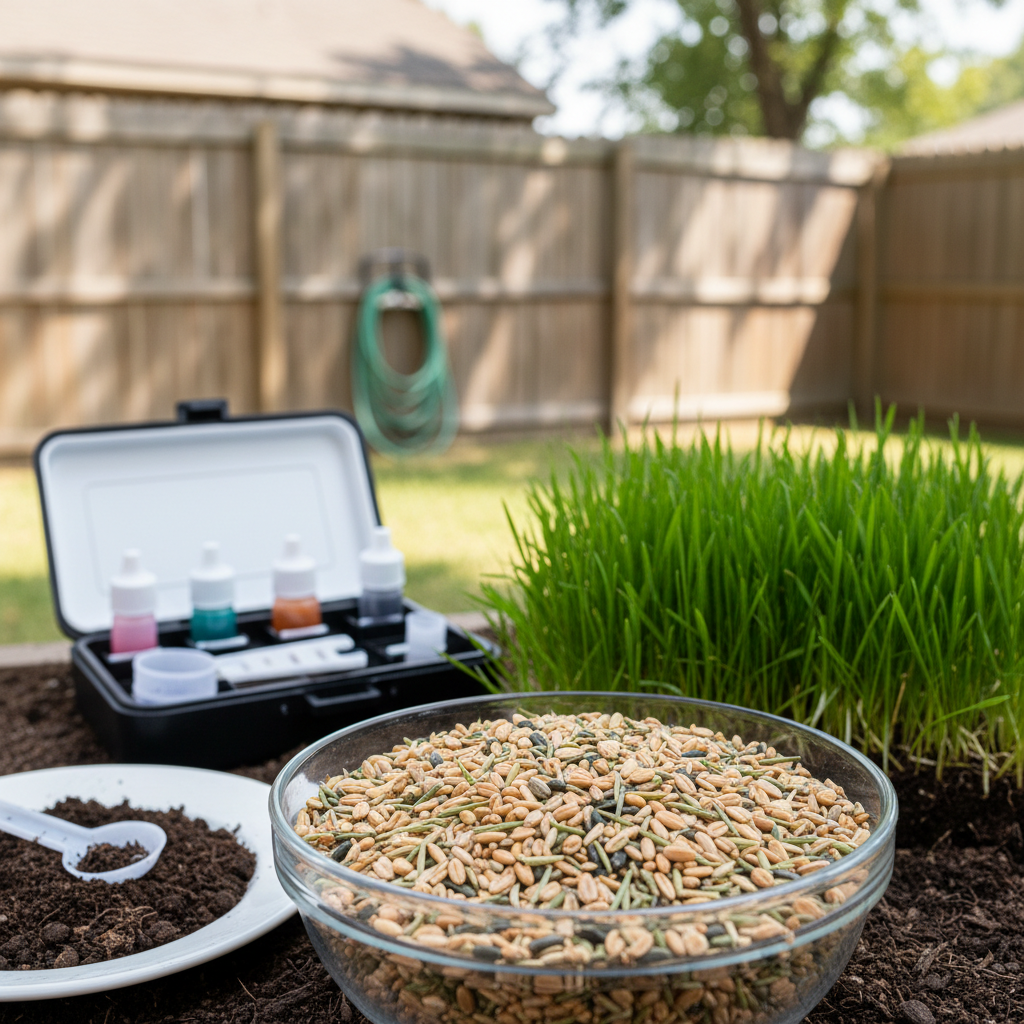
- Climate Zone: Determine if you're in a cool-season, warm-season, or transition zone. This is the primary factor dictating broad grass type. (USDA Plant Hardiness Zone Map is a good general guide, but also consider local microclimates).
- Soil Type & pH: Get a soil test. This is crucial for understanding nutrient deficiencies and pH levels. Local extension offices often provide affordable testing kits and recommendations. Without knowing your soil, you're guessing.
- If this doesn't work: You can get a basic DIY soil pH kit from most garden centers, but for a comprehensive nutrient analysis, a lab test is best.
Published July 10, 2026Last updated August 17, 2026
Tools & materials you'll need
Affiliate links- AmazonSoil testing kitBasic home kit or send-away lab test
- AmazonHand rake or Garden tillerTo loosen soil for seedbed preparation
- AmazonBroadcast spreader or Drop spreaderFor even seed distribution
- AmazonGarden hose with fine spray nozzleFor gentle, consistent watering
- AmazonLawn roller (optional)For good seed-to-soil contact, can often be rented
As an Amazon Associate FixlyGuide earns from qualifying purchases — at no extra cost to you. Prices and availability are accurate as of publication and subject to change.
Quick Answer
Many homeowners struggle to achieve a lush lawn because they make one critical mistake: choosing the wrong grass seed for their specific climate and yard conditions. Beyond just 'cool-season' or 'warm-season,' factors like sun exposure, soil type, and anticipated foot traffic play a huge role. Correctly identifying these elements and selecting a seed blend tailored to your specific environment is the single most important step in growing vibrant, healthy grass from scratch or when overseeding.
The Problem
You've diligently prepared your soil, spread your grass seed, watered consistently, and waited patiently, only to be met with sparse, patchy growth, or worse – nothing at all. This common frustration often isn't due to poor watering habits or bad luck. Instead, it stems from a fundamental misunderstanding of what your specific yard needs to thrive. The generic 'all-purpose' bag from the big box store might seem convenient, but it rarely delivers optimal results because no single grass type is suited for every condition. Ignoring critical factors like local climate zone, daily sun exposure, soil pH, and intended use means you're fighting an uphill battle before the first sprout even appears.
How It Works
Grass growth is a complex interplay of genetics and environment. Each grass species has specific requirements for optimal germination and sustained health. For instance, cool-season grasses like Kentucky Bluegrass, Fescues, and Ryegrass thrive when soil temperatures are consistently between 50-65°F (10-18°C), typically in spring and fall. They prefer northern climates with moderate summers and can tolerate some shade, though most need at least 4-6 hours of direct sun. Warm-season grasses, such as Bermudagrass, Zoysiagrass, and St. Augustine, prefer soil temperatures between 65-80°F (18-27°C) and are dominant in southern regions with hot summers. They generally require full sun, often 6-8 hours daily, and go dormant in colder temperatures.
Beyond temperature, soil composition is vital. Clay soils retain moisture but can be compacted, hindering root development, while sandy soils drain quickly, leading to nutrient loss. Ideal soil structure includes a balance of sand, silt, and clay (loam) to provide good drainage, aeration, and nutrient retention. Soil pH, a measure of acidity or alkalinity, also profoundly impacts nutrient availability. Most grasses prefer a slightly acidic to neutral pH (6.0-7.0). Too acidic or too alkaline, and even abundant nutrients can be locked up, unavailable to the grass roots. Finally, the amount of sunlight a specific area receives dictates which grass types can survive and flourish. Planting a full-sun grass in dense shade is a recipe for failure, just as planting a shade-tolerant grass in scorching, unfiltered sun will lead to stress and decline.
Step-by-Step Fix
1. Assess Your Site Conditions — Before buying any seed, understand your lawn's specific needs.
- Climate Zone: Determine if you're in a cool-season, warm-season, or transition zone. This is the primary factor dictating broad grass type. (USDA Plant Hardiness Zone Map is a good general guide, but also consider local microclimates).
- Sun Exposure: Observe different areas of your yard throughout the day. How many hours of direct sunlight does each section receive? Categorize as 'full sun' (6+ hours), 'partial sun' (4-6 hours), or 'shade' (less than 4 hours, mostly filtered).
- Soil Type & pH: Get a soil test. This is crucial for understanding nutrient deficiencies and pH levels. Local extension offices often provide affordable testing kits and recommendations. Without knowing your soil, you're guessing.
- If this doesn't work: You can get a basic DIY soil pH kit from most garden centers, but for a comprehensive nutrient analysis, a lab test is best.
2. Research Grass Varieties — Match the grass to your assessment.
- Cool-Season Options: Kentucky Bluegrass (dense, high maintenance, good recovery), Perennial Ryegrass (quick germination, good for overseeding, less drought tolerant), Tall Fescue (deep roots, drought tolerant, good for high traffic), Fine Fescues (shade tolerant, low maintenance).
- Warm-Season Options: Bermudagrass (very drought resistant, aggressive, needs full sun), Zoysiagrass (dense, low water, slow to establish), St. Augustine (good shade tolerance for warm season, coarse texture), Centipedegrass (low maintenance, needs acidic soil).
- Consider Blends: Many bags offer blends of compatible grass types, providing a more robust lawn that can tolerate a wider range of conditions and diseases.
3. Select the Right Seed Blend — Don't just grab the cheapest bag.
- Read the Label: Look for the percentage of pure live seed (PLS). Higher PLS means less inert matter and weed seed. The label will also list specific grass varieties.
- Purpose-Specific Blends: Choose blends labeled for 'sun & shade,' 'high traffic,' 'drought tolerant,' or 'dense shade' if your assessment reveals these specific needs. These are formulated with appropriate grass types.
- Avoid Annual Ryegrass: Unless you need a very temporary cover, annual ryegrass will die off after one season, leaving bare patches.
4. Prepare the Seedbed Properly — A good foundation is key.
- Clear Debris: Remove all weeds, rocks, and old plant matter. This reduces competition for resources.
- Loosen Soil: Loosen the top 4-6 inches of soil with a rake or tiller. This provides a soft bed for roots.
- Amend Soil (if needed): Based on your soil test, incorporate compost, topsoil, or specific amendments to adjust pH or improve drainage/nutrient retention. This is where your soil test pays off.
- Level the Area: Rake the soil smooth, filling in low spots to prevent water pooling.
5. Sow the Seed Correctly — Don't just dump it.
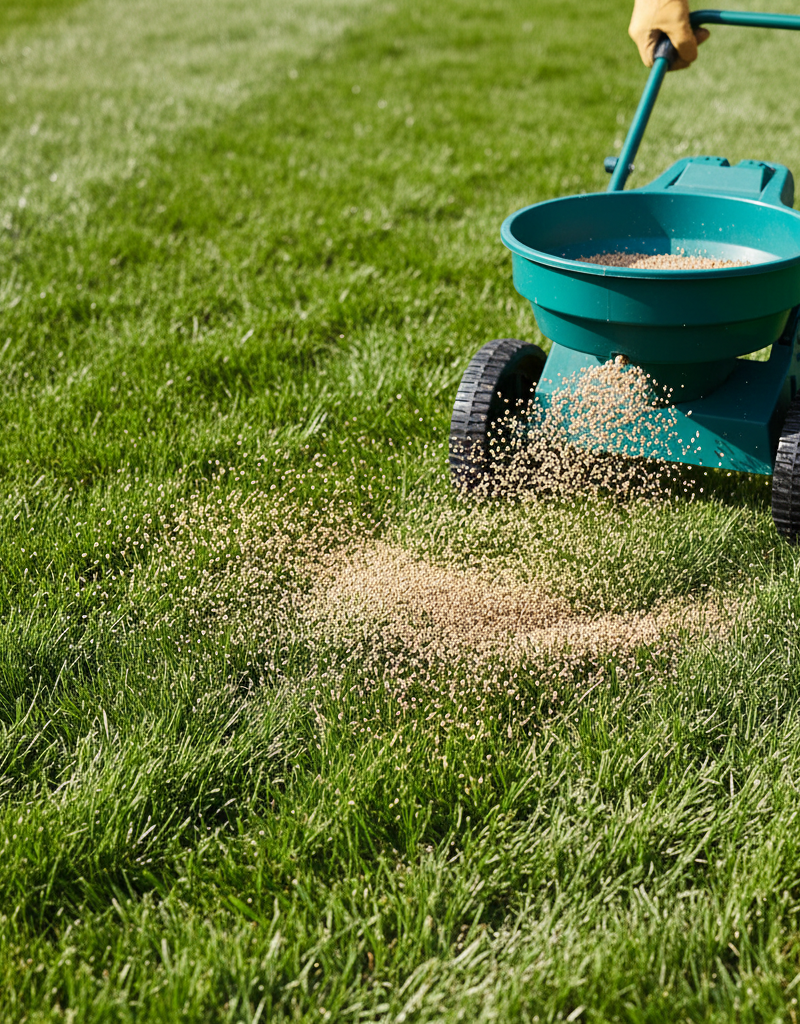
- Calculate Coverage: Use a spreader for even distribution. Refer to the seed bag for coverage rates; applying too much or too little is detrimental.
- Cross-Hatch Pattern: Spread half the seed walking in one direction, then the other half walking perpendicular. This ensures even coverage.
- Lightly Rake In: Gently rake the seed into the top 1/4 inch of soil. Don't bury it too deep, or it won't germinate. You should still see some seeds on the surface.
- Roll (Optional): Lightly roll the area with a lawn roller to ensure good seed-to-soil contact.
6. Provide Consistent Moisture — Critical for germination.
- Frequent, Light Watering: For the first 2-3 weeks (or until established), water 2-3 times a day for 5-10 minutes. The goal is to keep the top inch of soil consistently moist, not soggy. The seed must not dry out.
- Avoid Runoff: If water starts to pool or run off, stop and let it absorb before continuing. Adjust sprinkler heads for even coverage.
- Safety Note: Be mindful of slippery surfaces when watering. Always turn off power to any outdoor electrical outlets/fixtures before working near them with water.
7. Protect & Nurture — Give your new lawn a fighting chance.
- Limit Traffic: Stay off newly seeded areas as much as possible to avoid disturbing the seeds or tender sprouts.
- Fertilize Carefully: Use a 'starter fertilizer' (high in phosphorus) if recommended by your soil test, but apply sparingly and evenly. Avoid high-nitrogen fertilizers until the grass is established.
- First Mow: Wait until the grass is at least 3-4 inches tall. Set your mower to the highest setting and only remove the top third of the blade. Ensure blades are sharp to prevent tearing.
Common Causes
- Incorrect Grass Type for Conditions: The primary culprit. Using a cool-season grass in a hot, sunny southern climate or a sun-loving warm-season grass in deep shade will always result in failure.
- Poor Seed-to-Soil Contact: If seeds are left entirely on the surface, they dry out, blow away, or get eaten by birds. If buried too deep, they can't sprout.
- Inadequate Watering: New seeds NEED consistent moisture. Letting the seedbed dry out even once during germination can kill the entire crop. Conversely, overwatering can wash away seeds or lead to fungal issues.
- Soil Compaction or Poor Drainage: Roots need air and space to grow. Compacted soil prevents this, while poor drainage leads to waterlogged conditions that suffocate roots.
- Nutrient Deficiencies or pH Imbalance: Without the right balance of macro and micronutrients, or if the soil pH is too far outside the ideal range, grass simply cannot thrive, even with water and light.
- Pests or Disease: While less common for initial germination failure, young sprouts can be susceptible to damping-off disease (a fungal issue) or insect damage.
Common Mistakes
- Buying 'One Size Fits All' Seed: Generic seed blends rarely account for your specific climate, sun exposure, or soil, leading to disappointing results. Always choose a blend tailored to your site.
- Skipping the Soil Test: Guessing your soil's pH and nutrient levels is a recipe for wasted effort and money. A soil test is inexpensive and provides invaluable data for successful growth.
- Burying Seed Too Deep: Grass seeds are tiny and need light to germinate (or at least to not be too deep). Raking them in more than 1/4 inch or covering them with too much topsoil can prevent sprouting.
- Inconsistent Watering: New seeds are like newborns; they need constant, gentle care. Allowing the seedbed to dry out completely, even for a few hours on a hot day, can be fatal to emerging seedlings.
- Fertilizing Incorrectly: Using a weed-and-feed product on new seed will kill it. Using too much 'starter' fertilizer, or applying it unevenly, can burn young sprouts. Always follow instructions precisely.
- Ignoring Weeds Before Seeding: Letting existing weeds compete for water, nutrients, and sunlight will severely hinder your new grass's ability to establish. Clear the area thoroughly first.
Cost & Time Breakdown
| Task | DIY cost | Pro cost | Time |
|---|---|---|---|
| Soil Test | $15–$30 | Included | 10–15 min |
| Soil Amendments (compost, etc.) | $20–$100 | $50–$250 | 1–3 hours |
| Quality Grass Seed | $30–$150 | Included | 30–60 minutes |
| Spreader rental (if needed) | $15–$25/day | Included | N/A |
| Initial Watering & Care | $0 (water bill) | Included | 2–3 weeks daily |
| Professional Lawn Seeding | N/A | $300–$1000+ | 1–2 days prep |
Tips & Prevention
- Test Your Soil Annually: Make soil testing a routine part of your lawn care to catch deficiencies or imbalances early and adjust your approach.
- Overseed in Fall: For cool-season grasses, late summer to early fall (mid-August to mid-October) is generally the best time to overseed. For warm-season grasses, late spring to early summer is ideal. Soil temperatures are perfect, and competition from weeds is lower.
- Improve Drainage: If you have consistently soggy areas, consider core aeration or incorporating organic matter (like compost) to improve soil structure and drainage before planting.
- Mow High: Once established, keep your grass blades longer (3-4 inches). Taller grass shades the soil, retains moisture, and promotes deeper root growth, making it more robust and weed-resistant.
- Water Deeply, Less Frequently: Once established, train your lawn to be drought-tolerant by watering deeply (1 inch per week) but less often. This encourages deeper root growth.
- Choose Certified Seed: Look for seed with a
Related Articles
Keep troubleshooting with these hand-picked guides from FixlyGuide:
- The Hidden Reason Your GFCI Trips (It's Not Always a Faulty Outlet) — A continuously tripping GFCI outlet is a critical safety warning, often indicating moisture, a faulty appliance, or a wiring problem that r…
- The Secret to Lush Raised Beds? It's Not Just About How You Water — Smart irrigation for raised garden beds isn't just about automation; it's about delivering the right amount of water precisely when your pl…
- The 5-Minute Trick to Vacation-Proof Your Garden (Before You Leave Town) — Prevent your garden from wilting while you're away with simple, proactive steps that ensure lush growth and minimal fuss upon your return.
- The Secret to Scoring Deep Grill Discounts (Before Everyone Else Does) — Unlock massive savings on top-brand grills and outdoor cooking essentials by understanding the overlooked retail inventory cycles before Me…
- The Hidden Reason Your GFCI Trips (It’s Not Always a Bad Outlet) — A tripping GFCI outlet is a safety mechanism doing its job, often indicating a problem like moisture, a faulty appliance, or a wiring issue…
- The #1 Mistake Killing Your Thin Lawn (and How to Fix It in a Weekend) — Overseeding a thin lawn is crucial for a lush yard, but a common mistake can ruin your efforts before they even begin. Learn how to diagnos…
What should this project cost?
Enter your project details for a realistic cost range before you call anyone.
Cost depends heavily on which system turns out to be the source.
- Regional adjustment
- National average
- Labor share (typical)
- ~$1,620
- Quotes to collect
- 3 written estimates
Educational estimate based on national averages — not a binding quote. Always confirm with written local estimates.
This article was independently written by FixlyGuide based on the source topic.
Frequently asked questions
How often should I water new grass seed?+
New grass seed needs consistent moisture. Water 2-3 times a day for 5-10 minutes each time, keeping the top inch of soil continuously moist but not soggy, until the grass is established (2-3 weeks).
Can I put too much grass seed down?+
Yes, putting down too much grass seed can hinder growth. Overcrowding leads to competition for water, nutrients, and light, resulting in weaker, disease-prone grass. Follow the recommended coverage rates on the seed bag using a spreader for even distribution.
What temperature is best for grass seed to grow?+
For cool-season grasses (like fescue, bluegrass), soil temperatures between 50-65°F (10-18°C) are ideal. For warm-season grasses (like Bermuda, Zoysia), soil temperatures between 65-80°F (18-27°C) are best. Air temperature is less critical than soil temperature for germination.
Why didn't my grass seed germinate at all?+
Common reasons for no germination include improper seed-to-soil contact (seeds left on surface or buried too deep), inconsistent watering (drying out), wrong grass type for conditions, or poor soil quality (pH imbalance, compaction). A soil test can identify underlying issues.
When is the best time of year to plant grass seed?+
For cool-season grasses, late summer to early fall (mid-August to mid-October) is generally ideal. For warm-season grasses, late spring to early summer (when soil temperatures are consistently warm) is best. These periods offer optimal soil temperatures and less weed competition.

Discussion
Loading comments…