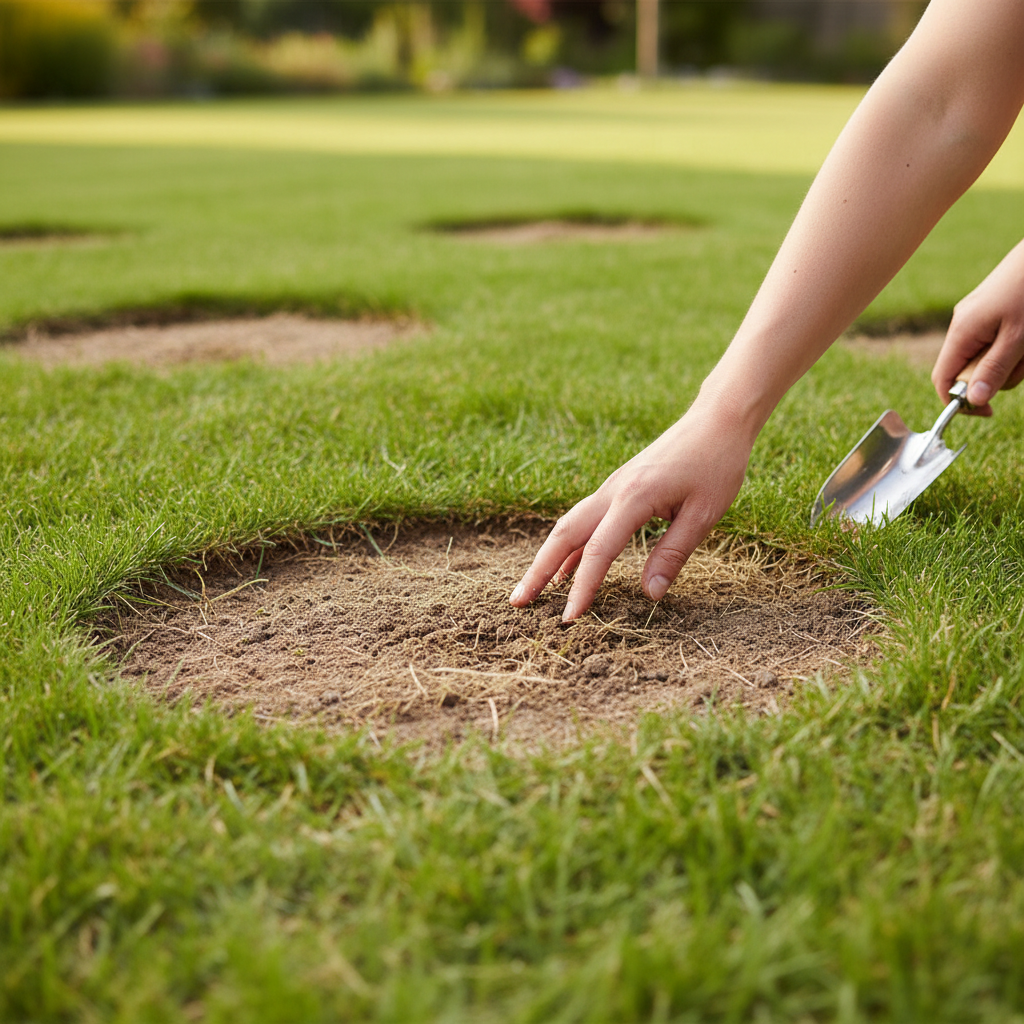
- Diagnose the Problem Area — Take a closer look at the patches.
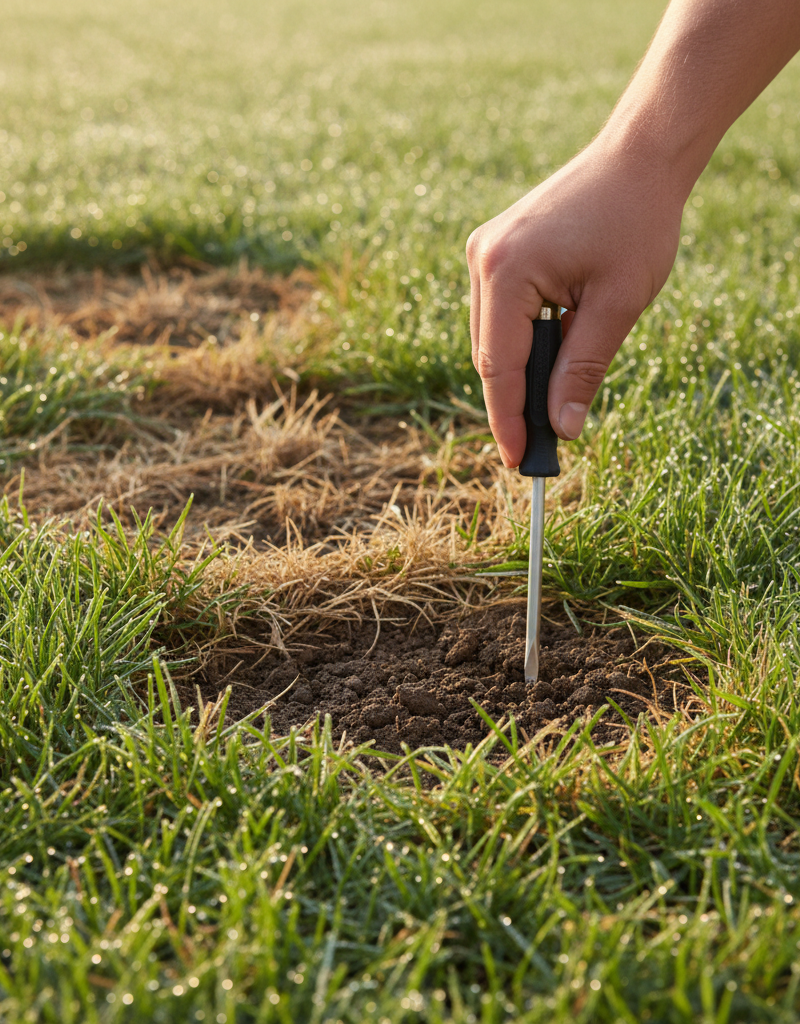
- Is the soil hard? Try pushing a screwdriver or a small spade into the bare spot. If it's difficult to penetrate more than a few inches, you likely have compacted soil.
- What do the existing grass blades look like near the patch? Are they discolored (yellow, brown, purple)? Do they pull up easily? Are there visible insects or strange spots/growths?
- Is there heavy foot traffic in this area? Observe how the area is used. High traffic areas are prone to compaction.
- Consider sun exposure and drainage. Does the area get too much sun, too little, or does water pool there after rain?
Landscaping · Deck or fence project
| Project category | Landscaping |
|---|---|
| Problem type | Deck or fence project |
| Trade required | Landscaping |
| Urgency | Planned project |
| Safety risk | Moderate safety risk |
| DIY suitability | DIY for experienced homeowners |
| Cost category | High cost |
| Typical timeline | Most builds 3–10 days depending on size |
| Contractor type | Landscaping contractor |
Repair option
Replace failed boards, posts, and hardware; reseal the surface.
Replacement option
Rebuild when framing or the ledger connection is unsafe.
Common causes
- Rot at posts and ledger
- Storm damage
- Adding outdoor living space
Relevant tools:home improvement material pricesproject cost estimator
Published May 24, 2026Last updated August 17, 2026
Tools & materials you'll need
Affiliate linksAs an Amazon Associate FixlyGuide earns from qualifying purchases — at no extra cost to you. Prices and availability are accurate as of publication and subject to change.
Quick Answer
Patchy grass in your lawn often indicates a deeper problem than just needing more seed. The most common culprits are compacted soil, uneven nutrient distribution, or localized pest and disease activity. Effective solutions involve dethatching and aerating to improve soil health, conducting a soil test to guide fertilization, and identifying specific pests or fungi for targeted treatment. Integrating these steps with proper watering and overseeding will ensure a lush, uniform lawn.
The Problem
Few things detract from a home's curb appeal like a lawn marred by bare spots and struggling grass. What starts as a small, isolated patch can quickly spread, creating an unsightly mosaic of green and brown. This isn't just an aesthetic issue; patchy grass signals an unhealthy lawn, prone to weeds, increased water runoff, and a diminished ability to withstand environmental stress. Homeowners often try to solve this by simply spreading more grass seed, only to find the new growth struggles or the patches return, revealing a deeper underlying issue.
The frustration mounts when repeated attempts at overseeding yield meager results. The bare spots persist, the grass looks weak, and the dream of a vibrant, verdant lawn seems out of reach. Understanding why specific areas of your lawn are failing while others thrive is the first critical step. Is it a drainage problem? A silent pest? Or perhaps the very soil beneath your feet is the hidden enemy? This article will guide you through diagnosing the real causes and implementing lasting solutions.
How It Works
A healthy lawn is a complex ecosystem, and patchy grass is a symptom of a disruption within this system. At its core, grass needs four things to thrive: sunlight, water, nutrients, and air. When any of these are insufficient or improperly delivered to a specific area, that grass will struggle, thin, or die, leading to patches.
Soil Structure: The foundation of a healthy lawn is its soil. Ideal soil has a balanced composition of sand, silt, and clay, along with organic matter. Critically, it should have good porosity – tiny air pockets that allow roots to breathe, water to penetrate, and nutrients to be absorbed. Compacted soil, often caused by heavy foot traffic, lawn equipment, or poor drainage, has minimal air pockets. Roots suffocate, and water struggles to infiltrate, leading to localized drought stress or waterlogging.
Nutrient Availability: Grass, like all plants, requires essential macronutrients (nitrogen, phosphorus, potassium) and micronutrients (iron, magnesium, etc.) for growth. Nitrogen promotes lush green growth, phosphorus aids root development, and potassium enhances overall plant health and resilience. If certain areas of your soil are deficient in these nutrients, or if the soil pH is too acidic or alkaline, the grass cannot absorb them effectively, resulting in weak, discolored, or sparse growth.
Pests and Diseases: A multitude of biological agents can cause patchy grass. Insect pests like grubs (larvae of beetles) feed on grass roots, destroying them from below. Chinch bugs suck sap from grass blades, causing yellowing and eventual death. Fungal diseases (like brown patch, dollar spot, or rust) often manifest as circular or irregular dead patches, especially in warm, humid conditions or when grass is stressed. These pathogens thrive under specific environmental conditions, often exacerbated by improper watering or fertilization, leading to localized damage.
Weed Competition: Weeds don't cause patches directly, but they exploit them. Once grass thins, weeds quickly colonize the bare soil, outcompeting new grass seedlings for resources and further hindering recovery. This creates a vicious cycle where patches become more established and harder to reverse without intervention.
Understanding these underlying mechanisms is crucial for moving beyond temporary fixes and implementing solutions that address the root cause of your patchy lawn.
Step-by-Step Fix
Safety Note: Always wear appropriate personal protective equipment, including gloves and eye protection, when handling fertilizers, pesticides, or operating power tools. Read and follow all manufacturer instructions for chemicals and equipment.
-
Diagnose the Problem Area — Take a closer look at the patches.
- Is the soil hard? Try pushing a screwdriver or a small spade into the bare spot. If it's difficult to penetrate more than a few inches, you likely have compacted soil.
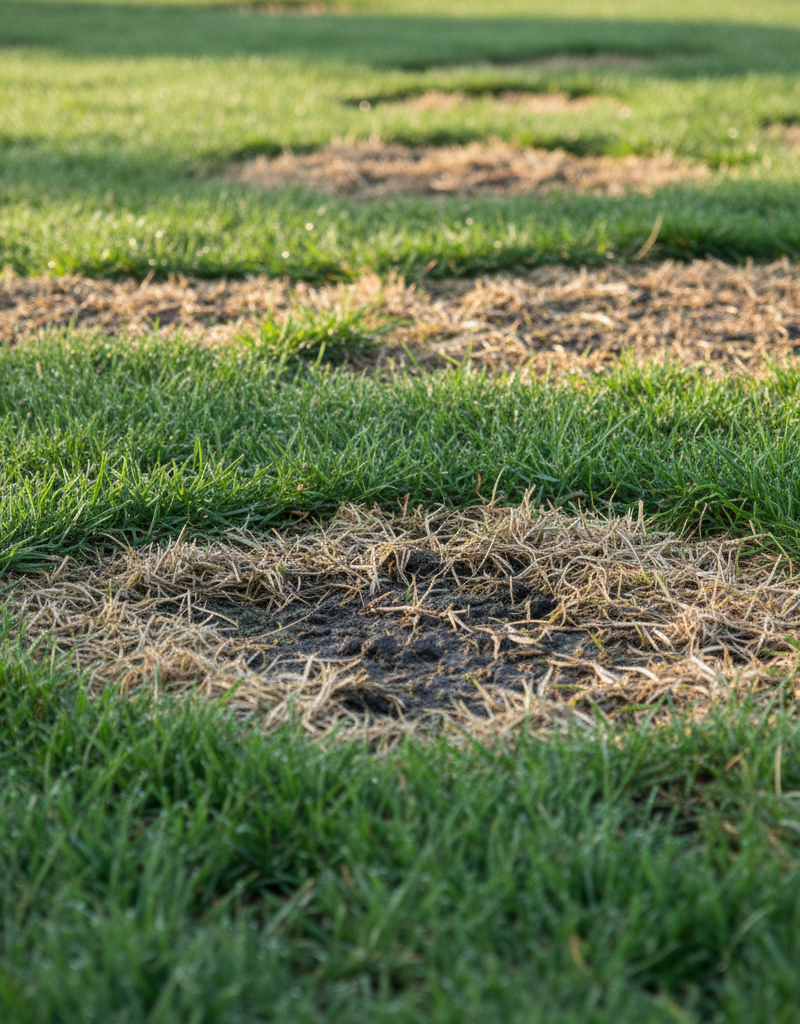
- What do the existing grass blades look like near the patch? Are they discolored (yellow, brown, purple)? Do they pull up easily? Are there visible insects or strange spots/growths?
- Is there heavy foot traffic in this area? Observe how the area is used. High traffic areas are prone to compaction.
- Consider sun exposure and drainage. Does the area get too much sun, too little, or does water pool there after rain?
-
Conduct a Soil Test — Understand your soil's nutritional profile and pH.
- Purchase a home soil test kit from a garden center or send a sample to your local university extension office for a more detailed analysis. They will tell you about nutrient levels and pH.
- Why it works: This is the only way to know precisely what nutrients your soil is lacking and if its pH is suitable for grass (typically 6.0-7.0 for most turf types).
- If the test shows nutrient deficiency: Amend with a fertilizer specifically tailored to your soil report.
- If the pH is off: Apply lime (to raise pH in acidic soil) or granular sulfur (to lower pH in alkaline soil) according to the soil test recommendations. Apply in stages, not all at once.
-
Dethatch and Aerate Compacted Areas — Improve air, water, and nutrient penetration.
- Dethatching: If you have more than 1/2 inch of thatch (a spongy layer of dead grass between the soil surface and green blades), use a dethatching rake or machine to remove it. Thatch prevents water and nutrients from reaching the soil.
- Aeration: For compacted areas, use a core aerator (rentable from tool rental centers) to pull out small plugs of soil. This creates channels for air, water, and nutrients to reach the root zone. You can also use manual spike aerators for very small patches, but core aeration is more effective.
- Timing: Dethatch and aerate when your grass is actively growing (late spring or early fall for cool-season grasses; late spring to early summer for warm-season grasses).
-
Address Pest or Disease Issues — Treat specific biological threats.
- Grubs: If you find C-shaped white grubs in the soil when digging, apply a granular grub control product containing imidacloprid or trichlorfon. Water thoroughly after application. Best applied in late summer or early fall when grubs are small.
- Chinch Bugs: Look for them at the border of dying and healthy grass. They are tiny (1/8-inch), black with white wings. Treat with an insecticide specifically for chinch bugs, such as those with bifenthrin or carbaryl as the active ingredient.
- Fungal Diseases (e.g., Brown Patch): Look for circular patches of thinning, browning grass. Often, fungal disease is precipitated by overwatering or watering in the evening. Apply a granular or liquid fungicide according to product instructions. Consider adjusting your watering schedule to mornings to allow grass to dry.
- If unsure: Take a sample of affected grass and soil to a local nursery or extension office for expert identification.
-
Prepare the Patch for Seeding — Create an optimal environment for new grass.
- Rake out any dead grass, debris, or weeds from the bare spot. Gently loosen the top 1-2 inches of soil with a hand trowel or rake.
- Apply a thin layer (about 1/4 inch) of good quality topsoil or compost to the prepared area. This provides a rich medium for seeds to germinate.
-
Select and Apply Grass Seed — Choose the right seed and spread it correctly.
- Choose the right seed type: Select a grass seed variety that matches your existing lawn and local climate conditions (e.g., cool-season fescue/rye/bluegrass or warm-season Bermuda/Zoysia). Consider a
Related Articles
Keep troubleshooting with these hand-picked guides from FixlyGuide:
- The #1 Mistake Killing Your Lawn's Grass (and 3 Simple Fixes) — Patchy grass can ruin your lawn's appearance, but often the cause is a common mistake that's easy to correct with the right approach.
- The #1 Mistake Killing Your Lawn's Thatch (And How to Fix Patchy Grass) — Patchy grass often stems from an overlooked problem: excessive thatch. Learn how to diagnose and correct thatch issues to restore a healthy…
- The #1 Summer Lawn Mistake Turning Your Grass Yellow (It's Not Overwatering) — Discover the most common, often overlooked reason your summer lawn is turning yellow despite your best efforts, and learn how to fix it.
- The #1 Mistake Killing Your Lawn's Grass (and How to Fix Patchy Spots) — Discover the most common reason for patchy grass and learn how to revive your lawn with targeted, easy-to-follow steps.
- The #1 Reason Your Sprinkler Head Won't Pop Up (And It's Not Clogging) — Discover the most common, often overlooked reason your sprinkler head isn't popping up and how to fix it with simple steps.
- The Secret Culprit Behind Your Leaky Refrigerator (It’s Not Always the Water Line) — Discover the most common, often overlooked, reasons your refrigerator is leaking water and how to fix them with simple DIY steps.
Should you do this yourself?
Answer five quick questions before you start. Safety outranks savings every time.
Your experience with work like this
How high do you have to work?
Does the job involve any of these?
Will it need a permit?
Specialty tools
Free and instant. Educational guidance only — not a quote, inspection, or professional diagnosis.
What should this project cost?
Enter your project details for a realistic cost range before you call anyone.
Cost depends heavily on which system turns out to be the source.
- Regional adjustment
- National average
- Labor share (typical)
- ~$1,620
- Quotes to collect
- 3 written estimates
Educational estimate based on national averages — not a binding quote. Always confirm with written local estimates.
Before you start
Check the difficulty, permits, and safety risk — then decide whether to call a pro.
- Estimate this projectGet a cost range for your scope and ZIP before you call anyone.Open
- Get local estimatesSend one request and compare written estimates from vetted pros.Open
Free, no signup required. Estimates are educational guidance, not a quote or an inspection.
Get the print-ready PDF of this guide
A clean, ad-free, printable version you can keep on your phone or pin to the workshop wall. Free with a FixlyGuide account.
- Print-optimized layout
- Tools, materials & every step included
- Saved to your account
Frequently asked questions
How do you get rid of patchy grass?+
Getting rid of patchy grass involves a multi-step approach: first, diagnose the underlying cause (e.g., compacted soil, nutrient deficiency, pests, or disease) through observation and soil testing. Then, address that cause by dethatching and aerating, applying appropriate fertilizers or soil amendments, or treating specific pests/diseases. Finally, prepare the area and overseed with the correct grass type, ensuring consistent watering for germination and establishment.
Why is my grass suddenly getting patchy?+
Sudden patchiness in grass can be attributed to several factors. It could be due to a sudden outbreak of a fungal disease that spreads quickly under specific weather conditions (e.g., extended humidity). It might also be the result of insect pests like grubs or chinch bugs reaching destructive populations. Chemical spills (like gasoline or harsh fertilizers applied incorrectly) or concentrated pet urine can also cause rapid patch development.
Will new grass grow on bare patches?+
New grass will grow on bare patches, but only if the underlying conditions are favorable. Simply sprinkling seeds on compacted, nutrient-poor, or pest-infested soil will likely fail. You must first address the issues that killed the original grass or prevented it from thriving. Once the soil is healthy, properly prepared, and free of competing factors, new grass seed has an excellent chance of germinating and establishing.
Can I just put topsoil over patchy grass?+
While adding a thin layer of topsoil or compost can improve soil quality and provide a better bed for new seeds, it's generally not enough on its own. You need to first identify and rectify the root cause of the patchiness, such as compaction, nutrient deficiencies, or pests. After addressing these issues, applying topsoil is an excellent final step before overseeding to give new grass the best start.

Discussion
Loading comments…