- Get a Soil Test — Don’t skip this. Seriously.
- You can buy a DIY kit at a hardware store, or better yet, call your local university extension office. They often do full soil tests for a small fee, maybe $15-$25. That’ll tell you what your soil’s missing and what the pH looks like.
- Why it matters: Without this, you’re guessing. You might be throwing fertilizer at nutrients the soil already has, or making an imbalance worse. A soil test tells you if you need more phosphorus, or if the pH is off and needs limestone.
Landscaping · Deck or fence project
| Project category | Landscaping |
|---|---|
| Problem type | Deck or fence project |
| Trade required | Landscaping |
| Urgency | Planned project |
| Safety risk | Moderate safety risk |
| DIY suitability | DIY for experienced homeowners |
| Cost category | High cost |
| Typical timeline | Most builds 3–10 days depending on size |
| Contractor type | Landscaping contractor |
Repair option
Replace failed boards, posts, and hardware; reseal the surface.
Replacement option
Rebuild when framing or the ledger connection is unsafe.
Common causes
- Rot at posts and ledger
- Storm damage
- Adding outdoor living space
Relevant tools:home improvement material pricesproject cost estimator
Published July 24, 2026Last updated August 17, 2026
Tools & materials you'll need
Affiliate links- Amazongranular lawn fertilizerspecific NPK ratio based on soil test and grass type
As an Amazon Associate FixlyGuide earns from qualifying purchases — at no extra cost to you. Prices and availability are accurate as of publication and subject to change.
Quick Answer
Getting your lawn fertilizer timing right isn’t just about tossing granules around and calling it a day. It’s about knowing your grass type and what phase it’s in. Up north, with cool-season grasses like fescue or rye, I usually tell folks the best window is early fall—think September to early October—and then a lighter feeding in early spring, around March or April. Down south, with warm-season stuff like Zoysia or Bermuda, you’re looking at late spring, once soil temps stay at a solid 65°F (usually late April to June), and then another round in late summer. Miss that timing and you’re wasting product, plain and simple — maybe even burning the lawn while you’re at it.
The Problem
I’ve seen this one a hundred times. Somebody buys a bag of 'winterizer' in August, or they dump a heavy dose of nitrogen on the yard right before a July heatwave. They mean well, sure, but they’re setting the lawn up to fail. Fertilizing at the wrong time is like giving a sleepy kid a double espresso—it just throws everything out of whack. You get weak growth, more disease and pest trouble, and, yeah, sometimes a straight-up burned lawn. That’s frustrating for the homeowner, and it’s money down the drain. I remember one summer in Fayetteville, a guy called me out because his Bermuda lawn looked like straw. He’d laid down a heavy shot of high-nitrogen fertilizer in late June, then left town for two weeks and missed the watering. That thing was toast.
How It Works
To really get a handle on fertilizing right, you’ve gotta understand how grass grows and what fertilizer is actually doing. Think of your grass plants—yeah, they’re plants!—as having their own little growth spurts. Cool-season grasses, the ones that hang on through cooler weather, do most of their root and shoot growth in the spring and especially in the fall. In the hot summer months, they’re basically just trying to survive; they go semi-dormant. Warm-season grasses, on the other hand, love the heat. They really wake up when soil temperatures consistently climb above 60-65°F and keep growing hard all summer. Then they slow down and eventually go dormant when cold weather shows up.
Fertilizer isn’t magic dust. It’s mainly nitrogen (N), phosphorus (P), and potassium (K)—the NPK ratio you see printed on every bag. Nitrogen drives green, leafy growth; phosphorus helps with roots and overall plant health; potassium helps the grass deal with stress, like drought and disease. When you apply fertilizer, the roots pull those nutrients out of the soil. If you give nitrogen to cool-season grass when it’s trying to shut down for summer, you push tender new growth that can’t take the heat. That stresses the plant. Put it on warm-season grass in the dead of winter, and it just sits there, leaching away or washing off where it does no good. I pulled a water heater in Frisco last month that had exactly this same “it’ll be fine” logic behind it—wrong tool, wrong timing, wrong result. Same story in the yard. Once you get these growth cycles straight, you’re working with the lawn instead of fighting it.
Step-by-Step Fix
Getting your lawn on a decent feeding schedule isn’t rocket science, but it does take a little planning. Here’s how I’d break it down for homeowners.
-
Know Your Grass Type — This is step one. No way around it.
- Take a good look at the lawn. Is it fine-bladed and still green late into fall, even when winter’s trying to show up? You probably have cool-season grass (fescue, rye, bluegrass). Does it go brown with the first hard frost, then take off like crazy when the heat hits? That’s usually warm-season grass (Bermuda, Zoysia, St. Augustine).
- Pro Tip: If you’re not sure, grab a handful of blades and take it to your local garden center. Usually somebody there can tell you pretty quick.
-
Get a Soil Test — Don’t skip this. Seriously.
- You can buy a DIY kit at a hardware store, or better yet, call your local university extension office. They often do full soil tests for a small fee, maybe $15-$25. That’ll tell you what your soil’s missing and what the pH looks like.
- Why it matters: Without this, you’re guessing. You might be throwing fertilizer at nutrients the soil already has, or making an imbalance worse. A soil test tells you if you need more phosphorus, or if the pH is off and needs limestone.
-
Cool-Season Grass: Early Fall is Primo — This is the big feeding.
- Around September to early October, when daytime temps are holding in the 60s and 70s°F, hit the lawn with a good balanced slow-release fertilizer. Something like a 16-4-8 or 12-12-12 analysis.
- Purpose: This one builds roots for winter and helps the grass store energy. It’ll come back strong and green next spring.
-
Cool-Season Grass: Early Spring Wake-Up Call — A lighter touch after winter.
- Late March to April, when the forsythias are blooming and the lawn’s starting to green up on its own, apply a lighter dose of a somewhat higher nitrogen fertilizer. Maybe a 20-0-10.
- Caution: Don’t get heavy-handed with nitrogen in spring. Too much can push top growth instead of roots, and that makes the grass weaker when summer stress rolls in.
-
Warm-Season Grass: Late Spring Kick-Off — Once the heat really sets in.
- Wait until your warm-season lawn is fully out of dormancy and actively growing, usually late April through June, when soil temperatures stay above 65°F consistently. That’s your green light.
- What to use: Look for a fertilizer with a lower first number (nitrogen) and relatively higher potassium for stress tolerance, like a 15-5-10 or even a 5-1-2 if your soil test recommends it.
-
Warm-Season Grass: Mid-Summer Boost (Optional, but often beneficial) — Just enough to keep it rolling.
- If the lawn is actively growing and looks like it needs a little help in July or early August, you can give it another light dose. This isn’t a heavy feeding; think maintenance, not a full banquet.
- Key: Keep it light so you don’t push tender growth into the worst of the summer heat. A slow-release product is your friend here.
-
Read the Bag (Seriously!) — They print those directions for a reason.
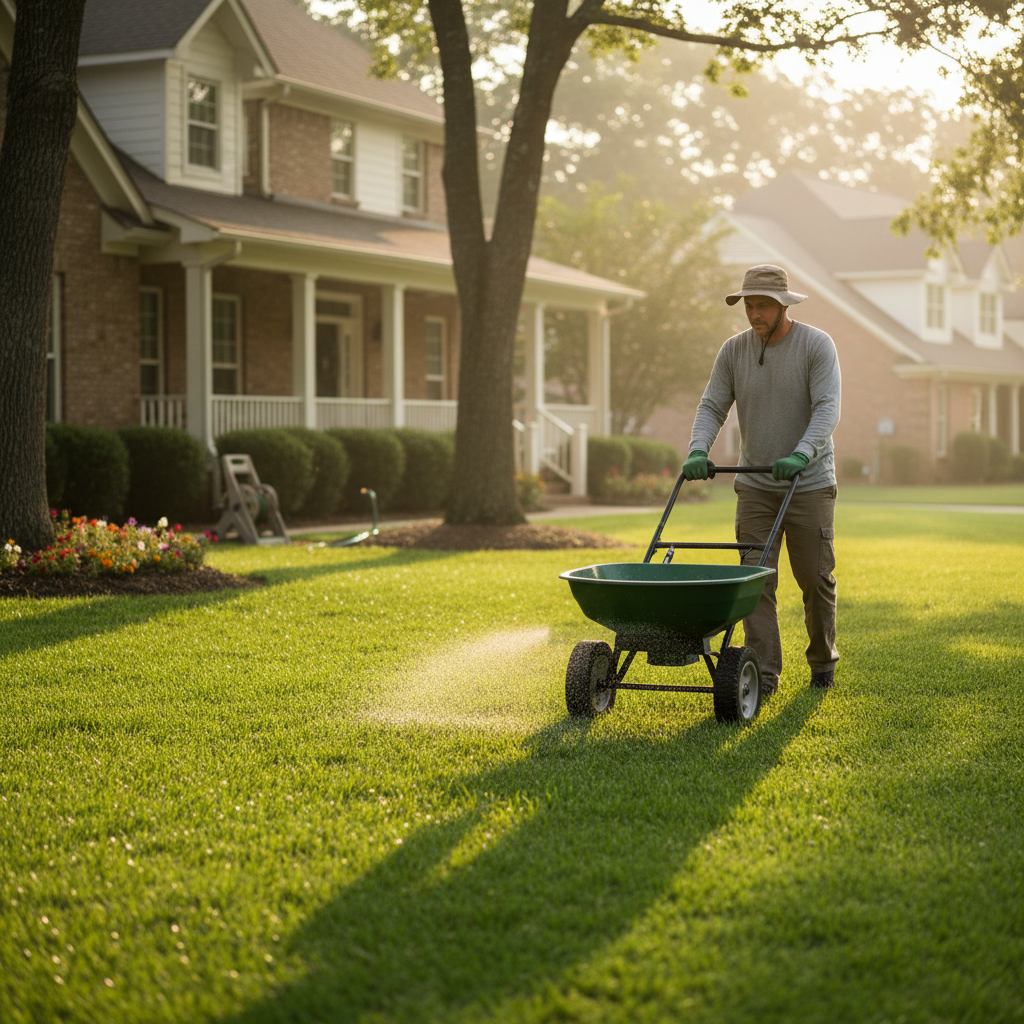
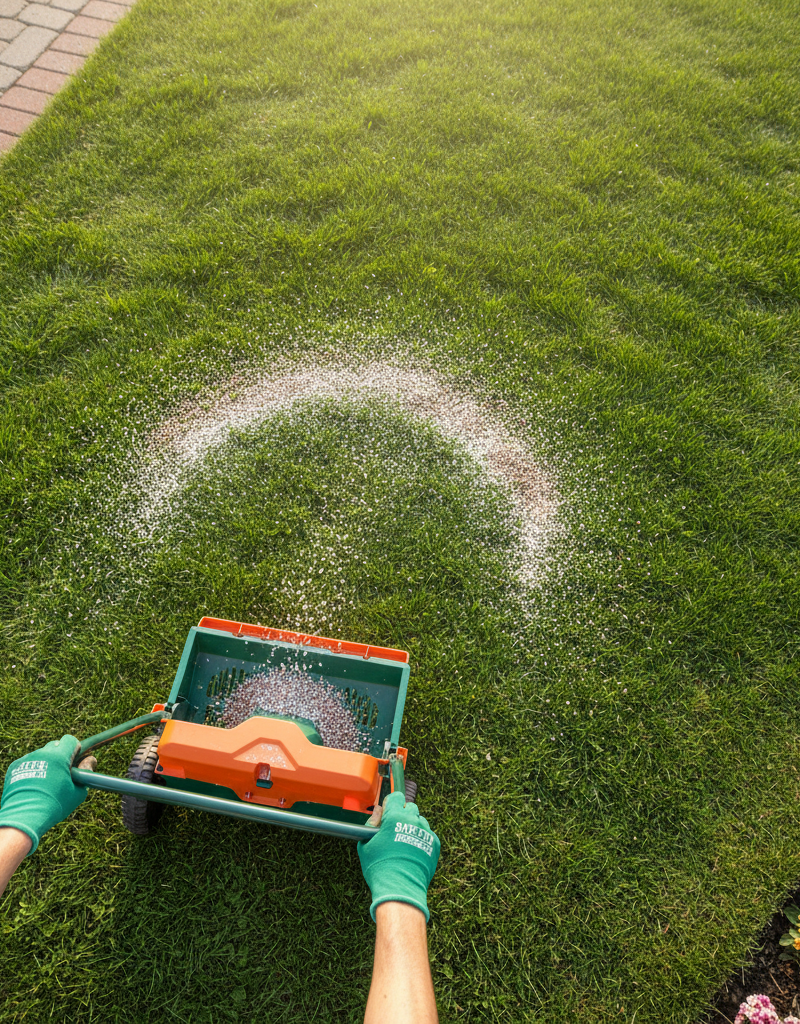
- Every fertilizer bag has a specific application rate. Don’t eyeball it. Use a spreader, set it right, and walk at a steady pace.
- Spreader types: A broadcast spreader is quicker for big lawns; a drop spreader gives you tighter control on smaller spaces or around flowerbeds.
-
Water it In — Don’t leave granules sitting on the blades.
- After fertilizing, water the lawn well. That moves the granules down to the soil where the roots can grab them and rinses fertilizer off the grass blades so you don’t get burn.
- Timing: Aim for about 1/2 inch of water. If rain isn’t coming, fire up the sprinklers for 20-30 minutes.
Common Causes
- Misidentifying Grass Type: This is the biggest rookie mistake, hands down. You can’t fertilize right if you don’t know what kind of grass you’ve got. Cool-season vs. warm-season makes all the difference.
- Ignoring Soil Temperature: Applying too early or too late, especially on warm-season grass. That soil needs to be consistently warm before the plant can really use the nutrients. Throwing fertilizer down when the soil’s still cold is just asking for trouble.
- Over-fertilizing: More isn’t better. Too much nitrogen can burn the lawn, build up too much thatch, and make disease more likely. Stick to the bag rates, and back off a bit if your soil test says the yard’s already in decent shape.
- Wrong NPK Ratio: Using a
Related Articles
Keep troubleshooting with these hand-picked guides from FixlyGuide:
- The #1 Landscape Edging Mistake Most Homeowners Make (And How to Fix It in a Weekend) — Learn to install durable, professional-grade landscape edging around your flower beds, avoiding common pitfalls for a neat, long-lasting lo…
- The #1 Mistake Killing Your Lawn (And How to Eradicate Clover Safely) — Discover the secret to a clover-free lawn without resorting to harsh chemicals that harm your grass, ensuring a lush, green yard year-round.
- The #1 Lawn Aeration Mistake Most Homeowners Make (And How to Time It Right) — Timing your lawn aeration correctly is crucial for maximizing its benefits and ensuring a healthier, more resilient lawn.
- The #1 Lawn Aeration Mistake Most Homeowners Make (And How to Fix It) — Timing is everything when it comes to lawn aeration, and doing it at the wrong time can do more harm than good for your grass.
- The #1 Timing Mistake Most Homeowners Make with Pre-Emergent Weed Control — Learn the critical timing of pre-emergent weed control application to prevent frustrating weed invasions and maintain a pristine lawn.
- The #1 Deck Sealing Mistake Most Homeowners Make (And How to Fix It) — Discover the most common error in deck sealing that leads to premature wear and how to correct it for lasting protection.
Should you do this yourself?
Answer five quick questions before you start. Safety outranks savings every time.
Your experience with work like this
How high do you have to work?
Does the job involve any of these?
Will it need a permit?
Specialty tools
Free and instant. Educational guidance only — not a quote, inspection, or professional diagnosis.
What should this project cost?
Enter your project details for a realistic cost range before you call anyone.
Cost depends heavily on which system turns out to be the source.
- Regional adjustment
- National average
- Labor share (typical)
- ~$1,620
- Quotes to collect
- 3 written estimates
Educational estimate based on national averages — not a binding quote. Always confirm with written local estimates.
Before you start
Check the difficulty, permits, and safety risk — then decide whether to call a pro.
- Estimate this projectGet a cost range for your scope and ZIP before you call anyone.Open
- Get local estimatesSend one request and compare written estimates from vetted pros.Open
Free, no signup required. Estimates are educational guidance, not a quote or an inspection.
Get the print-ready PDF of this guide
A clean, ad-free, printable version you can keep on your phone or pin to the workshop wall. Free with a FixlyGuide account.
- Print-optimized layout
- Tools, materials & every step included
- Saved to your account
Frequently asked questions
When is the absolute best time to fertilize cool-season grass?+
For cool-season grasses like fescue or Kentucky bluegrass, the absolute best time for a primary feeding is early fall, typically September to early October. This strengthens roots and helps the lawn recover from summer stress, preparing it for winter.
Can I fertilize my lawn in summer?+
It depends on your grass type. For cool-season grasses, very light fertilization is okay in early summer, but avoid heavy applications during peak heat. Warm-season grasses, however, are actively growing in summer and can benefit from a mid-summer feeding.
What happens if I fertilize at the wrong time?+
Fertilizing at the wrong time can lead to several problems: your grass might burn, develop weak growth, become more susceptible to diseases and pests, or the fertilizer could simply leach away instead of being absorbed, wasting money.
How often should I fertilize my lawn?+
Most healthy lawns benefit from 2-4 applications per year, depending on grass type and climate. A soil test will give you the most accurate recommendations for your specific lawn's needs.
Should I water my lawn after fertilizing?+
Yes, absolutely! Watering immediately after fertilizing helps move the granules down to the soil, where the roots can absorb them. It also washes any fertilizer off the grass blades, preventing potential burn.
What's the difference between cool-season and warm-season grasses?+
Cool-season grasses (fescue, rye, bluegrass) thrive in cooler temperatures and stay green in fall and spring. Warm-season grasses (Bermuda, Zoysia, St. Augustine) love heat, grow actively in summer, and go dormant (brown) in winter.
Is it better to fertilize in the morning or evening?+
It's generally best to fertilize in the morning when the grass is dry, and there's less wind. This allows you to water it in thoroughly before the heat of the day, reducing the risk of burn and ensuring even distribution before evening dew sets in.
Do I need a soil test every year?+
While not strictly necessary every single year, I recommend getting a soil test every 2-3 years. This helps you track changes in your soil's nutrient levels and pH, allowing you to fine-tune your fertilizing strategy for optimal results and avoid unnecessary applications.

Discussion
Loading comments…