
- Check Your Watering Schedule – Are you watering deep and infrequent?
- Tool Tip: Grab a cheap rain gauge from the garden store, or just use a tuna can.
- If this doesn't work: Your soil might be compacted, or you could have a water distribution problem.
Landscaping · Deck or fence project
| Project category | Landscaping |
|---|---|
| Problem type | Deck or fence project |
| Trade required | Landscaping |
| Urgency | Planned project |
| Safety risk | Moderate safety risk |
| DIY suitability | DIY for experienced homeowners |
| Cost category | High cost |
| Typical timeline | Most builds 3–10 days depending on size |
| Contractor type | Landscaping contractor |
Repair option
Replace failed boards, posts, and hardware; reseal the surface.
Replacement option
Rebuild when framing or the ledger connection is unsafe.
Common causes
- Rot at posts and ledger
- Storm damage
- Adding outdoor living space
Relevant tools:home improvement material pricesproject cost estimator
Published August 23, 2026Last updated August 23, 2026
Tools & materials you'll need
Affiliate linksAs an Amazon Associate FixlyGuide earns from qualifying purchases — at no extra cost to you. Prices and availability are accurate as of publication and subject to change.
Quick Answer
Look, when your lawn starts looking like a hayfield in July, your first thought is probably 'not enough water.' And yeah, sometimes that's it. But I’ve seen folks soak the heck out of their yard and still end up scratching their heads while it wilts. More often than not, it’s not the amount of water, but how you’re watering—or a sneaky nutrient imbalance—that’s turning your green carpet into a yellow mess. We’re talking about stuff that stresses the grass out so bad it can’t use what’s right there in the soil. You’ve gotta dig a little deeper than just cranking up the sprinkler.
The Problem
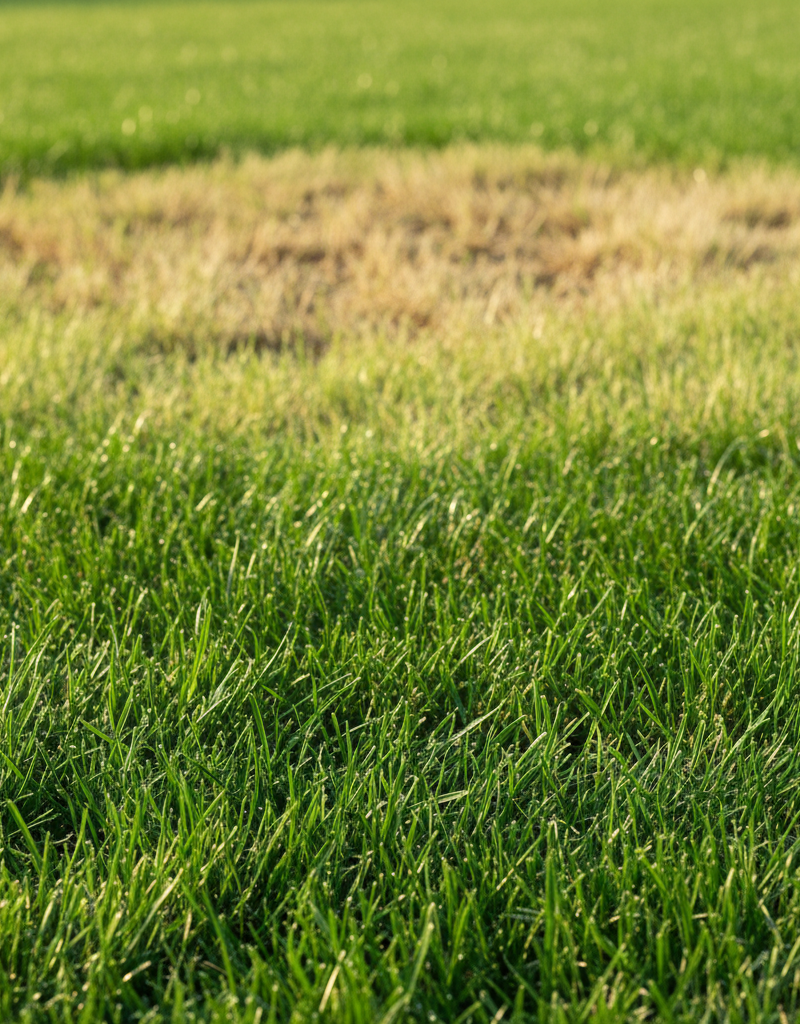
Every summer, I get calls from people, exasperated, 'My lawn's yellowing! I'm watering it every day!' And I get it. It’s aggravating. You put in the work, you see the brown creeping in, and it feels like a losing battle. But that uniform yellowing, or worse, patches of yellow that just won't green up? That’s usually not a simple drought. That’s your grass waving a white flag because something basic isn’t right, even though you’re trying. Most times, it’s a breakdown in the system—either how water gets to the roots or what nutrients are hanging around in the soil. It’s like feeding a kid candy all day—they’re full, but they’re still malnourished.
How It Works
Think of your lawn as millions of tiny plants, all hustling away together. Each blade of grass needs sunlight, water, and nutrients—especially nitrogen, phosphorus, and potassium—to make chlorophyll. Chlorophyll, that’s the stuff that keeps grass green. It grabs sunlight and turns it into energy. When grass doesn’t get enough of one of those main ingredients, or when it’s under stress, chlorophyll production slows down or flat-out stops. That’s when the green starts fading to yellow.
Water matters a lot, but it’s not just about how much you throw down. It’s about getting it deep into the soil where the roots can actually use it. If you’re watering too lightly, you’re just wetting the surface. The water evaporates before it gets down to those deeper roots, and then they get lazy and shallow. Then the temps hit 90°F, and those shallow roots can’t dig up enough moisture—boom, yellow. On the flip side, overwatering can be just as bad, suffocating the roots and leaching out nutrients they need. Compacted soil, usually from heavy foot traffic or equipment, makes it even tougher for water and air to get through, which is basically choking the roots. And don’t forget the bugs. Grubs, chinch bugs—they’ll chew roots or suck the juices right out, leaving yellow, dying patches behind. It’s a balancing act, and when one thing goes sideways, the whole lawn shows it.
Step-by-Step Fix
Here’s how I usually walk folks through diagnosing and fixing that summer yellow:
-
Check Your Watering Schedule – Are you watering deep and infrequent?
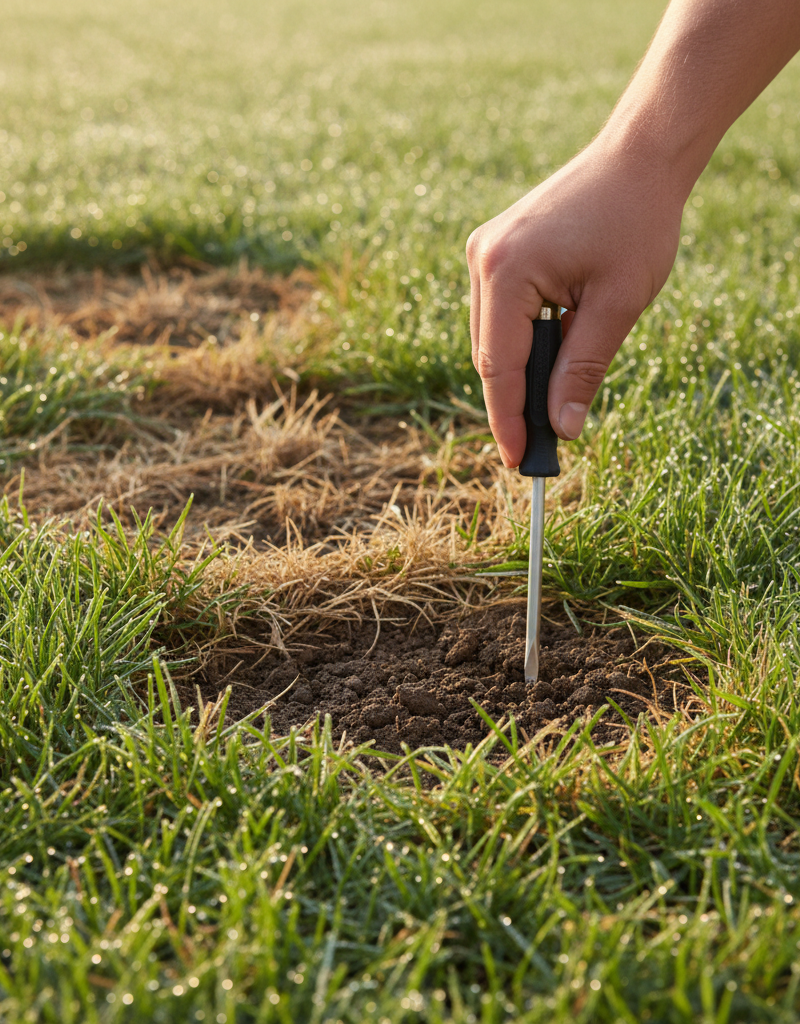
Most homeowners water too often and too little. You want to water deeply, about 1 inch per week, across 1 to 3 sessions. Stick a screwdriver into the soil; if it goes in easily at least 6 inches, you’re doing okay. If not, increase your watering time per session. Get a rain gauge and measure how much your sprinklers are actually putting out. A lot of systems are way off from what people think.- Tool Tip: Grab a cheap rain gauge from the garden store, or just use a tuna can.
- If this doesn't work: Your soil might be compacted, or you could have a water distribution problem.
-
Inspect for Pests – Are unwelcome guests eating your lawn?
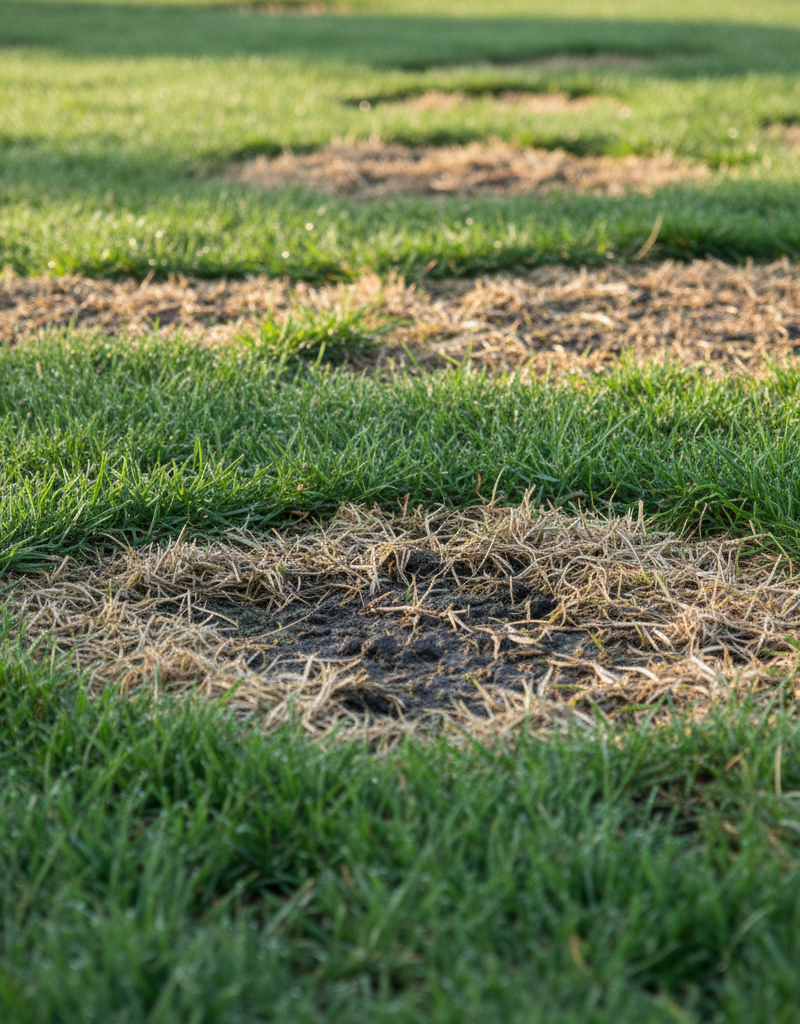
Take a closer look at the yellowing patches. Pull back some sod in a few spots. See any C-shaped white grubs? What about tiny, reddish-brown chinch bugs at the base of the grass blades, especially near concrete? Grubs will leave patches of grass that lift up like a carpet. Chinch bugs cause irregular yellow or brown spots. If you find them, you’ll need to treat with a targeted insecticide.- Safety Note: Always read insecticide labels carefully and wear appropriate protective gear. Keep pets and kids off the lawn until the treatment is dry.
-
Perform a Soil Test – What's your lawn actually hungry for?
This is the big one most DIYers skip. You can get a simple soil test kit from a garden center, or for a more comprehensive analysis, send a sample to your local university extension office. They’ll tell you your soil’s pH and nutrient levels—nitrogen, phosphorus, potassium, and micronutrients. Yellowing can often be an iron deficiency, especially in alkaline soils, or just a general lack of nitrogen.- Pro Tip: Take samples from several spots in your yard and mix them to get a good average. Follow the kit instructions precisely.
-
Aerate Compacted Soil – Is your lawn breathing?
If your soil feels rock hard, or you’ve got lots of foot traffic, compaction is likely the issue. Aeration makes small holes in the lawn, letting water, air, and nutrients reach the roots. You can rent a core aerator from a hardware store—they look like big lawnmowers but pull out plugs of soil. Do this when the grass is actively growing but not getting hammered by extreme heat.- Timing: Early fall or late spring are usually the best times for aeration.
- Don't skip: This step can make a huge difference in how your lawn responds to water and fertilizer.
-
Fertilize Smartly – Are you feeding it the right stuff?
Once you’ve got those soil test results, you’ll know what your lawn needs. If it’s nitrogen deficient, apply a slow-release nitrogen fertilizer. If the pH is off, you might need to add lime (to raise pH) or sulfur (to lower pH). Yellowing often points to an iron deficiency, which you can correct with a liquid iron supplement. Don’t just throw down 'weed and feed' and hope for the best.- Numeric Data: Aim for 1 lb of actual nitrogen per 1,000 square feet for each application. Check the bag; a '20-5-10' fertilizer means 20% nitrogen.
- Caution: Over-fertilizing, especially with quick-release nitrogen, can burn your lawn and make yellowing worse.
-
Mow at the Right Height – Are you scalping your grass?
Cutting your grass too short, especially in summer, stresses it out. Taller grass shades the soil, keeps it cooler, and helps hold moisture. It also pushes roots deeper. Most cool-season grasses (fescue, rye) like 2.5 to 3.5 inches. Warm-season grasses (Bermuda, St. Augustine) can handle a bit shorter, but never less than 2 inches in summer heat.- Rule of Thumb: Never remove more than one-third of the grass blade length in a single mowing.
-
Check for Dollar Spot or Other Fungi – Are diseases creeping in?
Yellowing in small, circular patches, roughly the size of a silver dollar? That’s often dollar spot, a common fungal disease. Other fungi can cause irregular patches or streaks. They thrive in humid conditions, especially when grass is stressed. Proper watering (early morning, not evening) and good air circulation can help. Fungicides are an option if it’s severe, but a lot of the time, plain old cultural fixes are enough.- Observation: Look for cobweb-like mycelium on the grass blades in the early morning dew.
-
Evaluate Your Sprinkler System – Is water reaching every corner?
Sometimes, it’s as simple as uneven coverage. I was at a house in Northfield last month, and the guy swore his system was top-notch, but half his backyard looked like straw. We found one sprinkler head was clogged, and another was spraying the sidewalk like it had a grudge. Run your system and watch it. Are there dry spots? Do some areas get drenched while others stay dry? Adjust heads, clean nozzles, or replace broken ones. You can even use those tuna cans again to see how much water each zone is getting.- Maintenance: Clean out sprinkler heads annually. Replace any cracked or leaky lines.
Common Causes
- Underwatering/Improper Watering: This is the most frequent culprit. Shallow, frequent watering doesn't encourage deep roots.
- Nutrient Deficiencies: Especially nitrogen or iron. A lack of these makes it hard for grass to produce chlorophyll.
- Soil Compaction: Hard soil means roots can't breathe or access water and nutrients effectively.
- Pests: Grubs, chinch bugs, and even some types of caterpillars can cause significant yellowing.
- Fungal Diseases: Dollar spot, brown patch, or rust can turn grass yellow or brown in distinct patterns.
- Over-fertilization: Too much nitrogen can burn the grass, causing it to yellow and die back quickly.
- Mowing Too Short: Scalping the lawn removes too much of the photosynthetic surface and stresses the plant.
- Heat Stress: While not always the primary cause, extreme heat can exacerbate all these other issues, pushing the lawn over the edge.
Common Mistakes
- Assuming all yellow equals drought: I’ve seen homeowners watering religiously, yet their lawn looks terrible. Check for other causes like pests or nutrient issues before you drown it.
- Fertilizing without a soil test: You’re just guessing what your lawn needs. You could be adding more of something it already has, or worse, burning it with excess nitrogen.
- Mowing the same height year-round: Your grass has different needs in different seasons. Taller in summer protects it from heat; shorter in spring encourages new growth.
- Ignoring sprinkler system check-ups: Sprinkler heads get clogged, knocked out of alignment, or just quit. A quick walk-through while the system’s running can save you a lot of headache.
- Applying weed killer in high heat: Herbicides can stress your lawn, and applying them when temperatures are above 85°F can cause widespread yellowing or scorching.
- Not aerating compacted areas: If your kids play soccer on the same patch every day, or you’ve got a busy path, that soil’s going to be packed. Aeration is critical there.
Cost & Time Breakdown
| Task | DIY Cost | Pro Cost | Time |
|---|---|---|---|
| Soil Test Kit (Basic) | $15–$30 | N/A | 15 min prep |
| Professional Soil Test | $30–$75 | N/A | 15 min prep |
| Iron Supplement | $20–$40 | N/A | 20–30 min |
| Nitrogen Fertilizer (25lb bag) | $30–$60 | N/A | 30–60 min |
| Aerator Rental | $80–$150 | N/A | 2–4 hours |
| Pro Aeration Service | N/A | $150–$300 | 1–2 hours |
| Pest Control (DIY) | $25–$50 | N/A | 30 min |
| Professional Pest Treatment | N/A | $100–$250 | 30–60 min |
| Sprinkler Head Replacement | $10–$25 per | $75–$150 per | 15–30 min per |
Tips & Prevention
- Water in the morning: Watering between 4 AM and 9 AM allows the grass to dry before nightfall, reducing fungal disease risk. Plus, you lose less to evaporation than midday watering.
- Keep mower blades sharp: Dull blades tear the grass, leaving ragged edges that turn brown and make the lawn more susceptible to disease.
- Leave grass clippings: Unless they're really clumpy, clippings return valuable nutrients and organic matter to the soil, acting as a natural, slow-release fertilizer.
- Fertilize according to soil test results: Don't guess! This is the most effective way to prevent nutrient deficiencies and avoid over-fertilizing.
- Consider a warm-season grass: If you're constantly battling yellowing in scorching summers, maybe your cool-season grass isn't right for your climate. Bermuda or Zoysia are tough in the heat.
- Monitor for early signs: Catching yellowing, spots, or pest activity early makes it much easier to treat before it becomes a widespread problem. Walk your lawn regularly, don't just admire it from the porch.
When to Call a Professional
If you’ve tried adjusting your watering, checked for common pests like grubs, and even done a basic soil pH test, but your lawn is still looking sickly and yellow, it might be time to bring in a pro. Specifically, if you suspect a serious fungal disease that you can’t identify, or if you have widespread pest damage that DIY treatments aren’t touching, a licensed lawn care professional can accurately diagnose the issue. They’ve got access to more specialized diagnostic tools and treatments that aren’t available to homeowners. Also, if your yellowing is concentrated around your sprinkler heads and you can’t figure out why, or if you just can’t get your lawn to respond, a pro can assess your entire irrigation system for issues you might be missing. Don’t be afraid to call it a day on the DIY if you’re not seeing improvement—sometimes you need that expert eye.
Related Articles
Keep troubleshooting with these hand-picked guides from FixlyGuide:
- The #1 Summer Lawn Mistake Turning Your Grass Yellow (and How to Fix It) — Discover the most common summer lawn mistake that causes yellowing grass and learn the simple steps to revive your lawn.
- The #1 Mistake Killing Your Summer Lawn (And How to Fix It in a Weekend) — Overwatering is the silent killer behind many yellow summer lawns, often mistaken for drought. Learn how to diagnose and correct drainage i…
- The #1 Summer Lawn Mistake Turning Your Grass Yellow (and How to Fix It) — Discover the most common summer mistake that causes lawns to turn yellow and learn how to correct it for a greener, healthier yard.
- The #1 Mistake Turning Your Healthy Lawn Brown After Watering — Discover the hidden culprit behind brown spots appearing in your lawn immediately after watering and learn how to correct this common mista…
- The #1 Mistake Killing Your Dandelion-Fighting Efforts (and the Easy Fix) — Stop dandelions from taking over your lawn by understanding common mistakes and implementing effective, long-term solutions for a healthier…
- The Giant Drywall Hole: 3 Hidden Mistakes That Make Fixing It Worse — Don’t just spackle over that huge drywall hole; learn the right way to repair it and avoid common mistakes that lead to an even bigger head…
What should this project cost?
Enter your project details for a realistic cost range before you call anyone.
Cost depends heavily on which system turns out to be the source.
- Regional adjustment
- National average
- Labor share (typical)
- ~$1,620
- Quotes to collect
- 3 written estimates
Educational estimate based on national averages — not a binding quote. Always confirm with written local estimates.
Get the print-ready PDF of this guide
A clean, ad-free, printable version you can keep on your phone or pin to the workshop wall. Free with a FixlyGuide account.
- Print-optimized layout
- Tools, materials & every step included
- Saved to your account
Frequently asked questions
Why is my grass turning yellow even though I water it every day?+
Daily, shallow watering often leads to yellowing because it encourages shallow root growth. The surface gets wet, but deep roots don't get enough moisture, making the grass vulnerable to heat stress and nutrient deficiencies. You need to water less often but much deeper.
Can over-fertilizing make my lawn turn yellow?+
Absolutely. Too much fertilizer, especially nitrogen, can burn your grass roots, leading to a condition called 'fertilizer burn.' This often results in widespread yellowing or browning, followed by dieback. Always follow application rates carefully and consider a slow-release product.
What does a lack of iron look like in grass?+
Iron deficiency typically causes the grass blades to turn a pale yellow, often while the veins of the leaves remain greener. This is particularly common in alkaline soils, where iron is present but unavailable to the grass roots. An iron supplement can usually correct this quickly.
How can I tell if my soil is compacted?+
You can check for soil compaction by trying to push a screwdriver or a metal rod into the ground. If it's difficult to push in more than a few inches, your soil is likely compacted. Water runoff and thin, struggling grass are also good indicators.
Is it better to water my lawn in the morning or evening?+
Always water your lawn in the early morning, ideally between 4 AM and 9 AM. This allows the grass blades to dry off before nightfall, which significantly reduces the risk of fungal diseases. Evening watering leaves grass wet for too long, creating an ideal environment for fungi.
How often should I fertilize my lawn in the summer?+
Summer fertilization depends on your grass type and soil test results. For cool-season grasses, it's generally best to avoid heavy nitrogen applications during peak summer heat. Warm-season grasses might tolerate light feeding. Always get a soil test to know what nutrients are actually needed before applying anything.
Can too much shade cause my lawn to turn yellow?+
Yes, inadequate sunlight can definitely cause yellowing or thinning of grass. Most turfgrasses need at least 4-6 hours of direct sunlight daily to thrive. If your lawn is shaded by large trees or structures, consider planting shade-tolerant grass varieties or alternative ground covers.
My lawn is yellow in patches, not uniformly. What could that mean?+
Patchy yellowing often points to localized issues like pests (grubs or chinch bugs), fungal diseases (like dollar spot), or uneven sprinkler coverage. It's less likely to be a general nutrient deficiency or widespread watering problem, which usually affects the entire lawn more uniformly.
How much water does my lawn need per week in summer?+
Most established lawns need about 1 inch of water per week, either from rain or irrigation, during the summer. It's best to deliver this inch in one to three deep watering sessions rather than several shallow ones, to encourage deep root growth.
What's the best way to prevent summer lawn yellowing?+
Prevention is key: proper deep and infrequent watering, regular soil testing and balanced fertilization, mowing at the correct height, and aerating compacted areas are your best defenses. Also, keeping an eye out for pests and diseases can help you address issues before they become widespread.
Discussion
Loading comments…