- The 1 Mowing Mistake That Leaves Your Lawn Brown and Patchy — Discover the most common mowing mistake homeowners make that leads to unhealthy, patchy grass and how to fix it for a vibrant lawn.
- The 1 Watering Mistake That Kills Lawns (And How to Fix Yours in 10 Minutes) — Discover the most common watering mistake homeowners make and how to adjust your watering routine for a healthier, more resilient lawn.
- The 1 Watering Mistake That's Killing Your Lawn (And How to Fix It) — Discover the most common watering error homeowners make and how to correct it for a healthier, greener lawn.
- Is Your Lawn Ready for Spring? 3 Hidden Mistakes Homeowners Make — Discover the common spring yard preparation mistakes that can undermine your lawn's health and how to avoid them for a vibrant, thriving ya…
- The 1 Watering Mistake That Kills Lawns (And How to Fix Yours for $0) — Overwatering or underwatering your lawn can lead to significant damage; learn the correct irrigation techniques to maintain a healthy, vibr…
Landscaping · Deck or fence project
| Project category | Landscaping |
|---|---|
| Problem type | Deck or fence project |
| Trade required | Landscaping |
| Urgency | Planned project |
| Safety risk | Moderate safety risk |
| DIY suitability | DIY for experienced homeowners |
| Cost category | High cost |
| Typical timeline | Most builds 3–10 days depending on size |
| Contractor type | Landscaping contractor |
Repair option
Replace failed boards, posts, and hardware; reseal the surface.
Replacement option
Rebuild when framing or the ledger connection is unsafe.
Common causes
- Rot at posts and ledger
- Storm damage
- Adding outdoor living space
Relevant tools:home improvement material pricesproject cost estimator
Published August 2, 2026Last updated August 17, 2026
Tools & materials you'll need
Affiliate links- AmazonEmpty tuna cans or straight-sided coffee mugs3-5
As an Amazon Associate FixlyGuide earns from qualifying purchases — at no extra cost to you. Prices and availability are accurate as of publication and subject to change.
Quick Answer
Most folks crank up the sprinklers every day, or every other day, for a short burst. That’s a mistake that’ll cost you. I’ve been fixing lawns long enough to know the real trick is simple: water deeply, not constantly. We’re talking about putting down about an inch of water, once or twice a week, depending on your soil and the weather. That lets the water sink in where it counts, and it pushes the roots to chase it. That’s how you build a tough lawn that can handle summer heat without turning into a hayfield.
The Problem
I’ve seen it a hundred times. Homeowners out there watering every single day, thinking they’re doing the right thing. They mean well. No question. But what they’re actually doing is training the grass to be weak. Daily, shallow watering is probably the most common mistake I run into. It keeps the roots hanging out near the surface because that’s where the water lives. Then a heatwave rolls in, or you miss a day, and those shallow roots can’t reach down for anything. Next thing you know, the lawn wilts, browns out, and if you keep on that same path, you’re staring at dead patches. Then it’s new sod or overseeding, and neither one is cheap.
And there’s another problem nobody likes dealing with — that constant damp surface is basically a welcome mat for fungal disease and weeds that love soggy topsoil. It turns into a bad loop fast. You waste water, you waste money, and you waste your Saturday.
How It Works
Grass in nature doesn’t get a little sprinkle every day. It gets rain, maybe plenty of it, then dry spells. That’s the whole game. The plant’s built to send roots down deep and find water on its own. When you water lightly and often, you’re teaching it to stay lazy. The roots hang out in the top inch or two because, hey, why bother going deeper if the drinks are always served up top?
Here’s the part a lot of folks miss: the top inch or two of soil dries out quick. So you keep pouring water back into ground that’s already wet enough, while the deeper soil stays dry as dust. That makes for a weak root system, plain and simple. But when you water deeply — enough to soak 4-6 inches down — you force those roots to go after it. They stretch, they thicken up, and they knit together into a better network.
I pulled a water heater in Frisco last month and the homeowner started asking about his lawn while I was hauling tools across the side yard. Same story. He’d been misting it every day, and the grass had the nerve to look tired all summer. Deep watering fixes that kind of mess. It builds a lawn that can tap into moisture farther down, stay greener through dry spells, and bounce back faster after stress. You water less often, too. Saves time. Saves money. Hard to argue with that.
Step-by-Step Fix
Step 1: Get to Know Your Soil — Understand how your soil absorbs water.
Before you even crack open the sprinkler timer, you’ve gotta know what kind of dirt you’re dealing with. Soil isn’t all the same, not even close. Sandy soil drains fast, like a sieve. Clay holds water longer, but if you dump it on too fast, it can compact up and shed water right off the top. Best move? Dig a small hole, say 6 inches deep, after a good rain or a deep watering. Feel it with your hands. Gritty means sand. Sticky and holds its shape? That’s clay. Most yards I work on are some mix in between — loam, or close enough. That tells you how fast the ground can take a real soak. If your soil’s very sandy, you may need to split your 1 inch of water into two sessions a few hours apart so it doesn’t run off before it soaks in.
Step 2: Measure How Much Water Your Sprinklers Deliver — Don't guess; actually measure it.
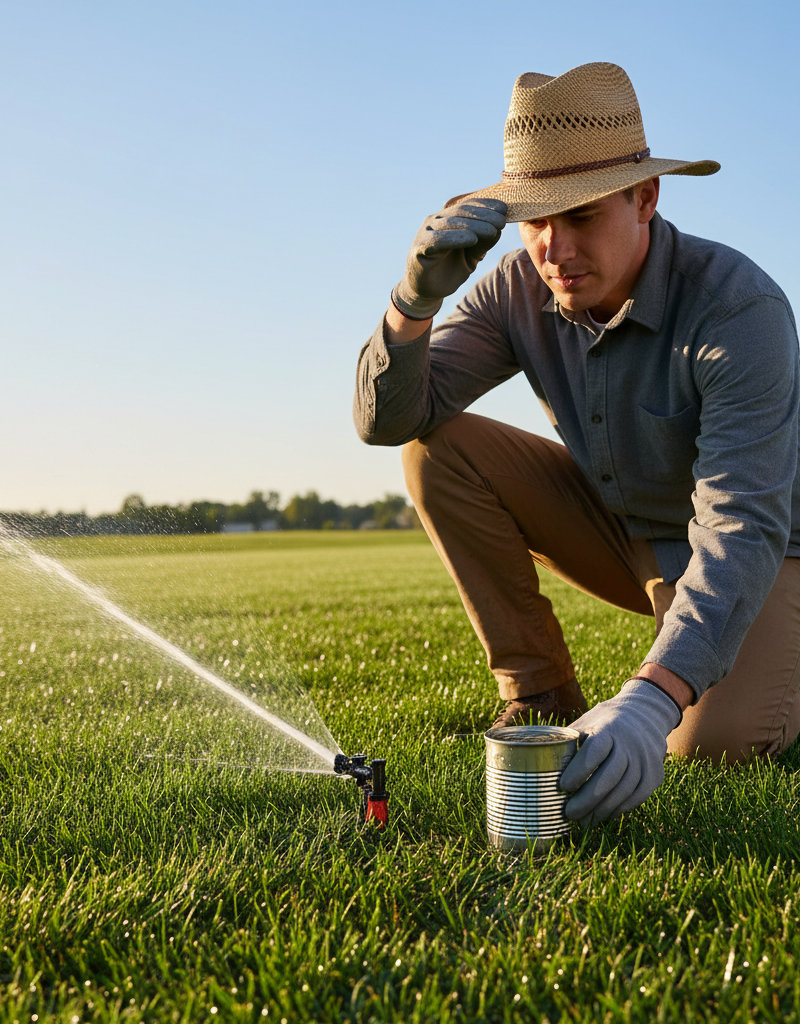
This is where a lot of homeowners go sideways. They set the timer and hope the yard magically gets what it needs. No dice. Grab a few empty tuna cans or straight-sided coffee mugs and spread them around the part of the lawn your sprinklers hit. Run the system for 15 minutes. Then shut it down and measure the water depth in each can with a ruler. Add the numbers up and divide by the number of cans to get your average. Say you got 1/4 inch in 15 minutes. That means you’d need an hour — 4 x 15 minutes — to get a full inch of water down.
That’s the number you need for deep watering. Do this in each zone if you’ve got multiple sprinkler heads, because coverage can be all over the map.
- Tools: Several empty tuna cans or coffee mugs, ruler.
- Tip: If a couple cans come up nearly empty, your coverage’s uneven. You may need to tweak sprinkler heads or add more so the whole yard gets watered evenly.
Step 3: Water Early in the Morning — Timing matters for absorption and disease prevention.
I always tell clients the same thing: the best time to water your lawn is between 4 AM and 8 AM. Why that window? Simple. The air’s cooler and the wind’s usually calmer, so you lose less water to evaporation. More of it actually gets into the soil where it belongs. Second, the grass has time to dry out before nightfall. Watering at night keeps the blades wet too long, and that’s just asking for fungal problems like brown patch or dollar spot.
I had a job in Alpharetta last summer where the homeowner was running the sprinklers at 7 PM every night, and his fescue was covered in fungus. We changed the schedule, gave it time, and it cleaned up right away. Sometimes the fix isn’t fancy. It’s just doing the basics right.
Step 4: Deep and Infrequent Watering — Aim for 1 inch, 1-2 times per week.
Using what you measured in Step 2, run the sprinklers long enough to put down a full inch of water. For most established lawns, one deep watering session a week is often enough. If you’re in a long hot stretch — think 90°F+ for days at a time — you might split that into two waterings, like half an inch on Monday and half an inch on Thursday. The point is to let the top few inches dry out between waterings. That little stress is what gets the roots moving.
Don’t panic if the lawn looks a little less flashy before the next watering. A duller green, footprints hanging around longer — that’s your warning sign, not a death sentence. You’re training the yard, not babysitting it.
Step 5: Watch Your Lawn, Not Just the Calendar — Your lawn will tell you when it's thirsty.
Watering by the calendar is a rookie move. Your lawn doesn’t care if it’s Tuesday. It cares if it’s dry.
Learn to read the grass. Healthy blades stand up straight. When they start getting thirsty, they’ll curl or fold a bit, and the color shifts from a bright green to something flatter and grayish. Another dead giveaway: walk across it. If your footprints are still there after a few minutes, it’s time to water. If it springs right back, there’s still enough moisture in the ground.
This matters even more when the seasons shift and the rain gets weird. You may need to stretch watering out to every 10 days, or bump it up to twice a week, depending on what the yard’s telling you. The lawn’s the boss here, not the app on your phone.
Step 6: Don't Forget About Slopes and Runoff — Prevent wasted water and erosion.
If you’ve got a sloped yard, or really tight clay soil, you might see water pooling up or running off before it can soak in. That’s just wasted water, and it’s a sign you’re pushing too much too fast. The fix here is called
Related Articles
Keep troubleshooting with these hand-picked guides from FixlyGuide:
- The #1 Mowing Mistake That Leaves Your Lawn Brown and Patchy — Discover the most common mowing mistake homeowners make that leads to unhealthy, patchy grass and how to fix it for a vibrant lawn.
- The #1 Watering Mistake That Kills Lawns (And How to Fix Yours in 10 Minutes) — Discover the most common watering mistake homeowners make and how to adjust your watering routine for a healthier, more resilient lawn.
- The #1 Watering Mistake That's Killing Your Lawn (And How to Fix It) — Discover the most common watering error homeowners make and how to correct it for a healthier, greener lawn.
- Is Your Lawn Ready for Spring? 3 Hidden Mistakes Homeowners Make — Discover the common spring yard preparation mistakes that can undermine your lawn's health and how to avoid them for a vibrant, thriving ya…
- The #1 Watering Mistake That Kills Lawns (And How to Fix Yours for $0) — Overwatering or underwatering your lawn can lead to significant damage; learn the correct irrigation techniques to maintain a healthy, vibr…
- The #1 Mistake Homeowners Make When Caulking a Bathroom Sink (And How to Fix It) — Discover the most common caulk mistake homeowners make around bathroom sinks and follow simple steps to achieve a lasting, watertight seal.
Questions to ask before you sign
Ask every contractor the same questions and the cheapest bid stops looking cheapest. Check them off as you go — your progress is saved on this device.
Free, no signup. Bring this to every walkthrough so you compare bids on the same terms.
What should this project cost?
Enter your project details for a realistic cost range before you call anyone.
Cost depends heavily on which system turns out to be the source.
- Regional adjustment
- National average
- Labor share (typical)
- ~$1,620
- Quotes to collect
- 3 written estimates
Educational estimate based on national averages — not a binding quote. Always confirm with written local estimates.
Check these numbers against your project
National averages are a starting point. These tools narrow it to your scope and ZIP.
- Estimate this projectGet a cost range for your scope and ZIP before you call anyone.Open
- Get local estimatesSend one request and compare written estimates from vetted pros.Open
Free, no signup required. Estimates are educational guidance, not a quote or an inspection.
Frequently asked questions
How do I know if I'm watering enough?+
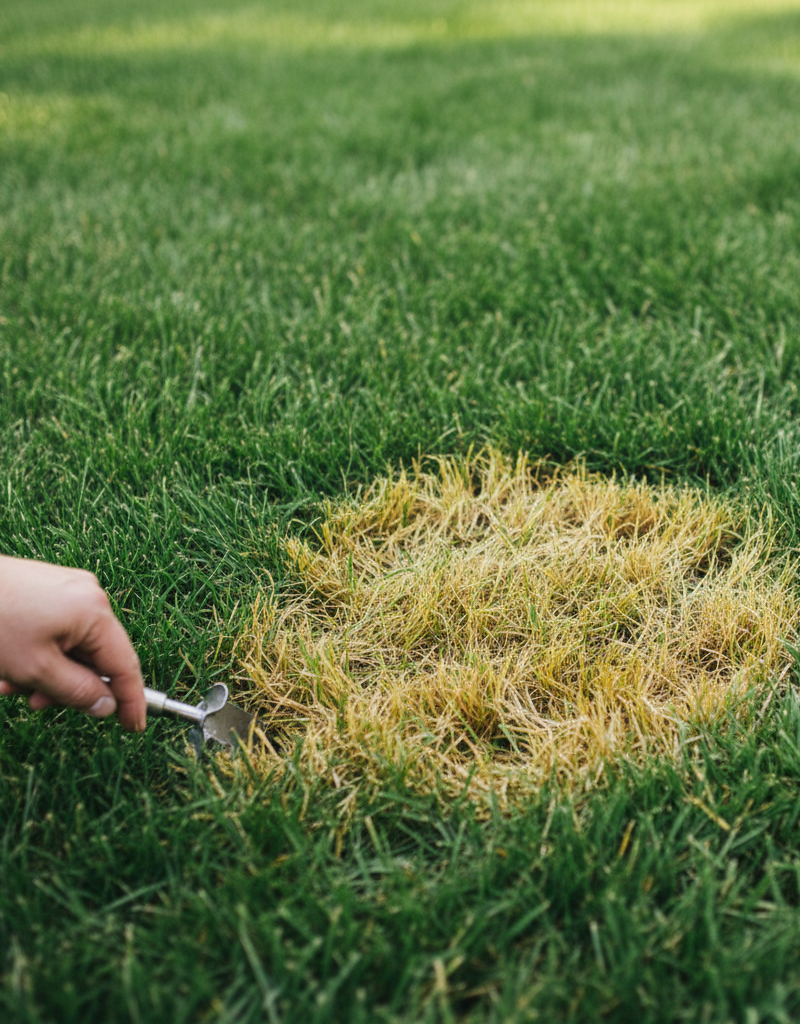
The best way is to check the soil moisture. After watering, dig down 4-6 inches with a trowel. The soil should feel consistently damp, not soggy or dry. Also, observe your lawn for signs of stress like dull color or footprints that don't rebound quickly.
Can you overwater a lawn?+
Absolutely. Overwatering is just as bad, if not worse, than underwatering. It starves the roots of oxygen, encourages fungal diseases, and promotes shallow root growth, making your lawn weak and susceptible to pests and drought.
What's the best time of day to water my lawn?+
The ideal time is early morning, between 4 AM and 8 AM. This minimizes evaporation loss due to cooler temperatures and less wind, and it allows the grass blades to dry out before evening, reducing the risk of fungal diseases.
How long should I run my sprinklers?+
It depends on your sprinkler's output. Use tuna cans or coffee mugs to measure how much water your sprinklers deliver in 15 minutes. Calculate how long you need to run them to apply 1 inch of water. For example, if you get 1/4 inch in 15 minutes, you'll need to run them for an hour to get 1 inch.
How much water does my lawn need per week?+
Most lawns need about 1 inch of water per week, including rainfall. This should be applied in one deep watering session or split into two sessions during very hot periods. Adjust based on your soil type and current weather conditions.
What are the signs of an underwatered lawn?+
An underwatered lawn will start to turn a dull, grayish-green, and the grass blades may curl or fold. Footprints will also remain visible on the lawn for several minutes after you walk across it.
What are the signs of an overwatered lawn?+
Signs of overwatering include yellowing grass (due to nutrient leaching or oxygen deprivation), an increase in weeds like nutsedge, and spongy-feeling soil. You might also notice fungal growth or a musty odor.
Should I adjust my watering based on the season?+
Yes, absolutely. Lawns need less water in cooler spring and fall months, especially if there's good rainfall. In peak summer heat, they'll need more, but still adhere to the deep and infrequent principle. You might reduce watering frequency significantly in winter if your grass goes dormant.
What is 'cycle and soak' watering?+
Cycle and soak is a technique where you break up your total watering time into shorter sessions, with a pause in between. For example, instead of watering for 60 minutes straight, you might water for 20 minutes, wait an hour for it to soak in, then water for another 20 minutes. This is especially helpful for slopes or compacted clay soils to prevent runoff.
Can I use smart sprinkler controllers?+
Smart sprinkler controllers are fantastic tools. They use local weather data, soil type, and plant type to automatically adjust your watering schedule, ensuring your lawn gets exactly what it needs without waste. They can be a significant upfront investment, but they pay for themselves in water savings over time.

Discussion
Loading comments…