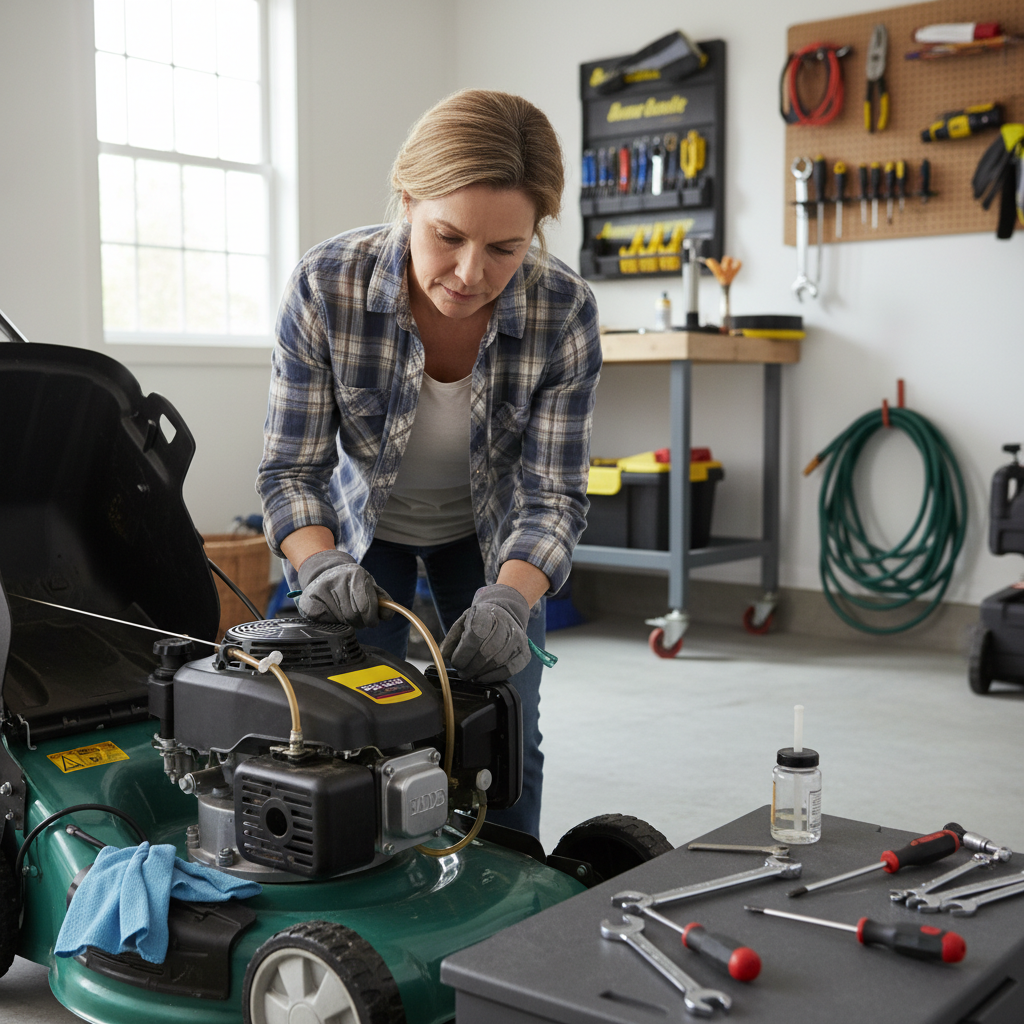
- Check the basics — Make sure it’s ready to run.
- Next up, safety switch. A lot of mowers have a bail bar you’ve got to hold down, or on a rider, you need to be in the seat. Make sure those are engaged. If not, you won’t get spark.
- Check the spark plug wire. Is it snug on the plug? A loose lead means no spark, and that’s the end of the story right there.
Landscaping · Deck or fence project
| Project category | Landscaping |
|---|---|
| Problem type | Deck or fence project |
| Trade required | Landscaping |
| Urgency | Planned project |
| Safety risk | Moderate safety risk |
| DIY suitability | DIY for experienced homeowners |
| Cost category | High cost |
| Typical timeline | Most builds 3–10 days depending on size |
| Contractor type | Landscaping contractor |
Repair option
Replace failed boards, posts, and hardware; reseal the surface.
Replacement option
Rebuild when framing or the ledger connection is unsafe.
Common causes
- Rot at posts and ledger
- Storm damage
- Adding outdoor living space
Relevant tools:home improvement material pricesproject cost estimator
Published July 31, 2026Last updated August 17, 2026
Tools & materials you'll need
Affiliate linksAs an Amazon Associate FixlyGuide earns from qualifying purchases — at no extra cost to you. Prices and availability are accurate as of publication and subject to change.
Quick Answer
When your lawn mower does the classic “crank but no start,” that’s the machine hollering for help from the fuel side of things. Yeah, I know you checked the gas, and you probably pulled the spark plug too. But if it’s still not kicking over, I’d lay money on stale fuel clogging things up — especially the carburetor. Modern ethanol gas is rough on small engines if it sits more than a month or two. So before you yank on that cord till your shoulder’s barking, let’s look past the old “is there gas in it?” routine.
The Problem
You’ve got a yard full of tall grass, the sun’s cooking the driveway, and your trusty mower just sits there like it’s offended. You pull the cord, it spins, maybe coughs once or twice, and then nothing. I’ve seen this exact scene a thousand times — homeowner annoyed, mower dug in its heels. Folks usually blame the spark plug first, and sure, sometimes that’s it. But more often, it’s what that spark plug can’t light off: bad fuel or a blocked path for good fuel. It’s a pain, no doubt. Still, with a little elbow grease and a methodical pass through the basics, you can usually get that engine running again without calling in the cavalry for something simple.
How It Works
Your lawn mower engine, whether it’s a push mower or a riding mower, is pretty slick in its own way — just a bunch of tiny explosions firing off every minute to spin that blade. It needs three things to run: air, fuel, and spark. Take one away, and you’ve got a very expensive paperweight.
Here’s the short version: the air filter cleans the air before it gets mixed with fuel. Fuel leaves the tank, runs through the fuel line, and heads into the carburetor. The carburetor’s job is a big one; it blends the air and fuel into a fine mist. That mist goes into the cylinder, where the spark plug lights it off. That push drives the piston down, turns the crankshaft, and spins your blade. Exhaust gets shoved out, and the whole thing repeats hundreds of times a second.
Most no-start problems come back to one of those three areas. Spark plug issues are pretty easy to check — pull it, look for fouling, test for spark. Air problems are usually a dirty filter. Fuel is where it gets messy, because a lot can go sideways: old gas, clogged fuel lines, a carburetor packed with varnish. If your mower sat all winter with untreated fuel in the tank, that ethanol can pull in moisture and leave gummy junk that clogs the tiny passages faster than you’d think. I pulled a water heater in Frisco last month that had exactly this kind of crusty buildup inside a little gas valve — same story, different machine. Once those passages are blocked, no fuel, no boom, no mowing. Plain and simple.
Step-by-Step Fix
Here’s how I tackle it when a mower won’t fire up. I always start with the easy stuff and work toward the more involved fixes. Don’t jump ahead, or you’ll just make more work for yourself.
-
Check the basics — Make sure it’s ready to run.
- First question: is there actually gas in the tank? Sounds dumb, but I’ve been on calls where the owner swore it was full, and it turned out bone dry. Don’t trust the “it smells like gas” trick. Look in the tank. Is the fuel fresh? If it smells sour or looks cloudy, that’s your culprit. Drain it and fill it with fresh, clean, stabilized fuel. On two-stroke engines, make sure you’re using the right fuel-oil mix. Get that wrong and you can hurt the engine fast.
- Next up, safety switch. A lot of mowers have a bail bar you’ve got to hold down, or on a rider, you need to be in the seat. Make sure those are engaged. If not, you won’t get spark.
- Check the spark plug wire. Is it snug on the plug? A loose lead means no spark, and that’s the end of the story right there.
-
Inspect the air filter — Clear the engine’s “lungs.”
- Pop the cover off, usually held by clips or a couple screws. Pull the filter element. Is it loaded with grass, dust, or some bug nest somebody decided to move in with? If it’s badly clogged, the engine can’t breathe and it’ll starve for air. Try starting it with the filter removed. If it fires even for a second, you’ve found a problem. Replace a paper filter if it’s dirty or oil-soaked. Foam filters can often be washed in warm soapy water, rinsed, dried, and lightly oiled with engine oil — check the manual if you’re not sure.
-
Test for spark — Make sure the ignition’s doing its job.
- This step matters. Disconnect the spark plug wire. Use a spark plug wrench and take the plug out carefully. Look at it: is it carboned up, wet with fuel, or oily? A nasty plug won’t fire worth a hoot. Clean it with a wire brush or just replace it if it looks rough. They’re cheap, usually under five bucks.
- For the test, reattach the plug wire to the cleaned plug or a new one. Use insulated pliers and hold the metal base of the plug against a clean, unpainted part of the engine block, away from the plug hole. Pull the starter cord once. You should see a strong blue spark jump the gap. No spark? The plug could be bad, the wire could be bad, or you may have an ignition module problem. If a new plug doesn’t change anything, that’s when I start thinking ignition coil. That’s usually a shop job unless you’re really comfortable digging into small engines. I keep a simple inline spark tester in my toolbox all the time — quick, cheap, no guesswork.
-
Confirm fuel delivery to the carburetor — Is gas even making it to the mixologist?
- Find the fuel line running from the tank to the carburetor. It’s usually rubber or clear plastic. If there’s no shut-off valve, pinch the line with a clamp or vice grips. Have an empty can or small bucket ready. Disconnect the line from the carburetor — you’ll probably need pliers for the clamp. Let go of the pinch and see what happens. If fuel barely dribbles out or nothing comes out, the line may be pinched, cracked, or — most often — the fuel filter is plugged.
- If no fuel flows: Swap the fuel filter. If there isn’t one, check the tank for junk around the outlet. I once found a whole wad of ladybugs blocking a fuel tank outlet on a mower in Hastings, MN! If the line itself is cracked or falling apart, replace it. And don’t forget the tank vent — if that’s blocked, the tank pulls a vacuum and fuel won’t move.
- If fuel flows: Good. That points the finger at the carburetor.
- Find the fuel line running from the tank to the carburetor. It’s usually rubber or clear plastic. If there’s no shut-off valve, pinch the line with a clamp or vice grips. Have an empty can or small bucket ready. Disconnect the line from the carburetor — you’ll probably need pliers for the clamp. Let go of the pinch and see what happens. If fuel barely dribbles out or nothing comes out, the line may be pinched, cracked, or — most often — the fuel filter is plugged.
-
Attempt a "quick start" with starter fluid — Bypassing the fuel system for a test.
- This is a fast way to tell if you’re really dealing with fuel delivery or something deeper. Pull the air filter again. With the choke open, if your mower has one, give a very brief shot — 1-2 seconds, no more — of carburetor cleaner or starting fluid straight into the carburetor throat. Then try to start it right away. If it fires and runs for a few seconds before dying, you can be 99% sure the trouble’s in the fuel system, usually the carburetor. If it doesn’t even cough, you may be looking at compression trouble or a more serious spark problem, even if step 3 showed spark. Sometimes the spark looks fine in free air and goes weak under load.
-
Clean the carburetor — The most common culprit for old fuel.
- This is where the job gets a little more hands-on. If tiny springs and gaskets make you nervous, this might be the point to call a pro. But a lot of DIY folks can handle it. You’ll need to pull the carburetor off the engine. Take pictures as you go — seriously, snap a bunch from different angles — so you know where every hose and linkage goes back. Once it’s off, you’ll need to tear it down a bit; the fuel bowl on the bottom is usually held by one screw. Safety Warning: Carburetor cleaner is nasty stuff and highly flammable. Work in a well-ventilated spot, wear eye protection, and keep it away from open flames. Also, easy does it with the delicate parts.
- Spray all the small openings and jets in the carburetor body with carburetor cleaner. Use a small wire — like a stripped bread tie — to poke through any suspected clogs in the tiny holes, especially the main jet and the idle jet. Replace any old gaskets you damage during teardown; a carburetor rebuild kit is often a smart buy and usually costs under $20. Once it’s clean, put it back together using your photos as your map.
-
Check valve clearance (Advanced) — Rare, but worth noting.
- Sometimes, especially on older or heavily used engines, valve clearances drift out of spec. If the valves aren’t opening and closing at the right time, or not opening fully, the engine won’t build proper compression and it won’t start. This is a more advanced check that takes a feeler gauge and the right torque specs, usually from a service manual. If you’ve done everything else and it still won’t light off — especially if you hear a clattering noise — this could be your problem. I usually tell homeowners to hand it to a shop at this point unless they’ve rebuilt small engines before. It’s not a quick fix.
Common Causes
- Stale Fuel: This is the big one. Gasoline, especially with ethanol, starts breaking down in about 30 days. It leaves varnish and sediment that clog fuel lines and carburetors. Use fuel stabilizer if the mower’s going to sit for more than a month.
- Clogged Carburetor: Direct fallout from stale fuel. Those tiny passages get gummed up, and the engine can’t get the right air/fuel mix.
- Dirty Air Filter: An engine needs to breathe. A filter packed with junk restricts airflow, causes a fuel-rich condition, and can foul the plug or keep it from firing at all.
- Fouled Spark Plug: Carbon buildup or oil on the electrodes kills the spark.
- Blocked Fuel Filter/Line: Debris in the tank or a kinked hose can starve the engine for fuel.
- Loose or Corroded Battery Terminals (Riding Mowers): If your riding mower clicks but won’t crank, check the battery. Clean the terminals and make sure they’re tight. A weak battery won’t spin the engine fast enough.
Common Mistakes
- Ignoring Old Fuel: Trying to start a mower with fuel that’s been sitting since last season is a common mistake. It’s a waste of time and can make the mess worse. Drain it.
- Over-Priming/Too Much Starting Fluid: A couple pumps of the primer bulb or a tiny shot of starting fluid is enough. Flooding the engine or soaking it with starting fluid can wash oil away, damage seals, and foul the plug.
- Skipping the Air Filter Check: It’s simple, but people miss it all the time. A five-second look can save you an hour of chasing ghosts.
- Not Checking for Spark Correctly: Just seeing the plug doesn’t tell you much. You have to watch for that blue spark against the engine block. If you’re unsure, get an inline tester.
- Disassembling the Carburetor without Photos: Trust me here. You’ll think you’ll remember where everything goes. You won’t. Take pictures, and label parts if you need to.
- Using the Wrong Fuel/Oil Mix: For 2-stroke engines, the wrong ratio can kill the motor. Always double-check the manual.
Cost & Time Breakdown
Here’s a rough idea of what you’re looking at, assuming gasoline is already on hand.
| Task | DIY Cost | Pro Cost | Time (DIY) |
|---|---|---|---|
| Check/Replace Spark Plug | $5–$15 | $40–$60 | 5–10 min |
| Clean/Replace Air Filter | $5–$25 | $40–$60 | 5–10 min |
| Drain Old Fuel & Refill | $0–$5 | $50–$80 | 15–20 min |
| Fuel Line/Filter Replacement | $10–$20 | $60–$100 | 20–30 min |
| Carburetor Cleaning/Rebuild | $15–$30 (kit) | $80–$150 | 1–2 hours |
| Professional Diagnostic/Repair | N/A | $75–$200+ | N/A |
Tips & Prevention
- Use Fresh, Stabilized Fuel: This is the single best thing you can do to prevent problems. If your mower’s going to sit for more than 30 days, fill the tank with fresh gas and a quality fuel stabilizer. I like Sta-Bil or Seafoam. Run the engine a few minutes so that treated fuel gets through the carburetor.
- Run the Tank Dry: Before winter storage, you can also run the engine until it runs out of fuel. That keeps old gas from sitting in the carburetor and turning gummy. Just remember to add fresh, stabilized fuel in the spring.
- Regular Air Filter Checks: Check your air filter every 10–15 hours of operation, or more often if you’re mowing dusty ground. A clean filter keeps the engine breathing right.
- Replace Spark Plug Annually: Even if it looks okay, a new spark plug every season gives you a strong, reliable spark. Cheap insurance.
- Check Fuel Lines: Look over the fuel lines now and then for cracks, kinks, or dry rot. A leaking fuel line is a fire hazard, plain and simple.
- Clean Under the Deck: Built-up grass clippings around the engine can cause overheating and can also hide pests that mess with wiring or fuel lines.
When to Call a Professional
Look, there’s no shame in calling in a pro. If you’ve gone through all these steps — especially the carburetor cleaning — and the mower still won’t start, it’s time for somebody with the right tools to take over. A stubborn no-start after fresh fuel, a new spark plug, and a clean carburetor usually means deeper trouble like a failing ignition coil, low compression from worn rings or valves, or a badly seized engine. If you tried the starter fluid test and got absolutely nothing — no cough, no sputter — that’s a pretty strong sign of a bigger ignition or compression issue. And if it’s a riding mower and the battery checks out but it still won’t crank, you may be dealing with a bad starter motor or solenoid, which can be a bit trickier to track down and swap out. Don’t force it if you’re not comfortable; a small engine shop has the tools and know-how to sort out those tougher problems fast and safely.
Related Articles
Keep troubleshooting with these hand-picked guides from FixlyGuide:
- The #1 Mistake Homeowners Make When a Lawn Mower Won't Start (And the Easy Fix) — Before you despair, discover the most common culprit behind a non-starting lawn mower and how to fix it in minutes.
- The #1 Mistake Killing Your Lawn: Why Crabgrass Isn't the Real Problem — Crabgrass is a stubborn weed, but eradicating it naturally is possible by understanding its life cycle and improving lawn health.
- The Hidden Reason Your Sprinkler System Won't Start (And Why It's Not the Controller) — Before you blame the controller, learn this common, overlooked reason your sprinkler system isn't starting and how to fix it with basic too…
- The #1 Reason Your Sprinkler Head Stays Down (and the 10-Minute Fix) — Before you dig, learn the most common culprit behind a stuck sprinkler head and how to get your irrigation system flowing again in minutes.
- The #1 Secret to Edging Flower Beds That Last Years (and Resist Weeds) — Discover the crucial, often-skipped step that ensures your landscape edging stays put and keeps weeds out for years, transforming your flow…
- The Secret Culprit Behind Your Dishwasher's Standing Water (It's Not Always a Clog) — Don't assume a clog is the only reason your dishwasher isn't draining; often, the fix is simpler than you think.
Should you do this yourself?
Answer five quick questions before you start. Safety outranks savings every time.
Your experience with work like this
How high do you have to work?
Does the job involve any of these?
Will it need a permit?
Specialty tools
Free and instant. Educational guidance only — not a quote, inspection, or professional diagnosis.
What should this project cost?
Enter your project details for a realistic cost range before you call anyone.
Cost depends heavily on which system turns out to be the source.
- Regional adjustment
- National average
- Labor share (typical)
- ~$1,620
- Quotes to collect
- 3 written estimates
Educational estimate based on national averages — not a binding quote. Always confirm with written local estimates.
Before you start
Check the difficulty, permits, and safety risk — then decide whether to call a pro.
- Estimate this projectGet a cost range for your scope and ZIP before you call anyone.Open
- Get local estimatesSend one request and compare written estimates from vetted pros.Open
Free, no signup required. Estimates are educational guidance, not a quote or an inspection.
Get the print-ready PDF of this guide
A clean, ad-free, printable version you can keep on your phone or pin to the workshop wall. Free with a FixlyGuide account.
- Print-optimized layout
- Tools, materials & every step included
- Saved to your account
Frequently asked questions
Why does my lawn mower crank but not start?+
Usually, if your mower cranks but won't start, it's a fuel delivery issue. This means either old, stale fuel has clogged the carburetor, the fuel line is blocked, or the fuel filter is dirty. Less often, it could be a weak spark or lack of air from a dirty filter.
How do I know if my spark plug is bad?+
Remove the spark plug and inspect the electrode. If it's covered in black soot, oil, or looks corroded, it needs cleaning or replacement. To test for spark, reattach the plug wire, hold the plug against the engine block, and pull the cord. You should see a strong blue spark.
Can old gas really stop a lawn mower from starting?+
Absolutely. Gasoline, especially with ethanol, degrades in about 30 days. It leaves gummy deposits that clog the tiny passages in your carburetor, preventing fuel flow and causing a no-start condition.
How do I clean a lawn mower carburetor?+
First, drain the fuel. Then, remove the carburetor (take pictures as you go!). Disassemble the fuel bowl and carefully spray all passages and jets with carburetor cleaner. Use a thin wire to clear any stubborn clogs, then reassemble with new gaskets if available.
What is fuel stabilizer and when should I use it?+
Fuel stabilizer is an additive that slows the degradation of gasoline. You should add it to your fuel tank anytime your mower will sit for more than a month, especially before winter storage, to prevent fuel system clogs.
My mower started with starting fluid but then died. What does that mean?+
This is a strong indicator that your problem is entirely fuel-related. Since the engine ran briefly on the starting fluid, you know you have spark and compression. The issue is that the engine isn't getting a consistent supply of fuel from its own system, almost certainly due to a clogged carburetor.
How often should I change my lawn mower's air filter?+
It's a good practice to check your air filter every 10 to 15 hours of operation. If it's a paper filter and looks very dirty or oil-soaked, replace it. Foam filters can often be cleaned and reused.
Is it better to store a lawn mower with a full or empty fuel tank?+
There are two schools of thought. A full tank with fuel stabilizer prevents condensation build-up. Alternatively, running the tank completely dry removes all fuel, preventing it from going stale and gumming up the carburetor during storage. Both methods are effective if done correctly.
How much does a new carburetor cost for a lawn mower?+
The cost of a new carburetor varies significantly by mower brand and model, but for most push mowers, a replacement carburetor can range from $25 to $75. Sometimes, a simple rebuild kit for $15-$30 is all you need if the housing isn't damaged.


Discussion
Loading comments…