- Targeted Herbicide Application (for larger areas) — When hand-pulling won’t cut it, a selective broadleaf herbicide is the move. These are made to kill dandelions and other broadleaf weeds without hurting your grass.
- Safety First: Always, and I mean always, read the label directions. Wear gloves, eye protection, and long sleeves. Don’t spray on windy days, unless you want to accidentally nail your neighbor’s petunias.
- Product Type: Look for products containing 2,4-D, MCPP, or dicamba. Some come as liquid concentrates, others as granules. For spot treatment, a liquid spray bottle works great.
- Timing: Apply when dandelions are actively growing — usually spring or fall — and when temperatures are between 50-80°F. Skip extreme heat. It can stress your grass and make the whole job messier.
Landscaping · Deck or fence project
| Project category | Landscaping |
|---|---|
| Problem type | Deck or fence project |
| Trade required | Landscaping |
| Urgency | Planned project |
| Safety risk | Moderate safety risk |
| DIY suitability | DIY for experienced homeowners |
| Cost category | High cost |
| Typical timeline | Most builds 3–10 days depending on size |
| Contractor type | Landscaping contractor |
Repair option
Replace failed boards, posts, and hardware; reseal the surface.
Replacement option
Rebuild when framing or the ledger connection is unsafe.
Common causes
- Rot at posts and ledger
- Storm damage
- Adding outdoor living space
Relevant tools:home improvement material pricesproject cost estimator
Published August 24, 2026Last updated August 24, 2026
Tools & materials you'll need
Affiliate linksAs an Amazon Associate FixlyGuide earns from qualifying purchases — at no extra cost to you. Prices and availability are accurate as of publication and subject to change.
Quick Answer
Look, I’ve spent a lot of years telling homeowners the same thing: most folks fight dandelions the hard way and still lose. The real trick isn’t just yanking what you can see. It’s figuring out why they’re there, then hitting them where it hurts — that deep taproot and the seed cycle. A thick, healthy lawn is your best defense, no question, but sometimes you’ve gotta bring in tools and herbicides to get it done right. Don’t let ‘em go to seed. That’s step one. Prevention and persistence — that’s the whole ballgame.
The Problem
You wake up one spring morning, ready to enjoy your yard, and bam — a sea of yellow dots staring back at you. Dandelions. They’re a homeowner’s year-after-year headache, and they seem to pop up outta nowhere. What starts as a few cheerful yellow flowers turns into a fuzzy white takeover, spreading seeds every time the wind kicks up. You pull one, two more seem to show up. You spray, and they’re back next week. Pretty maddening, right? Folks treat ‘em like any other weed, but dandelions are tough customers. Their deep taproots make ‘em hard to kill, and their crazy seed production makes ‘em impossible to ignore. If you let ‘em run wild, they’ll pull nutrients and water right outta your grass and leave you with a thin, beat-up lawn.
How It Works
Alright, let’s talk about these yellow devils so you know what you’re actually dealing with. Dandelions, Taraxacum officinale if you wanna get fancy, are perennial broadleaf weeds. Translation? They don’t just die off every winter; they hang around and come back stronger every spring. Their real survival trick is the taproot. It can run 6 to 18 inches deep, sometimes deeper in loose soil. That root works like a storage tank, holding water and nutrients, which is why they shrug off surface pulling and cutting.
They love thin, weak lawns because they’re chasing sunlight. If your grass is sparse, they’ve got all the light they need. Compacted soil? They’ll tolerate that too — sometimes better than grass can. Once they flower, the show isn’t over. In a few days, those yellow blooms turn into puffy white seed heads, and each one can carry hundreds of seeds. A single dandelion plant can crank out up to 2,000 seeds in a year. That’s no joke. Those seeds can ride the wind for miles, looking for a bare patch to settle into. That’s why you can clean up your yard and still have your neighbor’s dandelions blow in like they own the place. If you understand the whole cycle — taproot, flower, seed — you’ve got a real shot at shutting them down.
Step-by-Step Fix
Getting rid of dandelions the right way takes a few different moves. You can’t just pluck a few or spray once and call it a day. It’s a season-long fight, but you can win it.
-
Inspect Your Lawn & Identify the Invaders — Before you touch anything, take a slow walk around the yard. Are they scattered around, or packed into patches? Are they blooming, or already turning to seed? That tells you how hard you need to come at ‘em.
- Timing: Early spring or fall are your best windows for dealing with fresh growth.
- What to look for: Bright yellow flowers, deeply lobed leaves that form a rosette, and those white fluffy seed heads that show up when the plant’s getting ready to spread.
-
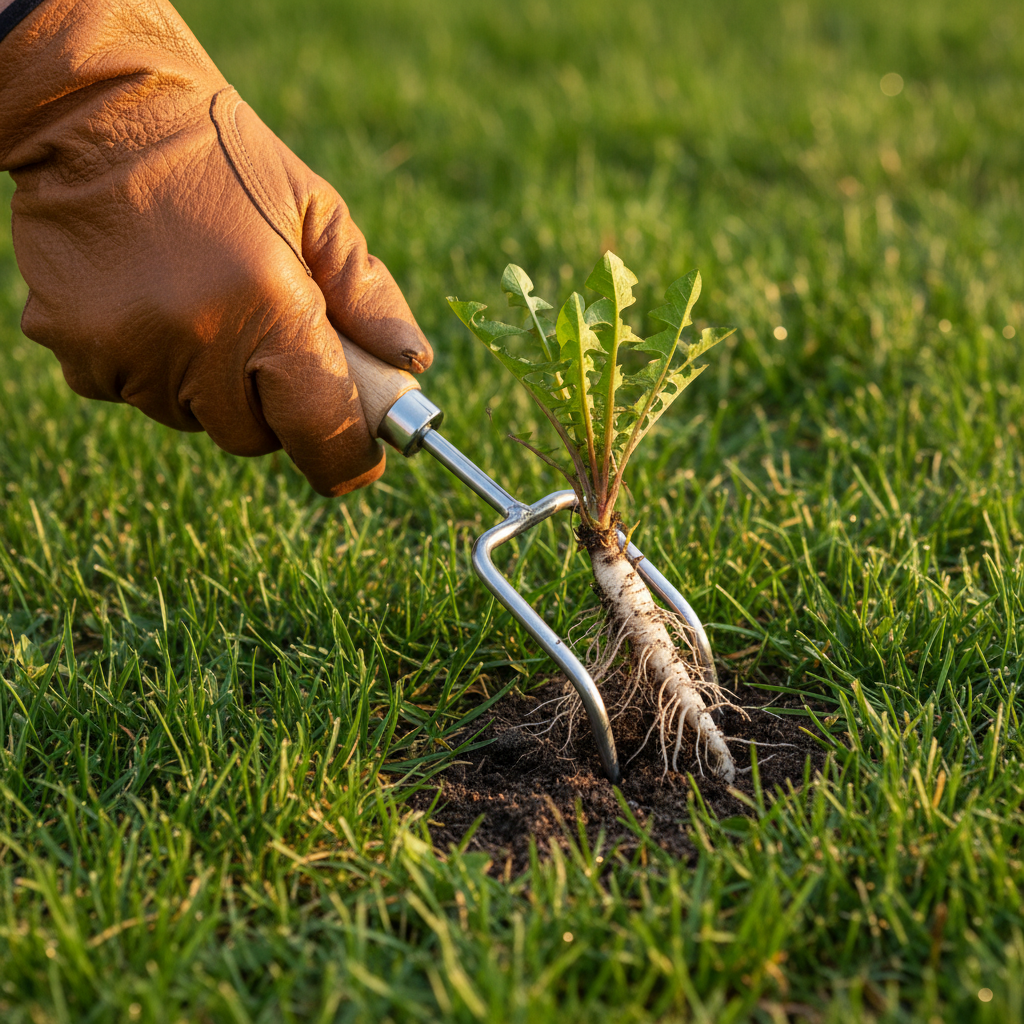
Mechanical Removal (for smaller infestations) — If you’ve only got a few dozen, or you don’t want to use chemicals, this is your first move. The goal is simple: get the whole taproot.
- Tools: A dandelion weeder tool is worth having. It’s got a notched end or forked design that helps you get down where the root lives.
- Technique: Water the lawn first; damp soil makes life a lot easier. Push the tool in next to the plant, pry it loose, and pull as much of that taproot as you can. Leave a chunk behind, and it’ll often come right back. I pulled a yard apart in Frisco last month where the homeowner had been yanking tops for years — same story, same weeds. We spent most of the afternoon digging instead of pulling, and that was the difference. Slow? Yep. Effective? You bet.
-
Targeted Herbicide Application (for larger areas) — When hand-pulling won’t cut it, a selective broadleaf herbicide is the move. These are made to kill dandelions and other broadleaf weeds without hurting your grass.
- Safety First: Always, and I mean always, read the label directions. Wear gloves, eye protection, and long sleeves. Don’t spray on windy days, unless you want to accidentally nail your neighbor’s petunias.
- Product Type: Look for products containing 2,4-D, MCPP, or dicamba. Some come as liquid concentrates, others as granules. For spot treatment, a liquid spray bottle works great.
- Timing: Apply when dandelions are actively growing — usually spring or fall — and when temperatures are between 50-80°F. Skip extreme heat. It can stress your grass and make the whole job messier.
-
Overseeding Your Lawn — A thick, healthy lawn is one of the best ways to keep dandelions from moving in. They hate competition. Overseeding fills in the bare spots they love to use.
- When: Late summer to early fall is the sweet spot. The new grass gets time to settle in before winter and wakes up ahead of the weeds in spring.
- How: Dethatch and aerate first if the soil’s packed down. Spread good grass seed evenly, then lightly cover it with a thin layer of compost or topsoil. Keep it moist until the seed sprouts.
-
Fertilize Regularly — Feed your lawn. A lawn that’s getting the right nutrients grows thicker and faster, which shades out weed seeds and makes it tougher for dandelions to get established.
- Schedule: Usually 3-4 applications per year: early spring, late spring, late summer, and late fall. Use a slow-release nitrogen fertilizer.
- Avoid: Overdoing it, which can burn the grass, or fertilizing at the wrong time, which can actually feed the wrong kind of growth.
-
Proper Mowing Height — Most folks mow too short. Taller grass shades the soil, keeps weed seeds from getting light, and makes it harder for dandelions to slip in.
- Height: Set your mower deck to 2.5 to 3 inches, or even 3.5 inches during hot summer months. Never cut off more than one-third of the grass blade height at one time.
-
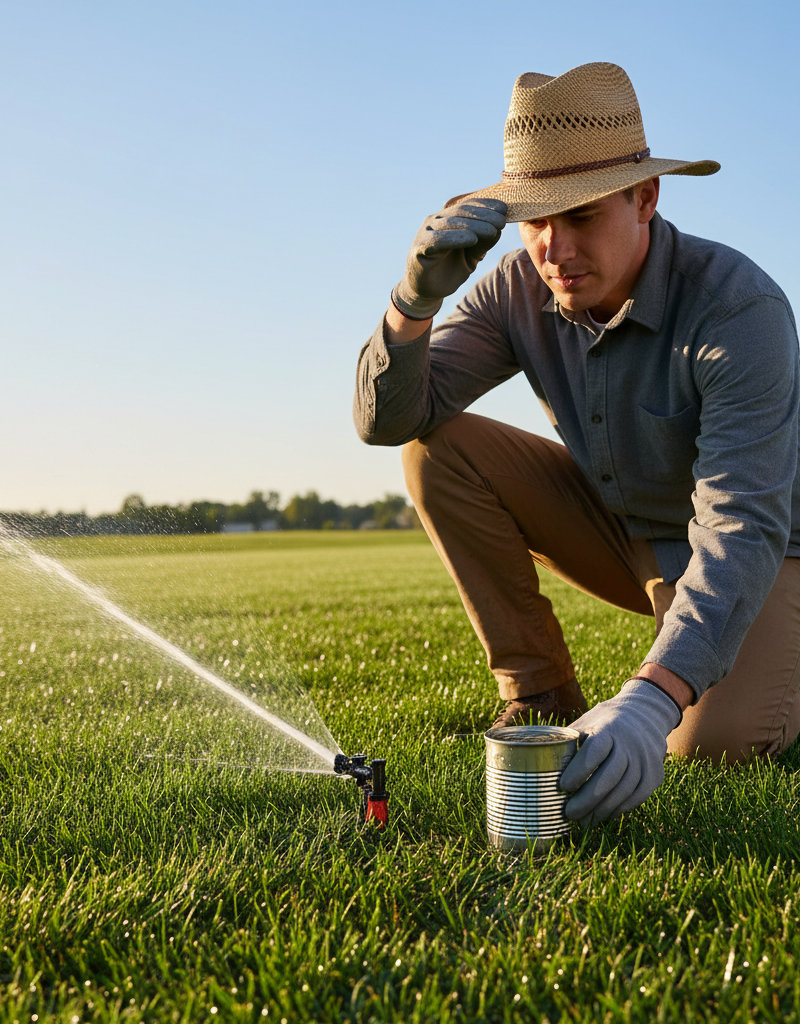
Water Deeply and Infrequently — Shallow watering makes shallow grass roots and invites weeds. Deep, infrequent watering pushes roots down where they belong and helps your lawn handle stress better.
- How much: Aim for about 1 inch of water per week, either from rain or irrigation. A rain gauge makes this easy to track.
- When: Early morning is best. Less evaporation, fewer fungus issues, better results all around.
-
Mulch Garden Beds — Dandelions don’t just show up in the lawn. They’ll pop up in beds too if you let them. A solid layer of mulch helps stop that.
- Type: Use shredded bark, wood chips, or straw. I like shredded bark myself; it holds up longer.
- Depth: Keep it at a 2-3 inch layer. Don’t bury the stems, though — that’s how you end up with rot.
Common Causes
So, why do these darn dandelions keep coming back? Usually it’s a mix of a few things, and it all points back to the health of the lawn.
- Thin or Patchy Lawn: Dandelions are sun-lovers. If your grass isn’t thick enough to shade the soil, they’ll move right in. Bare spots are basically open invitations.
- Compact Soil: Their deep taproots can push through packed soil where grass roots struggle. Aeration can help a ton here.
- Mowing Too Short: Scalping the lawn stresses the grass and lets sunlight hit the soil, which is just what dandelion seeds want.
- Improper Watering: Shallow, frequent watering keeps grass roots weak and near the surface, while dandelions with taproots can reach deeper moisture. That gives them the edge.
- Skipping Pre-Emergents: If you’re not using a pre-emergent herbicide in early spring, you’re basically letting those seeds germinate unchallenged. It’s like leaving the door cracked open.
- Allowing Them to Go to Seed: Big one. One dandelion with a puffball can send thousands of seeds into the yard. Let a few go to seed, and you’re planting next year’s problem — for you and everybody nearby.
Common Mistakes
I’ve seen a lot of good-hearted folks make these mistakes, and then they wonder why nothing changes.
- Mowing Over Seed Heads: Don’t let those white puffballs spread their mess all over your place. If you see them, pull them or treat them before they go to seed. Mowing just scatters the problem.
- Pulling Without Getting the Taproot: You might feel productive, but if you leave even an inch of that taproot, it’ll come right back — often with more than one head. That’s not removal. That’s a haircut.
- Spraying on a Windy Day: You’re not just wasting product; you’re risking damage to anything nearby that you actually want to keep. Herbicides are powerful. Respect them.
- Ignoring Soil Health: Dandelions thrive in weak soil. If yours is compacted, low on nutrients, or has a lousy pH, your grass will struggle and the weeds will win. Get a soil test.
- Waiting Too Long: The longer you let dandelions grow, the tougher they are to control. Small plants with shallow taproots are a whole lot easier to kill than mature ones that’ve already seeded a few times.
- Applying Herbicides Incorrectly: Too much, too little, wrong temperature — any of that can give you poor results or hurt the lawn. Read. The. Label. Twice.
Cost & Time Breakdown
| Task | DIY Cost | Pro Cost | Time |
|---|---|---|---|
| Hand Pulling (small areas) | $0–$25 (tool) | N/A | 15 min – 2 hours |
| Spot Spraying (DIY) | $15–$40 (herb.) | N/A | 10 min – 1 hour |
| Full Lawn Herbicide (DIY) | $30–$80 | N/A | 30 min – 2 hours |
| Overseeding & Fertilizing (DIY) | $50–$200+ | $200–$500+ | 2–4 hours (initial) |
| Pro Lawn Treatment (seasonal) | N/A | $300–$800/year | Varies by service |
| Soil Test | $15–$30 | N/A | 10 min |
Tips & Prevention
- Pre-Emergent is Your Ally: Apply a pre-emergent herbicide in early spring (when soil temps consistently reach 50-55°F) to stop dandelion seeds from germinating. That’s prevention doing its job.
- Fertilize for a Thicker Lawn: A solid fertilization schedule helps your grass grow dense and healthy, which naturally crowds out weeds. Aim for about 1 lb of nitrogen per 1,000 sq ft per application.
- Mow High: Keep that mower deck up. A grass height of 2.5 to 3 inches helps shade the soil and cuts down on seed germination.
- Water Smart: Deep, infrequent watering builds strong, deep grass roots that can compete better with dandelion taproots. Aim for about an inch of water per week.
- Aeration & Dethatching: If your soil is compacted or you’ve got a heavy layer of thatch, annual aeration and the occasional dethatching will help your lawn a lot and cut weed pressure down.
- Don't Let Them Seed: Big one. As soon as you see those yellow flowers turn to puffballs, deal with ‘em. Don’t let them scatter thousands of seeds and hand you next year’s headache.
When to Call a Professional
Look, I’m all for DIY, but there are times when you just need to call in the cavalry. If your lawn is truly overrun with dandelions — I’m talking wall-to-wall yellow, where you can barely see the grass — a professional lawn care service might be your best bet. They’ve got access to stronger, commercial-grade herbicides and the know-how to apply them safely and correctly. Also, if you’ve tried the DIY route for a season or two and still haven’t made a dent, or if you’re fighting a bigger issue like severe soil compaction, a pro can build a real plan for you, including soil amendments and aeration, that goes way beyond what most homeowners can do on a Saturday. Don’t be shy about waving the white flag and getting some expert help — sometimes that saves you time, money, and a whole lot of aggravation down the road.
Related Articles
Keep troubleshooting with these hand-picked guides from FixlyGuide:
- The #1 Mistake Killing Your Dandelion-Fighting Efforts (and the Easy Fix) — Stop dandelions from taking over your lawn by understanding common mistakes and implementing effective, long-term solutions for a healthier…
- The #1 Mistake Killing Your Lawn's Fight Against Dandelions (And The Easy Fix) — Stop dandelions from taking over your lawn by understanding their lifecycle and applying targeted, timely treatments for long-term control.
- The #1 Dandelion Mistake Almost Every Homeowner Makes (and How to Fix It) — Many homeowners accidentally make dandelions worse. Learn the most common mistake and how to truly eliminate these persistent weeds for goo…
- The #1 Mistake Homeowners Make When a Lawn Mower Won't Start (And the Easy Fix) — Before you despair, discover the most common culprit behind a non-starting lawn mower and how to fix it in minutes.
- The #1 Lawn Aeration Mistake Most Homeowners Make (And How to Fix It) — Timing is everything when it comes to lawn aeration, and doing it at the wrong time can do more harm than good for your grass.
- The Hidden Reason Your AC Freezes — And Why Most Homeowners Get It Wrong — Discover the surprising truth behind why your outdoor AC unit is freezing and learn the most common mistake homeowners make when trying to…
Should you do this yourself?
Answer five quick questions before you start. Safety outranks savings every time.
Your experience with work like this
How high do you have to work?
Does the job involve any of these?
Will it need a permit?
Specialty tools
Free and instant. Educational guidance only — not a quote, inspection, or professional diagnosis.
What should this project cost?
Enter your project details for a realistic cost range before you call anyone.
Cost depends heavily on which system turns out to be the source.
- Regional adjustment
- National average
- Labor share (typical)
- ~$1,620
- Quotes to collect
- 3 written estimates
Educational estimate based on national averages — not a binding quote. Always confirm with written local estimates.
Before you start
Check the difficulty, permits, and safety risk — then decide whether to call a pro.
- Estimate this projectGet a cost range for your scope and ZIP before you call anyone.Open
- Get local estimatesSend one request and compare written estimates from vetted pros.Open
Free, no signup required. Estimates are educational guidance, not a quote or an inspection.
Get the print-ready PDF of this guide
A clean, ad-free, printable version you can keep on your phone or pin to the workshop wall. Free with a FixlyGuide account.
- Print-optimized layout
- Tools, materials & every step included
- Saved to your account
Frequently asked questions
What kills dandelions permanently?+
There's no true 'permanent' killer because seeds are always flying around, but a combination of targeted herbicides, manual removal of taproots, and consistent lawn care (mowing high, proper watering, fertilizing) will keep them at bay for good. Pre-emergent herbicides are key for stopping new seeds.
When is the best time to spray dandelions?+
The best times are early spring when they first emerge and are actively growing, or in the fall after the first frost but before the ground freezes solid. In fall, dandelions are pulling nutrients down to their taproot, so they'll take the herbicide with it, making it super effective. Avoid spraying in extreme heat.
Can I just pull dandelions by hand?+
Yes, if you've only got a few, and you're diligent about it. The crucial part is getting the entire taproot. If you leave even a small piece behind, it'll regrow. A good dandelion weeding tool makes this job much easier and more effective than just yanking with your hands.
Does vinegar kill dandelions?+
Vinegar, especially horticultural vinegar (acetic acid concentration of 10-20%), can kill the top growth of dandelions. However, it's a non-selective herbicide, meaning it'll kill your grass too, and it rarely gets deep enough to kill the taproot. So, they'll usually grow back. Not my first choice for a lawn.
How long does it take for dandelions to die after spraying?+
Typically, you'll start seeing wilting and yellowing within a few days to a week after applying a broadleaf herbicide. Full death of the plant can take anywhere from 2 to 4 weeks, depending on the product, concentration, and growing conditions. Be patient; these things are tough.
Why do I have so many dandelions in my lawn?+
Lots of dandelions usually point to a weak, thin lawn. They thrive in bare spots, compacted soil, and areas with too much sunlight reaching the soil. Mowing too short, improper watering, and a lack of fertilization also contribute to an environment where dandelions can outcompete your grass.
Will mowing dandelions stop them from spreading?+
Mowing can cut off the flower heads, but if they've already turned into those white puffballs, you're actually spreading the seeds far and wide. Mowing prevents new seeds from forming, but it won't kill the plant or its taproot. It's a temporary cosmetic fix at best; don't count on it as your main strategy.
Is it better to use liquid or granular weed killer?+
It depends on your preference and the situation. Liquid weed killers offer precise spot treatment and faster results because they're absorbed through the leaves. Granular products are often combined with fertilizer ('weed and feed') and are good for treating large areas, but they need to be watered in to activate. Both can be effective if used correctly.
Can I prevent dandelions from coming back next year?+
You can't guarantee 'never again,' but you can dramatically reduce them. The best prevention is a thick, healthy lawn that's mowed high, watered deeply, and fertilized properly. Applying a pre-emergent herbicide in early spring will also stop new dandelion seeds from germinating. Persistence is key!

Discussion
Loading comments…