- Perform a catch-cup audit — Set out 6 to 10 flat-bottomed, identical shallow cans (tuna cans, cat food cans, or standardized plastic catch cups) randomly across one irrigation zone. Run that specific zone for exactly 15 minutes.
- Tools required: 6–10 tuna cans or irrigation catch cups, small ruler.
- If your zone has mixed heads (rotary rotors and fixed sprayers): Separate them; never run different nozzle types on the same valve line.
Landscaping · Deck or fence project
| Project category | Landscaping |
|---|---|
| Problem type | Deck or fence project |
| Trade required | Landscaping |
| Urgency | Planned project |
| Safety risk | Moderate safety risk |
| DIY suitability | DIY for experienced homeowners |
| Cost category | High cost |
| Typical timeline | Most builds 3–10 days depending on size |
| Contractor type | Landscaping contractor |
Repair option
Replace failed boards, posts, and hardware; reseal the surface.
Replacement option
Rebuild when framing or the ledger connection is unsafe.
Common causes
- Rot at posts and ledger
- Storm damage
- Adding outdoor living space
Relevant tools:home improvement material pricesproject cost estimator
Published October 25, 2026Last updated October 25, 2026
Tools & materials you'll need
Affiliate linksAs an Amazon Associate FixlyGuide earns from qualifying purchases — at no extra cost to you. Prices and availability are accurate as of publication and subject to change.
Quick Answer
Water established turf 1 to 2 times per week, and aim for a combined total of 1 to 1.5 inches of water including rainfall. Skip the daily 10-minute spritzing. That kind of watering just trains the roots to live in the top inch of baking soil. Deep, infrequent soaks push roots down 6 to 8 inches into cooler ground, and that’s where you want ’em.
The Problem
Most homeowners just let the irrigation controller run on autopilot. Timer pops on every morning at 6:00 AM for twelve minutes, rain or shine, cool spell or heat wave. Lawn looks fine in April. Then mid-July shows up, and suddenly you’ve got brown patches, crabgrass, or those weird spongy fungal mats overnight. Been there, fixed that.
What’s going on under the surface? Grass doesn’t drink by the clock. It drinks based on soil moisture depletion, ambient heat, wind velocity, and humidity. If you give turf brief daily cycles, the water barely gets past the thatch and the first half-inch of topsoil. Grass reacts the way you’d expect. Roots hang out near the surface because that’s where the water stops. Then July rolls in with 95°F afternoons, the top inch turns into a skillet, and the turf either goes dormant from heat stress or just plain quits.
Flip the coin, and overwatering causes its own mess. Soggy turf suffocates root hair cells, and those cells need oxygen to stay alive. Anaerobic bacteria move in, root rot follows, and now you’ve got a fat water bill and a dying lawn. No thanks. A weather-adjusted routine fixes both headaches at once.
How It Works
Turfgrass survives by pulling soil moisture up through microscopic root hairs, moving it through vascular xylem tissue, and releasing it through leaf stomata to cool itself—that whole process is called evapotranspiration (ET). On a sunny 90°F afternoon with low humidity and a 10 mph breeze, an active lawn can lose 0.25 to 0.35 inches of water a day through ET alone. That adds up fast.
Your dirt works like a moisture battery. Heavy clay—common across big stretches of North Texas, the Midwest, and the South—holds a ton of water because the particles are tiny and packed tight. Trouble is, clay drinks slow. If you apply water faster than 0.20 inches per hour, a lot of it just runs off toward the street or storm drain. Sandy soils are the opposite. They act like a sieve, dropping water straight down at up to 2 inches per hour, so they don’t hold much and they need more frequent top-offs. Loam is the sweet spot. Nice if you’ve got it.
A healthy root zone for warm-season varieties (Bermuda, St. Augustine, Zoysia) and cool-season varieties (Kentucky Bluegrass, Tall Fescue) needs to run 6 to 8 inches deep. Getting water down there takes roughly 0.5 to 0.75 inches per irrigation event. That gives you a gravity-fed moisture gradient: wet lower down, drier up top. The top inch dries out within 48 hours, which helps keep surface fungal spores and weed seeds from taking over, while the deeper roots tap the reserve below.
Step-by-Step Fix
Setting up a real irrigation schedule means measuring output, checking soil penetration, and programming your controller with the "cycle-and-soak" technique. Nothing fancy. Just do the homework.
-
Perform a catch-cup audit — Set out 6 to 10 flat-bottomed, identical shallow cans (tuna cans, cat food cans, or standardized plastic catch cups) randomly across one irrigation zone. Run that specific zone for exactly 15 minutes.
- Tools required: 6–10 tuna cans or irrigation catch cups, small ruler.
- If your zone has mixed heads (rotary rotors and fixed sprayers): Separate them; never run different nozzle types on the same valve line.
-
Calculate your precipitation rate — Measure the depth of water in each cup using a small ruler and calculate the average. Multiply that average depth by 4 to determine your zone's precipitation rate in inches per hour.
- For example, if your average depth after 15 minutes is 0.25 inches, your system puts down 1.0 inch per hour.
- Sprayers often put out 1.5 to 2.0 inches per hour; rotary nozzles usually put out 0.4 to 0.6 inches per hour.
-
Determine target application volume by grass and season — Set your weekly target based on turf type and current ambient temperatures. Warm-season grasses (Bermuda, Zoysia) need 1.0 inch total per week in peak summer; cool-season grasses (Tall Fescue, Kentucky Bluegrass) require 1.25 to 1.5 inches to stave off heat dormancy.
- In spring and autumn, cut these totals down to 0.5 to 0.75 inches total per week.
-
Split runtime into deep, spaced cycles — Divide your weekly target into two separate watering days (e.g., Tuesday and Friday). If your lawn requires 1.0 inch per week and your audit revealed an output rate of 1.0 inch per hour, you need 30 minutes of total watering per zone on each of those two days.
- If your lawn is in heavy sand: Split the weekly quota into three lighter days instead of two to avoid leaching water past the root zone.
-
Split single runs using the "cycle-and-soak" method — Prevent surface runoff on tight clay soils by programming multiple short run cycles with a soak window between them. Instead of blasting a zone for 30 consecutive minutes, program three 10-minute cycles spaced 45 minutes apart on the same morning.
- The first cycle breaks soil surface tension; the second cycle sinks into the upper root zone; the third cycle drives moisture to the 6-inch mark without running into the gutter.
-
Shift start times to early morning — Set the controller to fire between 3:00 AM and 6:00 AM.
- Morning watering avoids excessive evaporation loss caused by mid-day sun and high winds.
- Avoid evening watering (6:00 PM to 10:00 PM); wet grass blades sitting in warm, stagnant darkness for 10 hours provide an open invitation for brown patch (Rhizoctonia) and dollar spot fungi.
-
Verify soil depth with the screwdriver test — Push a standard 6-inch flathead screwdriver or steel soil probe vertically into the turf roughly 2 hours after your cycle completes. The blade should slide smoothly into the ground with moderate hand pressure down to the handle.
- If it hits a brick wall at 2 inches: The water ran off rather than penetrating. Lengthen soak windows or aerate compacted turf.
- If the soil is muddy or liquid: You are applying too much water or drainage is compromised.
-
Calibrate and test your rain sensor — Locate your hardwired or wireless rain shutoff switch mounted on the gutter or fence line. Clear out fallen leaves, press the manual test switch to verify controller shutoff, and adjust the rainfall trip point to 1/4 inch or 1/2 inch.
- If the sensor is older than 5 years: The internal hygroscopic cork discs are likely warped or decomposed; replace the sensor unit entirely.
-
Install a smart Wi-Fi irrigation controller — Upgrade a basic mechanical pin-clock box to a modern smart controller with local weather station syncing. Smart units automatically suspend cycles when rain, high winds, or freezing temps occur, adjusting runtimes automatically as seasonal solar radiation shifts.
- Safety note: Turn off power to the controller's dedicated 24VAC transformer or breaker before swapping field wiring lines.
Common Causes
Why’s your grass struggling to hold water? Nine times out of ten, it comes back to one of these:
- Shallow watering habits: Running zones for 8 to 10 minutes every day keeps the roots stuck in the top inch of soil, which leaves the lawn wide open to heat stress.
- Compacted clay soil: Heavy foot traffic and dense clay stop water from sinking in. It beads up, pools, and runs along concrete curbs instead of getting into the root zone.
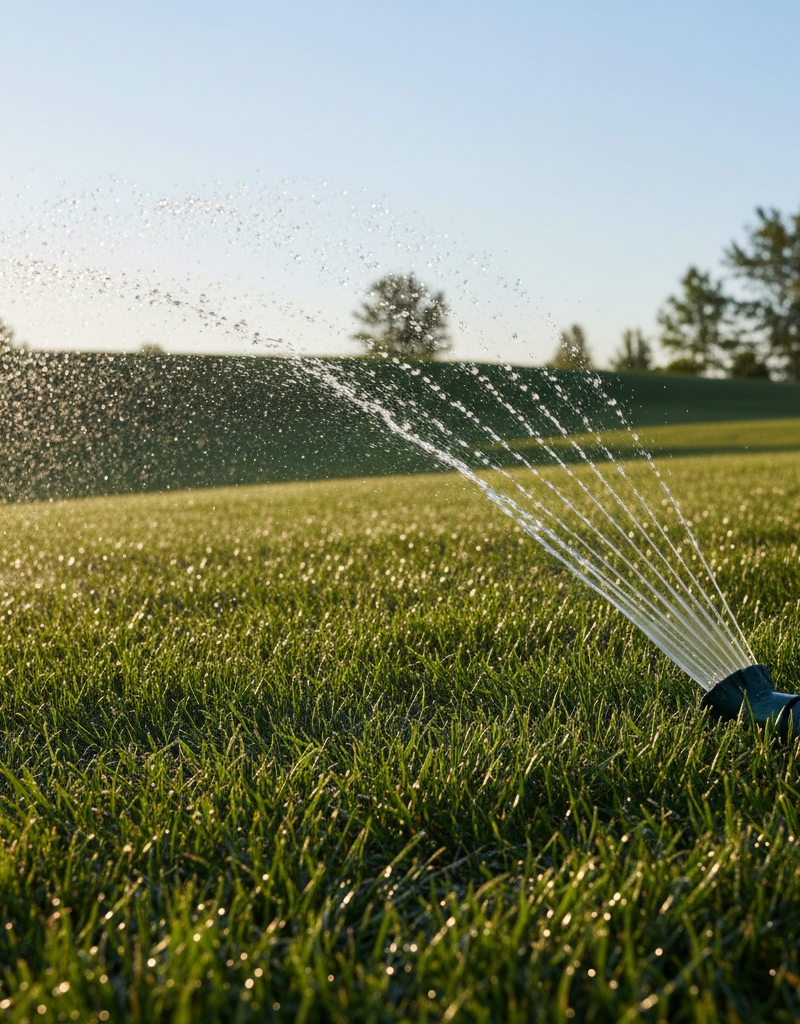
- Mismatched nozzle output: Mixing high-volume spray heads (1.5–2.0 inches/hr) and low-volume rotary nozzles (0.5 inches/hr) on a single zone leaves one section drowning while the next one dries out.
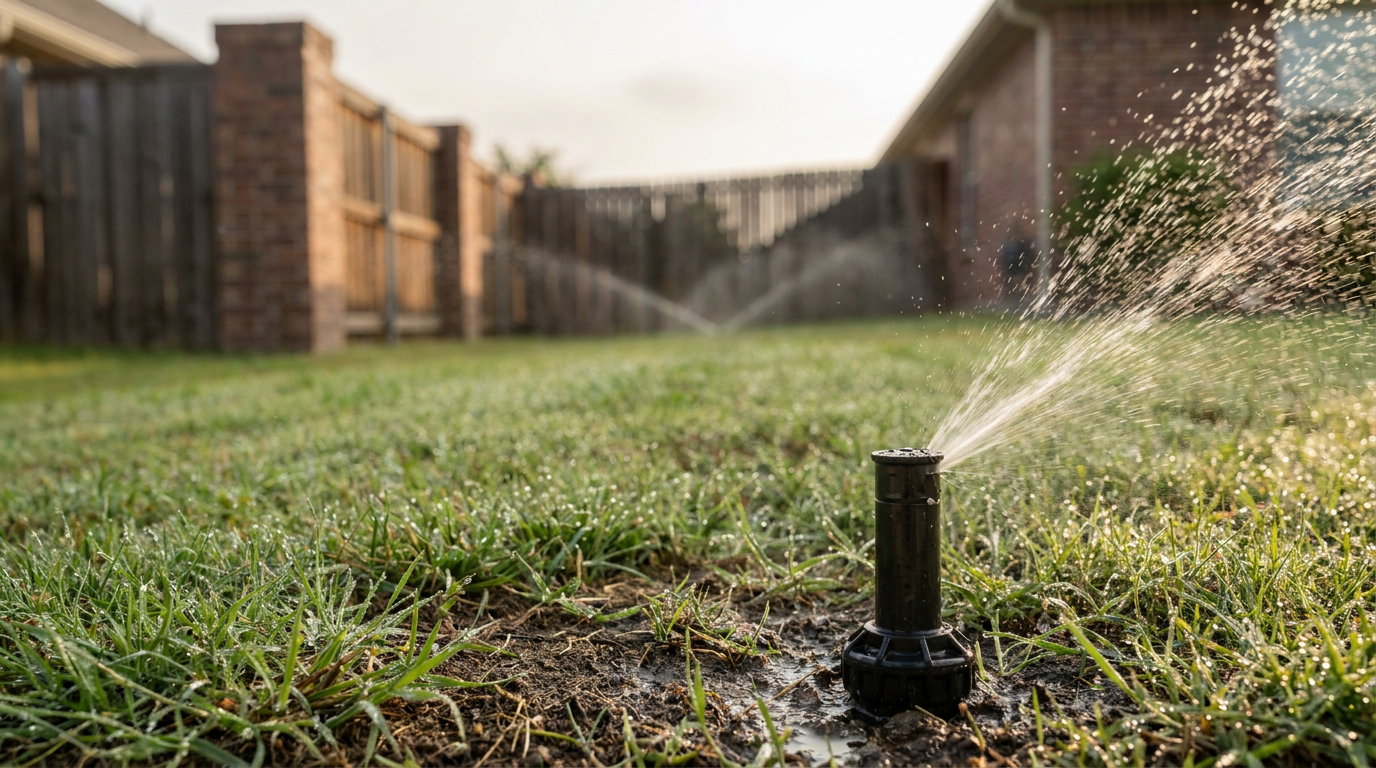
- Clogged or sunken spray heads: Heads pushed below grade by mowing equipment or clogged with sand blast water sideways into the thatch, and you end up with dry spots a few feet away.
- Ignoring the seasonal curve: Running the same program in October that you ran in July floods the root zone when the grass's metabolic demand drops by half.
Common Mistakes
- Watering at night to "beat the heat": Homeowners think running sprinklers at 9:00 PM saves water. It doesn’t. Wet foliage sitting overnight breeds fungal blights like pythium and large patch. Keep applications between 3:00 AM and 8:00 AM so the morning sun dries the blades fast.
- Adjusting runtimes by guesswork instead of inches: Adding "five minutes" to a zone when the grass looks thirsty doesn't solve the real issue. Measure output in inches with catch cups. Five minutes on a rotor head is barely a sip.
- Letting water pool on slopes: Watering a sloped lawn for 25 straight minutes turns into a river along the curb. Use cycle-and-soak: water for 6 minutes, pause an hour, repeat three times.
- Ignoring the rain gauge: Thinking a quick summer thunderstorm watered the lawn is a classic mistake. A 15-minute deluge often drops only 0.10 inches of water before blowing away. Buy a cheap rain gauge and check it before skipping a scheduled run.
- Watering during high winds: Running sprayers when wind speeds exceed 15 mph turns the spray into mist. Half your water ends up on your neighbor's roof or the asphalt street.
Cost & Time Breakdown
| Task | DIY Cost | Pro Cost | Time |
|---|---|---|---|
| Catch-Cup Audit & Flow Test | $0–$15 | $100–$180 | 1–2 hours |
| Soil Depth Verification Probe | $0–$20 | Included in audit | 15 minutes |
| Smart Controller Upgrade | $120–$250 | $350–$600 | 1–2 hours |
| Rain Sensor Replacement | $30–$60 | $125–$200 | 45 minutes |
| Nozzle Unclogging / Realignment | $5–$20 | $75–$150 | 1 hour |
| Core Aeration (Rental vs Service) | $75–$110 (rental) | $120–$250 | 2–3 hours |
Tips & Prevention
- Track blade recoil: Step firmly on the turf. If the grass blades spring back upright immediately, the plant has high turgor pressure and doesn't need water. If your footprints stay flattened and dull blue-gray for 15 minutes, water within 24 hours.
- Sharpen your mower blade twice a season: Dull mower blades tear grass tips instead of cutting them clean. Ragged, torn grass leaves bleed moisture through open wounds, and that drives up the lawn's water needs.
- Mow taller during high summer: Raise your mowing height by 0.5 to 1.0 inch during June, July, and August. Taller leaf blades shade the soil below, slow evaporation, and give root systems a little protection.
- Aerate compacted ground every spring or fall: Pulling 2- to 3-inch soil cores opens channels for oxygen and water. That matters a lot on older lawns where heavy clay has packed down under foot traffic.
- Seasonal controller recalibration: Mark four calendar reminders every year (March 15, June 1, September 1, November 1) to adjust your irrigation runtimes to match the current evapotranspiration rates.
When to Call a Professional
If you do the audit, run the cycles right, and a few zones still show major pressure drops, you may be dealing with something underground. Cracked PVC lateral pipes, tree root intrusion crushing 1-inch lines, or cracked fittings below grade call for trenching, pressure diagnostics, and solvent welding. I pulled a water line job in Frisco last month that had exactly this kind of ghost problem—looked fine at the heads, but the pressure was falling off hard under the yard. No way around it.
Same story if a zone won’t shut off and keeps running until you kill the backflow preventer or main shutoff. That usually means a failed zone control valve. Debris in the valve diaphragm, worn rubber gaskets, or burned-out 24V solenoids take excavation and a rebuild, not wishful thinking. And on backflow preventer testing, city code in nearly all jurisdictions says a licensed irrigation technician or certified backflow inspector has to inspect and tag the assembly every year. If dirty water backs up toward the house or the double-check valve spits water under pressure, shut the isolation valves and bring in a licensed irrigator.
Related Articles
Keep troubleshooting with these hand-picked guides from FixlyGuide:
- The 7 Critical Yard Prep Steps Smart Homeowners Never Miss (And Why) — Prepare your yard for a thriving spring with these essential steps, from soil testing to tool maintenance, ensuring a vibrant outdoor space.
- The Hard Truth About Thatch: Why Your Lawn Is Struggling (And How to Fix It) — Learn why a thick layer of thatch is silently choking your lawn and discover the hands-on steps you need to take to restore its health and…
- Fertilizer Burn on Your Lawn? 8 Steps to Save Your Scorched Grass — Revive grass and garden beds from fertilizer burn. Discover how reverse osmosis scorches roots and follow our 72-hour soil flushing protoco…
- The Grassy Secret: Why Your Lawn Has Brown Patches (Even After Watering) — Discover the real culprit behind mysterious brown lawn patches—it might not be drought. Learn to identify and eliminate lawn grubs before t…
- The Surprising Reason Your Garden's Failing (And It's Not Water or Fertilizer) — Many gardeners struggle with wilting plants and stunted growth despite proper watering and fertilizing, often overlooking the critical role…
- That Funky Smell in Your Washing Machine — Tired of your washing machine making your 'clean' clothes smell musty? We'll show you how often you should actually deep clean your washi…
Should you do this yourself?
Answer five quick questions before you start. Safety outranks savings every time.
Your experience with work like this
How high do you have to work?
Does the job involve any of these?
Will it need a permit?
Specialty tools
Free and instant. Educational guidance only — not a quote, inspection, or professional diagnosis.
What should this project cost?
Enter your project details for a realistic cost range before you call anyone.
Cost depends heavily on which system turns out to be the source.
- Regional adjustment
- National average
- Labor share (typical)
- ~$1,620
- Quotes to collect
- 3 written estimates
Educational estimate based on national averages — not a binding quote. Always confirm with written local estimates.
Before you start
Check the difficulty, permits, and safety risk — then decide whether to call a pro.
- Estimate this projectGet a cost range for your scope and ZIP before you call anyone.Open
- Get local estimatesSend one request and compare written estimates from vetted pros.Open
Free, no signup required. Estimates are educational guidance, not a quote or an inspection.
Get the print-ready PDF of this guide
A clean, ad-free, printable version you can keep on your phone or pin to the workshop wall. Free with a FixlyGuide account.
- Print-optimized layout
- Tools, materials & every step included
- Saved to your account
Frequently asked questions
How many inches of water does a lawn need each week?+
Most established lawns require 1.0 to 1.5 inches of water per week, including natural rainfall. Split this amount over one or two deep waterings rather than short daily sessions to encourage deep, resilient root growth.
What is the best time of day to water grass?+
Water between 3:00 AM and 8:00 AM. Early morning watering minimizes loss to evaporation and wind, while giving the grass blades time to dry off quickly under the morning sun, preventing fungal diseases.
Is it better to water your lawn every day or every other day?+
Daily watering keeps roots shallow and weak, inviting thatch buildup, weed seeds, and fungus. Watering deeply 1 to 2 times a week forces roots 6 to 8 inches down into the soil, making your lawn substantially more drought-tolerant.
How do I know how much water my sprinkler system puts out?+
Set out shallow, flat-bottomed cans (like empty tuna cans) across the zone and run your sprinklers for 15 minutes. Measure the water depth in the cans with a ruler, find the average, and multiply by 4 to get your system's output per hour.
What is the screwdriver test for lawns?+
Push a standard 6-inch screwdriver into the turf a couple of hours after watering. If it sinks smoothly all the way to the handle, your watering was deep enough. If it stops short at 2 inches, your soil is compacted or water ran off before soaking in.
What does the cycle-and-soak method mean?+
Cycle-and-soak divides one long watering period into two or three shorter cycles with rest breaks in between. This allows water time to absorb deeply into tight clay soils or sloped areas rather than running off into gutters.
Should I water my lawn during the winter months?+
Dormant lawns in freezing conditions do not need regular watering, but in dry, warm winter regions, give established grass 0.5 inches every 3 to 4 weeks during extended dry spells to keep roots viable.
What are the visible signs of drought stress in grass?+
Footprints that stay visible and flat, blades taking on a bluish-gray cast, and grass curling lengthwise all indicate the lawn has exhausted its moisture reserve and needs a watering cycle.

Discussion
Loading comments…