- The 1 Mistake Homeowners Make Adjusting Sprinkler Heads (And How to Fix It) — Mistakes in adjusting sprinkler spray patterns can lead to uneven watering, brown spots, and wasted water. Learn how to accurately fine-tun…
- The 1 Lawn Aeration Mistake Most Homeowners Make (And How to Time It Right) — Timing your lawn aeration correctly is crucial for maximizing its benefits and ensuring a healthier, more resilient lawn.
- The 1 Mistake Killing Your Lawn's Fight Against Dandelions (It's Not What You Think) — Stop dandelions from taking over your lawn by understanding the crucial timing and methods that most homeowners overlook, leading to endles…
- The 1 Summer Lawn Mistake That Guarantees Yellow Grass (It's Not Drought) — Understanding the most common mistake homeowners make with summer lawn care can save your grass from turning yellow and dying.
- The Secret Reason Your Lush Lawn Mysteriously Dies (It's Not Drought) — Grubs can secretly destroy a healthy lawn from underground, causing dead patches that look like drought damage. Learn to diagnose and treat…
Landscaping · Deck or fence project
| Project category | Landscaping |
|---|---|
| Problem type | Deck or fence project |
| Trade required | Landscaping |
| Urgency | Planned project |
| Safety risk | Moderate safety risk |
| DIY suitability | DIY for experienced homeowners |
| Cost category | High cost |
| Typical timeline | Most builds 3–10 days depending on size |
| Contractor type | Landscaping contractor |
Repair option
Replace failed boards, posts, and hardware; reseal the surface.
Replacement option
Rebuild when framing or the ledger connection is unsafe.
Common causes
- Rot at posts and ledger
- Storm damage
- Adding outdoor living space
Relevant tools:home improvement material pricesproject cost estimator
Published July 25, 2026Last updated August 17, 2026
Tools & materials you'll need
Affiliate links- AmazonEmpty tuna cans or straight-sided containers3–5
As an Amazon Associate FixlyGuide earns from qualifying purchases — at no extra cost to you. Prices and availability are accurate as of publication and subject to change.
Quick Answer
Forget those daily sprinkles. For most lawns, you’ll get the best results by watering deeply but not all the time—think 1 to 3 times a week, tops. The goal’s simple: soak the soil down to 4 to 6 inches each time, which usually works out to about an inch of water. That pushes the roots down where they belong, and a deep-rooted lawn holds up a whole lot better when the weather turns nasty. It also cuts down on disease. Your exact schedule’ll shift with your grass, your soil, and whatever the sky’s doing, but the deep-and-infrequent rule is the one I keep coming back to.
The Problem
I’ve seen this a thousand times: folks out there every evening, giving the lawn a quick little sprinkle like they’re washing a car. They mean well. They really do. But all they’re doing is training a shallow-rooted, needy lawn that wants a drink every day. That light, frequent watering only wets the top inch or two of soil. Your grass roots, being smart but lazy, stay right there where the water is. Then a hot spell rolls in, or you miss a day, and those shallow roots can’t reach a thing. Boom—crispy lawn.
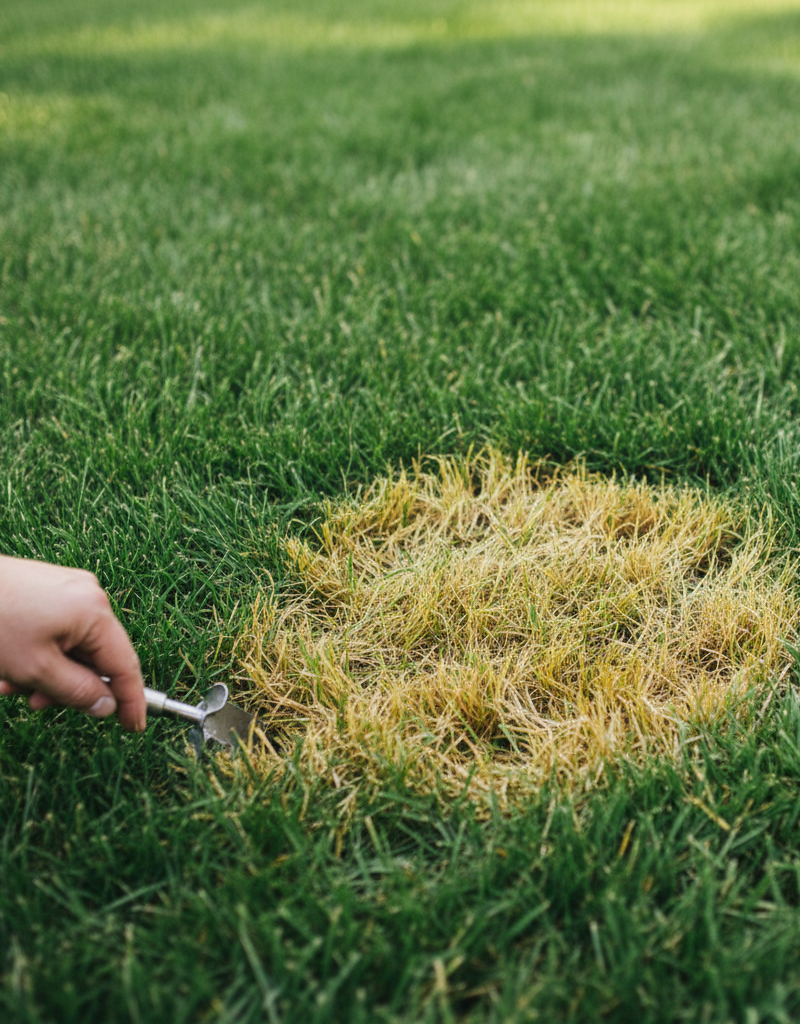
And it gets worse. That constantly damp top layer is basically an open invitation for fungal stuff like brown patch and dollar spot. Grubs and other pests love it too. So now you’re using more water, fighting more problems, and still staring at a lawn that looks tired. I pulled a sprinkler zone apart in Frisco last month that had exactly this problem—beautiful on top, mud and fungus underneath. It’s a lousy cycle, and honestly, it’s just money down the drain.
How It Works
Grass in nature doesn’t get a little drink every day. It gets a real soaking rain, then it goes a few days or even a week with nothing. That’s what makes roots work. They’ve got to chase moisture downward.
That’s what we’re trying to copy with smart watering. When you water to a depth of 4 to 6 inches, you’re telling the roots, “Water’s down here—go get it.” Over time, that builds a deeper, tougher root system. And that matters because deeper roots can tap into a bigger reserve of moisture and nutrients in the soil. The grass handles heat better. It handles drought better. It can even crowd out weeds more effectively, because a lot of weeds just can’t hang through dry stretches the way a healthy lawn can.
A deeper root system also helps the soil stay more stable and less prone to compaction. So instead of acting like a fussy houseplant that needs constant babysitting, your lawn turns into something hardier. That’s the whole game. You’re not just wetting grass—you’re teaching it to find its own water and stand on its own two feet.
Step-by-Step Fix
Before you flip the sprinkler switch, you’ve got to size up your setup. No two yards are identical, and what works for your buddy in Glendale probably won’t be the right move for your place in La Cañada—even if the grass looks the same from the curb.
-
Check Your Soil Type — This one matters a lot. Clay soil holds water for ages, so you won’t need to water as often. Sandy soil drains fast, so you’ll water more often, but you still want to water deeply. Quick test: grab a handful of damp soil. If it forms a ball and stays together, you’ve got clay or loam. If it falls apart easy, it’s sandy. I worked on a yard in Pasadena where the front was basically sand fill and the back was heavy clay. If you don’t account for that, you either drown the back or dry out the front.
- Tools: Trowel or shovel.
- Tip: You can send a soil sample to your local extension office for a proper readout. Small fee, big payoff.
-
Determine Your Grass Type — Different grasses drink different amounts. Cool-season grasses like fescue and bluegrass are happiest in spring and fall and can struggle in summer heat, so they’ll need more water during the hot months. Warm-season grasses like Bermuda or St. Augustine do their best work in summer and slow way down when it cools off. If you know what you’re growing, you can stop guessing.
- Resource: Look up pictures online or ask a local nursery if you’re not sure.
-
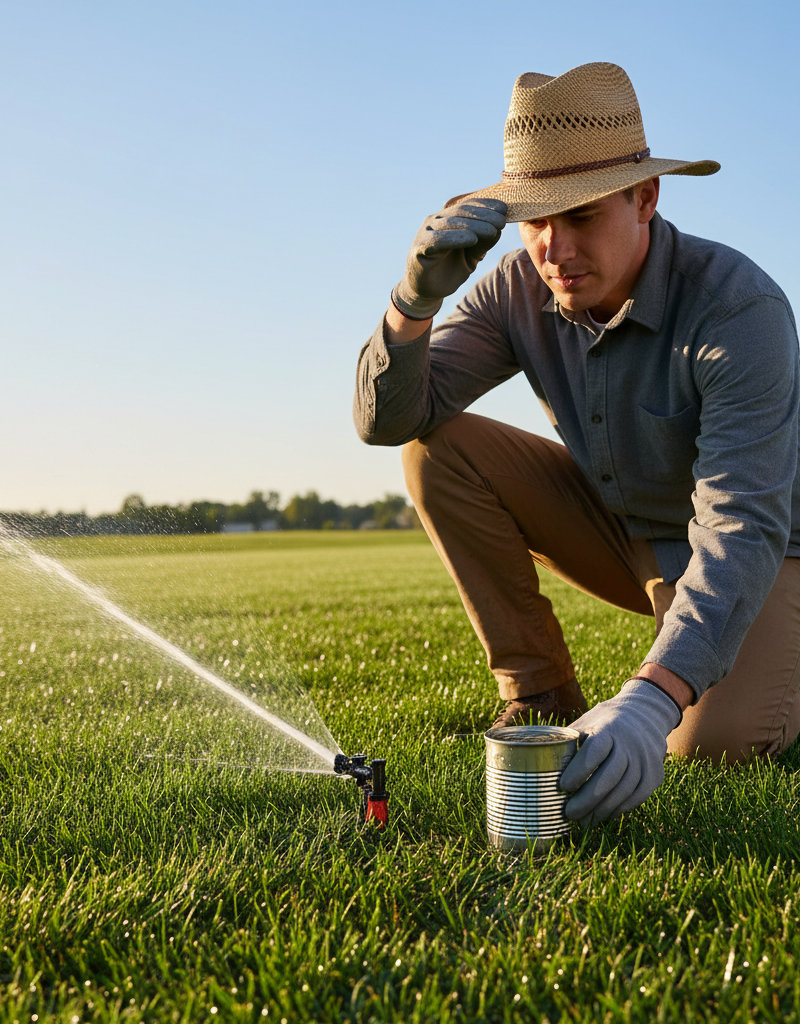
Perform a Tuna Can Test — This is how you figure out how fast your sprinklers are actually putting water out. Grab a few empty tuna cans or other straight-sided containers. Set them around the lawn at random. Run the sprinklers for 15 minutes. Measure the water in each can with a ruler and average it out. That gives you your sprinkler’s “irrigation rate.” If it’s, say, 0.25 inches in 15 minutes, you’ll need about an hour to get that ideal 1 inch of water.
- Materials: 3-5 empty tuna cans, ruler.
- Safety: Watch for slick spots around the sprinklers while you’re placing cans.
-
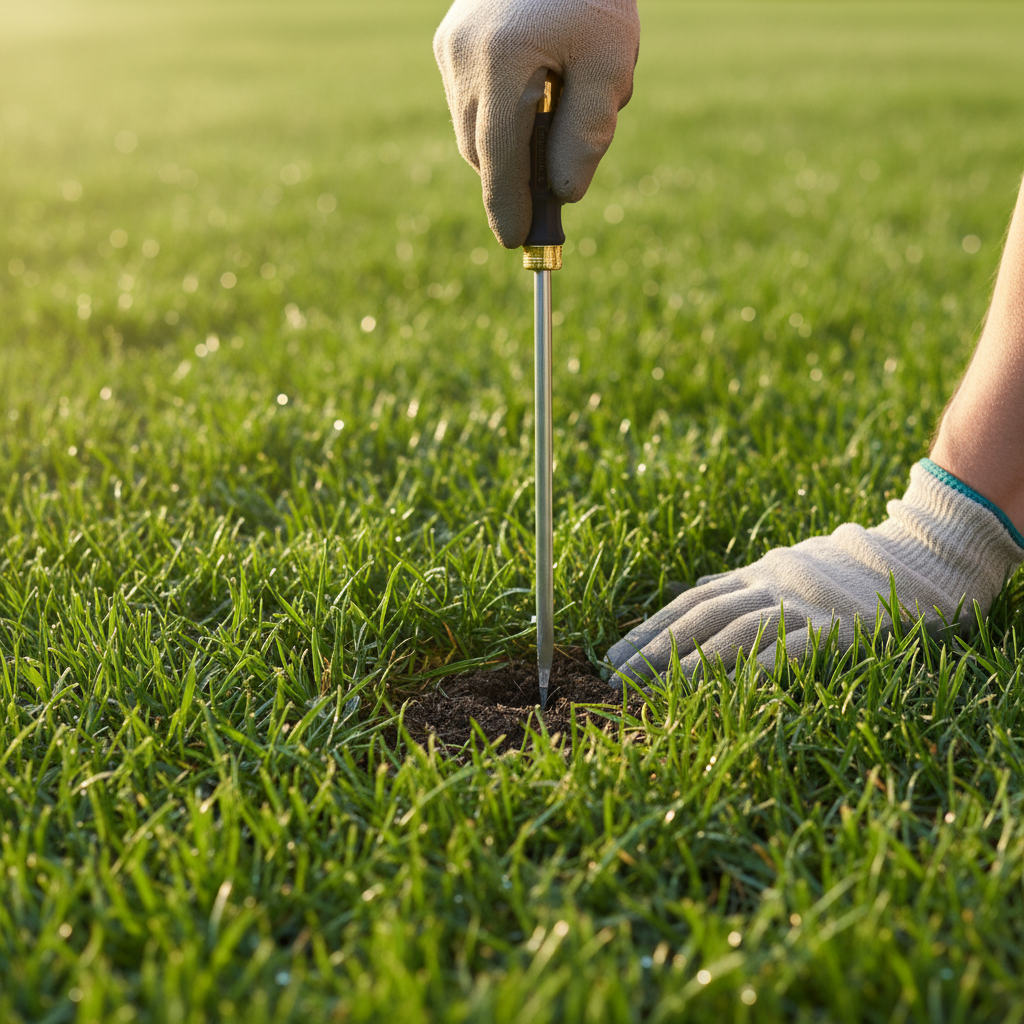
Feel for Moisture Depth — After you’ve run the sprinklers for what you think is enough time to get 4-6 inches deep, grab a screwdriver or a soil probe. Stick it into the lawn. It should slide in easy to the depth you want. If it stops hard at 2 inches, you need more water. If it drops in like nothing past 6 inches, you might be overwatering, or your soil’s super sandy. This is the real check, not the guesswork. You can also dig a small shallow hole with a trowel if you don’t mind getting your hands dirty.
- Tools: Long screwdriver (6-8 inches), soil probe, or trowel.
-
Adjust Your Schedule — Once you know your soil type, grass type, and sprinkler output, you can build a schedule that actually makes sense. For most cool-season grasses during peak summer, 2-3 times a week may be the sweet spot. For warm-season grasses, 1-2 times might be plenty. The key is letting the top few inches of soil dry out between waterings. That little stress pushes the roots to grow deeper. If your lawn starts looking bluish-gray or footprints stay matted down after you walk across it, it’s thirsty. Don’t wait for it to go brown—that’s calling it a day way too late.
- Tip: Early morning is the best window, before 10 AM. Less evaporation, less fungus. Simple.
-
Consider Smart Controllers — If you want to get fancy, or you’re just tired of babysitting the timer, a smart irrigation controller can take a lot of the guesswork out of it. These setups use local weather data and adjust your watering schedule automatically. They cost more up front, sure, but they can trim your water bill and keep the lawn healthier without you having to think about it every other day.
- Tools: Smart irrigation controller (optional).
- Pro Tip: Make sure it’s WaterSense labeled for maximum efficiency.
Common Causes
Most watering headaches come down to a few things I see all the time:
- Misunderstanding soil absorption rates: A lot of homeowners figure water sinks in right away. No dice with clay. It absorbs slow, so a hard blast often just runs off into the street and gets wasted.
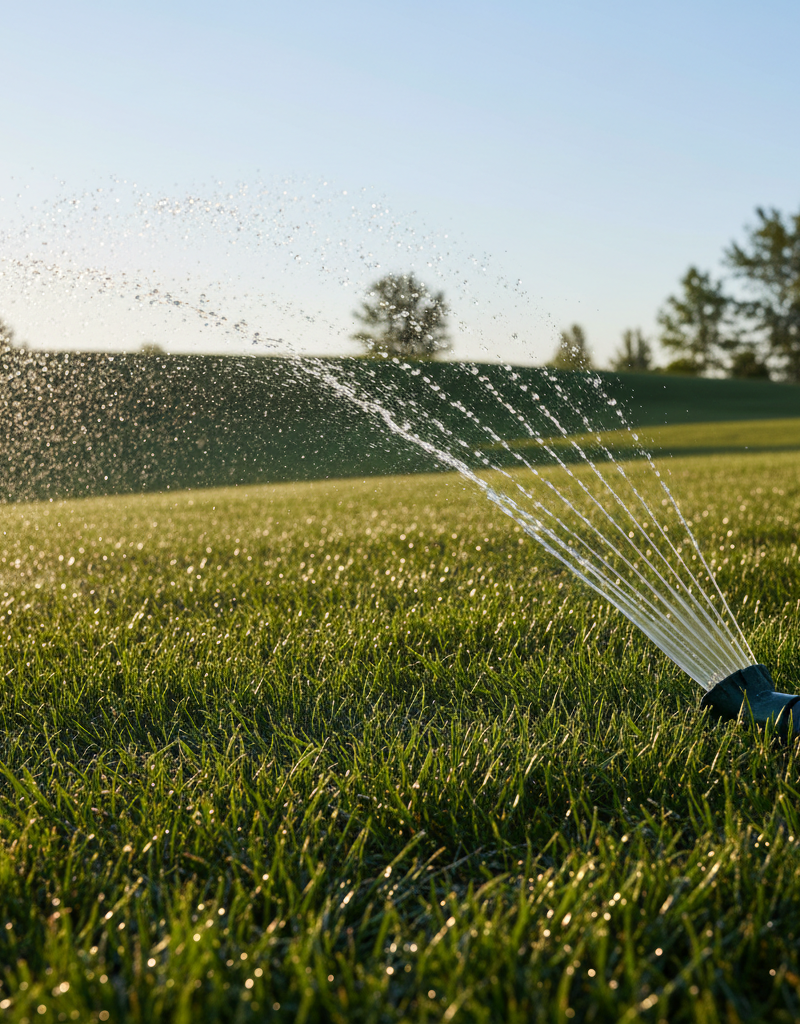
- Overestimating sprinkler efficiency: Older heads can be pretty lousy. Uneven coverage, misting, clogged nozzles—the whole mess can leave you watering air instead of grass.
- Ignoring grass's natural cues: Your lawn tells you when it’s thirsty. If it turns a dull bluish-gray or your footprints stay pressed down after you walk on it, it’s asking for water. Waiting until it’s bone brown is too late if you want a healthy lawn.
- **Trying to
Related Articles
Keep troubleshooting with these hand-picked guides from FixlyGuide:
- The #1 Mistake Homeowners Make Adjusting Sprinkler Heads (And How to Fix It) — Mistakes in adjusting sprinkler spray patterns can lead to uneven watering, brown spots, and wasted water. Learn how to accurately fine-tun…
- The #1 Lawn Aeration Mistake Most Homeowners Make (And How to Time It Right) — Timing your lawn aeration correctly is crucial for maximizing its benefits and ensuring a healthier, more resilient lawn.
- The #1 Mistake Killing Your Lawn's Fight Against Dandelions (It's Not What You Think) — Stop dandelions from taking over your lawn by understanding the crucial timing and methods that most homeowners overlook, leading to endles…
- The #1 Summer Lawn Mistake That Guarantees Yellow Grass (It's Not Drought) — Understanding the most common mistake homeowners make with summer lawn care can save your grass from turning yellow and dying.
- The Secret Reason Your Lush Lawn Mysteriously Dies (It's Not Drought) — Grubs can secretly destroy a healthy lawn from underground, causing dead patches that look like drought damage. Learn to diagnose and treat…
- The Secret Culprit Behind Your Leaky Refrigerator (It’s Not Always the Water Line) — Discover the most common, often overlooked, reasons your refrigerator is leaking water and how to fix them with simple DIY steps.
Should you do this yourself?
Answer five quick questions before you start. Safety outranks savings every time.
Your experience with work like this
How high do you have to work?
Does the job involve any of these?
Will it need a permit?
Specialty tools
Free and instant. Educational guidance only — not a quote, inspection, or professional diagnosis.
What should this project cost?
Enter your project details for a realistic cost range before you call anyone.
Cost depends heavily on which system turns out to be the source.
- Regional adjustment
- National average
- Labor share (typical)
- ~$1,620
- Quotes to collect
- 3 written estimates
Educational estimate based on national averages — not a binding quote. Always confirm with written local estimates.
Before you start
Check the difficulty, permits, and safety risk — then decide whether to call a pro.
- Estimate this projectGet a cost range for your scope and ZIP before you call anyone.Open
- Get local estimatesSend one request and compare written estimates from vetted pros.Open
Free, no signup required. Estimates are educational guidance, not a quote or an inspection.
Get the print-ready PDF of this guide
A clean, ad-free, printable version you can keep on your phone or pin to the workshop wall. Free with a FixlyGuide account.
- Print-optimized layout
- Tools, materials & every step included
- Saved to your account
Frequently asked questions
How do I know if I'm watering enough?+
After watering, use a long screwdriver or soil probe. It should easily slide into the soil for 4-6 inches. If you meet resistance sooner, you need to water longer. The ground should feel uniformly damp to that depth.
What time of day is best to water my lawn?+
The best time to water is early in the morning, between 4 AM and 10 AM. This minimizes water loss from evaporation due to sun and wind, and allows the grass blades to dry before nightfall, which helps prevent fungal diseases.
Can I overwater my lawn?+
Absolutely. Overwatering suffocates grass roots, leading to shallow growth, increased risk of fungal diseases like brown patch, and a higher susceptibility to pests. Your lawn also wastes water and leaches nutrients from the soil.
My lawn has brown spots, is it underwatered or overwatered?+
Brown spots can indicate either underwatering or overwatering, as both stress the grass. Check the soil moisture in the brown area. If it's bone dry, it's underwatered. If it's constantly soggy, it's likely overwatered. You can also look for signs of disease, which often accompany overwatering.
How long should I run my sprinklers?+
This depends entirely on your sprinkler's output and your soil type. Do the tuna can test to measure how much water your sprinklers deliver in a given time. Aim for 1 inch of water total per session, which might translate to 30 minutes to an hour or more, depending on your system.
Should I water my lawn every day?+
No, watering every day, especially with light sprinkles, encourages shallow root growth and makes your lawn weaker and more susceptible to drought and disease. Deep, infrequent watering is much more beneficial.
What if water just runs off my lawn?+
If water runs off, your soil (likely clay or compacted) can't absorb it fast enough. Break up your watering into shorter cycles. Water for 10-15 minutes, wait an hour for it to soak in, then water again for 10-15 minutes until you reach the desired depth. This technique is called 'cycle and soak.'
How much water does my lawn need per week?+
Most established lawns need about 1 inch of water per week, either from rain or irrigation. This can be delivered in one deep watering or split into two deeper waterings, depending on your soil and climate. During extreme heat, this might increase slightly.
Does grass type affect watering frequency?+
Yes, definitely. Cool-season grasses (like fescue, bluegrass) generally need more consistent moisture during warm periods than warm-season grasses (like Bermuda, St. Augustine), which are more drought-tolerant. Always consider your specific grass type.
When should I stop watering for the season?+
For cool-season grasses, you can start tapering off watering as temperatures drop in late fall, usually after the first hard frost. For warm-season grasses, reduce watering significantly as they go dormant in the fall and winter, only watering if there's a prolonged dry spell to prevent desiccation.
Discussion
Loading comments…