- Misidentifying Grass Type: This is probably the number one reason people mess up fertilization timing. Treat cool-season grass like warm-season grass, or the other way around, and you’re just wasting product.
- Guessing vs. Testing: Assuming your soil needs something without a test is like shooting in the dark. You might overload one nutrient or miss a real deficiency.
- Ignoring Soil Temperature: Air temp can fool you. Soil temperature is what drives root activity. A soil thermometer or local extension soil-temp report is way more useful than the weather app.
- Applying Too Much or Too Little: Follow the spreader settings on the bag. More isn’t better. Too much nitrogen can burn the lawn. Too little, and you won’t see much of anything.
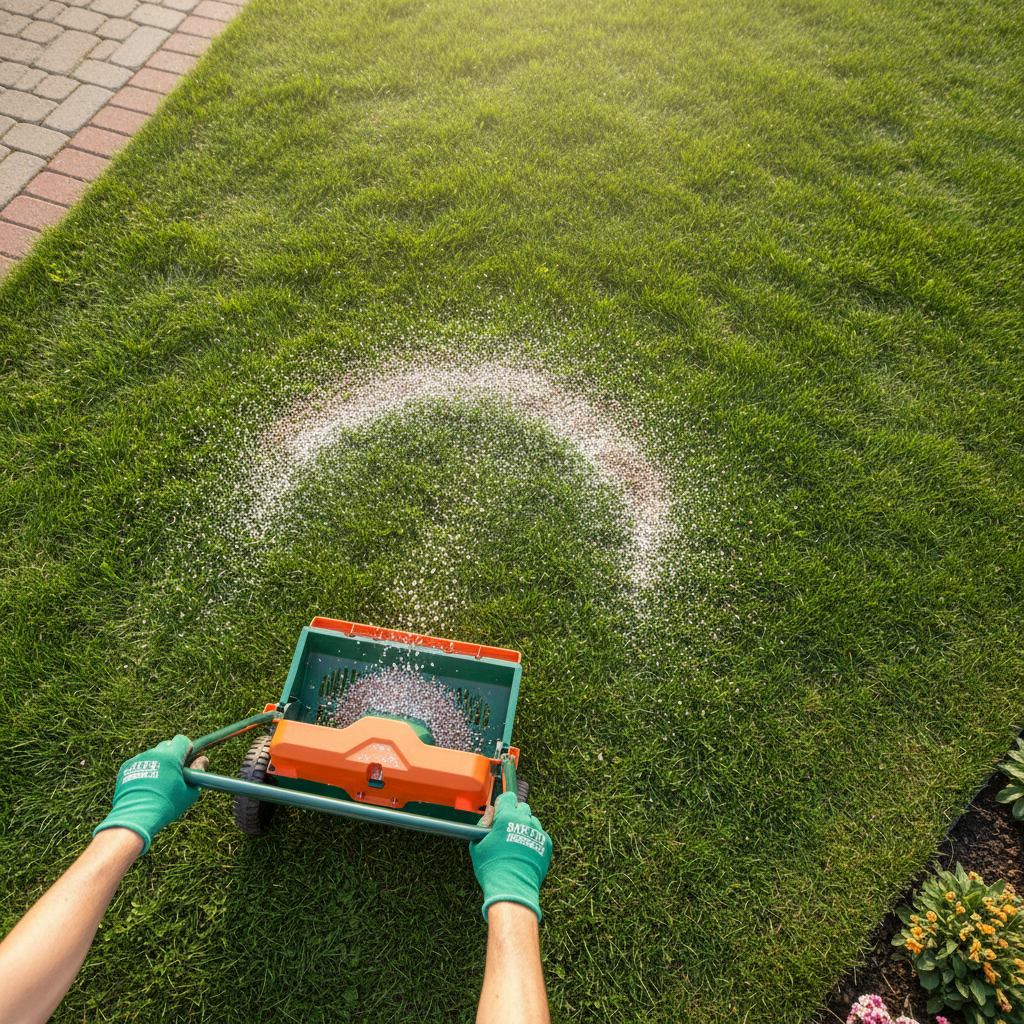
- Poor Spreader Calibration: If your spreader’s off, you’ll get patchy results—dark green here, pale spots there, maybe some striping. No thanks.
Landscaping · Deck or fence project
| Project category | Landscaping |
|---|---|
| Problem type | Deck or fence project |
| Trade required | Landscaping |
| Urgency | Planned project |
| Safety risk | Moderate safety risk |
| DIY suitability | DIY for experienced homeowners |
| Cost category | High cost |
| Typical timeline | Most builds 3–10 days depending on size |
| Contractor type | Landscaping contractor |
Repair option
Replace failed boards, posts, and hardware; reseal the surface.
Replacement option
Rebuild when framing or the ledger connection is unsafe.
Common causes
- Rot at posts and ledger
- Storm damage
- Adding outdoor living space
Relevant tools:home improvement material pricesproject cost estimator
Published July 29, 2026Last updated August 17, 2026
Tools & materials you'll need
Affiliate linksAs an Amazon Associate FixlyGuide earns from qualifying purchases — at no extra cost to you. Prices and availability are accurate as of publication and subject to change.
Quick Answer
Listen, folks, getting a thick, healthy lawn isn’t just about chucking fertilizer out there whenever you feel like it. Timing is the whole game. The right feeding window depends on the grass you’ve got. Cool-season grasses—fescue, ryegrass, bluegrass—want a solid feeding in early fall and again in early spring. Warm-season stuff like Bermuda, St. Augustine, and zoysia likes a late spring into early summer feeding, usually once the soil’s holding steady above 65°F (18°C).
The Problem
I’ve seen this a hundred times. Homeowner grabs a bag of “winterizer” or “weed and feed,” drops it in July, then wonders why the yard looks like cooked straw by August. Or they slam cool-season grass with a heavy nitrogen feed in the dead heat of summer and practically light it up. The fertilizer usually isn’t the villain. The timing is. Putting the right product down at the wrong time is like handing a sleepy kid a triple espresso—it just doesn’t fit, and it can do real damage. You’re burning money, sending nutrients into the ditch, and stressing the grass so it’s easier pickings for disease and bugs. I’ve even seen lawns go yellow after the wrong feed at the wrong temp, which is just a sick feeling when you’re standing there looking at it. It’s a common miss, but once you get why timing matters, you won’t forget it.
How It Works
Getting how grass grows is half the battle. Grass is just another plant—it has active growth and it has downtime. Fertilize with those cycles, and you’re working with it instead of fighting it. When grass is growing hard, the roots are pulling in nutrients, and the blades are making sugars through photosynthesis. That’s when it’s hungry.
Cool-season grasses (Kentucky bluegrass, perennial ryegrass, tall fescue, fine fescue) do most of their work in cooler weather—spring and fall. They’ll wake up when soil temps hit about 45-50°F (7-10°C) in spring, grow like crazy for a bit, then slow down, or go dormant, once summer heat pushes above 85°F (29°C). Their biggest rooting window is fall. That’s why that fall feeding matters so much—it builds root reserves for winter and sets up strong spring growth.
Warm-season grasses (Bermuda, St. Augustine, zoysia, centipede) run the other way. They love the heat, right in that 75-95°F (24-35°C) sweet spot. They don’t really fire up until soil temperatures consistently reach 65-70°F (18-21°C), usually late spring. Then they keep rolling all summer and go dormant when the weather cools off. Feeding them while they’re asleep is no dice; they can’t use it, and you’re just making runoff and waste.
Both types need nitrogen (N) for blade growth, phosphorus (P) for roots, and potassium (K) for overall health and stress resistance. Soil pH matters a lot too. Most lawn grasses want a pH between 6.0 and 7.0. If the soil’s too acidic or too alkaline, the grass can’t take up nutrients well, no matter how perfectly you time the application or how fancy the blend is. That’s why I always tell people to start with a soil test.
Step-by-Step Fix
Getting your fertilization timing right takes a little homework, but it pays off with a lawn that’ll make the neighbors glance over the fence.
-
Identify Your Grass Type — This is step one for a reason. Walk outside and look close. Is it fine-bladed and dark green, like fescue? Or wider-bladed, maybe creeping a bit, like Bermuda? If you’re not sure, grab a few blades, snap a picture, and take it to your local garden center or cooperative extension office. They can usually tell you what you’ve got. This part is the foundation of the whole schedule.
- Pro Tip: Look for a good turf grass guide online with clear pictures. University extension sites are solid for this.
-
Get a Soil Test — Don’t skip this, seriously. You wouldn’t take medicine without knowing what’s wrong, right? Same deal with your lawn. A soil test tells you exactly what nutrients your soil needs, what it’s got too much of, and where the pH sits. It’s usually $15-30 through your local extension office. You’ll get a report that points you toward the right fertilizer ratios (like 10-10-10 or 20-5-10) and tells you if you need lime or sulfur.
- How to: Pull soil from 5-10 random spots across the lawn, about 4-6 inches deep. Mix it in a clean bucket, then send about a cup of that blend to your extension office in a sealed bag.
-
Cool-Season Grasses: Fertilize in Fall — This is the big one. The best time to feed cool-season grass is early to mid-fall, usually September to October, when daytime temperatures are sitting steady around 60-70°F (15-21°C). That’s when the grass is putting energy into roots, not just top growth. Use a “winterizer” type fertilizer, which usually has more potassium for winter hardiness (like 10-0-14 or 13-25-12, but go by your soil test).
- When Not To: Don’t hit cool-season grass in late spring or summer with heavy nitrogen. It pushes top growth when the plant ought to be conserving energy, and that makes it easier to stress out from heat and disease.
-
Cool-Season Grasses: Second Feed in Early Spring — A little jumpstart. A lighter feeding in early spring, usually March or April, when soil temperatures are around 50°F (10°C), gives the lawn a boost as it wakes up. Use a balanced fertilizer or one a bit higher in nitrogen if your soil test calls for it (like 20-5-10).
- Timing: Don’t get ahead of yourself and fertilize before the grass starts greening up, or you’ll just feed the weeds.
-
Warm-Season Grasses: Fertilize Mid-to-Late Spring — That’s when it’s really waking up. For warm-season lawns, the first feeding should be late April to June, once the grass has fully greened up and soil temperatures are holding above 65°F (18°C). That’s when it’s actively building blades and getting ready for summer. Use a nitrogen-rich fertilizer (like 15-0-15 or 21-0-0, based on your soil test).
- A Memory: I remember a job in Peachtree City a few years back where a guy swore by fertilizing his Bermuda in March. Every spring, his yard looked thin and washed out next to the rest of the block. Once we had him wait until late April or early May, after the soil warmed up, that grass took off. It just needed to be hungry enough to actually use the food.
-
Warm-Season Grasses: Follow-up Applications — Keep the wheels turning. Depending on your soil test and what you want the lawn to do, you might put down 1-2 more light applications through summer, usually 6-8 weeks apart, ending in mid-August. Stick with a similar high-nitrogen blend. Don’t fertilize warm-season grass too late in fall, or you’ll push tender growth that can get clobbered by winter kill.
-
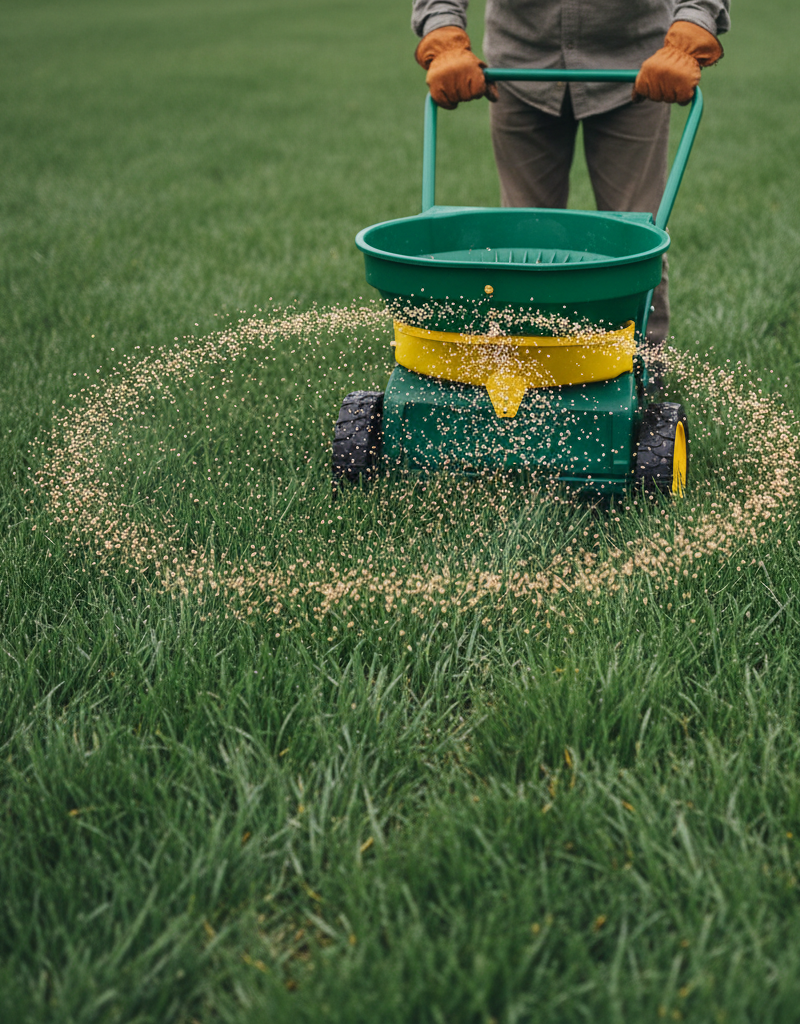
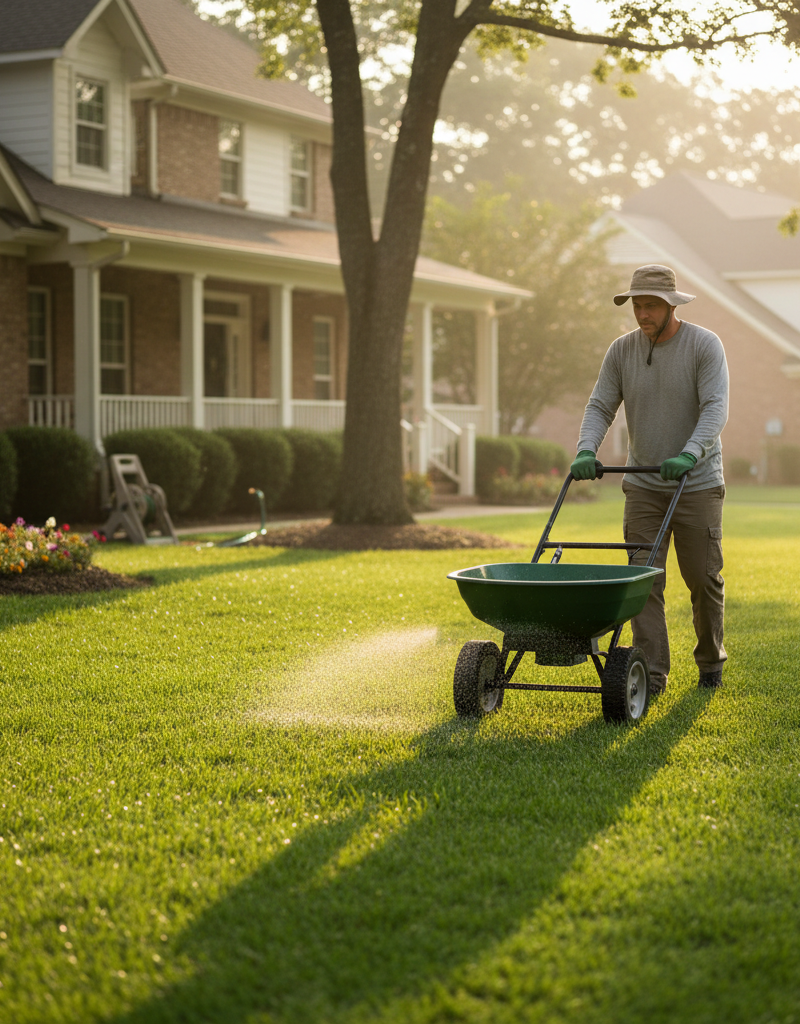
Apply Evenly — This is how you avoid stripes and hot spots. Granular or liquid, doesn’t matter—spread it evenly. A broadcast spreader is the ticket for granular products because it gives you good overlap. For liquids, a hose-end sprayer works fine. Read the bag or bottle for exact coverage rates and spreader settings.
- Safety First: Wear gloves and eye protection anytime you’re handling fertilizer. Wash up good afterward.
-
Water In — That’s what wakes it up. After granular fertilizer goes down, water the lawn well so the granules wash off the blades and into the soil where the roots can grab them. That helps prevent burn and gets the nutrients where they belong.
Common Causes
- Misidentifying Grass Type: This is probably the number one reason people mess up fertilization timing. Treat cool-season grass like warm-season grass, or the other way around, and you’re just wasting product.
- Guessing vs. Testing: Assuming your soil needs something without a test is like shooting in the dark. You might overload one nutrient or miss a real deficiency.
- Ignoring Soil Temperature: Air temp can fool you. Soil temperature is what drives root activity. A soil thermometer or local extension soil-temp report is way more useful than the weather app.
- Applying Too Much or Too Little: Follow the spreader settings on the bag. More isn’t better. Too much nitrogen can burn the lawn. Too little, and you won’t see much of anything.
- Poor Spreader Calibration: If your spreader’s off, you’ll get patchy results—dark green here, pale spots there, maybe some striping. No thanks.
Common Mistakes
- Fertilizing Dormant Grass: That’s just throwing money away. Dormant grass isn’t taking anything up, so the fertilizer sits there or washes off.
- Applying High-Nitrogen Fertilizer in Summer (Cool-Season): Heavy nitrogen in hot weather can push cool-season grass to grow when it should be slowing down, and that opens the door to disease, drought stress, and heat damage. I’ve seen lawns pick up ugly fungal issues from this exact mistake.
- Not Watering After Granular Application: Leaving granules on the blades can scorch the turf, especially once the sun gets cooking. Water it in.
- Fertilizing Right Before a Heavy Rain: You’ll lose a bunch of it to runoff, pollute waterways, and waste your cash.
- Over-applying Weed & Feed: A lot of weed and feed products are acting as a pre-emergent or post-emergent herbicide. Too much, or the wrong timing, can hurt your grass just as fast as it kills weeds.
- Ignoring pH: If the pH’s out of whack, the grass can’t use the fertilizer right. It’s like stocking a pantry and then locking the door.
Cost & Time Breakdown
| Task | DIY Cost | Pro Cost | Time |
|---|---|---|---|
| Soil Test | $15–$30 | Often included in service | 5–10 min (collecting samples) |
| Bag of Fertilizer (5,000 sq ft) | $30–$60 | N/A | 20–45 min |
| Spreader (one-time purchase) | $40–$150 | N/A | N/A |
| Professional Fertilization | N/A | $75–$150 per application | N/A |
| Lime or Sulfur (if needed) | $20–$40 per bag | Often included in service | 30–60 min |
Tips & Prevention
- Measure Your Lawn: Before you buy fertilizer, figure out the square footage so you don’t end up with too much or too little.
- Follow the Bag Directions: Read the label. Plain and simple. It tells you the application rates and spreader settings for different grass types.
- Calibrate Your Spreader: That’s how you get even coverage. A lot of broadcast spreaders have setup instructions right on them. If yours doesn’t, look up a guide for your model.
- Consider Slow-Release Fertilizers: They feed the lawn a little at a time, which lowers the burn risk and cuts down on how often you’ve gotta apply. Usually costs a bit more, but it’s worth a look.
- Don’t Bag Your Clippings: Leave the clippings on the lawn if they’re not piled up too thick. That recycles nutrients back into the soil. Folks call it grasscycling.
- Mow High: Taller grass, around 2.5-3.5 inches, grows deeper roots, shades out weeds, and handles stress better, so it usually doesn’t need as much babying.
- Aeration Helps: Aerate once a year, usually fall for cool-season and late spring/early summer for warm-season. It helps air and water get down into the soil, which makes fertilizer work better.
When to Call a Professional
Fertilizing looks simple enough, and a lot of the time it is. But there are times when calling a pro makes sense. If your lawn keeps looking rough even though you’re following the right schedule, you may be dealing with bigger problems like severe soil compaction, stubborn pest pressure, or fungal disease that looks a lot like a nutrient issue. A professional lawn care service can sort that out, run better soil tests, and apply specialized treatments or fertilizers you can’t easily buy at the store. They’ve also got commercial-grade equipment for precise application, which matters on big or tricky properties where even coverage is a pain. If your lawn is more weeds than grass, or you just don’t have the time or appetite to keep after it, bringing in an expert to set up a year-round feeding and treatment plan can be money well spent. They’ll know what product fits your yard and exactly when to put it down for your local conditions.
FAQ
Q: How many times a year should I fertilize my lawn?
A: For cool-season grasses, you’ll usually fertilize 2-3 times a year: heavily in early fall, then again in early spring, and maybe a light “winterizer” application in late fall. Warm-season grasses usually do best with 3-4 applications from late spring through late summer.
Q: Can I fertilize my lawn in the summer?
A: For cool-season grasses, it’s generally not a good idea to put down heavy nitrogen in summer heat, because it can stress the turf and make it more likely to get disease. Light, slow-release applications might be okay, but fall and spring are the main feeds. Warm-season grasses, on the other hand, thrive on summer feeding because that’s their active growth stretch.
Q: What happens if I fertilize my lawn at the wrong time?
A: Fertilizing at the wrong time can waste money, send nutrients into waterways, and hurt your lawn. For example, heavy summer fertilizing on cool-season grass can burn the turf, make it more disease-prone, and hurt heat tolerance. Fertilizing dormant grass is basically a bust because it won’t absorb anything.
Q: What's the best time of day to fertilize?
A: Fertilize when the grass is dry, usually in the morning or early evening when temps are cooler. That lowers the chance of leaf burn and gives you time to water it in before the sun gets too harsh. Try to avoid windy days so the spread stays even.
Q: Do I need to water after fertilizing?
A: Yes, absolutely. After granular fertilizer goes down, water the lawn thoroughly. That washes the granules off the blades and into the soil where the roots can use them. It also helps prevent fertilizer burn, which can happen if the granules sit on the leaves.
Q: How do I know if my grass is cool-season or warm-season?
A: Cool-season grasses like fescue, bluegrass, and ryegrass usually stay green through winter in milder climates and grow best in spring and fall. Warm-season grasses like Bermuda, St. Augustine, and zoysia go dormant and turn brown in winter, then thrive in hot summer temps. Your local cooperative extension office can also identify a sample for you.
Q: Is a soil test really necessary?
A: Yes, I highly recommend it. A soil test gives you the real story on nutrient levels and pH. That lets you pick the right fertilizer and add things like lime if you need to balance the soil, so you’re not wasting time and money. Without it, you’re just guessing.
Q: Can I use
Related Articles
Keep troubleshooting with these hand-picked guides from FixlyGuide:
- The #1 Mowing Mistake That Leaves Your Lawn Brown and Patchy — Discover the most common mowing mistake homeowners make that leads to unhealthy, patchy grass and how to fix it for a vibrant lawn.
- The #1 Summer Lawn Mistake Turning Your Grass Yellow (It's Not Overwatering) — Discover the most common, often overlooked reason your summer lawn is turning yellow despite your best efforts, and learn how to fix it.
- The #1 Lawn Aeration Mistake Most Homeowners Make (And When to REALLY Do It) — Discover the crucial mistake many homeowners make with lawn aeration and learn the optimal timing for a thriving, healthy lawn.
- The #1 Mistake Killing Your Lawn's Crabgrass Defense (And the Easy Fix) — Discover why common crabgrass removal methods fail and how to naturally eliminate this stubborn weed for a healthier lawn.
- The #1 Secret to Edging Flower Beds That Last Years (and Resist Weeds) — Discover the crucial, often-skipped step that ensures your landscape edging stays put and keeps weeds out for years, transforming your flow…
- The Secret to Lush Raised Beds? It's Not Just About How You Water — Smart irrigation for raised garden beds isn't just about automation; it's about delivering the right amount of water precisely when your pl…
What should this project cost?
Enter your project details for a realistic cost range before you call anyone.
Cost depends heavily on which system turns out to be the source.
- Regional adjustment
- National average
- Labor share (typical)
- ~$1,620
- Quotes to collect
- 3 written estimates
Educational estimate based on national averages — not a binding quote. Always confirm with written local estimates.
Get the print-ready PDF of this guide
A clean, ad-free, printable version you can keep on your phone or pin to the workshop wall. Free with a FixlyGuide account.
- Print-optimized layout
- Tools, materials & every step included
- Saved to your account
Frequently asked questions
How many times a year should I fertilize my lawn?+
For cool-season grasses, you'll typically fertilize 2-3 times a year: heavily in early fall, then again in early spring, and possibly a light application of 'winterizer' in late fall. Warm-season grasses usually do best with 3-4 applications from late spring through late summer.
Can I fertilize my lawn in the summer?+
For cool-season grasses, it's generally not recommended to apply heavy nitrogen fertilizer in the summer heat, as it can stress the turf and make it prone to disease. Light, slow-release applications might be okay, but fall and spring are primary. Warm-season grasses, however, thrive on summer feeding because that's their active growth period.
What happens if I fertilize my lawn at the wrong time?+
Fertilizing at the wrong time can waste money, cause nutrient runoff into waterways, and potentially harm your lawn. For example, fertilizing cool-season grass heavily in summer can lead to burned turf, disease susceptibility, and poor heat tolerance. Fertilizing dormant grass is simply ineffective as it won't absorb nutrients.
What's the best time of day to fertilize?+
It's best to fertilize when the grass is dry, preferably in the morning or early evening when temperatures are cooler. This reduces the risk of leaf burn and allows you to water it in properly before the sun gets too intense. Avoid windy conditions to ensure even distribution.
Do I need to water after fertilizing?+
Yes, absolutely! After applying granular fertilizer, you should water your lawn thoroughly. This washes the fertilizer granules off the grass blades and into the soil, where they can be absorbed by the roots. Watering also prevents fertilizer burn, which can occur if the granules sit on the leaves.
How do I know if my grass is cool-season or warm-season?+
Cool-season grasses like fescue, bluegrass, and ryegrass generally stay green through winter (in milder climates) and grow best in spring and fall. Warm-season grasses like Bermuda, St. Augustine, and zoysia go dormant and turn brown in winter, thriving in hot summer temperatures. Your local cooperative extension office can also help identify your grass type from a sample.
Is a soil test really necessary?+
Yes, it's highly recommended! A soil test provides critical information about your soil's nutrient levels and pH. This lets you choose the correct fertilizer blend and apply amendments (like lime) to optimize nutrient availability, ensuring your fertilization efforts are effective and not wasteful. Without it, you're just guessing.
Can I use 'weed and feed' products?+
Weed and feed products can be convenient, but they're often a compromise. It's usually better to address weeds separately with targeted herbicides and fertilize based on your soil test results. If you do use them, be very careful about timing and application rates, as incorrect use can harm your lawn or be ineffective against weeds.
Discussion
Loading comments…