- If your soil pH is off: Adjust it according to recommendations. For most turfgrasses, a pH of 6.0-7.0 is ideal. Use elemental sulfur to lower pH or agricultural lime to raise it.
- If nutrients are low: Incorporate natural, slow-release fertilizers like compost, blood meal, or bone meal, as recommended by your soil test.
- If organic matter is low: Top-dress with a thin layer (1/4 to 1/2 inch) of high-quality compost. This improves soil structure, water retention, and nutrient availability.
Landscaping · Deck or fence project
| Project category | Landscaping |
|---|---|
| Problem type | Deck or fence project |
| Trade required | Landscaping |
| Urgency | Planned project |
| Safety risk | Moderate safety risk |
| DIY suitability | DIY for experienced homeowners |
| Cost category | High cost |
| Typical timeline | Most builds 3–10 days depending on size |
| Contractor type | Landscaping contractor |
Repair option
Replace failed boards, posts, and hardware; reseal the surface.
Replacement option
Rebuild when framing or the ledger connection is unsafe.
Common causes
- Rot at posts and ledger
- Storm damage
- Adding outdoor living space
Relevant tools:home improvement material pricesproject cost estimator
Published July 9, 2026Last updated August 17, 2026
Tools & materials you'll need
Affiliate linksAs an Amazon Associate FixlyGuide earns from qualifying purchases — at no extra cost to you. Prices and availability are accurate as of publication and subject to change.
Quick Answer
Eradicating crabgrass naturally hinges on understanding its life cycle and disrupting it at key points, primarily through enriching your soil, meticulous lawn care practices, and the strategic use of natural pre-emergents. For most homeowners, the most impactful natural defense is applying corn gluten meal in early spring to prevent crabgrass seeds from germinating, combined with proper mowing heights and watering techniques that favor your desired turf over weeds. This approach creates an inhospitable environment for crabgrass without introducing synthetic chemicals to your yard.
The Problem
Crabgrass isn't just an eyesore; it's an aggressive annual weed that can quickly hijack a healthy lawn, outcompeting desirable grass for water, nutrients, and sunlight. Its distinctive, sprawling growth habit and coarse texture stick out like a sore thumb, marring the uniform appearance of your turf. The real frustration for many homeowners lies in its seemingly relentless return year after year. A single crabgrass plant can produce up to 150,000 seeds, which remain viable in the soil for years, waiting for the perfect conditions (warm soil, ample light) to germinate. Trying to pull every plant by hand is a Sisyphean task, and chemical solutions, while effective, often come with concerns about their impact on children, pets, and the environment. The underlying problem isn't just the weed itself, but often the cultural practices within a lawn that inadvertently create ideal conditions for crabgrass to thrive while simultaneously weakening the desirable grass.
How It Works
Crabgrass (Digitaria spp.) is a summer annual weed. This means it germinates in the spring, grows rapidly throughout the summer, produces thousands of seeds, and then dies with the first hard frost in the fall. The seeds, however, remain dormant in the soil, ready to sprout the following spring. Germination typically occurs when soil temperatures consistently reach 55-60°F (13-16°C) for several consecutive days, usually coinciding with the blooming of forsythia bushes.
Once germinated, crabgrass develops a fibrous root system and sends out tillers (stems) that spread horizontally, forming dense mats. These tillers can root at their nodes wherever they touch the soil, allowing the plant to rapidly colonize bare spots and thin areas in your lawn. Its broad leaves absorb sunlight efficiently, shading out smaller, slower-growing turfgrass. Crabgrass thrives in hot, sunny conditions and compacted, poorly drained soils – precisely the conditions that often stress cool-season grasses. It's particularly adept at taking advantage of lawns that are mowed too short, which reduces the turf's ability to shade the soil and suppress weed growth. Proper watering, especially deep and infrequent irrigation, encourages deeper root growth in desirable grasses, making them more resilient to competition. Conversely, shallow, frequent watering favors the shallow-rooted crabgrass. Understanding this life cycle and its preferred growing conditions is the key to natural control, allowing you to interrupt its cycle at various points, from preventing germination to hindering its growth and seed production.
Step-by-Step Fix
1. Assess Your Lawn's Soil Health — A soil test is your first diagnostic tool.
A healthy lawn is your best defense. Collect soil samples from several areas of your lawn and send them to your local cooperative extension office for testing. The results will provide critical information on your soil's pH, nutrient levels, and organic matter content. Crabgrass often thrives in compacted, nutrient-poor soils.
- If your soil pH is off: Adjust it according to recommendations. For most turfgrasses, a pH of 6.0-7.0 is ideal. Use elemental sulfur to lower pH or agricultural lime to raise it.
- If nutrients are low: Incorporate natural, slow-release fertilizers like compost, blood meal, or bone meal, as recommended by your soil test.
- If organic matter is low: Top-dress with a thin layer (1/4 to 1/2 inch) of high-quality compost. This improves soil structure, water retention, and nutrient availability.
2. Dethatch and Aerate — Improve air and water flow to roots.
Thatch, a layer of dead and living organic matter between the soil surface and the grass blades, can prevent water and nutrients from reaching grass roots and provide a cozy home for crabgrass seeds.
- Dethatch: If your thatch layer is thicker than 1/2 inch, use a dethatching rake or a verticutter/power rake in early spring or early fall when your lawn is actively growing.
- Aerate: Compacted soil is a prime breeding ground for crabgrass. Use a core aerator to pull plugs of soil from your lawn. This improves air circulation, water penetration, and nutrient uptake, encouraging deeper, stronger grass roots that can outcompete weeds. Aim to aerate in the spring or fall.
3. Apply Natural Pre-Emergent — Stop crabgrass before it starts.
This is arguably the most critical natural step. Apply a corn gluten meal (CGM) product in early spring, typically when forsythia bushes are blooming or when soil temperatures consistently reach 55-60°F. CGM works by releasing peptides that inhibit root formation in germinating seeds.
- Timing is everything: Apply too early, and its effect might wear off before all seeds germinate; apply too late, and the crabgrass will have already sprouted.
- Application: Follow the manufacturer's instructions for application rates. Use a broadcast spreader for even distribution.
- Watering: Water lightly after application to activate the corn gluten meal.
- Repeat: A second application 6-8 weeks later can extend protection, particularly in areas with long growing seasons.
4. Mow at the Correct Height — Shade out weed seeds naturally.
This simple act has a profound impact. Mowing too short stresses your lawn and allows more sunlight to reach the soil, encouraging crabgrass germination.
- Raise your mower deck: Most cool-season grasses (fescue, rye, bluegrass) prefer a height of 2.5–3.5 inches. Warm-season grasses (Bermuda, zoysia) can tolerate slightly shorter, but still aim for the upper end of their recommended range.
- Frequency: Mow frequently enough so you're only removing about one-third of the grass blade's height at each cut. This encourages denser growth and shades the soil.
- Leave clippings: Unless they're clumping heavily, leave grass clippings on the lawn. They return nutrients to the soil and help build organic matter.
5. Water Deeply and Infrequently — Promote deep root growth.
Shallow, frequent watering encourages shallow root systems in desirable grasses, making them less resilient to drought and more susceptible to weed invasion. Crabgrass, with its naturally shallow roots, thrives on frequent, light watering.
- Aim for 1 inch per week: Most lawns need about 1 inch of water per week, either from rain or irrigation.
- Deep soak: Water until the soil is moist 4-6 inches deep. You can check this by pushing a screwdriver into the soil; it should penetrate easily.
- Morning watering: Water in the early morning to minimize evaporation and allow grass blades to dry before nightfall, reducing fungal disease risk.
6. Overseed Thin Areas — Fill in gaps before weeds can.
Bare spots and thin areas are open invitations for crabgrass. Overseeding in the fall (or spring for warm-season grasses) fills these gaps with desirable turf.
- Prepare: Rake out any dead grass or debris. Loosen the soil surface slightly.
- Seed: Choose a grass type appropriate for your climate and sun exposure. Spread seeds according to package directions.
- Cover & Water: Lightly cover seeds with a thin layer of topsoil or compost and keep them consistently moist until they germinate and establish.
7. Spot Treat & Hand Pull Small Patches — Target established plants.
For individual crabgrass plants or small, isolated patches that sneak through, manual removal is an effective, chemical-free option.
- Timing: Pull when the soil is moist, which makes extraction easier.
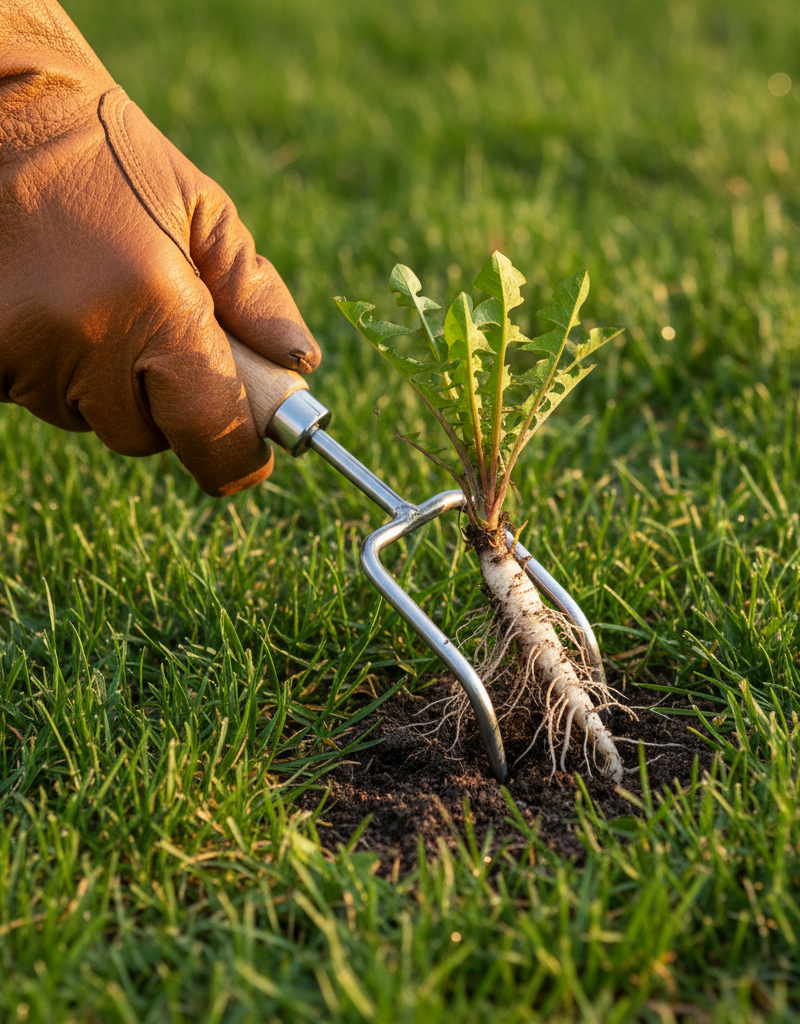
- Technique: Use a weeding tool to get as much of the root system as possible. If the plant has started to set seeds, carefully bag it to prevent further spread.
- Natural Herbicides: For larger patches, consider natural herbicides containing acetic acid (vinegar). BE CAUTIOUS: these are non-selective and will kill any plant material they touch, including your desirable grass. Apply precisely to the crabgrass, ideally on a hot, sunny day.
Common Causes
- Mowing Too Short: The number one culprit. Short grass can't shade the soil, allowing ample sunlight for crabgrass seeds to germinate and thrive.
- Compact Soil & Thatch: Poor soil structure and excessive thatch restrict air, water, and nutrient flow to desirable grass roots, weakening them and creating ideal conditions for tough weeds like crabgrass.
- Improper Watering: Frequent, shallow watering encourages shallow-rooted plants like crabgrass while often stressing deeper-rooted turfgrass.
- Poor Soil Fertility: Lawns lacking essential nutrients or with imbalanced pH struggle to grow dense and healthy, leaving open invitations for weeds.
- Late Spring Applications of Pre-Emergents: Applying natural pre-emergents too late means crabgrass seeds have already germinated, rendering the treatment ineffective for prevention.
- Skipping Overseeding: Bare or thin patches are quickly colonized by opportunistic weeds; if you don't fill them with desirable grass, crabgrass will.
- Not Cleaning Mower Decks: Crabgrass seeds can hitch a ride on mower decks from one part of the lawn to another, or even from your neighbor's yard.
Common Mistakes
- Mowing Too Short, Thinking It Looks Tidier: While a very short cut might look neat immediately, it severely weakens your grass and creates the perfect environment for crabgrass. Always aim for 2.5-3.5 inches for most turf.
- Applying Pre-Emergent Too Early or Too Late: Timing is paramount for corn gluten meal. If applied too early, its efficacy wears off; too late, and the crabgrass has already begun to grow. Monitor soil temperatures or local phenological indicators like forsythia bloom.
- Not Addressing Underlying Soil Issues: Just treating the weed symptomatically without addressing poor soil compaction, pH imbalances, or nutrient deficiencies means the crabgrass will likely return year after year.
- Ignoring Small Patches: Letting a few crabgrass plants go to seed can lead to thousands more next season. Address small infestations promptly before they become unmanageable.
- Overwatering or Underwatering: Both extremes stress your lawn. Overwatering can lead to fungal issues and shallow roots, while underwatering weakens turf, making it less resilient to weed competition. Stick to deep, infrequent watering.
- Aggressively Dethatching in Summer: Dethatching during hot, stressful periods can severely damage your lawn. Perform this task in cooler seasons (early spring or early fall) when grass is actively growing and can recover.
Cost & Time Breakdown
| Task | DIY Cost | Pro Cost | Time |
|---|---|---|---|
| Soil Test | $20–$50 | N/A | 15 mins (sending) |
| Corn Gluten Meal | $30–$80/50lb bag | N/A | 30–60 mins |
| Composting/Top-dressing | $50–$200 | $200–$600+ | 1–3 hours |
| Aeration/Dethatching | $0 (rent $80–$150/day) | $150–$400 | 2–4 hours (DIY) |
| Overseeding | $20–$100 | $100–$300+ | 1–2 hours |
| Hand Pulling/Spot Treat | $0–$20 | N/A | Variable |
Tips & Prevention
- Strategic Fertilization: Feed your lawn with slow-release, natural fertilizers to promote strong, dense growth that naturally crowds out weeds. Avoid quick-release high-nitrogen fertilizers that can favor weed growth.
- Grass Cycling: Leave grass clippings on your lawn. They return valuable nutrients and organic matter to the soil, reducing the need for synthetic fertilizers.
- Sharpen Mower Blades: Dull blades tear grass, leaving ragged edges that stress the plant and make it more susceptible to disease and pests. Sharpen blades at least once per season.
- Vigilant Monitoring: Regularly walk your lawn to spot and address small crabgrass plants before they can mature and spread seeds. Early intervention is key.
- Consider Diverse Turf: If appropriate for your region, consider a mix of turfgrasses that offers greater disease resistance and adaptability, making the overall lawn more resilient.
- Edge Control: Crabgrass often establishes itself along sidewalks and driveways. Keep these areas clear of small plants with edging tools or diligent hand-pulling.
When to Call a Professional
While natural crabgrass control is highly effective for most homeowners, there are situations when calling a licensed lawn care professional makes sense. If your lawn is severely infested with crabgrass, where it comprises more than 50% of your turf, a professional can offer more intensive solutions, including organic approaches that might require specialized equipment or formulations not readily available to the average homeowner. Additionally, if you've diligently followed natural methods for a full growing season and are still seeing rampant crabgrass, a professional can conduct advanced soil analyses, identify other underlying issues (like specific soilborne pathogens or persistent pest problems), or suggest a tailored, multi-year organic lawn renovation plan. They can also ensure proper timing and application of natural products for maximum efficacy across a large or complex landscape. If you're dealing with extensive compaction that requires heavy-duty aeration equipment or have significant grading issues contributing to weed growth, a professional will have the right tools and expertise.
Related Articles
Keep troubleshooting with these hand-picked guides from FixlyGuide:
- The #1 Crabgrass Mistake Most Homeowners Make (And 3 Natural Fixes) — Crabgrass invades lawns, but many natural remedies miss the mark. Learn the biggest mistake homeowners make and discover effective, eco-fri…
- The #1 Mistake Killing Your Lawn's Crabgrass Defense (And the Easy Fix) — Discover why common crabgrass removal methods fail and how to naturally eliminate this stubborn weed for a healthier lawn.
- The #1 Mistake Killing Your Lawn (and Spreading Dandelions Everywhere) — Discover the most common mistake homeowners make that inadvertently encourages dandelions and how to achieve a weed-free lawn.
- The 3 Crabgrass Mistakes Most Homeowners Make (And How to Fix Them Organically) — Discover the most common crabgrass removal mistakes and learn natural, organic methods to eliminate crabgrass from your lawn for good, fost…
- The #1 Crabgrass Mistake Killing Your Lawn (And 3 Natural Fixes) — Discover how common crabgrass removal mistakes undermine your lawn's health and learn three natural, effective methods to eradicate crabgra…
- Is Your Gutter Sagging After Every Storm? The Hidden Flaw Most Homeowners Miss — Discover the overlooked reason your gutters sag after every storm and learn the lasting fix that most homeowners miss.
What should this project cost?
Enter your project details for a realistic cost range before you call anyone.
Cost depends heavily on which system turns out to be the source.
- Regional adjustment
- National average
- Labor share (typical)
- ~$1,620
- Quotes to collect
- 3 written estimates
Educational estimate based on national averages — not a binding quote. Always confirm with written local estimates.
Frequently asked questions
Does vinegar kill crabgrass?+
Yes, concentrated horticultural vinegar (acetic acid) can kill crabgrass, but it's a non-selective herbicide. This means it will kill any plant it touches, including desirable grass. Use it with extreme caution and precise application only on the crabgrass itself, ideally on a hot, sunny day for best results. Diluted household vinegar is generally not strong enough to be effective.
When is the best time to apply natural crabgrass preventer?+
The best time to apply a natural pre-emergent like corn gluten meal is in early spring, typically when soil temperatures consistently reach 55-60°F (13-16°C) for several consecutive days. A common visual cue is when forsythia bushes are in full bloom. Applying it too early or too late can reduce its effectiveness.
How high should I mow my lawn to prevent crabgrass?+
To effectively prevent crabgrass, you should mow your lawn at the highest recommended height for your turf type, typically between 2.5 and 3.5 inches for most cool-season grasses. Taller grass shades the soil, keeping it cooler and darker, which discourages crabgrass seeds from germinating and helps existing grass outcompete weeds.
Can proper watering habits stop crabgrass?+
Absolutely. Deep, infrequent watering encourages desirable grass to develop deep, strong root systems, making it more resilient and better able to compete with weeds. Conversely, shallow, frequent watering promotes shallow root growth and creates the moist surface conditions that crabgrass thrives in. Aim for about 1 inch of water per week, applied in a single deep soaking.
Is crabgrass an annual or perennial?+
Crabgrass is a summer annual weed. This means it germinates from seed in the spring, grows throughout the summer, produces seeds, and then dies with the first hard frost in the fall. The seeds, however, remain in the soil and can germinate the following spring, leading homeowners to believe it's a perennial.

Discussion
Loading comments…