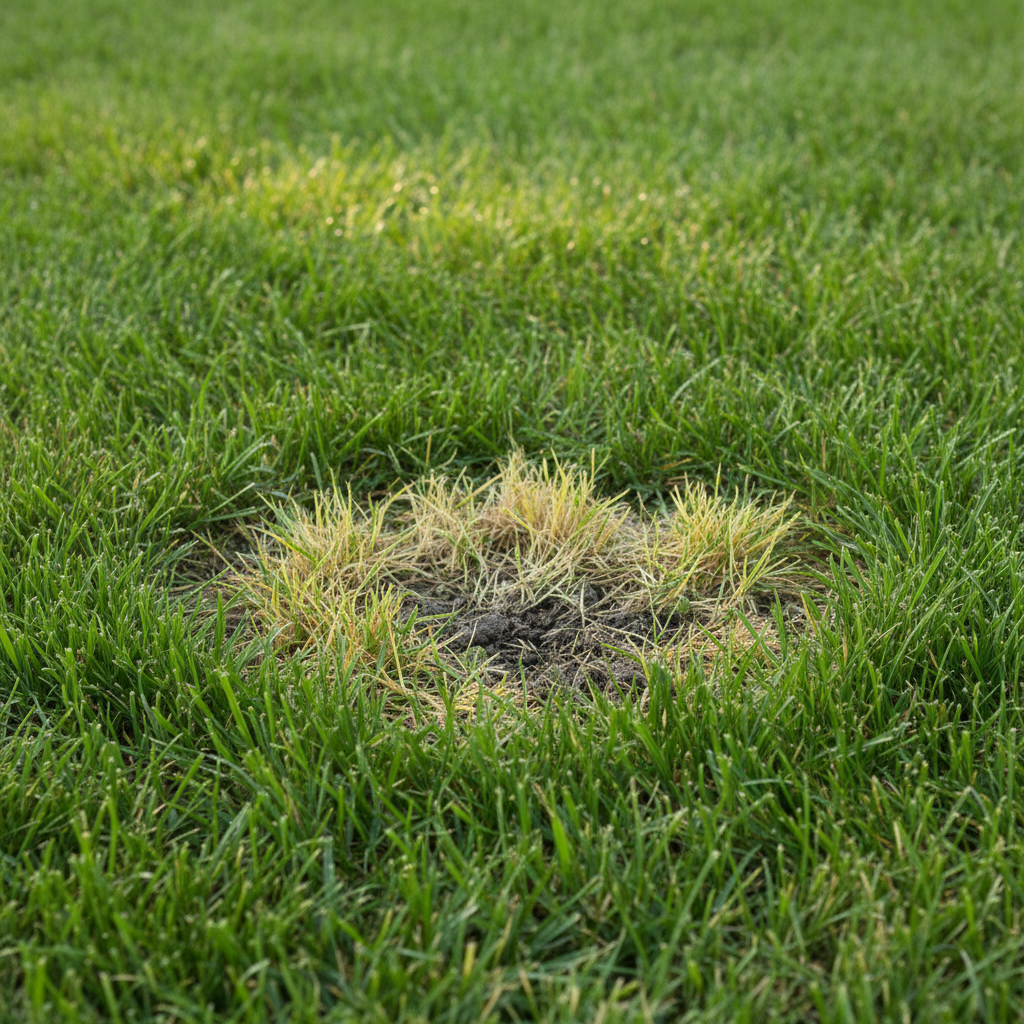
- Shallow, Frequent Watering: The number one cause. Encourages shallow root systems that can't handle summer stress.
- Nitrogen Deficiency: Grass needs nitrogen for green growth. Lack of it causes uniform yellowing.
- Iron Deficiency (Chlorosis): Often seen in alkaline soils, new growth turns yellow while veins remain green.
- Soil Compaction: Restricts root growth, water penetration, and air circulation.
- Heat Stress/Drought: Especially cool-season grasses will yellow during extended periods of high temperatures and insufficient water, leading to dormancy.
Landscaping · Deck or fence project
| Project category | Landscaping |
|---|---|
| Problem type | Deck or fence project |
| Trade required | Landscaping |
| Urgency | Planned project |
| Safety risk | Moderate safety risk |
| DIY suitability | DIY for experienced homeowners |
| Cost category | High cost |
| Typical timeline | Most builds 3–10 days depending on size |
| Contractor type | Landscaping contractor |
Repair option
Replace failed boards, posts, and hardware; reseal the surface.
Replacement option
Rebuild when framing or the ledger connection is unsafe.
Common causes
- Rot at posts and ledger
- Storm damage
- Adding outdoor living space
Relevant tools:home improvement material pricesproject cost estimator
Published June 10, 2026Last updated August 17, 2026
Tools & materials you'll need
Affiliate linksAs an Amazon Associate FixlyGuide earns from qualifying purchases — at no extra cost to you. Prices and availability are accurate as of publication and subject to change.
Quick Answer
Your summer lawn is most likely turning yellow due to improper watering practices, specifically watering too frequently for short durations. This encourages shallow root growth, making the grass susceptible to heat stress and nutrient deficiencies. To fix this, identify the exact cause by observing your lawn's patterns, testing the soil, and adjusting your watering to be deeper and less frequent, typically 1 inch of water once or twice a week.
The Problem
It's mid-summer, the sun is shining, and instead of a vibrant green carpet, your lawn is an uninspiring shade of yellow. This frustrating sight is a common agony for homeowners. While many immediately jump to conclusions like drought or disease, the culprit is often more nuanced, and frequently, it's something within your control. A yellowing lawn isn't just an aesthetic issue; it's a distress signal, indicating that your grass isn't getting what it needs to thrive. Ignoring these signs can lead to weakened turf, making it more susceptible to pests, weeds, and eventually, the complete loss of your lawn. Understanding the underlying mechanisms that turn healthy green blades into sickly yellow ones is the first step toward recovery.
How It Works
Healthy grass gets its vibrant green color from chlorophyll, the pigment essential for photosynthesis. When grass blades turn yellow, it's typically a sign that chlorophyll production is inhibited or that the existing chlorophyll is degrading. This can happen for several reasons, all stemming from environmental stress or lack of essential resources.
Watering: Water is perhaps the most critical factor. Grass roots absorb water and dissolved nutrients from the soil. If watering is too shallow or too frequent, roots stay near the surface, seeking the readily available moisture. When summer heat arrives, this shallow root system cannot access deeper, cooler soil reserves, leading to dehydration and yellowing. Conversely, over-watering can lead to saturated soil, suffocating roots by depriving them of oxygen and creating an environment ripe for fungal diseases. The goal is deep, infrequent watering that encourages roots to grow downward, making the grass more resilient.
Nutrient Deficiency: Like all living things, grass requires specific nutrients for healthy growth. Nitrogen is the most crucial for chlorophyll production and vegetative growth, giving grass its rich green color. Iron, magnesium, and sulfur are also vital micronutrients involved in photosynthesis. If the soil is lacking these, or if the grass can't absorb them due to pH imbalances or root damage, yellowing (known as chlorosis) will occur. Soil pH dictates nutrient availability; an imbalance (too acidic or too alkaline) can lock up nutrients, making them inaccessible to the grass roots.
Compaction: Over time, foot traffic, heavy machinery, or even rain can compact the soil. Compacted soil has fewer air pockets, which are essential for oxygen exchange and water infiltration. Roots struggle to penetrate dense soil, leading to poor water and nutrient absorption, and ultimately, yellowing. It also restricts the growth of beneficial microorganisms.
Heat Stress & Drought: Prolonged high temperatures and lack of sufficient water cause grass to enter a dormant state to conserve energy and moisture. Cool-season grasses like fescue and rye are particularly susceptible, often turning yellow or brown during hot, dry summers. While dormant, grass isn't dead, but it's not actively growing and lacks its vibrant color.
Pests and Disease: While less common than watering issues, certain fungal diseases (like dollar spot or brown patch) or insect infestations (like chinch bugs) can also cause yellowing in irregular patterns. These often present with other symptoms like distinct spots, wilting, or chewed blades.
Understanding these mechanisms helps pinpoint the specific issue afflicting your lawn, moving beyond guesswork to targeted solutions.
Step-by-Step Fix
1. Assess Your Watering Habits — The most common culprit
- Initial Check: Before anything else, analyze how you water. Do you water every day for 10-15 minutes? This is the classic shallow-watering mistake. Place a tuna can or rain gauge in a few spots around your lawn. Run your sprinklers for 20-30 minutes. Measure the water collected. You're aiming for 1 inch of water per week in most conditions, applied in one or two deep watering sessions. A good baseline is to apply 0.5 inches per watering cycle, allowing the top 4-6 inches of soil to dry out between waterings. Use a soil probe or screwdriver to check how deep the water penetrates.
2. Perform a Tuna Can Test — Measure your sprinkler output
- Action: Place several empty tuna cans or rain gauges evenly across your lawn. Turn on your sprinkler system for 30 minutes. Measure the depth of water in each can. Calculate the average. This tells you how long you need to run your sprinklers to deliver 1 inch of water. For example, if you collect 0.5 inches in 30 minutes, you need to run your sprinklers for 60 minutes. Aim to deliver 1 inch of water over one or two watering sessions per week, allowing the soil to dry out between applications.
3. Check for Soil Compaction — Poke around for resistance
- Action: Get a long screwdriver or a soil probe. Try to push it into the soil in several different areas of your lawn. If it's difficult to push in more than a few inches, your soil is likely compacted. You may need to aerate. If the soil is excessively hard, water penetration will be poor, and roots will struggle.
4. Consider a Soil Test — Identify missing nutrients
- Purpose: A professional soil test (available from your local extension office or garden center) will tell you precisely what nutrients your soil is lacking and its pH. This is critical for addressing nutrient deficiencies accurately. Without it, you're guessing. Expect results in 1-2 weeks. Basic tests typically cost $20-$40.
- If results show deficiencies: Apply a slow-release granular fertilizer balanced for your lawn's needs, or a specific supplement (like iron chelate for iron deficiency). Follow product instructions carefully.
- If results show incorrect pH: Apply lime to raise pH (make it less acidic) or elemental sulfur to lower pH (make it less alkaline). Do this gradually over several months, as large, sudden changes can shock the grass.
5. Adjust Mowing Practices — Don't scalp your lawn
- Action: Raise your mower blade. Never remove more than one-third of the grass blade at a time. Taller grass (3-4 inches) shades the soil, reducing water evaporation and encouraging deeper root growth. It also helps the grass tolerate heat better and outcompete weeds.
6. Address Potential Pests or Diseases — Look for other symptoms
- Inspection: Examine yellow patches closely. Are there small spots, irregularly shaped brown patches, or visible insects (e.g., chinch bugs in sunny spots, grubs indicated by patchy die-off that lifts easily)? Look for signs of fungal lesions on individual blades. Dollar spot appears as small, circular, straw-colored spots. Brown patch creates large, irregular brown areas with distinct darker borders. Take photos if you suspect an issue.
- If you suspect disease or pests: Consult a local lawn care professional or extension agent for identification and specific treatment recommendations. Misapplied pesticides or fungicides can do more harm than good.
7. Consider Aeration — Relieve compacted soil
- Action: If your screwdriver test indicated compaction, consider aerating your lawn, ideally in the spring or fall when the grass is actively growing. You can rent a core aerator from a local home improvement store. Run it over your lawn, pulling out small plugs of soil. Leave the plugs on the lawn to decompose and return nutrients to the soil. This creates channels for water, air, and nutrients to reach the roots.
Common Causes
- Shallow, Frequent Watering: The number one cause. Encourages shallow root systems that can't handle summer stress.
- Nitrogen Deficiency: Grass needs nitrogen for green growth. Lack of it causes uniform yellowing.
- Iron Deficiency (Chlorosis): Often seen in alkaline soils, new growth turns yellow while veins remain green.
- Soil Compaction: Restricts root growth, water penetration, and air circulation.
- Heat Stress/Drought: Especially cool-season grasses will yellow during extended periods of high temperatures and insufficient water, leading to dormancy.
- Fungal Diseases: Dollar spot, brown patch, or rust can cause yellow or tan spots/patches.
- Pests: Chinch bugs, grubs, or armyworms can damage roots or consume blades, leading to yellowing.
- Improper Mowing: Cutting grass too short stresses the plant and exposes the crown to excessive sun.
- Over-fertilization: Too much nitrogen (especially quick-release synthetic types) can burn the grass, turning it yellow or brown.
Common Mistakes
- Watering Every Day for Short Periods: This is the most common and damaging mistake. It trains roots to stay near the surface, making them vulnerable to heat and drought.
- Guessing at Nutrient Needs: Applying fertilizer without a soil test can worsen existing problems or create new ones by over-applying certain nutrients or throwing off pH.
- **Mowing Too Short (
Related Articles
Keep troubleshooting with these hand-picked guides from FixlyGuide:
- The #1 Summer Lawn Mistake Turning Your Grass Yellow (It's Not Overwatering) — Discover the most common, often overlooked reason your summer lawn is turning yellow despite your best efforts, and learn how to fix it.
- The #1 Mistake Turning Your Healthy Lawn Brown After Watering — Discover the hidden culprit behind brown spots appearing in your lawn immediately after watering and learn how to correct this common mista…
- The #1 Mistake Turning Your Green Lawn Brown After Watering — Watering your lawn should make it greener, but brown spots appearing afterward can signal common issues like overwatering, fungal disease,…
- The #1 Mistake Killing Your Tree's Leaves (It's Not Pests) — Discover why your tree's leaves are turning brown and how to reliably diagnose and solve the most common causes of tree leaf discoloration.
- The 3 Hidden Reasons Your Tree Leaves Turn Brown (and the Easy Fixes) — Discover the often-overlooked environmental stressors and specific diseases that cause tree leaves to brown, and learn simple, actionable s…
- The 4-Hour — Transform your garden into a self-sufficient oasis with smart strategies for watering, weeding, and pest control, minimizing your effort.
What should this project cost?
Enter your project details for a realistic cost range before you call anyone.
Cost depends heavily on which system turns out to be the source.
- Regional adjustment
- National average
- Labor share (typical)
- ~$1,620
- Quotes to collect
- 3 written estimates
Educational estimate based on national averages — not a binding quote. Always confirm with written local estimates.
Frequently asked questions
Why is my grass turning yellow even with watering?+
Grass can turn yellow even with watering if you're watering too frequently for short durations. This prevents roots from growing deep, making the grass susceptible to heat stress and nutrient deficiencies. Ensure you're watering deeply and infrequently, aiming for 1 inch of water once or twice a week.
What nutrient deficiency causes yellow grass?+
Nitrogen deficiency is the most common nutrient cause of overall yellowing in grass, as nitrogen is crucial for chlorophyll production. Iron deficiency can also cause new growth to turn yellow, often with green veins.
Can overwatering turn grass yellow?+
Yes, overwatering can absolutely turn grass yellow. Saturated soil starves roots of oxygen, leading to root rot and making the grass unable to absorb water and nutrients, resulting in chlorosis and yellowing.
How do I make my yellow grass green again?+
To make yellow grass green again, first diagnose the cause. Start by correcting watering habits (deep and infrequent). Consider a soil test to address nutrient deficiencies (especially nitrogen or iron). Ensure proper mowing height (3-4 inches) and aerate if soil is compacted. Be patient, as recovery takes time.
Why is my lawn yellow in spots?+
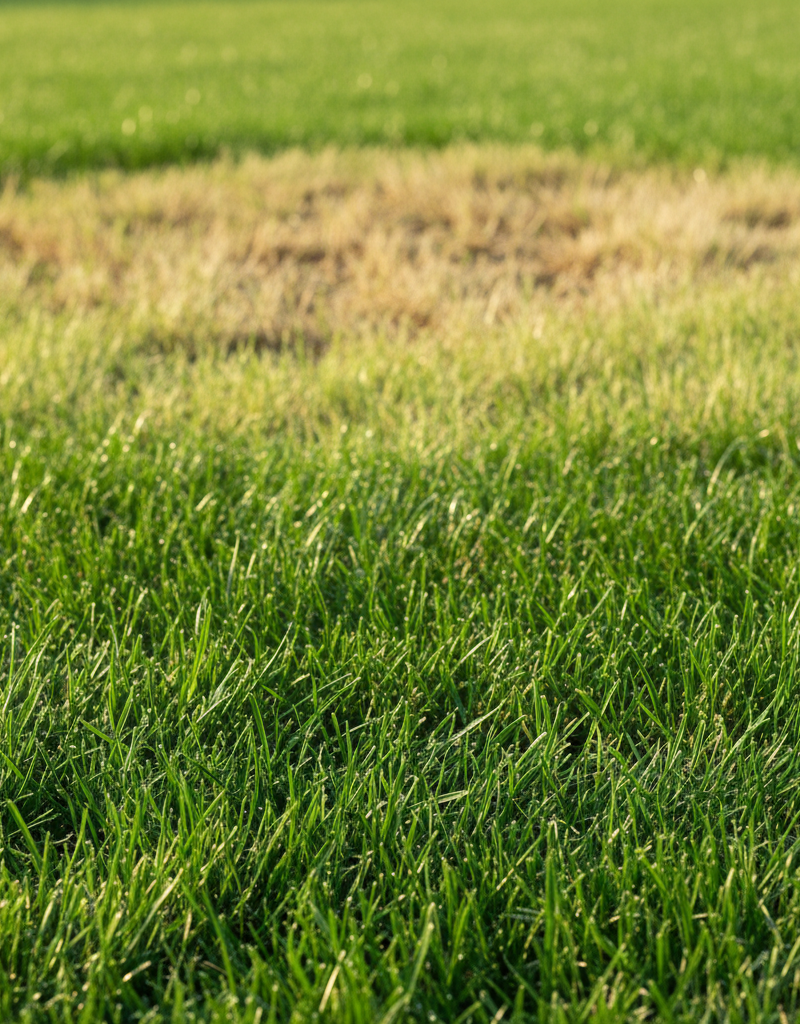
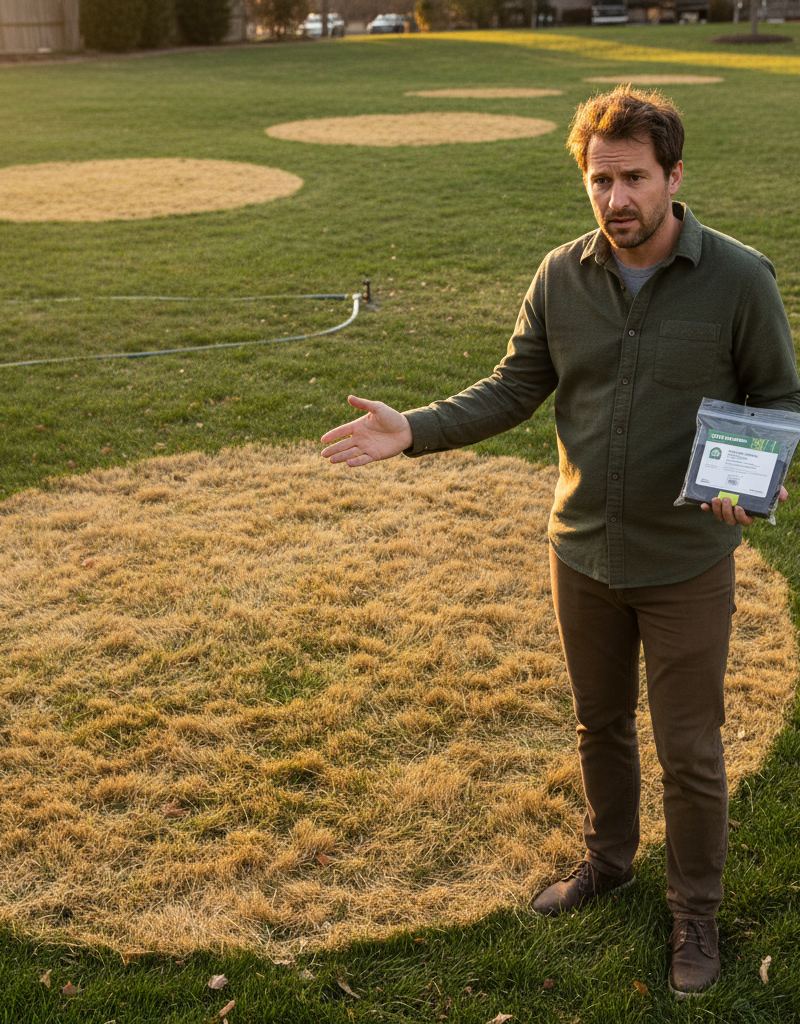
Yellow spots in a lawn often indicate localized issues such as pet urine, spilled chemicals, compaction, a patch of grubs or other pests, or a fungal disease like Dollar Spot or Brown Patch. Observe the pattern and surrounding grass for clues to narrow down the cause.

Discussion
Loading comments…