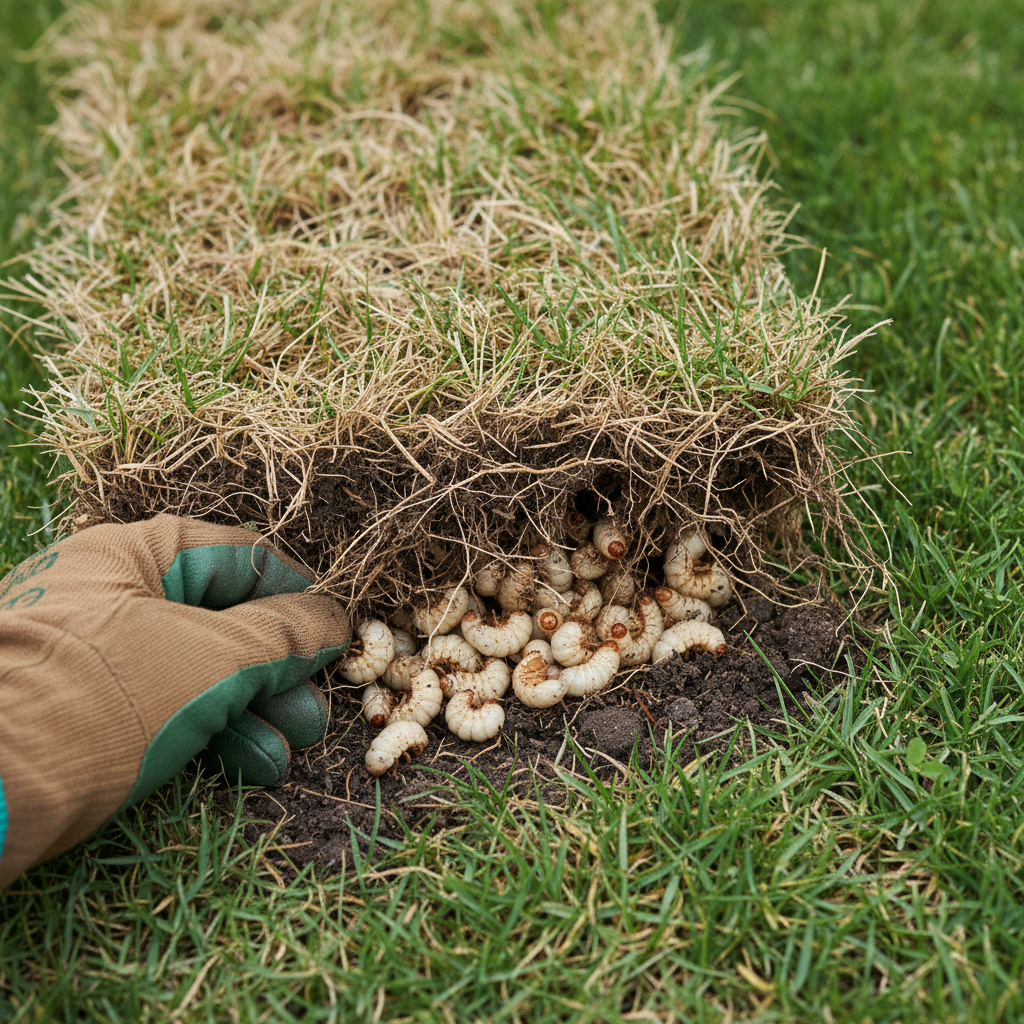
- Beetle Egg Laying: Adult beetles, attracted to healthy, well-irrigated lawns, lay eggs in the turf during summer, starting the cycle.
- Lack of Preventative Treatment: Not applying grub control products at the correct time allows new grubs to hatch and establish themselves.
- Inadequate Watering After Application: Without sufficient watering, granular grub control products don't reach the soil depth where grubs reside.
- Improper Product Selection: Using a general insecticide instead of a grub-specific product, or choosing a curative product for a preventative timing (or vice-versa), can be ineffective.
- Ignoring Local Conditions: Grub species and their emergence times can vary by region. Not tailoring treatment to local species and climate can lead to mistiming.
Landscaping · Deck or fence project
| Project category | Landscaping |
|---|---|
| Problem type | Deck or fence project |
| Trade required | Landscaping |
| Urgency | Planned project |
| Safety risk | Moderate safety risk |
| DIY suitability | DIY for experienced homeowners |
| Cost category | High cost |
| Typical timeline | Most builds 3–10 days depending on size |
| Contractor type | Landscaping contractor |
Repair option
Replace failed boards, posts, and hardware; reseal the surface.
Replacement option
Rebuild when framing or the ledger connection is unsafe.
Common causes
- Rot at posts and ledger
- Storm damage
- Adding outdoor living space
Relevant tools:home improvement material pricesproject cost estimator
Published June 7, 2026Last updated August 17, 2026
Tools & materials you'll need
Affiliate links- AmazonSpade or small shovel
- AmazonBroadcast spreader or drop spreaderRequired for granular products, ensures even application
- AmazonGarden hose with sprinkler or hose-end sprayer (for liquid products)
- AmazonRain gauge or empty tuna canTo measure water application depth
- AmazonRakeFor repairing damaged areas
As an Amazon Associate FixlyGuide earns from qualifying purchases — at no extra cost to you. Prices and availability are accurate as of publication and subject to change.
Quick Answer
Effective grub control hinges on understanding their lifecycle and precise timing. For prevention, apply biological (like milky spore) or chemical grub control products in late spring to early summer when grubs are small and most vulnerable. For existing infestations, a curative insecticide applied in late summer or early fall can reduce damage. Always water the treatment into the soil to reach the grubs.
The Problem
Is your once-lush lawn now riddled with irregular brown patches, feeling spongy underfoot, or easily pulled back like a loose rug? You likely have a grub problem. These C-shaped larvae of beetles—such as Japanese beetles, European chafers, and May/June bugs—devour the roots of your grass, leading to significant damage and even the death of sections of your lawn. Beyond the visible damage, grubs attract secondary pests like raccoons, skunks, and birds, which dig up your lawn even further in search of a meal. Many homeowners make the mistake of treating grubs at the wrong time, using ineffective products, or not preparing their lawn properly, leading to recurring infestations and continued frustration. The secret to stopping grubs isn't just killing them; it's interrupting their lifecycle at its most vulnerable stage.
How It Works
Understanding the grub lifecycle is paramount to effective control. Most damaging grubs have a one-year lifecycle, though some, like May/June bugs, can take two to three years. Adult beetles emerge from the soil in late spring to mid-summer (May to July, depending on the species and region). These adults then mate and lay their eggs in the turf, typically preferring healthy, well-watered lawns. Within a few weeks, usually in mid to late summer (July to August), the eggs hatch into tiny, first-instar grubs. This is the most critical stage for control. These young grubs immediately begin feeding on grass roots, growing rapidly through successive molts (instars). As they feed, they damage the root system, causing the tell-tale brown patches to appear. By late fall, as temperatures drop, the grubs burrow deeper into the soil to overwinter. In early spring, they move back up closer to the surface to feed for a short period before pupating, transforming into adult beetles, and restarting the cycle. The window for preventative control targets these young, actively feeding grubs. Curative treatments attempt to kill larger, more destructive grubs, but prevention is significantly more effective at long-term management because it kills them before they can cause widespread damage or reproduce.
Step-by-Step Fix
1. Confirm the Culprit — Don't guess, unearth the evidence.
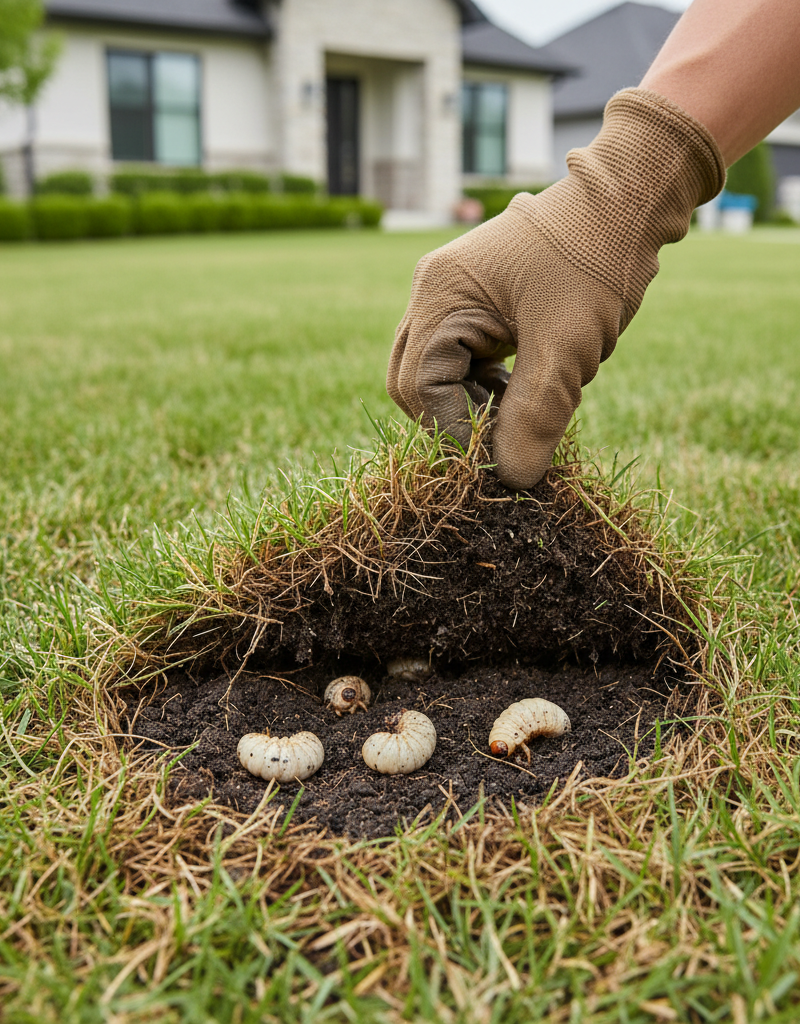
Before applying any treatment, positively identify grubs. Use a spade or shovel to cut three sides of a one-square-foot section of affected turf, about 2-4 inches deep. Fold back the sod like a flap. Examine the soil and root zone for C-shaped, white grubs with distinct brown heads and six legs near their heads. If you find 6-10 or more grubs per square foot, treatment is recommended. Fewer than 5 grubs per square foot usually doesn't warrant intervention, as some grubs are normal and healthy turf can tolerate minor feeding.
- If no grubs: Your lawn problem might be due to disease, drought, or nutrient deficiency. Consult a local extension office for diagnosis.
2. Choose Your Weapon: Preventative vs. Curative — Timing is everything for grub control.
Your treatment choice depends on the time of year and the severity of the infestation.
- Preventative (Best for annual control): Applied late spring to early summer (May-July) to kill newly hatched grubs. Ideal active ingredients include chlorantraniliprole (often found in products like Scotts GrubEx1 or Spectracide Bag-A-Bug Grub Killer) or imidacloprid (e.g., Bayer Advanced brand products). For organic control, milky spore (Paenibacillus popilliae) is effective against Japanese beetle grubs but takes years to establish.
- Curative (For existing damage): Applied late summer to early fall (August-October) when larger grubs are actively feeding. Products containing trichlorfon (e.g., Spectracide Triazicide Once & Done Insect Killer) or carbaryl (e.g., Sevin brand products) are common. Be aware that curative treatments are often less effective on mature grubs and may only prevent further damage, not reverse existing damage.
- Safety Note: Always read and follow all label instructions for any pesticide product. Wear appropriate personal protective equipment (PPE) like gloves, safety glasses, and long sleeves/pants. Keep pets and children off treated areas until dry.
3. Prepare Your Lawn — Maximize absorption for maximum impact.
For granular products, it's best to mow your lawn a day or two before application. If the soil is very dry, lightly water your lawn for about 30 minutes a day prior to aid absorption. Do not overwater or apply to soggy soil, as this can lead to runoff and reduced effectiveness.
4. Apply the Granules Evenly — Precision ensures coverage.
Use a broadcast spreader for granular products to ensure even distribution. Calibrate your spreader according to the product label's instructions for your specific model. Walk at a consistent pace, making slightly overlapping passes to avoid skips. For liquid concentrates, use a hose-end sprayer, again following label directions for dilution and application rate. Ensure the spray covers the entire affected area and a buffer zone around it.
5. Water It In (Crucial Step!) — Get the active ingredient to the grub.
Immediately after application (especially for granular products), water your lawn thoroughly. This activates the insecticide and washes it down into the soil where the grubs are feeding. Aim for about 0.5 to 1 inch of water (you can measure this with a rain gauge or by setting out an empty tuna can). Water deeply enough to penetrate the thatch layer and reach the root zone. Insufficient watering is a common reason for treatment failure.
- If you don't water enough: The product may remain on the surface and degrade in sunlight or not reach the grubs. Re-water if necessary.
6. Monitor and Re-evaluate — Look for signs of success and ongoing issues.
After 7-14 days, check for signs of grub activity reduction. New grass growth, fewer brown patches, and reduced digging by animals are good indicators. If animals continue to dig, or you still find grubs when sampling the turf, you may need a second application (if the product label allows and timing aligns with grub activity) or a different product. Remember, a single treatment rarely eliminates 100% of grubs, but it should significantly reduce their population to a tolerable level.
7. Repair Damaged Areas — Help your lawn recover strong.
Once grubs are under control, address the damaged areas. Rake out dead grass and loosen the soil. Apply new grass seed (choose a variety suited for your climate) or lay new sod. Keep the newly seeded or sodded areas consistently moist until established. Overseeding in early fall is often the most successful time for establishment.
Common Causes
- Beetle Egg Laying: Adult beetles, attracted to healthy, well-irrigated lawns, lay eggs in the turf during summer, starting the cycle.
- Lack of Preventative Treatment: Not applying grub control products at the correct time allows new grubs to hatch and establish themselves.
- Inadequate Watering After Application: Without sufficient watering, granular grub control products don't reach the soil depth where grubs reside.
- Improper Product Selection: Using a general insecticide instead of a grub-specific product, or choosing a curative product for a preventative timing (or vice-versa), can be ineffective.
- Ignoring Local Conditions: Grub species and their emergence times can vary by region. Not tailoring treatment to local species and climate can lead to mistiming.
- Poor Lawn Health: Stressed, undernourished lawns are more susceptible to grub damage and recover more slowly, making infestations seem worse.
Common Mistakes
- Treating Too Early or Too Late: Applying preventative products in fall or curative products in spring is largely ineffective as you're missing the grubs' vulnerable stages. Always check the calendar for your specific region and grub species.
- Not Identifying the Problem First: Assuming brown patches are grubs without confirming can lead to wasted effort and money on the wrong treatment. Always dig a test patch.
- Uneven Application: Hand-spreading granules or sloppy liquid application creates
Related Articles
Keep troubleshooting with these hand-picked guides from FixlyGuide:
- The #1 Mistake Homeowners Make When Battling Lawn Grubs (And a Simple Fix) — Discover the common mistake homeowners make when treating grubs and learn a simple, effective solution for a healthier lawn.
- The 3 Hidden Reasons Your Lawn Has Grubs (And the Pro Killer They Miss) — Discover the often-overlooked environmental factors attracting grubs to your lawn and the most effective, veterinarian-approved treatment s…
- The Undigested Secret in Your Lawn: Why Grubs Devour Roots (And the Simple Fix) — Grubs are the hidden menace beneath your lawn, turning lush green into patchy brown. Understanding their lifecycle is key to reclaiming you…
- The #1 Mistake Homeowners Make When Battling Lawn Grubs (And a Simple Organic Fix) — Discover why most DIY grub treatments fail and how a simple, organic approach can permanently rid your lawn of these destructive pests.
- The #1 Mistake Homeowners Make When Fighting Lawn Grubs (And How to Fix It) — Discover the crucial mistake homeowners often make when treating lawn grubs and learn the most effective, timing-sensitive strategies to el…
- That Peeling Caulk Hides a $2,000 Mistake. Here's the Fix. — Stop re-caulking your shower every year. Discover the professional method, from meticulous prep to the right materials, for a waterproof ba…
Should you do this yourself?
Answer five quick questions before you start. Safety outranks savings every time.
Your experience with work like this
How high do you have to work?
Does the job involve any of these?
Will it need a permit?
Specialty tools
Free and instant. Educational guidance only — not a quote, inspection, or professional diagnosis.
What should this project cost?
Enter your project details for a realistic cost range before you call anyone.
Cost depends heavily on which system turns out to be the source.
- Regional adjustment
- National average
- Labor share (typical)
- ~$1,620
- Quotes to collect
- 3 written estimates
Educational estimate based on national averages — not a binding quote. Always confirm with written local estimates.
Before you start
Check the difficulty, permits, and safety risk — then decide whether to call a pro.
- Estimate this projectGet a cost range for your scope and ZIP before you call anyone.Open
- Get local estimatesSend one request and compare written estimates from vetted pros.Open
Free, no signup required. Estimates are educational guidance, not a quote or an inspection.
Frequently asked questions
When is the best time to apply grub killer?+
The best time for preventative grub killer is late spring to early summer (May-July) when grubs are small and most vulnerable. For existing, active infestations, a curative product can be applied in late summer to early fall (August-October).
How do I know if I have grubs in my lawn?+
Look for irregular brown patches that feel spongy, or turf that pulls back easily like a carpet. You can confirm by cutting back a one-square-foot section of turf and looking for C-shaped, white grubs with brown heads in the soil directly beneath the grass.
What is the difference between preventative and curative grub control?+
Preventative grub control targets newly hatched, small grubs before they cause significant damage, usually applied in spring/early summer. Curative grub control is used to kill larger, actively feeding grubs causing visible damage in late summer/fall, but is often less effective.
Will grubs go away on their own?+
No, grubs will not go away on their own. They will continue to feed on grass roots, cause damage, and eventually transform into adult beetles, which will then lay more eggs and perpetuate the cycle in your lawn. Treatment is necessary for control.
How long after applying grub killer can I water my lawn?+
You should water your lawn immediately after applying granular grub killer. This is a crucial step to wash the active ingredient off the grass blades and into the soil where the grubs are feeding. Aim for 0.5 to 1 inch of water.

Discussion
Loading comments…