- Overwatering or Poor Drainage: Consistently moist soil creates ideal conditions for grubs.
- Thick Thatch Layer: Provides protection for grubs and a food source.
- Compact Soil: Weakens grass roots, making them more susceptible to grub feeding and poor nutrient uptake.
- Incorrect Mowing Height: Mowing too short stresses the grass, while leaving clippings (if excessive) can contribute to thatch.
- Over-fertilization, especially Nitrogen: Can result in shallow, succulent roots that are easily consumed by grubs.
Landscaping · Deck or fence project
| Project category | Landscaping |
|---|---|
| Problem type | Deck or fence project |
| Trade required | Landscaping |
| Urgency | Planned project |
| Safety risk | Moderate safety risk |
| DIY suitability | DIY for experienced homeowners |
| Cost category | High cost |
| Typical timeline | Most builds 3–10 days depending on size |
| Contractor type | Landscaping contractor |
Repair option
Replace failed boards, posts, and hardware; reseal the surface.
Replacement option
Rebuild when framing or the ledger connection is unsafe.
Common causes
- Rot at posts and ledger
- Storm damage
- Adding outdoor living space
Relevant tools:home improvement material pricesproject cost estimator
Published June 5, 2026Last updated August 17, 2026
Tools & materials you'll need
Affiliate links- AmazonGarden gloves
- AmazonSmall trowel or spade
- AmazonBucket or timer (for drainage test)
- AmazonCore aerator (rental)If significant compaction is present
- AmazonDethatching rake or power dethatcher (rental)If thatch layer is over 3/4 inch thick
- AmazonBroadcast spreaderFor even application of amendments/nematodes
As an Amazon Associate FixlyGuide earns from qualifying purchases — at no extra cost to you. Prices and availability are accurate as of publication and subject to change.
Quick Answer
Grub infestations often point to deeper soil health issues rather than just a pest problem. The most effective long-term solution isn't just killing grubs but improving your soil to make it inhospitable to them and more resilient to damage. Start by evaluating your lawn's drainage and compaction, then perform a soil test to uncover nutrient deficiencies or pH imbalances. Addressing these root causes, combined with proper cultural practices, will naturally reduce grub populations and foster a vibrant, healthy lawn.
The Problem
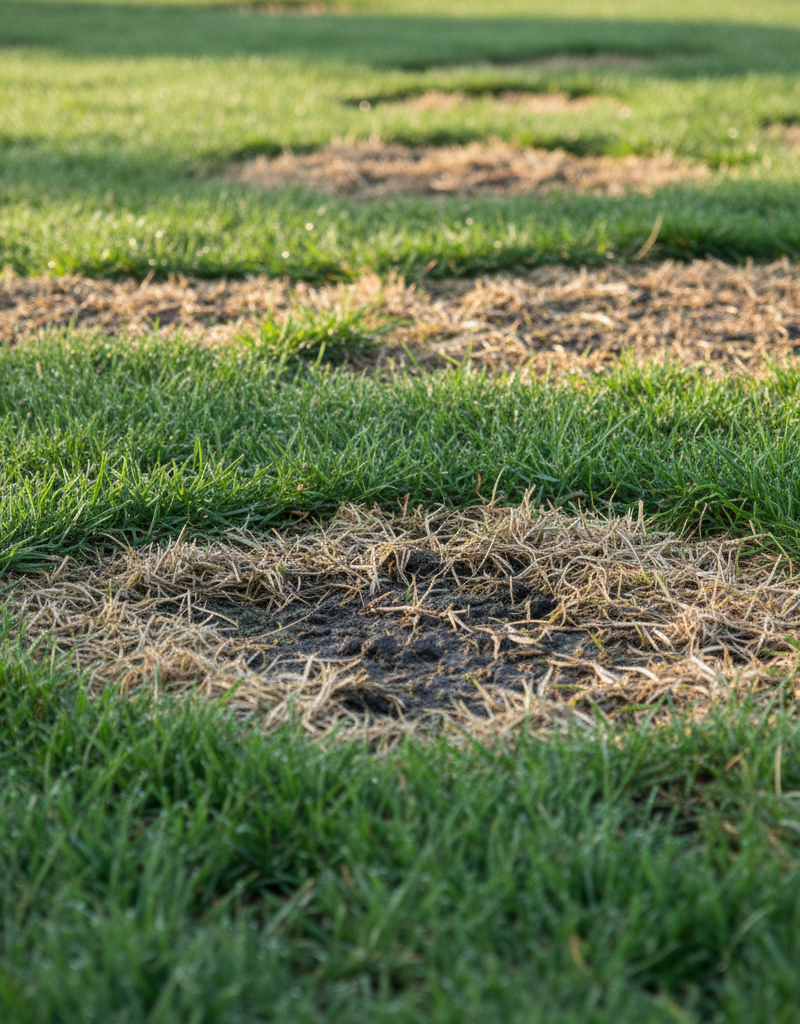
brown patches? Spongy areas underfoot? Or perhaps crows and raccoons are tearing up your meticulously maintained turf? These are classic signs of a grub infestation, specifically the larvae of beetles like Japanese beetles, chafers, and June bugs. These C-shaped, white grubs feed on grass roots, severing the plant from its water and nutrient supply, leading to significant turf damage. What homeowners often miss, however, is that grubs don't just appear randomly; they are often indicators of underlying problems in your lawn's health, particularly related to soil compaction, drainage, and nutritional balance. Simply applying a grub killer might offer a temporary fix, but without addressing the conditions that attract and sustain grubs, you’re likely to face recurring battles and an endless cycle of chemical treatments. The true problem isn't just the grubs themselves, but the invitation your soil is extending to them.
How It Works
Understanding a grub infestation requires a look beneath the surface, quite literally. Adult beetles lay their eggs in the soil, usually in mid-summer. These eggs hatch into grubs that immediately begin feeding on the tender roots of your grass. As autumn approaches, they move deeper into the soil to overwinter, emerging in spring to continue feeding before pupating into adult beetles. This lifecycle highlights two critical windows for intervention: late spring/early summer for preventative treatments targeting newly hatched grubs, and early fall for curative treatments targeting active, damaging grubs.
However, the presence and severity of grub damage are directly influenced by the soil environment. Grubs thrive in a dense, moist, and typically nutrient-rich (from decaying thatch) environment where roots are easily accessible.
Thatch Layer: This is the layer of dead and living organic matter between the soil surface and the green grass blades. A healthy thatch layer is thin (less than ½ inch) and helps conserve moisture. An excessive thatch layer (over 1 inch) creates a perfect, protected habitat for grubs, shielding them from predators and pesticides, while also making it harder for water, air, and nutrients to reach the roots.
Soil Compaction & Drainage: Compacted soil has less pore space, hindering water infiltration and root growth. This can lead to standing water, which, paradoxically, can create favorable conditions for grubs by keeping the root zone consistently moist. Poor drainage also stresses grass, making it more susceptible to grub damage. Conversely, well-aerated soil promotes stronger, deeper root systems that are more resilient to grub feeding.
Soil pH & Nutrients: The pH of your soil dictates nutrient availability. Most turfgrasses prefer a slightly acidic to neutral pH (6.0 to 7.0). When pH is too high or too low, essential nutrients become locked up, weakening the grass. Weak grass roots are like an open buffet for grubs, as they are easier to chew through and less able to recover from damage. An imbalance of specific nutrients, particularly nitrogen and phosphorus, can also deter or encourage different types of soil microorganisms, including those that might naturally prey on grubs.
By understanding these interconnected factors, you can move beyond mere grub killing to a strategy of soil rehabilitation. This approach not only reduces grub populations but also builds a healthier, more resilient lawn that is naturally more resistant to pests and diseases.
Step-by-Step Fix
Here’s how to diagnose and effectively treat a grub problem by focusing on soil health:
-
Safety First— Always wear garden gloves when handling soil, pesticides, or fertilizers. Avoid contact with skin and eyes. If using chemical grub control, read and follow all manufacturer's instructions, including wearing appropriate personal protective equipment (PPE) like long sleeves, pants, and closed-toe shoes.
-
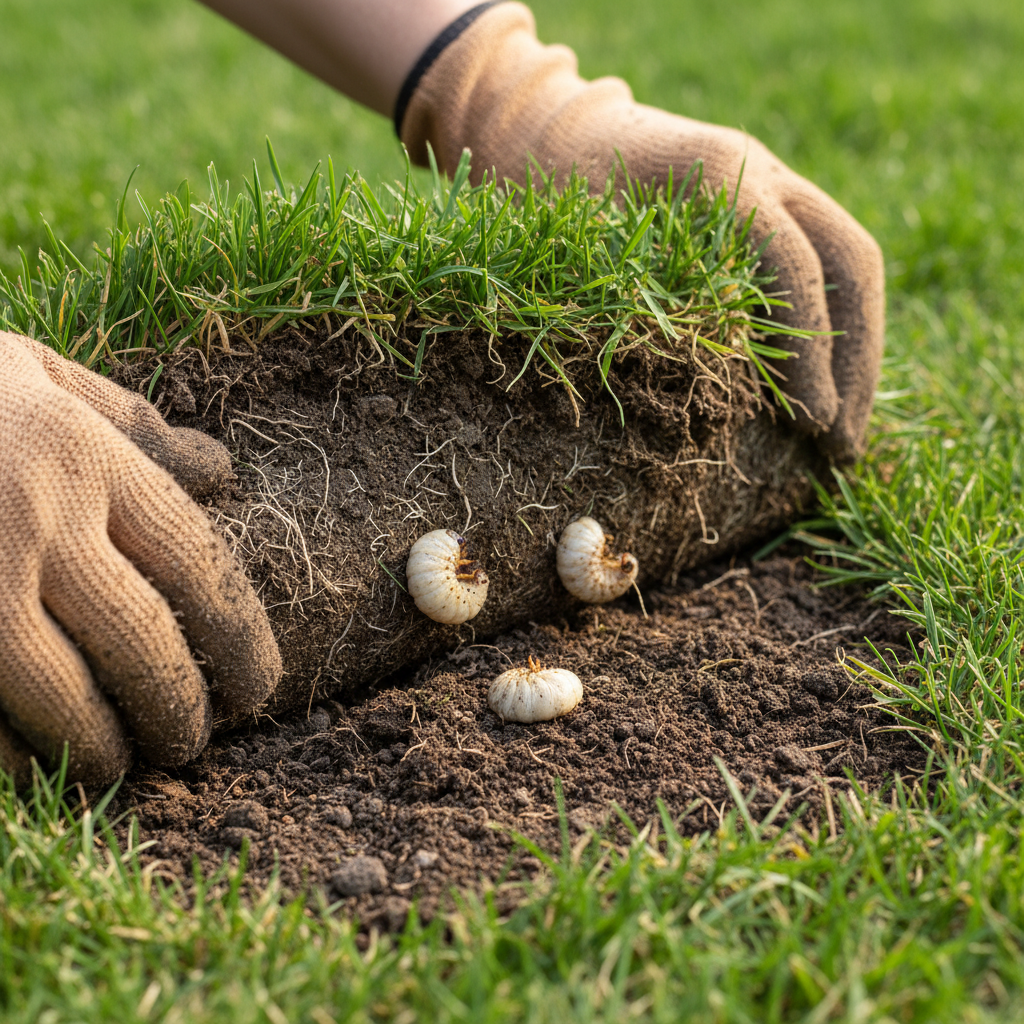
Inspect for Grub Damage— Confirm it's grubs. Look for irregularly shaped brown patches that appear in late summer or early fall. Tug on the brown grass; if it peels back like a rug, revealing C-shaped white grubs underneath, you have a grub problem. Also, watch for increased activity from animals like raccoons, skunks, or birds digging in your lawn, as they feast on grubs. A healthy lawn can tolerate about 5 grubs per square foot. More than 10-15 grubs per square foot indicates a significant problem requiring intervention.
-
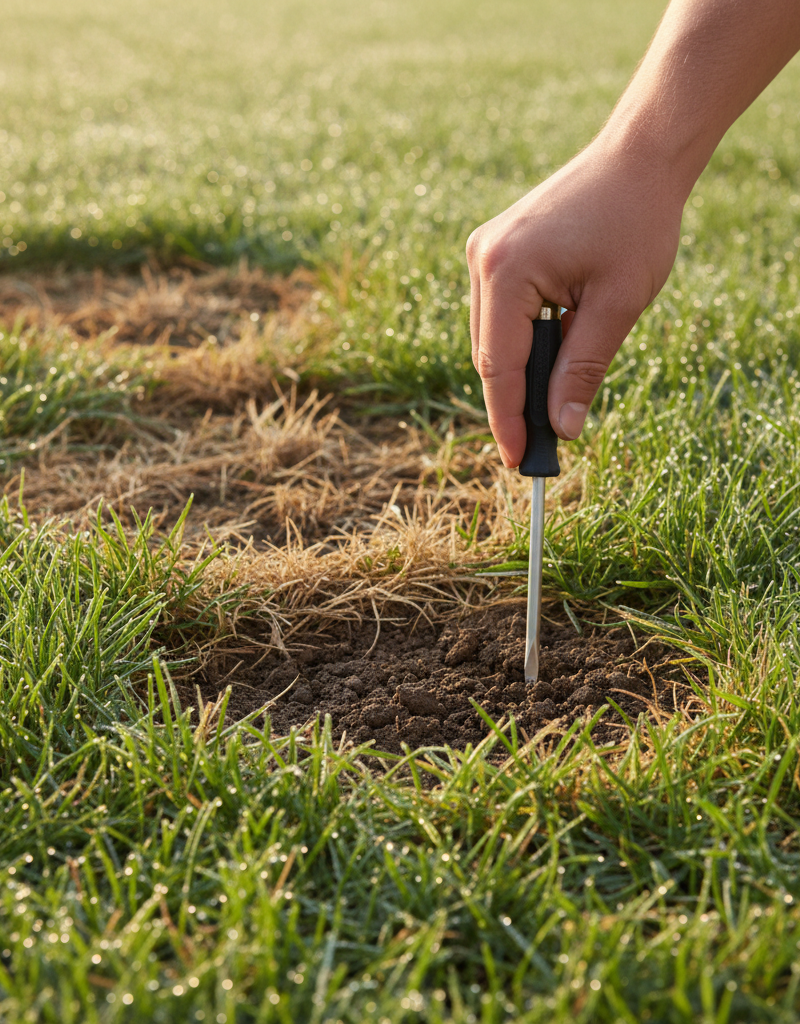
Perform a Soil Compaction & Drainage Test— Is your soil compacted? Dig a hole approximately 6 inches deep and 6 inches wide in an affected area and a healthy area of your lawn. Observe the soil structure. Is it crumbly or hard and dense? Fill the holes with water and time how long it takes for the water to drain completely. If the water drains in less than 5 minutes, you have good drainage. If it takes 15 minutes or longer, your soil is likely compacted and has poor drainage. This test provides immediate insight into a critical grub attractant.
-
Measure Thatch Layer Thickness— Assess your thatch. Use a trowel to cut a small, pie-shaped wedge of your lawn. Carefully lift it and observe the layer of organic material between the green grass blades and the soil surface. Measure its thickness. If it's thicker than ½ to ¾ inch, you have excessive thatch, which needs to be addressed through dethatching or aeration.
-
Conduct a Professional Soil Test— Uncover pH and nutrient issues. Purchase a soil test kit from your local garden center or, even better, send a sample to your local university extension office. These inexpensive tests provide detailed reports on your soil's pH, nutrient levels (nitrogen, phosphorus, potassium, micronutrients), and organic matter content. This information is crucial for tailoring a long-term solution. Allow 2-4 weeks for results.
-
Apply Cultural Controls (Based on Test Results)— Improve your soil to deter grubs.
- For Compaction/Poor Drainage: Aerate your lawn in early fall or spring. Use a core aerator that pulls out small plugs of soil, improving air and water penetration. For severe compaction, consider topdressing with compost after aeration. Aim to aerate annually if compaction is a recurring issue.
- For Excessive Thatch: Dethatch your lawn in early fall or spring using a power dethatcher or rake. Remove the loosened thatch. Ensure you don't remove more than 1/3 of the grass blade height during mowing, as this can contribute to thatch buildup.
- For pH Imbalance: If your soil test shows a pH outside the optimal 6.0-7.0 range, apply lime to raise pH (if too acidic) or sulfur to lower pH (if too alkaline), according to the soil test recommendations. Do this in fall or spring. Adjustments can take several months to a year to show significant results.
- For Nutrient Deficiencies: Apply fertilizers based on your soil test results. Avoid over-fertilizing with nitrogen, especially in late summer, as this can promote lush top growth at the expense of root development, making turf more vulnerable to grubs.
-
Consider Biological Grub Control— Introduce natural predators. For active grub infestations (detected in late summer/early fall or early spring), apply beneficial nematodes (Heterorhabditis bacteriophora species). These microscopic worms are natural parasites of grubs. Apply them to moist soil in the evening or on a cloudy day, as UV light can harm them. Follow package directions carefully regarding soil temperature and moisture.
-
Strategic Irrigation— Change your watering habits. Grubs prefer moist soil. In peak grub-laying season (mid-summer), consider reducing irrigation slightly to stress adult beetles and deter them from laying eggs in your lawn. Once grubs are established, deep, infrequent watering encourages deeper root growth, making grass more resilient.
-
Overseeding Damaged Areas— Repair the damage. After addressing the grub problem and improving soil conditions, overseed damaged areas with a resilient grass type. Rake the soil lightly before seeding and keep it consistently moist until germination. This is best done in early fall or spring.
Common Causes
- Overwatering or Poor Drainage: Consistently moist soil creates ideal conditions for grubs.
- Thick Thatch Layer: Provides protection for grubs and a food source.
- Compact Soil: Weakens grass roots, making them more susceptible to grub feeding and poor nutrient uptake.
- Incorrect Mowing Height: Mowing too short stresses the grass, while leaving clippings (if excessive) can contribute to thatch.
- Over-fertilization, especially Nitrogen: Can result in shallow, succulent roots that are easily consumed by grubs.
- Presence of Adult Beetles: If you see many Japanese beetles, chafer beetles, or June bugs in your yard in the summer, they are likely laying eggs that will become grubs.
Common Mistakes
- Treating Without Confirming Grubs: Many lawn problems mimic grub damage (e.g., fungal diseases, drought stress). Always confirm grubs are present before applying treatment.
- Applying Grub Control at the Wrong Time: Preventative grub control is most effective in late spring/early summer. Curative treatments work best in late summer/early fall when grubs are small and actively feeding. Applying at other times can be ineffective and a waste of product.
- Ignoring Soil Health: Relying solely on pesticides without addressing underlying soil issues is a temporary fix. Grubs will return if the conditions that attract them persist.
- Not Following Directions for Biological Controls: Beneficial nematodes are living organisms sensitive to UV light and temperature. Incorrect application renders them useless.
- Mowing Too Short During Infestation: Short grass is already stressed. Mowing too low adds more stress, making it harder for the lawn to recover from grub damage.
Cost & Time Breakdown
| Task | DIY cost | Pro cost | Time |
|---|---|---|---|
| Soil Compaction/Drainage Test | $0 | $0 | 15–30 minutes |
| Thatch Layer Measurement | $0 | $0 | 5–10 minutes |
| Professional Soil Test | $15–$30 | $50–$100 | 2–4 weeks (results) |
| Core Aeration (rental) | $80–$150 | $150–$300 | 2–4 hours |
| Dethatching (rental) | $70–$120 | $100–$250 | 2–4 hours |
| Beneficial Nematodes (DIY) | $30–$60 | N/A | 1–2 hours |
| Lime/Sulfur Application | $20–$50 | $50–$100 | 1–2 hours |
| Overseeding | $20–$50 | $50–$100 | 1–2 hours |
Tips & Prevention
- Mow High: Keep your grass at a height of 2.5-3 inches. Taller grass promotes deeper root growth and shades out weed seeds, making your lawn more resilient.
- Deep and Infrequent Watering: Water deeply (1 inch per week) rather than frequently and shallowly. This encourages roots to grow deeper, making them less accessible to surface-feeding grubs and more tolerant of drought.
- Dethatch Annually if Needed: If your lawn consistently develops a thick thatch layer, plan for annual dethatching in the fall to remove organic buildup.
- Aerate Regularly: For compacted soils, annual or bi-annual aeration significantly improves soil structure, promoting healthy root growth and reducing grub habitat.
- Plant Grub-Resistant Grasses: Consider incorporating endophyte-enhanced fescues or ryegrasses into your lawn, as these varieties contain natural chemicals that deter grubs and other insects.
- Monitor for Adult Beetles: Pay attention to adult beetle activity (Japanese beetles, June bugs) in your yard during summer. Heavy populations can indicate a higher risk of grub problems later in the season.
When to Call a Professional
While many grub problems can be managed with DIY methods, consider calling a professional lawn care service or arborist if you're dealing with extensive, recurring damage across large areas of your lawn, if your soil tests reveal complex nutrient deficiencies or severe pH imbalances that you're unsure how to correct, or if you prefer professional application of grub control products. They possess specialized equipment for aeration and dethatching, access to professional-grade products, and the expertise to diagnose accurately and implement a comprehensive, long-term lawn health plan that goes beyond simply eliminating grubs. A pro can also help identify if the problem is indeed grubs or another issue entirely, saving you time, money, and frustration.
Related Articles
Keep troubleshooting with these hand-picked guides from FixlyGuide:
- The Secret Reason Your Lush Lawn Mysteriously Dies (It's Not Drought) — Grubs can secretly destroy a healthy lawn from underground, causing dead patches that look like drought damage. Learn to diagnose and treat…
- The Undigested Secret in Your Lawn: Why Grubs Devour Roots (And the Simple Fix) — Grubs are the hidden menace beneath your lawn, turning lush green into patchy brown. Understanding their lifecycle is key to reclaiming you…
- The #1 Mistake Killing Your Lawn (and the Simple Grub Fix) — Grub worms can covertly destroy a beautiful lawn, but specific biological and chemical treatments applied at the right time can eliminate t…
- The #1 Mistake Homeowners Make When Battling Lawn Grubs (And a Simple Fix) — Discover the common mistake homeowners make when treating grubs and learn a simple, effective solution for a healthier lawn.
- The #1 Secret to Edging Flower Beds That Last Years (and Resist Weeds) — Discover the crucial, often-skipped step that ensures your landscape edging stays put and keeps weeds out for years, transforming your flow…
- The Secret Reason Your Interior Door Sticks (It's Not Always Humidity) — Before you grab a planer, discover the real culprits behind a sticking interior door and learn simple, effective fixes.
What should this project cost?
Enter your project details for a realistic cost range before you call anyone.
Cost depends heavily on which system turns out to be the source.
- Regional adjustment
- National average
- Labor share (typical)
- ~$1,620
- Quotes to collect
- 3 written estimates
Educational estimate based on national averages — not a binding quote. Always confirm with written local estimates.
Get the print-ready PDF of this guide
A clean, ad-free, printable version you can keep on your phone or pin to the workshop wall. Free with a FixlyGuide account.
- Print-optimized layout
- Tools, materials & every step included
- Saved to your account
Frequently asked questions
What are the common signs of grubs in your lawn?+
Common signs of grubs include irregular brown patches of dying grass that peel back easily like a rug, spongy areas when walking on the lawn due to root damage, and increased activity from animals like raccoons, skunks, or birds digging in your yard as they feed on the grubs.
When is the best time to treat grubs?+
The best time for preventative grub treatment is late spring to early summer (June-July) when eggs are hatching and grubs are small. For existing grub problems, curative treatments are most effective in late summer to early fall (August-September) when grubs are actively feeding, or in early spring as they resume feeding before pupating.
Can I get rid of grubs naturally without chemicals?+
Yes, you can get rid of grubs naturally. Methods include applying beneficial nematodes, improving soil health through aeration and dethatching, proper watering techniques to deter egg-laying, and encouraging natural predators like birds and ground beetles. Improving overall lawn health makes it less hospitable to grubs.
How do I know if I have a grub problem or another lawn issue?+
To confirm a grub problem, dig up a square foot section of affected turf about 2-4 inches deep and inspect the soil for C-shaped white grubs. If you find 6-10 or more grubs in that area, you likely have an infestation. Other issues like drought stress or fungal diseases don't typically involve finding grubs under the turf.
Does dethatching and aeration help with grubs?+
Yes, dethatching and aeration significantly help prevent and manage grub problems. Dethatching removes the thick layer of organic matter where grubs thrive, while aeration reduces soil compaction, improves drainage, and promotes healthier, stronger grass roots that are more resistant to grub damage and can recover more easily.
How long do grubs stay in the lawn?+
Grubs typically have a one-year life cycle. They hatch in mid-summer, feed throughout the late summer and fall, overwinter deep in the soil, feed again in the spring, and then pupate in late spring/early summer, emerging as adult beetles. So, they are present in the soil for about 10-11 months of that cycle.

Discussion
Loading comments…