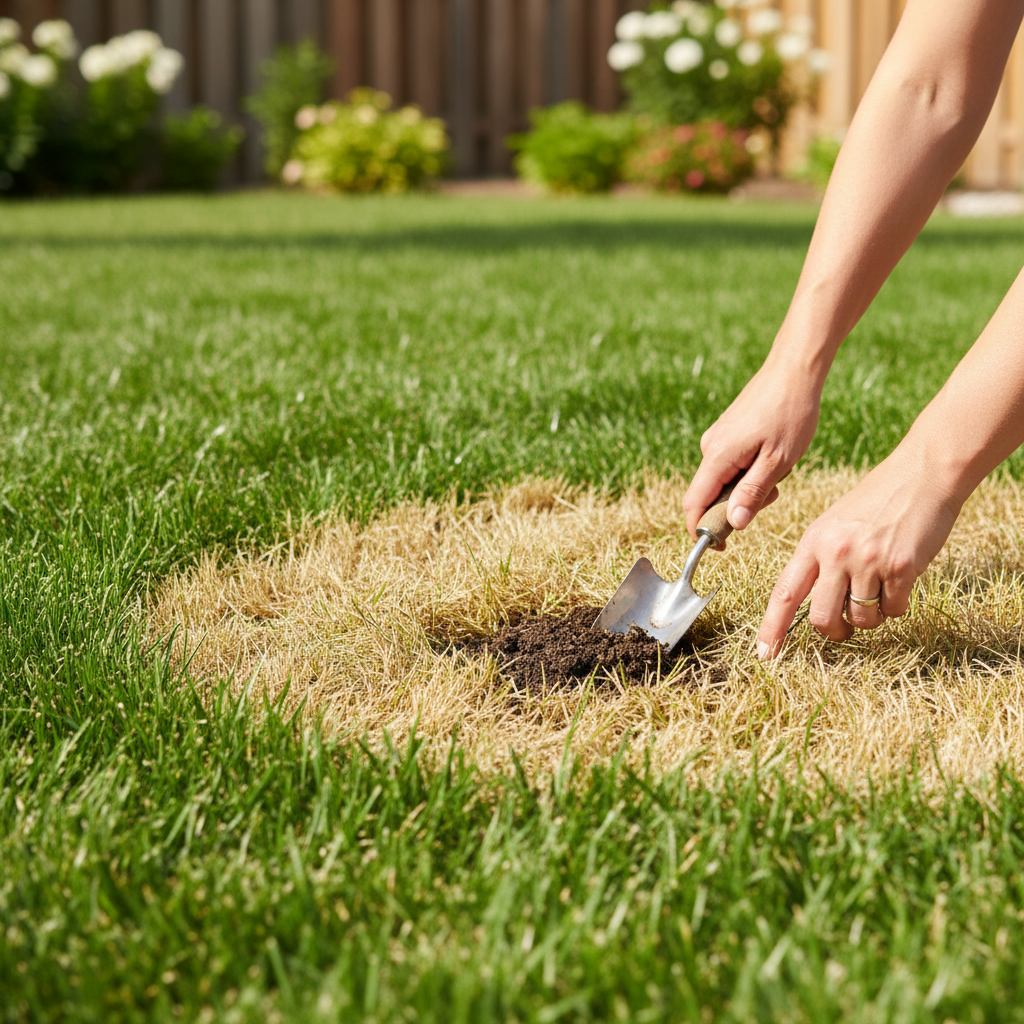
- Underwatering: The most frequent culprit, especially during hot, dry summer spells. The grass simply isn't getting enough moisture to sustain itself and perform photosynthesis.
- Overwatering: Leads to suffocated roots due to lack of oxygen, promoting root rot and hindering nutrient uptake. Often seen in poorly draining or compacted soils.
- Nutrient Deficiencies: Lack of essential nutrients, particularly nitrogen for overall green growth and iron for chlorophyll production, will cause yellowing.
- Compacted Soil: Prevents water, air, and nutrients from reaching the root zone, effectively starving the grass and making it more susceptible to all other issues.
- Thatch Buildup: An excessive layer of thatch acts as a barrier, preventing water and nutrients from penetrating to the soil and roots.
Landscaping · Deck or fence project
| Project category | Landscaping |
|---|---|
| Problem type | Deck or fence project |
| Trade required | Landscaping |
| Urgency | Planned project |
| Safety risk | Moderate safety risk |
| DIY suitability | DIY for experienced homeowners |
| Cost category | High cost |
| Typical timeline | Most builds 3–10 days depending on size |
| Contractor type | Landscaping contractor |
Repair option
Replace failed boards, posts, and hardware; reseal the surface.
Replacement option
Rebuild when framing or the ledger connection is unsafe.
Common causes
- Rot at posts and ledger
- Storm damage
- Adding outdoor living space
Relevant tools:home improvement material pricesproject cost estimator
Published June 5, 2026Last updated August 17, 2026
Tools & materials you'll need
Affiliate linksAs an Amazon Associate FixlyGuide earns from qualifying purchases — at no extra cost to you. Prices and availability are accurate as of publication and subject to change.
Quick Answer
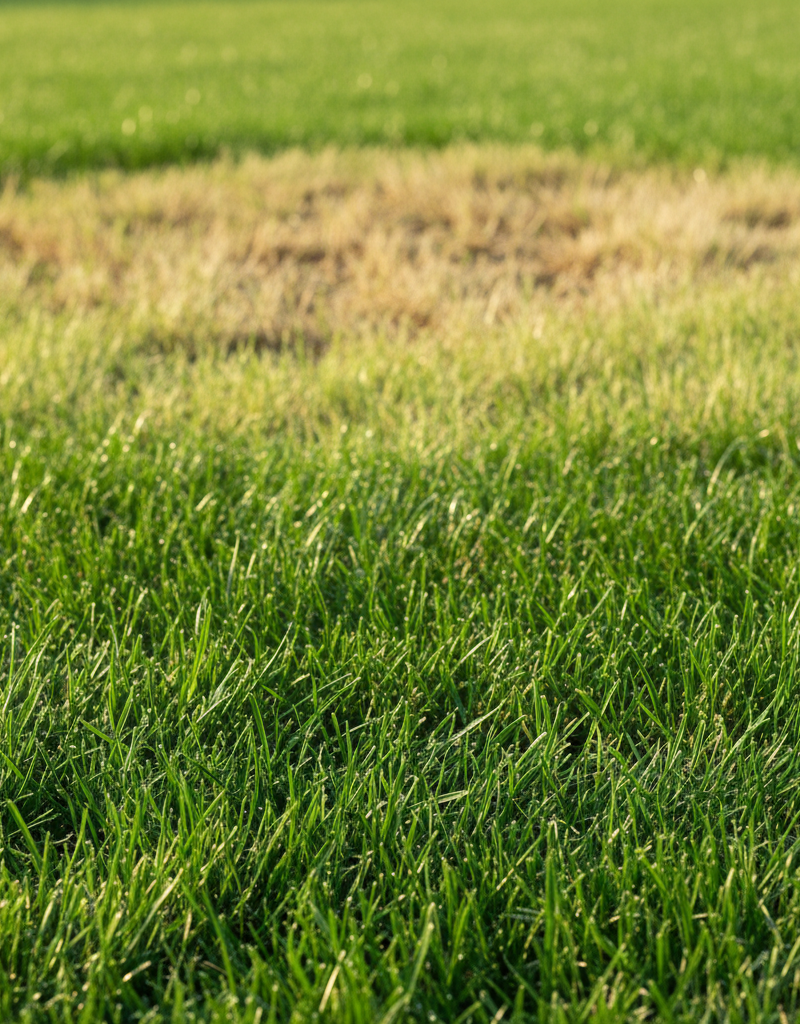
Summer lawns often turn yellow due to incorrect watering practices, which include insufficient water, overwatering, or watering during the sunniest parts of the day. Additionally, compacted soil, nutrient deficiencies (especially iron or nitrogen), and fungal diseases can contribute to the problem. By properly diagnosing the issue and implementing targeted solutions like amending watering habits, aerating the lawn, and fertilizing appropriately, you can restore your lawn to a healthy, green state.
The Problem
You wake up, look out the window, and instead of a lush green carpet, your lawn is a patchy, sickly yellow. This common summer woe can be incredibly frustrating for homeowners. It’s not just an aesthetic issue; a yellowing lawn is a cry for help, indicating underlying stress or deficiencies that, if left unaddressed, can lead to permanent damage, increased weed growth, and susceptibility to pests and diseases. The problem isn't always obvious, as several factors can mimic each other. Is it thirst? Too much water? A hidden fungus? Or is your soil lacking vital nutrients? Misdiagnosing the cause can lead to ineffective treatments, wasted time, and further decline of your turf. This guide will help you pinpoint the most common culprit—improper watering—and walk you through the steps to revive your struggling lawn.
How It Works
To understand why your lawn turns yellow, it helps to understand how grass works. Grass plants, like all plants, require sunlight, water, and nutrients (primarily nitrogen, phosphorus, and potassium, along with micronutrients like iron) for photosynthesis. Photosynthesis is the process by which plants convert light energy into chemical energy, creating the sugars they need to grow. Chlorophyll, the green pigment in leaves, is essential for this process. When a lawn turns yellow, it’s often a sign that chlorophyll production is inhibited or that the plant is under severe stress, leading to chlorosis.
Water plays a critical role. When grass doesn't get enough water, its cells begin to dehydrate, leading to wilting and eventually dormancy, turning a straw-like yellow or brown. Conversely, overwatering can be just as damaging. Excess water displaces oxygen in the soil, suffocating the roots. Roots need oxygen to absorb water and nutrients effectively. Without sufficient oxygen, roots weaken, become susceptible to rot, and the plant cannot properly take up iron and nitrogen, both crucial for chlorophyll production. This is often exacerbated in compacted soils where water drainage is poor.
Nutrient deficiencies, particularly nitrogen (responsible for lush green growth) and iron (a key component of chlorophyll), directly impact the grass's ability to remain green. Pests and diseases can also stress the plant, hindering its ability to photosynthesize and leading to yellowing. Understanding these basic mechanisms helps in correctly identifying and treating the problem.
Step-by-Step Fix
Here’s how to diagnose and fix the most common cause of a yellow summer lawn: improper watering.
1. Assess Your Watering Schedule — Determine if your lawn is getting too much or too little water.
- Underwatering: If your grass blades look thin, curled, and don't spring back quickly when walked on, and the soil feels dry to a depth of 2-3 inches, your lawn is likely thirsty. Water deeply and infrequently. Aim for 1 inch of water per week, delivered in one or two sessions, depending on your soil type and climate. Use a rain gauge to measure sprinkler output.
- Overwatering: If your lawn feels soggy, you see standing water, or there's a greenish-black algae growth, it could be overwatered. Overwatering can lead to shallow roots and suffocated soil. Reduced watering frequency and ensure good drainage. If your lawn is on a slope, look for runoff rather than absorption.
- Timing: Always water in the early morning (between 4 AM and 9 AM). This minimizes evaporation and allows the grass to dry before nightfall, reducing the risk of fungal diseases. Watering during midday leads to significant evaporation, and watering at night keeps grass wet too long, inviting disease.
2. Perform a Soil Probe Test — Check soil moisture and compaction levels.
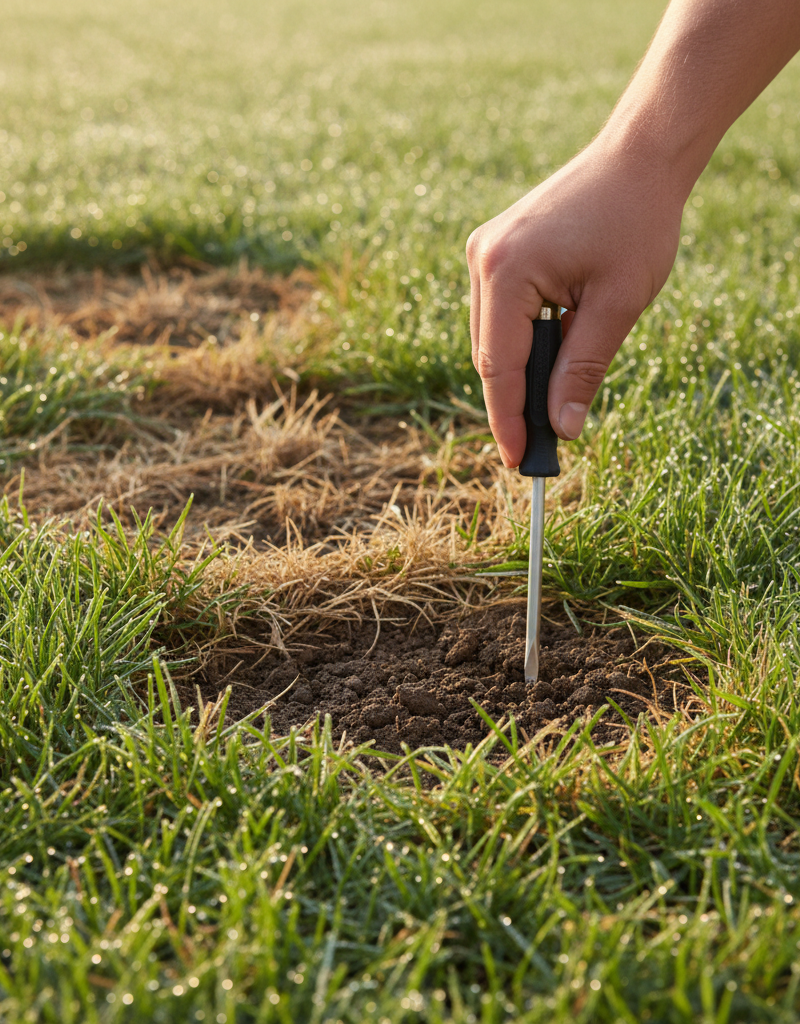
- Tools: A screwdriver or a soil probe. You can also use a trowel.
- Action: Push a long screwdriver or soil probe into the lawn. If it goes in easily to 6-8 inches, your soil is likely well-hydrated and not overly compacted. If it's difficult to push in, your soil might be dry or compacted. Dig up a small section with a trowel to visually inspect the soil: is it crumbly and moist, or hard and clumpy?
- If compacted: Consider aeration. Compacted soil hinders water penetration and root growth. You can rent a core aerator for significant compaction or use spike aerators for lighter issues.
3. Check for Thatch Buildup — Excess thatch can prevent water and nutrients from reaching roots.
- What it is: Thatch is a layer of dead and living organic matter (stems, roots, leaves) that accumulates between the soil surface and the green grass blades. A healthy thatch layer is about 0.5 inches thick.
- Inspection: Use a trowel to cut a small section of turf and lift it up. If the thatch layer is thicker than 0.75-1 inch, it's problematic. It acts like a sponge, holding water near the surface and preventing it from reaching the roots, attracting pests, and fostering disease.
- Solution: Dethatch your lawn. This can be done with a dethatching rake for small areas or a power dethatcher for larger lawns. Aim to dethatch in late spring or early fall when the grass is actively growing and can recover quickly.
4. Consider a Soil Test for Nutrient Deficiencies — Identify if your lawn is missing key nutrients.
- Why: Even with perfect watering, nutrient-deficient soil will lead to a yellow lawn. Nitrogen deficiency is common and results in an overall pale green to yellow color, starting from older leaves. Iron deficiency often causes yellowing between the veins of new leaves, while the veins themselves remain green.
- Action: Purchase a soil test kit from a garden center or send a sample to your local agricultural extension office. These tests provide detailed reports on pH levels and nutrient content.
- Interpretation & Solution: Based on the results, apply specific fertilizers. For nitrogen deficiency, use a lawn fertilizer rich in nitrogen. For iron deficiency, apply a chelated iron supplement. Follow product instructions carefully.
5. Identify and Address Pests or Diseases — Rule out biological causes of yellowing.
- Visual Inspection: Look closely at the grass blades and soil. Are there any visible insects (grubs, chinch bugs, sod webworms)? Are there unusual spots, lesions, or fungal growth (e.g., rust, dollar spot)? Patches of yellow or brown that spread unpredictably can indicate disease.
- Common Pests: Grubs eat roots, leading to patches of lawn that can be rolled back like a rug. Chinch bugs suck sap from grass blades, leaving irregular yellow patches.
- Common Diseases: Fungal diseases like rust (orange-red spores) or dollar spot (small, straw-colored spots) are common. Overwatering and poor air circulation often contribute to fungal issues.
- Solution: If pests are identified, use an appropriate insecticide according to label directions. For diseases, cultural controls (proper watering, air circulation) are often the first line of defense. Fungicides may be necessary for severe outbreaks but consult with a professional if you're unsure.
Common Causes
- Underwatering: The most frequent culprit, especially during hot, dry summer spells. The grass simply isn't getting enough moisture to sustain itself and perform photosynthesis.
- Overwatering: Leads to suffocated roots due to lack of oxygen, promoting root rot and hindering nutrient uptake. Often seen in poorly draining or compacted soils.
- Nutrient Deficiencies: Lack of essential nutrients, particularly nitrogen for overall green growth and iron for chlorophyll production, will cause yellowing.
- Compacted Soil: Prevents water, air, and nutrients from reaching the root zone, effectively starving the grass and making it more susceptible to all other issues.
- Thatch Buildup: An excessive layer of thatch acts as a barrier, preventing water and nutrients from penetrating to the soil and roots.
- Heat Stress: Extreme heat can cause grass to go dormant, turning yellow or brown, even if adequately watered. Some grass types are more susceptible than others.
- Pests and Diseases: Grubs, chinch bugs, sod webworms, and various fungal diseases can weaken grass and cause widespread yellowing or distinct yellow patches.
- Herbicides or Chemical Spills: Accidental application of weed killer or other chemicals can burn and yellow patches of your lawn.
Common Mistakes
- Watering Too Frequently and Lightly: This encourages shallow root growth, making your lawn more vulnerable to drought stress and heat. Instead, water deeply and infrequently.
- Watering in Midday Heat or Late Evening: Midday watering loses too much to evaporation, while late evening watering keeps the grass wet too long, promoting fungal diseases. Water early in the morning.
- Ignoring Soil Compaction: Watering more won't help if the water can't penetrate. If your soil is hard, address compaction through aeration before increasing water.
- Guessing Nutrient Needs: Applying a 'lawn food' without knowing what your soil actually lacks can lead to imbalances or waste. Get a soil test for targeted fertilization.
- Mowing Too Short: Scalping your lawn stresses the grass, reduces its ability to photosynthesize, and exposes the soil to more sun, increasing evaporation. Never remove more than one-third of the blade height at a time.
- Assuming All Yellow is Lack of Water: While common, don't overlook other causes like pests, diseases, or nutrient issues. A quick diagnostic can save you a lot of effort.
Cost & Time Breakdown
| Task | DIY Cost | Pro Cost | Time |
|---|---|---|---|
| Soil Probe/Screwdriver | $0 (if owned) – $15 | N/A | 5–10 minutes |
| Rain Gauge | $5–$20 | N/A | 2–3 minutes |
| Soil Test Kit | $15–$30 | N/A | 15–30 minutes |
| Fertilizer/Iron Supp. | $20–$60 | Included in service | 20–40 minutes |
| Dethatching Rake | $30–$50 | $150–$300 (service) | 1–3 hours |
| Core Aerator Rental | $70–$120/day | $100–$250 (service) | 2–4 hours |
| Pest/Fungicide Treatment | $25–$75 (DIY spray) | $150–$400 (service) | 30–60 minutes |
Tips & Prevention
- Deep and Infrequent Watering: Train your grass roots to grow deeper by providing a good soaking that penetrates 6-8 inches into the soil. Water enough to deliver 1 inch of water per week, then wait until the top few inches of soil are dry before watering again. This builds drought resistance.
- Mow High: Keep your grass blades longer (aim for 2.5–3.5 inches, depending on grass type). Taller grass shades the soil, reduces water evaporation, and promotes deeper root growth. It also helps crowd out weeds.
- Fertilize Strategically: Based on soil test results, fertilize your lawn at appropriate times (usually spring and fall) with a balanced or nitrogen-rich fertilizer. Avoid over-fertilizing, especially during peak summer heat, as this can burn the lawn.
- Aerate Annually/Biennially: For most lawns, aerating every one to two years helps alleviate compaction, allowing water, air, and nutrients to reach the roots more effectively. This is particularly important for high-traffic areas or heavy clay soils.
- Dethatch as Needed: If your thatch layer exceeds 0.75 inches, dethatch your lawn to improve water and nutrient penetration. Do this when the grass is actively growing for quick recovery.
- Use a Rain Sensor: Install a rain sensor on your irrigation system to prevent unnecessary watering during and after rainfall, saving water and preventing overwatering.
When to Call a Professional
While many yellow lawn issues can be resolved with DIY efforts, there are times when professional help is essential. If you've tried common solutions like adjusting watering, fertilizing, and aerating, yet your lawn continues to struggle or worsen, a professional can provide advanced diagnostics. This includes specialized soil analysis, identification of elusive lawn diseases or significant pest infestations that require targeted chemical treatments or integrated pest management strategies. Additionally, if you suspect issues beyond simple hydration or nutrition, such as drainage problems requiring extensive landscaping solutions, or if your lawn's health deteriorates rapidly despite your best efforts, a certified arborist or lawn care specialist can offer expert intervention and prevent irreversible damage to your turf. They have access to commercial-grade equipment and knowledge to address complex deep-rooted issues.
Related Articles
Keep troubleshooting with these hand-picked guides from FixlyGuide:
- The #1 Mistake Killing Your Summer Lawn (It's Not What You Think) — Uncover the surprising truth behind your yellow summer lawn and learn how to fix the most common, yet overlooked, culprit: overwatering.
- The #1 Summer Lawn Mistake Turning Your Grass Yellow (It's Not Overwatering) — Discover the most common, often overlooked reason your summer lawn is turning yellow despite your best efforts, and learn how to fix it.
- The #1 Mistake Killing Your Tree's Leaves (It's Not Pests) — Discover why your tree's leaves are turning brown and how to reliably diagnose and solve the most common causes of tree leaf discoloration.
- The 3 Hidden Reasons Your Tree Leaves Turn Brown (and the Easy Fixes) — Discover the often-overlooked environmental stressors and specific diseases that cause tree leaves to brown, and learn simple, actionable s…
- The #1 Mistake Turning Your Healthy Lawn Brown After Watering — Discover the hidden culprit behind brown spots appearing in your lawn immediately after watering and learn how to correct this common mista…
- The Secret to Lush Raised Beds? It's Not Just About How You Water — Smart irrigation for raised garden beds isn't just about automation; it's about delivering the right amount of water precisely when your pl…
Should you do this yourself?
Answer five quick questions before you start. Safety outranks savings every time.
Your experience with work like this
How high do you have to work?
Does the job involve any of these?
Will it need a permit?
Specialty tools
Free and instant. Educational guidance only — not a quote, inspection, or professional diagnosis.
What should this project cost?
Enter your project details for a realistic cost range before you call anyone.
Cost depends heavily on which system turns out to be the source.
- Regional adjustment
- National average
- Labor share (typical)
- ~$1,620
- Quotes to collect
- 3 written estimates
Educational estimate based on national averages — not a binding quote. Always confirm with written local estimates.
Before you start
Check the difficulty, permits, and safety risk — then decide whether to call a pro.
- Estimate this projectGet a cost range for your scope and ZIP before you call anyone.Open
- Get local estimatesSend one request and compare written estimates from vetted pros.Open
Free, no signup required. Estimates are educational guidance, not a quote or an inspection.
Frequently asked questions
Why is my lawn yellow even after watering?+
If your lawn is yellow despite watering, it could be due to several reasons: overwatering (leading to root suffocation), compacted soil preventing water absorption, nutrient deficiencies (like iron or nitrogen), heat stress, or even a fungal disease. A soil test and close inspection for pests or disease are recommended.
How often should I water my yellow lawn in summer?+
For a yellowing lawn, aim to water deeply and infrequently, delivering about 1 inch of water per week in one or two sessions. Water early in the morning, which allows the water to penetrate the soil before evaporating and the grass blades to dry before nightfall, reducing disease risk.
Can too much sun make grass turn yellow?+
While grass needs sun, extreme heat and intense direct sun can cause heat stress, leading to dormancy and yellowing, especially if coupled with insufficient water. Some cool-season grasses are more susceptible to turning yellow in hot summer sun. Ensuring proper hydration and mowing at a higher height can help mitigate this.
What nutrient deficiency causes yellow grass?+
The most common nutrient deficiencies causing yellow grass are nitrogen and iron. Nitrogen deficiency typically results in an overall pale green to yellow color, starting from older leaves. Iron deficiency often causes a distinct yellowing between the veins of new leaves, with the veins themselves remaining green.

Discussion
Loading comments…