- Shallow, Frequent Watering: Encourages shallow roots in desirable grass and favors crabgrass's surface-level root system.
- Mowing Too Short: Reduces the grass's ability to photosynthesize, stresses the turf, and allows more sunlight to reach the soil, promoting crabgrass germination.
- Compacted Soil: Restricts healthy turf root growth, creating bare patches where crabgrass thrives.
- Thin or Sparse Lawn: Open areas in the lawn provide ample space for crabgrass seeds to sprout and grow without competition.
- Improper Fertilization: Either too little or too much fertilizer at the wrong time can weaken turf and make it vulnerable.
Landscaping · Deck or fence project
| Project category | Landscaping |
|---|---|
| Problem type | Deck or fence project |
| Trade required | Landscaping |
| Urgency | Planned project |
| Safety risk | Moderate safety risk |
| DIY suitability | DIY for experienced homeowners |
| Cost category | High cost |
| Typical timeline | Most builds 3–10 days depending on size |
| Contractor type | Landscaping contractor |
Repair option
Replace failed boards, posts, and hardware; reseal the surface.
Replacement option
Rebuild when framing or the ledger connection is unsafe.
Common causes
- Rot at posts and ledger
- Storm damage
- Adding outdoor living space
Relevant tools:home improvement material pricesproject cost estimator
Published May 7, 2026Last updated August 17, 2026
Tools & materials you'll need
Affiliate linksAs an Amazon Associate FixlyGuide earns from qualifying purchases — at no extra cost to you. Prices and availability are accurate as of publication and subject to change.
Quick Answer
Natural crabgrass control hinges on cultivating a robust, thick lawn that naturally chokes out weeds. This involves timely cultural practices like proper mowing height, deep and infrequent watering, and nutrient management. For existing crabgrass, manual removal is highly effective, especially for younger plants. Organic pre-emergent solutions, applied at the correct soil temperature, can prevent new seeds from germinating, offering a chemical-free defense against this pervasive weed.
The Problem
Crabgrass (Digitaria spp.) is an annual warm-season weed that germinates when soil temperatures consistently reach 55-60°F. It thrives in thin, stressed lawns, often popping up in bare patches, along driveways, and in compacted soil. Its low-growing, spreading habit allows it to quickly colonize open areas, robbing desirable turfgrass of nutrients, water, and sunlight. If left unchecked, a single crabgrass plant can produce thousands of seeds, ensuring a more significant infestation the following year. Homeowners often struggle with crabgrass because they either misidentify it, apply treatments at the wrong time, or neglect the underlying lawn health issues that invite it in the first place.
How It Works
Crabgrass is an opportunistic plant. It loves disturbed soil, excessive heat, and weak turf. It reproduces solely by seed, with new plants emerging each spring and growing rapidly through the summer. As fall approaches, the plants produce abundant seeds and then die with the first hard frost. The key to natural control lies in disrupting this life cycle and making your lawn an inhospitable environment for crabgrass.
Firstly, understanding soil temperature is crucial. Crabgrass seeds won't germinate until the soil consistently warms up. This usually parallels the blooming of forsythia or lilacs in many regions. Applying a pre-emergent before this window creates a barrier that inhibits seed germination. Secondly, a dense turf canopy shades the soil, keeping it cooler and physically blocking sunlight from reaching crabgrass seeds, preventing them from sprouting. Taller grass also has a more extensive root system, making it more resilient to drought and better able to compete for resources. Thirdly, correct watering practices encourage deep root growth in your desired turf, making it more drought-tolerant. Crabgrass, with its shallow roots, thrives on frequent, light watering that keeps the top inch or two of soil moist. By watering deeply and infrequently, you stress the crabgrass while strengthening your lawn. Finally, proper fertilization ensures your lawn has the nutrients it needs to grow thick and healthy, further outcompeting weeds. Organic approaches often leverage corn gluten meal as a natural pre-emergent, which works by inhibiting root formation in germinating seeds, including some desirable ones if applied incorrectly.
Step-by-Step Fix
Step 1: Identify Your Enemy — Confirm it's crabgrass before you act.
Crabgrass often gets mistaken for other weeds. Look for wide, coarse blades that grow in clumps, radiating out from a central point. Young crabgrass has a lighter green color, while mature plants develop a purplish tint. The seed heads resemble tiny fingers. Proper identification is crucial for effective treatment; an herbicide meant for broadleaf weeds won't affect crabgrass, and vice-versa. Snap some photos and compare them to reliable online guides if you're unsure.
Step 2: Mow High, Mow Smart — Encourage healthy turf to outcompete crabgrass.
Set your mower to its highest effective setting, typically 3-4 inches for most cool-season grasses. Taller grass shades the soil, keeping it cooler and preventing crabgrass seeds from germinating. It also encourages deeper root growth in your turf. Never remove more than one-third of the grass blade length in a single mowing. A sharp blade is essential for a clean cut, helping your grass recover faster and reducing disease susceptibility.
Step 3: Water Deeply and Infrequently — Deprive crabgrass of its preferred moisture.
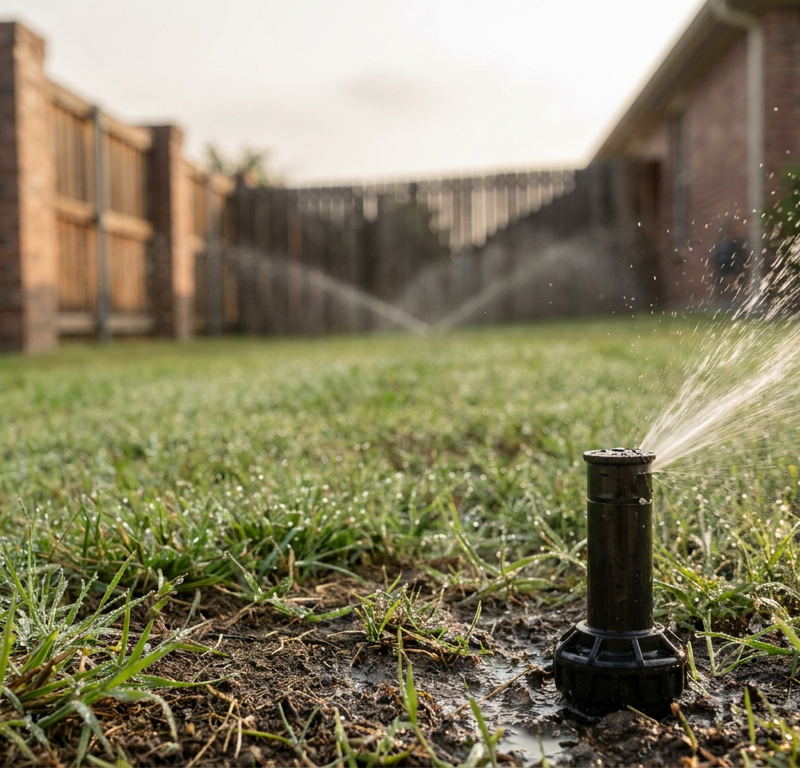
Water your lawn thoroughly but less often, aiming for about 1 inch of water per week, applied in a single session or two. This encourages your turf's roots to grow deep into the soil, seeking moisture. Crabgrass, with its shallow root system, struggles in drier topsoil conditions. Frequent, shallow watering, conversely, creates the perfect moist environment for crabgrass to thrive while promoting shallow roots in your desirable grass, making it less resilient.
Step 4: Manual Removal for Small Infestations — The most environmentally friendly approach.
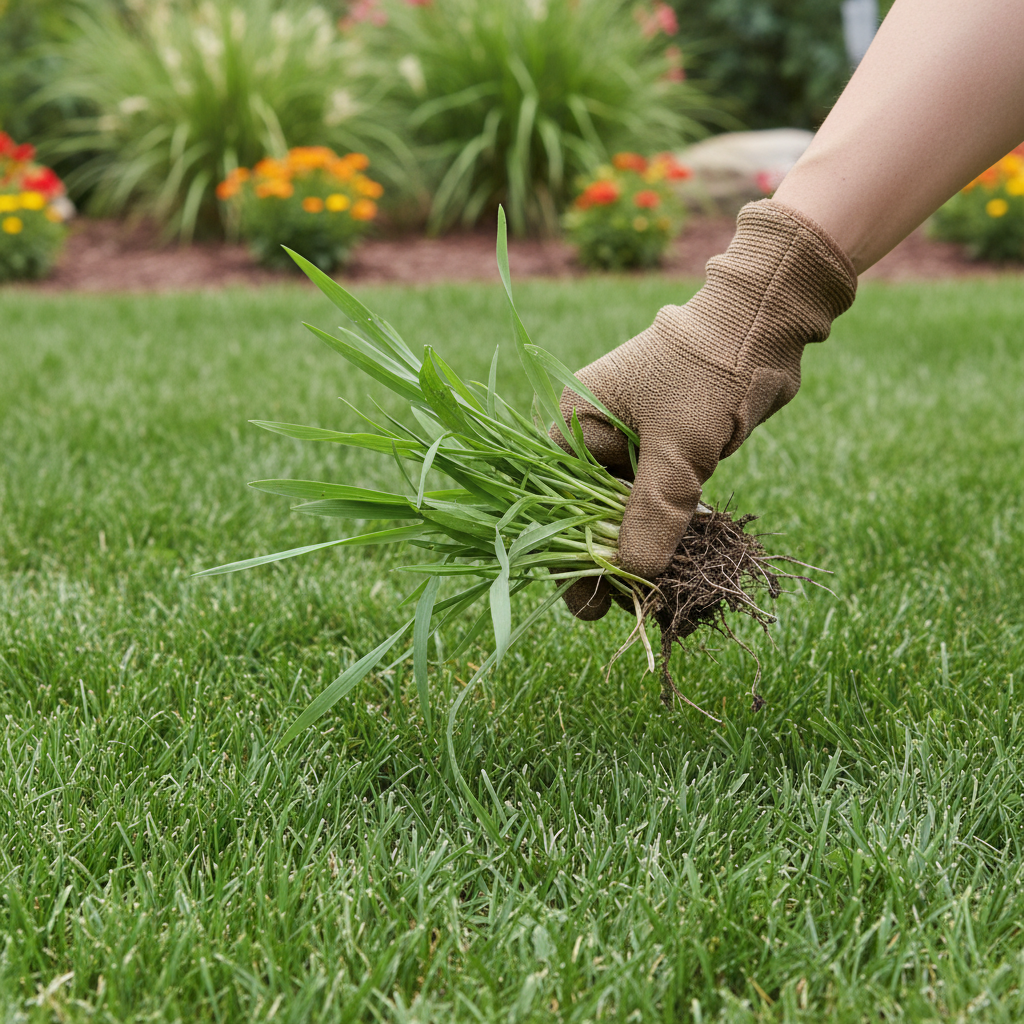
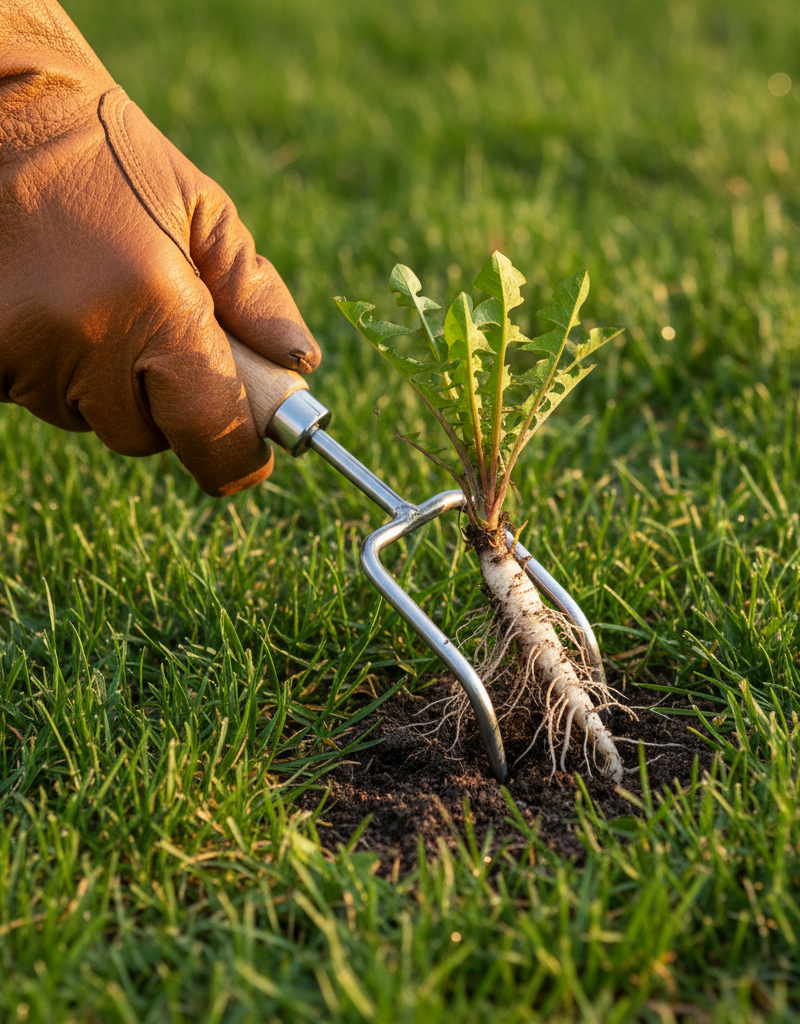
For scattered crabgrass plants or small patches, hand-pulling is incredibly effective. It's easiest after a rain or deep watering when the soil is soft. Grasp the plant firmly at its base and pull slowly but steadily to get as much of the root system as possible. If you leave roots behind, the plant can regrow. Bag and dispose of the removed weeds to prevent any seeds from spreading. This method is labor-intensive but ensures you remove the entire plant and its potential seed production.
Step 5: Spot Treat with Horticultural Vinegar (Acetic Acid) — A natural post-emergent.
For larger patches where hand-pulling isn't feasible, horticultural vinegar (acetic acid, usually 10-20% strength) can act as a natural post-emergent. Always wear protective gloves and eye protection when using horticultural vinegar, as it is much stronger than kitchen vinegar and can cause skin and eye irritation. Apply directly to the crabgrass on a calm, sunny day when rain isn't expected for at least 24 hours. Be careful to avoid contact with desirable grass, as it will also be damaged. The vinegar essentially burns the plant foliage. Repeat applications may be necessary for stubborn plants.
Step 6: Apply Organic Pre-Emergent — Prevent new seeds from sprouting.
Corn gluten meal is a natural pre-emergent that inhibits seed root development. Apply it in early spring when soil temperatures are consistently above 50°F but before they reach 60°F – often when forsythia blooms. Spread it evenly across your lawn at the recommended rate (often 20 lbs per 1,000 sq ft). Water it lightly after application to activate it. It also acts as a slow-release nitrogen fertilizer, feeding your lawn. Remember that corn gluten meal can also inhibit desirable grass seed germination, so avoid applying it if you plan to overseed your lawn in the spring. If you are overseeding in the fall, corn gluten meal can be a great spring crabgrass preventative.
Step 7: Aerate and Overseed — Combat compaction and improve density.
Compacted soil creates ideal conditions for crabgrass. Aerate your lawn in late summer or early fall (depending on your grass type) to improve air, water, and nutrient penetration. Immediately after aeration, overseed with a high-quality turfgrass blend appropriate for your climate. This will thicken your lawn, filling in bare spots and providing a dense canopy that naturally suppresses crabgrass germination next spring. Choose grass varieties that thrive in your specific growing conditions.
Common Causes
- Shallow, Frequent Watering: Encourages shallow roots in desirable grass and favors crabgrass's surface-level root system.
- Mowing Too Short: Reduces the grass's ability to photosynthesize, stresses the turf, and allows more sunlight to reach the soil, promoting crabgrass germination.
- Compacted Soil: Restricts healthy turf root growth, creating bare patches where crabgrass thrives.
- Thin or Sparse Lawn: Open areas in the lawn provide ample space for crabgrass seeds to sprout and grow without competition.
- Improper Fertilization: Either too little or too much fertilizer at the wrong time can weaken turf and make it vulnerable.
- Late Spring Applications: Applying pre-emergent too late, after crabgrass has already germinated, renders it ineffective.
Common Mistakes
- Mowing Too Short: This is arguably the biggest mistake. It weakens your turf and gives crabgrass the sunlight it needs to flourish. Instead: Keep your mower at its highest setting (3-4 inches).
- Overwatering or Underwatering: Both can stress your lawn and create opportunities for crabgrass. Instead: Water deeply and infrequently, aiming for 1 inch per week.
- Applying Pre-Emergent at the Wrong Time: Applying too early or too late makes it useless. Instead: Monitor soil temperatures; apply when soil is consistently 50-55°F, before 60°F.
- Not Addressing Underlying Lawn Health: Simply removing crabgrass without improving lawn density means it will return. Instead: Focus on amending soil, proper feeding, and overseeding to build a thick, competitive lawn.
- Ignoring Manual Removal: For small patches, hand-pulling is often overlooked but highly effective and chemical-free. Instead: Be diligent with hand-pulling young plants before they produce seeds.
- Spreading Seeds with a Mower: If you mow through crabgrass with mature seed heads, you're essentially reseeding your lawn. Instead: Bag clippings when crabgrass is present, or hand-pull before mowing in heavily infested areas.
Cost & Time Breakdown
| Task | DIY Cost ($) | Pro Cost ($) | Time |
|---|---|---|---|
| Hand-pulling (small areas) | $0 | N/A | 1-2 hours (per session) |
| Organic Pre-emergent (Corn Gluten Meal) | $40–$80 | N/A | 30–60 minutes |
| Aeration & Overseeding (DIY) | $80–$150 | $200–$400 | 2–4 hours (one-time) |
| Horticultural Vinegar (spot treat) | $15–$30 | N/A | 15–30 minutes |
| Regular Mowing & Watering | $0 | N/A | Ongoing |
Tips & Prevention
- Soil Testing: Perform a soil test every few years to understand your lawn's nutrient needs and pH levels. This can guide fertilization and amendments to promote stronger turf.
- Fall Overseeding: The best time to overseed with cool-season grasses is in the fall. This allows new grass to establish before the heat of summer and strengthens the lawn against spring weeds.
- Mulch Bare Patches: If you have areas where grass struggles, consider mulching them instead of fighting endless weed battles. A thick layer of organic mulch can suppress crabgrass.
- Edging: Use a landscape edger around driveways and walkways to create a barrier that makes it harder for crabgrass to creep into your lawn from these hot, exposed areas.
- Clean Equipment: If you've been working in an area heavily infested with crabgrass, clean your mower deck and tools to avoid spreading seeds to other parts of your lawn.
- Be Patient: Natural methods take time. Consistency with proper lawn care practices is key to long-term crabgrass control without chemicals.
When to Call a Professional
While many homeowners can effectively manage crabgrass naturally, there are times when a professional's expertise is invaluable. If your lawn is severely infested with crabgrass, making manual removal impractical, or if you're struggling to establish a healthy turf despite your best efforts, a lawn care professional can help. They can provide an accurate diagnosis, perform soil remediation like deep aeration or soil amendments, and develop a comprehensive, organic-focused lawn management plan. Professionals have access to specialized equipment for even spreading of organic materials and can identify underlying issues that might be contributing to persistent weed problems. If you suspect your lawn has other serious issues, such as fungal diseases or grubs, that are weakening it and inviting crabgrass, a pro can diagnose and treat those specific problems.
Related Articles
Keep troubleshooting with these hand-picked guides from FixlyGuide:
- The #1 Mistake Killing Your Lawn's Crabgrass Defense (And the Easy Fix) — Discover why common crabgrass removal methods fail and how to naturally eliminate this stubborn weed for a healthier lawn.
- The #1 Mistake Homeowners Make When Fighting Dandelions (And The Weeds Still Win) — Learn the surprising reason dandelions continue to plague your lawn and the effective, long-term strategies to reclaim your turf without en…
- The Eternal Weed Battle: Why They Always Come Back (And How to Actually Win) — Stop the cycle of endless weeding by understanding why weeds persist and how to implement long-term control strategies.
- The 3 Dandelion Killers Hiding In Your Garage (And How To Use Them Safely) — Eradicate dandelions from your lawn effectively with common household items and proper application techniques to restore a pristine yard.
- The #1 Mistake Killing Your Lawn's Clover—and the Easy fix That Spares Your Grass — Discover the most common mistake homeowners make when trying to eliminate clover, and learn how to remove it effectively without harming yo…
- The Secret to Lush Raised Beds? It's Not Just About How You Water — Smart irrigation for raised garden beds isn't just about automation; it's about delivering the right amount of water precisely when your pl…
What should this project cost?
Enter your project details for a realistic cost range before you call anyone.
Cost depends heavily on which system turns out to be the source.
- Regional adjustment
- National average
- Labor share (typical)
- ~$1,620
- Quotes to collect
- 3 written estimates
Educational estimate based on national averages — not a binding quote. Always confirm with written local estimates.
Frequently asked questions
Does vinegar kill crabgrass naturally?+
Yes, horticultural vinegar (acetic acid, typically 10-20%) can effectively kill crabgrass as a spot treatment. It works by burning the plant's foliage. However, it is non-selective, so apply it carefully to avoid damaging desirable grass. Always wear protective gear when using stronger concentrations.
When is the best time to apply natural crabgrass killer?+
For natural pre-emergent like corn gluten meal, apply in early spring when soil temperatures are consistently between 50-55°F, before they reach 60°F. This typically coincides with the blooming of forsythia bushes. For existing crabgrass, manual removal or spot treatment with vinegar is best when plants are young and actively growing in spring to early summer.
Will a thick lawn prevent crabgrass?+
Absolutely. A dense, healthy, and tall turfgrass canopy is one of the most effective natural defenses against crabgrass. Taller grass shades the soil, keeping it cooler and blocking sunlight from reaching crabgrass seeds, thereby preventing germination. A strong root system also helps your lawn outcompete weeds for water and nutrients.

Discussion
Loading comments…