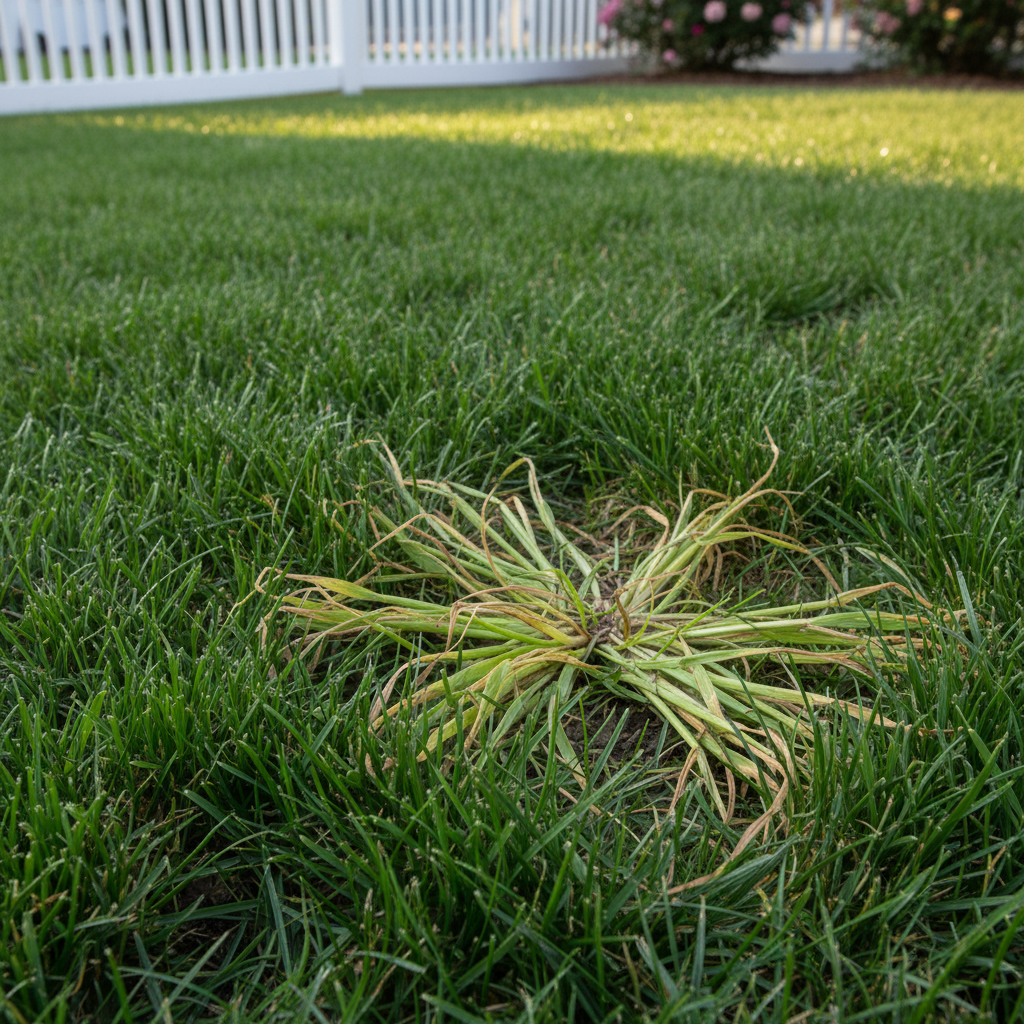
- Mowing too short: Short grass blades minimize photosynthesis, weaken the plant, and allow sunlight to reach the soil, promoting crabgrass germination.
- Compacted soil: Prevents good air and water penetration, hindering the deep root growth of desirable grasses while crabgrass tolerates it better.
- Infrequent or shallow watering: Encourages shallow grass roots and keeps the topsoil moist, conditions favored by crabgrass.
- Nutrient deficiencies or imbalances: Weakens turf, making it less competitive against weeds. A lack of proper soil nutrition can inhibit desirable grass growth.
- Bare spots or thin turf: Crabgrass is an opportunistic weed that quickly colonizes any open ground.
Landscaping · Deck or fence project
| Project category | Landscaping |
|---|---|
| Problem type | Deck or fence project |
| Trade required | Landscaping |
| Urgency | Planned project |
| Safety risk | Moderate safety risk |
| DIY suitability | DIY for experienced homeowners |
| Cost category | High cost |
| Typical timeline | Most builds 3–10 days depending on size |
| Contractor type | Landscaping contractor |
Repair option
Replace failed boards, posts, and hardware; reseal the surface.
Replacement option
Rebuild when framing or the ledger connection is unsafe.
Common causes
- Rot at posts and ledger
- Storm damage
- Adding outdoor living space
Relevant tools:home improvement material pricesproject cost estimator
Published May 3, 2026Last updated August 17, 2026
Tools & materials you'll need
Affiliate links- AmazonLawnmower1 · Adjustable deck height
- AmazonSoil thermometer1 · For accurate application timing
- AmazonBroadcast spreader1 · Walk-behind for even application
- AmazonGarden hose with sprinkler1 · Oscillating or impact sprinkler for even coverage
- AmazonTuna can or rain gauge1 · For measuring water depth
- AmazonWeeding tool or trowel1 · For hand-pulling
As an Amazon Associate FixlyGuide earns from qualifying purchases — at no extra cost to you. Prices and availability are accurate as of publication and subject to change.
Quick Answer
Naturally getting rid of crabgrass involves strengthening your lawn's health to outcompete the weed, primarily through proper mowing, strategic watering, and targeted organic pre-emergent applications. Addressing soil compaction and nutrient deficiencies creates an environment where desirable grass thrives and crabgrass struggles to take hold, reducing its prevalence without harsh chemicals.
The Problem
Crabgrass isn't just an eyesore; it's a cunning annual weed that can quickly colonize bare spots and thin, stressed lawns, choking out desirable grass species. Its prolific seed production means that even a few plants can lead to a significant infestation the following year. Many homeowners resort to synthetic herbicides, which can harm beneficial soil microbes, pollute waterways, and sometimes even weaken the very lawn they're trying to protect. The real problem often lies in a cycle of reactive treatment rather than proactive lawn health, allowing crabgrass to exploit weaknesses in the turf.
How It Works
Crabgrass (Digitaria spp.) is an annual warm-season grass that germinates when soil temperatures consistently reach 55-60°F at a 2-4 inch depth, typically in late spring. It thrives in hot, dry conditions and compacted, nutrient-poor soil where desirable cool-season grasses (like fescue, bluegrass, and rye) struggle. Each crabgrass plant can produce tens of thousands of seeds, which remain viable in the soil for years, waiting for the right conditions to germinate. These seeds prefer disturbed soil, ample sunlight, and thin turf. The plant grows low to the ground, spreading outwards in a mat-like fashion, effectively shading out and outcompeting weaker desirable grasses for water and nutrients. As temperatures drop in the fall, the crabgrass dies, leaving behind a new generation of seeds to emerge the following spring. The key to natural control is to break this cycle by preventing germination, inhibiting growth, and fostering a dense, healthy lawn that leaves no room for crabgrass.
Step-by-Step Fix
Step 1: Get Mowing Height Right — _Raise your mower deck to at least 3 inches, ideally 3.5-4 inches, for most cool-season grasses.
_Taller grass shades the soil, keeping it cooler and preventing crabgrass seeds from germinating. It also encourages deeper root growth for a more robust lawn that can outcompete weeds. Mowing too short is the single biggest mistake homeowners make, essentially inviting crabgrass.
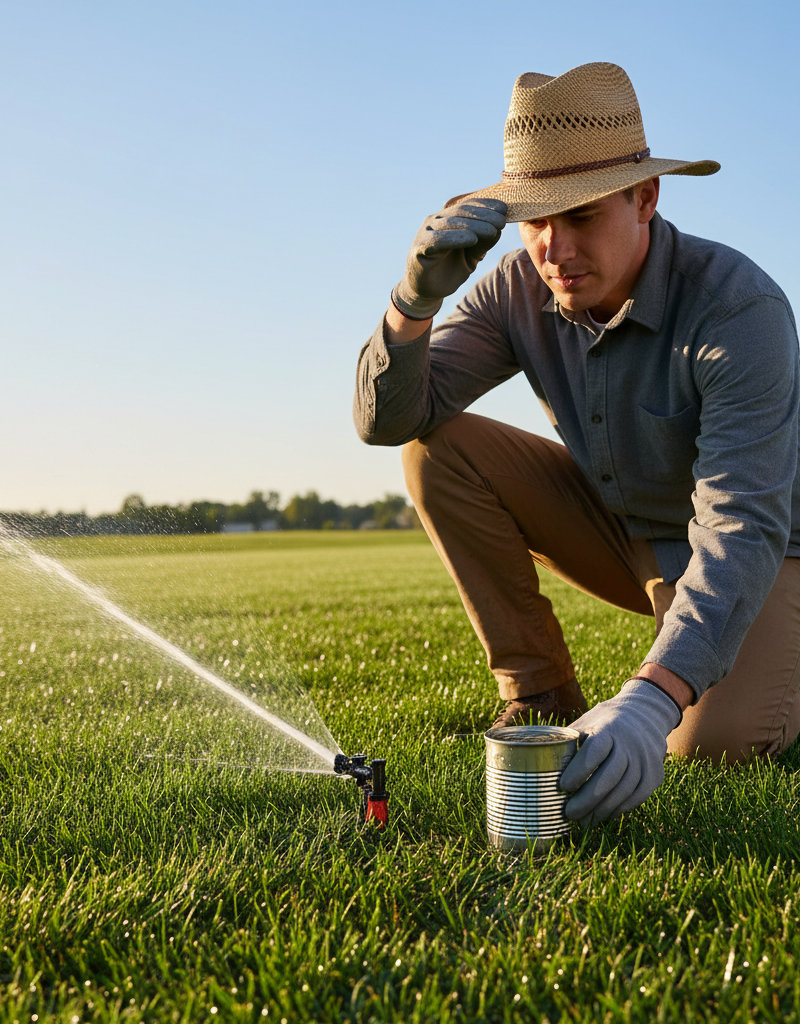
Step 2: Water Deeply, Less Frequently — _Provide 1 inch of water per week, either from rain or irrigation, in a single deep watering session.
_Deep watering encourages grass roots to grow deeper, making the turf more drought-tolerant and resilient. Frequent, shallow watering keeps the topsoil moist, which is exactly what crabgrass seeds need to germinate, while also promoting shallow root systems in your desirable grasses.
- To measure 1 inch: Place an empty tuna can or rain gauge in your sprinkler's path. Time how long it takes to collect 1 inch of water, then water for that duration each week.
Step 3: Apply Organic Pre-Emergent Strategically — _Use a corn gluten meal-based pre-emergent in early spring when Forsythia bushes bloom or soil temperatures reach 50-55°F.
_Corn gluten meal is a natural byproduct of corn milling that inhibits root development in germinating seeds. It's most effective before crabgrass germinates. Aim for a rate of 10-20 pounds per 1,000 square feet. It also acts as a slow-release nitrogen fertilizer, feeding your lawn.
- Timing is critical: Apply too late, and the crabgrass will have already germinated; apply too early, and its effectiveness may wear off before the main germination window.
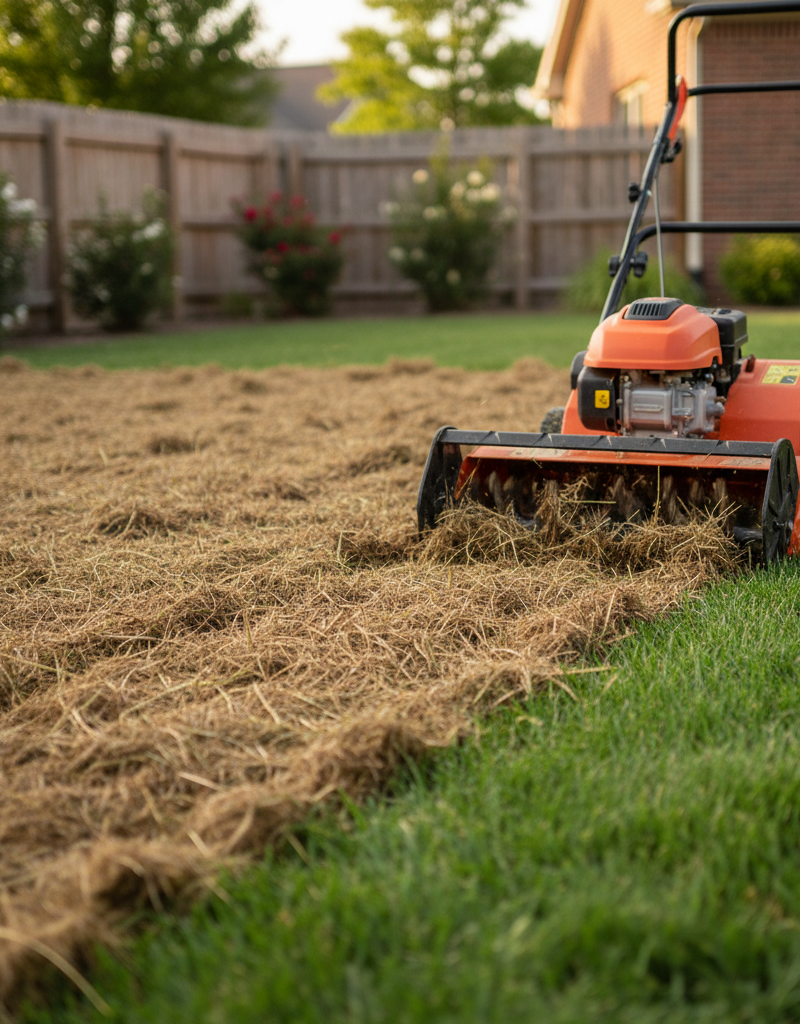
- Rake lightly first: If you have heavy thatch, lightly rake to ensure the corn gluten meal reaches the soil.
Step 4: Spot Treat Young Crabgrass by Hand — _For individual or small patches of crabgrass, pull them out manually before they produce seeds.
_This is most effective when the plants are young and the soil is moist. Use a weeding tool or trowel to ensure you get as much of the root system as possible. Discard pulled crabgrass in the trash, not compost, to avoid spreading seeds.
- If soil is dry: Water the area thoroughly an hour or two before weeding to loosen the soil.
- Use a weeding fork: Tools designed for taproots can be very effective.
Step 5: Overseed in the Fall — _Core aerate and overseed bare or thin spots with a high-quality, regionally adapted grass seed blend in early to mid-fall.
_A dense, healthy lawn is the best defense against crabgrass. Overseeding fills in gaps where crabgrass might otherwise get a foothold. Fall is ideal because cool-season grasses thrive, and there's less competition from weeds.
- Choose the right seed: Select a grass type that is well-suited to your local climate and sun exposure. Look for turf-type tall fescue, Kentucky bluegrass, or perennial ryegrass for cool-season zones.
- Prepare the seedbed: Lightly rake to expose some soil after aeration to ensure good seed-to-soil contact.
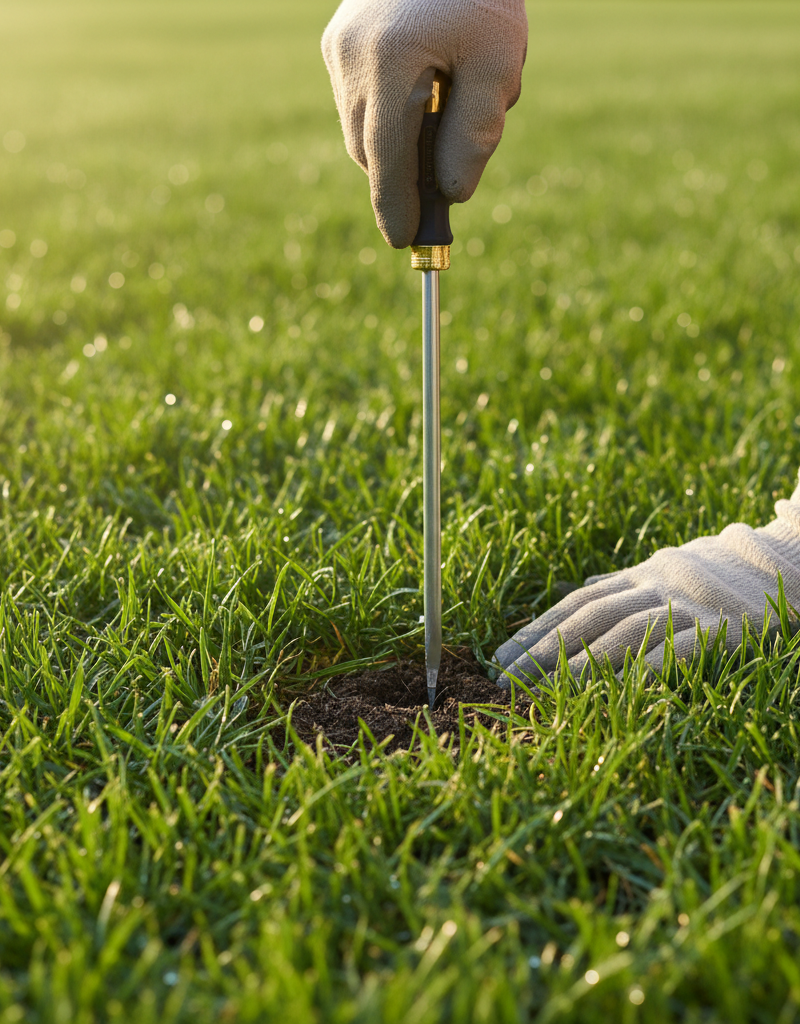
Step 6: Improve Soil Health (Long-Term Strategy) — _Conduct a soil test every 3-5 years and amend your soil based on the results.
_Healthy soil, rich in organic matter, supports a robust root system for desirable grasses. Crabgrass thrives in compacted, infertile soil. Addressing pH imbalances and nutrient deficiencies creates an environment hostile to crabgrass and beneficial to your lawn.
- Soil test kits: Available at garden centers or through local extension offices. They provide recommendations for lime (to raise pH) or sulfur (to lower pH) and specific nutrients.
- Add organic matter: Top-dress with a thin layer (1/4 inch) of high-quality compost annually to improve soil structure and nutrient content.
Common Causes
- Mowing too short: Short grass blades minimize photosynthesis, weaken the plant, and allow sunlight to reach the soil, promoting crabgrass germination.
- Compacted soil: Prevents good air and water penetration, hindering the deep root growth of desirable grasses while crabgrass tolerates it better.
- Infrequent or shallow watering: Encourages shallow grass roots and keeps the topsoil moist, conditions favored by crabgrass.
- Nutrient deficiencies or imbalances: Weakens turf, making it less competitive against weeds. A lack of proper soil nutrition can inhibit desirable grass growth.
- Bare spots or thin turf: Crabgrass is an opportunistic weed that quickly colonizes any open ground.
- Skipping fall overseeding: Neglecting to fill in thin areas leaves prime real estate for crabgrass to establish itself next spring.
- Applying pre-emergent at the wrong time: If applied too early, its efficacy wears off; too late, and crabgrass has already germinated.
Common Mistakes
- Mowing too low, too often: This stresses your lawn, encouraging shallow roots and opening the canopy for crabgrass. Always aim for at least 3 inches, and only remove one-third of the blade height at a time.
- Dumping grass clippings with seeds: If you've pulled crabgrass or it's gone to seed, don't put it in your compost or leave it on the lawn. Bag and discard it to prevent spreading thousands of new seeds.
- Ignoring soil compaction: Compacted soil chokes out healthy grass roots. Skipping aeration, especially in high-traffic areas, directly contributes to crabgrass problems. Aerate annually if your soil is heavy clay or gets a lot of foot traffic.
- Over-fertilizing in summer with fast-release nitrogen: While tempting to green up the lawn, this often fuels crabgrass more than established desirable grasses, especially when temperatures are high. Stick to fall fertilization or slow-release organic options.
- Watering every day for short periods: This creates exactly the moist topsoil conditions that crabgrass absolutely loves for germination, while not encouraging deep roots for your desired turf.
- Assuming one pre-emergent application is enough: Some zones with long spring warming periods or heavy weed pressure may benefit from a split application of pre-emergent, with the second half applied 6-8 weeks after the first.
Cost & Time Breakdown
| Task | DIY cost | Pro cost | Time |
|---|---|---|---|
| Mowing height adjustment | $0 | N/A | 5 minutes |
| Deep watering adjustment | $0 | N/A | 10-20 min/week |
| Organic pre-emergent (DIY) | $50–$100 (50 lb) | N/A | 30–60 minutes |
| Hand weeding small patches | $0 | N/A (or $75/hr pro) | 10–30 minutes |
| Soil test kit | $15–$30 | N/A | 15 minutes |
| Overseeding (seed, rental aerator) | $100–$250 | $300–$600 | 2–4 hours |
| Compost top-dressing | $50–$150 | N/A | 1–2 hours |
Tips & Prevention
- Check Soil Temp: Purchase an inexpensive soil thermometer to precisely time your pre-emergent application. Don't guess – crabgrass germinates when soil temps hit 55-60°F.
- Sharpen Mower Blades: Dull blades tear grass, making it susceptible to disease and stress. Sharpen your blades at least once a season, or every 20-25 hours of use.
- Leave Clippings: Unless there's a heavy weed seed presence, leave grass clippings on the lawn. They return valuable nitrogen and organic matter to the soil, acting as a natural fertilizer.
- Regular Core Aeration: For compacted soils, plan to core aerate annually or bi-annually in the fall. This reduces compaction, improves water/air penetration, and boosts overall turf health.
- Patch Bare Spots Promptly: Anytime you see a bare spot, rake it lightly and apply grass seed. Don't leave open invitations for weeds.
- Fertilize in Fall: For cool-season grasses, the most important feeding is in the fall. This builds strong root systems that can resist winter stress and emerge vigorous in spring, outcompeting early-season weeds like crabgrass.
When to Call a Professional
If your crabgrass infestation is severe, covering more than 30-40% of your lawn, or if your lawn's overall health is poor despite your best efforts, it's time to consider a professional. A licensed lawn care professional can accurately diagnose underlying soil issues, recommend specific organic strategies tailored to your region, and apply specialized products (still organic-compliant if that is your goal) that might not be available to homeowners. They can also perform services like core aeration and overseeding more efficiently and effectively, helping to quickly restore your lawn's vigor and long-term resistance to weeds.
Related Articles
Keep troubleshooting with these hand-picked guides from FixlyGuide:
- The #1 Crabgrass Mistake (and 3 Organic Ways to Fix It) — Discover the biggest mistake homeowners make when battling crabgrass and how to effectively eliminate it using three natural methods.
- The #1 Mistake Killing Your Lawn's Clover—and the Easy fix That Spares Your Grass — Discover the most common mistake homeowners make when trying to eliminate clover, and learn how to remove it effectively without harming yo…
- The #1 Dandelion Mistake Almost Every Homeowner Makes (and How to Fix It) — Many homeowners accidentally make dandelions worse. Learn the most common mistake and how to truly eliminate these persistent weeds for goo…
- The #1 Mistake Killing Your Lawn (and How to Remove Clover Without Chemicals) — Discover the most common mistake homeowners make when battling clover and learn effective, organic methods to eliminate it without harming…
- How to Permanently Remove Weeds from Your Lawn: A Step-by-Step Guide — Achieving a weed-free lawn requires a combination of effective removal techniques and consistent prevention strategies, ensuring long-term…
- The #1 Mistake That Makes Deck Boards Warp (And the Easy Fix) — Discover the most common reason deck boards warp and how a simple, proactive fix can restore your deck's appearance and longevity.
Should you do this yourself?
Answer five quick questions before you start. Safety outranks savings every time.
Your experience with work like this
How high do you have to work?
Does the job involve any of these?
Will it need a permit?
Specialty tools
Free and instant. Educational guidance only — not a quote, inspection, or professional diagnosis.
What should this project cost?
Enter your project details for a realistic cost range before you call anyone.
Cost depends heavily on which system turns out to be the source.
- Regional adjustment
- National average
- Labor share (typical)
- ~$1,620
- Quotes to collect
- 3 written estimates
Educational estimate based on national averages — not a binding quote. Always confirm with written local estimates.
Frequently asked questions
Does vinegar kill crabgrass?+
While horticultural vinegar (acetic acid) can kill young crabgrass on contact, it is non-selective and will also kill desirable grass. It's not recommended for broadcast application on lawns, only for targeted spot treatment in pathways or cracks where no other plants are desired. Be cautious, as stronger concentrations can be dangerous to handle.
When is the best time to apply natural crabgrass killer?+
For organic pre-emergents like corn gluten meal, the best time is in early spring, before crabgrass seeds germinate. This typically coincides with Forsythia bushes blooming or when soil temperatures consistently reach 50-55°F at a 2-4 inch depth. Timing is crucial for effectiveness.
Can proper mowing really prevent crabgrass?+
Yes, proper mowing height is one of the most effective natural defenses. Keeping your grass at 3-4 inches shades the soil, keeping it cooler and preventing crabgrass seeds from germinating. It also encourages deeper root systems, making your lawn stronger and more competitive against weeds.
Will crabgrass die on its own?+
Crabgrass is an annual plant, meaning individual plants will die with the first hard frost in the fall. However, each plant can produce thousands of seeds throughout the summer, ensuring a new, often larger, infestation the following spring if cultural practices aren't put in place to prevent germination.
Discussion
Loading comments…