- Excessive Thatch: A thick layer of decomposing organic matter (thatch) prevents water, nutrients, and new grass seeds from reaching the soil. It also harbors pests and diseases.
- Improper Mowing: Mowing too short stresses the grass, reduces its ability to photosynthesize effectively, and weakens the root system, leading to thinning. Mowing with dull blades tears the grass, making it susceptible to disease.
- Nutrient Deficiencies or Imbalances: Lack of essential nutrients like nitrogen, phosphorus, or potassium, or an improper pH level, can hinder grass growth and vigor. A soil test is crucial for diagnosing this.
- Insufficient Watering or Overwatering: Too little water during dry periods causes stress and dormancy. Excessive watering can lead to shallow root systems and fungal diseases, especially in poorly drained soils.
- Shade: Most common turfgrasses require a certain amount of sunlight. Areas under dense trees or structures may thin out due to insufficient light.
Landscaping · Deck or fence project
| Project category | Landscaping |
|---|---|
| Problem type | Deck or fence project |
| Trade required | Landscaping |
| Urgency | Planned project |
| Safety risk | Moderate safety risk |
| DIY suitability | DIY for experienced homeowners |
| Cost category | High cost |
| Typical timeline | Most builds 3–10 days depending on size |
| Contractor type | Landscaping contractor |
Repair option
Replace failed boards, posts, and hardware; reseal the surface.
Replacement option
Rebuild when framing or the ledger connection is unsafe.
Common causes
- Rot at posts and ledger
- Storm damage
- Adding outdoor living space
Relevant tools:home improvement material pricesproject cost estimator
Published June 8, 2026Last updated August 18, 2026
Tools & materials you'll need
Affiliate linksAs an Amazon Associate FixlyGuide earns from qualifying purchases — at no extra cost to you. Prices and availability are accurate as of publication and subject to change.
Quick Answer
To overseed a thin lawn effectively, begin by assessing and correcting underlying issues like soil compaction or nutrient deficiencies. Prepare the existing turf by mowing short, dethatching, and aerating. Select a grass seed suitable for your climate and sun exposure. Spread the new seed evenly, ensuring good seed-to-soil contact, and then provide consistent, light irrigation to promote germination and establishment. Addressing these factors ensures the new grass thrives, leading to a thicker, healthier lawn.
The Problem
Many homeowners struggle with thin, patchy lawns despite regular watering and fertilizing. This isn't just an aesthetic issue; a thin lawn is more susceptible to weeds, pests, and diseases due because the turf isn't dense enough to naturally outcompete invaders and maintain a robust root system. The primary frustration often stems from seeing new grass sprout, only for it to disappear or fail to thrive, leaving the lawn looking sparse and unhealthy. The underlying problem is rarely just a lack of seed; rather, it's a combination of suboptimal soil conditions, improper seed selection, and inadequate post-seeding care that prevents new grass from establishing properly. Without addressing these critical factors, simply spreading more seed is often a wasted effort, leading to continued disappointment and a perpetual struggle for a lush lawn.
How It Works
Overseeding is more than just scattering grass seed; it’s a strategic act designed to introduce new, vigorous grass plants into an existing turf ecosystem. For new grass to succeed, a complex interplay of environmental factors must be optimized. First, the soil provides the foundational support, offering nutrients, water retention, and a medium for root growth. Compacted soil, common in many home lawns, restricts root development, limits water and nutrient absorption, and reduces oxygen availability, all critical for seedling survival. Aeration mechanically removes small plugs of soil, creating channels for air, water, and nutrients to penetrate deeper, alleviating compaction and fostering a healthier root zone.
Once the soil is prepared, the grass seed itself is a living organism waiting for the right conditions to germinate. Each seed contains an embryo and a stored food supply. When exposed to sufficient moisture and an optimal temperature range (which varies by grass type, typically 55-65°F soil temperature for cool-season grasses and 65-80°F for warm-season grasses), the seed absorbs water, swells, and the embryo begins to grow. The first to emerge is the radicle, the embryonic root, which anchors the seedling and begins to draw water and nutrients from the soil. Shortly after, the coleoptile, containing the embryonic shoot, pushes through the soil surface, unfurling its first leaves to begin photosynthesis.
Success hinges on consistent moisture without oversaturation, adequate sunlight, and protection from disturbance. The existing turf, if properly prepared (mowed short, dethatched), provides some shelter for the delicate seedlings. However, competition for resources remains. Adequate seed-to-soil contact is paramount; if seeds sit on top of thatch or dense existing grass, they dry out quickly and fail to germinate or establish proper roots. Over time, as the seedlings mature, they develop a more extensive root system, tiller (produce new shoots from the base), and begin to spread, gradually increasing the overall density and health of the lawn. This process revitalizes the turf, making it more resilient to stress and better equipped to resist weeds and diseases.
Step-by-Step Fix
1. Evaluate and Prepare Your Lawn – Before you even think about seed, assess your lawn's condition. Look for compacted areas, excessive thatch (a spongy layer of organic matter between the grass blades and the soil surface), and general thinning. Mow your lawn shorter than usual, aiming for 1.5 to 2 inches. This exposes the soil to the new seeds and reduces competition from existing grass. * Tools: Mower, dethatcher (if thatch is over 1/2 inch thick), core aerator (if soil is compacted). * If this doesn't work: If your lawn is severely compacted or has significant thatch, skipping these steps will likely lead to poor germination and establishment. Consider renting a core aerator or hiring a professional if hand tools aren't sufficient.
2. Dethatch (if needed) – Remove excessive thatch to allow seeds to reach the soil. If your thatch layer is more than half an inch thick, use a dethatcher or a power rake. This machine combs through your lawn, pulling up dead grass and organic debris. Collect and remove all dethatched material immediately after. * Safety: Always wear eye protection when operating power equipment. Read the manufacturer's instructions for safe operation.
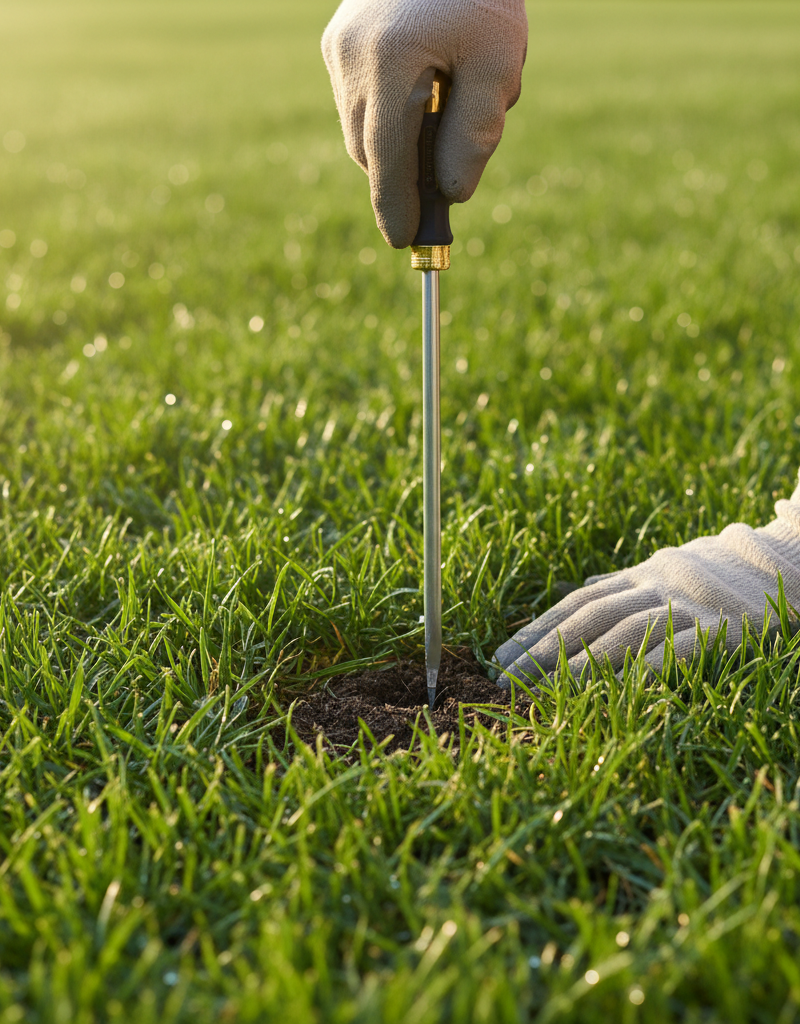
3. Aerate (if needed) – Improve soil penetration for water, nutrients, and roots. If your soil is compacted (test by easily pushing a screwdriver into it to at least 6 inches), use a core aerator. This machine pulls out small plugs of soil, creating pockets for your new seeds to settle into. Leave the soil plugs on the lawn; they will break down naturally and return nutrients to the soil. For optimal results, pass over your lawn in two directions (e.g., north-south, then east-west). * Pro Tip: Aerate when the soil is moist but not waterlogged, typically the day after a good rain or thorough watering. This makes it easier for the aerator to penetrate.
4. Choose the Right Grass Seed – Select a seed blend appropriate for your climate and specific lawn conditions. Consider your region (cool-season vs. warm-season) and the amount of sun your lawn receives (full sun, partial shade, dense shade). Look for "weed-free" or "0% weed seed" on the label. A quality seed blend will significantly impact your results. * What to avoid: Cheap, generic "all-purpose" seed mixes often contain undesirable grass types or a high percentage of inert matter. * Recommendation: Consult your local extension office or a reputable garden center for recommendations specific to your area.
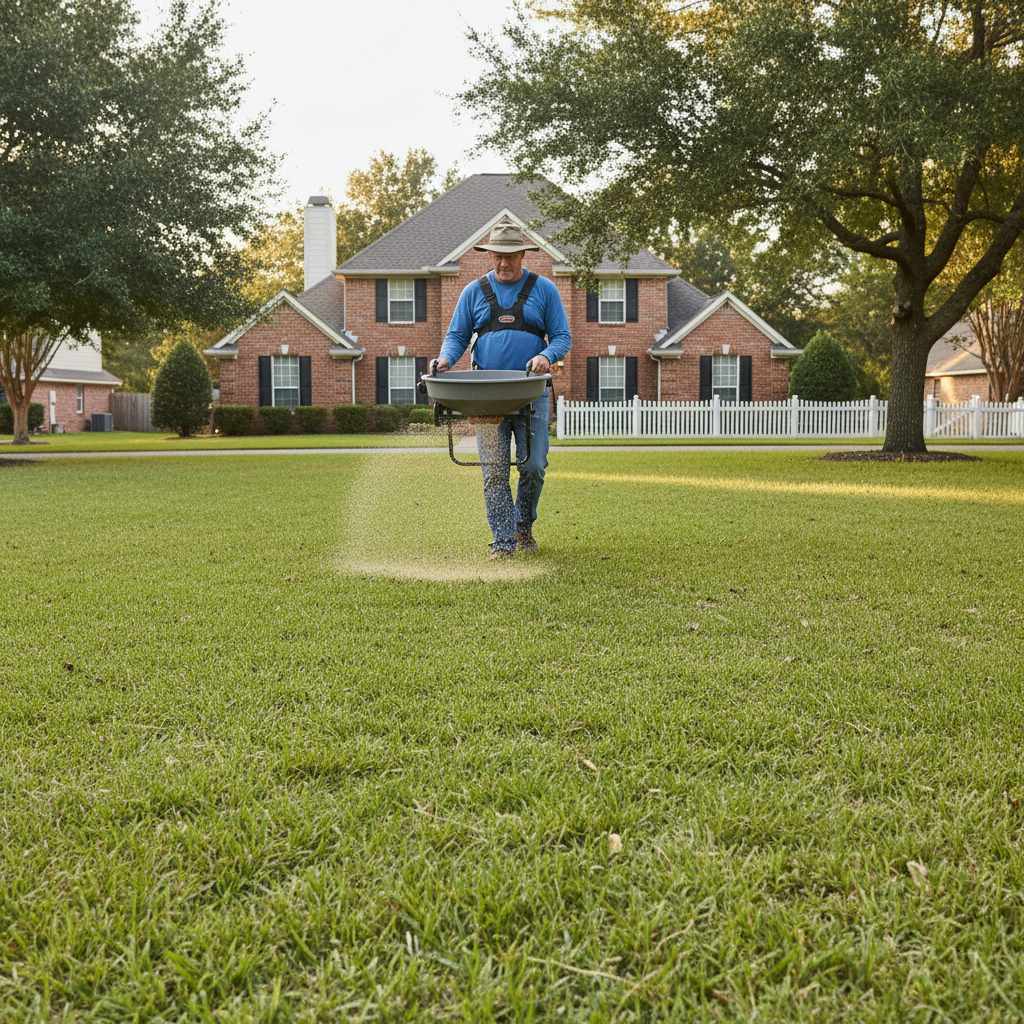
5. Spread the Seed Evenly – Achieve uniform coverage for a consistent, thick lawn. Use a broadcast spreader or a drop spreader for even distribution. Refer to the seed bag for the recommended overseeding rate. For best results, apply half the seed walking in one direction (e.g., north-south) and the other half walking perpendicular (e.g., east-west). This "cross-hatching" method minimizes patchy areas. * Tools: Broadcast spreader or drop spreader. * Speed: Walk at a steady, consistent pace to avoid clumps or bare spots.
6. Enhance Seed-to-Soil Contact – Crucial for germination, ensure seeds are firmly in contact with the soil. After spreading, gently rake the lawn with a leaf rake, ensuring the seeds are lightly worked into the top 1/8 to 1/4 inch of soil. You can also lightly roll the lawn with a water-filled roller, but be careful not to compact the soil too much, especially on clay soils. The goal is contact, not deep burial.
7. Apply Starter Fertilizer (Optional but Recommended) – Give your new seedlings a boost. A starter fertilizer, specially formulated with higher phosphorus content, promotes strong root development in new grass. Apply it according to package directions immediately after spreading the seed. Ensure the fertilizer contacts the soil, not just the grass blades.
8. Water Consistently and Lightly – Moisture is the most critical factor for germination. For the first 2-3 weeks, lightly water your lawn 2-3 times a day, keeping the top inch of soil consistently moist but never waterlogged. The goal is to prevent the tiny seedlings from drying out. As the grass germinates and grows, gradually reduce watering frequency but increase duration to encourage deep root growth. * Timing: Water in the early morning to minimize evaporation and disease risk. * Observation: Adjust watering based on weather conditions. Hot, windy days require more frequent watering.
9. Protect from Traffic and Mow Carefully – Give your new grass time to establish. Avoid heavy foot traffic, pets, and lawn mowers on newly seeded areas for at least 3-4 weeks, or until the new grass is robust enough to handle it. When you do mow, set your mower to a higher setting (typically 3 inches or more) for the first few cuts. Never remove more than one-third of the grass blade at a time.
10. Long-Term Care – Maintain a healthy lawn to prevent future thinning. After the new grass is established (6-8 weeks), return to a regular watering and fertilization schedule appropriate for your grass type. Mow at the recommended height for your variety, usually 2.5 to 3.5 inches. Implement annual aeration and dethatching as needed. Consider soil testing every 3-5 years to identify specific nutrient deficiencies.
Common Causes
- Soil Compaction: Heavy foot traffic, equipment use, or compact soil types (like clay) can compress soil particles, reducing air and water circulation essential for root growth. This is perhaps the single biggest deterrent to successful overseeding.
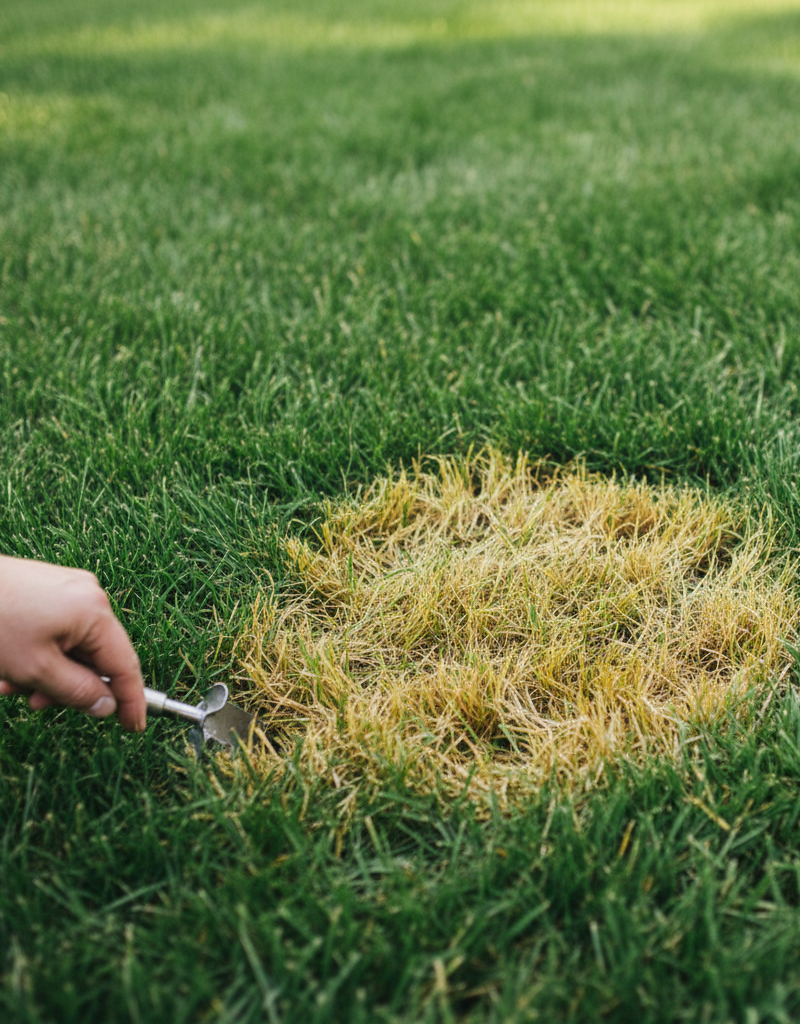
- Excessive Thatch: A thick layer of decomposing organic matter (thatch) prevents water, nutrients, and new grass seeds from reaching the soil. It also harbors pests and diseases.
- Improper Mowing: Mowing too short stresses the grass, reduces its ability to photosynthesize effectively, and weakens the root system, leading to thinning. Mowing with dull blades tears the grass, making it susceptible to disease.
- Nutrient Deficiencies or Imbalances: Lack of essential nutrients like nitrogen, phosphorus, or potassium, or an improper pH level, can hinder grass growth and vigor. A soil test is crucial for diagnosing this.
- Insufficient Watering or Overwatering: Too little water during dry periods causes stress and dormancy. Excessive watering can lead to shallow root systems and fungal diseases, especially in poorly drained soils.
- Shade: Most common turfgrasses require a certain amount of sunlight. Areas under dense trees or structures may thin out due to insufficient light.
- Pests and Diseases: Grubs, chinch bugs, fungal diseases (like brown patch or dollar spot) can severely damage and thin a lawn. Timely identification and treatment are vital.
- Poor Seed-to-Soil Contact: Seeds merely sitting on top of dense grass or thatch will dehydrate and die before they can germinate and establish roots.
Common Mistakes
- Skipping Soil Preparation: Many homeowners simply throw seed on existing grass. Without proper dethatching and aeration, the seeds won't reach the soil, moisture won't penetrate, and success will be minimal. Instead: Always dethatch and aerate if needed before seeding.
- Using the Wrong Seed: Opting for cheap or unsuitable seed (e.g., sun-loving grass in deep shade) guarantees poor results. Instead: Invest in high-quality seed tailored to your climate and sun exposure.
- Inconsistent Watering: New seeds need constant moisture to germinate and establish. Letting them dry out for even a few hours during critical early stages can kill them. Overwatering, however, can wash away seeds or promote disease. Instead: Water lightly and frequently (2-3 times a day) for the first 2-3 weeks.
- Applying Too Much Seed: Believing "more is better" can lead to overcrowding, where seedlings compete too intensely for resources, resulting in weak, thin grass. Instead: Adhere to the recommended seeding rate on the package. Use a spreader for even coverage.
- Fertilizing Incorrectly: Using a weed-and-feed product right before or after overseeding can kill new seedlings. Instead: Use a starter fertilizer specifically designed for new grass. Avoid broadleaf weed killers for several weeks after seeding.
- Ignoring Underlying Issues: If your lawn is thin due to shade, poor drainage, or pests, overseeding alone won't solve the problem long-term. Instead: Address the root cause; prune trees, improve drainage, or treat pests before reseeding.
Cost & Time Breakdown
| Task | DIY cost | Pro cost | Time |
|---|---|---|---|
| Soil Test | $15–$30 | $0 (often included in service) | 1-2 hours (collecting sample) |
| Dethatching | $0 (if manual rake) – $100 (rental) | $150–$400 | 2–4 hours |
| Core Aeration | $0 (if manual) – $100 (rental) | $150–$350 | 2–4 hours |
| Grass Seed (quality) | $50–$200 | $50–$200 (material only) | N/A |
| Starter Fertilizer | $30–$60 | $30–$60 (material only) | N/A |
| Total DIY Cost | $95–$390 | $350–$800+ | 4–10 hours (active work) |
Tips & Prevention
- Mow High: Keep your grass length between 2.5 to 3.5 inches. Taller grass shades the soil, reducing weed germination and promoting deeper root growth, making the lawn naturally thicker and more resilient.
- Water Deeply and Infrequently: When watering, aim for 1 inch of water per week, applied in a single session rather than multiple short ones. This encourages roots to grow deeper, making the grass more drought-tolerant. Adjust based on rainfall.
- Fertilize Strategically: Follow a balanced fertilization schedule based on your soil test results and grass type. Avoid over-fertilizing, which can lead to excessive top growth at the expense of root development. Split applications are often better.
- Address Soil pH: Grass thrives in a specific pH range (typically 6.0-7.0). If your soil test indicates an unbalanced pH, apply lime (to raise pH) or sulfur (to lower pH) as recommended to optimize nutrient availability.
- Control Weeds Promptly: Weeds compete for water, nutrients, and sunlight. Deal with them early through spot treatment or hand-pulling before they establish and spread. Ensure any chemical weed killers are safe for new seedlings.
- Annual Aeration and Dethatching: Even a healthy lawn benefits from annual aeration (especially in high-traffic areas) and occasional dethatching if the thatch layer begins to exceed ½ inch. This routine maintenance keeps the turf ecosystem healthy.
When to Call a Professional
While overseeding is a manageable DIY project, there are specific situations where calling a professional lawn care service is advisable. If your lawn problems persist despite repeated overseeding efforts, this often points to deeper issues that require expert diagnosis, such as severe soil compaction, chronic nutrient deficiencies, widespread turf diseases, or extensive pest infestations that are difficult for a homeowner to identify and treat effectively. Additionally, if your lawn is exceptionally large, has significant slopes, or if you lack the time or proper equipment (like a core aerator or power dethatcher) to prepare the soil adequately, a professional service can ensure the job is done correctly and efficiently. They have access to commercial-grade equipment and specialized knowledge to assess your soil, select the optimal seed and amendments, and implement a long-term plan to rejuvenate even the most challenging lawns, ultimately saving you time and potential frustration in the long run.
Related Articles
Keep troubleshooting with these hand-picked guides from FixlyGuide:
- The #1 Mistake Killing Your Lawn's Thickness (and How to Fix It in a Weekend) — Overseeding a thin lawn is essential for a lush green carpet, but many homeowners make a crucial mistake that hinders success. Learn the ri…
- The #1 Mistake Killing Your Thin Lawn (And How to Fix It in a Weekend) — Overseeding your lawn can transform it from thin and patchy to lush, but many homeowners make a crucial mistake that hinders success. Learn…
- The #1 Mistake Killing Your Thin Lawn (and How to Fix It in a Weekend) — Overseeding a thin lawn is crucial for a lush yard, but a common mistake can ruin your efforts before they even begin. Learn how to diagnos…
- The #1 Mistake Killing Your Lawn's Thickness (and How to Fix It for $50) — Overseeding can transform a thin, patchy lawn into a lush, vibrant carpet, but many homeowners miss a critical step, hindering success.
- The #1 Mistake Killing Your Thin Lawn (And How to Overseed Like a Pro) — Discover the crucial mistake homeowners make with thin lawns and how proper overseeding can transform your turf.
- The Giant Drywall Hole: 3 Hidden Mistakes That Make Fixing It Worse — Don’t just spackle over that huge drywall hole; learn the right way to repair it and avoid common mistakes that lead to an even bigger head…
Should you do this yourself?
Answer five quick questions before you start. Safety outranks savings every time.
Your experience with work like this
How high do you have to work?
Does the job involve any of these?
Will it need a permit?
Specialty tools
Free and instant. Educational guidance only — not a quote, inspection, or professional diagnosis.
What should this project cost?
Enter your project details for a realistic cost range before you call anyone.
Cost depends heavily on which system turns out to be the source.
- Regional adjustment
- National average
- Labor share (typical)
- ~$1,620
- Quotes to collect
- 3 written estimates
Educational estimate based on national averages — not a binding quote. Always confirm with written local estimates.
Before you start
Check the difficulty, permits, and safety risk — then decide whether to call a pro.
- Estimate this projectGet a cost range for your scope and ZIP before you call anyone.Open
- Get local estimatesSend one request and compare written estimates from vetted pros.Open
Free, no signup required. Estimates are educational guidance, not a quote or an inspection.
Frequently asked questions
When is the best time to overseed a lawn?+
For cool-season grasses (like fescue, rye, bluegrass), the best time to overseed is late summer to early fall (August to mid-October), giving seeds time to establish before winter. For warm-season grasses (like Bermuda, zoysia, St. Augustine), late spring to early summer (April to June) is ideal, when soil temperatures are consistently warm.
How long does it take for new grass seed to grow?+
Most grass seeds will begin to germinate within 7-21 days, depending on the grass type, soil temperature, and moisture conditions. It can take 4-8 weeks for the new seedlings to establish enough to withstand light foot traffic and regular mowing.
Can I overseed without aerating?+
While it's possible, overseeding without aerating significantly reduces success, especially if your soil is compacted. Aeration creates direct pathways for seeds to reach the soil, improving germination rates and root development. If your soil isn't compacted, thorough dethatching and proper seed-to-soil contact can suffice, but aeration is always a beneficial step.
How soon can I mow after overseeding?+
Wait until the new grass seedlings are at least 3 inches tall, which typically takes 3-4 weeks. When you do mow, set your mower to a high setting (at least 3 inches) and ensure the blades are sharp to avoid pulling out new grass. Do not remove more than one-third of the blade height during a single mowing.
What kind of fertilizer should I use when overseeding?+
Use a 'starter fertilizer' specifically formulated for new grass. These fertilizers have a higher phosphorus content, which promotes strong root development in young seedlings. Avoid 'weed and feed' products, as the herbicides can harm new grass seeds.
Discussion
Loading comments…