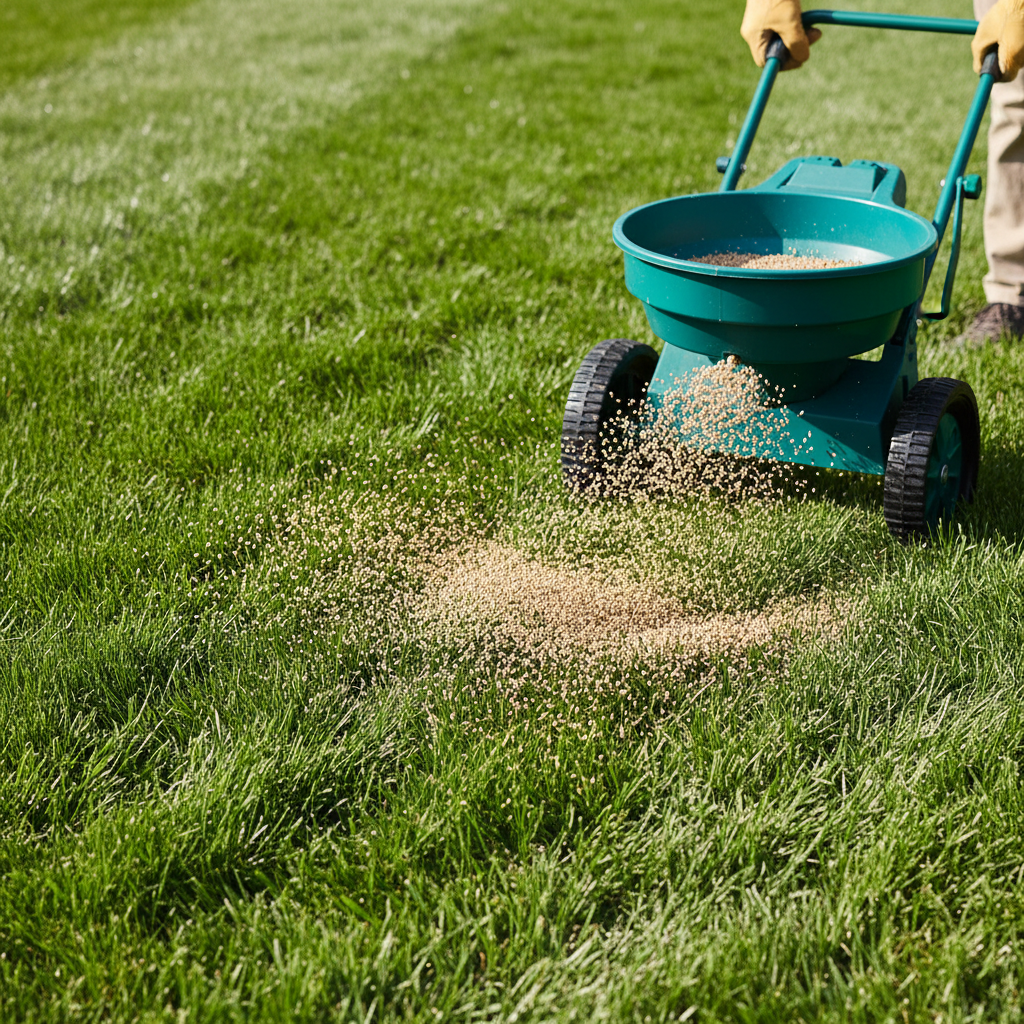
- Nitrogen (N) promotes lush, green leaf growth.
- Phosphorus (P) supports strong root development and overall plant vigor, especially important for new lawns or during periods of stress.
- Potassium (K) enhances the grass's ability to withstand stress from drought, disease, and foot traffic.
Landscaping · Deck or fence project
| Project category | Landscaping |
|---|---|
| Problem type | Deck or fence project |
| Trade required | Landscaping |
| Urgency | Planned project |
| Safety risk | Moderate safety risk |
| DIY suitability | DIY for experienced homeowners |
| Cost category | High cost |
| Typical timeline | Most builds 3–10 days depending on size |
| Contractor type | Landscaping contractor |
Repair option
Replace failed boards, posts, and hardware; reseal the surface.
Replacement option
Rebuild when framing or the ledger connection is unsafe.
Common causes
- Rot at posts and ledger
- Storm damage
- Adding outdoor living space
Relevant tools:home improvement material pricesproject cost estimator
Published June 9, 2026Last updated August 18, 2026
Tools & materials you'll need
Affiliate links- AmazonBroadcast or Drop SpreaderFor even application of granular fertilizer.
- AmazonGarden GlovesFor protection when handling fertilizer.
- AmazonEye ProtectionSafety glasses to prevent fertilizer dust or granules from entering eyes.
- AmazonWater Hose and SprinklerFor watering in the fertilizer immediately after application.
As an Amazon Associate FixlyGuide earns from qualifying purchases — at no extra cost to you. Prices and availability are accurate as of publication and subject to change.
Quick Answer
Many homeowners struggle to achieve a lush, green lawn despite consistent fertilizing efforts. The core problem often isn't the fertilizer itself, but when it's applied. Haphazard or mistimed fertilization can stress your lawn, encourage weed growth, and even lead to nutrient runoff, wasting both product and effort. The secret to a vibrant lawn lies in synchronizing your fertilization schedule with your specific grass type's natural growth cycles and the local climate.
The Problem
Imagine feeding a sleeping baby – it's ineffective, messy, and simply doesn't help the baby grow. Similarly, applying fertilizer when your lawn isn't actively growing is a common, yet significant, mistake. Homeowners often fertilize based on a calendar date or a vague idea of 'spring' or 'fall,' without considering the ambient soil temperature, grass species, or local weather patterns. This can lead to a host of problems: the nutrients aren't absorbed efficiently, encouraging aggressive weeds to take over, causing nutrient burn on dormant grass, or simply washing away, polluting local waterways. The result is a perpetually struggling lawn that looks thin, discolored, and prone to disease, despite your best intentions and investment in expensive fertilizers.
How It Works
To understand proper lawn fertilization, you need a basic understanding of how grass grows and utilizes nutrients. Grass plants, like all plants, perform photosynthesis, converting sunlight into energy. This energy drives root development, blade growth, and the production of new tillers (new grass shoots). Fertilizers provide essential macronutrients—nitrogen (N), phosphorus (P), and potassium (K)—and sometimes micronutrients that are vital for these processes.
- Nitrogen (N) promotes lush, green leaf growth.
- Phosphorus (P) supports strong root development and overall plant vigor, especially important for new lawns or during periods of stress.
- Potassium (K) enhances the grass's ability to withstand stress from drought, disease, and foot traffic.
Grass growth isn't constant; it follows distinct seasonal cycles. Cool-season grasses, like fescue, bluegrass, and ryegrass, actively grow during the cooler temperatures of spring and particularly in the fall. During the hot summer months, they often go dormant to conserve energy. Warm-season grasses, such as Bermuda, Zoysia, and St. Augustine, thrive in warmer temperatures, growing vigorously from late spring through summer and entering dormancy in the fall and winter when temperatures drop.
Applying fertilizer when the grass is actively growing ensures the roots can efficiently absorb the nutrients and transport them to the entire plant. This leads to strong, healthy growth, improved color, and better resistance to weeds and disease. Conversely, fertilizing dormant grass is akin to watering a potted plant when it's already overwatered – the nutrients either sit on the surface, burn the non-growing blades, or leach into the soil before the roots can use them. Understanding this fundamental biological rhythm is the key to unlocking your lawn's full potential.
Step-by-Step Fix
1. Identify Your Grass Type – Cool-season or warm-season?
Your first step is crucial: determine whether you have cool-season or warm-season grass. This dictates your entire fertilizing schedule. Look closely at your lawn; if you're unsure, consulting a local extension office or a reputable nursery can help.
- Cool-season grasses (Kentucky Bluegrass, Tall Fescue, Perennial Ryegrass) green up in early spring, may brown out in hot summer, and thrive in fall.
- Warm-season grasses (Bermudagrass, Zoysiagrass, St. Augustinegrass) green up late spring/early summer, thrive in heat, and go dormant (brown) in fall/winter.
2. Perform a Soil Test – Understand what your soil needs.
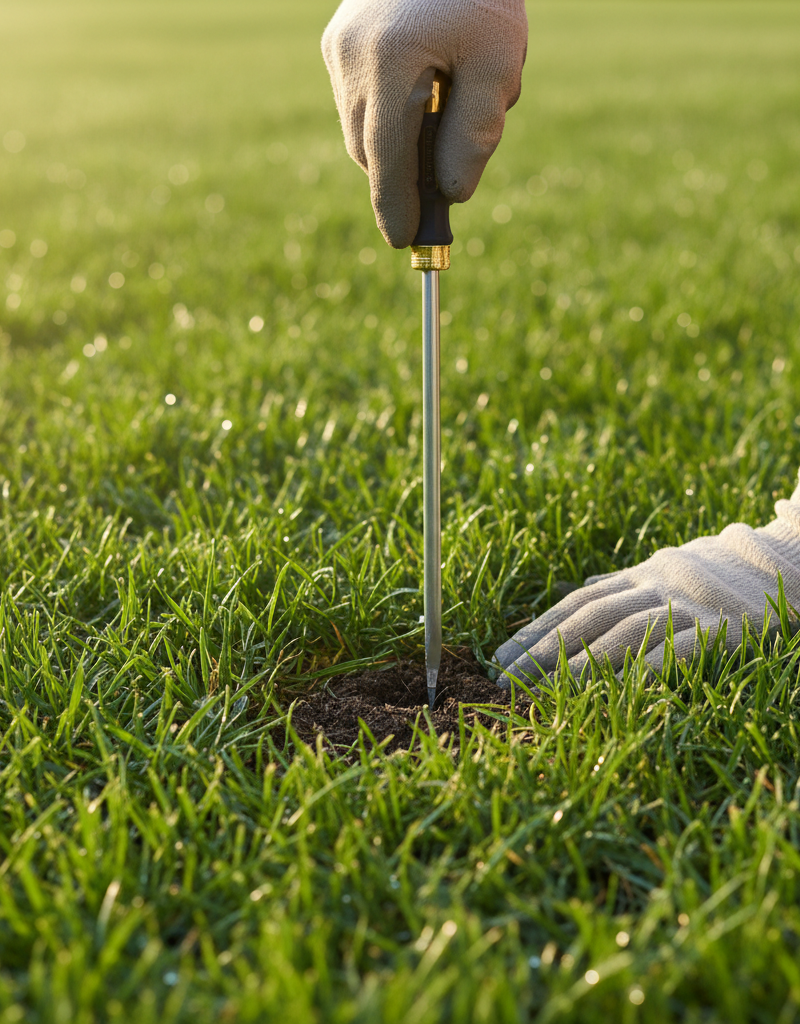
Before applying any fertilizer, especially if you're experiencing persistent issues, get a soil test. This can be done through your local university extension office for a small fee (typically $15-$30). The test will reveal deficiencies in N-P-K, pH levels, and other micronutrients, allowing you to choose a fertilizer with the precise ratio your lawn needs. Without a soil test, you're guessing, which can lead to over-fertilization of certain nutrients and continued deficiencies in others.
- Safety Note: Always follow instructions carefully when collecting soil samples.
3. Choose the Right Fertilizer – Match the product to your needs.
Based on your grass type and soil test results, select an appropriate fertilizer.
- N-P-K Ratio: The three numbers on a fertilizer bag (e.g., 20-5-10) represent the percentage of Nitrogen, Phosphorus, and Potassium. A soil test will guide you to the ideal ratio. For established lawns, a higher nitrogen ratio (e.g., 4-1-2 or 3-1-2) is common.
- Slow-Release vs. Quick-Release: Slow-release fertilizers provide nutrients over a longer period, reducing the risk of 'burn' and promoting more consistent growth. Quick-release fertilizers offer a fast green-up but carry a higher risk of burn if over-applied. Most homeowners benefit from slow-release options.
- Weed-and-Feed: Use these only if you have a specific weed problem that aligns with the product's targets, and be mindful of timing relative to grass seeding. Improper use can damage new grass or be ineffective.
4. Time Your Applications (Cool-Season Grasses) – Fall is prime time.
For cool-season grasses, target these periods:
- Early Fall (Most Important): Late August to early October, when daytime temperatures are consistently in the 60s to low 70s °F. This is the most crucial feeding time as roots are actively growing and storing energy for winter and spring. Aim for a slow-release, high-nitrogen fertilizer (e.g., 20-5-10 or 22-0-8).
- Late Fall/Winterizer: Late October to early December, before the ground freezes, but after growth has slowed substantially. Use a 'winterizer' fertilizer, which is typically higher in potassium, to help with cold hardiness (e.g., 10-0-20 or 5-10-15).
- Early Spring (Optional, Light Application): Early March to mid-April, when soil temperatures are consistently above 45-50°F and new growth begins. Use a lighter hand with a balanced or slightly higher nitrogen fertilizer. Avoid heavy applications that promote excessive top growth before roots are fully established, which can lead to problems later in the season. Consider a crabgrass pre-emergent at this time if needed, applied before soil temperatures reach 55°F.
5. Time Your Applications (Warm-Season Grasses) – Focus on late spring/summer.
For warm-season grasses, target these periods:
- Late Spring (Most Important): Mid-April to late May, after the lawn has fully greened up and is actively growing, and all danger of frost is past. Soil temperatures should be consistently above 65°F. Use a general-purpose lawn fertilizer with a higher nitrogen content (e.g., 16-4-8 or 21-5-10).
- Early Summer: June to July, about 6-8 weeks after the late spring application, especially if growth is vigorous or the lawn is under stress from high traffic. Use a similar balanced or high-nitrogen fertilizer, but avoid excessive application during peak summer heat.
- Late Summer/Early Fall (Optional, Light Application): Late August to early September. A light application can help maintain color and vigor without pushing too much new growth right before dormancy. Avoid fertilizing warm-season grasses too late in the fall, as this can stimulate tender new growth that will be damaged by the first frost.
6. Calibrate Your Spreader – Even coverage is key.
An improperly calibrated spreader is a common cause of uneven fertilization, leading to stripes or patches of burned grass.
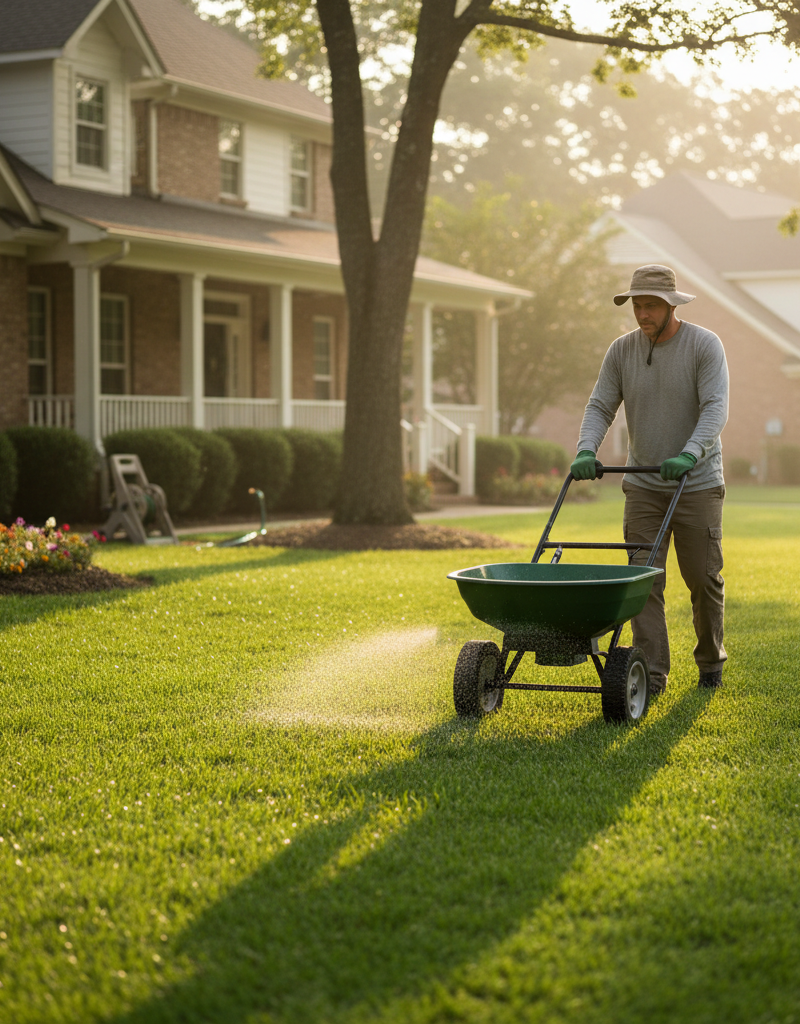
- Tools: Use a drop or broadcast spreader. Consult your fertilizer bag for the recommended spreader setting.
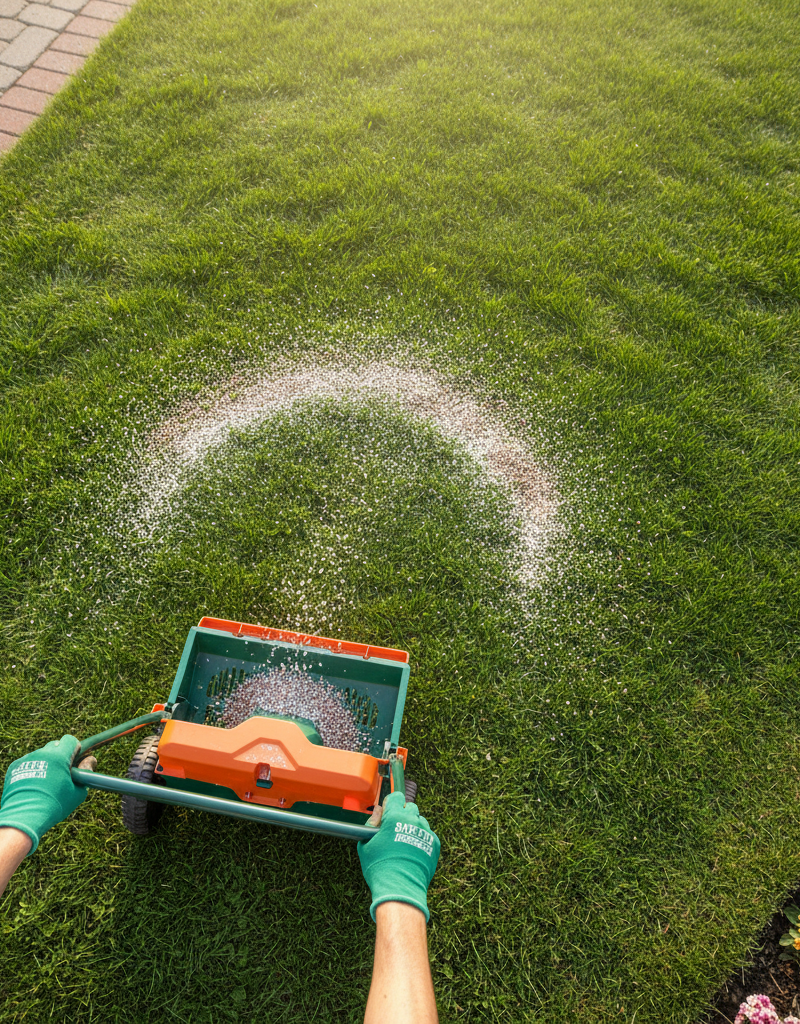
- Method: Before filling, do a dry run over your lawn to get a feel for the spreader's path. Apply half the recommended fertilizer in one direction (e.g., north-south), then apply the other half perpendicular to the first (e.g., east-west) to ensure even coverage. Overlap wheel marks slightly.
- Safety Note: Always wear gloves, eye protection, and closed-toe shoes when handling and applying granular fertilizers.
7. Water Your Lawn – Activate the fertilizer.
After applying granular fertilizer, lightly water your lawn. This helps dissolve the granules, moving the nutrients into the soil where the roots can access them.
- How much? Aim for about 1/4 to 1/2 inch of water. Avoid heavy watering that could cause runoff.
- When? Ideally, water within 24 hours of application. If rain is expected, you might time your application accordingly, but don’t rely solely on natural rainfall unless you’re sure it will be adequate.
8. Monitor and Adjust – Your lawn will tell you what it needs.
Pay attention to your lawn's response. Is it greener? Thicker? If you see signs of burning (yellow or brown streaks/patches), you may have applied too much or didn't water enough. If results are sluggish, re-check your timing or consider another soil test next season.
- If this doesn't work: Consider a second soil test in a different area of the lawn. You may have underlying soil compaction or drainage issues that are hindering nutrient uptake. Aeration (core or liquid) can alleviate compaction.
Common Causes
- Incorrect Timing: The most prevalent issue. Applying fertilizer when grass is dormant or stressed means nutrients aren't absorbed effectively, leading to waste and potential damage.
- Ignoring Grass Type: Treating a cool-season lawn like a warm-season lawn (or vice-versa) guarantees suboptimal results because their growth cycles are fundamentally different.
- Lack of Soil Testing: Guessing at nutrient needs often means applying too much of one nutrient and not enough of another, creating imbalances.
- Improper Spreader Calibration: Uneven application results in an inconsistent lawn – patches of lush growth next to struggling, starved areas or even burnt spots.
- Over-fertilization: Applying too much fertilizer, especially quick-release types, can burn the grass, leading to yellowing or browning.
- Fertilizing in Extreme Conditions: Applying fertilizer during a heatwave or drought when the grass is already stressed can cause significant damage.
Common Mistakes
- Fertilizing a Dormant Lawn: Many homeowners apply early spring fertilizer to warm-season grasses when they are still dormant, leading to nutrient runoff and feeding weeds instead of grass. Instead: Wait until the grass has fully greened up and is actively growing.
- Applying Without Watering In: Leaving granular fertilizer on the surface for extended periods can lead to fertilizer burn, especially in hot, sunny conditions. Instead: Always lightly water in granular fertilizer immediately after application.
- Using the Same Fertilizer Every Time: Relying on a 'one-size-fits-all' fertilizer without understanding your soil's specific needs can perpetuate nutrient deficiencies or excesses. Instead: Get a soil test every 3-5 years and choose a fertilizer based on its recommendations.
- Overlapping Spreader Passes Too Much: This creates distinct dark green stripes or even burned sections where the concentration of fertilizer is too high. Instead: Use a consistent walking pace and slightly overlap wheel tracks, or apply in two perpendicular passes with half the fertilizer each time.
- Fertilizing Before a Heavy Rain: A strong downpour shortly after application can wash away much of the fertilizer before it can be absorbed, leading to waste and potential water pollution. Instead: Check the weather forecast and aim for a period of light rain or plan to water it in yourself.
- Ignoring Weeds or Pests: Fertilizing a lawn riddled with weeds or pests can actually promote their growth or further stress the already weakened grass. Instead: Address significant weed or pest problems before or in conjunction with fertilization for best results.
Cost & Time Breakdown
| Task | DIY Cost ($) | Pro Cost ($) | Time (minutes) |
|---|---|---|---|
| Soil Test | 15–30 | N/A | 15–30 |
| Bag of Fertilizer (5,000 sq ft) | 30–60 | N/A | 20–40 |
| Spreader Calibration/Use | 0 | N/A | 15–30 |
| Watering In | 0 (utility) | N/A | 20–40 |
| Total per Application | 45–90 | 75–200 | 70–140 |
(Note: Professional costs are estimates for labor to apply fertilizer only, not including the actual product. A full lawn care program would be significantly higher.)
Tips & Prevention
- Calibrate Your Spreader Annually: Even if you think you know your spreader, re-calibrate it or at least check recommended settings for each new product. This prevents over or under-application.
- Mow at the Right Height: Taller grass (usually 2.5-3.5 inches) has deeper roots, shades out weeds, and handles stress better, helping it utilize fertilizer more efficiently.
- Leave Grass Clippings: 'Grasscycling' returns valuable nitrogen and organic matter to the soil, reducing your need for supplemental fertilizer.
- Water Deeply, Less Frequently: Encourage deeper root growth by watering for longer periods, but less often. This helps roots reach nutrients deeper in the soil profile.
- Consider Organic Options: Organic fertilizers release nutrients slowly and improve soil health over time, often reducing the risk of burning and promoting a healthier soil microbiome.
- Winterize Warm-Season Grasses Differently: For warm-season lawns, avoid late-season nitrogen. A light application of potassium in late summer can aid cold tolerance without stimulating new, tender growth that winter will kill.
When to Call a Professional
While correct timing of fertilization is a highly accessible DIY task, there are specific situations where calling a professional is a wise investment. If your lawn is consistently struggling despite diligent efforts and proper timing, a professional can offer advanced diagnostics, such as specialized soil analysis, pest and disease identification, and compaction testing that goes beyond what a homeowner can typically perform. If you're dealing with extensive crabgrass or other persistent broadleaf weeds that standard weed-and-feed products don't control, a licensed applicator has access to more effective, targeted herbicides that are not available to the public. Furthermore, if you have a very large property or complex landscaping that makes precise fertilizer application challenging, a professional lawn care service can ensure even coverage and optimal nutrient delivery without the risk of over-application or missed spots. They can also offer tailored programs that include not just fertilization, but also aeration, liming, and pest control, creating a comprehensive solution for a truly problematic lawn.
Related Articles
Keep troubleshooting with these hand-picked guides from FixlyGuide:
- The #1 Mowing Mistake That Leaves Your Lawn Brown and Patchy — Discover the most common mowing mistake homeowners make that leads to unhealthy, patchy grass and how to fix it for a vibrant lawn.
- The #1 Lawn Aeration Mistake Most Homeowners Make (And When to REALLY Do It) — Discover the crucial mistake many homeowners make with lawn aeration and learn the optimal timing for a thriving, healthy lawn.
- The #1 Lawn Aeration Mistake Most Homeowners Make (And When to REALLY Do It) — Discover the crucial mistake many homeowners make with lawn aeration and learn the optimal timing for a healthier, more vibrant lawn.
- The #1 Pre-Emergent Mistake Wrecking Your Weed Control (And How to Fix It) — Applying pre-emergent at the wrong time is the most common mistake, leading to ineffective weed control and wasted effort for homeowners.
- The #1 Lawn Aeration Mistake Most Homeowners Make (And When to REALLY Do It) — Discover the crucial mistake homeowners make with lawn aeration and learn the optimal timing to ensure a healthy, thriving lawn.
- The 7 Mistakes That Ruin a Perfect Paint Job (and How to Fix Them) — Painting a room like a pro isn't just about technique—it's about avoiding common pitfalls that lead to streaks, drips, and uneven finishes.…
Should you do this yourself?
Answer five quick questions before you start. Safety outranks savings every time.
Your experience with work like this
How high do you have to work?
Does the job involve any of these?
Will it need a permit?
Specialty tools
Free and instant. Educational guidance only — not a quote, inspection, or professional diagnosis.
What should this project cost?
Enter your project details for a realistic cost range before you call anyone.
Cost depends heavily on which system turns out to be the source.
- Regional adjustment
- National average
- Labor share (typical)
- ~$1,620
- Quotes to collect
- 3 written estimates
Educational estimate based on national averages — not a binding quote. Always confirm with written local estimates.
Before you start
Check the difficulty, permits, and safety risk — then decide whether to call a pro.
- Estimate this projectGet a cost range for your scope and ZIP before you call anyone.Open
- Get local estimatesSend one request and compare written estimates from vetted pros.Open
Free, no signup required. Estimates are educational guidance, not a quote or an inspection.
Frequently asked questions
How often should I fertilize my lawn?+
For most established lawns, fertilizing 2-4 times per year is sufficient, depending on your grass type and desired results. Cool-season grasses benefit most from early fall and, if needed, early spring applications. Warm-season grasses thrive with late spring and early summer applications. Always follow a soil test recommendation and adjust based on your lawn's specific needs.
Can I fertilize my lawn in the summer?+
It depends on your grass type. If you have warm-season grass (like Bermuda or Zoysia), summer is a prime growing season, and you can fertilize. If you have cool-season grass (like Fescue or Bluegrass), it generally goes dormant in summer heat, and fertilizing can stress it or cause burn. Focus on light, slow-release applications if needed, or skip summer feeding for cool-season varieties.
What happens if you over-fertilize your lawn?+
Over-fertilization, especially with quick-release nitrogen, can 'burn' your lawn. This results in yellowing, browning, or even blackening of the grass blades, as the high salt content draws moisture out of the plant. It can also lead to nutrient runoff, harming local waterways. If you suspect over-fertilization, water the affected areas heavily to help flush the excess nutrients from the root zone.
How long after fertilizing can I mow?+
It's generally recommended to wait 24-48 hours after applying granular fertilizer before mowing. This gives the fertilizer time to settle into the soil and begin dissolving, preventing the mower from picking up and redistributing the granules. If you applied a liquid fertilizer, wait until it has dried completely, usually a few hours, to avoid tracking it.
Do I need to water after fertilizing?+
Yes, it is highly recommended to lightly water your lawn after applying granular fertilizer. This helps move the fertilizer granules off the grass blades and into the soil, where the roots can absorb the nutrients. It also prevents fertilizer burn, especially in sunny conditions. Aim for about 1/4 to 1/2 inch of water.
Discussion
Loading comments…