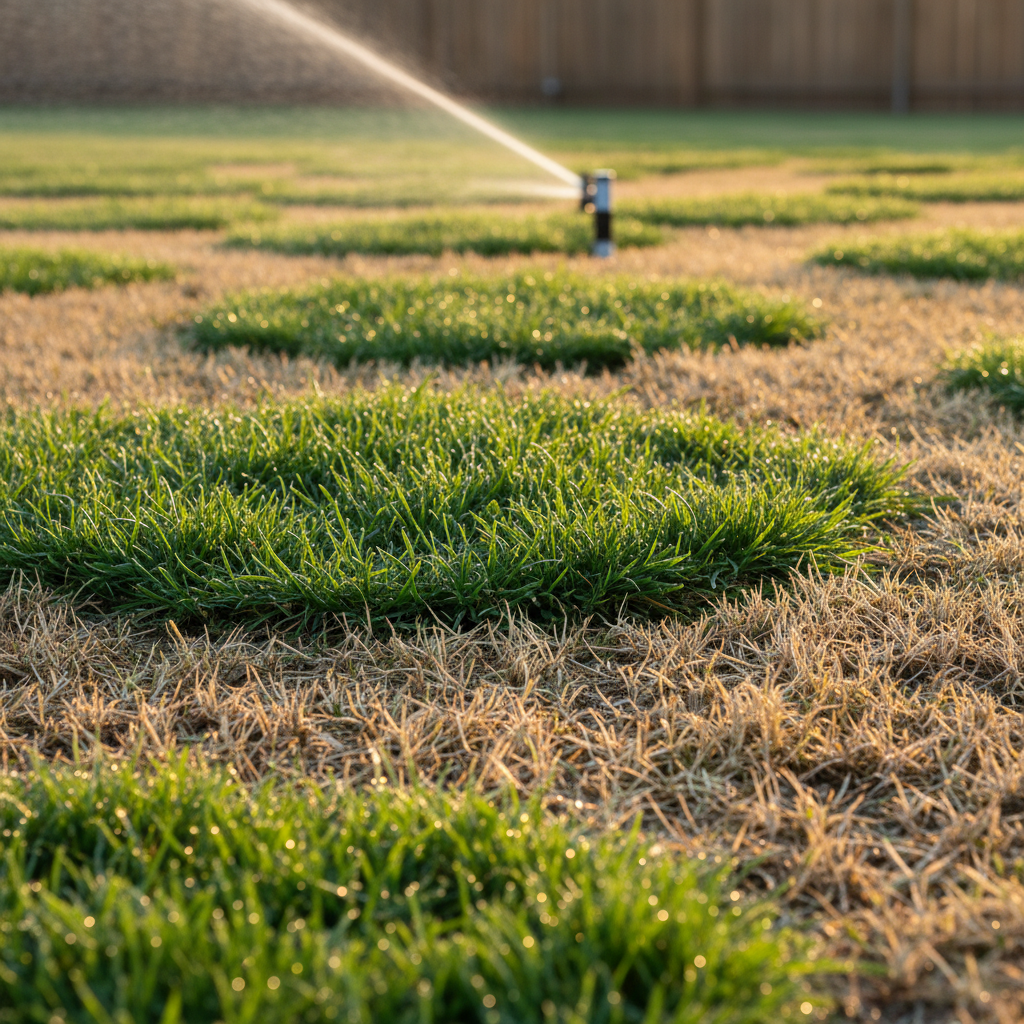
- Watering at the Wrong Time: Watering in the middle of a hot, sunny day leads to significant evaporation, meaning much of the water never reaches the roots. Watering in the evening leaves the grass wet overnight, promoting fungal diseases.
- Compacted Soil: Hard, compacted soil prevents water from penetrating deeply. Instead, water runs off, leaving the root zone dry even if the surface appears wet. This is common in high-traffic areas or lawns with heavy clay soil.
- Thatch Buildup: A thick layer of thatch (dead organic matter) on the soil surface can act like a sponge, holding water but preventing it from reaching the soil and roots below, leading to surface-level dryness despite irrigation.
- Shallow Root System: Consistent light, frequent watering encourages grass to develop shallow roots, making it highly dependent on regular irrigation and extremely vulnerable to even short periods of drought or heat stress.
Landscaping · Deck or fence project
| Project category | Landscaping |
|---|---|
| Problem type | Deck or fence project |
| Trade required | Landscaping |
| Urgency | Planned project |
| Safety risk | Moderate safety risk |
| DIY suitability | DIY for experienced homeowners |
| Cost category | High cost |
| Typical timeline | Most builds 3–10 days depending on size |
| Contractor type | Landscaping contractor |
Repair option
Replace failed boards, posts, and hardware; reseal the surface.
Replacement option
Rebuild when framing or the ledger connection is unsafe.
Common causes
- Rot at posts and ledger
- Storm damage
- Adding outdoor living space
Relevant tools:home improvement material pricesproject cost estimator
Published June 6, 2026Last updated August 17, 2026
Tools & materials you'll need
Affiliate linksAs an Amazon Associate FixlyGuide earns from qualifying purchases — at no extra cost to you. Prices and availability are accurate as of publication and subject to change.
Quick Answer
Brown spots appearing in your lawn after watering are often a sign of improper irrigation rather than a simple lack of water. The irony is that your effort to nourish your lawn might be inadvertently causing its decline. Common culprits include overwatering, which can lead to fungal diseases like brown patch or root rot, and underwatering, which simply dries out the grass. Inconsistent watering, where some areas get too much and others too little, can also create localized stress spots. Understanding your soil type, grass variety, and local climate are crucial for developing an effective watering strategy that prevents these frustrating brown patches and promotes a lush, green lawn.
The Problem
You've done your due diligence, watering your lawn regularly, perhaps even more so when the weather heats up, only to find unsightly brown spots appearing shortly after. It's a perplexing problem that often leads homeowners to believe their lawn isn't getting enough water, prompting them to water even more – a cycle that can exacerbate the issue. These brown patches aren't just an aesthetic concern; they indicate that your grass is under significant stress. This stress can stem from various factors related to watering, including applying too much water, not enough water, or watering at the wrong time of day. The result can be shallow root growth, nutrient leaching, increased susceptibility to pests and diseases, and ultimately, a patchy, unhealthy lawn that struggles to recover.
How It Works
To understand why brown spots occur after watering, it's helpful to grasp how grass absorbs water and nutrients. Grass roots are designed to take up moisture and dissolved nutrients from the soil. When you water, the goal is to saturate the soil to a sufficient depth (typically 6-8 inches for most lawn grasses) to encourage deep root growth. Deep roots make the lawn more resilient to drought and various stressors. However, several factors can disrupt this ideal process.
Firstly, overwatering suffocates the roots. Grass roots, like all living organisms, need oxygen. When the soil is constantly waterlogged, the air pockets are filled with water, depriving the roots of essential oxygen. This creates an anaerobic environment where beneficial soil microbes struggle, and harmful anaerobic bacteria and fungi thrive. Fungal diseases like brown patch, dollar spot, and Pythium blight are common consequences of consistently wet conditions. These pathogens attack the grass blades and roots, leading to discolored, often circular, brown patches that spread quickly. Overwatering also leaches essential nutrients, especially nitrogen, past the root zone, making them unavailable to the grass.
Secondly, underwatering is a more straightforward problem. When the grass doesn't receive enough water, its cells begin to dehydrate. The chlorophyll, responsible for the grass's green color, breaks down, and the blades turn yellow, then brown as they dry out and die. While seemingly simple to fix with more water, consistent underwatering forces the grass to develop a shallow root system, making it even more vulnerable to future dry spells and heat stress. The grass tries to conserve moisture by shutting down metabolic processes, leading to dormancy and eventually death if drought conditions persist.
Finally, inconsistent watering creates pockets of stress. If your sprinkler system has poor coverage, or if you water certain areas more or less than others, some parts of your lawn will be overwatered while others are underwatered. This variation can lead to a patchwork of healthy and stressed grass. Compacted soil, often caused by heavy foot traffic or equipment, can also prevent water from penetrating evenly, leading to runoff and localized dry spots even when the rest of the lawn is well-irrigated. Understanding these mechanisms is the first step toward diagnosing and rectifying the brown spot problem.
Step-by-Step Fix
1. Observe Your Lawn and Watering Habits — Begin by closely examining the brown spots. Are they uniformly distributed, or are they concentrated in certain areas? Note the size, shape, and pattern of the brown patches. Also, reflect on your watering schedule: how often do you water, for how long, and what type of sprinkler do you use?
- Tool Tip: A simple rain gauge or a tuna can can help measure how much water your sprinklers are actually delivering over a specific period.
- Diagnostic Question: Are the brown spots appearing in low-lying areas, suggesting poor drainage, or on slopes, indicating runoff?
2. Perform a Tuna Can Test for Even Coverage — Place several empty tuna cans or similar shallow containers in various spots across your lawn, including in and around the brown patches. Run your sprinklers for 15-20 minutes. Measure the amount of water collected in each can to identify areas of over or under-watering.
- Actionable Insight: Adjust sprinkler heads to ensure even coverage. If certain areas consistently receive significantly less or more water, it's a clear sign of uneven irrigation.
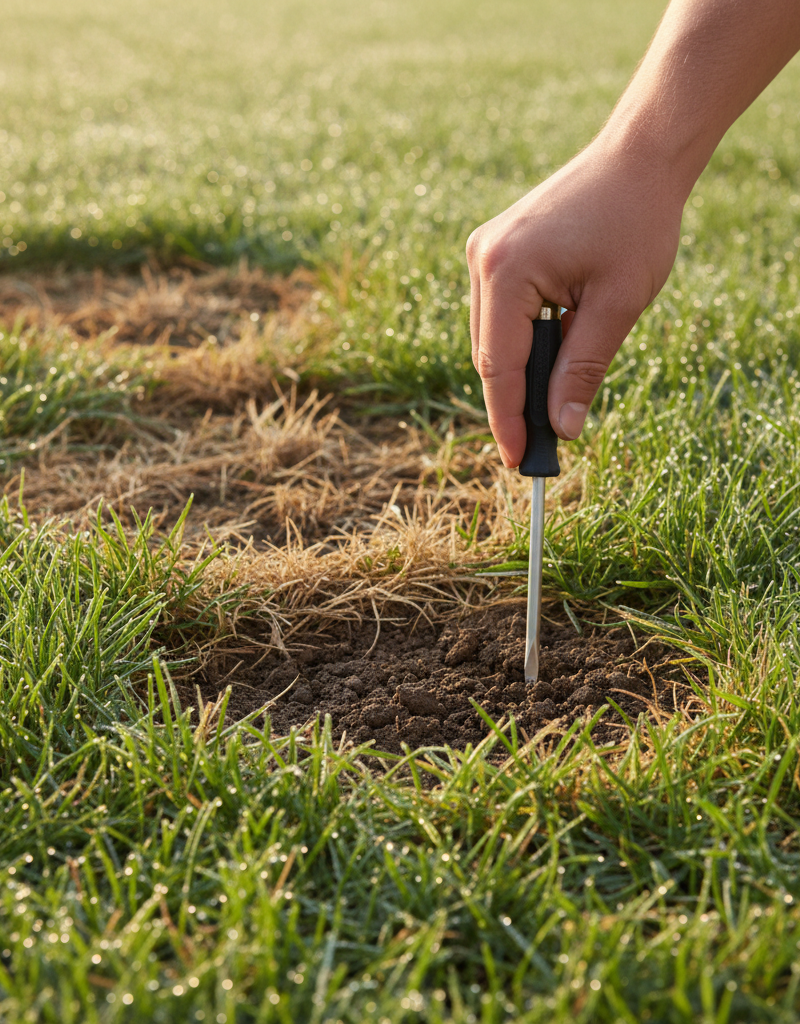
3. Check Soil Moisture Depth — After watering, wait a few hours, then use a screwdriver, soil probe, or a trowel to check how deep the water has penetrated the soil in both healthy and brown areas. The soil should be moist 6-8 inches deep.
- Safety Note: When using a screwdriver or probe, be mindful of any underground irrigation lines or electrical cables.
- If this doesn't work: If water isn't penetrating, you might have compacted soil (see aerating below) or a significant thatch layer.
4. Adjust Watering Frequency and Duration — If your soil is only moist an inch or two deep, you're likely underwatering. If it's constantly soggy, you're overwatering. Adjust your watering schedule to water deeply (6-8 inches of soil penetration) but less frequently. Most lawns need 1-1.5 inches of water per week, applied in 2-3 sessions.
- For Dry Spots: Increase watering duration for those specific areas, or consider spot watering with a hose until the soil is moist to the correct depth.
- For Soggy Spots: Reduce watering, improve drainage, or consider amending the soil in those areas.
5. Water at the Right Time — The best time to water is early morning (between 4 AM and 9 AM). This minimizes evaporation and allows the grass blades to dry before nightfall, reducing the risk of fungal diseases.
- Mistake to Avoid: Watering in the evening leaves grass wet overnight, creating a prime environment for fungal growth.
6. Aerate Compacted Soil — If soil compaction is preventing water penetration, aerating your lawn can help. Use a core aerator to pull out small plugs of soil, improving air and water circulation.
- Tool: A manual or powered core aerator.
- Timing: Aerate in the spring or fall when your grass is actively growing.
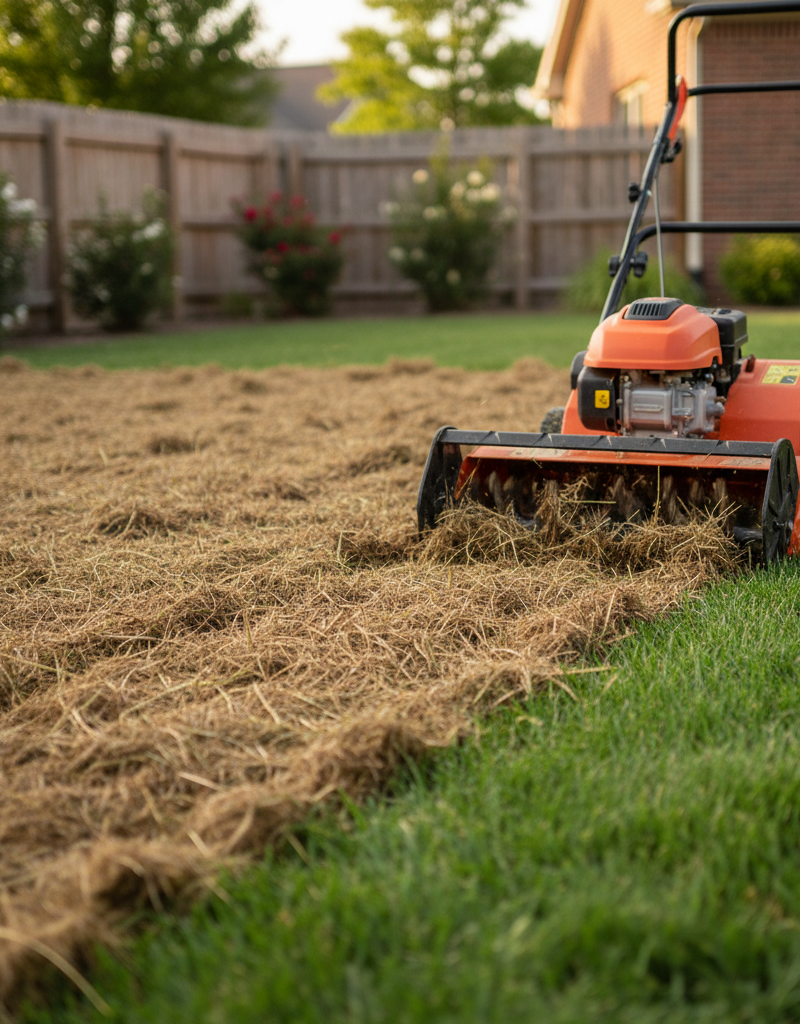
7. Dethatch Your Lawn — A thick layer of thatch (dead grass, stems, and roots) can prevent water from reaching the soil. If your thatch layer is more than ½ inch thick, dethatching can improve water absorption.
- Tool: A dethatching rake or a power dethatcher.
- Frequency: Dethatch every 1-2 years if needed.
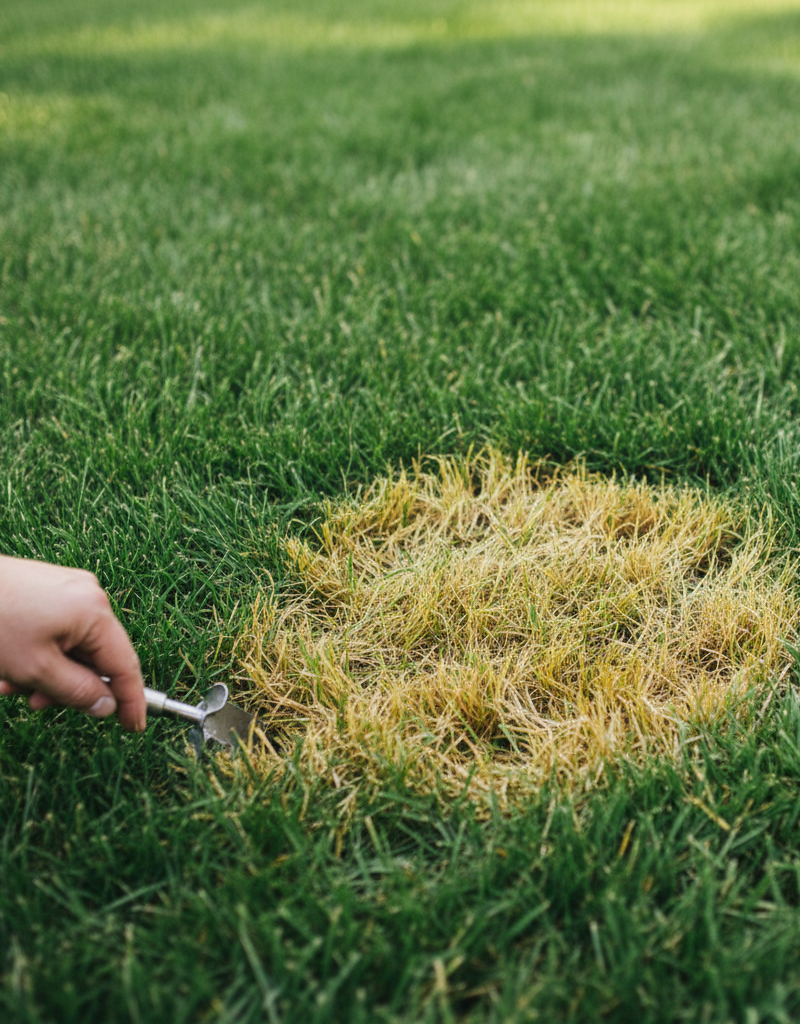
8. Check for Fungal Diseases — If brown spots have distinct shapes (e.g., rings, irregular patches) or visible signs like fuzzy growth, webs, or discolored blades, you might have a lawn disease exacerbated by watering issues. Consult a local extension office or garden center for diagnosis and appropriate fungicide recommendations.
- Diagnostic Tip: Brown patch often appears as circular or irregularly shaped brown areas with a dark ring around the perimeter, especially in humid conditions.
Common Causes
- Overwatering: This is a surprisingly common culprit. Continuously saturated soil deprives grass roots of oxygen, leading to root rot and creating ideal conditions for fungal diseases like brown patch, dollar spot, and Pythium blight. Often, homeowners overwater out of concern, assuming more water is always better, especially during hot spells.
- Underwatering: The opposite extreme, where the lawn simply doesn't receive enough moisture to sustain healthy growth. This causes grass blades to dry out, turn yellow, then brown, and eventually die. Underwatering can be due to infrequent watering, insufficient duration, or poor sprinkler coverage.
- Uneven Water Distribution: Faulty sprinkler heads, incorrect water pressure, clogged nozzles, or overlapping spray patterns can lead to some areas receiving too much water while others receive too little, resulting in a patchy appearance of brown and green.
- Watering at the Wrong Time: Watering in the middle of a hot, sunny day leads to significant evaporation, meaning much of the water never reaches the roots. Watering in the evening leaves the grass wet overnight, promoting fungal diseases.
- Compacted Soil: Hard, compacted soil prevents water from penetrating deeply. Instead, water runs off, leaving the root zone dry even if the surface appears wet. This is common in high-traffic areas or lawns with heavy clay soil.
- Thatch Buildup: A thick layer of thatch (dead organic matter) on the soil surface can act like a sponge, holding water but preventing it from reaching the soil and roots below, leading to surface-level dryness despite irrigation.
- Shallow Root System: Consistent light, frequent watering encourages grass to develop shallow roots, making it highly dependent on regular irrigation and extremely vulnerable to even short periods of drought or heat stress.
Common Mistakes
- Watering on a Fixed Schedule Regardless of Weather: Many homeowners water on a set schedule (e.g., every other day) without considering recent rainfall or current temperatures. This often leads to overwatering during cool, wet periods and sometimes underwatering during prolonged dry spells.
- Assuming All Brown Means Dry: Seeing brown spots immediately triggers the thought of needing more water. However, as discussed, often overwatering or fungal diseases caused by excessive moisture are the true culprits. Always diagnose before increasing water.
- Not Calibrating Sprinklers: Most homeowners don't know how much water their sprinkler system delivers. Without calibration (like the tuna can test), you're essentially guessing, leading to inefficient and often harmful watering practices.
- Watering Too Frequently for Short Durations: This encourages shallow root growth because the water never penetrates deep enough to encourage roots to grow downwards. Shallow roots make the lawn less resilient and more susceptible to drought and disease.
- Ignoring Soil Type: Different soil types retain water differently. Sandy soils drain quickly and may need more frequent, shorter watering, while clay soils hold water longer and need less frequent, deeper watering. Using a 'one-size-fits-all' approach is a common mistake.
- Not Observing the Lawn's Response: A common mistake is to set a watering schedule and then forget it. Regularly observe your lawn for signs of stress (wilting, dull color, footprints remaining visible) and adjust your watering as needed.
Cost & Time Breakdown
| Task | DIY Cost | Pro Cost | Time |
|---|---|---|---|
| Sprinkler calibration (tuna can test) | $0–$5 | N/A | 30 min |
| Soil moisture check | $0–$15 | N/A | 10 min |
| Adjust & repair sprinkler heads | $5–$50 | $75–$200 per visit | 15–60 min |
| Manual Aeration | $20–$50 (tool) | $150–$300 | 1–3 hours |
| Dethatching (rake) | $20–$40 (tool) | $200–$450 | 2–5 hours |
| Fungicide Application | $20–$80 per application | $100–$250 | 20–40 min |
Tips & Prevention
- Deep and Infrequent Watering: Train your lawn to grow deep roots by watering deeply (6-8 inches of soil penetration) but less frequently. This makes your lawn more resilient to dry conditions.
- Water Early in the Morning: Minimize evaporation and allow grass blades to dry before nightfall to prevent fungal diseases. Aim for 4 AM to 9 AM.
- Use a Rain Gauge or Soil Moisture Meter: These tools provide objective data to help you know exactly how much water your lawn is receiving and how deep it's penetrating, preventing guesswork.
- Consider Your Soil Type: Adjust watering based on whether you have sandy (drains quickly, needs more frequent watering) or clay (retains water, needs less frequent watering) soil.
- Mow at Proper Height: Keep your grass mowed at the higher end of its recommended range (typically 2.5-3.5 inches). Taller grass shades the soil, reducing water evaporation and encouraging deeper root growth.
- Regularly Inspect Sprinkler System: Check for clogged nozzles, broken heads, or misaligned spray patterns that can cause uneven watering. Fix these promptly.
- Fertilize Appropriately: Over-fertilization, especially with nitrogen, can encourage lush top growth at the expense of root development, making the grass more susceptible to drought and disease.
When to Call a Professional
While many watering issues can be resolved with DIY adjustments, it's wise to call a professional for more complex or persistent problems. If, after implementing proper watering techniques, aeration, and dethatching, your brown spots persist or worsen, a lawn care professional or an irrigation specialist can provide expert diagnosis. They can identify advanced pest infestations, specific lawn diseases, or complex soil issues (like severe compaction or nutrient deficiencies) that might be beyond the scope of typical DIY fixes. Additionally, if you suspect significant problems with your irrigation system, such as underground leaks, persistent uneven coverage that can't be fixed by simple adjustments, or a need for a complete system overhaul, an irrigation specialist has the tools and expertise to address these efficiently and effectively. Consulting a pro can save you time, money, and frustration in the long run.
Related Articles
Keep troubleshooting with these hand-picked guides from FixlyGuide:
- The #1 Mowing Mistake That Leaves Your Lawn Brown and Patchy — Discover the most common mowing mistake homeowners make that leads to unhealthy, patchy grass and how to fix it for a vibrant lawn.
- The #1 Summer Lawn Mistake Turning Your Grass Yellow (It's Not Overwatering) — Discover the most common, often overlooked reason your summer lawn is turning yellow despite your best efforts, and learn how to fix it.
- Thatched Lawn Secret: Why Brown Spots Bloom AFTER Watering (and the $15 Fix) — Brown spots appearing after watering your lawn often point to underlying thatch issues, hindering water absorption and nutrient delivery.
- The #1 Mistake Killing Your Lawn's Crabgrass Defense (And the Easy Fix) — Discover why common crabgrass removal methods fail and how to naturally eliminate this stubborn weed for a healthier lawn.
- The #1 Mistake Turning Your Healthy Lawn Brown After Watering — Discover the most common, overlooked reason your lawn develops brown spots right after you water it, and how to fix it with simple steps.
- The Secret to Lush Raised Beds? It's Not Just About How You Water — Smart irrigation for raised garden beds isn't just about automation; it's about delivering the right amount of water precisely when your pl…
What should this project cost?
Enter your project details for a realistic cost range before you call anyone.
Cost depends heavily on which system turns out to be the source.
- Regional adjustment
- National average
- Labor share (typical)
- ~$1,620
- Quotes to collect
- 3 written estimates
Educational estimate based on national averages — not a binding quote. Always confirm with written local estimates.
Frequently asked questions
Can too much water cause brown spots?+
Yes, absolutely. Overwatering is a common cause of brown spots. It deprives grass roots of oxygen, leading to root rot, and creates ideal conditions for fungal diseases like brown patch and dollar spot to thrive, ultimately turning the grass brown and unhealthy.
How do I know if my brown lawn is from overwatering or underwatering?+
To tell the difference, check the soil moisture. If the soil is constantly soggy, even hours after watering, it's likely overwatering. If the soil is dry and crumbly several inches down, it's underwatering. Overwatered lawns may also show signs of fungal growth or a general decline, while underwatered grass will be brittle and dry.
How often should I water my lawn to prevent brown spots?+
The ideal frequency depends on your grass type, soil, and climate, but a general rule is to water deeply (to moisten soil 6-8 inches deep) but infrequently. This usually means 1-1.5 inches of water per week, applied in 2-3 sessions rather than daily light watering. Always water in the early morning.
Will brown grass turn green again after proper watering?+
Often, yes, especially if the brown spots are due to drought stress or minor overwatering. If the grass crowns and roots are still viable, consistent proper watering can help them recover and regreen. However, if the grass is completely dead from severe or prolonged stress or extensive disease, it may not recover and will need reseeding or sodding.
Discussion
Loading comments…