- Misunderstanding Root Biology: Believing grass roots stay shallow naturally, rather than understanding they can be trained to grow deep with proper watering.
- Habit from Shorter Sprinkler Cycles: Many automatic irrigation systems are pre-programmed for frequent, short cycles which are detrimental.
- Attempting to Mimic Rain: Thinking light, daily sprinkles are best because natural rain often comes that way, ignoring the intensity difference.
- Ignoring Soil Type: Not adjusting watering practices for clay soil (slow absorption) versus sandy soil (fast drainage).
- Fear of Overwatering: Homeowners reduce watering duration too much, leading to consistent underwatering and shallow roots.
Landscaping · Deck or fence project
| Project category | Landscaping |
|---|---|
| Problem type | Deck or fence project |
| Trade required | Landscaping |
| Urgency | Planned project |
| Safety risk | Moderate safety risk |
| DIY suitability | DIY for experienced homeowners |
| Cost category | High cost |
| Typical timeline | Most builds 3–10 days depending on size |
| Contractor type | Landscaping contractor |
Repair option
Replace failed boards, posts, and hardware; reseal the surface.
Replacement option
Rebuild when framing or the ledger connection is unsafe.
Common causes
- Rot at posts and ledger
- Storm damage
- Adding outdoor living space
Relevant tools:home improvement material pricesproject cost estimator
Published June 12, 2026Last updated August 17, 2026
Tools & materials you'll need
Affiliate linksNo materials required.
As an Amazon Associate FixlyGuide earns from qualifying purchases — at no extra cost to you. Prices and availability are accurate as of publication and subject to change.
Quick Answer
The most common lawn watering mistake is frequent, shallow watering. This encourages weak, shallow root growth and invites weeds and diseases. The fix is to water deeply and infrequently, aiming for 1 inch of water per week, applied in one or two sessions, to promote a robust, drought-resistant lawn that naturally crowds out weeds and resists common lawn problems.
The Problem
Your lawn is looking less like a lush green carpet and more like a battleground for weeds, despite your best efforts at regular watering. You might notice brown patches, thinning grass, or a general lack of vigor. The culprit isn't necessarily a lack of water, but rather how you're watering. Many homeowners believe that frequent, light watering is best, mimicking natural rainfall. However, this common practice is a silent killer for healthy turf. Shallow watering encourages grass roots to stay near the surface, seeking out the readily available moisture. These surface roots are incredibly vulnerable to heat stress, drought, and disease. When temperatures rise or you skip a watering session, these shallow-rooted plants quickly suffer, turning brown and dying off. What's left behind? Open invitations for opportunistic weeds with their deep, resilient root systems to move in and take over. Furthermore, consistently damp topsoil from frequent watering creates an ideal breeding ground for fungal diseases like brown patch and dollar spot, further weakening your turf.
How It Works
To understand proper watering, you need to understand how grass roots function. Grass thrives when its roots grow deep into the soil, ideally 4 to 6 inches or more for most common turfgrasses. These deep roots allow the plant to access moisture and nutrients stored deeper in the soil, making it far more resilient to environmental stresses like drought, heat waves, and foot traffic. When you apply water shallowly and frequently, only the top inch or two of soil gets wet. The grass roots have no incentive to grow deeper; all the moisture they need is readily available at the surface. Over time, your lawn develops a weak, shallow root system. Conversely, deep and infrequent watering works by encouraging roots to chase the moisture deeper into the soil profile. When you apply enough water to penetrate 4-6 inches, the surface dries out between waterings. This drying period oxygenates the soil and forces the roots to extend downwards to find the remaining moisture. This process strengthens the plant's overall health, makes it more tolerant to dry spells, and creates a dense, healthy turf that naturally outcompetes weeds for resources like water, light, and nutrients. Think of it like training: you're teaching your grass to be strong and self-sufficient, rather than dependent on constant surface hydration.
Step-by-Step Fix
1. Assess Your Soil Type — Understand how your soil impacts water retention.
- Tools: Small shovel or trowel.
- Action: Dig a small hole about 6 inches deep in an inconspicuous part of your lawn. Squeeze a handful of soil. If it crumbles easily, you likely have sandy soil, which drains quickly. If it forms a sticky ball, you have clay soil, which retains water longer. Loamy soil (ideal) will hold together but break apart with light pressure. This assessment helps determine how quickly your lawn absorbs and retains water, influencing your watering schedule.
2. Calibrate Your Sprinklers — Measure exactly how much water your system delivers.
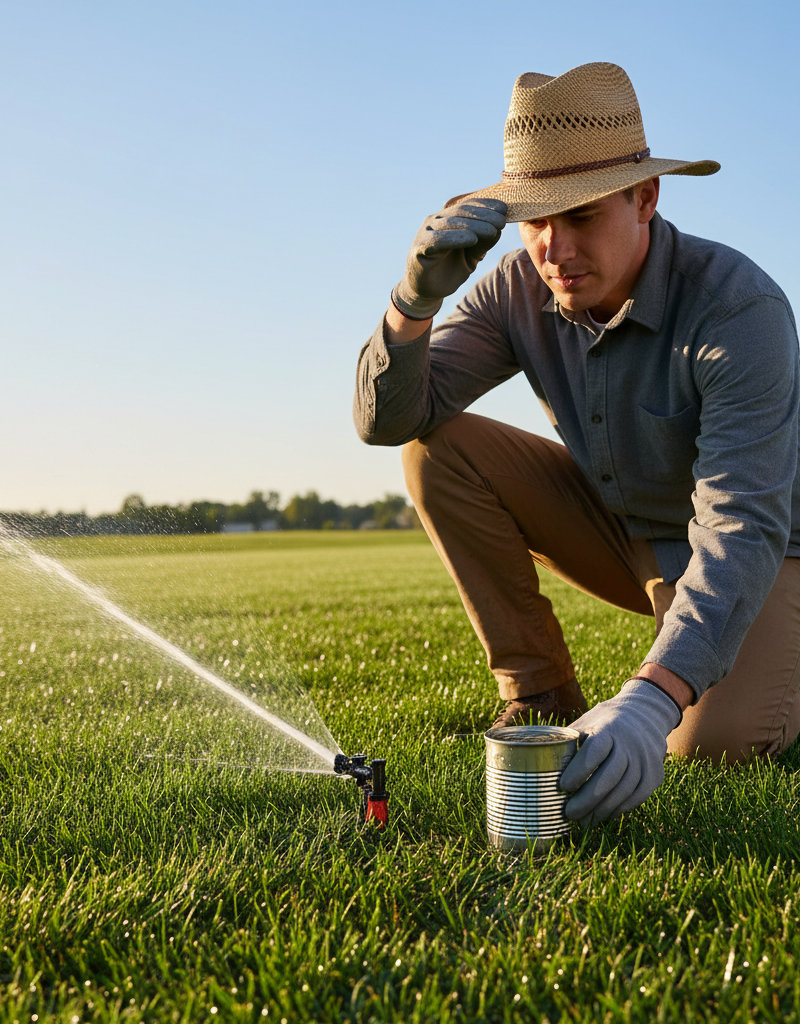
- Tools: Five to ten empty tuna cans or straight-sided containers, ruler.
- Safety: Ensure children and pets are clear of the sprinkler path.
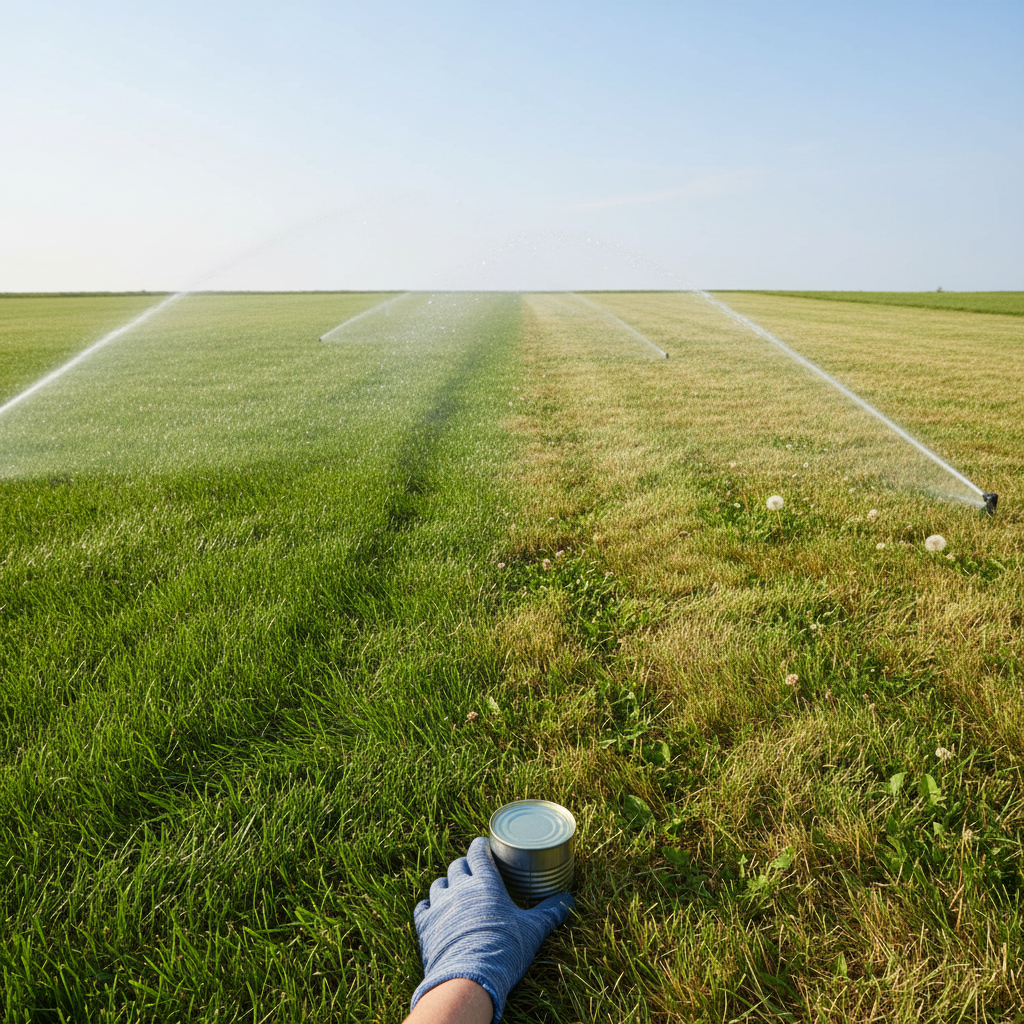
- Action: Place the tuna cans randomly across a zone of your lawn covered by your sprinklers. Run the sprinklers for 15 minutes. Measure the water depth in each can with a ruler and average the results. Multiply this average by four to find out how much water your system delivers in one hour. For example, if you collect 0.25 inches in 15 minutes, your system delivers 1 inch per hour. This precise measurement is critical for calculating proper run times.
3. Determine Your Weekly Water Need — Target 1 inch of water per week for most lawns.
- Action: Most lawns require approximately 1 inch of water per week during the active growing season, including any natural rainfall. In very hot climates or during peak summer, this might increase to 1.5 inches. However, 1 inch is a good starting point for cool-season and warm-season grasses. If you received 0.5 inches of rain, you'll need to supply the remaining 0.5 inches through irrigation.
4. Calculate Sprinkler Run Time — Apply the correct amount of water in a single session.
- Action: Using your sprinkler calibration results, divide your weekly water need (e.g., 1 inch) by the amount your sprinklers deliver per hour. If your sprinklers deliver 0.5 inches per hour and you need 1 inch total, you'll need to run them for 2 hours in total. This total time should ideally be split into two sessions of 1 hour each, applied on two separate days, or one long session if your soil can handle it without runoff.
5. Water Deeply and Infrequently — Train your roots to grow deeper.
- Action: Instead of daily short bursts, aim to water 1-2 times per week. Apply the calculated amount of water (e.g., 1 inch) in one or two long sessions. For example, if you need 1 inch, you might water for 1 hour on Monday and another hour on Thursday (if your system delivers 0.5 inches/hour). This allows the topsoil to dry out completely between waterings, forcing roots to go deeper. Clay soils might need shorter, more frequent (but still deep) sessions to prevent runoff, while sandy soils can handle longer, less frequent watering.
6. Water in the Early Morning — Minimize evaporation and disease risk.
- Action: The best time to water is between 4 AM and 8 AM. This allows the water to penetrate before the sun gets too strong, minimizing evaporation. Watering in the evening or at night leaves grass blades wet for too long, creating ideal conditions for fungal diseases. Watering in the middle of the day leads to significant water loss through evaporation.
7. Watch for Signs of Thirst — Adjust based on your lawn's specific needs.
- Action: Even with a schedule, your lawn will tell you if it's thirsty. Look for grass blades that turn a dull, bluish-gray color or appear to be wilting or curling. If you walk across the lawn and your footprints remain visible for several minutes, it's a sign the grass needs water. These are indicators that you might need to slightly increase your watering duration or frequency, especially during heatwaves.
8. Conduct a Soil Probe Test — Confirm water penetration depth.
- Tools: Soil probe, screwdriver, or a long stick.
- Action: After a watering session, wait 30 minutes to an hour. Stick a soil probe or a long screwdriver into the wetted area. It should penetrate easily at least 4-6 inches deep. If it only goes down an inch or two, you haven't watered deeply enough, and you need to increase your run time. If it's soggy much deeper, you might be overwatering.
Common Causes
- Misunderstanding Root Biology: Believing grass roots stay shallow naturally, rather than understanding they can be trained to grow deep with proper watering.
- Habit from Shorter Sprinkler Cycles: Many automatic irrigation systems are pre-programmed for frequent, short cycles which are detrimental.
- Attempting to Mimic Rain: Thinking light, daily sprinkles are best because natural rain often comes that way, ignoring the intensity difference.
- Ignoring Soil Type: Not adjusting watering practices for clay soil (slow absorption) versus sandy soil (fast drainage).
- Fear of Overwatering: Homeowners reduce watering duration too much, leading to consistent underwatering and shallow roots.
- Lack of Sprinkler Calibration: Guessing at how much water their system applies, leading to significant over or under-application.
Common Mistakes
- Watering Daily for Short Periods: This is the most damaging mistake. It guarantees shallow root growth, making your lawn highly susceptible to stress, disease, and weed invasion. Instead, water less frequently, but for longer durations.
- Watering in the Evening or Mid-Day: Watering in the evening leaves foliage wet overnight, inviting fungal diseases. Watering in the middle of the day leads to significant water loss to evaporation. Always water in the early morning.
- Ignoring Runoff: If water is pooling or running into the street, your soil can't absorb it fast enough. Don't waste water; instead, break your watering session into two or three shorter cycles, allowing 30-60 minutes between each for absorption (this is called
Related Articles
Keep troubleshooting with these hand-picked guides from FixlyGuide:
- The #1 Watering Mistake That Kills Lawns (And How to Fix Yours for $0) — Overwatering or underwatering your lawn can lead to significant damage; learn the correct irrigation techniques to maintain a healthy, vibr…
- The #1 Watering Mistake That Kills Lawns (And How to Fix Yours in 10 Minutes) — Discover the most common watering mistake homeowners make and how to adjust your watering routine for a healthier, more resilient lawn.
- The #1 Mowing Mistake That Leaves Your Lawn Brown and Patchy — Discover the most common mowing mistake homeowners make that leads to unhealthy, patchy grass and how to fix it for a vibrant lawn.
- The #1 Mistake Killing Your Lawn's Crabgrass Defense (And the Easy Fix) — Discover why common crabgrass removal methods fail and how to naturally eliminate this stubborn weed for a healthier lawn.
- Thatched Lawn Secret: Why Brown Spots Bloom AFTER Watering (and the $15 Fix) — Brown spots appearing after watering your lawn often point to underlying thatch issues, hindering water absorption and nutrient delivery.
- The 4-Hour — Transform your garden into a self-sufficient oasis with smart strategies for watering, weeding, and pest control, minimizing your effort.
Should you do this yourself?
Answer five quick questions before you start. Safety outranks savings every time.
Your experience with work like this
How high do you have to work?
Does the job involve any of these?
Will it need a permit?
Specialty tools
Free and instant. Educational guidance only — not a quote, inspection, or professional diagnosis.
What should this project cost?
Enter your project details for a realistic cost range before you call anyone.
Cost depends heavily on which system turns out to be the source.
- Regional adjustment
- National average
- Labor share (typical)
- ~$1,620
- Quotes to collect
- 3 written estimates
Educational estimate based on national averages — not a binding quote. Always confirm with written local estimates.
Before you start
Check the difficulty, permits, and safety risk — then decide whether to call a pro.
- Estimate this projectGet a cost range for your scope and ZIP before you call anyone.Open
- Get local estimatesSend one request and compare written estimates from vetted pros.Open
Free, no signup required. Estimates are educational guidance, not a quote or an inspection.
Frequently asked questions
How do I know if I'm watering too much or too little?+
If you're watering too much (frequently and shallowly), your lawn will likely have shallow roots, be prone to fungal diseases, and might feel spongy. If you're watering too little, grass blades will turn a dull bluish-gray, wilt, or curl, and footprints will remain visible after walking on the lawn. A soil probe can confirm water penetration depth.
Can I water my lawn every day?+
No, watering your lawn every day, especially for short periods, is a common mistake. It promotes shallow root growth, making your lawn weak and susceptible to drought, weeds, and disease. Instead, aim for deep and infrequent watering, typically 1-2 times per week.
How deep should water penetrate the soil when I water my lawn?+
Ideally, water should penetrate the soil to a depth of 4 to 6 inches after each watering session. This encourages grass roots to grow deep, making the lawn more resilient to stress. You can check the penetration depth with a soil probe or a long screwdriver.
What difference does time of day make for watering?+
Watering in the early morning (4 AM to 8 AM) is best because it minimizes evaporation and allows the grass blades to dry before nightfall, reducing the risk of fungal diseases. Watering during midday leads to significant evaporation, and evening watering keeps foliage wet too long.
How much water in inches does my lawn need per week?+
Most lawns typically need about 1 inch of water per week, including natural rainfall, during their active growing season. In very hot climates, this might increase to 1.5 inches. Use tuna cans to calibrate your sprinklers and apply the correct amount.

Discussion
Loading comments…