- Moist Soil Conditions: Adult beetles prefer to lay eggs in moist, healthy turf. Over-watering in summer can inadvertently create ideal egg-laying conditions, attracting beetles to your lawn over drier ones.
- Lack of Preventative Measures: Not applying preventative grub control products in late spring/early summer allows grub populations to establish and grow unchecked.
- Ineffective Timing of Curative Treatments: Applying curative treatments too early (before grubs are actively feeding) or too late (after they've burrowed deep for winter) significantly reduces their efficacy.
- Nearby Infested Areas: If your neighbors have significant grub problems, their adult beetles can easily fly over and lay eggs in your lawn.
- Thin or Stressed Turf: While grubs can affect any lawn, thin, poorly maintained, or stressed turf may show more pronounced damage and be less resilient to grub feeding.
Landscaping · Deck or fence project
| Project category | Landscaping |
|---|---|
| Problem type | Deck or fence project |
| Trade required | Landscaping |
| Urgency | Planned project |
| Safety risk | Moderate safety risk |
| DIY suitability | DIY for experienced homeowners |
| Cost category | High cost |
| Typical timeline | Most builds 3–10 days depending on size |
| Contractor type | Landscaping contractor |
Repair option
Replace failed boards, posts, and hardware; reseal the surface.
Replacement option
Rebuild when framing or the ledger connection is unsafe.
Common causes
- Rot at posts and ledger
- Storm damage
- Adding outdoor living space
Relevant tools:home improvement material pricesproject cost estimator
Published June 18, 2026Last updated August 17, 2026
Tools & materials you'll need
Affiliate linksAs an Amazon Associate FixlyGuide earns from qualifying purchases — at no extra cost to you. Prices and availability are accurate as of publication and subject to change.
Quick Answer
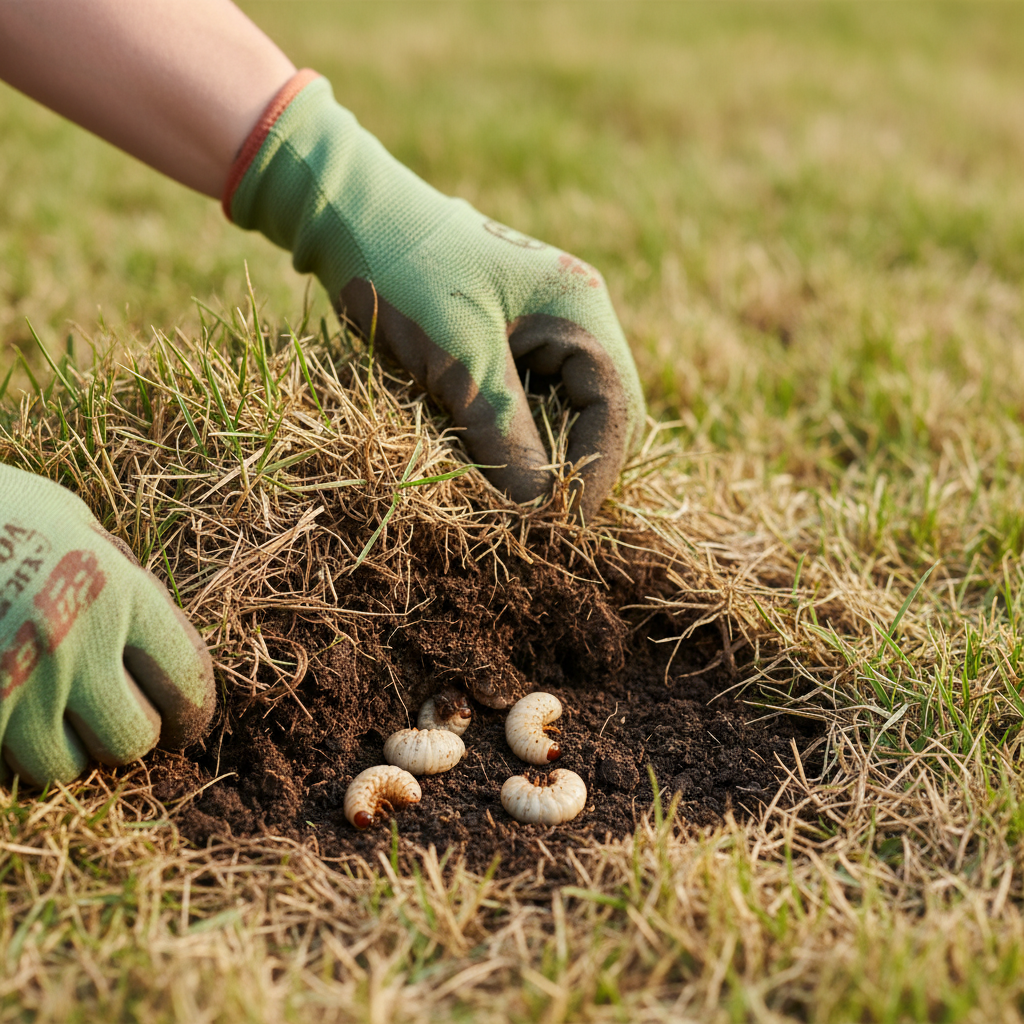
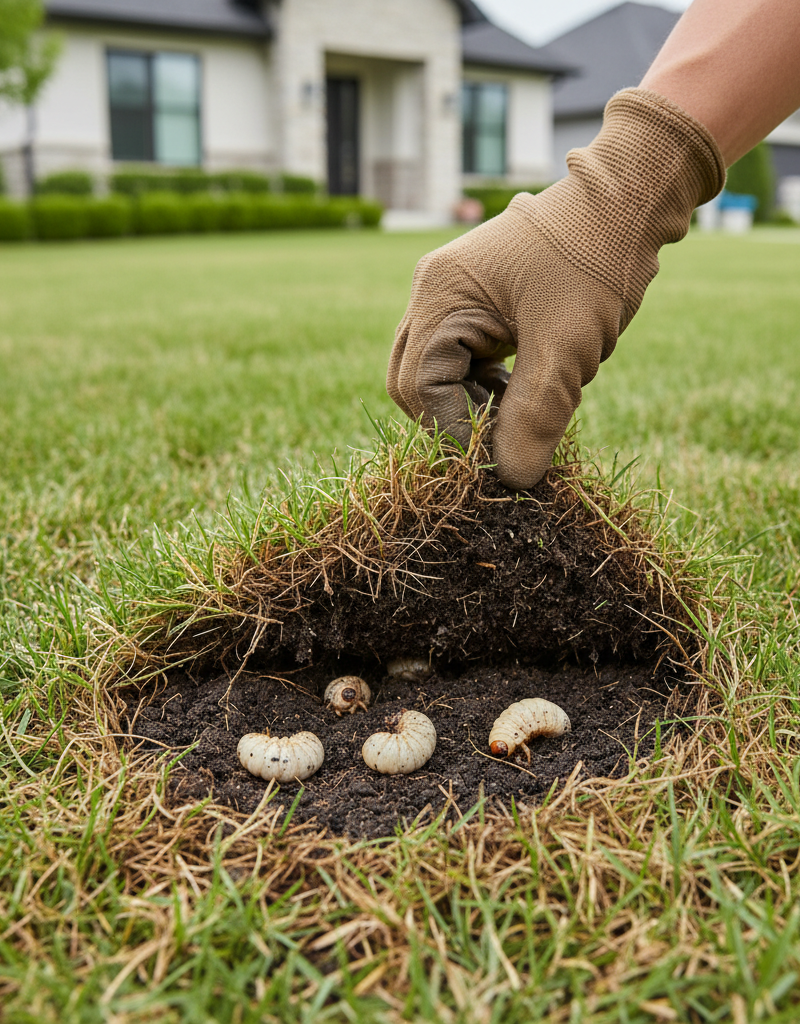
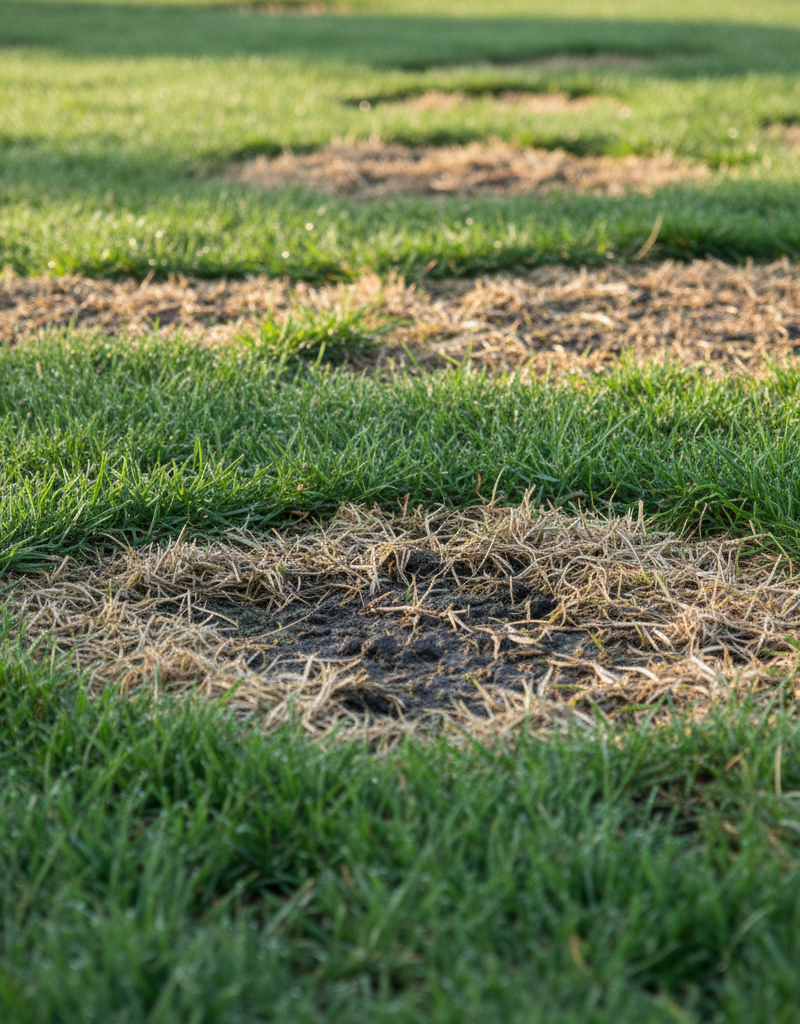
Grubs are the larval stage of various beetles, including Japanese beetles, chafers, and May/June beetles, that feed on the roots of your lawn. This root damage leads to irregular brown patches, particularly in late summer and early fall, and a spongy feeling underfoot. If you can easily pull up sections of turf like a carpet, or spot C-shaped white larvae in the soil, grubs are likely your culprit. Successful treatment hinges on understanding their lifecycle and applying targeted insecticides—either preventative products in spring or early summer to stop eggs from hatching, or curative products in late summer or early fall when grubs are actively feeding and most vulnerable.
The Problem
Imagine walking across your lush green lawn, only to notice an increasing number of dry, brown patches that don't respond to watering. You step on it, and it feels unusually soft, almost like walking on loose sod. If birds are frequently pecking at your grass, or you see raccoons and skunks digging small holes, these are all tell-tale signs of a hidden menace: grubs. These small, white, C-shaped larvae live just beneath the soil surface, relentlessly munching on grass roots. As they feed, they sever the connection between the grass blades and their water source, leading to widespread wilting and eventual death of sections of your lawn. A severe grub infestation can quickly turn a vibrant lawn into a ruined landscape, making it crucial to diagnose and treat the problem effectively and at the right time.
How It Works
Understanding the grub lifecycle is paramount to effective control. Most common lawn-damaging grubs, such as Japanese beetles, European chafers, and May/June beetles, share a similar one-year lifecycle in temperate climates. Adult beetles emerge from the soil in early to mid-summer (June-July), mate, and then lay their eggs just beneath the surface of well-irrigated lawns. These eggs hatch within a few weeks, typically in late July through August, giving rise to the tiny, newly hatched grubs. These young grubs immediately begin feeding on the tender grass roots closest to the surface. As they grow through successive instars (molting stages), their appetite intensifies, and they cause the most significant damage from late summer through early fall (August-October). When soil temperatures begin to drop in late fall, the grubs burrow deeper into the soil (6-12 inches) to overwinter, becoming dormant. In spring, as soil temperatures rise, they migrate back up to the root zone for one last feeding قبل pupating, typically in late May or early June. The pupae then transform into adult beetles, completing the cycle and emerging to start the process anew. This means there are specific windows for treatment: preventative treatments target the eggs and newly hatched grubs in late spring/early summer, while curative treatments are most effective in late summer/early fall when grubs are actively feeding and vulnerable.
Step-by-Step Fix
1. Confirm the Culprit — Don't just assume it's grubs. Irregular brown patches can be caused by drought, disease, or other pests. To confirm, cut a 1-foot square flap of sod in a damaged area (and an adjacent healthy area for comparison) with a shovel, about 2-4 inches deep. Lift it carefully and inspect the soil directly beneath in the top few inches. For a damaging infestation, you'll typically find 6-10 or more grubs per square foot.
*   **Tool:** Sharp spade or shovel
*   **Tip:** If you only find one or two grubs, your lawn can likely tolerate them. Look for other causes of the damage.
2. Identify the Grub Species (Optional but Helpful) — While most treatments are broad-spectrum, knowing the species can refine your timing. Japanese beetle grubs are typically smaller and have a distinct V-shaped pattern of hairs on their rear end. May/June beetle grubs are larger. If unsure, a local extension office can help.
* **Observation:** Note size and hair patterns with a magnifying glass if available.
3. Choose Your Weapon: Preventative vs. Curative — Your timing dictates the product type. Preventative insecticides (e.g., those containing chlorantraniliprole or imidacloprid) are applied in spring or early summer (May-July) to prevent grub eggs from hatching or to kill tiny, newly hatched grubs. Curative insecticides (e.g., those containing trichlorfon or carbaryl) are applied in late summer or early fall (August-October) when grubs are actively feeding and larger.
*   **Safety Note:** Always read and follow all pesticide label instructions precisely. Wear appropriate personal protective equipment (PPE).
*   **If this doesn't work:** Ensure you're applying at the correct time for the product type. Mis-timing is the most common reason for failure.
4. Prepare Your Lawn for Treatment — For granular products, mow your lawn to its regular height. For all treatments, lightly water the lawn for a day or two before application to ensure the soil is moist. This helps the product penetrate and become available to the grubs.
* **Note:** Avoid heavy watering directly before, as it can dilute or wash away some products.
5. Apply the Insecticide Evenly — Use a broadcast spreader for granular products to ensure uniform coverage. Calibrate your spreader according to the product label's instructions. If using a liquid concentrate, mix it precisely as directed and apply with a hose-end or pump sprayer.
*   **Tool:** Broadcast spreader or sprayer
*   **Tip:** Overlapping passes slightly helps prevent missed spots. Walk at a consistent pace.
6. Water in the Product (Crucial Step) — Immediately after application (or within 24 hours, depending on the product label), water your lawn thoroughly. Aim for about 0.5 to 1 inch of water. This moves the insecticide down into the soil where the grubs are feeding. Without watering, the product can degrade on the surface or be ineffective.
*   **Tool:** Garden hose with sprinkler or irrigation system
*   **Observation:** The soil should be moist, not waterlogged, to the depth where grubs are active (1-3 inches).
7. Observe and Reassess — It can take several weeks for the grubs to die and for the lawn to show signs of recovery. Continue to monitor for new damage or persistent grub activity. You may need to reseed damaged areas once the grubs are under control.
* **Tip:** Be patient; results aren't always instantaneous, especially with preventative treatments.
8. Lawn Repair — Once grubs are controlled, rake out dead grass and overseed heavily with a high-quality grass seed blend suitable for your region. Keep the newly seeded areas consistently moist until germination and establishment.
* **Material:** Grass seed, topsoil (optional for thinning areas)
Common Causes
- Adult Beetle Activity: High populations of adult beetles (Japanese beetles, chafers, May/June beetles) in your neighborhood mean more eggs being laid in lawns. If you see many adult beetles on your plants in summer, expect grub activity later.
- Moist Soil Conditions: Adult beetles prefer to lay eggs in moist, healthy turf. Over-watering in summer can inadvertently create ideal egg-laying conditions, attracting beetles to your lawn over drier ones.
- Lack of Preventative Measures: Not applying preventative grub control products in late spring/early summer allows grub populations to establish and grow unchecked.
- Ineffective Timing of Curative Treatments: Applying curative treatments too early (before grubs are actively feeding) or too late (after they've burrowed deep for winter) significantly reduces their efficacy.
- Nearby Infested Areas: If your neighbors have significant grub problems, their adult beetles can easily fly over and lay eggs in your lawn.
- Thin or Stressed Turf: While grubs can affect any lawn, thin, poorly maintained, or stressed turf may show more pronounced damage and be less resilient to grub feeding.
Common Mistakes
- Assuming All Brown Patches Are Grubs: Many homeowners jump to grub control at the sight of brown patches. Drought stress, fungal diseases (like brown patch), or other insect pests can cause similar symptoms. Always confirm with a sod inspection first.
- Mis-timing Applications: The most common mistake. Applying preventative products in fall or curative products in spring will likely be ineffective because the grubs are either not present or not actively feeding in the upper soil profile.
- Not Watering in Insecticides: Granular and many liquid grub control products require watering to move the active ingredient into the root zone where grubs reside. Skipping this step or not watering enough can render the treatment useless.
- Over-applying or Under-applying Product: Not calibrating your spreader or sprayer correctly can lead to too much product (waste, potential harm) or too little (ineffective control). Always read and follow label rates precisely.
- Ignoring Grub Species/Life Cycle: While a general approach works for most, understanding the specific grub's lifecycle in your region can help refine timing for maximum impact.
- **Relying Solely on Organic or
Related Articles
Keep troubleshooting with these hand-picked guides from FixlyGuide:
- The 3 Hidden Reasons Your Lawn Has Grubs (And the Pro Killer They Miss) — Discover the often-overlooked environmental factors attracting grubs to your lawn and the most effective, veterinarian-approved treatment s…
- The #1 Mistake Killing Your Lawn (and the Simple Grub Fix) — Grub worms can covertly destroy a beautiful lawn, but specific biological and chemical treatments applied at the right time can eliminate t…
- The #1 Mistake Homeowners Make When Battling Lawn Grubs (And a Simple Fix) — Discover the common mistake homeowners make when treating grubs and learn a simple, effective solution for a healthier lawn.
- The Secret Reason Your Lush Lawn Mysteriously Dies (It's Not Drought) — Grubs can secretly destroy a healthy lawn from underground, causing dead patches that look like drought damage. Learn to diagnose and treat…
- The #1 Mistake Killing Your Lawn's Fight Against Dandelions (It's Not What You Think) — Stop dandelions from taking over your lawn by understanding the crucial timing and methods that most homeowners overlook, leading to endles…
- That White Crust On Your Faucet? It's A Big Problem — That chalky, white buildup on your fixtures isn't just ugly—it's limescale from hard water, and it's actively clogging, corroding, and ruin…
Should you do this yourself?
Answer five quick questions before you start. Safety outranks savings every time.
Your experience with work like this
How high do you have to work?
Does the job involve any of these?
Will it need a permit?
Specialty tools
Free and instant. Educational guidance only — not a quote, inspection, or professional diagnosis.
What should this project cost?
Enter your project details for a realistic cost range before you call anyone.
Cost depends heavily on which system turns out to be the source.
- Regional adjustment
- National average
- Labor share (typical)
- ~$1,620
- Quotes to collect
- 3 written estimates
Educational estimate based on national averages — not a binding quote. Always confirm with written local estimates.
Before you start
Check the difficulty, permits, and safety risk — then decide whether to call a pro.
- Estimate this projectGet a cost range for your scope and ZIP before you call anyone.Open
- Get local estimatesSend one request and compare written estimates from vetted pros.Open
Free, no signup required. Estimates are educational guidance, not a quote or an inspection.
Frequently asked questions
How do I know if I have grubs?+
Look for irregular brown patches of grass that peel back easily like carpet, revealing C-shaped white larvae in the soil underneath. Increased bird or animal digging can also be a sign.
When is the best time to treat grubs?+
For preventative treatment, apply in May-July. For curative treatment, apply in August-October when grubs are actively feeding and most vulnerable.
Do I need to water after applying grub killer?+
Yes, watering thoroughly after applying granular or liquid grub control is crucial. It moves the insecticide from the surface down into the soil where the grubs are feeding.
Can my lawn recover from grub damage?+
Yes, once grubs are controlled, you can repair damaged areas by raking out dead grass and overseeding. Consistent watering will be key for new seed germination and establishment.
What's the difference between preventative and curative grub control?+
Preventative products (applied spring/early summer) stop eggs from hatching or kill newly hatched grubs. Curative products (applied late summer/early fall) kill larger, actively feeding grubs causing visible damage.
Discussion
Loading comments…