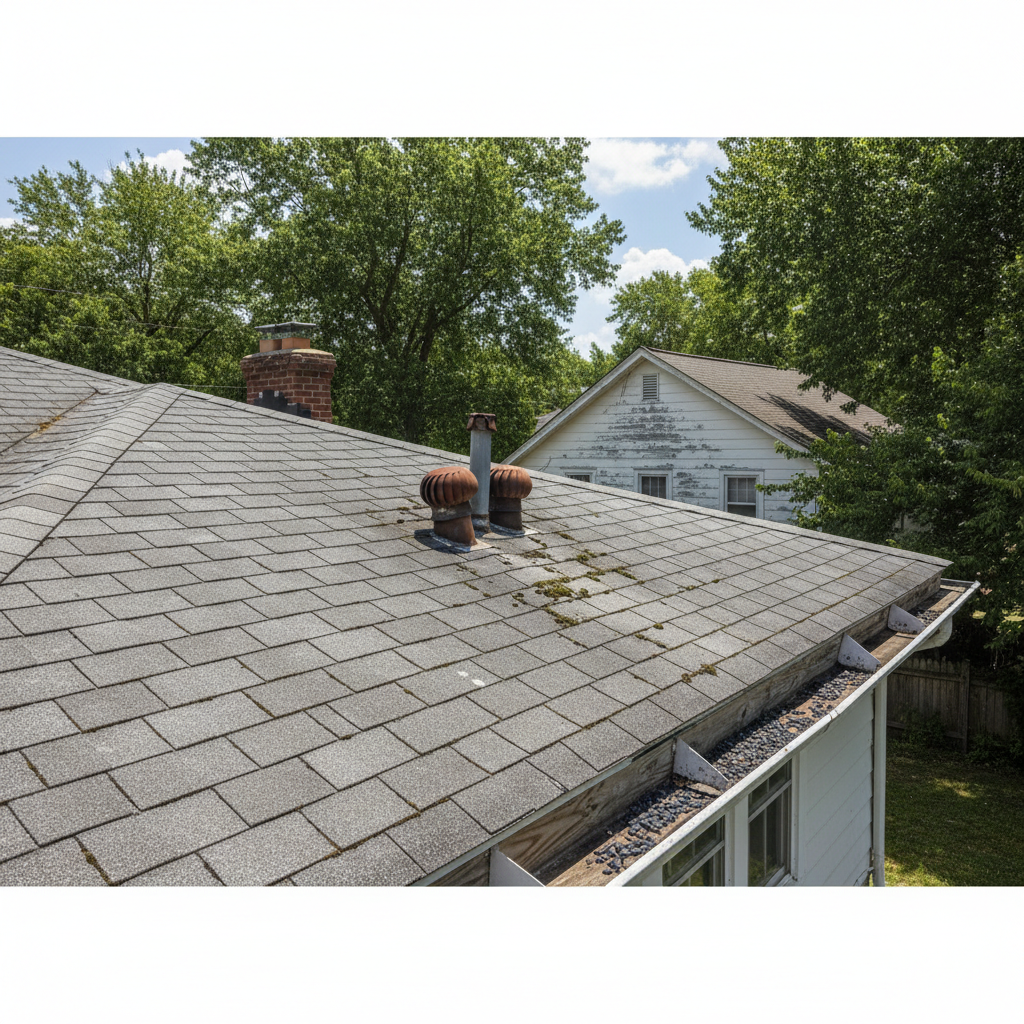
- Flashing — chimneys, walls, skylights. The single most common leak source.
- Penetrations — plumbing vent boots crack and split long before shingles wear out.
- Valleys — where two slopes meet and water concentrates.
- Edges and eaves — drip edge, ice damming in cold climates, wind uplift at the perimeter.
- The field — granule loss, curling, cracking, and storm impact across broad areas. This is the one that points to full replacement.
Roofing · Flashing failure
| Project category | Roofing |
|---|---|
| Problem type | Flashing failure |
| Trade required | Roofing |
| Urgency | Soon — within weeks |
| Safety risk | Moderate safety risk |
| DIY suitability | Pro recommended |
| Cost category | Low cost |
| Typical timeline | Usually a half-day repair |
| Contractor type | Licensed roofing contractor |
Repair option
Replace the boot or step flashing and re-weave shingles around it.
Replacement option
Address during a full replacement when several details have failed at once.
Common causes
- Cracked pipe boots — the single most common roof leak source
- Rusted step flashing at walls and chimneys
- Sealant used as a substitute for proper metal
Relevant tools:project cost estimatordiy or hire a pro
Published September 4, 2026Last updated September 4, 2026
Tools & materials you'll need
Affiliate linksNo materials required.
As an Amazon Associate FixlyGuide earns from qualifying purchases — at no extra cost to you. Prices and availability are accurate as of publication and subject to change.
Quick Answer
Your roof is a water-shedding system, not a waterproof lid. Water gets in where the system is interrupted: chimneys, vents, skylights, valleys, wall transitions, and the edges. That's why "your roof is old" is a sales line, not a diagnosis — and why a photo of the actual failure point matters more than a number on a quote.
Where Roofs Actually Fail
- Flashing — chimneys, walls, skylights. The single most common leak source.
- Penetrations — plumbing vent boots crack and split long before shingles wear out.
- Valleys — where two slopes meet and water concentrates.
- Edges and eaves — drip edge, ice damming in cold climates, wind uplift at the perimeter.
- The field — granule loss, curling, cracking, and storm impact across broad areas. This is the one that points to full replacement.
Inspecting Safely From the Ground
You do not need to climb up. Use binoculars and a phone camera:
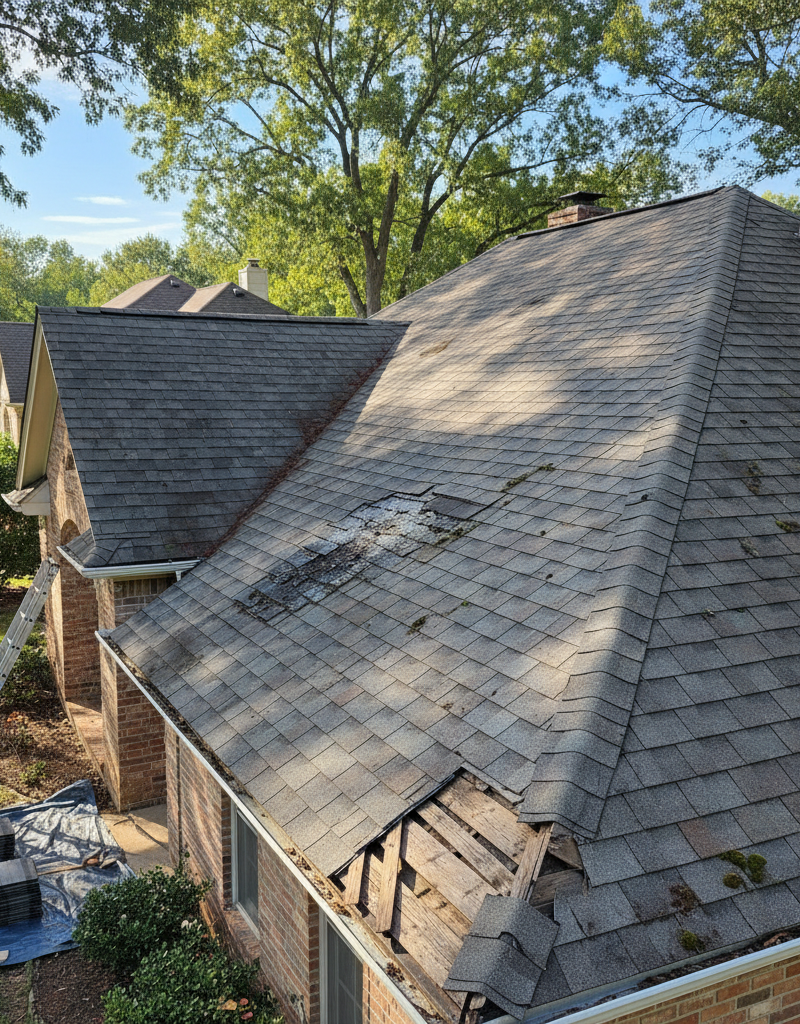
- Missing, lifted, curled, or cracked shingles.
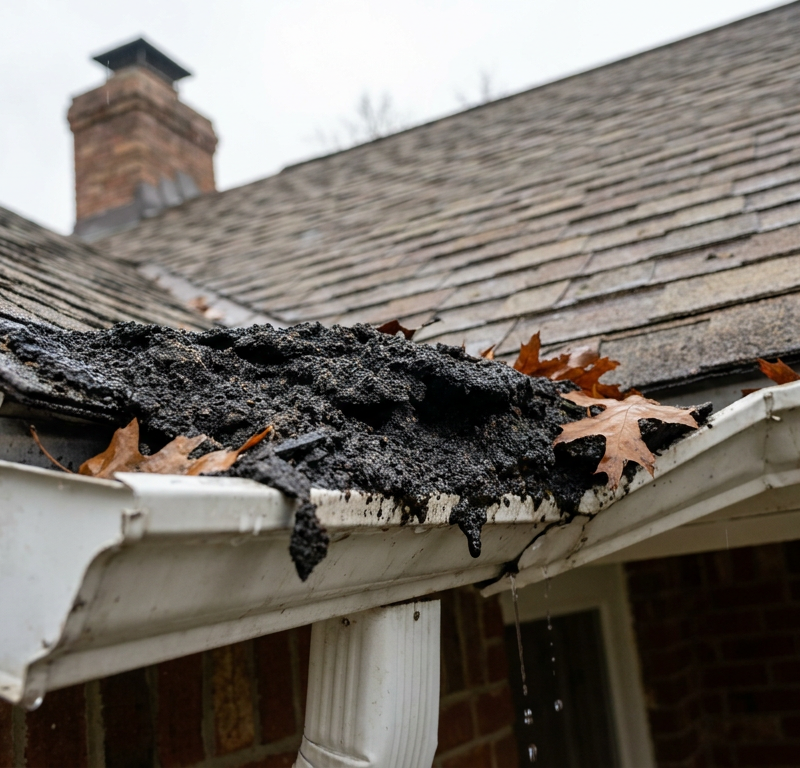
- Dark patches or heavy granule loss; granules collecting in gutters.
- Rusted or lifted flashing, cracked vent boots.
- Sagging rooflines.
- Debris and standing water in gutters, downspouts discharging against the foundation.
Then check the attic on a dry day and again during rain: stains on decking, damp insulation, rusty nail tips, daylight at penetrations, and any musty smell.
Storm Damage: What to Do in the First 48 Hours
- Photograph everything, dated, from the ground.
- Note the storm date and check for hail dents on soft metal — gutters, vents, AC fins — which corroborates hail even when shingles look fine.
- Contact your insurer before signing anything.
- Be skeptical of unsolicited door knockers who want a contract on the spot.
- Make reasonable temporary protection to prevent further damage, and keep receipts.
Repair or Replace
Ask the roofer to show you photographs and answer:
- Where exactly is the failure?
- Is it localized to one detail, or widespread across the field?
- Can it be repaired, and what would that cost?
- What is the condition of the decking and underlayment?
- How much serviceable life is left on the surrounding roof?
One repairable flashing defect on an otherwise sound roof is a very different project from broad deterioration across an aged roof.
Gutters Matter More Than People Think
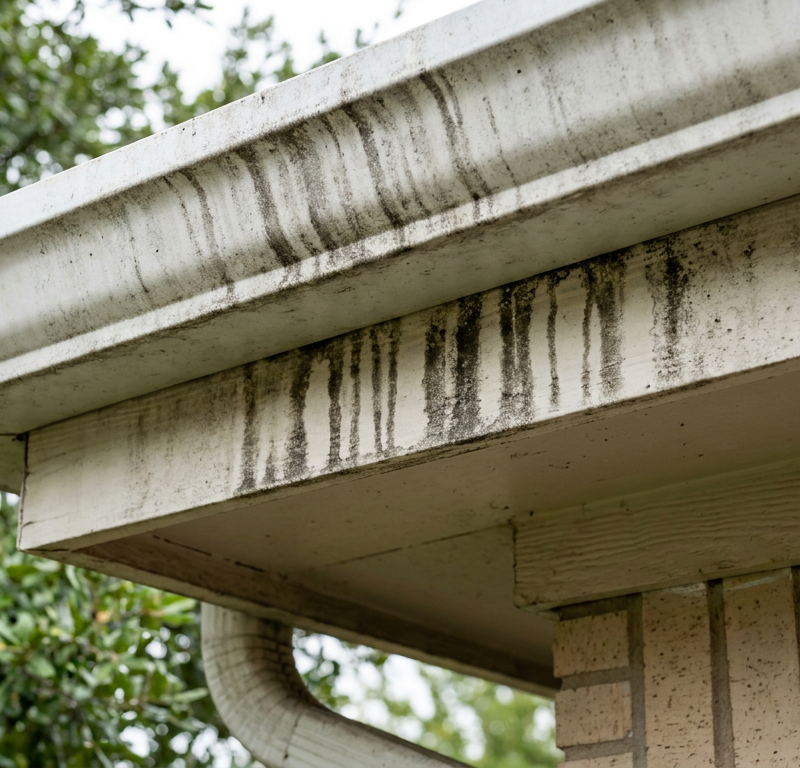
Most foundation and basement moisture problems start with water dumped at the base of the wall. Clean gutters twice a year, confirm slope toward downspouts, and extend discharge at least four to six feet from the foundation. It's the cheapest water-damage prevention in the house.
When to Stop and Call a Pro
Steep, wet, or multi-story roofs are not a DIY inspection. Active leaks, storm damage claims, sagging structure, and anything involving decking replacement need a licensed roofer.
Find a Pro Through Fixly Guide
If the next step is a professional, don't start with a phone book. Start with a diagnosis and a short list.
- Find a local pro — pick your trade and ZIP code to see vetted contractors serving your area.
- DIY or hire a pro? — a two-minute check that tells you which jobs are safe to handle yourself.
- Repair or replace? 12 expensive home decisions — how to judge a big-ticket quote.
- Home problem guides — start with the symptom, get likely causes and safety guidance.
- 15 house problems you shouldn't ignore — warning signs homeowners get used to.
Fixly Guide provides educational guidance only. Nothing here is a professional diagnosis or an inspection.
Should you do this yourself?
Answer five quick questions before you start. Safety outranks savings every time.
Your experience with work like this
How high do you have to work?
Does the job involve any of these?
Will it need a permit?
Specialty tools
Free and instant. Educational guidance only — not a quote, inspection, or professional diagnosis.
Questions to ask before you sign
Ask every contractor the same questions and the cheapest bid stops looking cheapest. Check them off as you go — your progress is saved on this device.
Free, no signup. Bring this to every walkthrough so you compare bids on the same terms.
What should this project cost?
Enter your project details for a realistic cost range before you call anyone.
Spot repairs commonly run $400–$1,800; full replacement typically $9,000–$18,000 for an average home.
- Regional adjustment
- National average
- Labor share (typical)
- ~$2,948
- Quotes to collect
- 3 written estimates
Educational estimate based on national averages — not a binding quote. Always confirm with written local estimates.
Fixly Project Decision Box
- DIY difficulty
- Professional Recommended
- Estimated time
- Inspection 1–2 hours · repairs 1–3 days
- Cost level
- High
Main tools / materials
- Binoculars for a ground-level look
- Flashlight for attic checks
- Moisture meter
- Roofing cement (temporary patch only)
When to stop and call a pro
- Active leak near lights, fans, or any wiring
- Sagging, bulging, or water-filled ceiling
- Steep, wet, or two-story roof — do not climb it
- Storm or hail damage you plan to claim on insurance
Need professional help?
Free roof assessment first — no phone calls until you ask for them.
Get Local Roofing HelpGet help with your roof now
Stay off the roof. These free tools help you protect the house and reach the right professional fast.
- Emergency repair checklistThe first steps that limit damage before a pro arrives.Open
- Repair or replace your roof?Answer 10 questions about age, leaks, and damage to get a clear next step.Open
- Get local estimatesSend one request and compare written estimates from vetted pros.Open
Free, no signup required. Estimates are educational guidance, not a quote or an inspection.
Frequently asked questions
How do I know if my roof is leaking?+
Look for ceiling or wall stains, damp attic insulation, rusty nail tips or daylight at penetrations, and a musty smell. Inspect the attic during rain — the entry point is often uphill from the stain.
Does an old roof automatically need replacing?+
No. Age raises the likelihood, but the decision depends on whether the failure is localized to a detail such as flashing or widespread across the roof field, plus the condition of the decking.
How often should gutters be cleaned?+
At least twice a year, and more often under heavy tree cover. Confirm downspouts discharge several feet away from the foundation.
Should I sign with a roofer who knocks on my door after a storm?+
Not on the spot. Document the damage, contact your insurer, and get quotes from established local contractors you can verify.
Discussion
Loading comments…