- Gather Your Arsenal — Before you climb, get everything together. You don’t want to be hopping up and down all afternoon.
- Tools: Sturdy ladder, two buckets, a soft-bristle brush (a car-washing brush on a pole is perfect), clean rags.
- Materials: A dedicated gutter cleaner (look for “tiger stripe remover” or “black streak remover”), water.
Roofing · Aging roof
| Project category | Roofing |
|---|---|
| Problem type | Aging roof |
| Trade required | Roofing |
| Urgency | Planned project |
| Safety risk | Low safety risk |
| DIY suitability | Pro recommended |
| Cost category | High cost |
| Typical timeline | Plan 4–12 weeks ahead for scheduling and material lead time |
| Contractor type | Licensed roofing contractor |
Repair option
Maintenance repairs to buy a season or two while you budget.
Replacement option
Planned replacement, which is almost always cheaper than a leak-driven emergency.
Common causes
- Normal weathering past the shingle service life
- Poor attic ventilation cooking the shingles from below
- Repeated repairs on the same slopes
Relevant tools:repair or replace roofproject cost estimatorhome improvement material prices
Published October 2, 2026Last updated October 2, 2026
Tools & materials you'll need
Affiliate links- AmazonGutter CleanerSpecifically for 'tiger stripes' or 'black streaks'
As an Amazon Associate FixlyGuide earns from qualifying purchases — at no extra cost to you. Prices and availability are accurate as of publication and subject to change.
The Problem
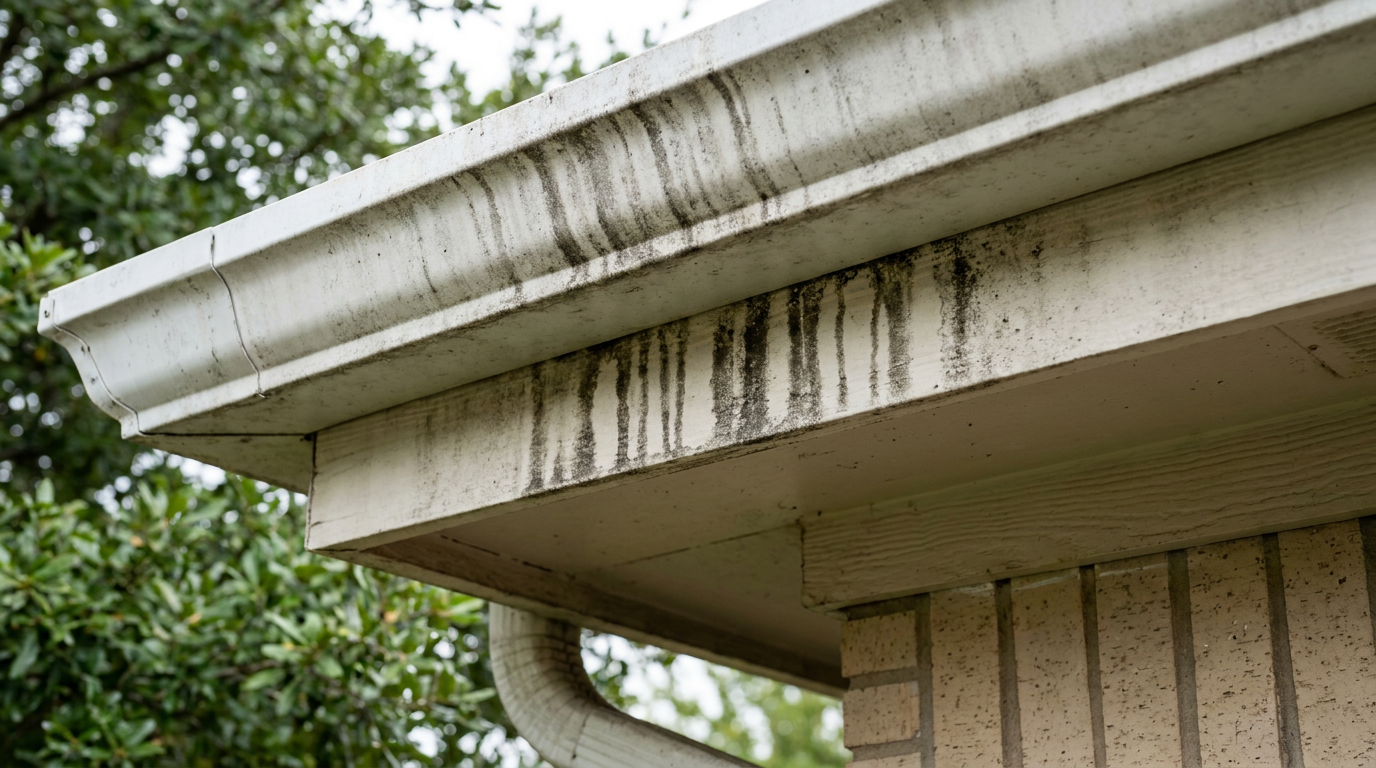
You’ve seen them before. Long, ugly black or dark gray vertical streaks running down the face of your otherwise clean white gutters. From the street, it looks like your house is crying dirty tears. That’s “tiger striping,” and it’s one of the most stubborn, annoying cosmetic headaches a homeowner gets. It makes the whole place look tired and neglected, even if your gutters are working fine and there isn’t a clog in sight.
The frustrating part? Normal pressure washing or a quick blast with a garden hose barely touches them. These aren’t just surface dirt; they’re bonded to the gutter’s finish in a way regular cleaners can’t break loose. Try the wrong scrub pad or chemical, and you can scratch the paint — now you’ve got a bigger mess than when you started.
How It Works
So what’s actually going on here? Tiger stripes are the result of an electrostatic bond. It’s a mix of chemistry and physics happening right on your roofline.
Your gutters are usually aluminum with a baked-on enamel or polyester finish. As rainwater runs over the asphalt shingles on your roof, it picks up tiny particles — dust, shingle tar, pollen, pollution from the air, diesel soot, all that junk. That grimy cocktail heads for the gutter edge. Instead of dropping straight off, surface tension makes the water cling to the curved front lip before it finally lets go.
As that dirty water keeps clinging and dripping in the same spots, the particles start building up. The painted gutter surface carries a slight electrical charge, and the tar, dirt, and soot particles carry the opposite charge. That difference creates a strong electrostatic bond — like a tiny magnet — and it locks the grime onto the surface. Year after year, layer on layer, and boom: those hard-to-remove stripes show up. It’s not a stain in the paint. It’s a crust sitting on top of it.
I pulled a water heater in Frisco last month and the homeowner had the same thing running down the front gutters — looked like the house had been parked under a diesel rig for a decade.
Step-by-Step Fix
Ready to get those gutters looking decent again? Here’s the game plan. Don’t rush it, and don’t grab the steel wool — you’ll just make a bigger problem for yourself.
-
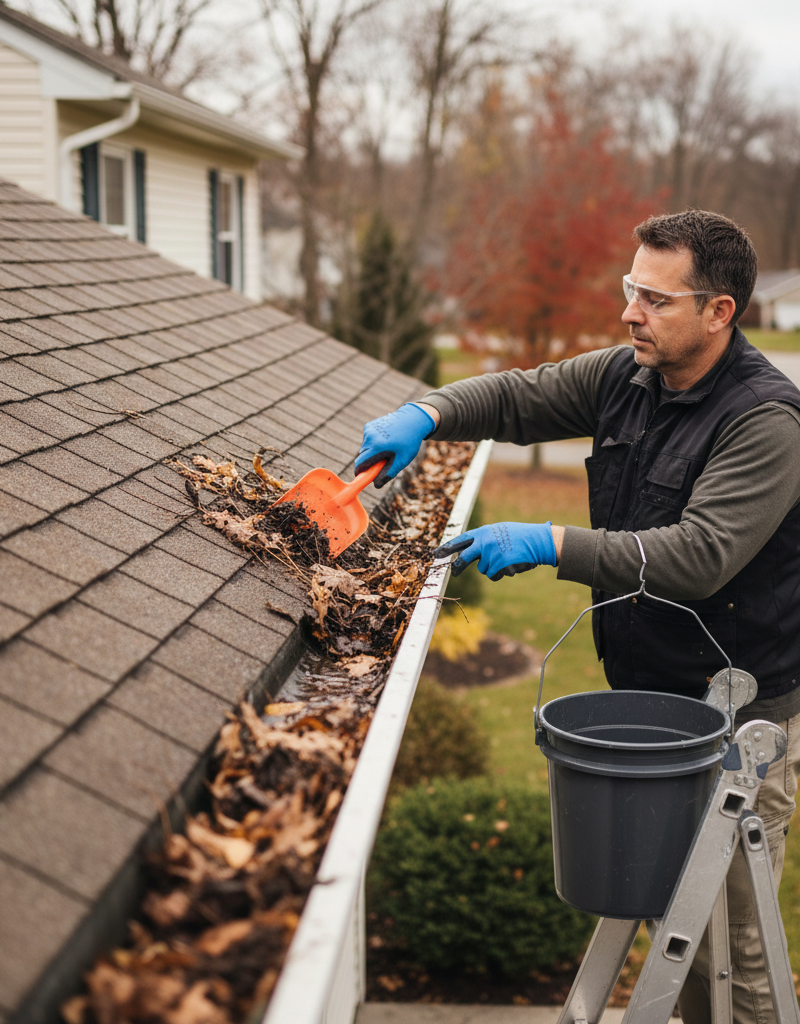
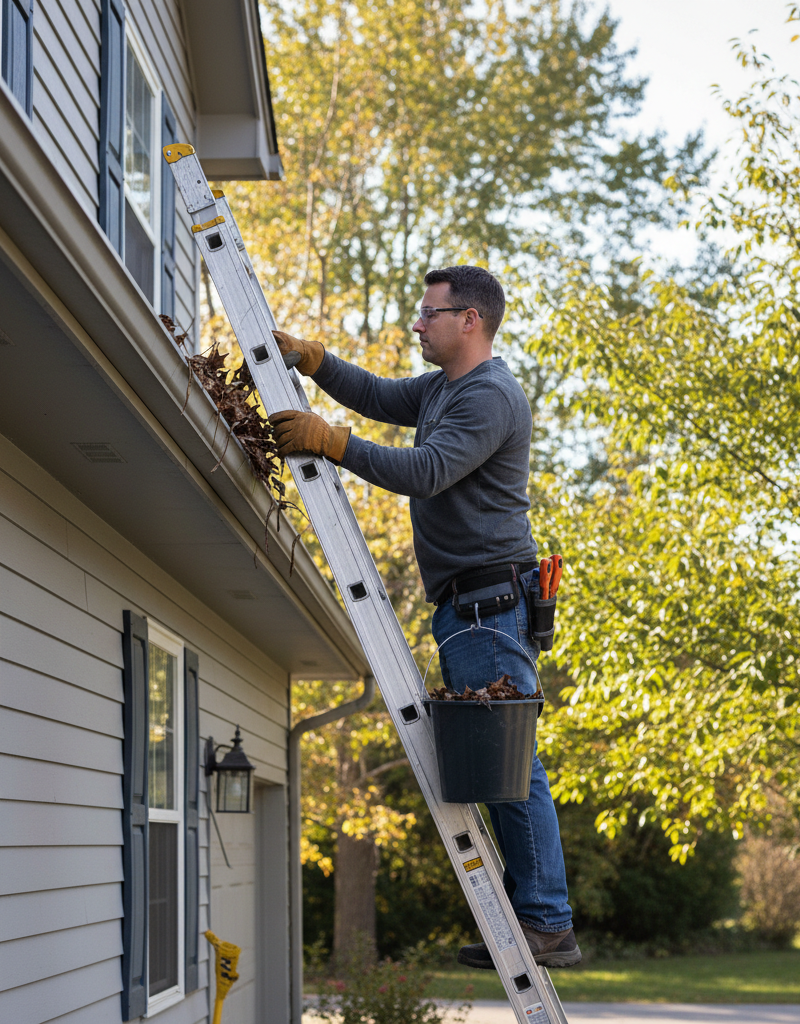
Safety First — You’re working on a ladder, maybe with water and cleaners involved. Set that ladder on stable, level ground. Use a spotter if you can. Wear safety glasses so you don’t catch a splash in the eye, and gloves so the chemical doesn’t chew up your skin. And no, don’t work anywhere near power lines.
-
Gather Your Arsenal — Before you climb, get everything together. You don’t want to be hopping up and down all afternoon.
- Tools: Sturdy ladder, two buckets, a soft-bristle brush (a car-washing brush on a pole is perfect), clean rags.
- Materials: A dedicated gutter cleaner (look for “tiger stripe remover” or “black streak remover”), water.
-
Do a Test Spot — Don’t go after the whole house right out of the gate. Pick a small, out-of-the-way 12-inch section of gutter. Follow the cleaner’s directions and test it there first. That way you know it won’t discolor or damage the finish.
-
Mix Your Solution — Fill one bucket with clean water for rinsing. In the second bucket, mix your gutter cleaner according to the manufacturer’s directions. Some are ready-to-use sprays, while others are concentrates you need to dilute with water. Don’t get cute and add extra; stronger isn’t always better, and it can wreck the paint.
-
Apply the Cleaner — Work in manageable 3- to 5-foot sections and apply the cleaning solution to the gutter face. A rag, sponge, or brush all work. Use enough to soak the stripes, but not so much that it’s running all over the plants and surfaces below.
-
Let It Dwell — This is the step folks skip, and then they wonder why nothing happens. Don’t start scrubbing right away. Let the cleaner sit for the time listed on the bottle, usually 2 to 5 minutes. That gives the chemicals time to break down the electrostatic bond holding the grime to the gutter.
-
Scrub Gently — Now use your soft-bristle brush to lightly work the surface. You shouldn’t need much muscle here. The cleaner already did the hard part. You’re just loosening the softened grime, not grinding the paint off. Use steady, even strokes. If a spot’s really stubborn, hit it a second time.
-
Rinse Thoroughly — Using your bucket of clean water and a clean rag, rinse the section you just cleaned. You want every bit of cleaner and loosened grime off there. If you’re using a brush on a pole, you can often hook up a hose for a steady, low-pressure rinse. Make sure the runoff isn’t pooling against your foundation — that’s a whole different headache.
-
Move to the Next Section — Once one section is clean and rinsed, move the ladder and do it again: apply, dwell, scrub, rinse. Working in sections keeps the cleaner from drying on the surface, which can leave behind a residue almost as ugly as the stripes.
-
Final Rinse and Inspection — After you’ve cleaned all the gutters, give the gutters and the siding below them one last gentle rinse to wash away any leftover cleaner. Stand back and look it over. The difference can be pretty dramatic.
Common Causes
- Asphalt Shingle Runoff: This is the big one. As shingles age, they shed more of the oily, tar-like granules that feed tiger stripes.
- Airborne Pollutants: Live near a busy road or industrial area? Diesel soot and other junk in the air make the streaking worse.
- Pollen and Sap: In spring and fall, pollen and tree sap can leave a sticky film on your gutters, and that acts like flypaper for dust.
- Lack of a Drip Edge: If your roof doesn’t have a proper metal drip edge, water can run down the fascia board and behind the gutter, where dirt loves to collect on the front face.
- Dew and Condensation: Even on dry days, morning dew can dampen the gutter face and let airborne dust stick and build up over time.
Common Mistakes
- Using a High-Pressure Power Washer: Blasting gutters with a pressure washer sure sounds fast, but it’s a great way to peel the paint right off. You can dent aluminum too, and drive water up under the shingles. Use a garden hose with a gentle nozzle at most.
- Scrubbing with Abrasives: Steel wool, scouring pads, or even hard-bristle brushes will scratch and dull the finish for good. Sure, the stripes might disappear — and you’ll be left with a scratched-up mess that gets dirty faster.
- Using Bleach or Harsh Chemicals: Chlorine bleach works on plenty of stuff, but it can discolor the painted finish on your gutters or cause it to fail early. Stick with pH-neutral or specially formulated cleaners.
- Letting the Cleaner Dry: If tiger stripe remover dries on the gutter, you can end up with a hazy film that needs scrubbing off anyway. Work in small sections and rinse like you mean it.
- Forgetting a Test Spot: You never know how a cleaner will react with your specific gutter finish. Skip the 2-minute test and you could be staring at hours of regret if it damages the paint along the whole run.
Cost & Time Breakdown
Cleaning tiger stripes is a pretty budget-friendly DIY project. The main expense is the specialty cleaner, since you probably already own a ladder and some brushes.
| Task | DIY Cost | Pro Cost (Gutter Cleaning Service) | Time (for 150 linear feet) |
|---|---|---|---|
| Purchase Cleaner & Supplies | $20–$40 | (Included in service) | 30 minutes (shopping) |
| Ladder Setup & Prep | $0 | (Included in service) | 15–20 minutes |
| Cleaning & Rinsing | $0 | $150–$300 | 2–3 hours |
| Final Cleanup | $0 | (Included in service) | 15 minutes |
Tips & Prevention
- Clean Regularly: A light cleaning every year beats a heavy scrub every five years, hands down. A quick wipe-down with mild detergent can keep that electrostatic bond from getting started.
- Install Gutter Guards: They’re not magic, but good gutter guards can cut down on shingle grit and organic debris that ends up in the gutters, which helps reduce the striping.
- Apply a Coat of Wax: After a deep clean, a coat of car wax on the gutter faces can make them slicker and keep dirt from sticking so easily. You’ll need to redo it every year or two.
- Check Your Drip Edge: Make sure your roof has a proper drip edge that sends water into the center of the gutter, not down the front face. That’s a bigger fix, but it solves a root problem.
- Trim Overhanging Branches: Less leaf litter and pollen on the roof means less gunk in the water running over your gutters.
When to Call a Professional
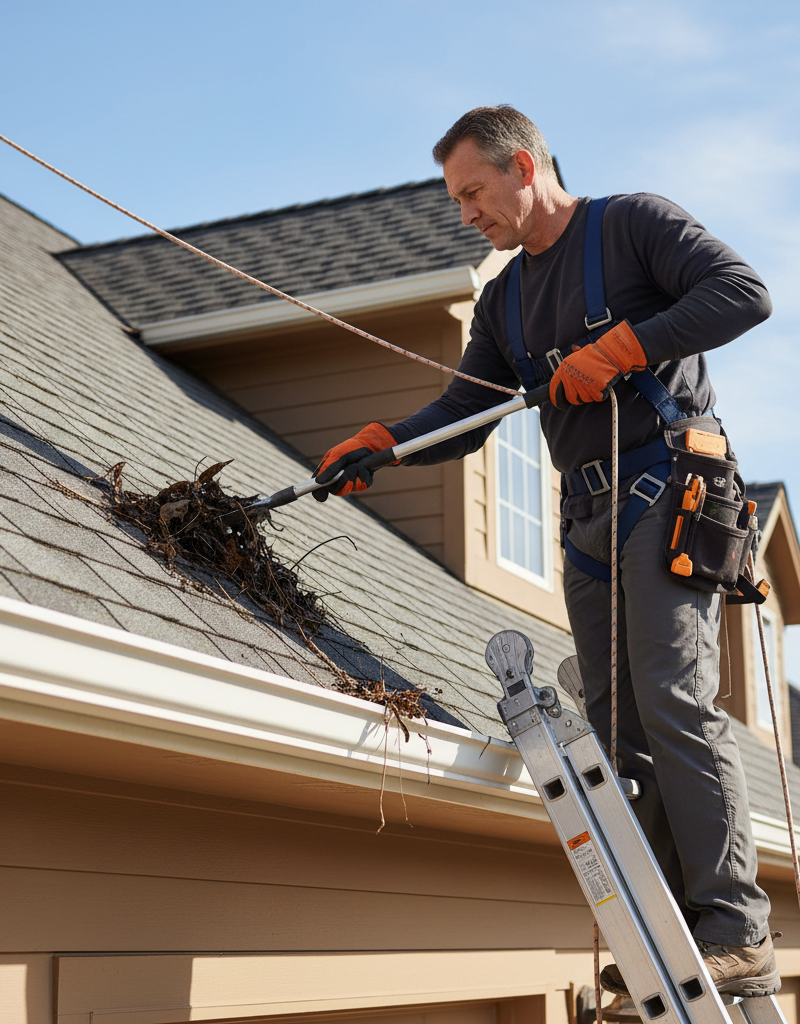
This is a pretty manageable DIY job for most homeowners. That said, call a professional gutter cleaning service if you’re not comfortable working on a tall ladder for any length of time. Safety comes first. If you’ve got a two- or three-story house, the fall risk is nothing to shrug at, and it’s better left to pros with the right safety gear, harnesses, and insurance. And if the stripes won’t come off with a dedicated cleaner and gentle scrubbing, the paint finish may be shot. At that point, a pro can tell you whether the gutters need to be repainted or replaced altogether.
Related Articles
Keep troubleshooting with these hand-picked guides from FixlyGuide:
- Those Ugly Black Streaks on Your Roof Aren't Dirt — Those unsightly black streaks are actually a type of algae called Gloeocapsa magma feeding on your shingles, but they can be cleaned and pr…
- The #1 Gutter Mistake That Causes Overflow (And How to Fix It in 20 Minutes) — Overflowing gutters during heavy rain are usually caused by a readily fixable clog, often due to a common cleaning mistake.
- Siding Stains Near Roof: What's Causing Black Streaks and How to Fix It — Black or brown stains on your siding just below the roofline are usually caused by algae, roof debris, or failing flashing, but can sometim…
- The Ugly Truth About Chalky Siding (And Your Simple 3-Hour Fix) — Don't let faded, chalky siding ruin your home's curb appeal. This guide explains why it happens and gives you a straightforward, effective…
- The Weird White Powder on Your Siding: And How to Stop It Coming Back — That strange white powder on your siding isn't just ugly; it's a sign of moisture issues that could lead to bigger problems. Here's how to…
- The Sagging Gutter Secret: Why Your Rain Runs Wild (And How to Seal It Right) — Sagging gutters often point to failing sealant in the joints, leading to leaks and water damage. This guide shows you how to effectively cl…
Should you do this yourself?
Answer five quick questions before you start. Safety outranks savings every time.
Your experience with work like this
How high do you have to work?
Does the job involve any of these?
Will it need a permit?
Specialty tools
Free and instant. Educational guidance only — not a quote, inspection, or professional diagnosis.
What should this project cost?
Enter your project details for a realistic cost range before you call anyone.
Spot repairs commonly run $400–$1,800; full replacement typically $9,000–$18,000 for an average home.
- Regional adjustment
- National average
- Labor share (typical)
- ~$2,948
- Quotes to collect
- 3 written estimates
Educational estimate based on national averages — not a binding quote. Always confirm with written local estimates.
Decide what your roof needs
Two minutes of questions turns "something is wrong up there" into a clear next step.
- Repair or replace your roof?Answer 10 questions about age, leaks, and damage to get a clear next step.Open
- Compare contractor quotesScore up to four bids on price, warranty, licensing, and timeline.Open
- Get local estimatesSend one request and compare written estimates from vetted pros.Open
Free, no signup required. Estimates are educational guidance, not a quote or an inspection.
Get the print-ready PDF of this guide
A clean, ad-free, printable version you can keep on your phone or pin to the workshop wall. Free with a FixlyGuide account.
- Print-optimized layout
- Tools, materials & every step included
- Saved to your account
Frequently asked questions
Can I use a Magic Eraser on tiger stripes?+
It's not recommended. Magic Erasers are micro-abrasives that can dull or damage the paint finish on your gutters. While it might remove the stripe, it can create a dull spot that looks just as bad.
Will power washing remove tiger stripes from gutters?+
Usually not, and it's very risky. The electrostatic bond is too strong for just water pressure, and the force can easily strip paint, dent the aluminum, or force water where it doesn't belong. A soft brush and the right cleaner is a safer and more effective method.
Why do my white gutters have black streaks?+
Those black streaks are called tiger stripes. They're caused by rainwater washing tar from your shingles, pollen, and pollution onto the gutters, where it bonds electrostatically to the painted aluminum surface.
How do you prevent tiger stripes on gutters?+
Regular, gentle cleaning is the best prevention. Wiping gutters down annually prevents the grime from bonding. Applying a coat of car wax after cleaning can also help, as it creates a slick surface that repels dirt.
Is there a cleaner that dissolves tiger stripes without scrubbing?+
Most effective cleaners require some gentle agitation. While they do the chemical work of breaking the bond, a soft brush is needed to physically lift the loosened grime away from the surface.
Do gutter guards stop tiger striping?+
They can help reduce it but won't stop it completely. Gutter guards reduce the amount of debris from the roof surface, which is a key ingredient in the stripes. However, water will still flow over the front edge, carrying fine particulates and pollutants.
How often should I clean tiger stripes off my gutters?+
For most homes, a deep cleaning is only needed every 3-5 years, or whenever the appearance bothers you. An annual light wipe-down can prevent them from becoming severe and difficult to remove.
Can I paint over tiger stripes?+
You should never paint over them. Painting over the grime will lead to poor adhesion, and the new paint will quickly peel and fail. The surface must be perfectly clean before any new paint is applied.
Discussion
Loading comments…