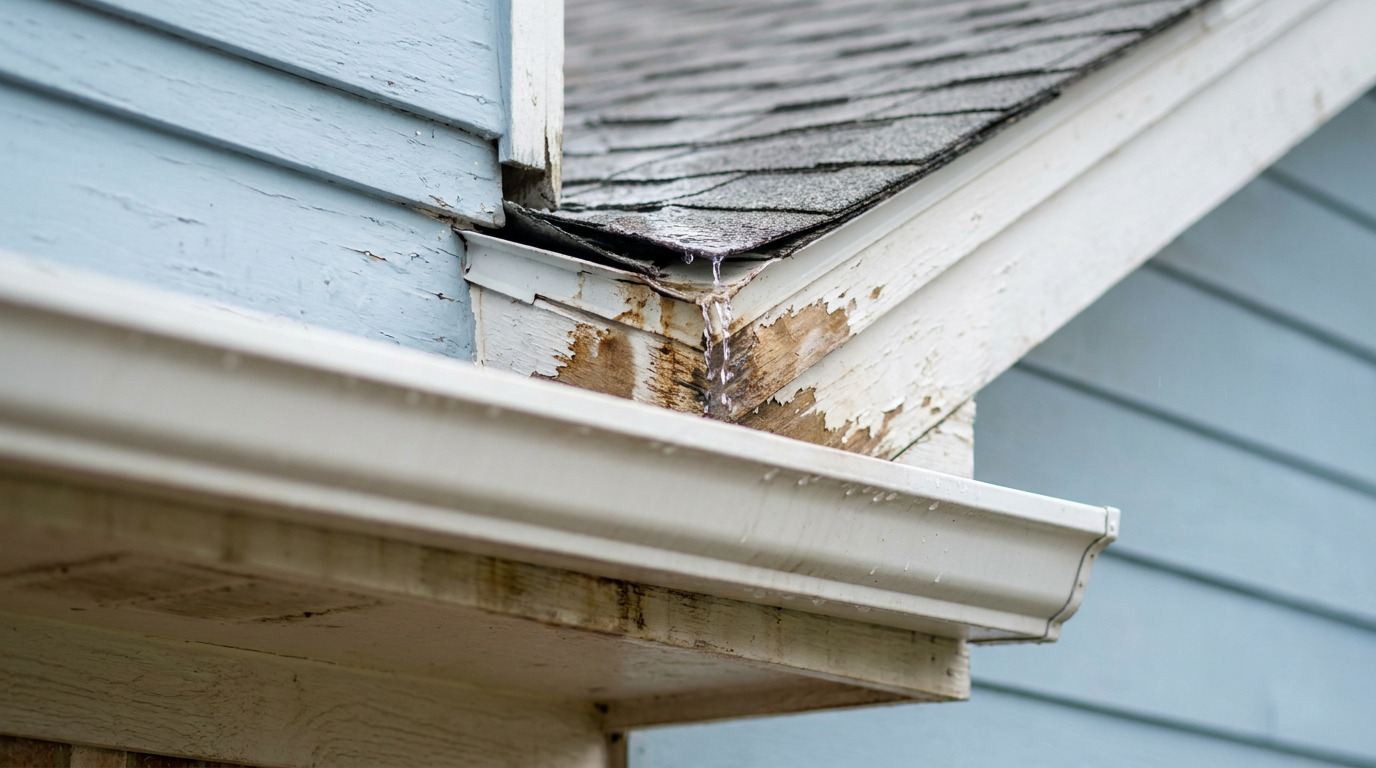
- Tools: Tin snips, pry bar, hammer, roofing cement, 10-foot section of vinyl or aluminum gutter apron/flashing.
- Action: This is the fix I end up doing a lot. You’re installing a gutter apron, which is a flashing piece meant to slide under existing shingles.
- Gently lift the bottom edge of the shingles just enough to make a small gap.
- Slide the top edge of the gutter apron up under the shingles. The bottom edge should hang down into the gutter and cover the gap.
- Use a few dabs of roofing cement under the shingles to hold it in place. Don’t nail through the face of the shingles.
Plumbing · Clog
| Project category | Plumbing |
|---|---|
| Problem type | Clog |
| Trade required | Plumbing |
| Urgency | Soon — within weeks |
| Safety risk | Low safety risk |
| DIY suitability | DIY friendly |
| Cost category | Low cost |
| Typical timeline | Same-day DIY attempt; pro visit within a day or two |
| Contractor type | Licensed plumber |
Repair option
Plunger, hand auger, or trap cleanout before chemicals.
Replacement option
Line replacement when clogs return in the same spot repeatedly.
Common causes
- Hair and soap buildup in the trap
- Grease cooling in the branch line
- Flushed wipes or foreign objects
Relevant tools:diy difficultydiy or hire a pro
Published October 19, 2026Last updated October 19, 2026
Tools & materials you'll need
Affiliate linksAs an Amazon Associate FixlyGuide earns from qualifying purchases — at no extra cost to you. Prices and availability are accurate as of publication and subject to change.
Quick Answer
Water getting behind your gutter is usually an install problem, not a clog. Most of the time, I find one of two things: there’s no drip edge, or the gutters are hung too low and the hangers are starting to let go. Then the water does what water always does — it finds the easy path, wicks up the shingles, skips the gutter, and starts chewing on the fascia board. That’s where the real bill comes from.
You’ll need to check the gap between your roof sheathing and the back of the gutter to see where it’s failing. Most fixes boil down to one of two moves: add the right flashing or reset the gutter height and slope so it actually catches water like it’s supposed to.
The Problem
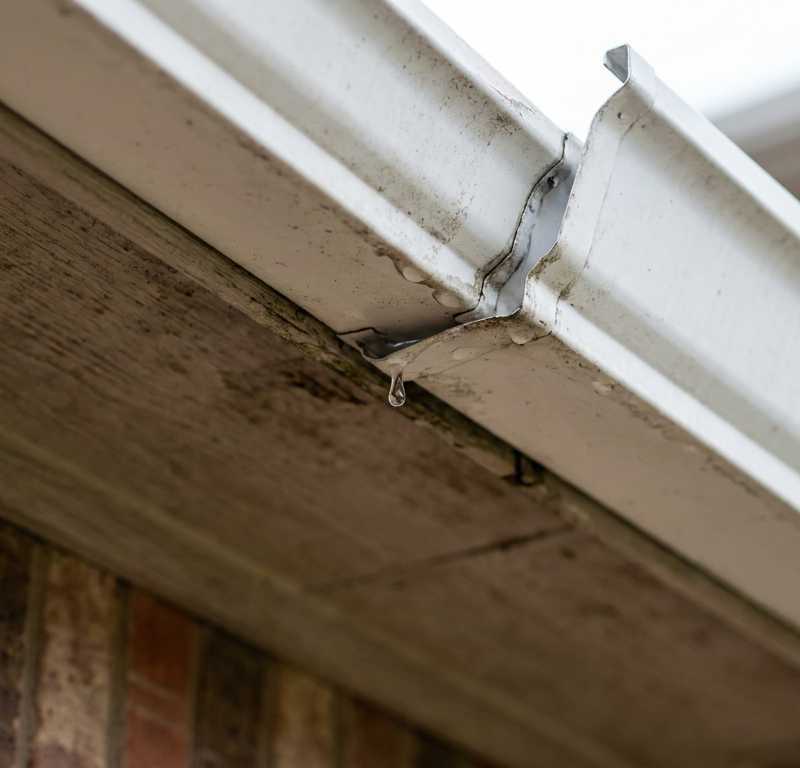
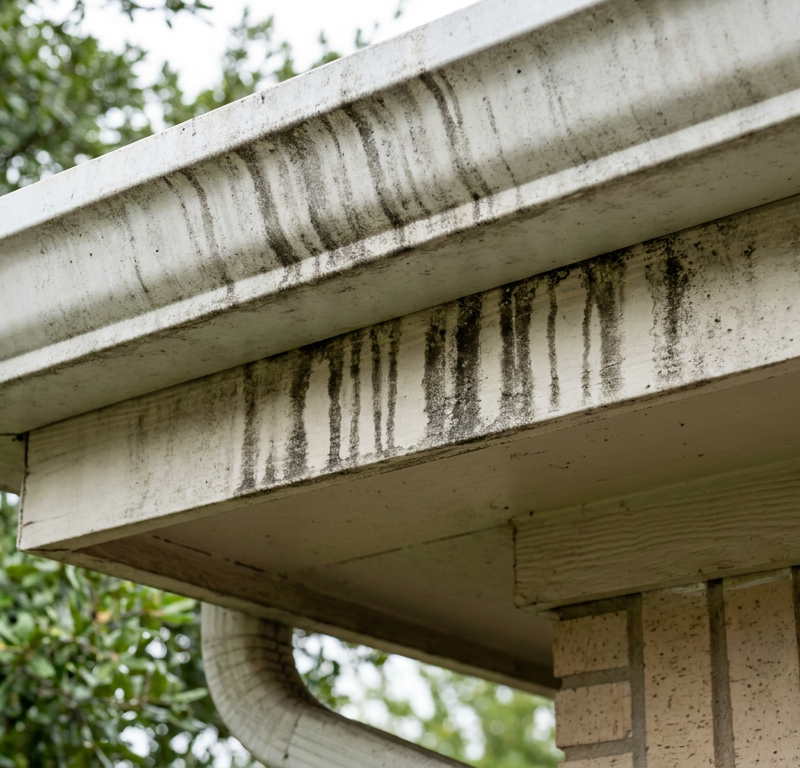
You notice water dripping from behind the gutter, usually during a steady rain. Looks like an overflow at first glance, right? But then you get on a ladder and the gutter isn’t packed with leaves. No dice. The water’s coming from the space between the gutter and the fascia board — that long board the gutter hangs on. Sometimes you’ll see dark streaks, peeling paint, or wood that’s soft enough to poke through with a screwdriver. That’s not a little cosmetic issue. That’s the roofline getting eaten alive.
I pulled a gutter section in Frisco last month that had exactly this leak, and the homeowner thought it was “just a drip.” The fascia underneath was already punky. That’s how these things go — slow, sneaky, and expensive if you ignore them.
This isn’t something I’d brush off. When water keeps soaking the fascia and the rafter tails behind it, you’re heading straight into wood rot that can run into thousands. Around here in North Texas, that damp wood also brings termites and carpenter ants to the party. Not the kind you want. If you see water behind the gutter, you’ve got to track it down.
How It Works
To make sense of why water gets behind your gutter, you’ve got to picture the edge of the roof. There’s the roof decking, also called sheathing, then underlayment — felt paper or synthetic stuff — and then the shingles on top. The shingles should overhang the edge of the decking by about 1/2 to 3/4 of an inch.
That’s where two pieces matter: the drip edge and the gutter hangers.
-
Drip Edge: This is a thin L-shaped strip of metal, usually aluminum or galvanized steel, that belongs right at the roof edge. One leg of the 'L' sits flat on the decking under the shingles, and the other leg hangs down over the fascia. Its whole job is to carry water from the shingle edge into the gutter. Without it — or if somebody installed it on top of the shingles instead of under them — water can curl around the edge from surface tension and run straight down the fascia. The gutter misses out completely.
-
Gutter Position & Hangers: Gutters hang from brackets or spikes screwed into the fascia. The back of the gutter should sit tight against the fascia, tucked right under the drip edge. If it’s hung too low, even by half an inch, heavy rain can jump right over the gutter and hit the fascia behind it. And if the hangers loosen up over time, the gutter sags or pulls away, which opens a gap water loves to use.
Once water gets behind the gutter, it gets trapped. It can’t dry out fast. It soaks the fascia, the soffit below it, and the ends of the rafters. That’s how a small gutter issue turns into a real structural repair. Ugly stuff. Fast, too.
Step-by-Step Fix
Before you start, here’s the big warning: use a sturdy ladder and set it right. Have somebody spot you if you can. Working at the roofline isn’t forgiving, and a fall can ruin your whole week — or worse. If ladders make you nervous, call it a day and get a pro.
1. Observe During Rain (If Possible)
- First thing, watch the problem area during a decent rain. Where’s the water coming from? Is it a sheet running behind the gutter, or just one spot dripping? That tells you a lot before you even touch a tool.
2. Ladder Inspection & Cleaning
- Tools: Ladder, gloves, gutter scoop or trowel, bucket.
- Action: Get up there and look at the bad section. Even if clogging isn’t the main problem, you still need to rule it out. Scoop out any junk in that area so you can actually see the gutter back, the hangers, and the roof edge.
3. Check the Drip Edge
- Tools: Flashlight.
- Action: Look at the top edge of the gutter. Do you see metal flashing running from under the shingles down into the gutter? That’s your drip edge. If it’s missing, you’ve likely found the main issue. If it’s there, is it bent away from the gutter? Damaged? Or is the gutter pulled back from it?
4. Check Gutter Height and Slope
- Tools: Tape measure, 4-foot level.
- Action: The back of the gutter should sit snug against the fascia board, about 1/2 to 1 inch below the shingle line. Lower than that, and water can overshoot it. Then put the level inside the gutter. You want a slight slope — about 1/4 inch for every 10 feet — toward the nearest downspout. If it’s flat or pitched the wrong way, water pools and eventually finds a way out.
5. If You Don't Have a Drip Edge: Install Retrofit Flashing
- Tools: Tin snips, pry bar, hammer, roofing cement, 10-foot section of vinyl or aluminum gutter apron/flashing.
- Action: This is the fix I end up doing a lot. You’re installing a gutter apron, which is a flashing piece meant to slide under existing shingles.
- Gently lift the bottom edge of the shingles just enough to make a small gap.
- Slide the top edge of the gutter apron up under the shingles. The bottom edge should hang down into the gutter and cover the gap.
- Use a few dabs of roofing cement under the shingles to hold it in place. Don’t nail through the face of the shingles.
- If you need more than one piece, overlap sections by 2-3 inches.
6. If Hangers are Loose or Too Low: Adjust the Gutter
- Tools: Drill/driver with 1/4" hex head, new gutter hangers (if needed).
- Action: Most newer gutters use bracket-style hangers screwed into the fascia.
- Remove the hanger in the problem area.
- Push the gutter up so it sits tight against the fascia, just below the shingle line.
- Drive the screw back in and make sure it grabs solid wood. If the old hole’s stripped, move over an inch and drill a fresh one.
- Do that for any other loose hangers in the run. Sometimes you’ve got to unscrew several of them to get the pitch right on a longer section.
7. Check the Fascia Board for Damage
- Tools: Screwdriver or awl.
- Action: While you’re up there, poke the fascia board — especially anywhere stained or peeling. If it’s soft and spongy, that’s rot. A small bad spot can sometimes be cleaned out and filled with wood hardener and epoxy filler. If a big section’s soft, the whole board needs to come out, and that’s usually a roofer or carpenter job.
8. Test Your Work
- Tools: Garden hose.
- Action: Run water on the roof above the repaired section. Watch the edge. Water should flow off the shingles, onto the drip edge/apron, and straight into the gutter. Then check behind the gutter and make sure nothing’s sneaking through.
Common Causes
- No Drip Edge Installed: I see this a lot, especially on older houses or roofs done by somebody chasing the cheapest bid. It’s the #1 cause.
- Gutter Hung Too Low: The installer set the gutter too far below the roofline, so heavy rain shoots past it.
- Failed Gutter Spikes or Hangers: Older spikes work loose over time. Once they pull out, the gutter sags away from the fascia and leaves a gap.
- Improper Shingle Overhang: If the shingles don’t extend past the decking by at least 1/2 inch, water runs right down the fascia. That’s a roofing mistake.
- Rotted Fascia Board: Rotten fascia can’t hold the gutter tight, so it starts pulling away. The rot is often caused by the leak, and then the leak gets worse. Nice little loop, huh?
Common Mistakes
- Ignoring the Problem: People think it’s just a small drip. That “small drip” keeps working on the roof structure until a $50 fix turns into a $5,000 repair.
- Using Caulk to "Seal" the Gap: Smearing silicone caulk along the top back of the gutter is a temporary homeowner patch. It’ll fail, and it can trap moisture where you don’t want it. The fix is mechanical — flashing and proper positioning — not just gooping it up.
- Installing a Drip Edge on Top of Shingles: That doesn’t help. The flashing has to go under the shingles to guide the water.
- Not Checking for Rot: If you just tighten a hanger without checking the wood it bites into, it’ll pull out again later.
- Reversing the Gutter Slope: When you reset hangers, it’s easy to create a high spot that blocks drainage. Check it with a level before you pack up.
Cost & Time Breakdown
This table assumes you're fixing a 10-20 foot section. Costs are for materials only.
| Task | DIY Cost | Pro Cost | Time |
|---|---|---|---|
| Inspecting and Cleaning | $0 | (part of service call) | 30 minutes |
| Installing Retrofit Drip Edge (10 ft) | $15–$25 | $150–$300 | 1–2 hours |
| Adjusting/Replacing Gutter Hangers (5-10 hangers) | $20–$40 | $100–$250 | 1 hour |
| Minor Fascia Rot Repair (Epoxy) | $30–$50 | $200–$400 | 2–3 hours (inc. drying time) |
| Full Fascia Board Replacement (10-20 ft) | $100–$200 (materials) | $500–$1,200+ | 1–2 days (Pro recommended) |
Tips & Prevention
- Annual Inspection: Once a year is the bare minimum. After the fall leaf drop is a good time — get on a ladder and check the drip edge and hanger condition.
- Clean Gutters Twice a Year: Clean gutters don’t just drain better. They also make it easier to spot problems like a gutter back pulling away.
- Look Up During Rain: Every so often, walk around the house during a storm. That’s the easiest way to catch water spilling behind a gutter.
- Choose Quality Contractors: If you’re getting a new roof, ask flat-out whether new drip edge is included in the bid. Good roofers treat that as standard, not an upgrade.
- Don't Lean Ladders on Gutters: An extension ladder leaning right on the gutter can bend it, loosen hangers, and create the exact gap you’re trying to fix. Use standoffs or stabilizers.
- Check Your Shingle Overhang: Next time you’re up there, look under the shingle edge. You want to see about 3/4" past the wood sheathing. If it’s flush or short, water’s going to want to run down the fascia every time.
When to Call a Professional
This can be a manageable DIY repair if the problem is just adding a gutter apron or re-securing a few hangers. But you should stop and call a professional gutter installer or roofer right away if you find any of these:
- Extensive Wood Rot: If you poke the fascia or soffit and it’s soft, crumbles, or your screwdriver sinks in easily over a stretch longer than a foot, you’re past patch territory. That board needs replacing, and that means pulling the gutter system off and putting it back.
- You're Uncomfortable on a Ladder: Seriously. No repair is worth a life-changing fall. Gutter work means reaching and leaning from a ladder, and that’s just plain risky. If it doesn’t feel safe, call a pro.
- The Roof Itself is the Problem: If the shingles are cut too short or the roof edge is flashed wrong from the start, that’s a roofer job, not a gutter guy job. They’ll need to fix the root cause, which may mean removing and reinstalling the bottom courses of shingles.
'''
Related Articles
Keep troubleshooting with these hand-picked guides from FixlyGuide:
- The #1 Gutter Mistake That Causes Overflow (And How to Fix It in 20 Minutes) — Overflowing gutters during heavy rain are usually caused by a readily fixable clog, often due to a common cleaning mistake.
- The #1 Gutter Mistake That Causes Overflow (It's Not Clogs!) — Discover the often-overlooked culprit behind overflowing gutters during heavy rain and learn the surprising, easy fix most homeowners miss.
- Siding Turning Green? What's Growing on Your House and How to Get Rid of It — Seeing green stuff on your siding? It's usually algae, mold, or mildew. Here's how to tell the difference and clean it off safely in one af…
- The Ugly Truth About Chalky Siding (And Your Simple 3-Hour Fix) — Don't let faded, chalky siding ruin your home's curb appeal. This guide explains why it happens and gives you a straightforward, effective…
- The Mystery of the Loose Siding Panel: Why It Flaps and How to Fix It Right — Loose siding panels aren't just an eyesore; they can lead to serious water damage if not addressed quickly. Learn why your siding is flappi…
- That Annoying Water Heater Popping Sound? It's Trying to Tell You This One Thing — A popping water heater usually signals a common issue: sediment buildup. Learn why it happens and how to fix it with a simple flush.
Should you do this yourself?
Answer five quick questions before you start. Safety outranks savings every time.
Your experience with work like this
How high do you have to work?
Does the job involve any of these?
Will it need a permit?
Specialty tools
Free and instant. Educational guidance only — not a quote, inspection, or professional diagnosis.
Estimate your own project cost
National averages are a starting point. Enter your details for a range that fits your house.
Roof replacement cost
- Per square (installed)$604 – $866
Add $500–$2,500 if decking is rotten and needs replacement. Storm damage may be covered by insurance.
Educational estimate only — always confirm with written local bids.
What should this project cost?
Enter your project details for a realistic cost range before you call anyone.
Spot repairs commonly run $400–$1,800; full replacement typically $9,000–$18,000 for an average home.
- Regional adjustment
- National average
- Labor share (typical)
- ~$2,948
- Quotes to collect
- 3 written estimates
Educational estimate based on national averages — not a binding quote. Always confirm with written local estimates.
Fixly Project Decision Box
- DIY difficulty
- Professional Recommended
- Estimated time
- Inspection 1–2 hours · repairs 1–3 days
- Cost level
- High
Main tools / materials
- Binoculars for a ground-level look
- Flashlight for attic checks
- Moisture meter
- Roofing cement (temporary patch only)
When to stop and call a pro
- Active leak near lights, fans, or any wiring
- Sagging, bulging, or water-filled ceiling
- Steep, wet, or two-story roof — do not climb it
- Storm or hail damage you plan to claim on insurance
Need professional help?
Free roof assessment first — no phone calls until you ask for them.
Get Local Roofing HelpDecide what your roof needs
Two minutes of questions turns "something is wrong up there" into a clear next step.
- Repair or replace your roof?Answer 10 questions about age, leaks, and damage to get a clear next step.Open
- Compare contractor quotesScore up to four bids on price, warranty, licensing, and timeline.Open
- Get local estimatesSend one request and compare written estimates from vetted pros.Open
Free, no signup required. Estimates are educational guidance, not a quote or an inspection.
Frequently asked questions
Can I just put caulk between the gutter and the fascia to stop the leak?+
No, this is a common mistake. Applying caulk is a temporary fix that traps water, hiding the problem and accelerating wood rot on the fascia board. The correct solution is mechanical: installing proper flashing (a drip edge or gutter apron) or re-aligning the gutter so water can't get behind it in the first place.
How much does it cost to have a professional fix water getting behind my gutters?+
For a simple fix on a single-story house, like installing a section of drip edge or re-securing some hangers, you can expect to pay a gutter professional between $150 and $400. If the fascia board itself is rotted and needs replacement, the cost will be significantly higher, likely starting around $500 and potentially exceeding $1,200 for a long section.
Is a drip edge required by building codes?+
In most areas, yes. The International Residential Code (IRC), which serves as the model for most local building codes, requires the installation of a drip edge at the eaves and rakes of a roof. If your home is older or a roofer cut corners, it might be missing, which is a very common cause of water getting behind gutters.
Can clogged gutters cause water to go behind them?+
While it's possible, it's not the most common reason. If a gutter is severely clogged, water can pool and overflow, potentially splashing back against the fascia. However, water consistently running *between* the gutter and fascia is almost always a sign of an installation problem like a missing drip edge or improper gutter height.
My gutters are brand new but water is still getting behind them. Why?+
This strongly points to an improper installation. The installers likely hung the gutters too low below the roofline or failed to install or integrate a proper drip edge. Contact the installation company immediately; this should be covered under their workmanship warranty.
What happens if I ignore water running behind my gutter?+
Ignoring it can lead to very expensive repairs. The constant moisture will rot the wooden fascia board, the soffit below, and even the ends of your roof rafters. This structural damage can cost thousands of dollars to fix, far more than the cost of a simple gutter adjustment or flashing installation.
What's the difference between a drip edge and a gutter apron?+
A drip edge is installed with a new roof, placed on the decking before the shingles. A gutter apron is a retrofit product designed to be slipped under existing shingles to fix a problem. They both serve the same function: to guide water from the roof edge cleanly into the gutter.
How do I know if my fascia board is rotted?+
Gently poke the board with a screwdriver or an awl, paying close attention to any areas with peeling paint or dark stains. If the wood feels soft, spongy, or the tool sinks in easily, the wood is rotted. Healthy wood will be firm and resist the pressure.
Discussion
Loading comments…