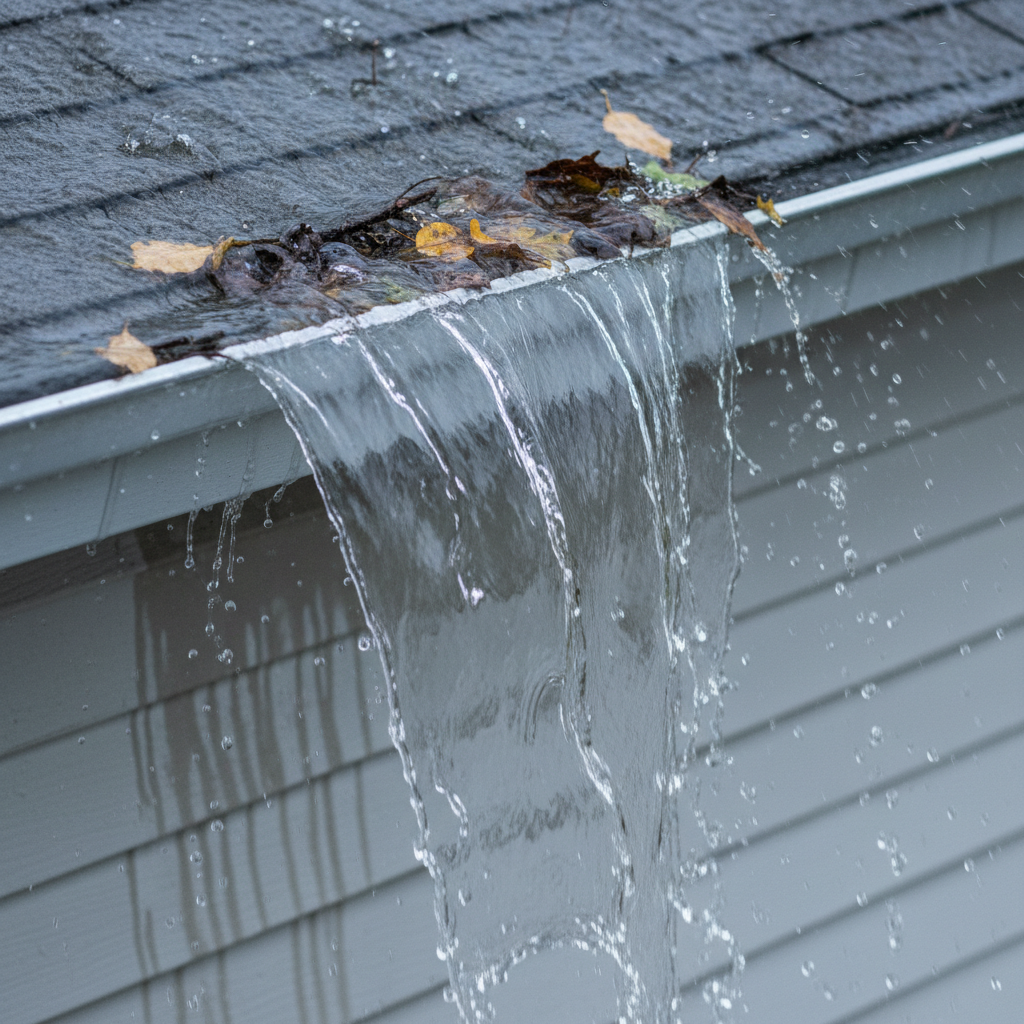
- Debris Blockages: Big one right here. Leaves, twigs, pine needles, shingle grit, even tennis balls or bird nests can dam up your gutters or downspouts.
- Improper Pitch/Slope: If your gutters aren’t angled right (that 1/4 inch per 10 feet), water pools instead of moving, and then debris settles in.
- Undersized Gutters: Older homes or additions sometimes have gutters that just can’t keep up with the roof area, especially in heavy storms. A 5-inch K-style gutter is standard, but some bigger roofs really do better with 6-inch.
- Clogged Downspouts: A lot of times the blockage isn’t in the gutter trough at all — it’s deeper in the vertical pipe or the elbows, especially near the bottom where junk likes to collect.
- Sagging Gutters: When gutters pull away from the fascia or get dented bad enough, they create low spots that hold water and overflow.
Plumbing · Clog
| Project category | Plumbing |
|---|---|
| Problem type | Clog |
| Trade required | Plumbing |
| Urgency | Soon — within weeks |
| Safety risk | Low safety risk |
| DIY suitability | DIY friendly |
| Cost category | Low cost |
| Typical timeline | Same-day DIY attempt; pro visit within a day or two |
| Contractor type | Licensed plumber |
Repair option
Plunger, hand auger, or trap cleanout before chemicals.
Replacement option
Line replacement when clogs return in the same spot repeatedly.
Common causes
- Hair and soap buildup in the trap
- Grease cooling in the branch line
- Flushed wipes or foreign objects
Relevant tools:diy difficultydiy or hire a pro
Published July 29, 2026Last updated August 17, 2026
Tools & materials you'll need
Affiliate links- AmazonSturdy extension laddertall enough for your roofline
- AmazonGarden hose with jet nozzle
- AmazonSmall plastic scoop or trowel
- AmazonLong needle-nose pliersfor reaching into downspouts
- AmazonScrewdriver or nut driverfor downspout screws
- AmazonPlumber's snake or downspout augerif you have stubborn downspout clogs
- AmazonSpirit level (12-24 inch)for checking pitch
As an Amazon Associate FixlyGuide earns from qualifying purchases — at no extra cost to you. Prices and availability are accurate as of publication and subject to change.
Quick Answer
When your gutters are splashing over the sides during a downpour, it’s almost always a blockage or a system that’s getting overwhelmed by water. Most of the time, that’s a big wad of leaves, twigs, or old shingle grit tucked away where you can’t see it — in the gutter trough itself, at the downspout opening, or farther down in the pipe. Clear the clog and check the pitch, and you’re usually in good shape. Do that sooner than later, and you’ll save yourself a pile of grief with your foundation, fascia, and siding.
The Problem
I’ve seen it hundreds of times. Homeowner calls after a storm, worried about water pooling around the foundation or a damp spot in the basement. Nine times out of ten, the culprit is right above their head — an overflowing gutter. It’s not just a nuisance. That water’s supposed to get carried away from the house, not dump down the siding, soak the ground, wreck the landscaping, or work its way into a basement or crawl space. Let that go long enough and you’ll start seeing rotten fascia boards, damaged soffits, mildew, and maybe even foundation trouble if the soil keeps getting saturated and swelling up.
I remember a job in Northgate a few years back. Mrs. Henderson called me because her basement kept getting damp after every heavy rain. We checked the usual stuff — downspout extensions, grading, all of it. Looked fine from the ground. But once I climbed the ladder, I found the real problem: a robin had packed a monster nest into her biggest downspout elbow. That, plus years of oak leaves, made a plug so tight it wouldn’t budge with a hose. No dice. It was basically concrete. We cleared it out, and her basement dried right up. Hidden blockages like that are what’ll get you.
How It Works
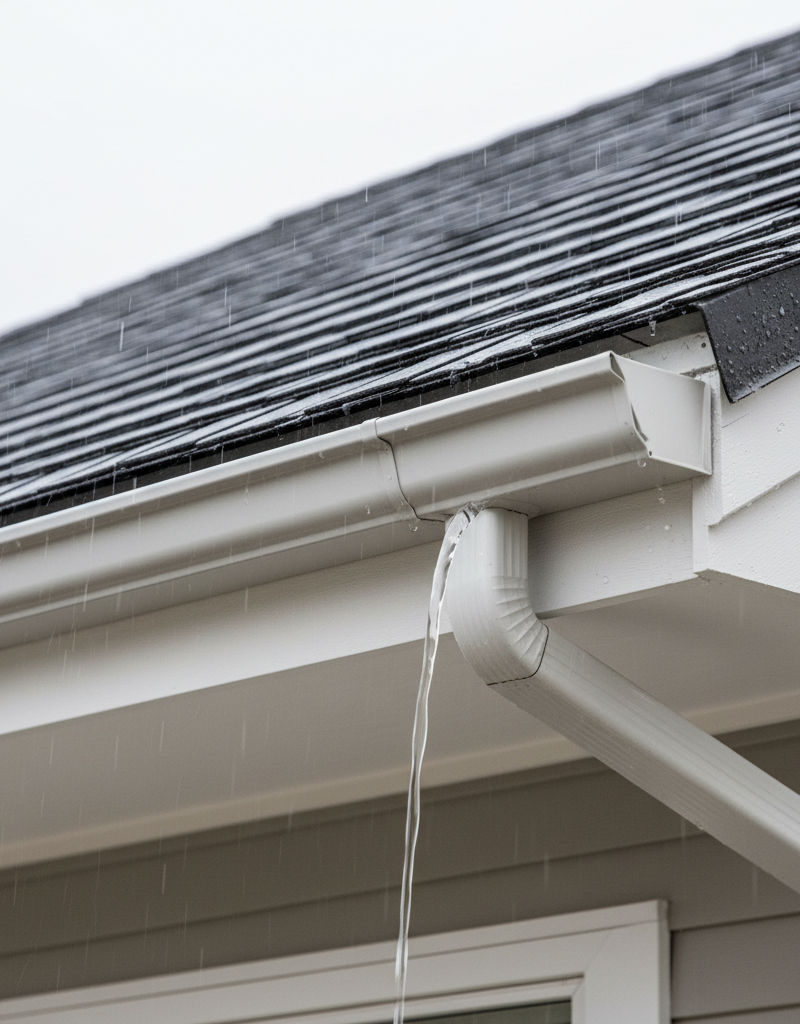
Your gutter system’s a pretty simple piece of the roof puzzle, but it matters. Rain hits the shingles, runs down, and lands in the gutters. Those gutters aren’t flat; they’re set with a slight slope — typically about 1/4 inch of drop for every 10 feet of run — so the water heads toward the downspouts. Think of it like a tiny river feeding an outlet. The downspouts then carry that water straight down the side of the house and, with proper extensions, away from the foundation.
When everything’s right, even a good hard rain shouldn’t overwhelm a clean, properly sized system. A standard 5-inch K-style gutter can handle runoff from roughly 5500 square feet of roof area, assuming standard rainfall. But toss in a handful of wet leaves, some shingle grit, and a few small sticks, and that 1/4-inch slope doesn’t mean much anymore. The debris slows things down, water stacks up behind it, and then it spills right over the lip of the gutter — usually where you least want it, right next to the house. Simple setup. Big mess if you ignore it.
Step-by-Step Fix
Here’s how I handle overflowing gutters, step by step. Keep your head on straight with this part — use a solid ladder and have someone spot you if you can. You don’t want to take a tumble over a handful of leaves.
-
Assess the Situation — Before you even drag the ladder out, watch the gutters during a rainstorm. See exactly where the overflow starts. Is it one spot, or is the whole run dumping water? That tells you pretty quick whether you’ve got a local clog or a bigger issue like bad slope. Make a note — a photo helps — so you know where to start.
- Safety First: Don’t climb a wet or icy roof, and don’t trust a wobbly ladder. If ladders make you nervous, call a pro. Broken bones aren’t a bargain.
-
Clear the Obvious Debris — Set the ladder carefully and scoop out the big clumps of leaves and twigs by hand. I always start right near the downspouts because that’s where the real jams usually live. Wear good gloves — you never know what kind of nasty junk, or sharp junk, you’ll run into. Half the time it’s just a layer of slimy leaves choking off the flow.
- Tools: Heavy-duty gloves, small plastic scoop or trowel, five-gallon bucket.
-
Flush with a Hose — Once the big stuff’s out, use a garden hose with a jet nozzle to flush the gutter trough. Start at the high end and work toward the downspout. Watch how the water moves. If it backs up, you’ve still got a clog. Stick the nozzle into the downspout opening and blast it. You should see a strong stream coming out the bottom. If not, the blockage’s deeper in there.
- Tip: If water piles up in the downspout opening and won’t drain, that’s your stubborn clog. Try a plumber’s snake or a specialized downspout auger.
-
Tackle Downspout Clogs — For deeper downspout blockages, you’ve got a couple of ways to go. If you can see the clog from the top or bottom, sometimes you can pull it out with long needle-nose pliers or even a wire hanger bent into a hook. For the stubborn ones, I’ll disconnect the downspout sections — usually just a few screws — and clear them on the ground. A plumber’s snake works great here, too. Feed it from either end until you break through. Then bolt everything back together tight.
- Tools: Screwdriver/nut driver, needle-nose pliers, plumber’s snake or downspout auger.
-
Check Gutter Pitch — After you’ve cleared everything, step back and look at the slope. Water ought to move toward the downspout without hesitation. If you see standing water after a hose test — or worse, the gutter slopes away from the downspout — you’ve got a pitch problem. That usually means loose hangers or hangers that were installed wrong from the jump. You’ll need to reset and adjust them. The target is 1/4 inch per 10 feet of gutter run. Grab a level and tape measure and verify it.
- How-to: Mark 10-foot intervals. Place your a level against the gutter. Raise or lower the gutter until the bubble is slightly past center, indicating the 1/4-inch slope. Re-drill hanger screws if necessary, or replace bent hangers.
-
Extend Downspouts — Make sure your downspout extensions are actually moving water away from the house. They should send it at least 5 to 10 feet from the foundation. Sometimes a clean system still gets overwhelmed if all that water dumps right beside the slab. Simple flip-up extensions or underground drain tile can make a huge difference in keeping the basement dry and the footing out of trouble.
- Material: Downspout extensions (flexible or rigid), screws for attachment.
-
Consider Gutter Guards (with caveats!) — Gutter guards can help, but they’re not a magic “install it and forget it” fix. Some mesh guards end up trapping small debris and shingle grit, which turns into a different headache. Solid covers can make water sheet right over the top if the rain comes down hard enough. I’ve had better luck with fine mesh or micro-mesh systems, but they still need attention now and then — they just cut down how often you’re up there cleaning.
- Pro Tip: If you live where pine needles or small seeds are everywhere, some gutter guards can actually make things worse by giving debris another place to hang up.
-
Regular Maintenance Schedule — The best fix is staying ahead of it. Clean your gutters at least twice a year — once in late spring after tree pollen and seeds drop, and again in late fall after the leaves are done falling. If you’ve got a lot of trees around, you may need to do it more often. It’s a good chance to spot loose hangers, cracks, or other wear before they turn into a headache.
Common Causes
- Debris Blockages: Big one right here. Leaves, twigs, pine needles, shingle grit, even tennis balls or bird nests can dam up your gutters or downspouts.
- Improper Pitch/Slope: If your gutters aren’t angled right (that 1/4 inch per 10 feet), water pools instead of moving, and then debris settles in.
- Undersized Gutters: Older homes or additions sometimes have gutters that just can’t keep up with the roof area, especially in heavy storms. A 5-inch K-style gutter is standard, but some bigger roofs really do better with 6-inch.
- Clogged Downspouts: A lot of times the blockage isn’t in the gutter trough at all — it’s deeper in the vertical pipe or the elbows, especially near the bottom where junk likes to collect.
- Sagging Gutters: When gutters pull away from the fascia or get dented bad enough, they create low spots that hold water and overflow.
- Damaged Gutter Sections: Cracks, holes, or dents can mess with the flow and make one section spill over. Sometimes a ladder bump or a falling branch does the damage.
Common Mistakes
- Ignoring the problem: Thinking,
Related Articles
Keep troubleshooting with these hand-picked guides from FixlyGuide:
- The #1 Gutter Mistake That Causes Overflow (And How to Fix It in 20 Minutes) — Overflowing gutters during heavy rain are usually caused by a readily fixable clog, often due to a common cleaning mistake.
- The #1 Gutter Mistake That Causes Overflow (It's Not Clogs!) — Discover the often-overlooked culprit behind overflowing gutters during heavy rain and learn the surprising, easy fix most homeowners miss.
- The 3 Hidden Reasons Your Gutters Fail in Heavy Rain (It’s Not Just Leaves) — Overflowing gutters during heavy rain often stem from a few common, yet overlooked, issues beyond simple leaf clogs, leading to potential s…
- The #1 Reason Your Gutters Overflow (It's Not Clogging) — Discover the surprising true cause of overflowing gutters during heavy rain and how a simple fix can prevent costly water damage to your ho…
- The #1 Gutter Overflow Culprit in Heavy Rain (It’s Not Just Clogs) — Discover why your gutters overflow during heavy rain, often due to an overlooked issue beyond simple clogs, and how to fix it.
- The Tiny Gap That Wastes Energy: Why Your Baseboards Pull Away (And the Simple, Permanent Fix) — Baseboards separating from walls are a common issue, often indicating underlying problems with moisture or house settling, but are typicall…
Should you do this yourself?
Answer five quick questions before you start. Safety outranks savings every time.
Your experience with work like this
How high do you have to work?
Does the job involve any of these?
Will it need a permit?
Specialty tools
Free and instant. Educational guidance only — not a quote, inspection, or professional diagnosis.
What should this project cost?
Enter your project details for a realistic cost range before you call anyone.
Spot repairs commonly run $400–$1,800; full replacement typically $9,000–$18,000 for an average home.
- Regional adjustment
- National average
- Labor share (typical)
- ~$2,948
- Quotes to collect
- 3 written estimates
Educational estimate based on national averages — not a binding quote. Always confirm with written local estimates.
Fixly Project Decision Box
- DIY difficulty
- Professional Recommended
- Estimated time
- Inspection 1–2 hours · repairs 1–3 days
- Cost level
- High
Main tools / materials
- Binoculars for a ground-level look
- Flashlight for attic checks
- Moisture meter
- Roofing cement (temporary patch only)
When to stop and call a pro
- Active leak near lights, fans, or any wiring
- Sagging, bulging, or water-filled ceiling
- Steep, wet, or two-story roof — do not climb it
- Storm or hail damage you plan to claim on insurance
Need professional help?
Free roof assessment first — no phone calls until you ask for them.
Get Local Roofing HelpDecide what your roof needs
Two minutes of questions turns "something is wrong up there" into a clear next step.
- Repair or replace your roof?Answer 10 questions about age, leaks, and damage to get a clear next step.Open
- Compare contractor quotesScore up to four bids on price, warranty, licensing, and timeline.Open
- Get local estimatesSend one request and compare written estimates from vetted pros.Open
Free, no signup required. Estimates are educational guidance, not a quote or an inspection.
Get the print-ready PDF of this guide
A clean, ad-free, printable version you can keep on your phone or pin to the workshop wall. Free with a FixlyGuide account.
- Print-optimized layout
- Tools, materials & every step included
- Saved to your account
Frequently asked questions
Why do my gutters overflow only in heavy rain?+
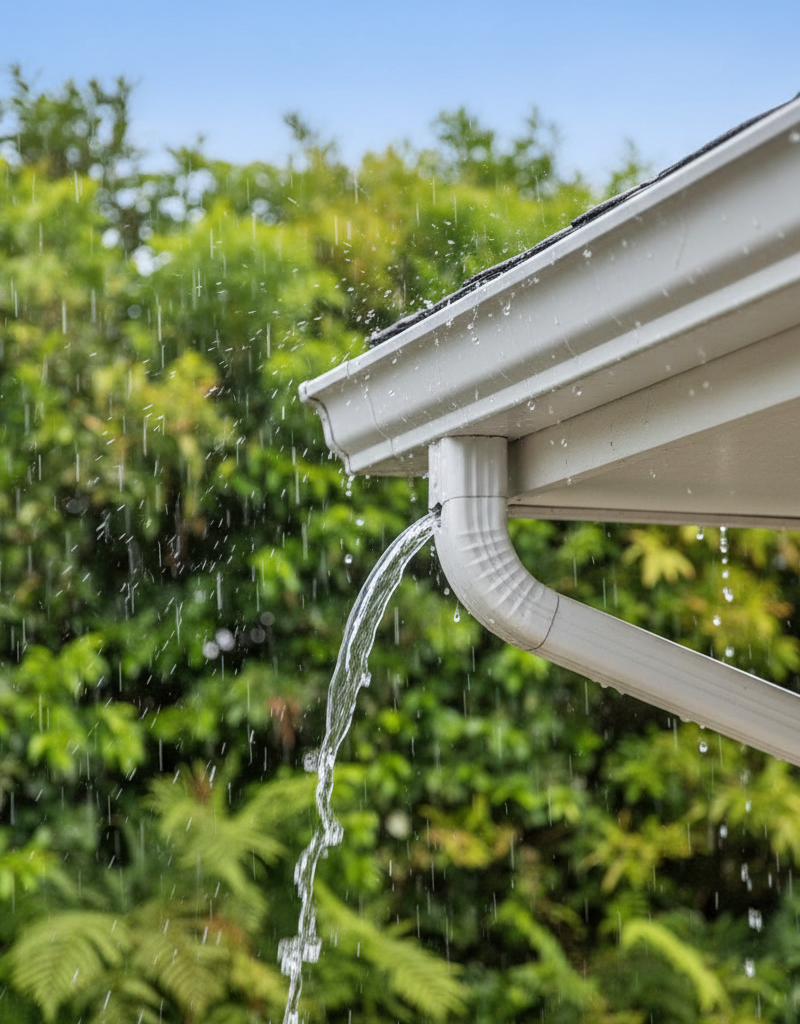
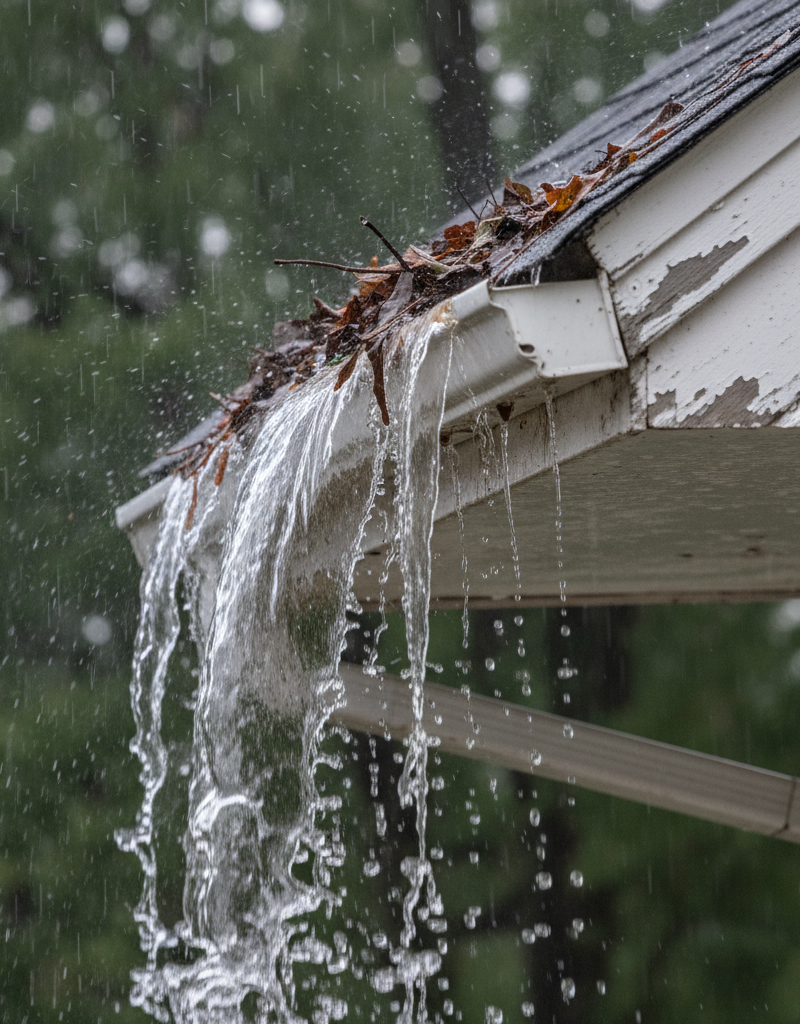
This usually indicates a partial blockage. During light rain, water can still trickle past the obstruction, but a heavy downpour produces too much volume, quickly backing up against the clog and spilling over the gutter's edge.
How often should I clean my gutters?+
I tell homeowners at least twice a year: once in late spring after trees are done dropping seeds and pollen, and again in late fall once all the leaves are down. If you have lots of surrounding trees, you might need to do it more frequently, like quarterly.
Can overflowing gutters damage my house?+
Absolutely. Long-term overflowing gutters can lead to rotten fascia boards, damaged soffits, eroded landscaping, wet basements or crawl spaces, and even costly foundation damage due to soil saturation. It's a serious issue to address quickly.
What's the right slope for gutters?+
The standard recommendation is a slope of 1/4 inch for every 10 feet of gutter run. This slight pitch ensures water drains efficiently towards the downspouts without pooling and allows debris to be carried out with the water flow.
Are gutter guards worth it to prevent overflowing?+
They can help, but they're not a magic bullet. Some types of gutter guards, especially screens, can get clogged themselves with small debris or shingle grit. Micro-mesh guards tend to work better, but even then, occasional cleaning is still necessary to ensure proper function.
My downspout is clogged; how do I clear it?+
First, try flushing it from the top with a garden hose. If that doesn't work, you might need to remove the downspout sections and clear them on the ground. A plumber's snake or a specialized downspout auger can also be fed into the pipe to break apart stubborn clogs.
What size gutters do I need?+
For most residential homes, 5-inch K-style gutters are sufficient. However, if you have a very large roof, live in an area with extremely heavy rainfall, or have a steep roof pitch, a 6-inch gutter system might be necessary to handle the increased water volume effectively.
Can I fix gutter pitch myself?+
If you're comfortable on a ladder, yes, you can. It usually involves adjusting or replacing the gutter hangers. You'll need a level to ensure the correct 1/4 inch per 10 feet slope towards the downspout. Sometimes tightening existing fasteners is enough; other times, new holes and fasteners are needed.
How far should downspouts extend from the house?+
Downspout extensions should direct water at least 5 to 10 feet away from your home's foundation. This prevents water from pooling around the foundation, which can lead to erosion, basement leaks, and foundation damage over time.
Discussion
Loading comments…